

Introduction
Australian native plants that repel mosquitoes are species known to naturally deter mosquitoes through scent, oils, or ecological impact. These plants are commonly used in gardens, patios, and indoor spaces to reduce mosquito presence without relying on chemicals. They work by masking human scent, releasing aromatic compounds, or supporting ecosystems that naturally reduce mosquito populations. Many of these plants belong to families such as Myrtaceae, known for their essential oil content. While they do not eliminate mosquitoes completely, they play a valuable role in integrated pest management and sustainable garden design.
Quick Summary
- Certain Australian native plants release natural oils that help repel mosquitoes.
- These plants can be used outdoors or indoors depending on light and climate conditions.
- Combining repellent plants with proper garden design improves effectiveness.
- Some plants also attract beneficial insects like dragonflies that reduce mosquito populations.
What Are Mosquito Repellent Plants and How Do They Work?
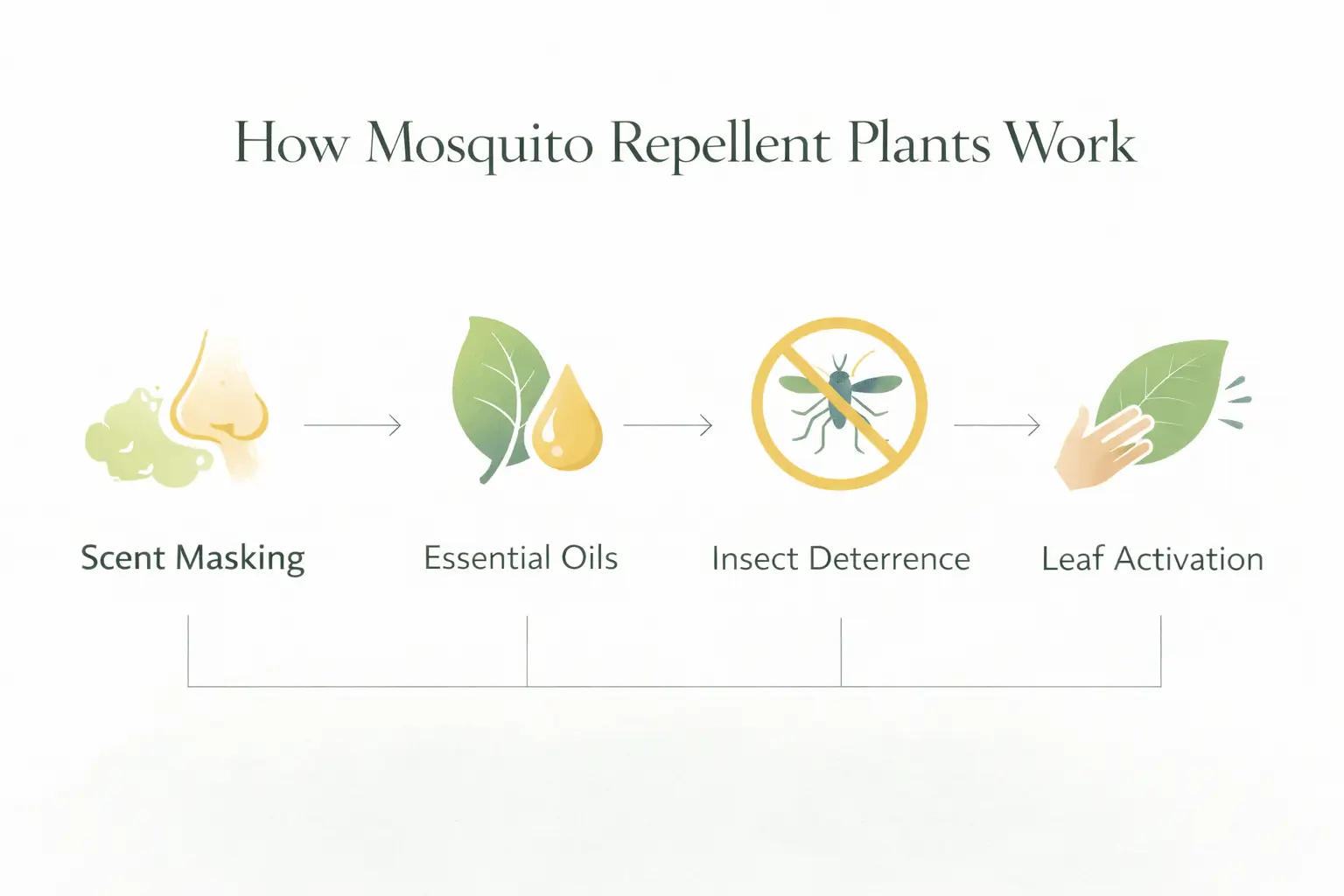
Mosquito repelling plants are species that naturally deter mosquitoes by emitting strong aromas or chemical compounds that interfere with mosquito behavior. These plants reduce mosquito activity rather than eliminating them completely. Many of these plants contain natural compounds similar to citronella, a well-known insect-repelling substance (learn more about citronella on Wikipedia).
Key Points:
- Release strong natural aromas that confuse mosquitoes
- Contain essential oils that insects avoid
- Reduce mosquito landing and breeding activity
- Work best when leaves are crushed or brushed
Many plants that repel mosquitoes contain compounds similar to citronella, including terpenes and aldehydes. These compounds disrupt a mosquito’s ability to detect carbon dioxide and body heat, which are primary cues for locating humans. The effect is often localized, meaning plants that mosquitoes hate must be placed close to human activity areas for noticeable results.
Australian Native Plants That Repel Mosquitoes (Core List)
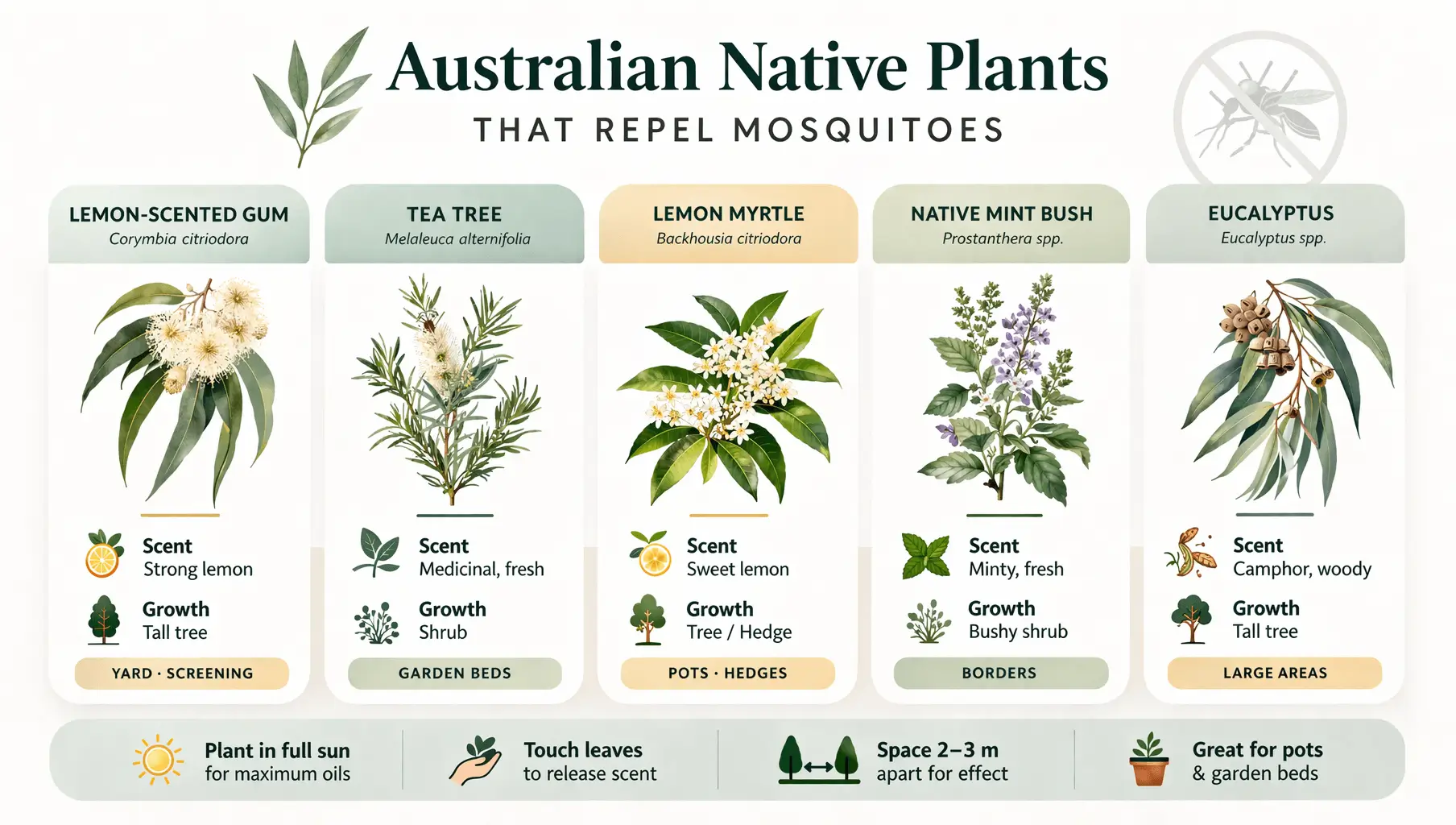
Australian native plants that repel mosquitoes are typically aromatic species with high essential oil content. These plants belong mainly to the Myrtaceae family and are well adapted to Australian climates. Many of these species are also widely used in Australian landscaping, similar to hedge plants discussed in Types of Lilly Pilly, which highlights how native plants contribute to both function and aesthetics.
Lemon-Scented Gum (Corymbia citriodora)
- Scent profile: Strong lemon fragrance
- Growth habit: Tall tree, fast-growing
- Where to plant: Large outdoor spaces
- Mosquito-repelling mechanism: High citronellal content
Tea Tree (Melaleuca species)
- Scent profile: Medicinal, earthy aroma
- Growth habit: Shrub to small tree
- Where to plant: Garden beds, moist areas
- Mosquito-repelling mechanism: Antimicrobial oils deter insects
Lemon Myrtle (Backhousia citriodora)
- Scent profile: Intense citrus scent
- Growth habit: Medium-sized shrub/tree
- Where to plant: Gardens and patios
- Mosquito-repelling mechanism: High citral concentration
Native Mint Bush (Prostanthera species)
- Scent profile: Minty, refreshing aroma
- Growth habit: Compact shrub
- Where to plant: Pots, patios, indoor spaces
- Mosquito-repelling mechanism: Aromatic foliage
Eucalyptus Varieties (Eucalyptus spp.)
- Scent profile: Sharp, cooling aroma
- Growth habit: Trees or shrubs
- Where to plant: Outdoor landscapes
- Mosquito-repelling mechanism: Eucalyptol-rich oils
Best Australian Native Plants That Repel Mosquitoes for Different Spaces
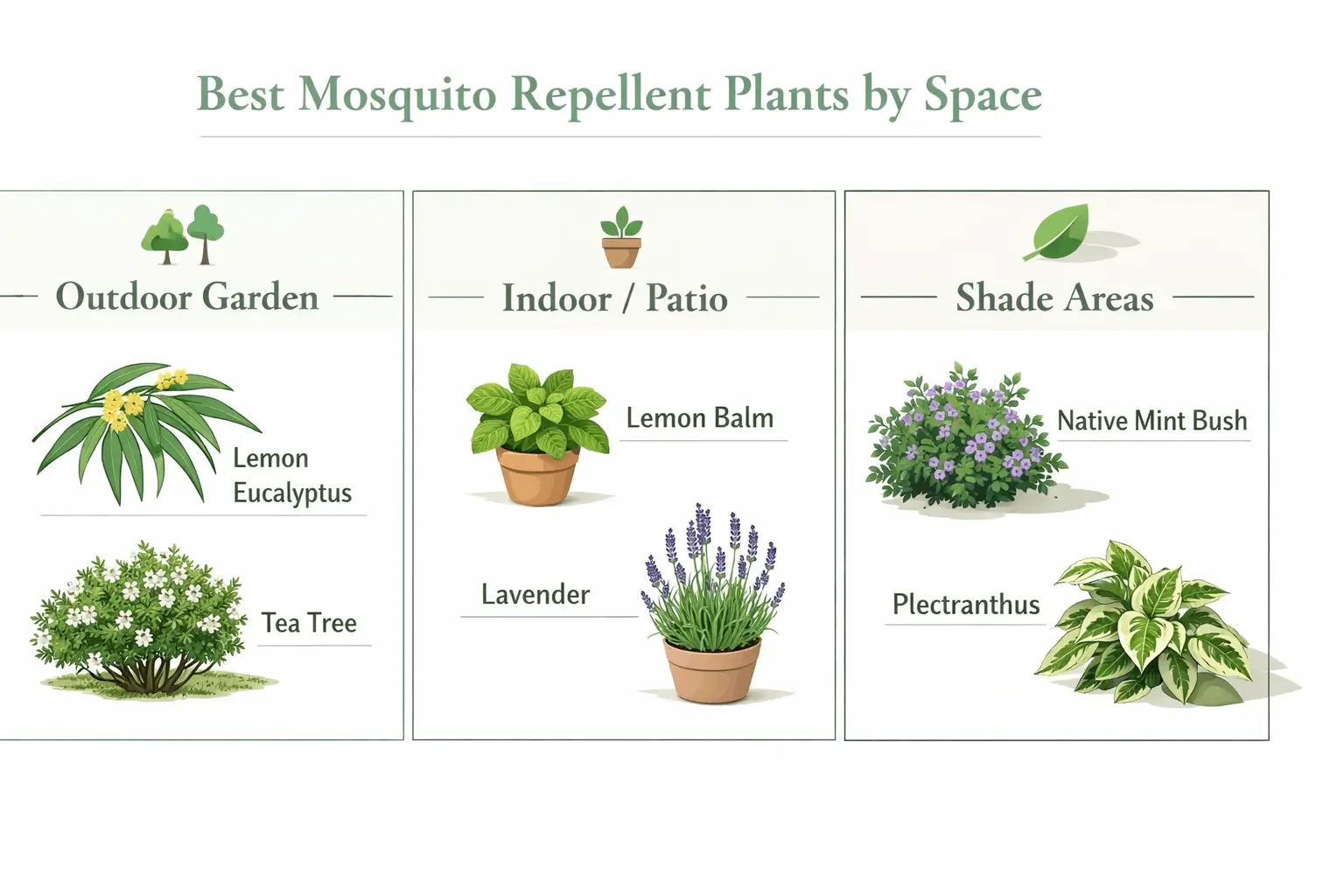
The best Australian native plants that repel mosquitoes depend on placement, light conditions, and garden design.
Outdoor Garden Use
- Larger trees and shrubs like eucalyptus and lemon-scented gum
- Ideal for perimeter planting and windbreaks
- Create a natural aromatic barrier
For larger garden layouts, combining these plants with structured privacy planting—like those featured in 10+ Fast Growing Australian Native Screening Plants Guide—can improve both mosquito control and landscape coverage.
Indoor or Patio Use
- Potted plants such as native mint bush and lemon myrtle
- Place near windows, doors, and seating areas
- Ensure adequate sunlight and airflow
Shade-Tolerant Options
- Tea tree species that tolerate moisture and partial shade
- Suitable for low-light or humid garden zones
- Help maintain mosquito control in dense planting areas
Comparison: Native vs Non-Native Mosquito Repellent Plants
Native and non-native mosquito repellent plants differ in adaptability, maintenance, and effectiveness.
| Feature | Australian Native Plants | Non-Native Repellent Plants |
| Climate Adaptation | Highly adapted to Australia | May need extra care |
| Water Needs | Typically low | Varies |
| Pest Resistance | Naturally resilient | Moderate |
| Effectiveness | Moderate, eco-integrated | Often stronger scent-based |
| Maintenance | Low | Medium |
Native plants integrate better into local ecosystems, while non-native plants like citronella grass may provide stronger immediate scent but require more care.
How to Use Plants to Repel Mosquitoes Effectively
Using plants to repel mosquitoes effectively requires strategic placement and realistic expectations. Plants alone are not sufficient but can significantly reduce mosquito presence when used correctly.
Key Strategies:
- Plant near seating areas, doors, and windows
- Combine multiple plant types for layered protection
- Crush leaves occasionally to release oils
- Pair with airflow and water control
For example, placing aromatic plants around patios while ensuring no stagnant water nearby enhances overall effectiveness.
Do Mosquito Repellent Plants Really Work? (Limitations & Conditions)
Mosquito repellent plants work to a limited extent by reducing mosquito activity in their immediate area. They do not eliminate mosquito populations.
Key Points:
- Plants alone do not eliminate mosquitoes
- Effectiveness depends on density and proximity
- Best used as part of a broader mosquito-control strategy
Environmental factors such as humidity, temperature, and wind can influence how well plant oils disperse. Dense planting and frequent interaction with foliage improve results.
Ecological Approach: Plants That Attract Dragonflies in Australia
Plants that attract dragonflies support natural mosquito control by encouraging predators into the garden ecosystem. Dragonflies feed on mosquito larvae and adults.
Key Concepts:
- Dragonflies are natural mosquito predators
- Water-friendly native plants support breeding habitats
Examples:
- Native reeds
- Aquatic plants
- Wetland-friendly species
Including water features with appropriate plant species can increase dragonfly populations and reduce mosquitoes naturally.
Common Mistakes When Using Mosquito Repellent Plants
Many gardeners reduce effectiveness by making simple but avoidable mistakes.
Mistakes:
- Relying on a single plant
- Poor placement away from activity zones
- Ignoring standing water
- Choosing non-suitable climate plants
A common beginner mistake is planting aromatic species far from seating areas, where their effect becomes negligible.
Common Mosquito Problems in Gardens (Problem–Solution Section)
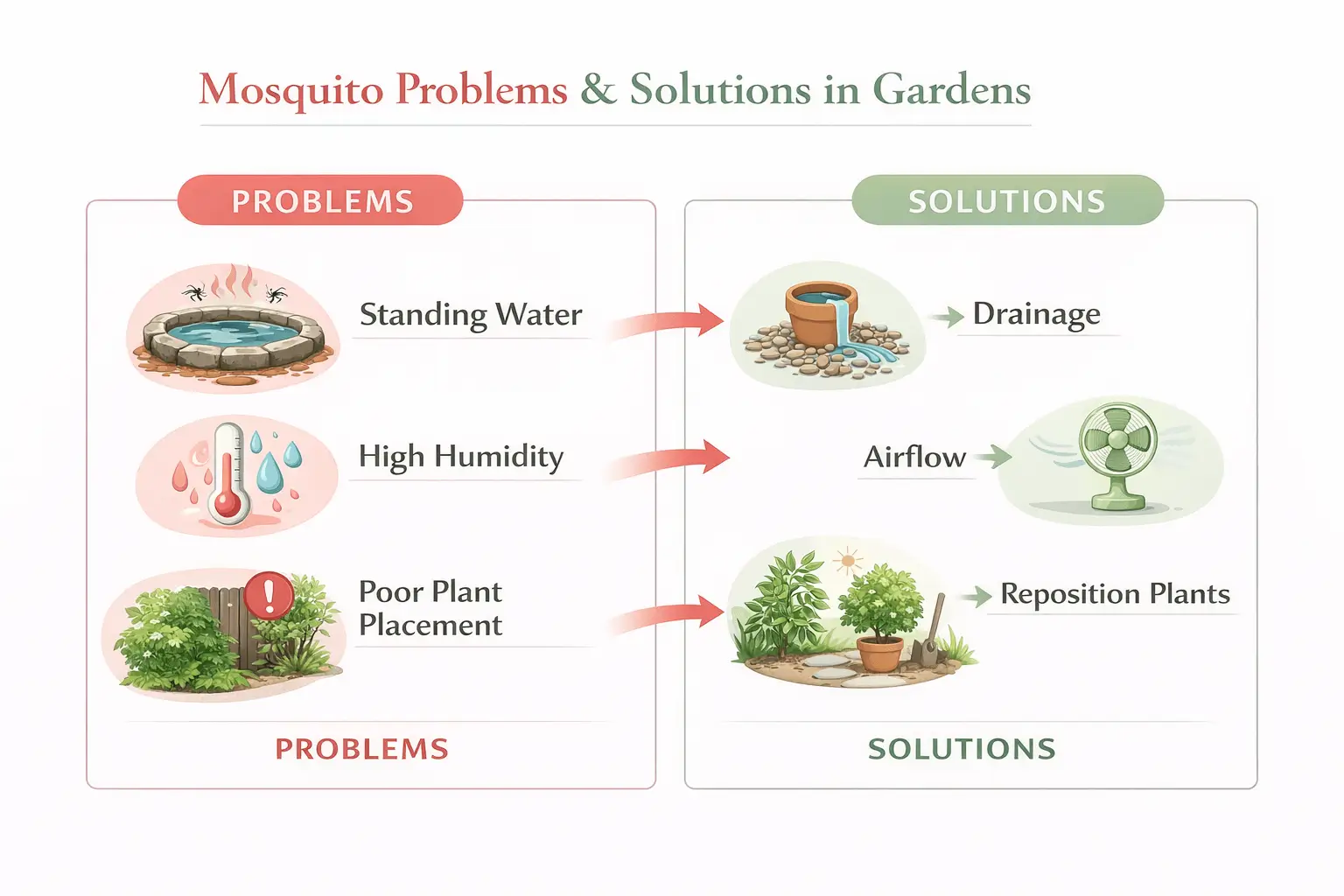
Problem: High Mosquito Activity
- Cause: Standing water, dense humidity
- Solution: Improve drainage, airflow
- Prevention: Regular maintenance
Problem: Plants Not Working
- Cause: Too far from usage areas
- Solution: Reposition near seating zones
Problem: Increased Insects
- Cause: Certain plants attracting pests
- Solution: Balance with repellent species
Additional Benefits of Mosquito Repellent Plants
Mosquito repellent plants provide multiple ecological and practical benefits beyond pest control.
Benefits:
- Repel other insects like flies and midges
- Enhance garden fragrance
- Support biodiversity
- Low-maintenance landscaping
These plants contribute to a healthier, more balanced garden ecosystem.
How to Combine Mosquito Repellent Plants With Garden Design
Combining mosquito repellent plants with garden design improves both function and aesthetics.
Ideas:
- Border planting for natural barriers
- Companion planting in vegetable gardens
- Patio container arrangements
- Layered planting (groundcover + shrubs + trees)
Layered planting creates multiple scent zones, increasing overall effectiveness in repelling mosquitoes.
Conclusion
Australian native plants that repel mosquitoes provide a natural, low-maintenance way to reduce mosquito presence while enhancing garden biodiversity. While they are not a complete solution on their own, combining these plants with proper garden design, strategic placement, and ecological methods such as attracting predators creates a more effective and sustainable mosquito control system.
FAQs
1. What are the best Australian native plants that repel mosquitoes?
Plants like lemon myrtle, tea tree, and eucalyptus are commonly used due to their strong natural oils and adaptability to Australian conditions.
2. Do mosquito repellent plants work indoors?
Yes, mosquito repellent plants can work indoors if placed near windows, doors, or airflow areas where mosquitoes are likely to enter.
3. What plants keep mosquitoes away the most effectively?
Plants with strong aromatic oils, such as native mint bush and lemon-scented gum, tend to be the most effective in reducing mosquito activity.
4. Can plants completely eliminate mosquitoes?
No, plants cannot completely eliminate mosquitoes and should be combined with other methods such as removing standing water.
5. Are there plants that attract mosquitoes instead?
Yes, plants that create dense, moist, or humid environments may indirectly attract mosquitoes by providing resting areas.