
Introduction
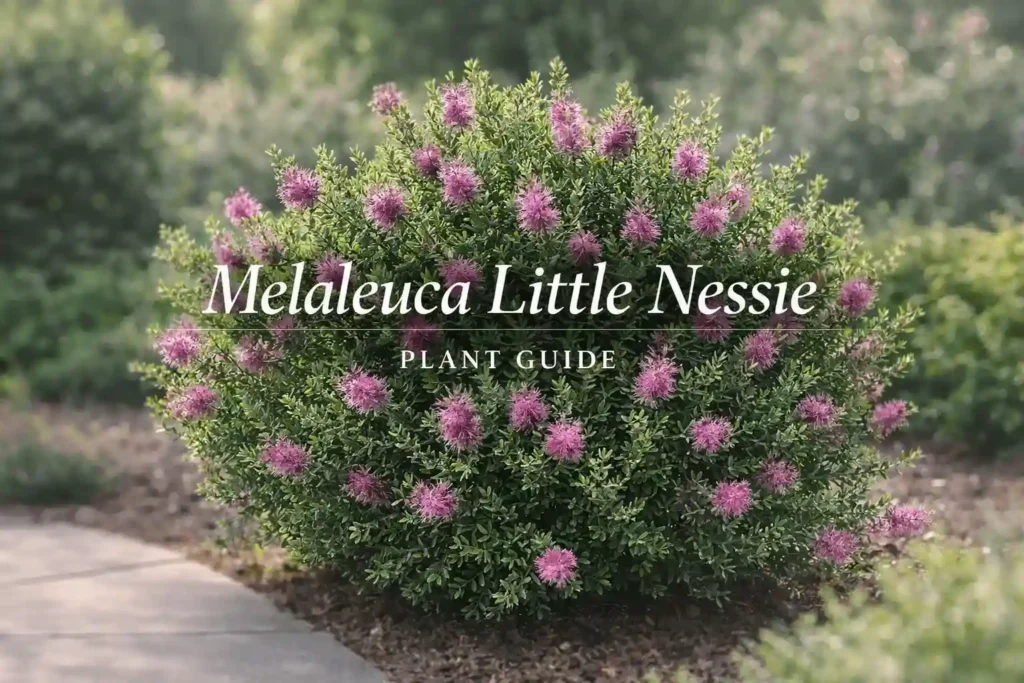
Melaleuca Little Nessie is a compact dwarf cultivar of Melaleuca nesophila, valued for its dense evergreen foliage and vibrant pink-purple bottlebrush flowers. Commonly used in small gardens, borders, and hedging, this Australian native belongs to the Myrtaceae family and offers strong ornamental appeal with low maintenance needs.
Quick Summary
- Melaleuca Little Nessie is a dwarf shrub reaching 1–1.5m in height, ideal for compact gardens.
- Produces pink-purple bottlebrush flowers that attract bees and birds.
- Thrives in full sun with well-drained soil and becomes drought-tolerant once established.
- Requires minimal care, light pruning, and shows strong resistance to pests.
- Suitable for hedges, borders, and coastal landscaping designs.
What Is Melaleuca Little Nessie?
Botanical Identity and Origin
Melaleuca Little Nessie is a dwarf selection of Melaleuca nesophila, commonly known as showy honey myrtle or honey myrtle plant. It originates from Australia and belongs to the Myrtaceae family, which includes aromatic shrubs and trees adapted to warm, dry climates. The genus Melaleuca belongs to the Myrtaceae family and is widely documented in botanical literature, including its overview on Wikipedia.
Growth Habit and Structure
This cultivar forms a dense, evergreen mound with narrow foliage and compact branching. It is naturally tidy in shape, making it suitable for structured planting without heavy pruning.
- Dense evergreen foliage maintains year-round coverage
- Bottlebrush-style pink-purple flowers form in clusters
- Attracts pollinators such as bees and native birds
- Naturally compact growth habit suitable for small spaces
Key Features and Characteristics
Flower and Foliage Highlights
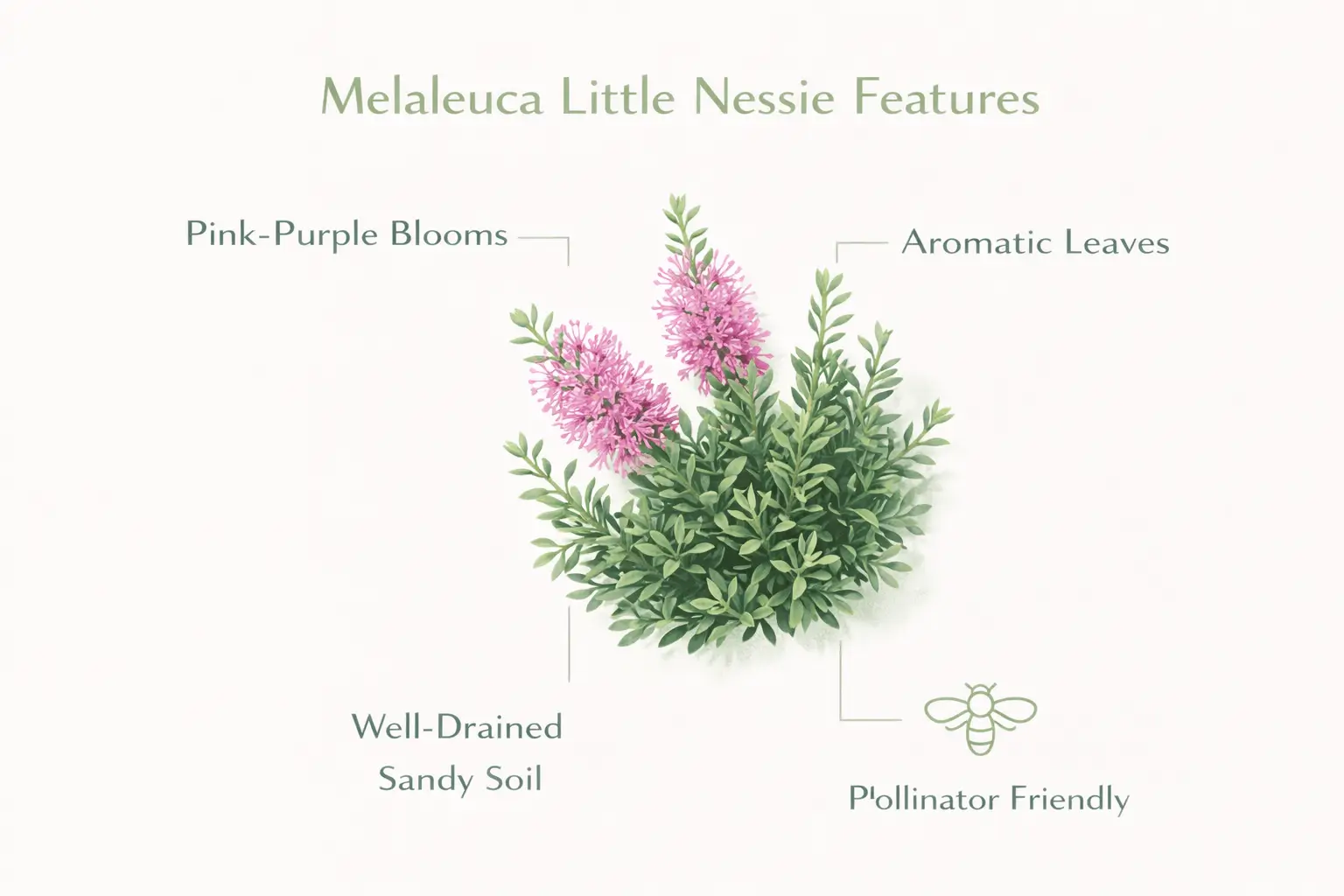
Melaleuca Little Nessie is primarily valued for its ornamental flowering and fine-textured foliage.
- Vibrant pink to purple bottlebrush flowers appear in clusters
- Blooms persist from spring through summer
- Narrow, lance-shaped leaves with a subtle aromatic scent
- Dense foliage creates a neat, structured appearance
Seasonal Blooming Pattern
Flowering is most intense during warmer months, especially spring and early summer. Full sun exposure significantly enhances bloom density and color vibrancy, particularly in melaleuca pink and purple tones.
Plant Size
Mature Dimensions
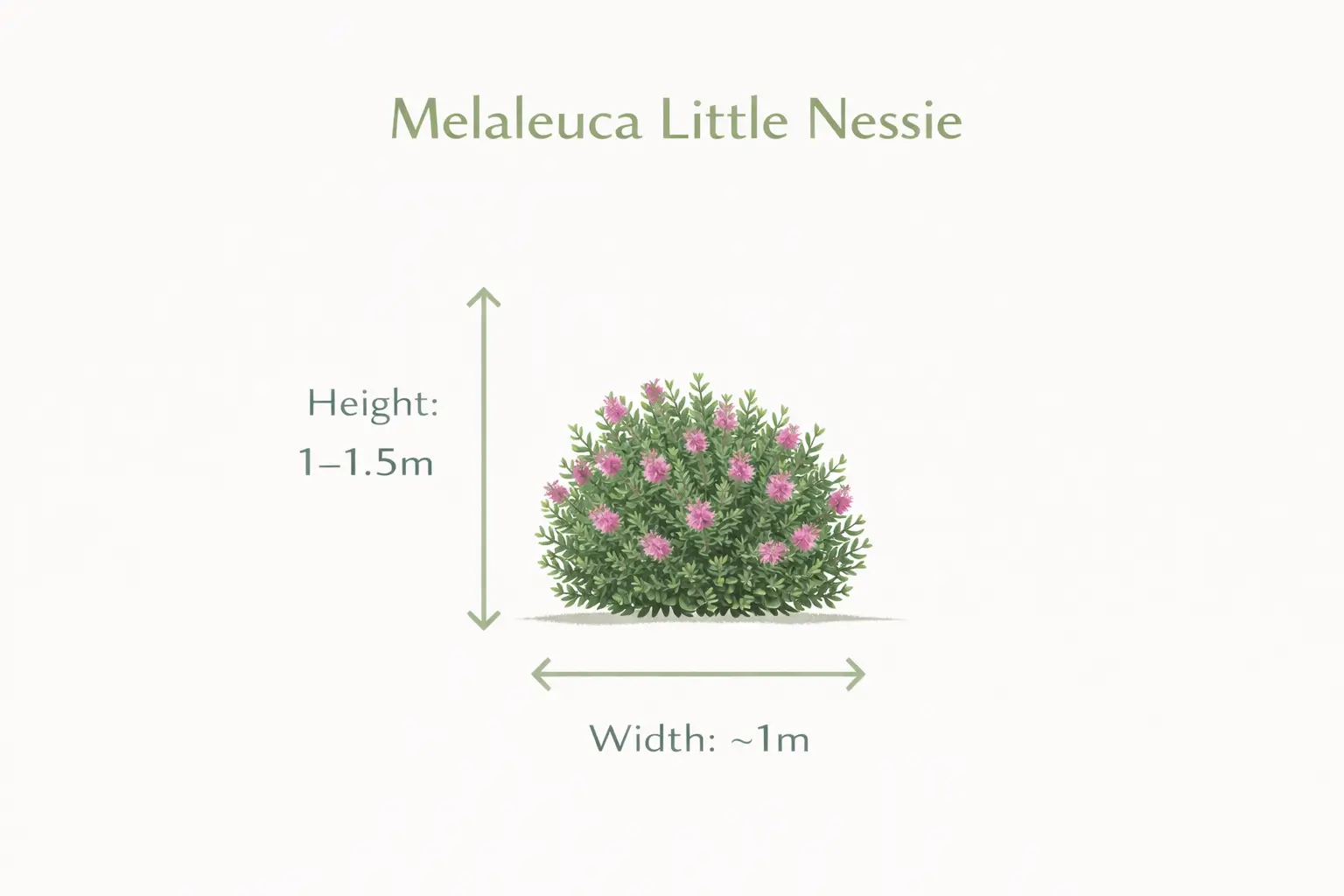
Melaleuca Little Nessie remains compact throughout its life cycle, making it suitable for small landscapes.
- Outdoor size: 1.2–1.5m tall × ~1m wide
- Container growth: Typically under 1m with pruning
- Naturally slower vertical expansion compared to standard Melaleuca nesophila
Factors Affecting Size
Plant size depends on environmental conditions and maintenance practices.
- Fertile soil encourages faster growth
- Regular pruning maintains compact shape
- Sunlight exposure influences overall vigor
Growth Rate
Development Speed
Melaleuca Little Nessie exhibits moderate growth under ideal conditions.
- Average growth: 30–50 cm per year
- Faster development in warm climates
- Slower growth during winter dormancy
Seasonal Growth Behavior
Growth peaks during spring and early summer when sunlight and temperatures are optimal. In shaded or cooler environments, growth becomes significantly slower and less dense.
Growing Conditions and Care Guide
Light Requirements
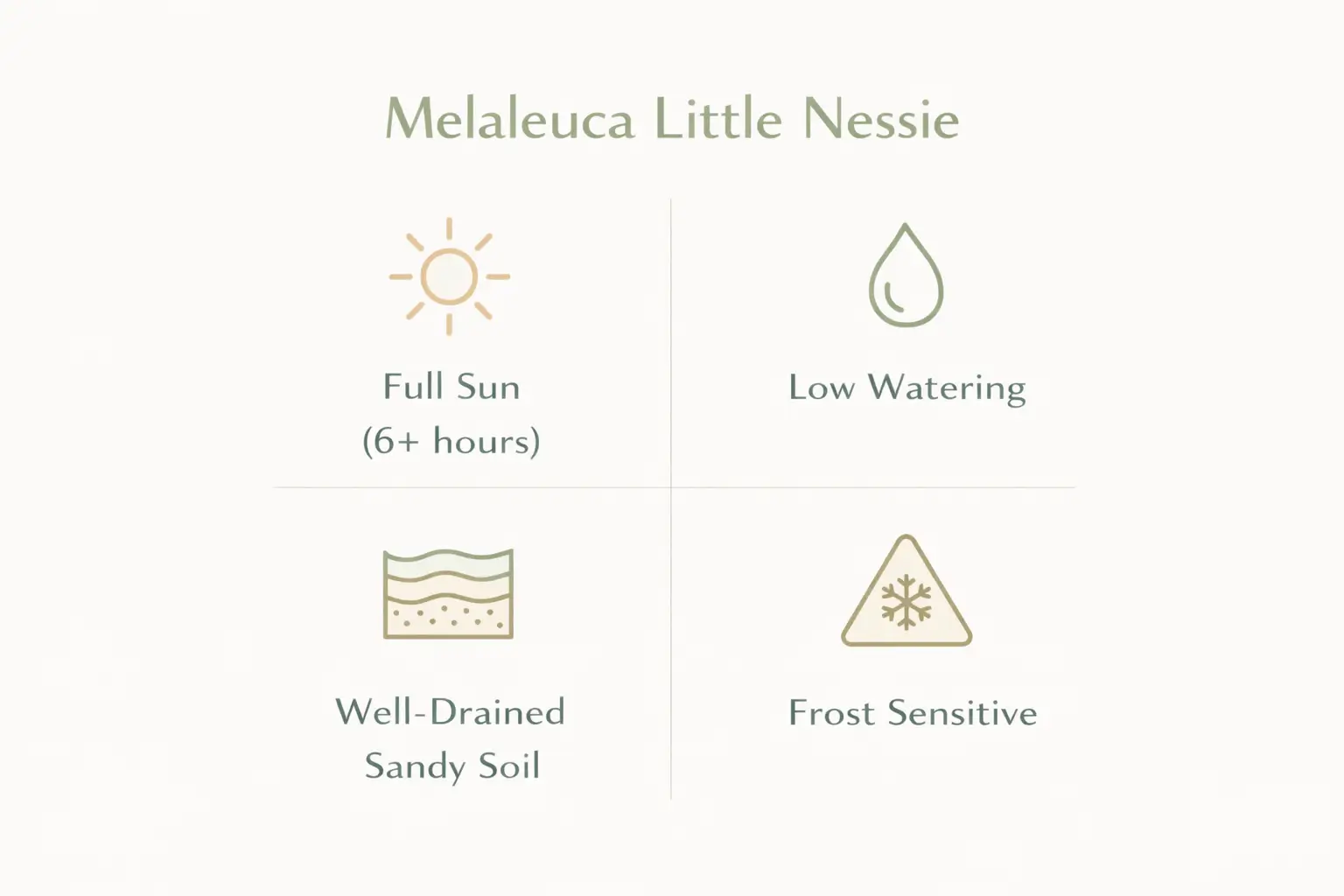
Full sun exposure is essential for healthy growth and flowering.
- Minimum 6 hours of direct sunlight daily
- Reduced flowering in shaded conditions
Watering Needs
Watering requirements change with plant maturity.
- Regular watering during first year
- Once established, highly drought-tolerant
- Avoid waterlogged soil conditions
Because of its strong drought tolerance, it is commonly included among plants for dry areas suited to low-water landscaping.
Soil Preferences
Well-drained soil is critical for long-term health.
- Prefers sandy or loamy soil
- Slightly acidic to neutral pH
- Poor drainage can cause root issues
Fertilizer Requirements
Minimal feeding is required due to its native adaptability.
- Apply slow-release native plant fertilizer annually
- Low-nitrogen formulations are recommended
Pruning Guidelines
Light pruning maintains density and shape.
- Tip-prune after flowering
- Avoid heavy cutting into old wood
- Encourages bushier growth
Climate Tolerance
Adapted to warm and coastal environments.
- USDA zones 9–11
- Tolerates coastal wind and salt exposure
- Frost-sensitive; requires protection in cold climates
Comparison: Melaleuca Little Nessie vs. Standard Melaleuca nesophila
| Feature | Little Nessie | Standard nesophila |
| Height | 1–1.5m | 2–3m |
| Hedge Use | Excellent for low hedges | Better for tall screens |
| Flower Density | Compact and dense | Larger but more spaced |
Using Melaleuca Little Nessie in Hedges and Landscapes
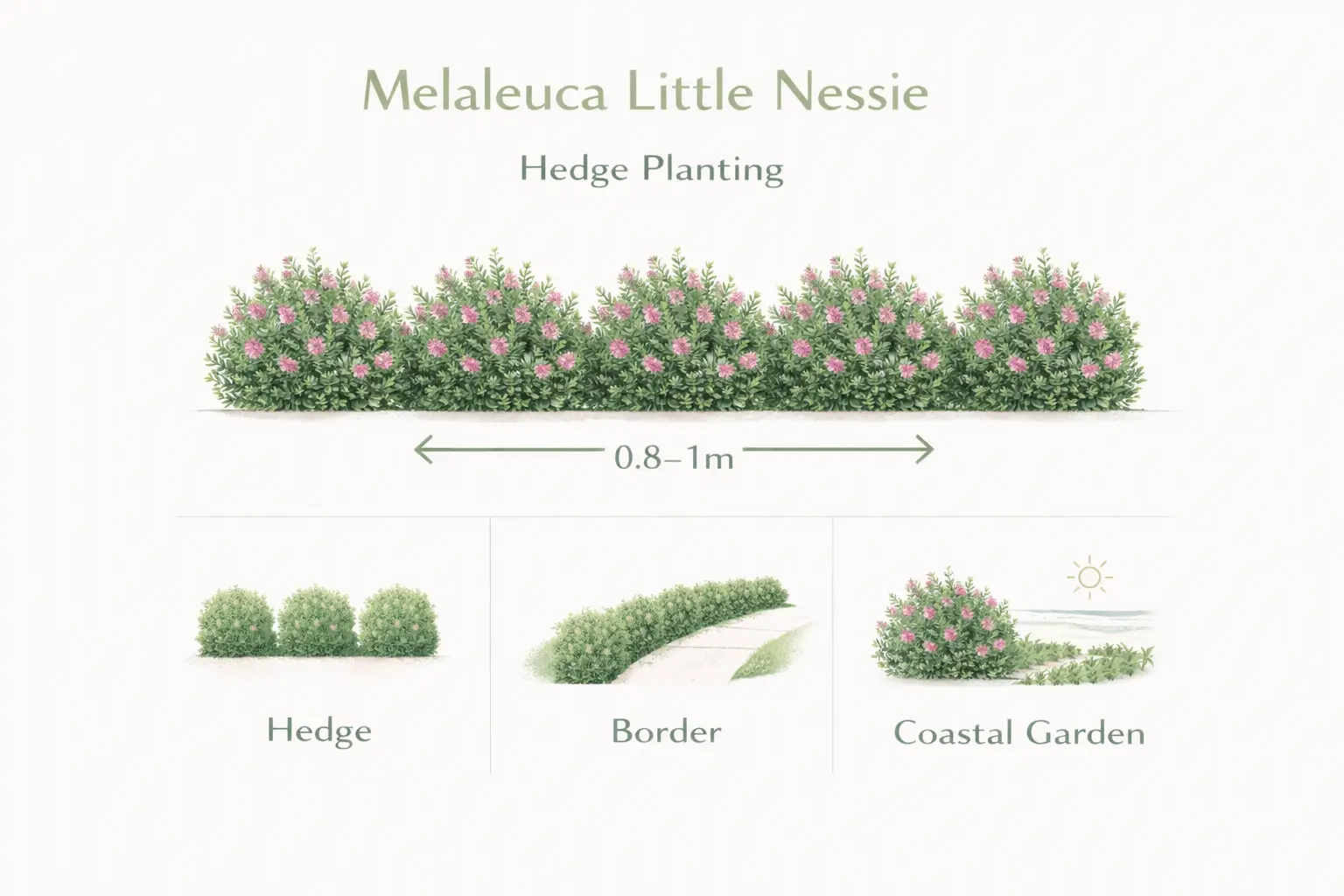
Hedge Design and Spacing
Melaleuca Little Nessie is widely used for low hedges and structured borders.
- Ideal spacing: 0.8–1m apart
- Forms dense, uniform screens when planted correctly
- Suitable for formal and informal hedge designs
It is also considered one of the most reliable small hedge plants for structured borders and low ornamental screens in residential gardens.
Companion Planting and Uses
It pairs well with other drought-tolerant ornamentals.
- Lavender for color contrast
- Grevilleas for pollinator attraction
- Works well in coastal and Mediterranean-style gardens
Landscape Applications
- Low hedging and edging
- Coastal garden design
- Decorative borders and mass planting
Melaleuca Little Nessie is often grouped with other tropical screening plants used for compact, low-maintenance garden privacy in modern landscape designs.
Common Problems and Troubleshooting
Yellow Leaves
Usually caused by excess moisture or poor drainage.
- Reduce watering frequency
- Improve soil drainage
- Avoid compacted soil conditions
Pests (Aphids and Minor Insects)
Occasionally affected by sap-sucking insects.
- Spray with water jet to remove pests
- Apply neem oil if infestation persists
- Improve airflow around plant
Slow Growth
Often linked to environmental limitations.
- Ensure full sun exposure
- Apply light fertilization in spring
- Check soil quality
Frost Damage
Sensitive to cold temperatures.
- Apply mulch around roots
- Protect young plants in winter
- Plant in sheltered locations
Beginner Mistakes to Avoid
- Overwatering leading to root rot
- Excess fertilizer causing weak growth
- Planting in shaded areas reducing flowering
Propagation and Varieties
Propagation Methods
Best propagated through semi-hardwood cuttings.
- Take cuttings in spring
- Use well-draining propagation mix
- Rooting success rate around 70% under ideal conditions
Related Cultivars
Closely related to other narrow or dwarf Melaleuca nesophila forms.
- Similar “narrow nessie” selections exist
- Shares traits with other honey myrtle varieties
Conclusion
Melaleuca Little Nessie is a highly adaptable dwarf shrub that combines compact growth with striking pink-purple bottlebrush flowers. Its resilience, drought tolerance, and low maintenance requirements make it ideal for modern landscaping, especially in small gardens and hedging applications. With proper sun exposure, light pruning, and well-drained soil, it delivers consistent ornamental value throughout the year.
Frequently Asked Questions
What is the mature size of Melaleuca Little Nessie?
It typically grows 1–1.5m tall and about 1m wide, remaining compact with light pruning.
How do I prune Little Nessie Melaleuca for a hedge?
Tip-prune after flowering to encourage dense growth while avoiding cutting into old wood.
Does Melaleuca nesophila Little Nessie tolerate drought?
Yes, once established it is highly drought-tolerant and requires minimal watering.
What causes purple flowers on this honey myrtle?
The color is genetic to the cultivar, and full sun enhances bloom intensity.
Can I grow Little Nessie plant indoors?
It can survive in very bright indoor conditions but performs best outdoors for flowering.