
Introduction
Red globe grape is a widely recognized table grape variety valued for its large size, firm texture, and mild sweetness. Unlike many modern seedless grapes, red globe grapes contain seeds and offer a more traditional grape-eating experience. They are cultivated across warm regions and are popular in both local markets and international trade. Beyond taste, these grapes are appreciated for their nutritional content, including vitamins, antioxidants, and hydration-supporting compounds. This article explores the characteristics, nutrition, plant growth, care requirements, and practical uses of red globe grapes in a structured, easy-to-understand format.
Quick Summary
- Red globe grapes are large, seeded table grapes with a firm texture and mild sweetness
- They contain vitamins, antioxidants, and natural sugars beneficial for overall health
- The plant grows as a vine and requires warm climates, sunlight, and structured support
- They are often compared with seedless grapes due to differences in size, texture, and seeds
What Is a Red Globe Grape (Definition & Origin)
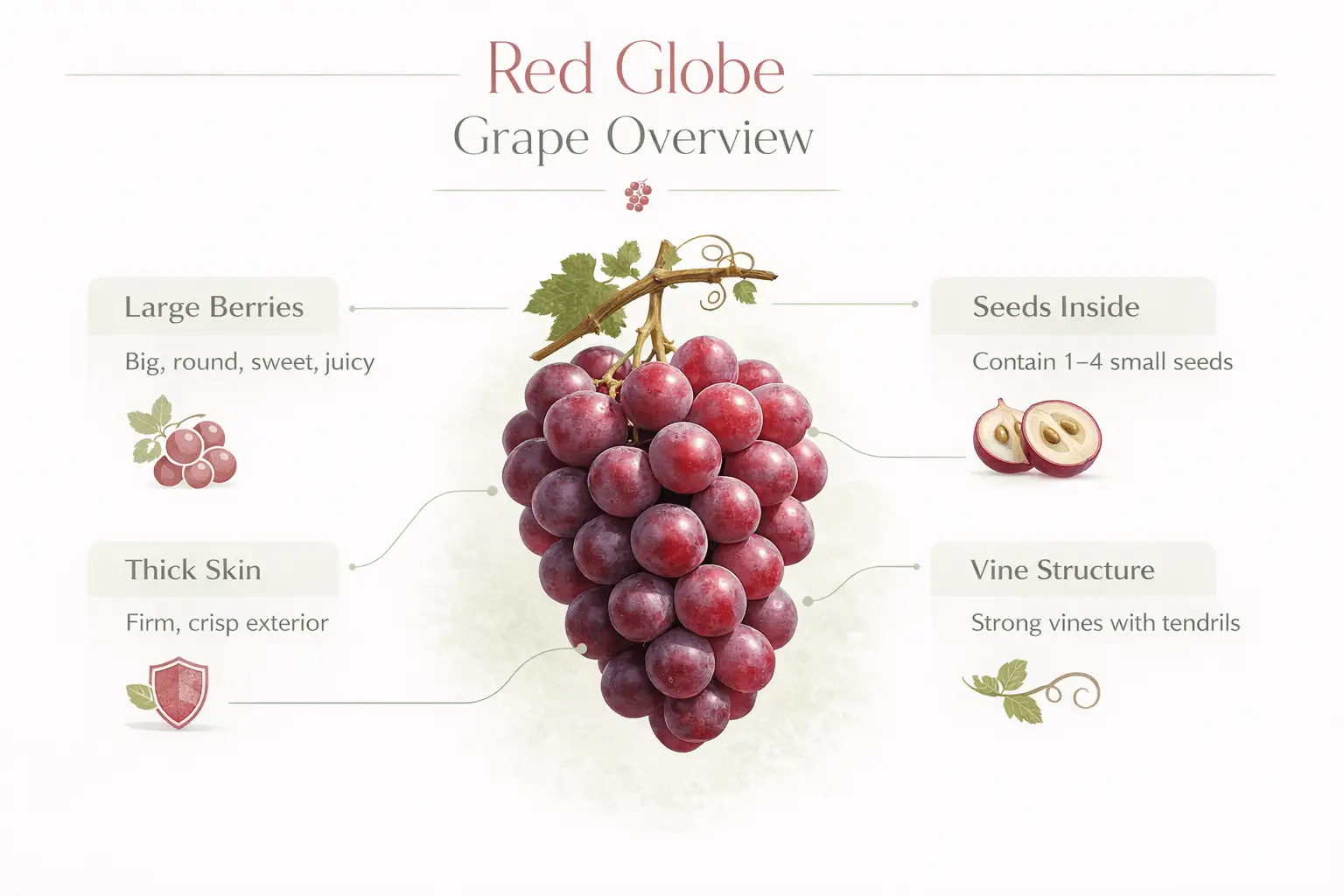
Red globe grape belongs to Vitis vinifera, the common grapevine species used for both table and wine grapes, widely cultivated across the world. As a red globe grape variety, it belongs to Vitis vinifera, the common grapevine species used for both table and wine grapes.
Red globe grapes originated through agricultural development programs and are now cultivated globally, especially in warm climates such as the United States, Chile, China, and Mediterranean regions.
Grapes are broadly classified into:
- Table grapes: Consumed fresh (e.g., red globe grapes)
- Wine grapes: Used for winemaking
Red globe grapes, often referred to as “grapes red globe,” are specifically grown for fresh consumption due to their size, appearance, and durability during transport.
Red Globe Grape Taste, Texture, and Sweetness Profile
Red globe grape taste is mild, slightly sweet, and refreshing. Unlike very sugary varieties, red globe grapes offer a balanced sweetness that is not overpowering.
Are red globe grapes sweet?
They are moderately sweet but generally less sweet than many seedless grape varieties.
Key texture characteristics:
- Thick, firm skin
- Crunchy flesh
- Large berry size
Compared to seedless grapes:
- Seeded grapes like red globe often feel more substantial
- Seedless grapes are softer and easier to eat
This combination of firmness and mild sweetness makes red globe grapes suitable for those who prefer less sugary fruit.
Red Globe Grapes Nutrition and Calories
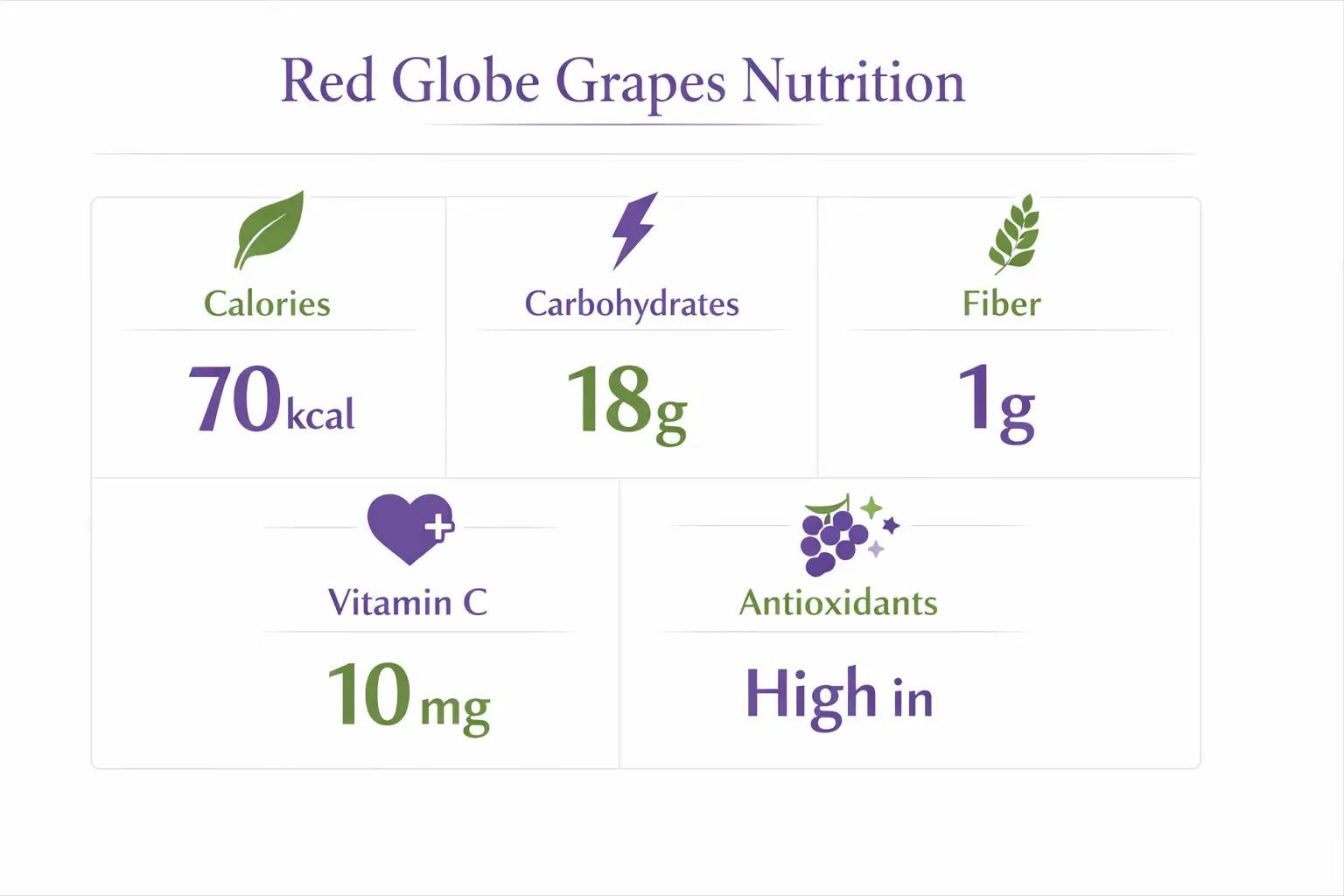
Red globe grapes nutrition includes essential vitamins, natural sugars, and antioxidants that support overall health.
They are a source of:
- Vitamin C
- Antioxidants (such as polyphenols)
- Hydrating water content
- Natural carbohydrates
Nutritional Breakdown per 100g
| Nutrient | Amount |
| Calories | ~69 kcal |
| Carbohydrates | ~18 g |
| Fiber | ~1 g |
| Vitamin C | ~10 mg |
| Antioxidants | Present |
Red globe grape calories are relatively moderate, making them a suitable snack option when consumed in balanced portions.
Health Benefits of Red Globe Grapes
Red globe grapes benefits come from their nutrient composition and antioxidant properties.
Key health benefits:
- Antioxidant support: Helps reduce oxidative stress
- Heart health support: May support cardiovascular function
- Hydration and energy: High water and natural sugar content
General grape benefits also include:
- Contribution to daily vitamin intake
- Support for overall metabolic function
These benefits highlight the value of grapes vitamins and natural plant compounds in a balanced diet.
If you are interested in exploring other nutrient-rich fruits, you can also read Aguaje Fruit Benefits for comparison with tropical fruit nutrition.
Seeds in Red Globe Grapes: Edibility and Facts
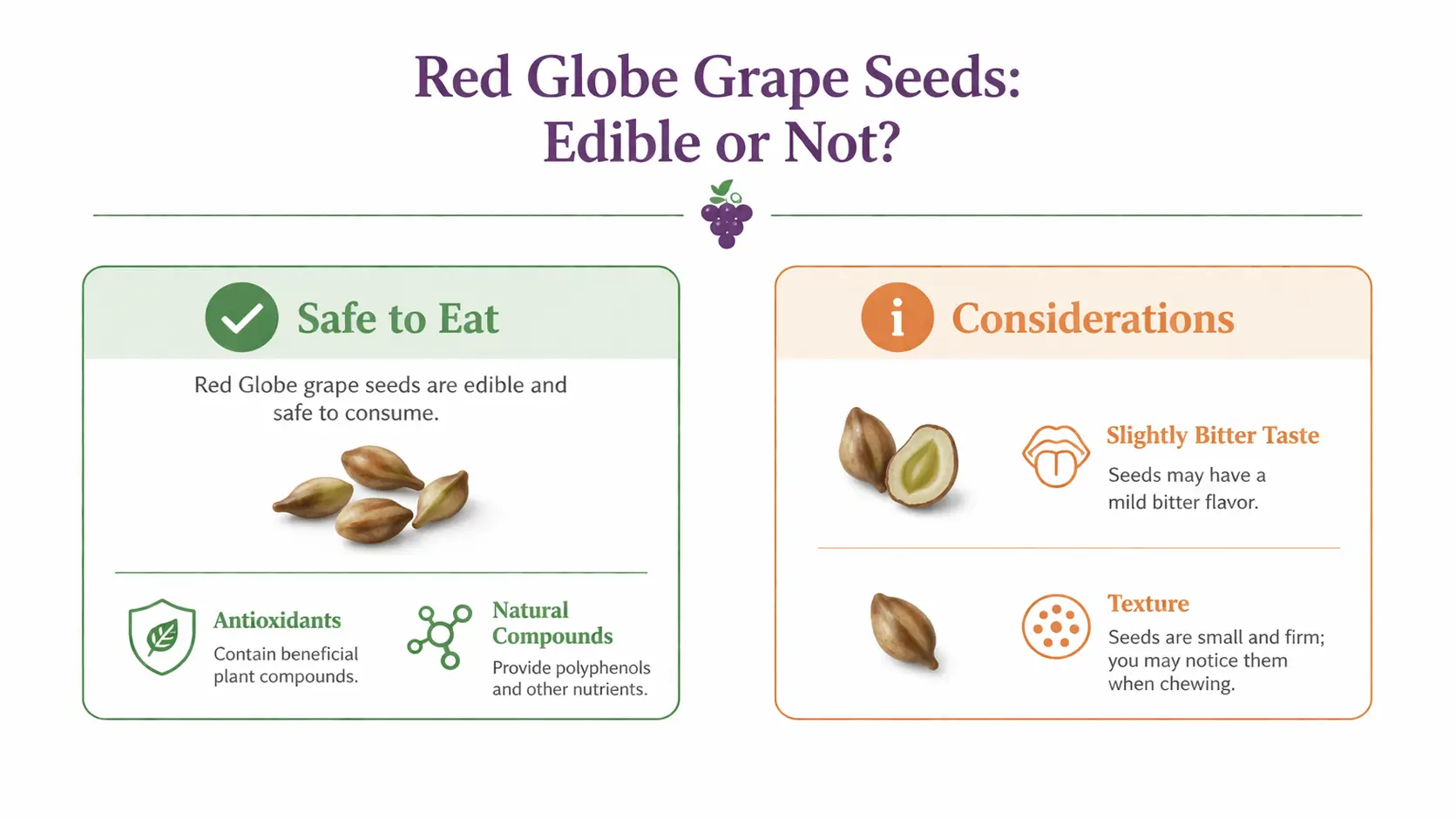
Are red globe grape seeds edible?
Yes, red globe grape seeds are edible and safe to consume.
Key facts:
- Seeds contain beneficial compounds like antioxidants
- They have a slightly bitter taste
- They are commonly swallowed or chewed
Red globe grapes are naturally seeded globe grapes, not seedless. Some confusion exists due to modern breeding, but traditional red globe grapes contain seeds.
Red Globe Grape Plant and Vine Structure
The red globe grape plant grows as a climbing vine, typical of grapevine plants in the Vitis genus.
Structure includes:
- Woody stems (vines)
- Tendrils for climbing
- Broad leaves
- Clusters of fruit
Grape vines require support systems such as trellises to grow effectively and produce high-quality fruit.
Plant Size and Growth Characteristics
Red globe grape vines can grow extensively under proper conditions.
Typical characteristics:
- Height: Can reach several meters when supported
- Spread: Wide lateral growth along trellises
Factors influencing size:
- Soil quality
- Sunlight exposure
- Water availability
Proper support systems are essential to manage vine growth and optimize fruit production.
Growth Rate and Seasonal Development
Red globe grape vines grow at a moderate to fast rate depending on environmental conditions.
Seasonal cycle:
- Spring: Rapid vegetative growth
- Summer: Flowering and fruit development
- Late summer to fall: Harvest period
Temperature and sunlight play a critical role in fruit quality and sugar development.
Care Guide for Red Globe Grape Vine
Red globe grape vine care focuses on maintaining balanced growth and fruit quality.
Key requirements:
- Water: Regular but not excessive
- Light: Full sun exposure
- Soil: Well-draining soil
- Pruning: Essential for fruit quality
Additional care practices:
- Fertilize during the growing season
- Ensure proper airflow to prevent disease
A common mistake is overwatering, which can lead to root issues and poor fruit development.
Common Problems and Growing Mistakes
Red globe grape vines can face several common issues.
Problem → Cause → Solution:
- Low sweetness → lack of sunlight → increase sun exposure
- Root rot → overwatering → improve drainage
- Pest damage → lack of monitoring → use organic pest control
- Weak growth → poor soil nutrition → apply balanced fertilizer
Regular observation helps prevent most problems early.
Red Globe Grapes vs Seedless Grapes
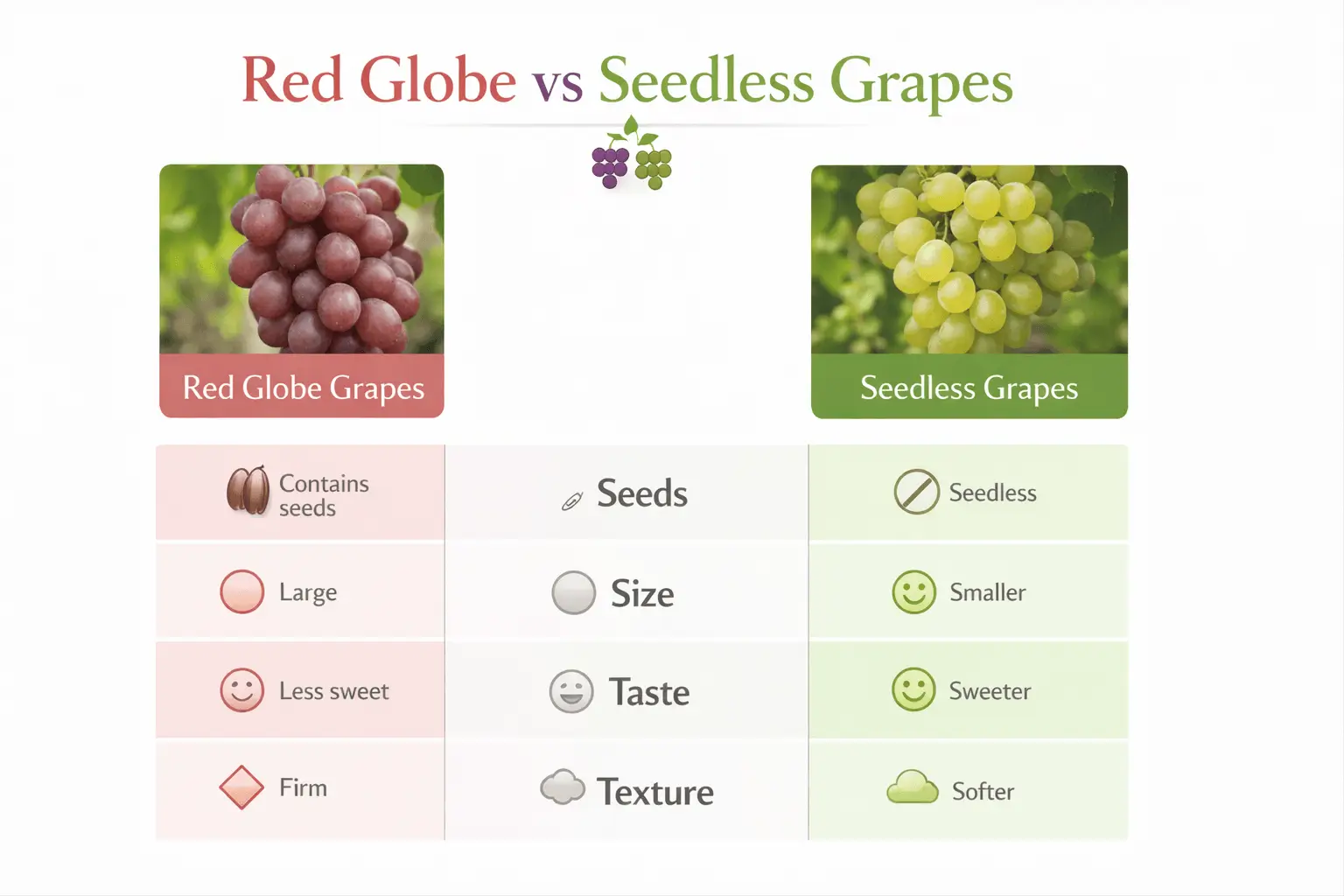
Red globe grapes differ significantly from seedless varieties.
Comparison Table
| Feature | Red Globe Grapes | Seedless Grapes |
| Seeds | Present | Absent |
| Size | Large | Medium |
| Taste | Mild sweet | Often sweeter |
| Texture | Firm | Softer |
This comparison highlights differences in convenience, taste, and eating experience. Red globe grapes are often compared with other table varieties, and for a deeper understanding of differences in size, texture, and sweetness, you can explore Black Finger Grapes.
Practical Considerations: Availability and Buying Factors
Red globe grapes price varies depending on region, season, and quality.
Key considerations:
- Typically available in warm seasons
- Sold in local markets, grocery stores, and farms
- Price per kg fluctuates based on supply
When considering where to buy red globe grapes:
- Choose fresh produce markets
- Look for locally sourced options when available
Beginner Tips and Usage Insights
To get the best experience from red globe grapes:
When to eat:
- Best consumed when fully ripe for optimal sweetness
Storage tips:
- Refrigerate to maintain freshness
- Avoid washing until ready to eat
How to select quality grapes:
- Firm texture
- Bright, even color
- No wrinkles or shriveling
These simple practices improve both taste and shelf life.
For those who prefer alternative consumption methods, you can also explore Fruit Juice Benefits Chart to understand how grapes compare in juice form.
Conclusion
Red globe grape is a distinctive table grape variety known for its large size, firm texture, and mild sweetness. It provides nutritional value through vitamins, antioxidants, and natural sugars while also offering horticultural benefits as a vine plant. Understanding its growth requirements, seed structure, and comparison with seedless grapes helps users make informed choices. Whether consumed fresh or grown at home, red globe grapes remain a reliable and balanced fruit option.
FAQs
What makes red globe grapes different from other grapes?
They are larger, seeded, and have a firmer texture compared to most seedless varieties.
Are red globe grape seeds safe to eat?
Yes, red globe grape seeds are edible and contain beneficial compounds, though they may taste slightly bitter.
How sweet are red globe grapes compared to other grapes?
They are mildly sweet and generally less sugary than many seedless grape varieties.
What nutrients are found in red globe grapes?
They contain vitamins, antioxidants, natural sugars, and hydration-supporting compounds.
Can red globe grapes be grown at home?
Yes, they can be grown as a vine plant with proper sunlight, pruning, and well-drained soil conditions.