
Introduction
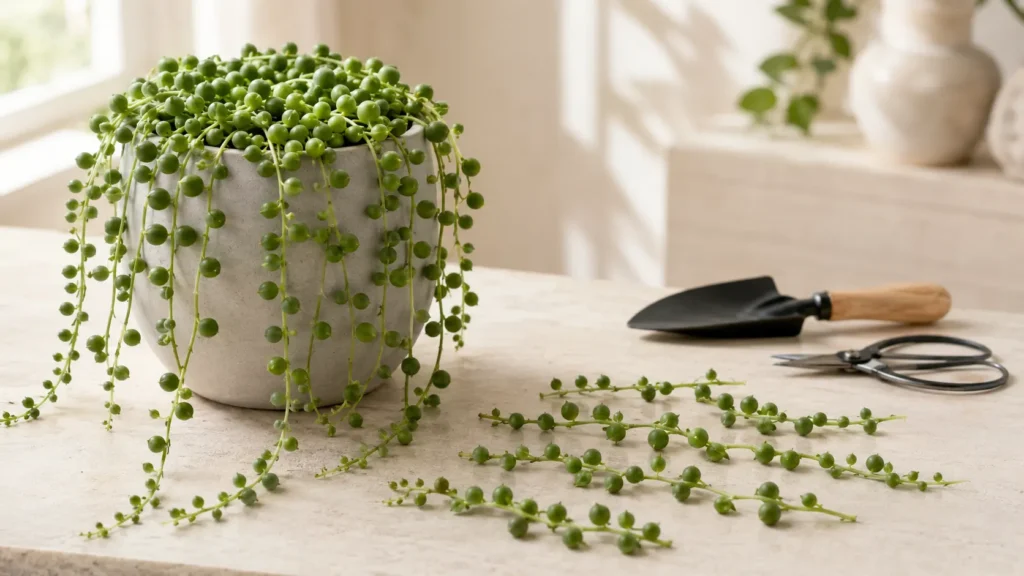
String of pearls propagation is the process of creating new plants from an existing string of pearls succulent through methods such as stem cuttings. String of pearls, scientifically known as Senecio rowleyanus (now often classified as Curio rowleyanus), is a trailing succulent recognized for its round, bead-like leaves. String of pearls, scientifically known as Senecio rowleyanus and now classified as Curio rowleyanus, is a trailing succulent recognized for its round, bead-like leaves. The plant’s botanical classification and characteristics are described in more detail on Curio rowleyanus (String of Pearls) Wikipedia. Propagation allows growers to multiply plants, restore thin growth, and create fuller displays without purchasing new plants. This guide explains how to propagate string of pearls using soil, water, and perlite methods while covering timing, care requirements, and common mistakes. String of pearls propagation is one part of broader indoor plant care knowledge, including plant benefits, maintenance routines, and growing guides covered in our complete Plants Benefits and Guides resource.
Quick Summary
- String of pearls can be propagated using stem cuttings placed in soil, water, or perlite.
- Root development usually takes around 2–4 weeks when growing conditions are suitable.
- A single pearl can technically produce a new plant, but success is less reliable than stem cutting propagation.
- Bright indirect light, minimal watering, and well-draining soil improve propagation success.
What Is String of Pearls Propagation?
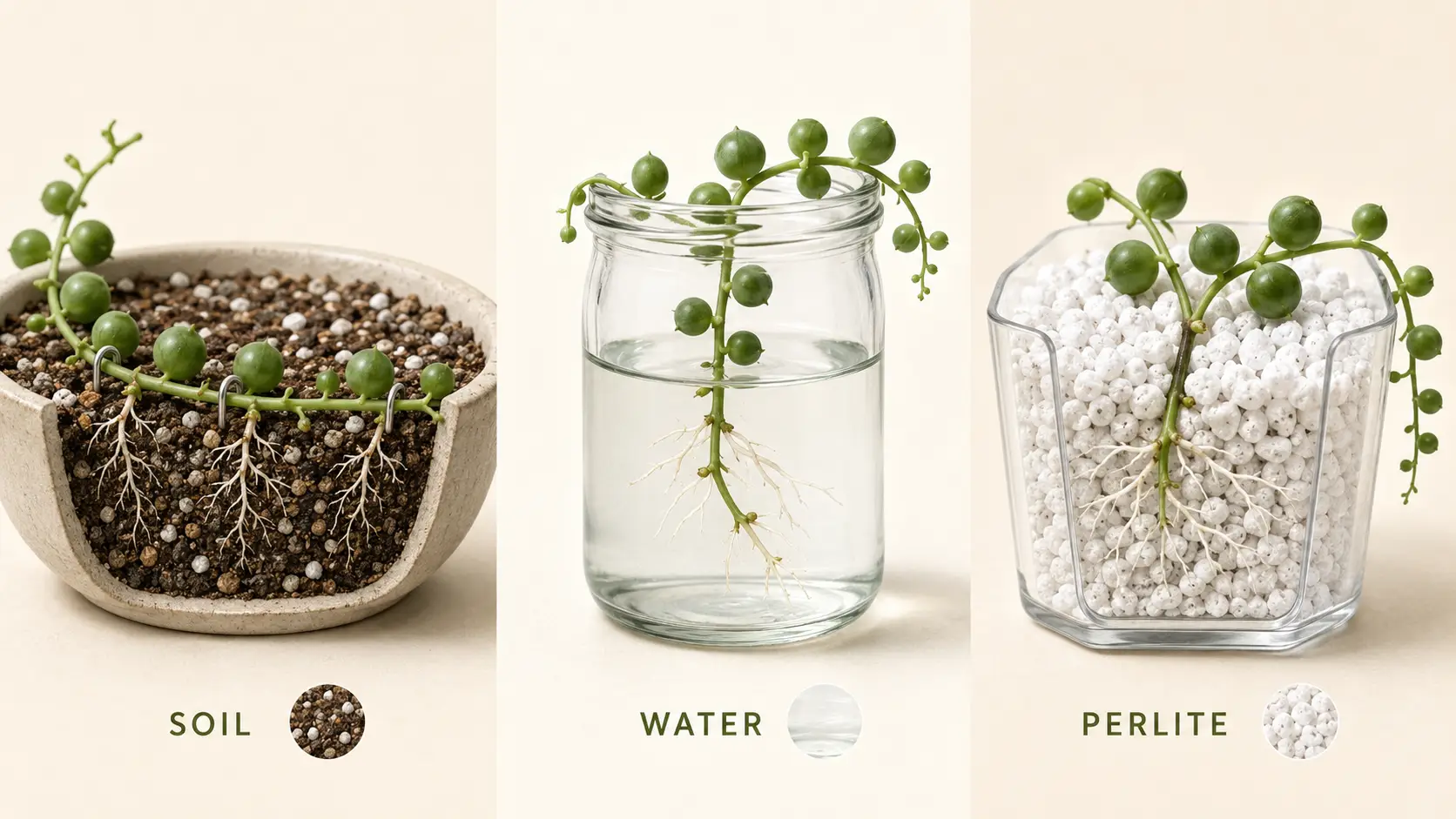
String of pearls propagation is the process of growing new plants from parts of an existing succulent. The most reliable method is vegetative propagation, where healthy stem cuttings develop new roots and continue growing as independent plants. For string of pearls, propagating through cuttings is preferred because each stem already contains growth points and can establish faster. Many houseplants can be multiplied through stem or division methods, and understanding different propagation techniques can help improve success with other indoor plants as well, such as learning how to propagate a prayer plant.
This type of propagation is also known as Senecio propagation or Curio rowleyanus propagation. Unlike seed propagation, stem propagation produces clones of the parent plant because the new growth develops from existing plant tissue. Before propagating, it is helpful to understand the plant’s basic growing requirements, including watering, light, and soil needs. Learn more in this complete Senecio rowleyanus care guide.
String of pearls cuttings can root through several mediums:
- Soil propagation
- Water propagation
- Perlite propagation
Each method works by encouraging the cut stem to produce roots while maintaining enough moisture without causing rot.
Why Propagate String of Pearls?
Propagating string of pearls helps gardeners create more plants while improving the appearance and health of existing growth.
Benefits include:
- Creating fuller, bushier hanging plants
- Replacing damaged or dying sections
- Sharing cuttings with other plant growers
- Saving money by multiplying existing plants
- Keeping backup plants in case the original plant experiences dieback
Propagation is also useful for rejuvenating older plants that have become long and sparse due to insufficient light or natural aging.
Materials Needed Before You Start
Before propagating string of pearls, prepare clean tools and a suitable rooting environment. Proper preparation reduces infection risks and improves rooting success.
Tools and materials needed:
- Clean scissors or pruning shears
- Healthy string of pearls stem cutting
- Small propagation container
- Well-draining succulent or cactus soil
- Water container for water propagation
- Perlite for alternative rooting
- Optional rooting hormone
- Clean workspace
Using sterilized cutting tools helps prevent bacteria and fungal problems that can damage fresh cuttings.
How to Propagate String of Pearls in Soil
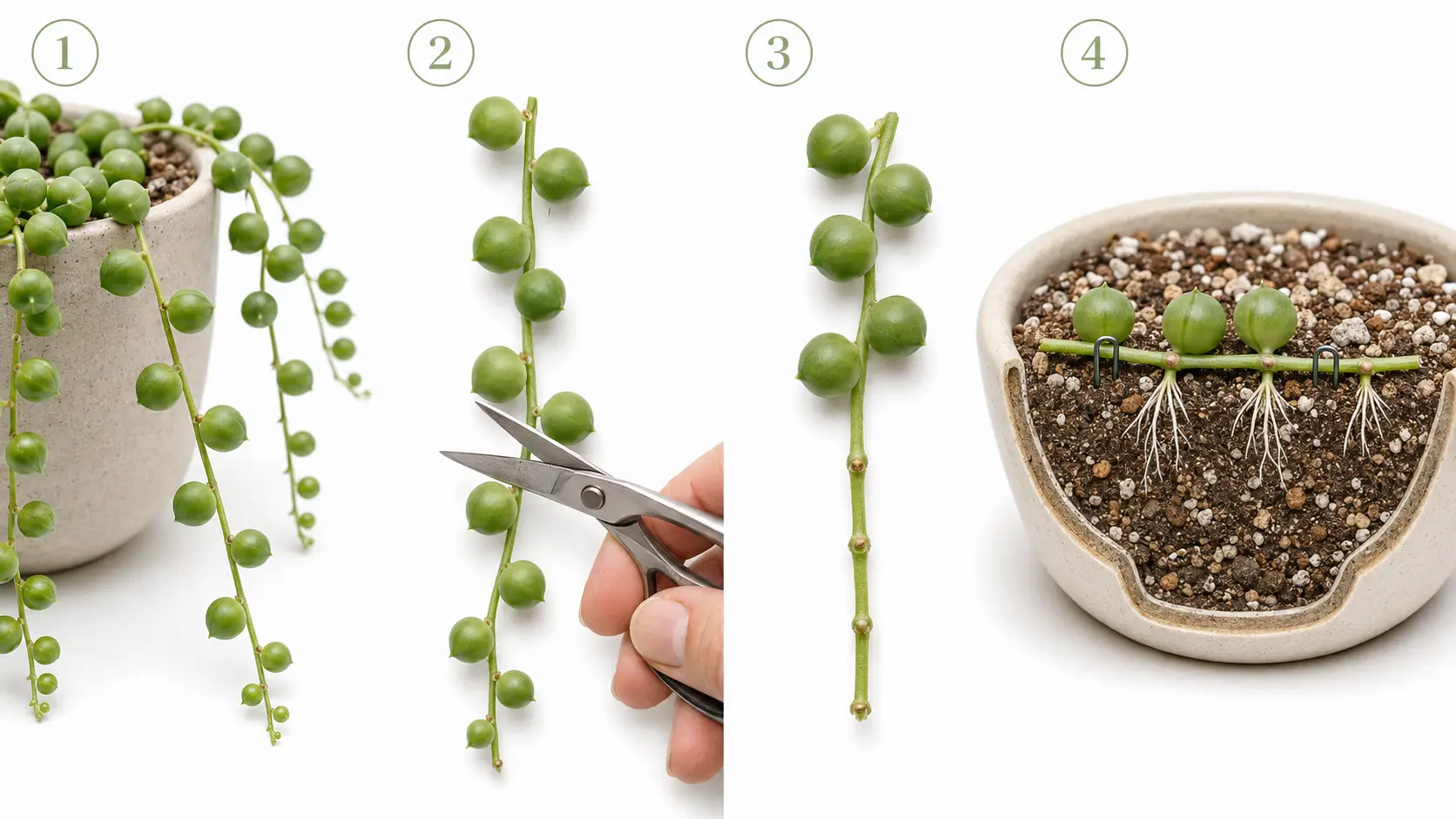
Soil propagation is one of the most common and beginner-friendly methods for string of pearls cuttings. It allows roots to develop directly in their final growing medium.
Steps:
- Select a healthy stem with several pearls attached.
- Cut a section approximately 3–5 inches long.
- Remove a few pearls from the lower part of the stem to expose the area that will contact soil.
- Allow the cutting to dry briefly so the cut surface can callus.
- Place the stem on the soil surface or gently bury the exposed section.
- Keep the soil slightly moist but avoid heavy watering.
- Place the container in bright indirect light.
The cutting develops roots from nodes along the stem. Once established, watering can gradually return to normal succulent care. Soil propagation is a popular method for many indoor plants because it allows roots to develop directly in their growing medium, similar to techniques used for other trailing houseplants like heartleaf philodendron.
Can You Propagate String of Pearls Just by Laying It in Soil?
Yes, string of pearls can be propagated by simply laying a cutting on soil because the stem can produce roots from areas touching the growing medium. This works because string of pearls stems often develop aerial roots that naturally attach to surfaces.
The laying method is useful because it reduces the risk of burying the cutting too deeply, which can trap moisture and cause rot. The burying method can also work, but only the lower stem section should be covered.
How to Propagate String of Pearls in Water
Water propagation allows growers to observe root development before transferring cuttings into soil.
Steps:
- Take a healthy stem cutting.
- Remove pearls from the lower stem section.
- Place only the bare stem portion into water.
- Keep leaves above the water line.
- Change the water regularly to keep it fresh.
- Move the cutting into succulent soil once roots are developed.
Water propagation is useful for monitoring progress, but the transition into soil should happen carefully to reduce transplant stress. Water propagation is also commonly used for other popular trailing houseplants, where growers monitor root development before transferring cuttings into soil.
Is It Better to Propagate in Soil or Water?
Soil propagation is generally better for stronger root adaptation because roots develop directly in their final environment. Water propagation is easier to monitor but may produce roots that need adjustment after transplanting.
| Method | Advantages | Limitations |
| Soil | Stronger soil-ready roots, lower transplant stress | Root progress is harder to see |
| Water | Easy monitoring, beginner-friendly | Requires careful transition to soil |
Both methods can succeed when moisture and light conditions are controlled.
How to Propagate String of Pearls in Perlite
Perlite propagation is a hybrid method that provides excellent drainage and moisture control. Perlite allows oxygen around developing roots while preventing excessive moisture buildup.
To propagate in perlite:
- Place prepared cuttings into slightly damp perlite.
- Keep the medium lightly moist.
- Provide bright indirect light.
- Transfer rooted cuttings into succulent soil after establishment.
This method is useful for growers who struggle with overwatering because perlite dries faster than traditional soil.
Can You Grow String of Pearls From a Single Pearl?
Yes, string of pearls can technically be grown from a single pearl, but success rates are lower compared with stem cuttings. A single pearl contains plant tissue, but it lacks the established nodes and stored energy found in a stem section.
If attempting single-pearl propagation:
- Use a healthy pearl.
- Place it on lightly moist, well-draining medium.
- Provide stable warmth and indirect light.
- Avoid excess water.
Growing from a leaf or pearl is slower and less reliable than using a complete cutting.
Comparison — Soil vs. Water vs. Perlite Propagation
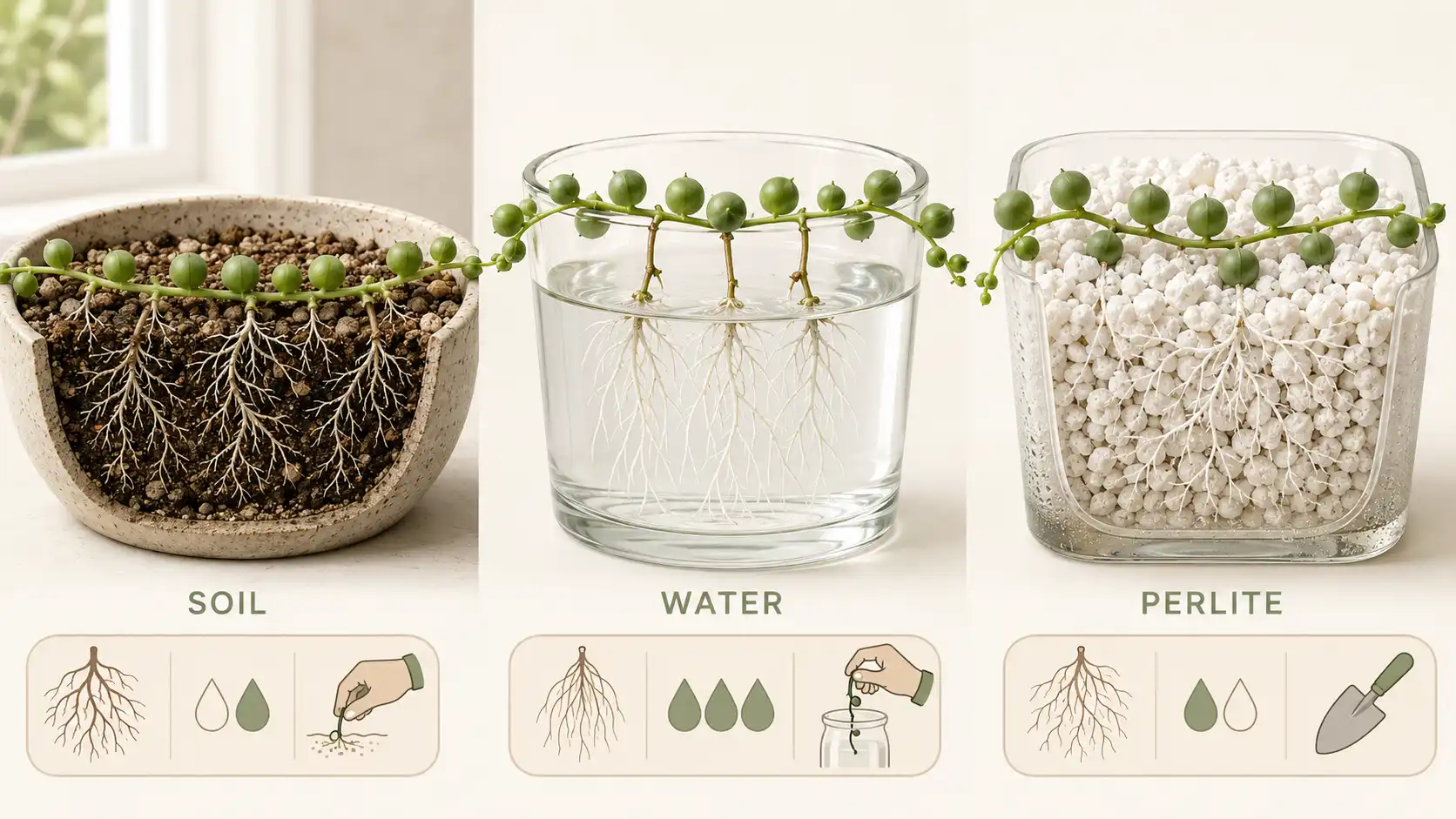
| Method | Root Time | Difficulty | Risk of Rot | Best For |
| Soil | 2–4 weeks | Easy | Low with proper watering | Beginners and permanent planting |
| Water | 2–4 weeks | Easy | Moderate if water becomes stagnant | Monitoring root growth |
| Perlite | 2–4 weeks | Moderate | Low | Better moisture control |
How Long Does It Take for String of Pearls to Root?
String of pearls usually takes 2–4 weeks to develop roots, although timing depends on temperature, light, season, and cutting health. Active growing conditions during spring and summer typically produce faster results.
Factors affecting rooting speed include:
- Warm temperatures
- Bright indirect light
- Healthy stem cuttings
- Proper moisture levels
- Reduced disturbance during rooting
What Helps Cuttings Root Faster?
To encourage faster rooting:
- Provide warmth without extreme heat.
- Place cuttings in bright indirect light.
- Use rooting hormone if desired.
- Maintain moderate humidity.
- Avoid moving cuttings frequently.
Overwatering is one of the main reasons cuttings fail before roots develop.
Best Time of Year to Propagate String of Pearls
The best time to propagate string of pearls is during spring and summer when the plant is actively growing. Warmer temperatures support faster root development and new growth.
September can still be suitable for taking cuttings in warm climates or indoors with adequate light. However, rooting may slow as temperatures decrease and the plant enters a slower growth period.
Common Mistakes When Propagating String of Pearls
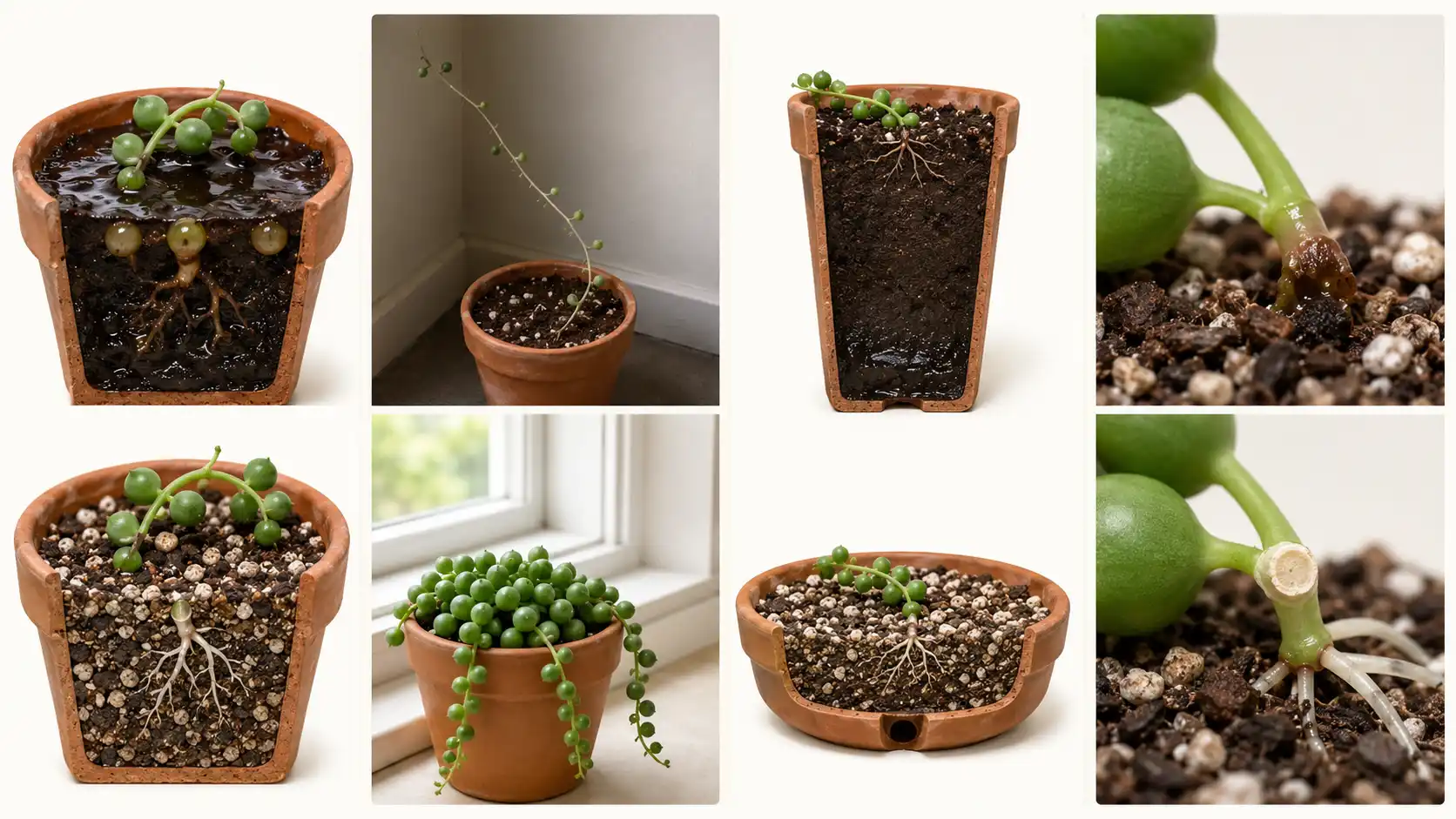
Overwatering cuttings: Excess moisture prevents oxygen around the stem and encourages rot. Use lightly moist soil and allow drying between waterings.
Wrong pot depth: Deep containers hold extra moisture and do not match the plant’s shallow root system. Use shallow, well-draining pots.
Insufficient light: Low light causes weak growth and poor rooting. Place cuttings near bright indirect light.
Skipping callusing time: Fresh cuts planted immediately may absorb too much moisture and rot. Allow cut ends to dry briefly before planting.
Do String of Pearls Like Deep or Shallow Pots?
String of pearls prefer shallow pots because they have relatively shallow root systems. A wide container with drainage holes allows roots to spread while preventing excess moisture retention.
Deep pots can increase the risk of wet soil staying around the roots for too long.
Can You Use Miracle-Gro on String of Pearls?
Miracle-Gro can be used on established string of pearls plants if applied carefully, but heavy feeding is not recommended during propagation. Young cuttings have limited root systems and can be damaged by excess fertilizer.
Use:
- Diluted fertilizer
- Low feeding frequency
- Fertilizer only after roots are established
Is It Illegal to Propagate Some Succulents?
Some patented succulent cultivars have legal restrictions on commercial propagation, especially plants protected under plant patents or similar protections. However, common string of pearls (Curio rowleyanus) is generally not restricted for normal home propagation.
Restrictions usually apply to selling or commercially reproducing protected cultivars rather than personal plant multiplication.
Caring for Newly Propagated String of Pearls
After rooting, string of pearls requires conditions similar to mature plants.
Watering:
Water infrequently and allow soil to dry between watering sessions. Newly rooted plants need less water than many houseplants.
Light:
Provide bright indirect light. Too little light causes stretched growth.
Soil:
Use a fast-draining succulent or cactus mix.
Fertilization:
Feed lightly during active growth after the plant becomes established.
Climate tolerance:
String of pearls prefers warm conditions and is usually grown indoors in cooler climates. Outdoor growth works in frost-free environments.
Content Differentiation — String of Pearls vs. Similar Trailing Succulents
| Plant | Propagation Similarity | Main Difference |
| String of Hearts | Stem cuttings work well | Has heart-shaped leaves and thinner vines |
| String of Bananas | Stem propagation is common | Leaves are curved like bananas |
| String of Turtles | Stem cuttings are used | Slower-growing patterned leaves |
| String of Raindrops | Similar succulent propagation | Larger teardrop-shaped leaves |
Like string of pearls, some other trailing houseplants such as peperomia species are valued for their compact growth habits and easy-care nature.
Conclusion
Learning how to propagate string of pearls is a simple process when the correct method and conditions are used. Soil, water, and perlite propagation can all produce successful results when cuttings receive proper light, controlled moisture, and enough time to develop roots. The most important factors are avoiding overwatering, choosing healthy cuttings, and propagating during active growth periods. With the right approach, string of pearls propagation is an achievable method for creating healthier, fuller plants.
FAQs
What is the fastest way to propagate string of pearls?
The fastest way to propagate string of pearls is usually through healthy stem cuttings placed in soil or perlite under warm conditions with bright indirect light. Stem cuttings root faster than single pearls.
Can I propagate string of pearls just by laying it in soil?
Yes, string of pearls can be propagated by laying a stem cutting on soil. The stems can develop roots from areas touching the growing medium, making this an effective method.
Can you grow string of pearls from a single pearl?
Yes, a single pearl can sometimes grow into a new plant, but success is lower because it lacks the advantages of a complete stem cutting with multiple nodes.
Can I propagate my string of pearls in water?
Yes, string of pearls can be propagated in water by placing the cut stem section into water until roots develop. The cutting should then be moved carefully into soil.
How long does it take for string of pearls to root?
String of pearls usually takes about 2–4 weeks to root, depending on temperature, light, moisture, and the health of the cutting.
Do string of pearls like deep or shallow pots?
String of pearls prefer shallow pots because their roots are small and need excellent drainage. Shallow containers reduce the risk of excess moisture.
Can you use Miracle-Gro on string of pearls?
Yes, Miracle-Gro can be used on established string of pearls plants when diluted properly, but young propagations should not be heavily fertilized until roots are developed.