
Introduction
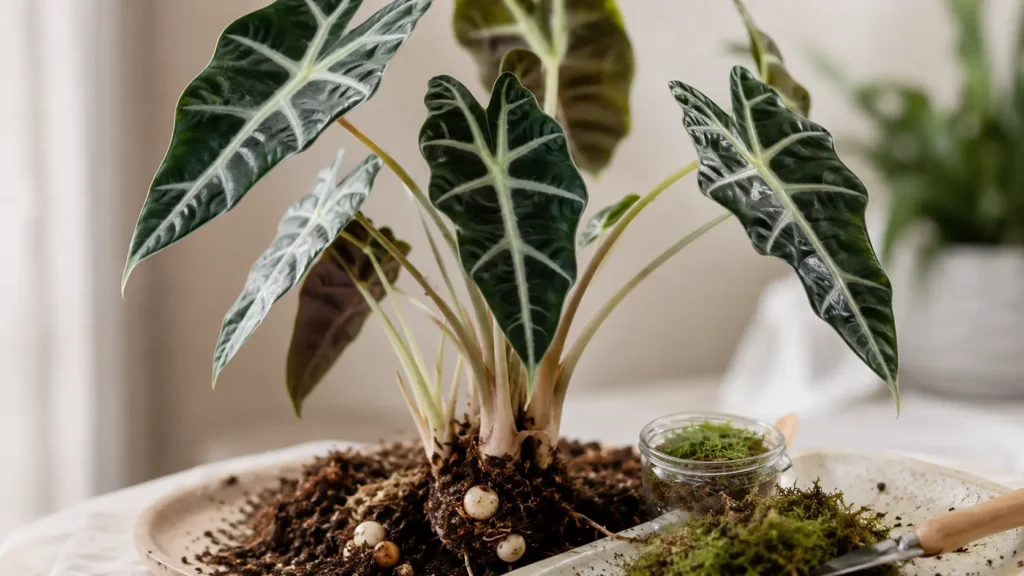
How to propagate Alocasia corms is one of the most searched topics among houseplant growers because these small underground structures can produce entirely new plants. Alocasia corms are energy-storing organs that sit dormant until the right conditions trigger growth. With the correct moisture, warmth, and orientation, they can sprout into healthy plants within weeks.
Successful propagation depends on choosing the right medium, maintaining humidity, and preventing rot. Whether using water, soil, perlite, or moss, understanding the corm’s biology is essential. This guide explains each method clearly so you can reliably grow new Alocasia plants from corms at home.
Quick Summary
- Alocasia corms can be grown in water, soil, perlite, or moss depending on experience level and environment.
- The “eye” of the corm must always face upward to ensure proper sprouting.
- Rooting typically takes 2–6 weeks depending on conditions like heat and humidity.
- Overwatering and poor drainage are the most common reasons for failure.
What Is an Alocasia Corm?
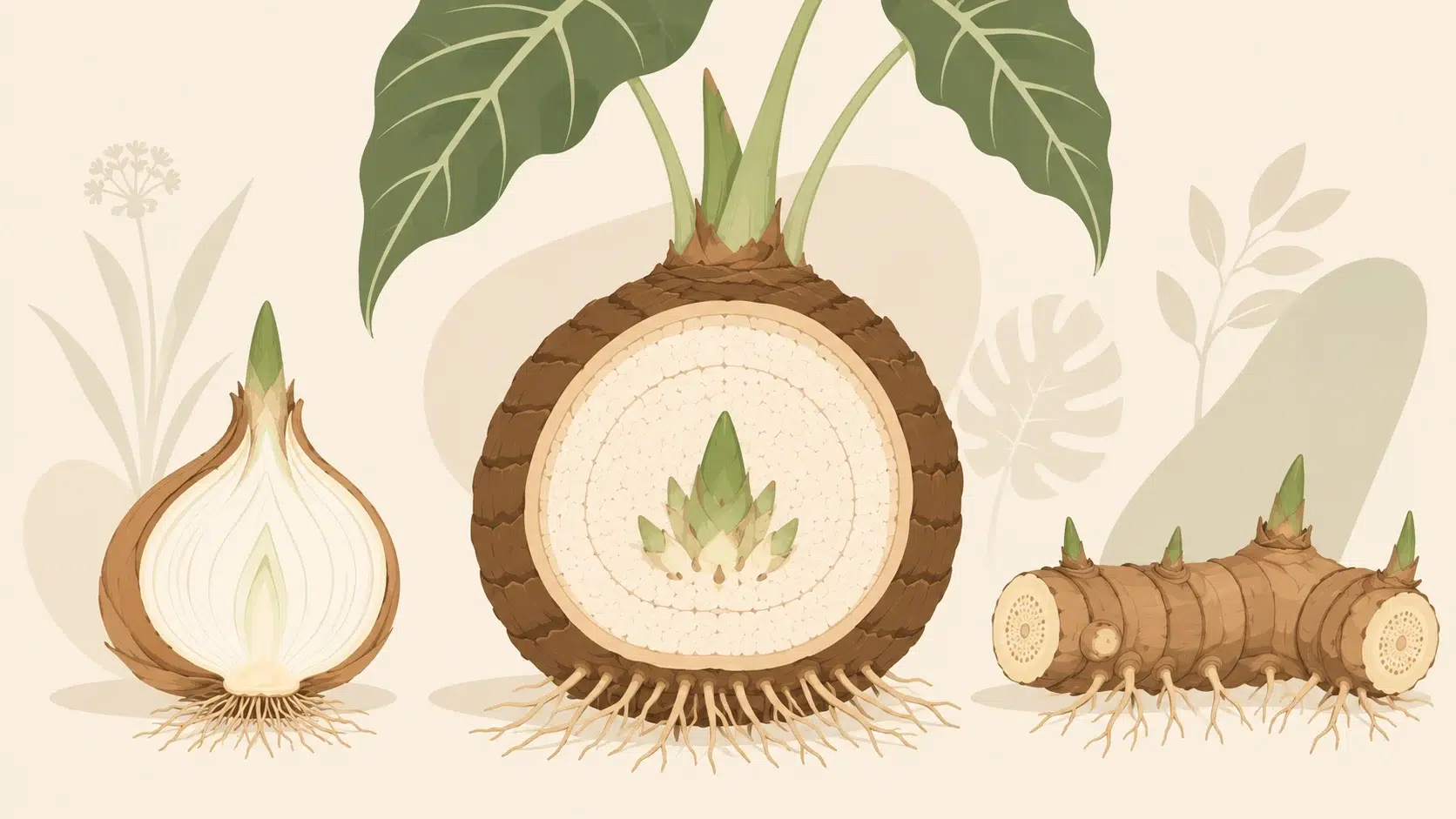
An Alocasia corm is a compact underground storage structure that contains nutrients and a dormant growth point capable of producing a new plant. Unlike seeds or cuttings, corms already contain the biological energy needed to sprout without fertilization or pollination. Understanding Alocasia species like in Alocasia Zebrina Care Guide: Complete Indoor Growing Tips helps explain why corm propagation is so effective in tropical foliage plants.
Corms are commonly found at the base of mature Alocasia plants or separated during repotting. They serve as survival organs that allow the plant to regenerate under favorable conditions. Alocasia belongs to the Araceae family, a group of tropical flowering plants commonly known as aroids. If you want to go deeper than a single-species overview, the Alocasia corm propagation reference on GitHub breaks down corm anatomy and growth-node behavior across multiple Alocasia cultivars. It’s a useful technical companion once you understand the basics covered here.
How Alocasia Corms Differ From Bulbs and Rhizomes
Alocasia corms differ from bulbs and rhizomes in both structure and growth behavior. Bulbs store energy in layered scales, while rhizomes grow horizontally underground. Corms, however, are solid, single-unit structures that store energy internally and sprout from a central growth node. This makes them more compact but highly effective for propagation.
What You Need Before Propagating Alocasia Corms
Before starting Alocasia corm propagation, preparation is critical to ensure high success rates. Healthy materials reduce rot risk and improve sprouting speed.
You will need:
- A firm, healthy corm without soft spots or mold
- A suitable growing medium (water, soil, perlite, or moss)
- A clear or opaque container depending on method
- A warm environment (70–85°F / 21–29°C) with bright indirect light
Temperature stability is especially important because Alocasia corms are sensitive to cold conditions and may remain dormant if too cool.
Should You Soak Alocasia Corms Before Planting?
Soaking Alocasia corms before planting is optional but often beneficial for rehydration and dormancy breaking. Submerging the corm in lukewarm water for 12–24 hours helps soften the outer layer and encourages early root activation. Proper lighting conditions, explained in Bright Indirect Light vs Direct Sunlight for Plants, are critical for activating dormant corm growth.
However, soaking should be avoided if the corm already shows signs of rot or mushiness. Healthy corms benefit most from a short soak followed by immediate planting in a moist but well-aerated medium.
Which Side of the Alocasia Corm Goes Up?
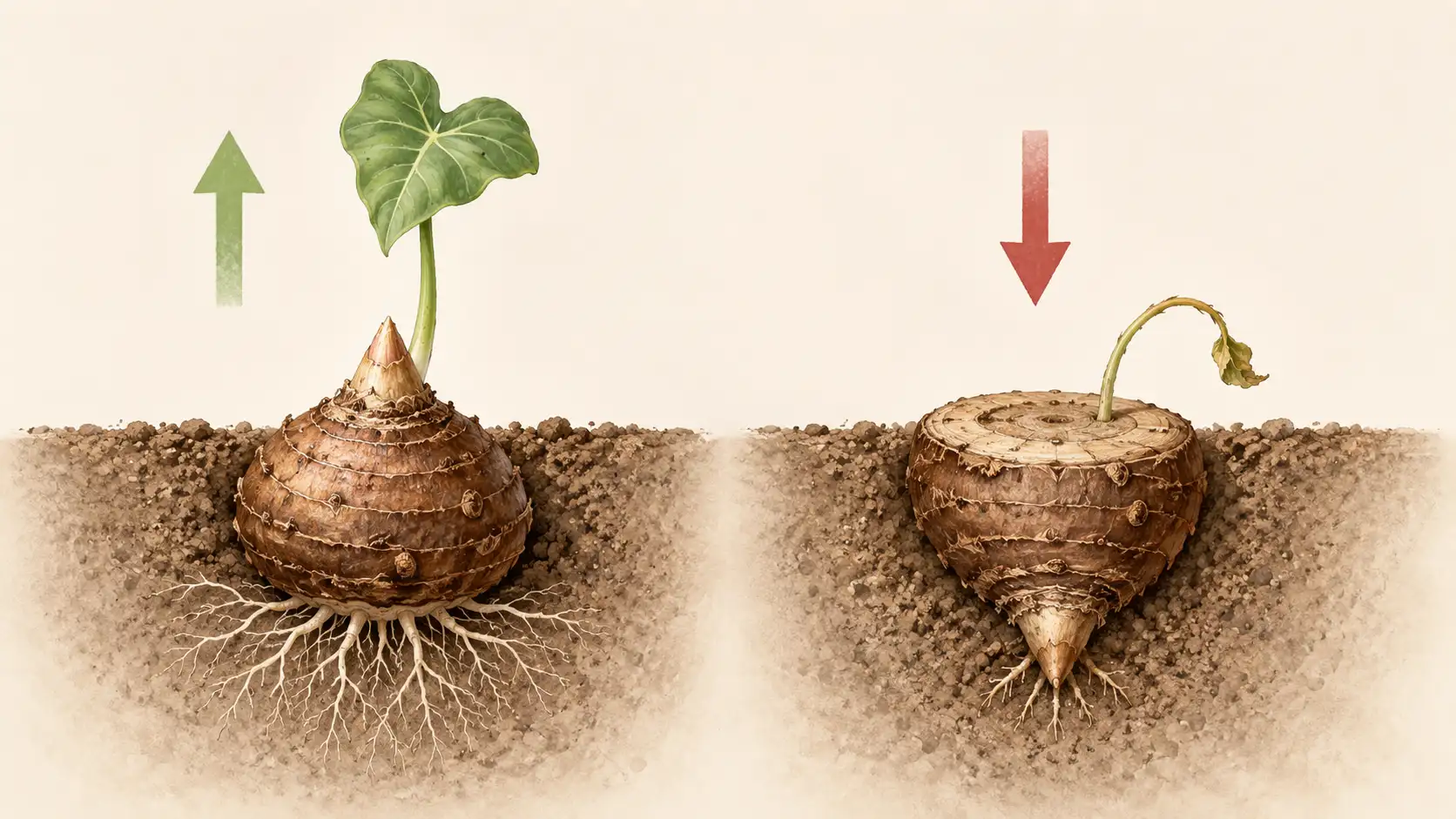
The correct planting orientation is essential for successful propagation. The pointed side of the corm, known as the “eye” or growth node, must always face upward.
Planting orientation rules:
- Eye (pointed end) → faces upward
- Flatter base → faces downward
- Incorrect placement → delays or prevents sprouting
Should You Peel an Alocasia Corm?
Peeling the outer layer of an Alocasia corm is optional. It can help expose hidden rot or damage, but healthy corms do not require peeling. Removing too much protective layer may increase dehydration risk, so peeling should only be done when inspecting questionable corms.
How to Propagate Alocasia Corms in Water
Water propagation is one of the most beginner-friendly methods for Alocasia corms because it allows full visibility of root development.
Steps:
- Place the corm in a container with the eye facing upward
- Ensure the base touches water lightly without full submersion
- Use clean water and replace it every 3–5 days
- Keep in warm, bright indirect light
How Long Does It Take an Alocasia Corm to Root in Water?
Alocasia corms typically take 2–4 weeks to develop roots in water under ideal conditions. Cooler temperatures or low light may slow the process significantly.
Can Alocasia Grow in Just Water Long-Term?
Water is suitable only for early rooting stages. While roots can develop in water, long-term growth is not ideal. Most growers transfer the plant to soil once roots are established for better nutrient access and stability.
How to Propagate Alocasia Corms in Soil
Soil propagation is closer to natural growing conditions and supports long-term development once sprouting begins. Similar soil and moisture balance principles are also used in Alocasia Sarian Care Guide: Light, Water & Growth.
Steps:
- Plant the corm shallowly with the eye just above or barely covered
- Use a well-draining aroid soil mix
- Keep soil lightly moist but never waterlogged
- Maintain warm temperatures and indirect light
Is Miracle-Gro Potting Mix Good for Alocasia?
Standard Miracle-Gro potting mix is not ideal on its own because it retains too much moisture. It becomes suitable only when amended with perlite, orchid bark, or similar materials to improve aeration and drainage.
How to Propagate Alocasia Corms in Perlite or Moss
Perlite and sphagnum moss are highly effective propagation mediums due to their balance of moisture retention and airflow. Maintaining humidity is essential, as also explained in How to Increase Humidity for Indoor Plants Without a Humidifier.
- Perlite: Reduces rot risk and promotes strong root development
- Sphagnum moss: Retains humidity and supports consistent moisture levels
Both methods are widely used for sensitive Alocasia varieties because they create stable rooting environments.
Water or Soil — Which Propagation Method Is Best?
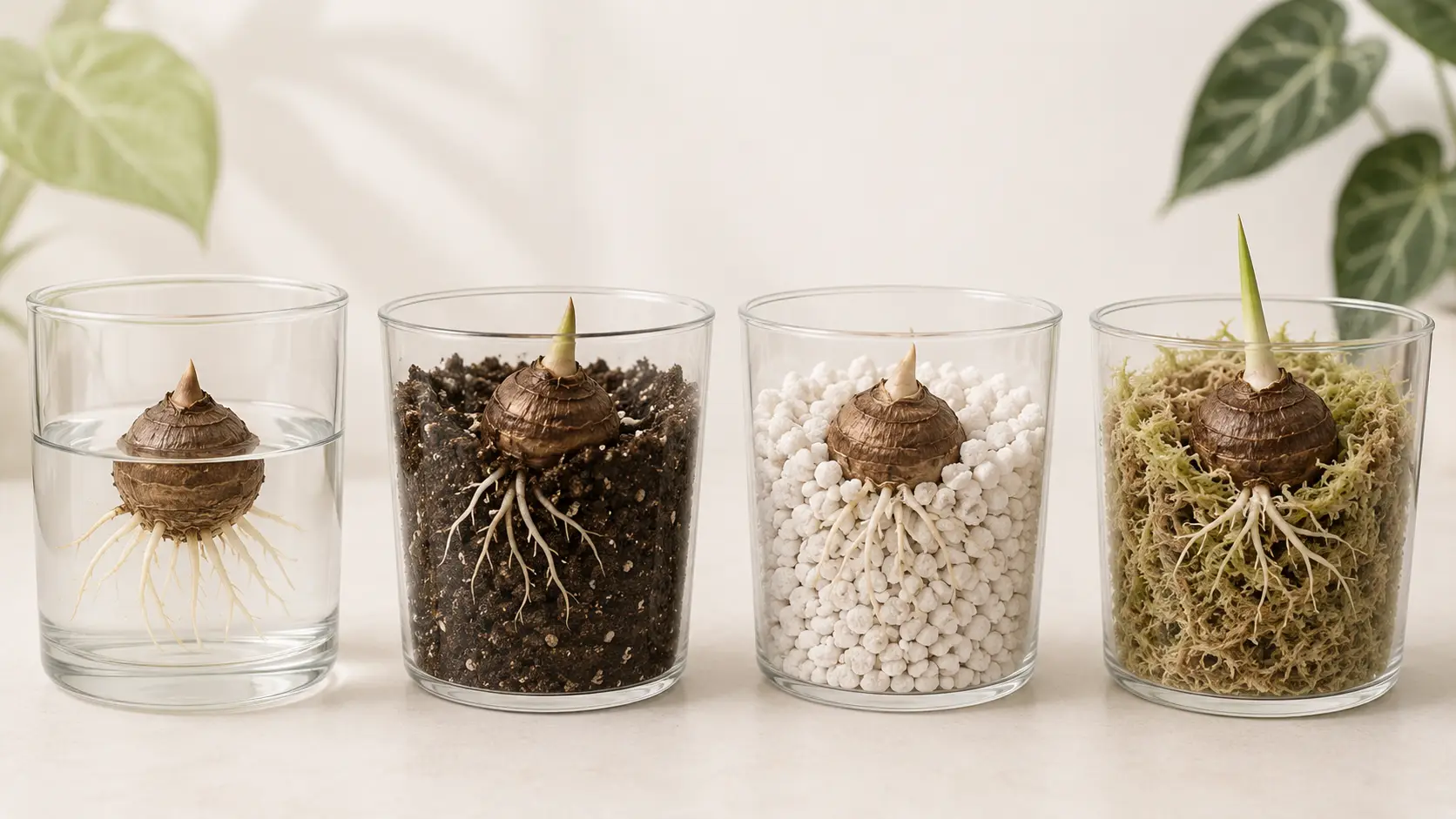
| Method | Root Visibility | Rot Risk | Speed | Best For |
| Water | High | Moderate | Fast | Beginners |
| Soil | None | Low | Moderate | Long-term growth |
| Perlite | High | Low | Fast | Preventing rot |
| Moss | Moderate | Low-Moderate | Moderate | Humidity lovers |
Water is best for observation, while perlite offers the best balance between safety and speed. Similar low-maintenance propagation approaches are seen in plants like Peperomia Rotundifolia Care Guide: 6+ Proven Easy Tips. If you’re tracking multiple corms across different methods, the Alocasia corm propagation tracking sheet offers a ready-made log template for recording rooting time, medium, and success rate. It’s a practical way to compare results across batches over time.
Potting and Watering Requirements for Alocasia Corms
Alocasia corms prefer shallow conditions rather than deep pots. A wide, shallow container helps prevent excess moisture buildup.
Key requirements:
- Use pots with drainage holes
- Prefer bottom watering to reduce crown rot risk
- Keep soil consistently moist but never soggy
- Avoid deep containers that trap water
Bottom watering allows roots to absorb moisture without exposing the top of the corm to excessive wetness.
Common Alocasia Corm Problems
Corm Rot
Caused by overwatering or poor drainage. Prevent by using airy soil and reducing water frequency.
No Sprouting After Weeks
Often due to incorrect orientation or non-viable corm. Check firmness and ensure the eye is facing upward.
Mold Growth in Water
Occurs when water is stagnant. Fix by changing water frequently and maintaining cleanliness.
Slow or Stalled Growth
Usually linked to low temperature or insufficient light. Move to a warmer, brighter location.
Beginner Mistakes When Propagating Alocasia Corms
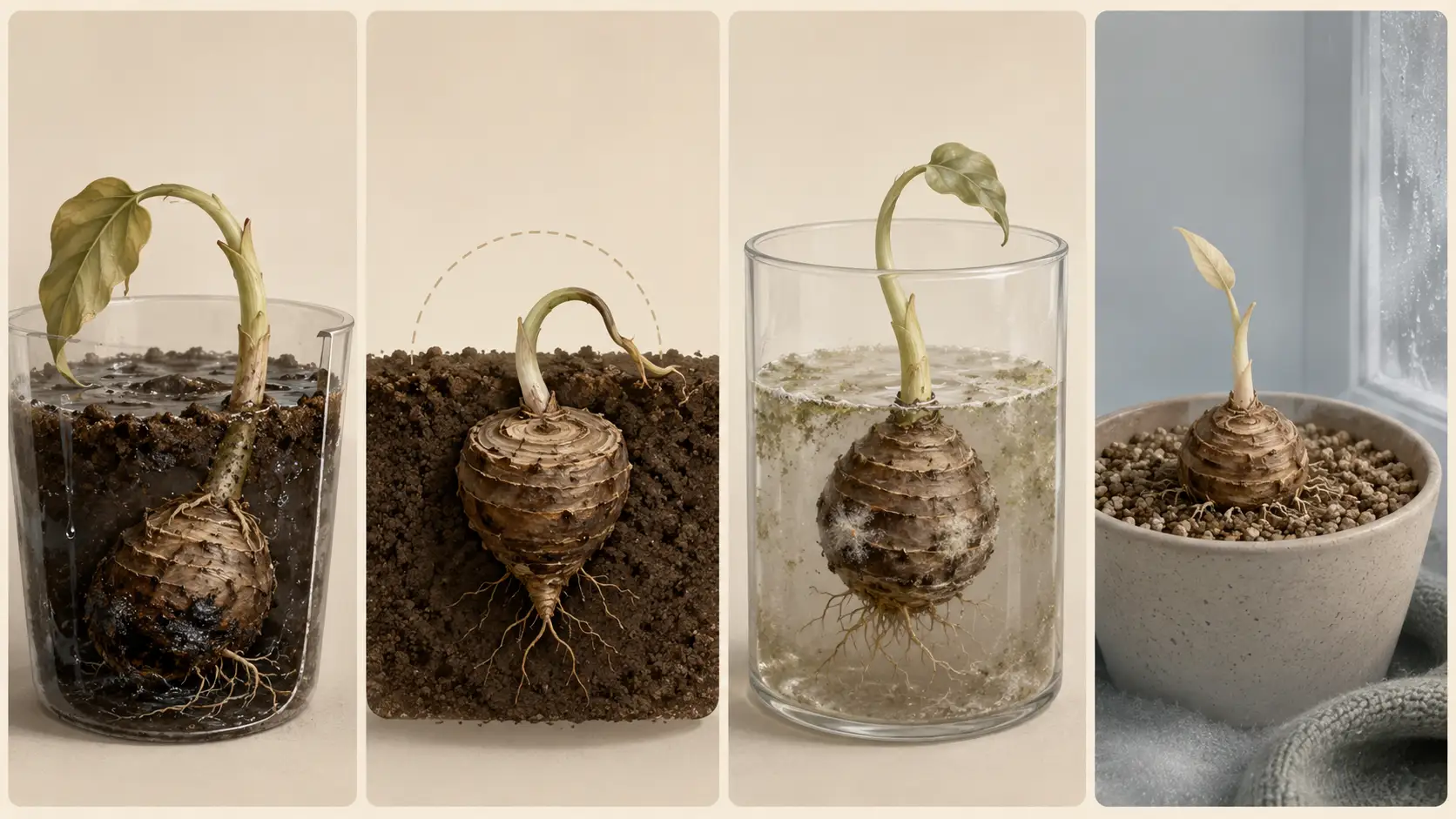
Common mistakes include:
- Planting the corm upside down
- Overwatering during dormancy
- Keeping plants in cold environments
- Abandoning corms too early before rooting begins
Avoiding these errors significantly improves success rates.
How Alocasia Corms Compare to Cuttings or Divisions
Unlike stem cuttings or plant divisions, Alocasia corm propagation relies entirely on stored energy within the corm. No leaves or stems are required. This makes it a more independent but slower propagation method compared to division, which already includes established growth tissue. For a wider comparison beyond Alocasia alone, the Aroid Corm & Tuber Propagation Database on Notion catalogs propagation behavior across related aroid genera like Colocasia and Amorphophallus. It’s a helpful reference if you’re propagating multiple aroid species side by side.
Conclusion
Successfully learning how to propagate Alocasia corms depends on correct orientation, proper moisture control, and choosing the right growing medium. Whether using water, soil, perlite, or moss, maintaining warmth and preventing rot are the most important factors for success. With patience, most healthy corms will begin rooting within a few weeks and develop into thriving Alocasia plants. For more general plant care principles, see our guide on Plants Benefits and Guides (Complete Care, Types & Growing Tips).
FAQs
Can you grow Alocasia corms in water?
Yes, Alocasia corms can be grown in water during the rooting stage. They develop visible roots in 2–4 weeks, but should eventually be transferred to soil for long-term growth.
How long does it take an Alocasia corm to root in water?
It usually takes 2–4 weeks under warm conditions with bright indirect light. Cooler environments can slow the process.
Should you soak Alocasia corms before planting?
Soaking for 12–24 hours can help rehydrate dormant corms, but it is not mandatory. Avoid soaking damaged or rotting corms.
Which side of the Alocasia corm goes up?
The pointed “eye” side faces upward, while the flatter base faces downward. Incorrect orientation can prevent sprouting.
Do you water Alocasia from top or bottom?
Bottom watering is preferred because it reduces the risk of rot around the crown and keeps moisture more evenly distributed.
Is it hard to grow Alocasia corms?
They are moderately easy to grow if conditions are warm and moist. The main challenges are rot prevention and maintaining correct humidity levels.



3 Responses