
Introduction
A tree with red flowers Australia includes a diverse group of native and ornamental species known for their vibrant blooms and seasonal visual impact. These trees range from compact garden varieties to large landscape specimens and thrive across different Australian climates. Species such as Corymbia ficifolia, Delonix regia, and Brachychiton acerifolius are widely recognized for their striking red displays. Understanding how to identify these trees, their growth patterns, and care requirements allows gardeners and landscapers to select the most suitable option for long-term health, flowering performance, and environmental compatibility.
Quick Summary
- Australia features both native and ornamental trees with vivid red blooms.
- Common species include Corymbia ficifolia, Delonix regia, and Brachychiton acerifolius.
- Tree size, climate tolerance, and maintenance needs vary significantly.
- Proper identification and care improve flowering and longevity.
What Is a Tree With Red Flowers in Australia?
Definition and General Characteristics
A tree with red flowers refers to any tree species that produces prominent red or red-toned blooms during its flowering season. These trees can be either native Australian species or introduced ornamentals. Flowering typically occurs in warmer months, with blooms ranging from bright scarlet to deep crimson.
Native species are generally adapted to Australian conditions, while ornamental varieties may require more controlled environments. Visual traits include dense flowering clusters, seasonal color changes, and distinctive canopy displays.
Common Features Across Red Flowering Trees
Most red flowering trees share several identifiable characteristics:
- Bright red flowers designed to attract pollinators such as birds and bees
- Deciduous or evergreen growth habits depending on species
- Distinct leaf structures, including narrow gum leaves or broad deciduous foliage
- Bark textures ranging from smooth to rough and patterned
These shared features help in recognizing a red flowering tree in different environments.
Popular Trees With Red Flowers in Australia (Key Species Overview)
Corymbia ficifolia (Red Flowering Gum)
Corymbia ficifolia is a native Australian tree known for its vibrant red blossoms and adaptability. It belongs to the Myrtaceae family and is widely used in urban landscaping.
- Produces dense clusters of bright red flowers
- Includes smaller cultivars such as mini red flowering gum
- Drought-tolerant once established
Some of these species are also featured among the Fast Growing Australian Native Trees: 8+ Smart Picks, making them excellent choices for gardeners seeking both rapid growth and vibrant seasonal color.
Delonix regia (Royal Poinciana / Flame Tree)
Delonix regia, often called the royal poinciana or flame tree, is an ornamental species valued for its intense red-orange canopy.
- Large spreading tree with umbrella-shaped canopy
- Best suited to warm, tropical, or subtropical climates
- Highly decorative during flowering season
The Delonix regia is widely recognized for its spectacular canopy, as also documented in botanical references such as Wikipedia.
Brachychiton acerifolius (Illawarra Flame Tree)
Brachychiton acerifolius is a native deciduous tree famous for its dramatic flowering display.
- Loses leaves before flowering, enhancing visual impact
- Produces bright red bell-shaped flowers
- Common along Australian streets and parks
Erythrina (Coral Tree)
Erythrina species, commonly known as coral trees, are ornamental trees with distinctive tubular red flowers.
- Attract nectar-feeding birds
- Often used as shade trees
- Fast-growing but may require maintenance
How to Identify a Red Flowering Tree (Identification Guide)
Flower Shape and Color Variations
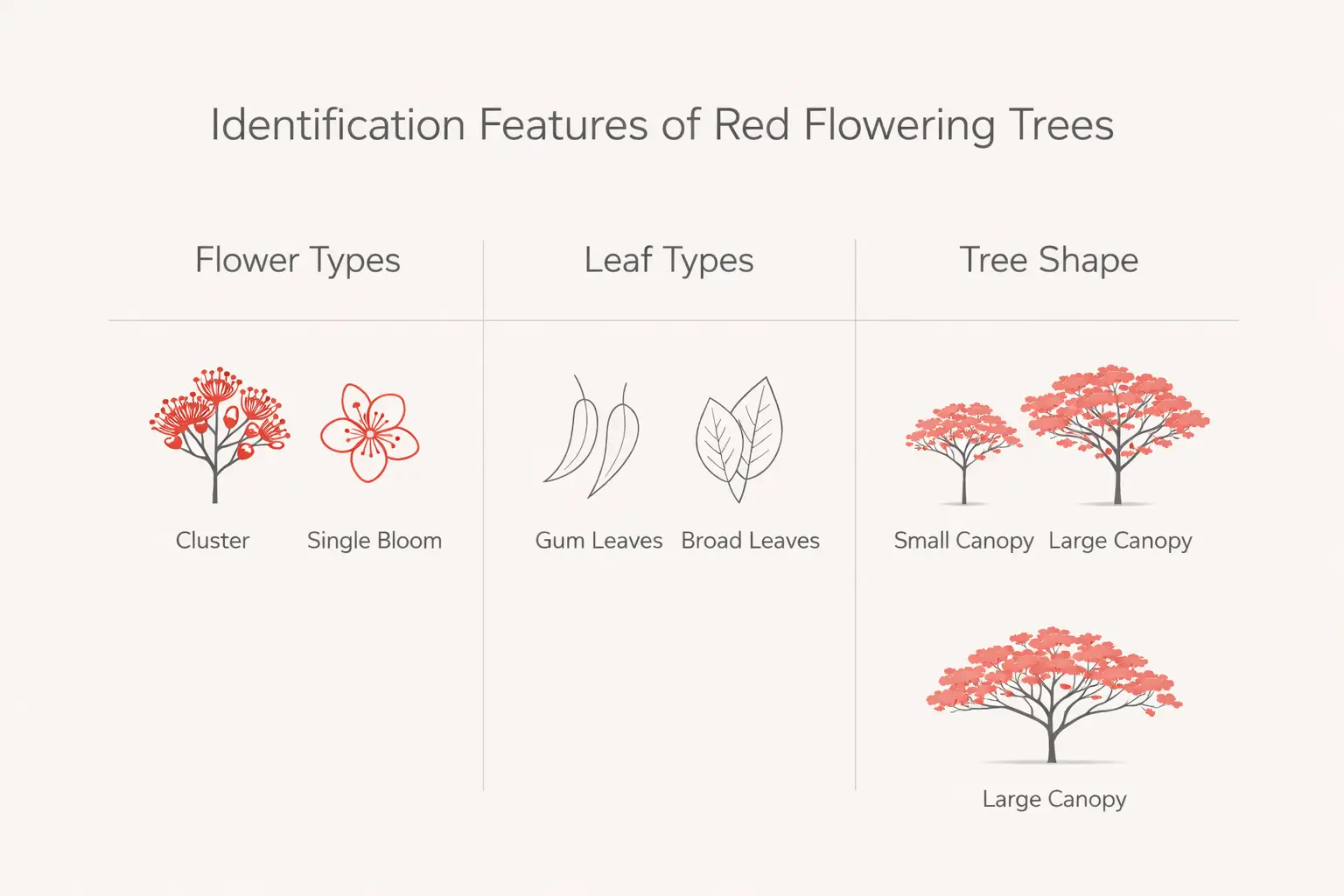
Red flowering trees can be identified by their bloom structure and color tones. Flowers may appear in clusters or as individual blooms, with shades ranging from bright red to orange-red or crimson.
Leaf and Bark Characteristics
Leaf type and bark texture provide additional identification clues:
- Gum trees typically have narrow, elongated leaves
- Deciduous trees feature broader leaves that fall seasonally
- Bark may be smooth, fibrous, or rough depending on species
Growth Habit and Size Clues
Tree structure also helps in identification:
- Small trees have compact canopies
- Larger trees display wide spreading branches
- Trunk shape and branching patterns vary significantly
Key Identification Factors:
- Flower cluster density
- Leaf texture (smooth vs compound)
- Tree height and trunk form
Types by Size: Choosing the Right Red Flowering Tree
Small Trees With Red Flowers
Small trees are suitable for limited spaces such as urban gardens.
- Example: mini red flowering gum
- Ideal for courtyards and small yards
Medium to Large Trees
These trees provide shade and landscape value.
- Example: flame tree and poinciana
- Suitable for parks and large gardens
Tall Trees With Red Flowers
Tall species are best for avenues or expansive properties.
- Offer strong visual impact
- Require adequate space for root and canopy spread
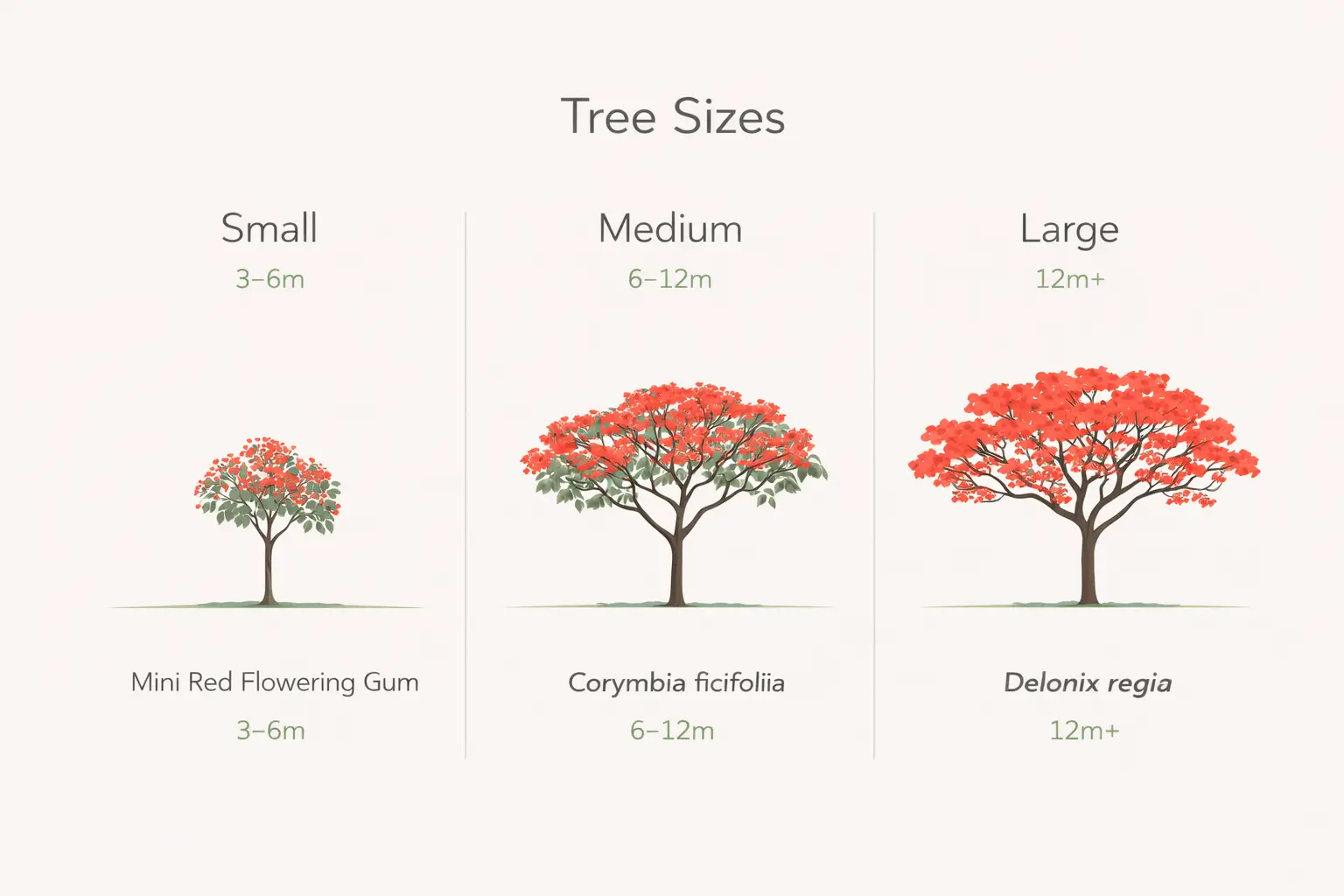
| Tree Type | Height Range | Example Species | Best Use |
| Small | 3–6 m | Mini red flowering gum | Small gardens |
| Medium | 6–12 m | Corymbia ficifolia | Landscaping |
| Large | 12–20 m+ | Delonix regia | Shade & avenues |
Native vs Non-Native Red Flowering Trees
Australian Native Red Flowering Trees
Native trees are naturally adapted to local environments.
- Lower water requirements
- Better resistance to local pests
- Examples include Australian gum trees with red flowers
While many red flowering trees are deciduous, some landscaping plans may benefit from combining them with species featured in 7+ Essential Evergreen Trees Brisbane Gardens Need to maintain year-round greenery.
Non-Native Ornamental Trees
Non-native species often produce more intense blooms but require care.
- Sensitive to climate variations
- May need irrigation and soil management
Comparison:
- Water needs: natives require less
- Growth rate: ornamentals may grow faster
- Climate tolerance: natives are more resilient
Growth Rate and Seasonal Flowering Patterns
Growth Speed of Popular Species
Red flowering trees vary in growth speed:
- Slow-growing: some native species
- Moderate: Corymbia ficifolia
- Fast-growing: coral tree (Erythrina)
When Red Flowering Trees Bloom
Most trees bloom during late spring to summer. Climate plays a major role in timing and intensity.
Factors Influencing Flowering:
- Temperature triggers
- Rainfall levels
- Sunlight exposure
Care Guide for Red Flowering Trees
Watering and Soil Needs
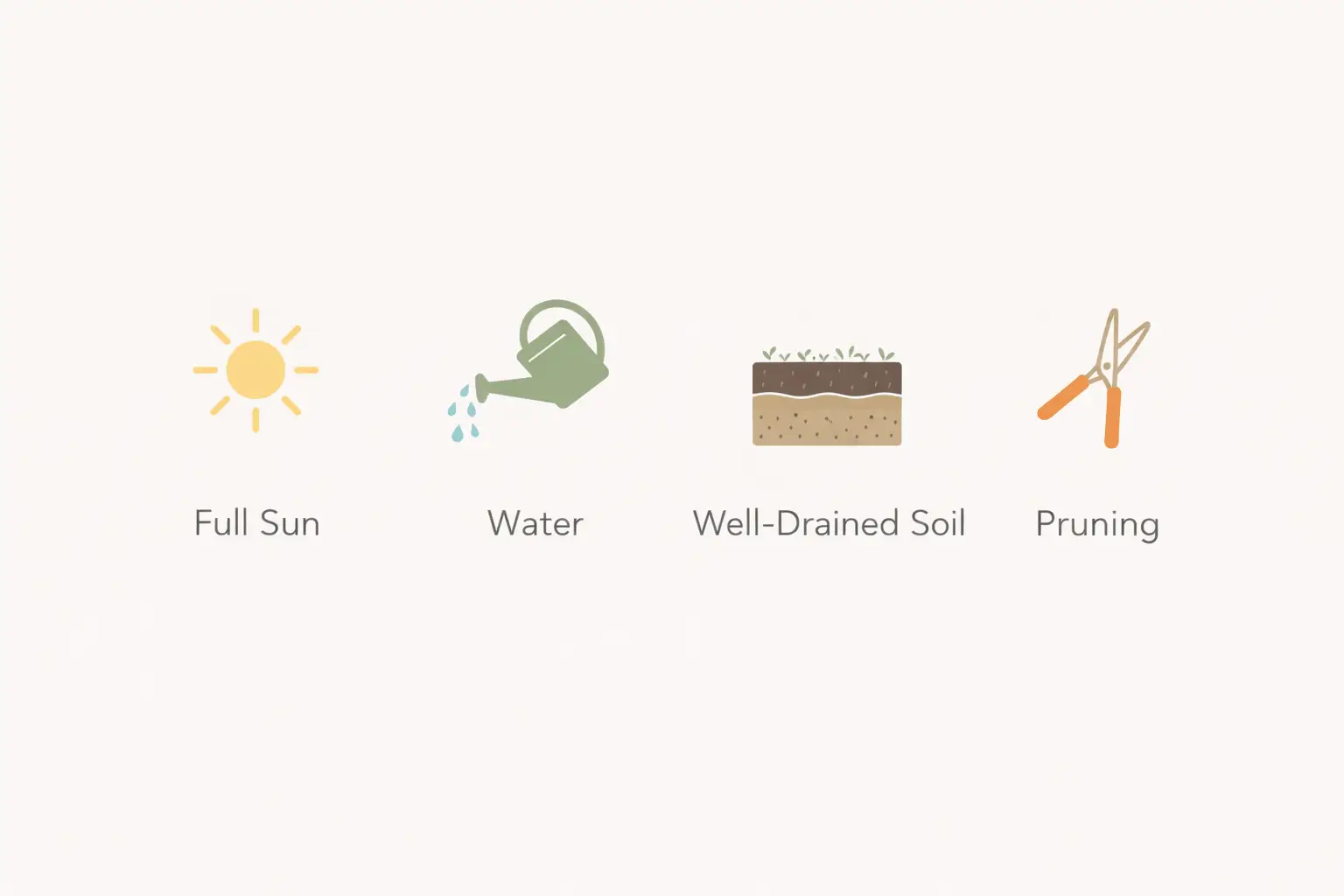
- Prefer well-draining soil
- Native species are drought-tolerant once established
- Avoid waterlogged conditions
Sunlight Requirements
- Full sun is essential for strong flowering
- Minimum 6–8 hours of sunlight daily
Fertilizing and Pruning
- Native trees require minimal fertilization
- Prune to maintain structure and remove dead branches
Climate and Environmental Tolerance
- Coastal trees tolerate salt exposure
- Inland species adapt to dry conditions
Common Problems and Solutions (Troubleshooting Guide)
Why Trees Fail to Flower
- Lack of sunlight reduces flowering
- Nutrient imbalance affects bloom production
Leaf Drop or Poor Growth
- Overwatering can damage roots
- Poor drainage leads to stress
Pests and Diseases
- Gum trees may face insect infestations
- Coral trees can attract pests in humid climates
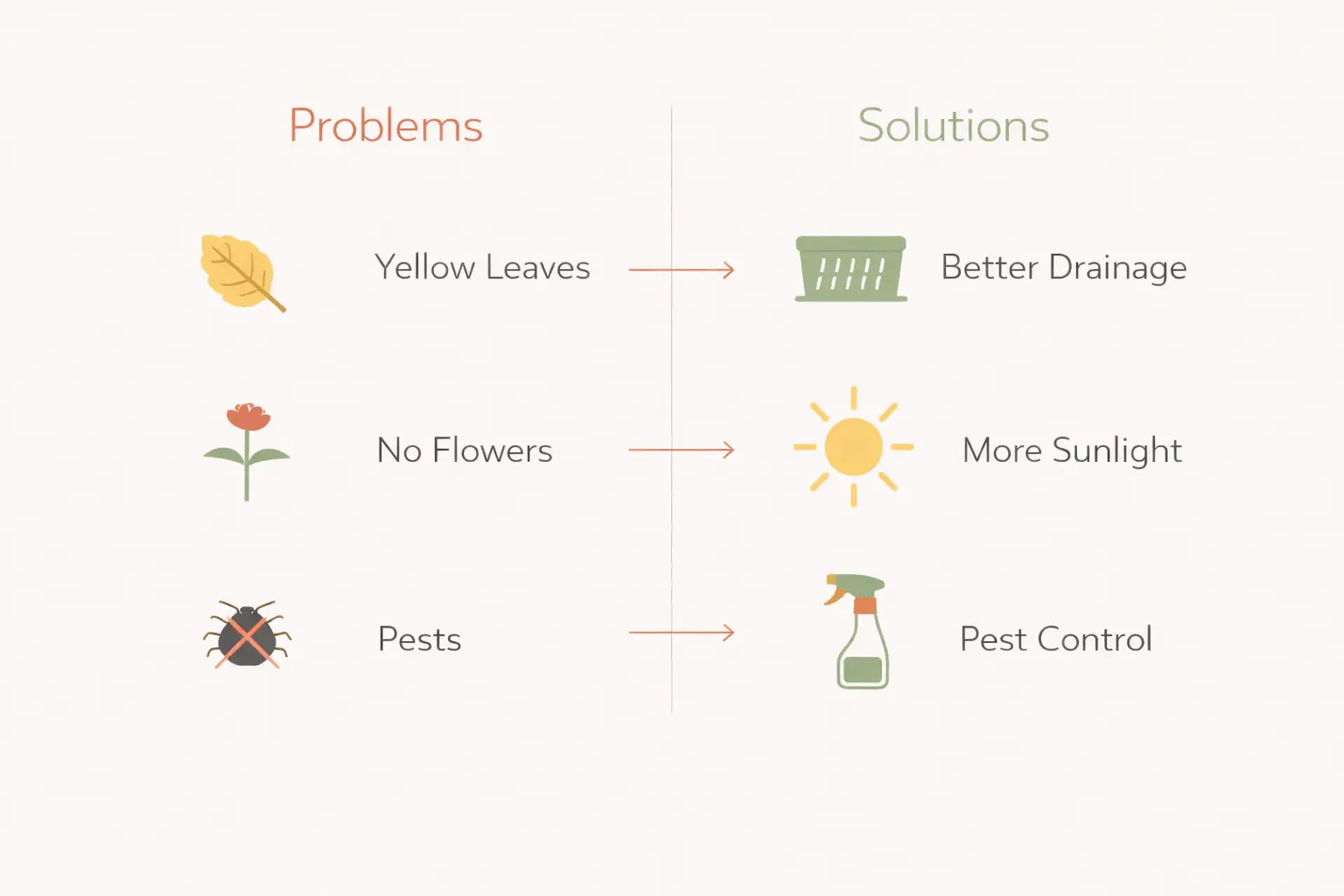
Problem → Solution:
- Yellow leaves → improve drainage
- No blooms → increase sunlight exposure
Common Mistakes When Growing Red Flowering Trees
- Planting in unsuitable climate zones
- Overwatering native species
- Ignoring mature tree size
- Planting in shaded areas instead of full sun
These mistakes often lead to poor growth and reduced flowering.
Landscaping Uses and Design Ideas
Best Uses in Gardens
- Feature tree for visual impact
- Shade provider in outdoor spaces
- Avenue planting for streetscapes
For added privacy and structure, red flowering trees can be paired with options from Tropical Screening Plants: Best Choices for Garden Privacy to create layered and functional garden designs.
Combining With Other Plants
- Pair with green foliage for contrast
- Combine with shrubs and ground covers
Design Ideas:
- Create focal points in gardens
- Layer seasonal colors for year-round interest
Environmental Benefits of Red Flowering Trees
Red flowering trees provide important ecological benefits:
- Attract pollinators such as birds and bees
- Offer shade and reduce heat
- Support biodiversity in urban and natural environments
These trees contribute to both aesthetics and environmental health.
Conclusion
A tree with red flowers Australia combines visual appeal with ecological value, offering a wide range of options from native species like Corymbia ficifolia to ornamental trees such as the flame tree. By understanding identification features, growth patterns, and care requirements, gardeners can choose the most suitable tree for their environment. Proper placement, sunlight, and maintenance ensure consistent flowering and long-term success, making these trees a valuable addition to Australian landscapes.
FAQs
What is the most common tree with red flowers in Australia?
Corymbia ficifolia, known as the red flowering gum, is the most common due to its adaptability and vibrant blooms.
Are red flowering trees native to Australia?
Yes, several species such as the Illawarra flame tree and red flowering gum are native.
Do red flowering trees lose their leaves?
Some are deciduous, like flame trees, while others remain evergreen or semi-evergreen.
What is the best small tree with red flowers for gardens?
Mini red flowering gum varieties are ideal for small garden spaces.
When do red flowering trees bloom in Australia?
Most bloom from late spring to summer, depending on climate and species.
Why is my red flowering tree not blooming?
Common causes include insufficient sunlight, poor soil conditions, or immature tree age.



4 Responses