
Introduction
The Illawarra flame tree flower is one of Australia’s most visually striking flowering tree displays. Scientifically known as Brachychiton acerifolius, this australian flame tree is valued for its bright red seasonal blooms, broad shade canopy, and ornamental appeal in parks and gardens. Native to eastern Australia, the tree adapts well to warm climates and becomes especially noticeable when its branches turn almost completely red during flowering season. Many gardeners grow flame tree plants for landscaping, wildlife support, and drought tolerance. For more gardening insights, plant care advice, and landscape plant recommendations, explore our complete Plants Benefits and Guides resource hub. Understanding flowering conditions, growth habits, and common maintenance issues helps improve long-term health and blooming performance.
Quick Summary
- The Illawarra flame tree flower typically appears from late spring to early summer with vivid red floral displays.
- Brachychiton acerifolius grows best in warm regions with full sun and well-draining soil.
- Poor sunlight, excessive fertilizer, climate stress, or immature growth commonly cause flowering problems.
- The tree is widely used as an ornamental Australian landscape species due to its dramatic seasonal appearance.
- Flame trees are often compared with bottle trees and coral trees because of similar flowering characteristics.
What Is an Illawarra Flame Tree?
What Is a Flame Tree?
A flame tree is a broad category of ornamental flowering trees known for producing bright red, orange, or scarlet blooms during seasonal flowering periods. The term flame tree commonly refers to several unrelated species that create fiery floral displays. Many people use the phrase flame tree tree when describing ornamental shade trees with strong flowering characteristics.
True australian flame tree species belong to the Brachychiton genus, while some trees called flame trees belong to entirely different plant families. For example, coral trees and royal poinciana trees are often confused with the Illawarra flame tree because they also produce red flame tree flowers.
Flame trees are popular because they combine:
- Strong ornamental value
- Seasonal flowering impact
- Shade production
- Wildlife attraction
- Drought tolerance in some climates
Understanding Brachychiton Acerifolius
Brachychiton acerifolius is the scientific name for the Illawarra flame tree. The species belongs to the Malvaceae family and is native to eastern Australia, particularly coastal rainforest regions of New South Wales and Queensland. The illawarra flame tree brachychiton acerifolius is named after the Illawarra region of New South Wales, where the tree naturally occurs. The species is widely recognized for flowering heavily after shedding leaves. The flame tree brachychiton acerifolius can reach impressive mature sizes and often becomes a major landscape feature in public gardens, streetscapes, and larger residential properties. Botanical classification details for Brachychiton acerifolius further explain its native Australian origins and flowering characteristics.
Key botanical facts about brachychiton acerifolius illawarra flame tree include:
- Scientific name: Brachychiton acerifolius
- Plant family: Malvaceae
- Native region: Eastern Australia
- Growth form: Deciduous or semi-deciduous tree
- Main feature: Bright scarlet flowering canopy
Where Do Flame Trees Grow?
Flame trees grow best in tropical, subtropical, and warm temperate climates. Understanding where do flame trees grow successfully depends on temperature, rainfall, sunlight, and drainage conditions. The illawarra flame tree Australia climate range includes coastal and inland regions with mild winters and warm summers. Young trees may struggle in severe frost conditions, although mature specimens tolerate light cold better. Illawarra trees prefer open locations where the canopy receives full sunlight throughout most of the day.
The Illawarra flame tree is also commonly featured among fast-growing Australian native trees used for ornamental shade and seasonal flowering displays.
Common environmental requirements include:
- Full sun exposure
- Well-draining soil
- Moderate rainfall
- Warm growing conditions
- Protection from severe frost during early growth
Bullet Point Overview:
- Preferred climate: Subtropical to warm temperate
- Sun exposure: Full sun for best flowering
- Frost tolerance: Light frost only when mature
- Rainfall preferences: Moderate seasonal rainfall with good drainage
Illawarra Flame Tree Flower Characteristics
What Does the Illawarra Flame Tree Flower Look Like?
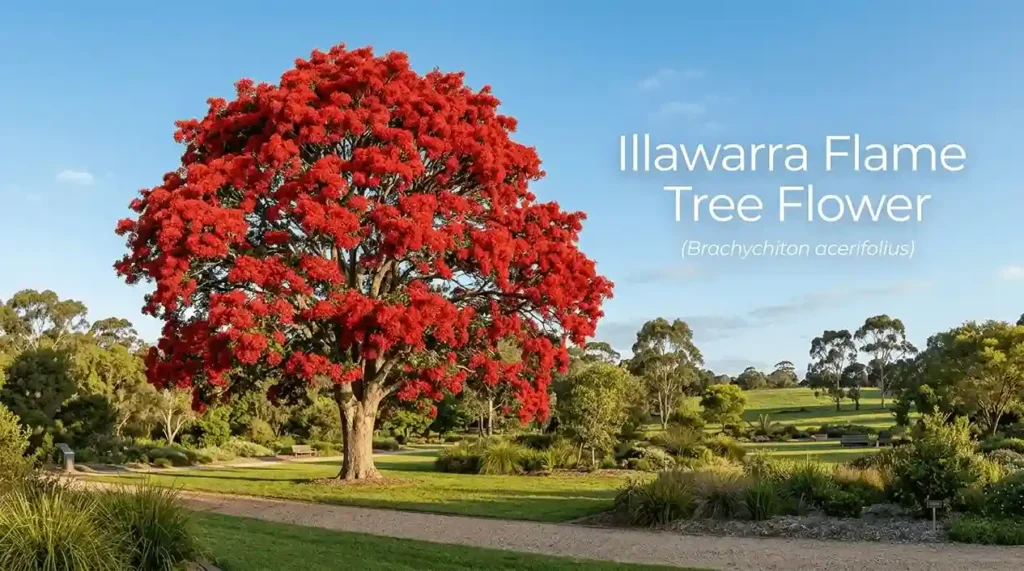
The illawarra flame tree flower is known for its brilliant scarlet-red blooms that cover the canopy during flowering season. Individual flowers are bell-shaped and clustered densely along branches, creating a dramatic visual effect. Many flame tree flowers appear after the tree drops most of its foliage. This leafless flowering stage increases the visual intensity of the blooms because the bright flowers become fully visible without green foliage covering them. Due to its vivid scarlet blooms, the species is frequently included in guides covering trees with red flowers in Australia.
The illawarra flame tree flowers often attract birds, pollinators, and photographers because of their vibrant seasonal appearance.
The flowering display typically includes:
- Bright crimson-red petals
- Dense floral clusters
- Bell-shaped flower structures
- Strong seasonal color contrast
- High ornamental landscape value
Australian Flame Tree Leaves and Leaf Structure
Australian flame tree leaves vary in shape depending on the tree’s age and growth stage. Juvenile foliage often appears deeply lobed, while mature leaves become broader and less divided.
Each flame tree leaf is generally large, smooth-textured, and maple-like in appearance. Mature flame tree leaves help create dense summer shade before seasonal shedding begins.
The illawarra flame tree leaf naturally falls before flowering because the species conserves moisture and redirects energy toward flower production.
Common leaf characteristics include:
- Large glossy foliage
- Lobed juvenile leaf forms
- Broad mature leaf shapes
- Seasonal leaf drop before blooming
- Green foliage during active growth periods
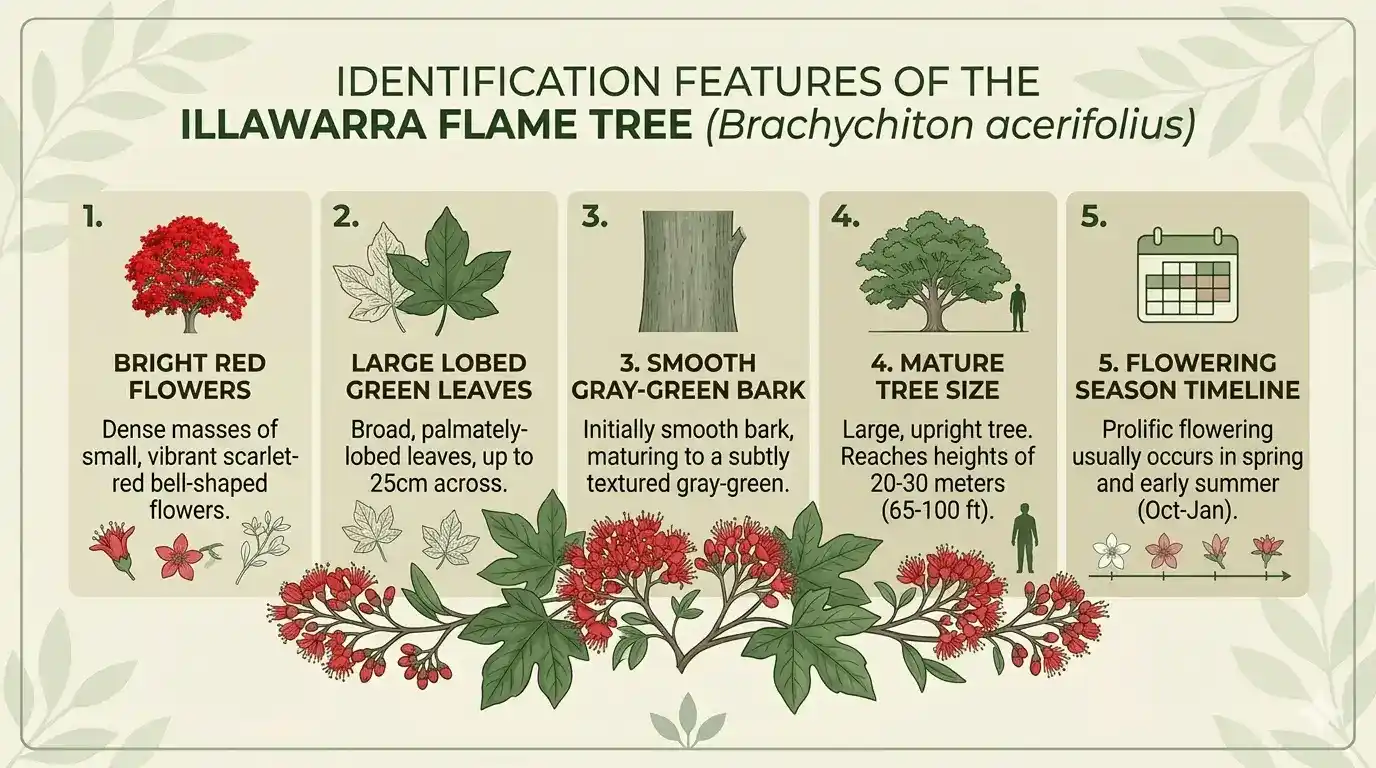
Table Section — Flame Tree Identification Features
| Feature | Illawarra Flame Tree |
| Flowers | Bright scarlet-red clustered blooms |
| Leaves | Large lobed green leaves |
| Bark | Smooth gray-green bark |
| Mature Size | 10–30 meters tall |
| Flowering Season | Late spring to early summer |
When Does the Illawarra Flame Tree Flower?
Illawarra Flame Tree Flowering Time and Season
The answer to when does illawarra flame tree flower is usually late spring through early summer. In Australia, flowering commonly begins between October and December depending on regional climate conditions.
The illawarra flame tree flowering season may vary according to rainfall, temperature, tree maturity, and sunlight exposure. Trees in warmer subtropical regions often bloom earlier than trees growing in cooler temperate areas.
When do flame trees flower most heavily? Peak flowering usually occurs after warm seasonal conditions and temporary dry periods.
Regional flowering influences include:
- Coastal warmth
- Seasonal rainfall patterns
- Tree maturity
- Sunlight availability
- Soil drainage quality
How Long Does It Take for an Illawarra Flame Tree to Flower?
How long does it take for a illawarra flame tree to flower depends largely on whether the tree is grown from seed or purchased as a nursery-grown specimen.
Seed-grown trees may require 5 to 8 years before producing significant flowering displays. Nursery-grown trees often flower sooner because they are already partially mature.
Young trees prioritize root establishment and canopy development before flowering begins.
Bullet Point Overview:
- Typical flowering age: Around 5–8 years from seed
- Factors delaying flowering: Shade, overwatering, poor nutrition
- Fastest growth conditions: Warm climate with full sun and good drainage
Why Isn’t My Illawarra Flame Tree Flowering?
Common Reasons an Illawarra Flame Tree Does Not Flower
Why isn t my illawarra flame tree flowering is a common question among gardeners. In most cases, poor flowering occurs because the tree is immature, heavily shaded, stressed, or receiving excessive nitrogen fertilizer.
Another major reason why does my illawarra flame tree not flower is improper pruning. Cutting branches at the wrong time can remove developing flower buds before blooming season begins.
An illawarra flame tree not flowering may also result from:
- Insufficient sunlight
- Waterlogged soil
- Frost damage
- Nutrient imbalance
- Recent transplant stress
How to Encourage Better Flowering
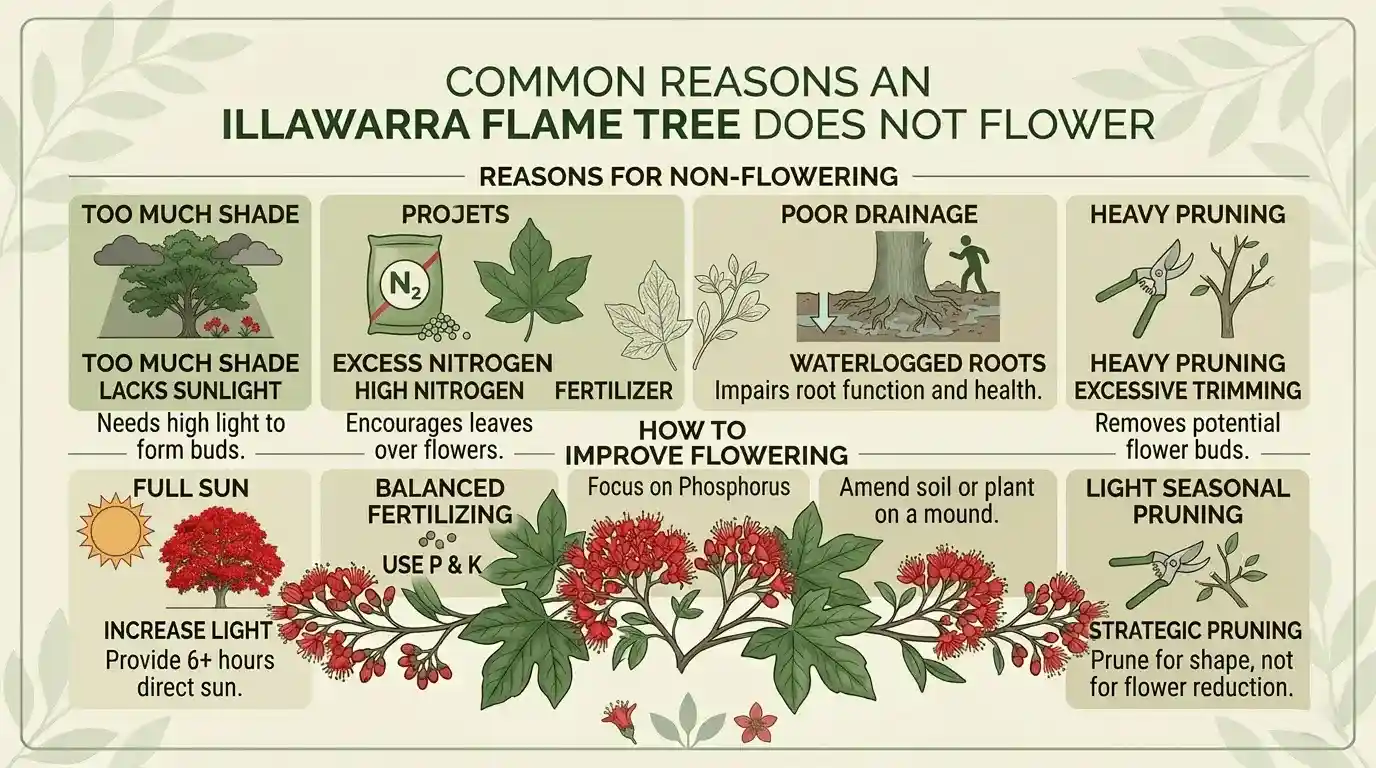
Improving flowering performance usually involves correcting environmental stress and improving sunlight exposure.
Trees flower best when growing in open sunny areas with moderate watering and balanced nutrition.
Helpful flowering improvement methods include:
- Increase sun exposure
- Reduce nitrogen fertilizer
- Improve drainage
- Avoid excessive pruning
- Water deeply but less frequently once established
Illawarra Flame Tree Flower Care Guide
Sunlight, Soil, and Water Requirements
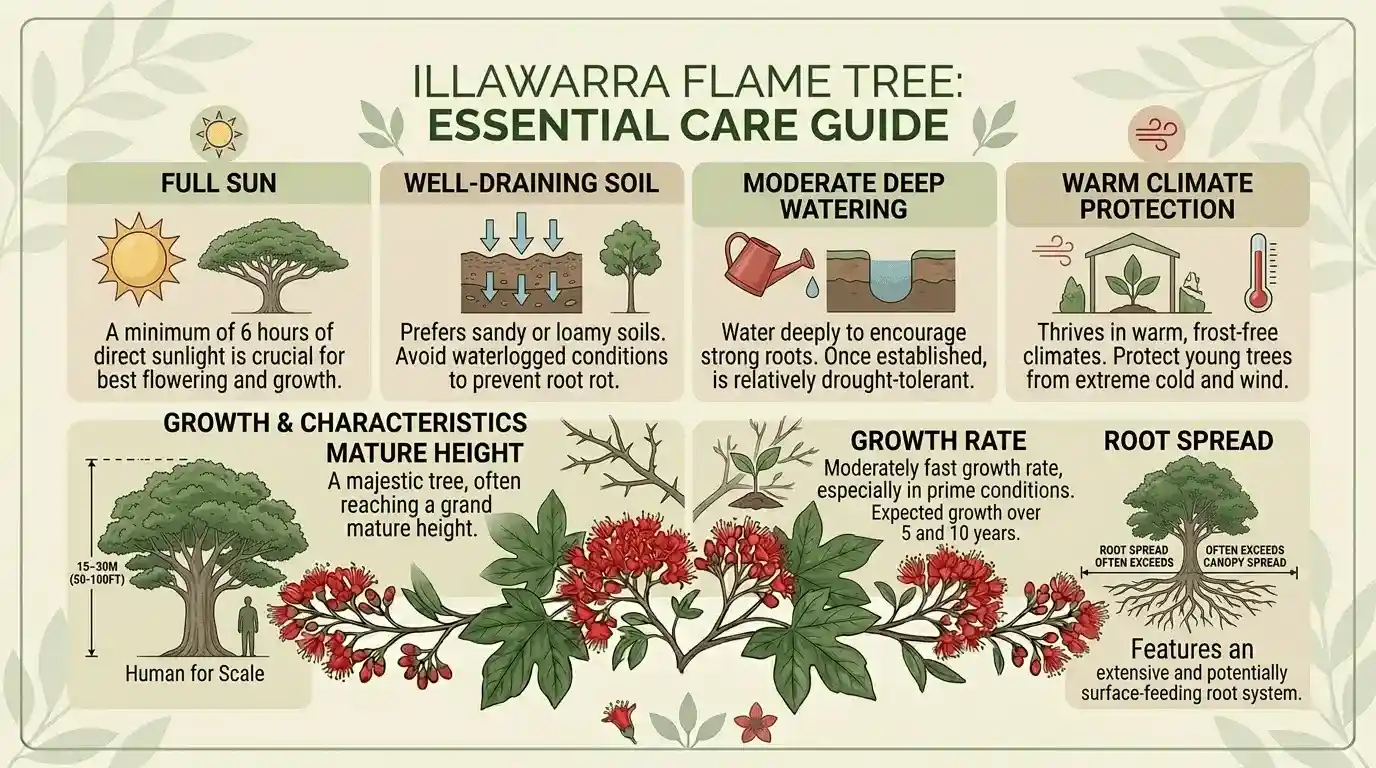
Illawarra flame tree flower care begins with proper site selection. Flame tree plants grow best in sunny locations with deep, free-draining soil.
Although flame trees plant well in various soil types, poor drainage commonly causes root stress and fungal problems.
Established trees are relatively drought tolerant, but young trees require consistent watering while roots develop.
Basic care recommendations include:
- Full sun positioning
- Well-draining soil
- Moderate deep watering
- Reduced watering during cool seasons
- Protection from prolonged waterlogging
Fertilizing and Pruning Considerations
Pruning should occur after flowering finishes or during dormant periods. Excessive pruning before bloom season can reduce flower production.
Balanced slow-release fertilizer may support healthy growth, but too much nitrogen encourages leaf production instead of flowering.
Common maintenance mistakes include:
- Heavy pruning before flowering
- Overfertilizing young trees
- Frequent shallow watering
- Planting in compacted soil
Plant Size and Growth Rate
The Illawarra flame tree can become very large under ideal conditions. Mature trees often reach 10–30 meters in height with broad canopy spread.
Indoor growing is generally unsuitable because the species requires substantial root space and strong sunlight.
Growth rates vary according to climate and soil quality.
Bullet Point Overview:
- Mature height: 10–30 meters
- Mature width: 8–15 meters
- Growth rate category: Moderate to fast
- Root spread considerations: Large roots require planting distance from structures
Illawarra Flame Tree Problems and Troubleshooting
Common Illawarra Flame Tree Problems
Illawarra flame tree problems commonly include yellow leaves, fungal stress, poor flowering, and root damage caused by overwatering.
Young trees may also experience transplant shock after relocation. Drought stress can trigger premature leaf drop during hot weather.
Additional issues may involve:
- Root rot in wet soils
- Pest infestation
- Nutrient deficiencies
- Heat stress during establishment
- Storm damage to branches
Leaves Turning Yellow or Falling Early
Yellow leaves often result from watering imbalance or nutrient deficiency. Overwatering reduces root oxygen, while underwatering stresses foliage during hot conditions.
Seasonal leaf drop before flowering is natural for many flame trees and should not always be mistaken for disease.
Warning signs of stress include:
- Persistent yellow foliage
- Blackened roots
- Wilting branches
- Patchy canopy decline
- Premature leaf shedding outside seasonal cycles
Pest and Disease Prevention
Preventive maintenance greatly reduces long-term health problems.
Good airflow, proper drainage, and pruning hygiene help minimize fungal infections and pest buildup.
Bullet Point Overview:
- Common pests: Scale insects and borers
- Signs of stress: Yellowing leaves and branch dieback
- Prevention methods: Proper drainage and airflow
- Recovery tips: Reduce watering stress and remove damaged growth
Illawarra Flame Tree Pros and Cons
Benefits of Growing an Illawarra Flame Tree
The Illawarra flame tree is valued for its dramatic flowering display and broad shade canopy. Landscapers frequently use the species in parks, avenues, and large gardens. The tree also supports local wildlife by attracting birds and pollinating insects. Larger properties sometimes use mature flame trees alongside other fast-growing privacy trees to improve shade and visual screening.
Major benefits include:
- Spectacular seasonal flowers
- Strong ornamental value
- Shade production
- Drought tolerance after establishment
- Wildlife attraction
Potential Drawbacks and Limitations
Despite its beauty, the species may not suit every landscape.
Large mature size and root spread can create problems in smaller residential gardens. Seasonal leaf drop and flower litter may also increase maintenance requirements.
Common limitations include:
- Large canopy spread
- Seasonal debris accumulation
- Root competition near paving
- Reduced suitability for small spaces
Naturally, many gardeners researching illawarra flame tree pros and cons evaluate available planting space before choosing the species.
Table Section — Pros vs Cons Comparison
| Pros | Cons |
| Brilliant red flowering display | Large mature size |
| Provides shade | Seasonal leaf and flower drop |
| Drought tolerant when established | Root spread concerns |
| Attractive wildlife habitat | Requires sunny growing conditions |
Flame Tree Varieties and Similar Trees
Different Flame Tree Varieties
Several flame tree varieties exist worldwide, although many belong to unrelated botanical groups.
Popular ornamental species include:
- Illawarra flame trees
- Royal poinciana
- African tulip tree
- Various Brachychiton hybrids
Each species differs in flowering style, canopy shape, and climate tolerance.
Coral Tree vs Flame Tree
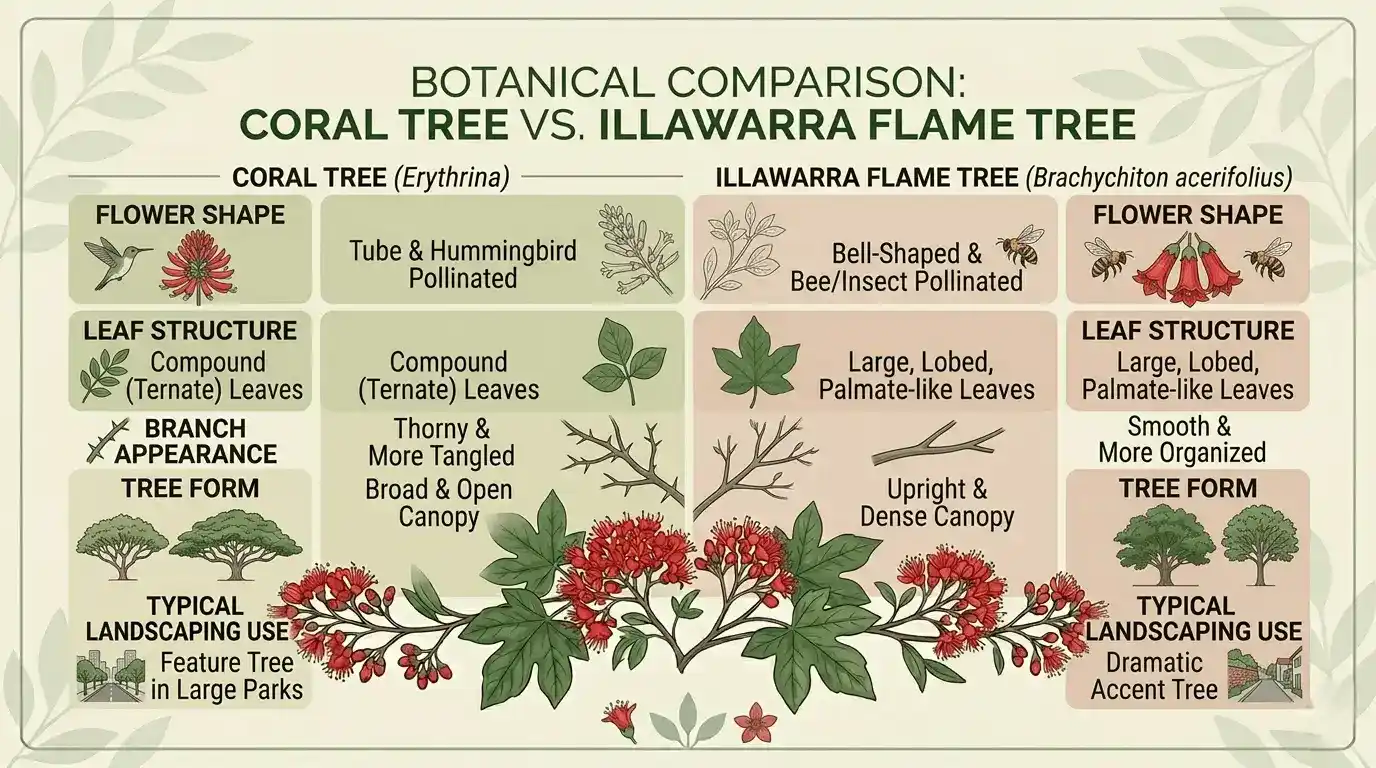
Coral tree vs flame tree comparisons are common because both produce vivid red flowers. However, coral tree species belong to the Erythrina genus, while the Illawarra flame tree belongs to Brachychiton. The coral flame tree and flame coral tree terms are often used informally to describe brightly flowering Erythrina species.
Differences between coral tree and flame tree species include:
| Feature | Coral Tree | Illawarra Flame Tree |
| Botanical Group | Erythrina coral tree | Brachychiton acerifolius |
| Flower Type | Tubular coral tree flower | Bell-shaped red flowers |
| Leaves | Compound coral tree leaves | Broad lobed leaves |
| Growth Habit | Often thorny branches | Smooth canopy structure |
The red coral tree may also produce more irregular branching than the Australian flame tree.
Flame Tree vs Bottle Tree Comparison
The flame bottle tree comparison usually involves other Brachychiton species such as bottle trees.
Bottle trees typically develop swollen trunks for water storage, while flame trees are primarily valued for flowering displays.
The brachychiton flame tree generally has broader canopies and brighter floral displays than most bottle tree species.
Illawarra Flame Tree Flower Uses and Cultural Interest
Ornamental and Landscaping Uses
Illawarra flame tree flower uses mainly focus on ornamental landscaping.
The species is frequently planted in:
- Public parks
- Large residential gardens
- Streetscapes
- Botanical collections
- Wildlife-supporting landscapes
Its seasonal flowering display creates strong visual contrast and shade coverage during warmer months. The species also works well in low-maintenance Australian native garden designs focused on drought tolerance and seasonal color.
Illawarra Flame Tree Flower Essence and Bush Flower Uses
The illawarra flame tree flower essence is sometimes referenced within Australian bush flower traditions.
Australian bush flower essences illawarra flame tree products are generally associated with wellness practices and symbolic emotional support traditions. However, these products should not be considered medical treatments.
Related terms include:
- Illawarra flame tree bush flower essence
- Illawarra flame tree bush flower
- Illawarra flame tree flower power
These references are typically cultural or alternative wellness associations rather than scientific botanical uses.
Growing Illawarra Flame Trees From Seeds
Illawarra Flame Tree Flower Seeds and Propagation
Illawarra flame tree flower seeds are commonly propagated through seed germination.
Seeds usually germinate more successfully after scarification or soaking because the outer seed coating can be hard.
Propagation steps commonly include:
- Collect mature seed pods
- Dry and prepare seeds
- Soak seeds before planting
- Use free-draining propagation mix
- Maintain warm temperatures during germination
Spring and early summer generally provide the best germination conditions.
Beginner Mistakes When Growing Flame Trees
Many beginner gardeners make avoidable mistakes when growing flame trees.
Common errors include poor placement, overwatering, and expecting rapid flowering from immature trees.
Bullet Point Overview:
- Planting too close to structures
- Poor drainage
- Lack of sunlight
- Incorrect pruning timing
- Excessive watering during establishment
Buying Illawarra Flame Trees and Availability
Where to Find Illawarra Flame Trees
Gardeners searching for illawarra flame tree for sale options can often find young trees through specialist nurseries and online plant suppliers.
Flame tree for sale availability depends on climate region and seasonal stock levels.
Many nurseries offer:
- Seed-grown trees
- Grafted ornamental specimens
- Tube stock seedlings
- Advanced landscape trees
Regional availability affects flame trees for sale inventory throughout the year.
Illawarra Flame Tree Bunnings and Retail Availability
Illawarra flame tree bunnings availability varies by location and seasonal demand.
Some large retailers may occasionally stock:
- Flame tree bunnings seedlings
- Bottle tree bunnings stock
- Tree seeds bunnings packets
However, availability differs between stores and growing regions.
Conclusion
The Illawarra flame tree flower is one of Australia’s most recognizable ornamental tree displays. Brachychiton acerifolius combines brilliant scarlet flowering, broad shade coverage, and strong landscape value in warm climates. Successful flowering depends on full sun, proper drainage, balanced nutrition, and tree maturity. Understanding common problems such as poor flowering, yellow leaves, and root stress helps gardeners maintain healthier trees over time. Whether grown for ornamental landscaping, wildlife attraction, or seasonal visual impact, the Illawarra flame tree remains a standout Australian species valued for both beauty and adaptability.
FAQs
What is the best climate for an Illawarra flame tree?
The best climate for an Illawarra flame tree is subtropical or warm temperate with full sun, moderate rainfall, and mild winters.
Why does my Illawarra flame tree not flower every year?
Irregular flowering may result from climate stress, insufficient sunlight, immature growth, excessive fertilizer, or seasonal weather changes.
How fast does Brachychiton acerifolius grow?
Brachychiton acerifolius has a moderate to fast growth rate under warm conditions with adequate sunlight and well-draining soil.
Do flame trees lose their leaves before flowering?
Yes. Many flame trees naturally shed leaves before blooming to make the bright flowers more visible.
What is the difference between a coral tree and an Illawarra flame tree?
Coral trees belong to the Erythrina genus, while Illawarra flame trees belong to the Brachychiton genus. They differ in leaf structure, flower shape, and branching habits.
Can you grow an Illawarra flame tree from seeds?
Yes. Illawarra flame trees are commonly grown from seeds using warm temperatures and well-draining propagation soil.
Are Illawarra flame tree roots invasive?
The roots are not considered aggressively invasive, but mature trees require adequate planting distance from structures and paving.