
Introduction
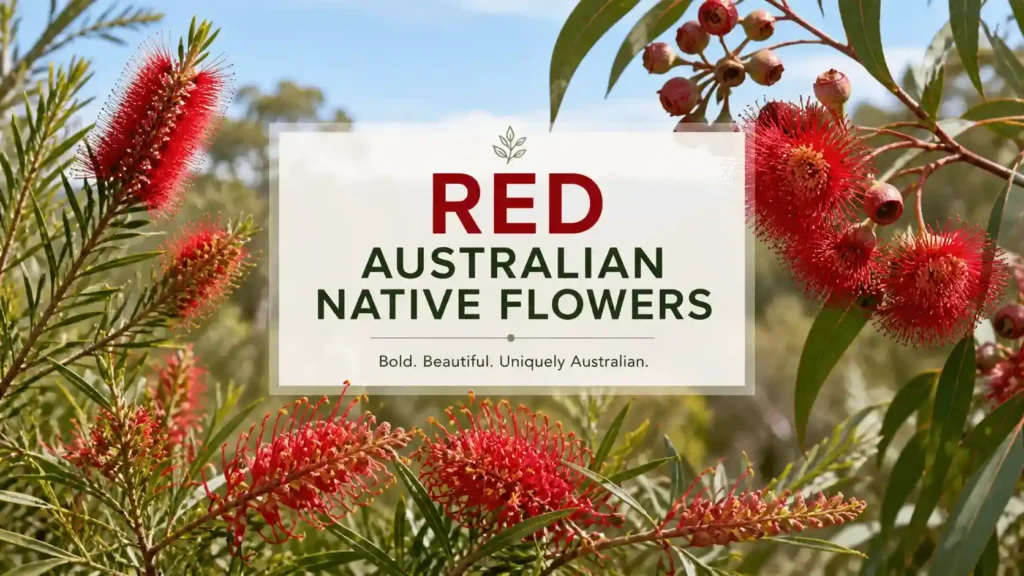
Red Australian native flowers are a diverse group of plants known for their vibrant color, ecological importance, and adaptability to local climates. These plants range from shrubs and trees to ground covers, making them ideal for landscaping, biodiversity support, and low-maintenance gardening in Australia. Their bright red blooms play a key role in attracting pollinators such as birds and insects. In addition to their visual appeal, these native red flowers are highly resilient and capable of thriving in drought-prone conditions, poor soils, and intense sunlight, making them suitable for sustainable and practical garden design.
Quick Summary
- Red Australian native flowers include shrubs, trees, and ground covers adapted to local climates
- Popular for landscaping due to low maintenance and drought tolerance
- Provide ecological benefits like attracting pollinators and supporting biodiversity
- Available in a wide range of forms, including flowering plants and red foliage species
What Are Red Australian Native Flowers?
Definition and Key Characteristics
Red Australian native flowers are plant species that originate in Australia and produce red blooms or foliage while being naturally adapted to local environmental conditions. These differ from non-native ornamental plants by requiring less water, fewer inputs, and minimal maintenance. These plants are part of the broader Australian flora, which has evolved to thrive in diverse and often extreme environmental conditions.
Key traits include:
- Adaptation to Australian soil types and climate conditions
- Bright red flowers designed to attract pollinators such as birds and insects
- Evergreen growth in many species with strong drought resistance
These plants represent a core part of Australian ecosystems and are commonly used in native landscaping.
Types of Red Australian Native Flowers (By Plant Category)
Red Flowering Trees
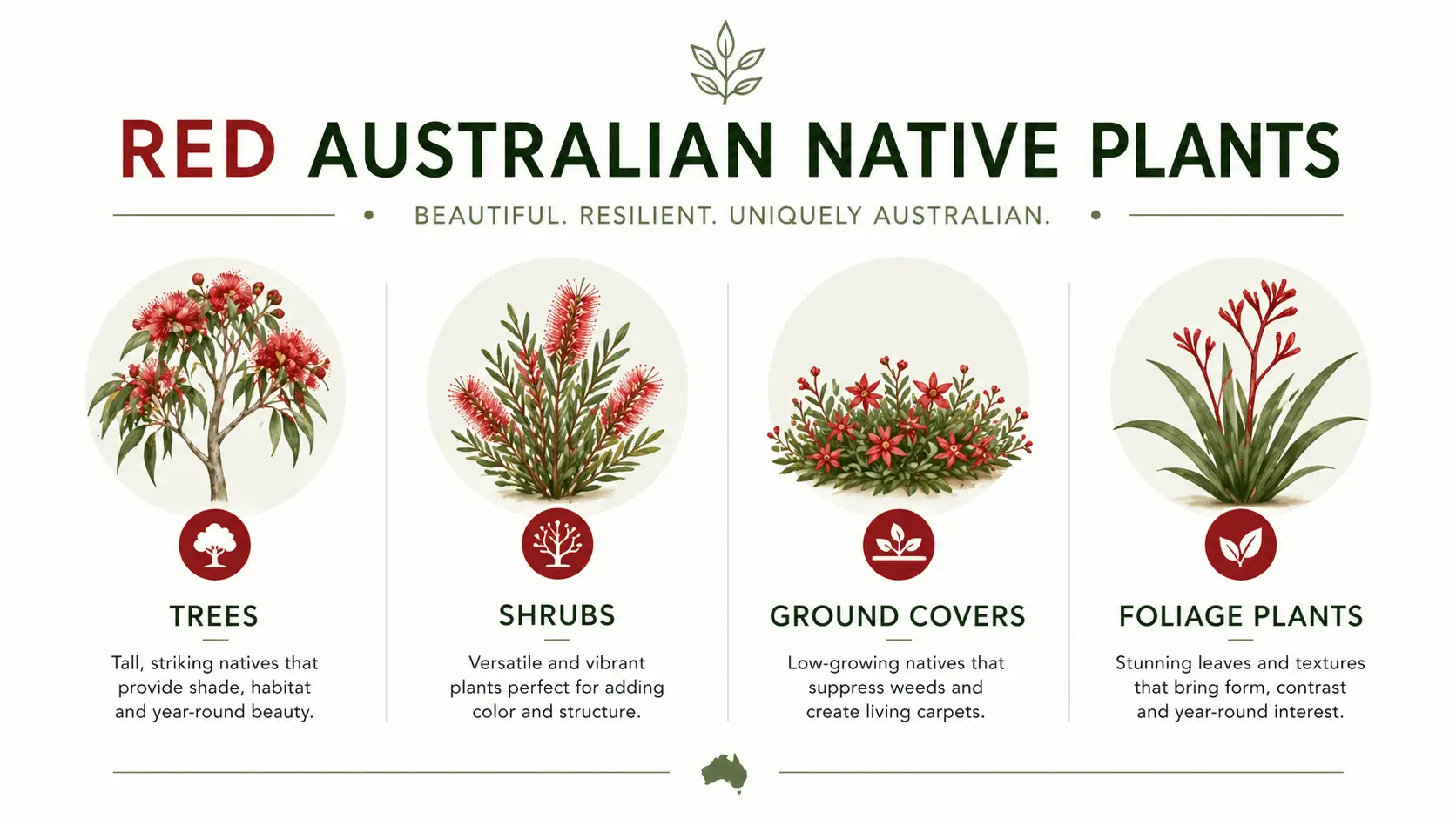
Red flowering trees are larger native plants that provide height and structure in landscapes. They often feature seasonal blooms and wide canopies.
Common characteristics:
- Moderate to tall height with spreading branches
- Seasonal flowering, typically in warmer months
- Provide shade and habitat for wildlife
Red flowering trees are often used as focal points in landscapes, and choosing the right tree with red flowers Australia can enhance both shade and seasonal color.
Red Flowering Shrubs
Red flowering shrubs are among the most commonly used plants in Australian gardens due to their versatility.
Common uses:
- Hedges and borders
- Garden layering and structure
- Decorative flowering displays
Ground Covers and Low-Growing Plants
Ground covers with red flowers are low-growing plants that spread horizontally across the soil.
Benefits include:
- Erosion control
- Weed suppression
- Suitability for small gardens or slopes
Many gardeners also combine red-flowering varieties with an Australian native ground cover to improve soil coverage and reduce maintenance.
Red Foliage Plants vs Flowering Plants
- Red foliage plants display colored leaves year-round and provide consistent visual interest
- Flowering plants produce seasonal red blooms and often attract pollinators
Popular Red Australian Native Flowers Names and Examples
Common Species List
A curated list of red Australian native flowers includes:
- Trees: Flowering gum (Eucalyptus species)
- Shrubs: Bottlebrush (Callistemon), Grevillea
- Ground covers: Prostrate Grevillea
These plants vary in size, growth habit, and landscape use.
Naming Patterns and Identification
Names of red flowers are often based on:
- Botanical classification
- Flower shape or appearance
- Indigenous or descriptive naming systems
Identification features include:
- Distinct flower forms such as spikes or clusters
- Leaf structure and color
- Overall plant growth habit
Comparison: Red Native Flowers vs Other Red Flower Plants
Native vs Non-Native Red Flower Plants
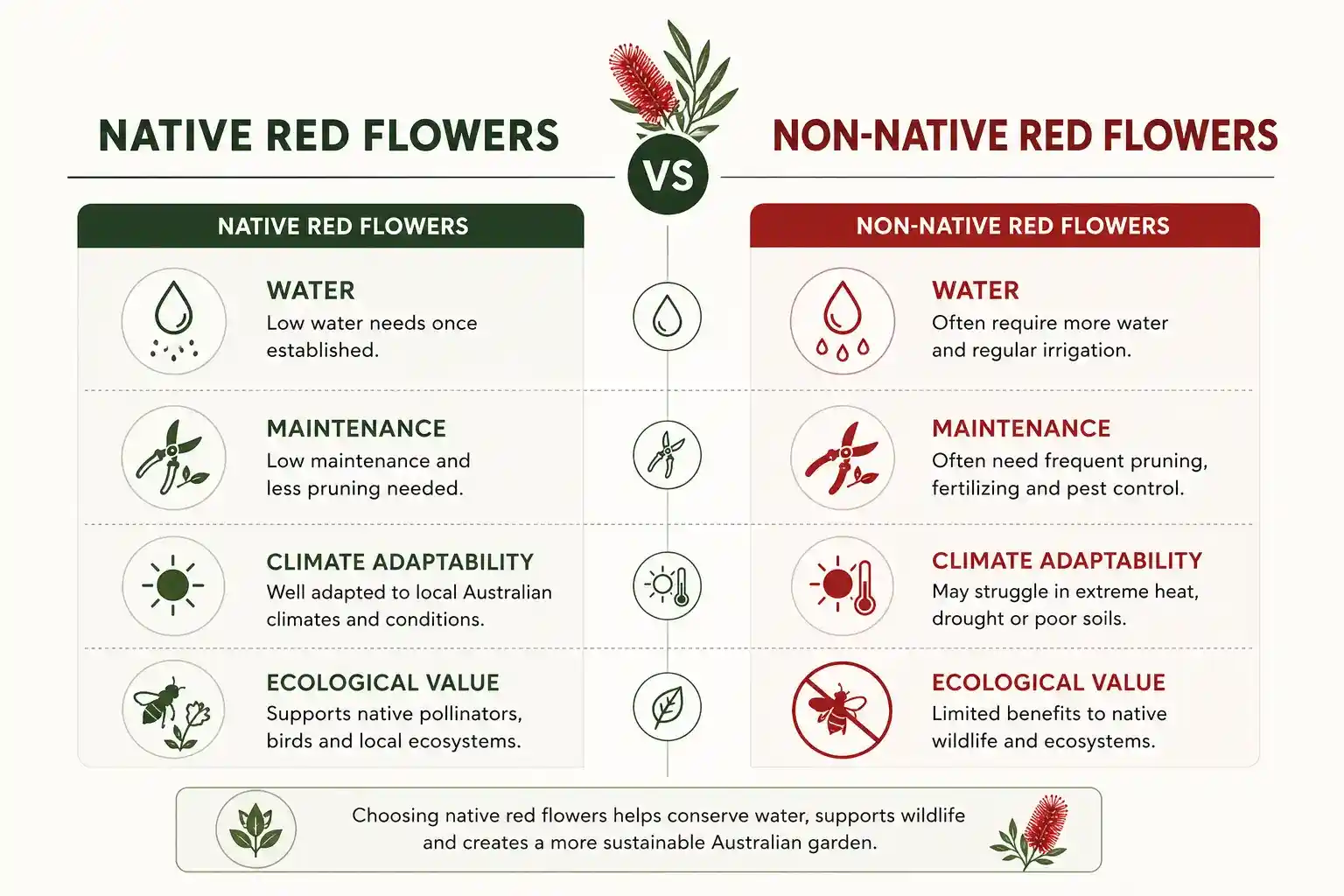
| Feature | Native Red Flowers | Non-Native Red Flower Plants |
| Climate Adaptation | High | Variable |
| Water Needs | Low | Medium–High |
| Maintenance | Low | Moderate |
| Ecological Value | High | Low |
Flowering vs Foliage-Based Red Plants
- Flowering plants provide seasonal bursts of color and attract pollinators
- Foliage-based plants offer year-round color through leaves rather than blooms
Landscaping Uses of Red Australian Native Flowers
Garden Design Applications
Red Australian native flowers are commonly used in landscaping for:
- Creating visual contrast with green or neutral plants
- Designing layered garden beds
- Serving as focal points in outdoor spaces
These plants are ideal for creating an easy low maintenance Australian native garden, especially in areas with limited water availability.
Suitable Environments
These plants perform well in:
- Full sun conditions
- Coastal environments with salt exposure
- Inland regions with dry climates
Combining with Other Plants
Effective combinations include:
- Pairing red blooms with green foliage for contrast
- Mixing with neutral tones to balance brightness
- Using layered planting for depth and texture
Growth Conditions and Flowering Behavior
How Long Do Australian Native Flowers Last?
Most red Australian native flowers bloom seasonally, typically during spring and summer. Individual flowers may last several weeks, while the plant itself flowers annually depending on species and conditions.
Environmental Factors Affecting Growth
Growth depends on:
- Soil drainage quality
- Sunlight exposure
- Rainfall levels
Proper conditions ensure healthy flowering and plant longevity.
Growth Rate Overview
- Fast-growing species include many shrubs and ground covers
- Slower-growing plants are often trees or woody perennials
Care Guide for Red Australian Native Flower Plants
Watering and Soil Needs
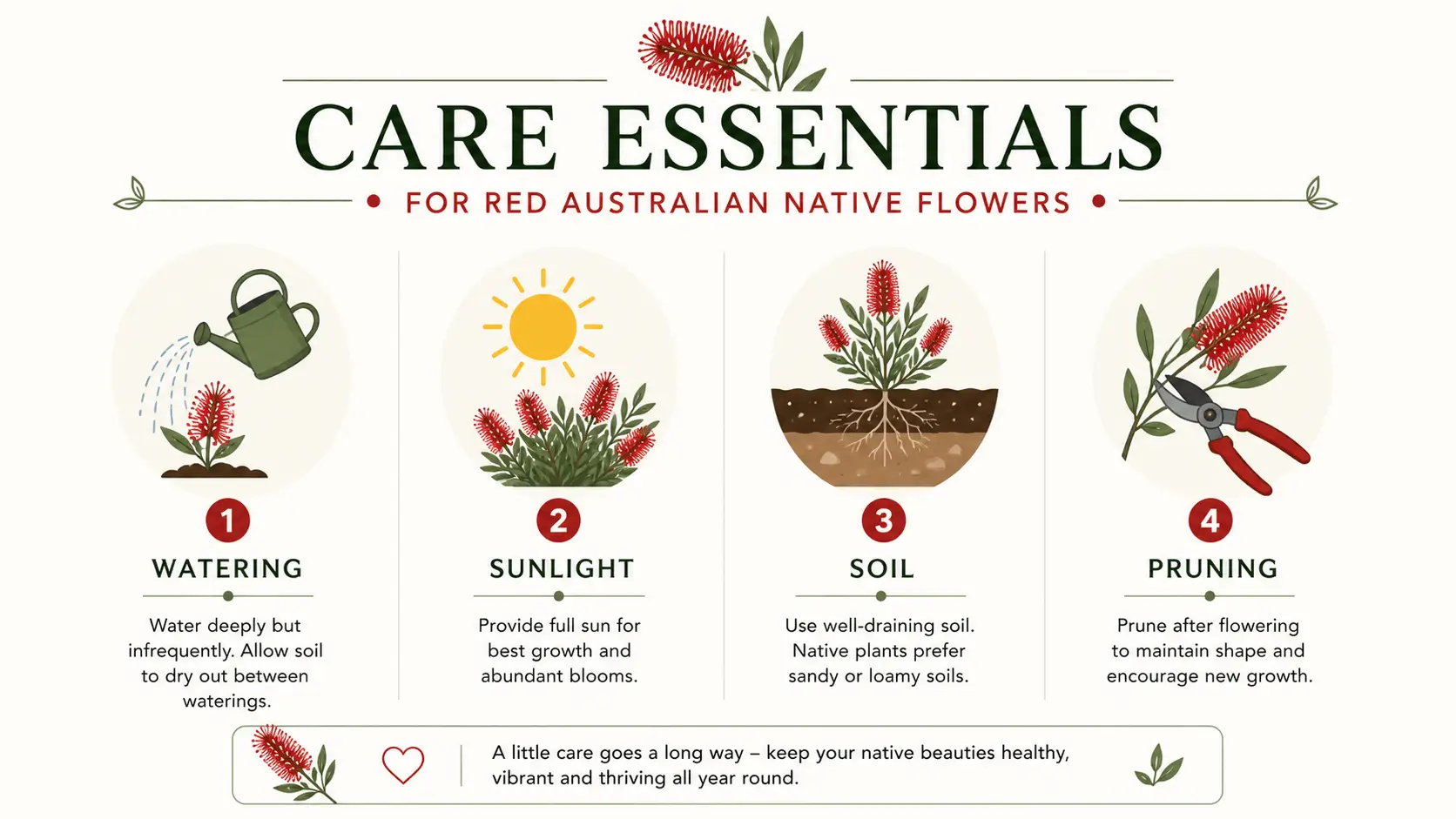
- Require minimal watering once established
- Prefer well-drained soils to prevent root issues
Light Requirements
- Most species grow best in full sun
- Some tolerate partial shade depending on variety
Pruning and Maintenance
- Prune after flowering to maintain shape
- Remove dead or damaged branches regularly
Fertilization Considerations
- Use low-phosphorus fertilizers formulated for native plants
- Avoid excessive fertilization, which can harm roots
Common Problems and Solutions
Yellowing Leaves or Poor Flowering
This issue is often caused by overwatering or poor soil drainage. Improving drainage and reducing watering frequency typically resolves the problem.
Pest and Disease Issues
Common pests include:
- Aphids
- Scale insects
Solutions:
- Use natural pest control methods
- Maintain healthy plant conditions
Slow Growth or Weak Plants
This may result from nutrient imbalance or incorrect planting location.
Solutions:
- Adjust soil composition
- Ensure adequate sunlight exposure
Beginner Mistakes to Avoid with Red Native Australian Flowers
- Overwatering plants that are naturally drought-tolerant
- Using fertilizers high in phosphorus
- Planting in heavy or poorly drained soils
Avoiding these mistakes helps maintain plant health and consistent flowering.
Environmental Benefits of Red Australian Native Flowers
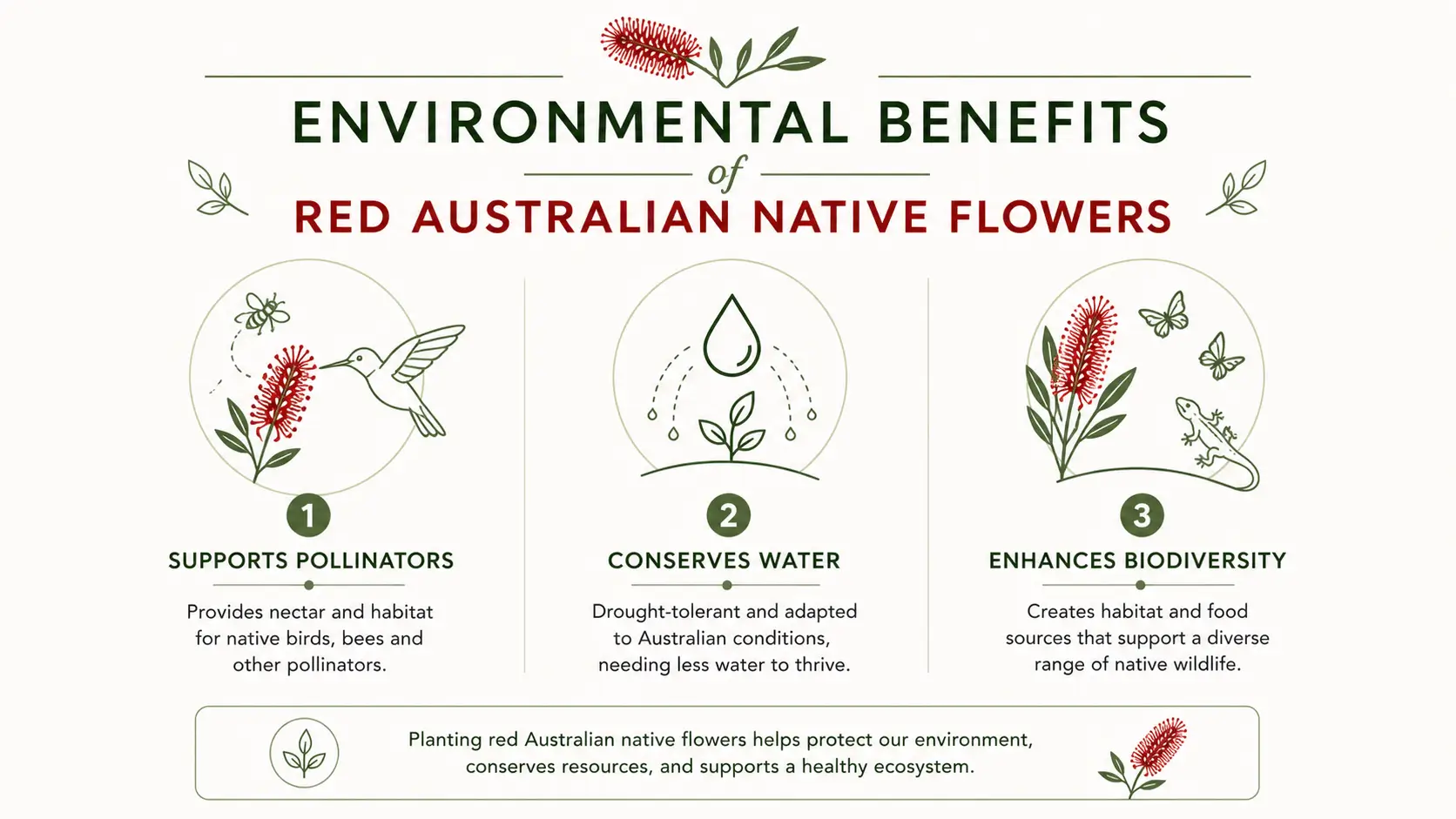
Supporting Wildlife and Pollinators
Red Australian native flowers play a vital role in ecosystems by:
- Attracting birds such as honeyeaters
- Supporting bees and beneficial insects
Sustainability Benefits
- Reduce water usage due to drought tolerance
- Lower maintenance requirements
- Support ecological balance in gardens
Chart Section: Overview of Australian Red Wildflowers
| Plant Type | Example | Growth Habit | Best Use |
| Tree | Flowering Gum | Tall, spreading | Shade, focal point |
| Shrub | Bottlebrush | Dense, bushy | Hedges, borders |
| Ground Cover | Prostrate Grevillea | Low, spreading | Soil coverage |
| Foliage Plant | Red-leaf shrub | Compact | Decorative contrast |
How to Choose the Right Red Australian Native Flower
Based on Space and Size
- Small gardens benefit from compact shrubs and ground covers
- Large landscapes can accommodate trees and spreading shrubs
Based on Climate and Soil
- Coastal areas require salt-tolerant species
- Inland regions benefit from drought-resistant plants
Based on Visual Goals
- Choose flowering plants for seasonal color
- Select foliage plants for year-round visual interest
Conclusion
Red Australian native flowers offer a balanced combination of visual appeal, resilience, and ecological value. Their ability to thrive in local conditions with minimal maintenance makes them ideal for sustainable landscaping. From shrubs and trees to ground covers, these plants provide flexibility in garden design while supporting biodiversity. By selecting suitable species and following proper care practices, gardeners can achieve long-lasting, vibrant displays using red Australian native flowers. For a broader understanding of plant care, growth, and selection, explore our complete Plants: Benefits and Guides resource covering various plant types and gardening insights.
FAQs
1. What are the most common red Australian native flowers?
Common examples include bottlebrush, grevillea, and flowering gum trees, all known for their bright red blooms and adaptability.
2. How do I care for red Australian native flower plants?
They require full sun, well-drained soil, minimal watering, and low-phosphorus fertilizers for healthy growth.
3. Can red native flowers grow in all parts of Australia?
Many species are adaptable, but certain varieties are better suited to specific climates such as coastal or arid regions.
4. What is the difference between red foliage plants and red flowering plants?
Red foliage plants provide color through leaves year-round, while flowering plants produce seasonal red blooms.
5. How long do red Australian native flowers bloom?
Bloom duration varies, but many species flower seasonally, especially during spring and summer.
6. Are red Australian native flowers good for landscaping?
Yes, they are widely used due to their drought tolerance, low maintenance, and strong visual impact.



One Response