Introduction
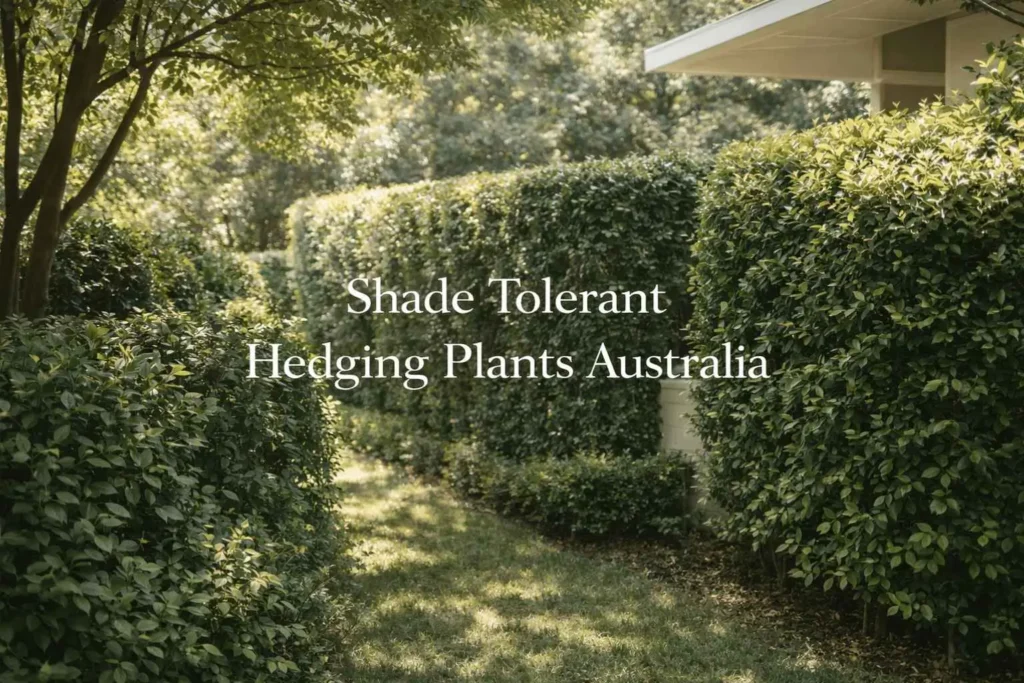
Shade tolerant hedging plants Australia refers to plant species that can grow densely and form effective hedges even in low-light or partially shaded environments. These plants are ideal for gardens with limited sunlight, urban courtyards, or areas under trees where traditional hedges struggle to thrive. Choosing the right shade hedge plants Australia ensures year-round privacy, structure, and greenery without compromising plant health. Unlike sun-dependent species, these hedges adapt to reduced light while still maintaining foliage density and growth consistency.
Quick Summary
- Shade tolerant hedging plants Australia thrive in low-light or filtered sunlight conditions.
- Evergreen varieties are best for year-round screening and privacy.
- Growth rate, height, and maintenance needs vary depending on species and climate.
- Selecting the right hedge depends on shade level, soil, and intended screening height.
What Are Shade Tolerant Hedging Plants and How Do They Work?
Understanding Shade Tolerance in Plants
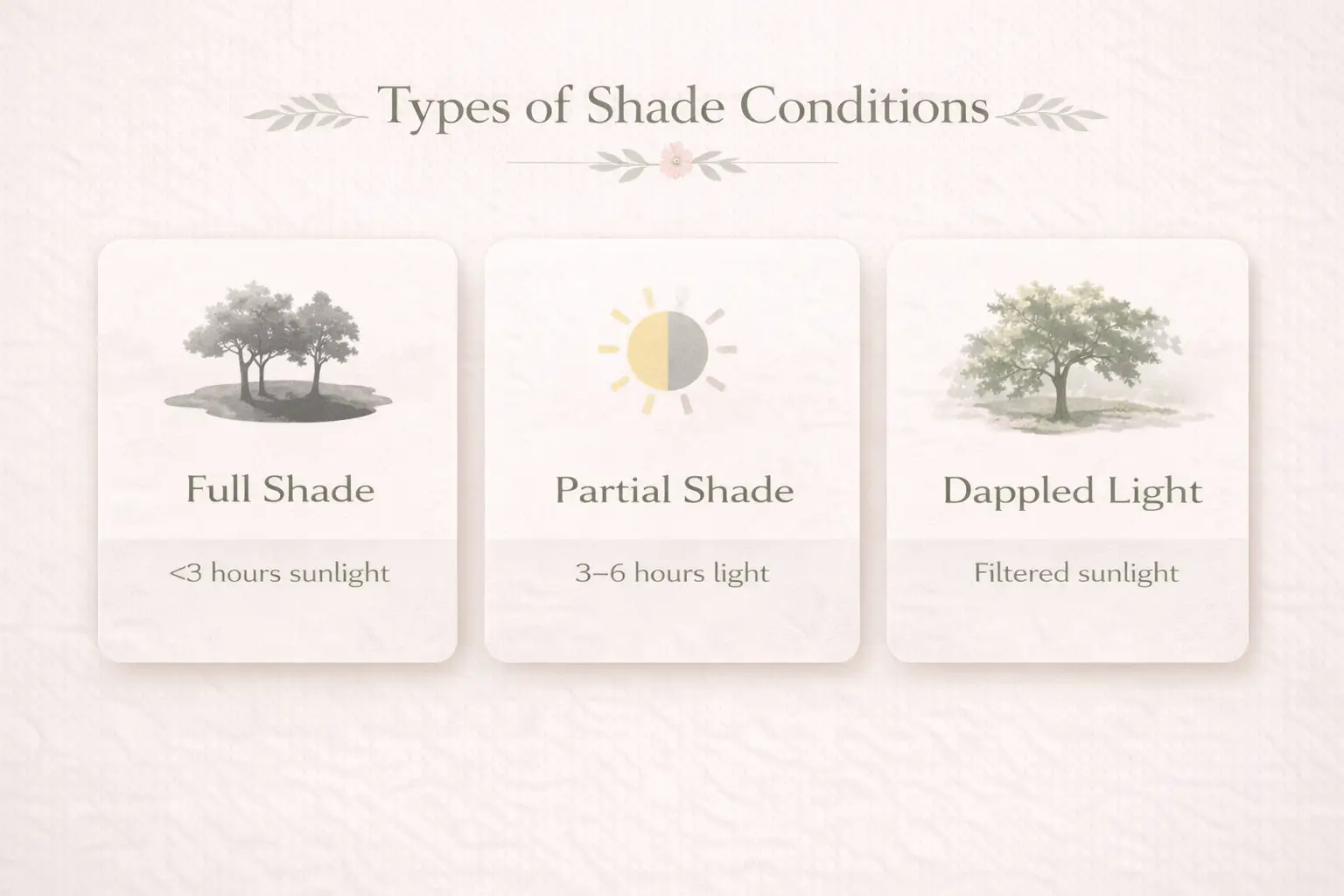
Shade tolerant hedging plants are species adapted to grow with reduced sunlight by maximizing light absorption and minimizing energy loss.
- Full shade: Less than 3 hours of direct sunlight per day
- Partial shade: 3–6 hours of filtered or indirect light
- Dappled light: Sunlight filtered through trees
Plants that grow in shade Australia often develop:
- Larger, thinner leaves to capture more light
- Slower growth habits to conserve energy
- Flexible branching structures for light access
Shade tolerance in plants is closely linked to how they adapt to low-light environments, a concept widely studied in plant ecology and photosynthesis (see Shade tolerance).
What Makes a Good Shade Hedge Plant
A shade tolerant hedge Australia must maintain structure and density despite reduced sunlight.
Key characteristics include:
- Dense foliage for privacy and screening
- Upright growth habit even in shaded areas
- Ability to remain evergreen or semi-evergreen
Hedge plants that grow in shade differ from sun-loving hedges by prioritizing survival efficiency over rapid growth. The best hedge grows well in shade when it balances density, adaptability, and low-light performance.
Best Shade Tolerant Hedging Plants Australia (Top Choices)
Evergreen Shade Hedging Plants for Year-Round Privacy
Evergreen varieties provide continuous coverage, making them ideal shade hedge plants Australia.
Common options:
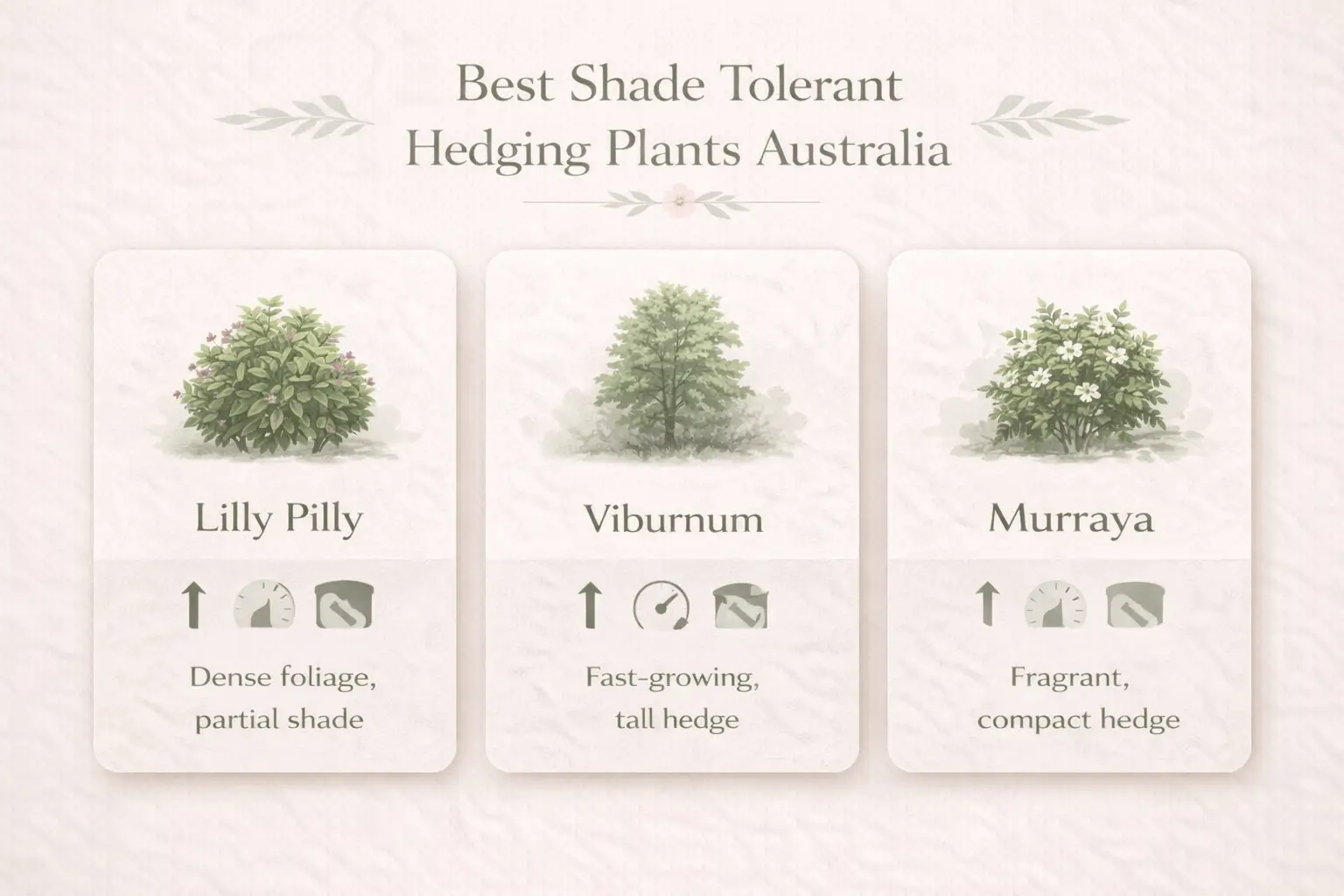
- Lilly Pilly (Syzygium spp.) – Some varieties tolerate partial shade and offer dense foliage
- Viburnum (Viburnum odoratissimum) – Reliable evergreen screening plant for low light
- Murraya (Murraya paniculata) – Performs well in partial shade with fragrant foliage
When selecting varieties like Lilly Pilly for shaded hedges, understanding different cultivars can help you choose the most suitable option—see “Types of Lilly Pilly” for a detailed breakdown of heights, growth habits, and hedge suitability. If you want to compare all 25 evergreen options side-by-side instead of just these top picks, use our interactive shade hedge selector tool to filter by light level, height, and climate. It’s a free, sortable comparison built specifically for Australian shade gardens.
Tall Shade Tolerant Hedging Plants Australia
For privacy and boundary hedges, taller species are preferred.
Examples include:
- Viburnum varieties reaching 3–5 meters
- Lilly Pilly cultivars suited for shaded areas
- Other tall full shade plants Australia capable of forming vertical screens
These plants are ideal for:
- Backyard privacy barriers
- Boundary definition
- Wind protection
Low Maintenance Shade Tolerant Hedging Plants Australia
Low maintenance options are ideal for busy gardeners or low-intervention landscapes.
Characteristics:
- Slow to moderate growth
- Minimal pruning requirements
- Lower water demand once established
Best choices include hardy evergreen shrubs that adapt well to plants in shaded areas without constant care.
Shade Screening Plants vs Traditional Hedging Plants
Key Differences Between Screening and Hedging
Screening plants and hedges serve similar purposes but differ in structure and maintenance.
- Screening plants:
- Faster-growing
- Less formal appearance
- Require minimal shaping
- Hedges:
- Structured and neatly trimmed
- Denser foliage
- Require regular pruning
Best Shade Screening Plants Australia
Shade screening plants provide quick privacy in low-light environments.
- Shade screening plants for quick privacy
- Screening plants in shade vs hedge plants
- Best screening plants Australia for low light
Shade tolerant screening plants Australia are ideal when:
- Immediate coverage is needed
- A natural, informal look is preferred
- Maintenance needs must remain low
Choose screening plants for shade when flexibility and speed matter more than formal structure. For faster privacy solutions in low-light gardens, you can also explore broader options like “Tropical Screening Plants”, which includes adaptable species suitable for shaded and semi-shaded conditions.
How to Choose the Right Hedge for Shade Conditions
Factors to Consider Before Planting
Selecting the right hedge depends on environmental and design factors.
Key considerations:
- Light availability (full shade vs part shade plants Australia)
- Soil type and drainage quality
- Desired hedge height and density
Climate-Specific Choices (Brisbane & Warm Regions)
Climate plays a major role in plant success.
- Best hedge plants Brisbane thrive in humidity
- Hedging plants Brisbane must tolerate heat and moisture
- Tropical and subtropical species perform better in warm climates
If you’re planting in warmer regions, following a seasonal approach can improve success—refer to “Brisbane Planting Guide” to align hedge selection with local climate conditions.
Key points:
- Plants for shaded areas Australia vary by region
- Plants for part shade Australia adapt better than full shade specialists
- Shade tolerant plants Australia differ significantly from full sun plants
Want a printable, region-by-region checklist to take shopping? Access our downloadable hedge selection spreadsheet, which lists climate, water needs, and coastal tolerance per plant. It’s ideal for cross-checking against your local growing conditions before purchase.
Growth Rate and Size of Shade Tolerant Hedges
Growth Speed Explained
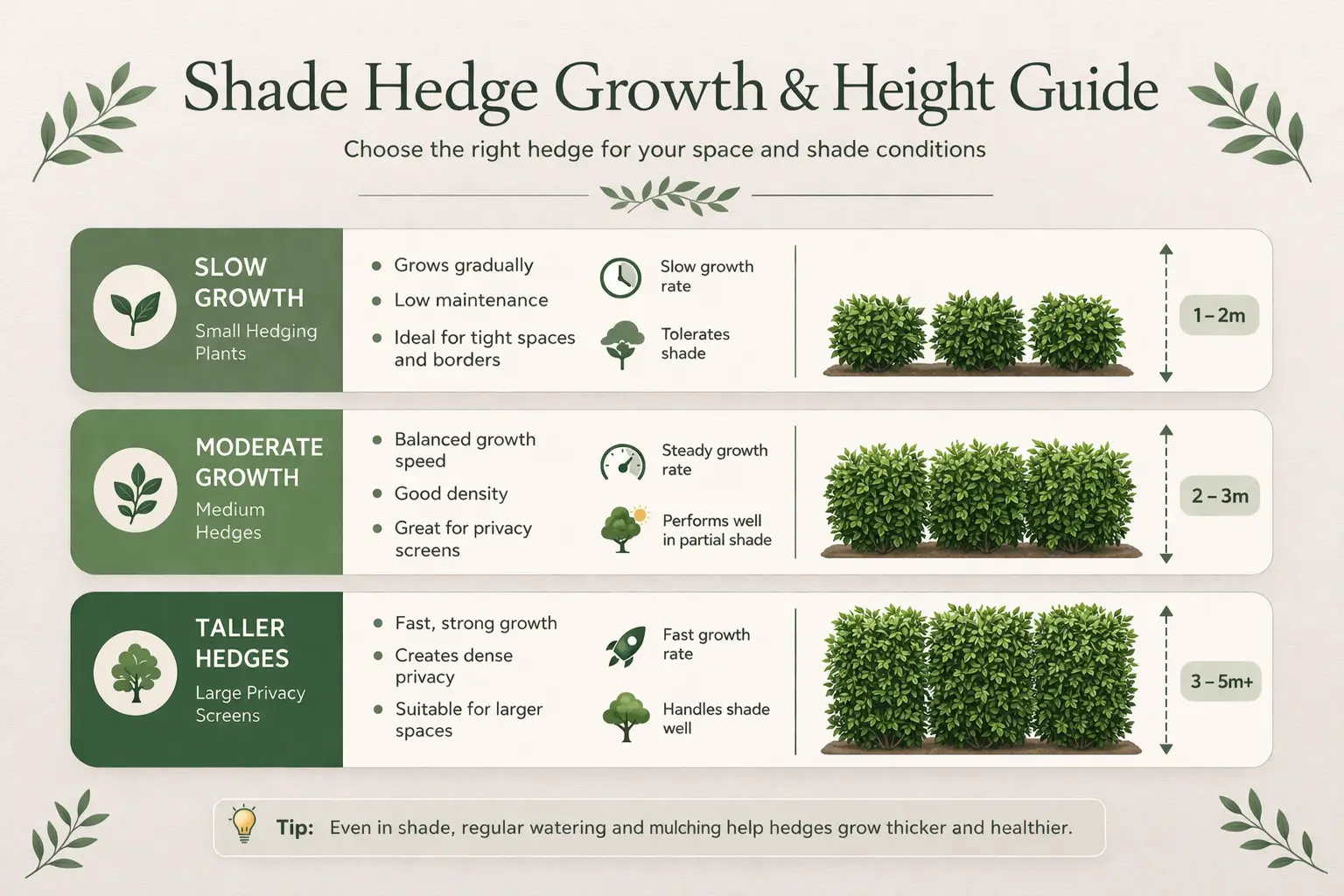
Shade tolerant hedging plants generally grow slower due to reduced sunlight.
- Slow-growing: minimal yearly height increase
- Moderate growth: steady development with proper care
- Fast-growing: limited in shaded environments
Shade reduces photosynthesis, which directly affects growth rate.
Typical Hedge Height and Spread
Hedge size depends on species and conditions.
- Small hedges: 1–2 meters
- Medium hedges: 2–3 meters
- Tall full shade plants Australia: 3 meters or more
For a deeper breakdown of each species beyond this summary table, browse our full plant reference database on Notion, covering growth notes, cultivar variations, and regional suitability. It’s the detailed companion to the quick stats listed here.
Table: Shade Hedge Growth Overview
| Plant Type | Growth Rate | Max Height | Shade Tolerance Level |
| Lilly Pilly | Moderate | 3–5m | Partial shade |
| Viburnum | Moderate-fast | 3–5m | Partial to full shade |
| Murraya | Moderate | 2–4m | Partial shade |
Hedges that grow in shade typically develop slower but can still achieve full coverage over time.
Care Guide for Shade Tolerant Hedging Plants
Watering and Soil Needs
Proper soil and watering are essential for success.
- Use well-draining soil to prevent root rot
- Reduce watering frequency in shaded areas
- Maintain consistent moisture without waterlogging
Light Requirements and Placement
Correct placement improves growth performance.
- Position plants where they receive filtered light
- Avoid deep shade unless species are highly tolerant
- Balance shade exposure with airflow
Pruning and Maintenance
Regular maintenance ensures density and shape.
- Prune lightly but consistently
- Remove weak or leggy growth
- Shape hedges to encourage bushiness
Key care tips:
- Fertilizing in low-light conditions improves growth
- Preventing leggy growth requires strategic pruning
- Encouraging thick foliage depends on light and spacing
Common Problems with Shade Hedging Plants (And How to Fix Them)
Slow Growth in Deep Shade
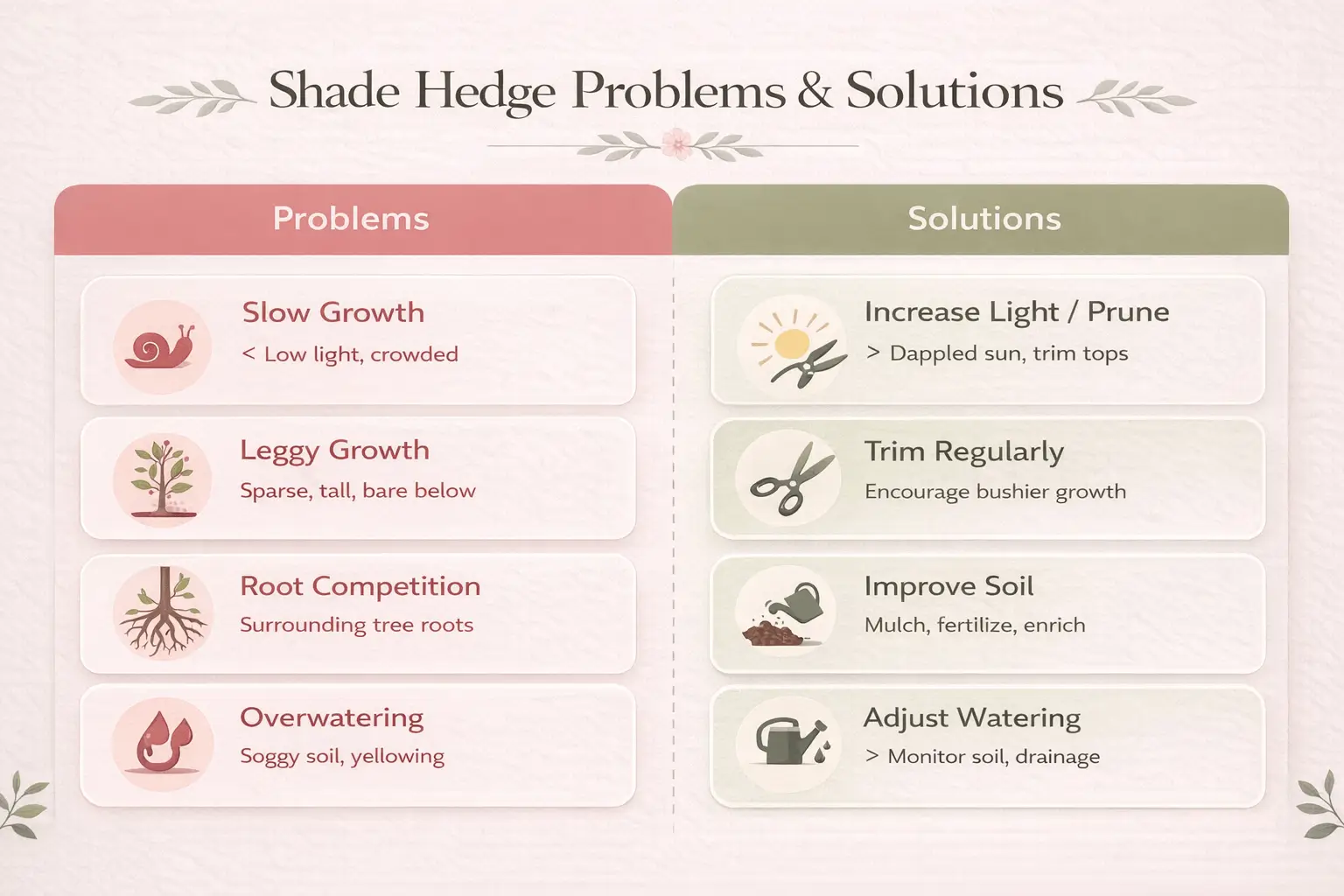
Answer: Slow growth occurs due to insufficient light and reduced photosynthesis.
- Cause: inadequate sunlight
- Fix: increase light exposure or selective pruning
Sparse or Leggy Growth
Answer: Leggy growth happens when plants stretch toward available light.
- Cause: low light levels
- Fix: trim regularly and adjust spacing
Root Competition and Soil Issues
Answer: Root competition reduces nutrient availability, especially under trees.
- Cause: competing roots and poor soil
- Fix: improve soil quality and apply mulch
Hedge plants that do well in shade require balanced care to avoid these issues.
Comparison: Shade Tolerant vs Sun-Loving Hedge Plants
Key Differences in Growth and Maintenance
| Feature | Shade Tolerant Hedging Plants | Sun-Loving Hedge Plants |
| Growth Speed | Slower | Faster |
| Density | Moderate | Dense |
| Maintenance | Lower | Moderate |
| Light Needs | Low to partial | Full sun |
Shade hedge plants are best suited for low-light environments, while sun hedges perform better in open, sunny areas.
Beginner Mistakes to Avoid When Planting Shade Hedges
Common mistakes can limit hedge success in shaded environments.
- Choosing sun-only species for shaded areas
- Overwatering in low-light conditions
- Planting too close together
- Ignoring soil quality
Avoiding these errors improves long-term hedge performance and health.
Conclusion
Shade tolerant hedging plants Australia provide a practical solution for creating privacy, structure, and greenery in low-light gardens. By selecting the right species based on shade level, climate, and maintenance needs, gardeners can achieve healthy, dense hedges even in challenging conditions. Understanding growth patterns, care requirements, and common issues ensures long-term success with any shade hedge Australia setup.
FAQs
What hedge grows well in shade in Australia?
Plants like Viburnum, Lilly Pilly, and Murraya are among the best hedges that grow in shade Australia due to their adaptability and dense foliage.
Can hedges grow in full shade or only partial shade?
Most hedge plants that grow in shade prefer partial shade, but some species can tolerate deep shade with slower growth.
What are the best low maintenance shade hedging plants?
Low maintenance shade tolerant hedging plants Australia include slow-growing evergreen shrubs that require minimal pruning and watering.
Are there tall shade tolerant hedging plants for privacy?
Yes, tall shade tolerant hedging plants Australia can reach 3–5 meters, making them ideal for screening and boundary hedges.
Do shade hedges grow slower than sun hedges?
Yes, hedges that grow in shade typically have slower growth rates due to reduced sunlight, but they can still form dense screens over time.



One Response