
Introduction
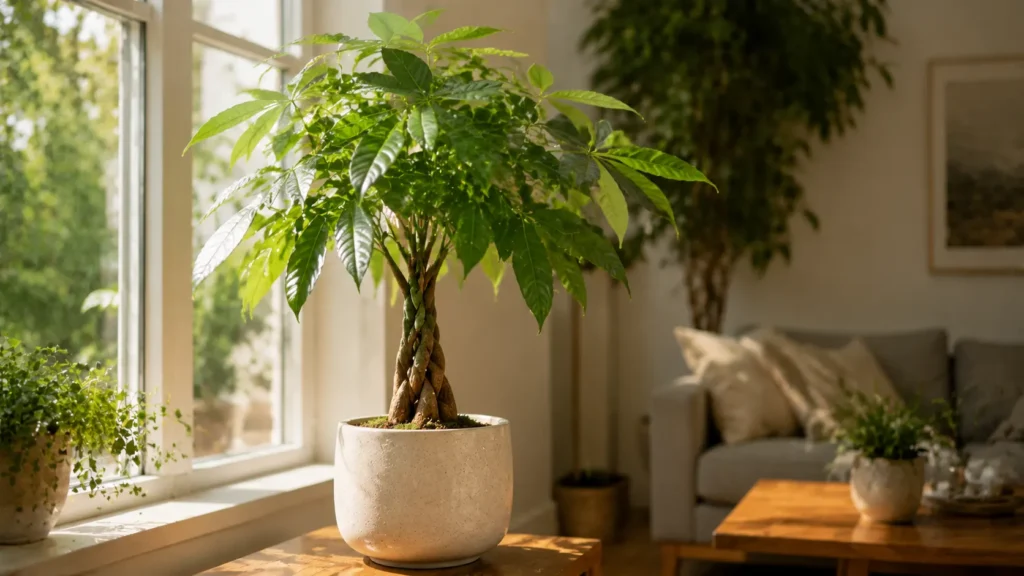
Pachira aquatica problems refer to a set of common growth and health issues affecting the money tree plant, a tropical houseplant native to Central and South American wetlands. Pachira aquatica, commonly known as the money tree or Guiana chestnut, is widely grown indoors for its braided trunk and ornamental foliage. Most problems arise from incorrect watering, poor drainage, or insufficient light rather than disease. Understanding these issues helps plant owners quickly diagnose symptoms and restore plant health effectively.
Quick Summary
- Most pachira aquatica problems are caused by overwatering, poor drainage, or low light conditions.
- Yellow or brown leaves usually indicate environmental stress rather than permanent damage.
- Root rot is the most serious issue but can often be reversed if detected early.
- Proper soil, watering balance, and consistent indirect light prevent most issues.
What Is Pachira Aquatica (Money Tree)?
Overview of the Money Tree Plant
Pachira aquatica is a tropical wetland tree species commonly grown as an indoor ornamental plant known as the money tree. It belongs to the Malvaceae family and is native to Central and South America, especially swampy regions.
Common Names and Characteristics
The plant is widely recognized as:
- Money tree
- Guiana chestnut
- Pachira money tree
It is characterized by a braided trunk, glossy green leaves, and a symbolic association with prosperity in feng shui traditions. The pachira aquatica money tree is often kept indoors as a decorative and low-maintenance houseplant.
Pachira Aquatica Size and Growth Rate
Typical Mature Size (Indoor vs Outdoor)
Indoors, the money tree plant usually grows between 3 to 6 feet tall depending on pot size and pruning. Outdoors in tropical conditions, pachira aquatica can reach up to 60 feet in height with a broad canopy.
Growth Rate and Seasonal Patterns
The money tree indoor plant has a moderate growth rate. It grows faster in spring and summer when light and warmth are optimal, while growth slows significantly during winter due to reduced light exposure and cooler temperatures. Growth variability is also discussed in Alocasia Zebrina Care Guide: Complete Indoor Growing Tips, where environment strongly influences plant size.
Common Pachira Aquatica Problems (Overview)
Pachira aquatica problems are usually easy to identify through visible symptoms such as leaf discoloration or structural changes.
Common Issues Include:
- Yellowing leaves
- Leaf drop
- Root rot
- Soft or swollen trunk
- Brown leaf tips
- Pest infestations
- Slow or stunted growth
Quick-Reference Table
| Symptom | Likely Cause | Severity Level |
| Yellow leaves | Overwatering or low light | Medium |
| Brown leaves | Dry air or underwatering | Medium |
| Soft trunk | Root rot | High |
| Leaf drop | Stress or temperature change | Medium |
| Stunted growth | Nutrient/light deficiency | Low–Medium |
Why Are Pachira Aquatica Leaves Turning Yellow?
Overwatering and Root Rot
Overwatering is the most common cause of pachira aquatica yellow leaves. Excess moisture damages roots, reducing oxygen intake and leading to chlorosis. Fix this by allowing soil to dry and improving drainage.
Underwatering and Dry Soil
Underwatering causes leaves to turn pale yellow and crispy. The plant becomes dehydrated and loses turgor pressure. Water consistently when the top 2–3 inches of soil feel dry. This pattern is also seen in Syngonium Leaves Turning Yellow: Causes and Solutions, where inconsistent watering leads to similar leaf discoloration.
Low Light or Sudden Light Change
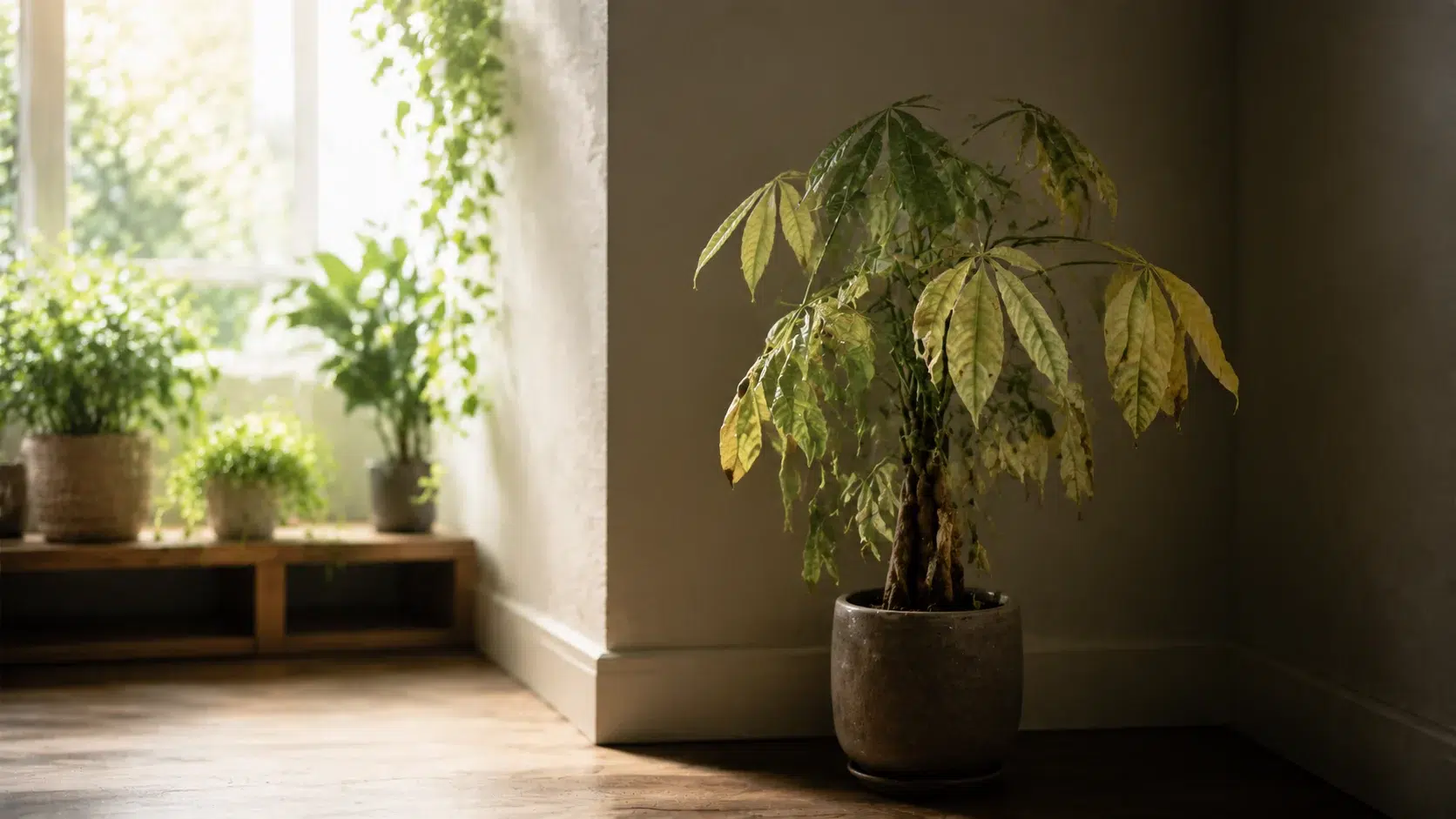
Insufficient light slows photosynthesis, resulting in weak, yellow foliage. Move the plant to bright, indirect light for recovery.
Seasonal Yellowing in Winter
During winter, money tree leaves turning yellow is often natural due to slower growth cycles. Reduce watering during this period.
Why Is My Pachira Aquatica Dying?
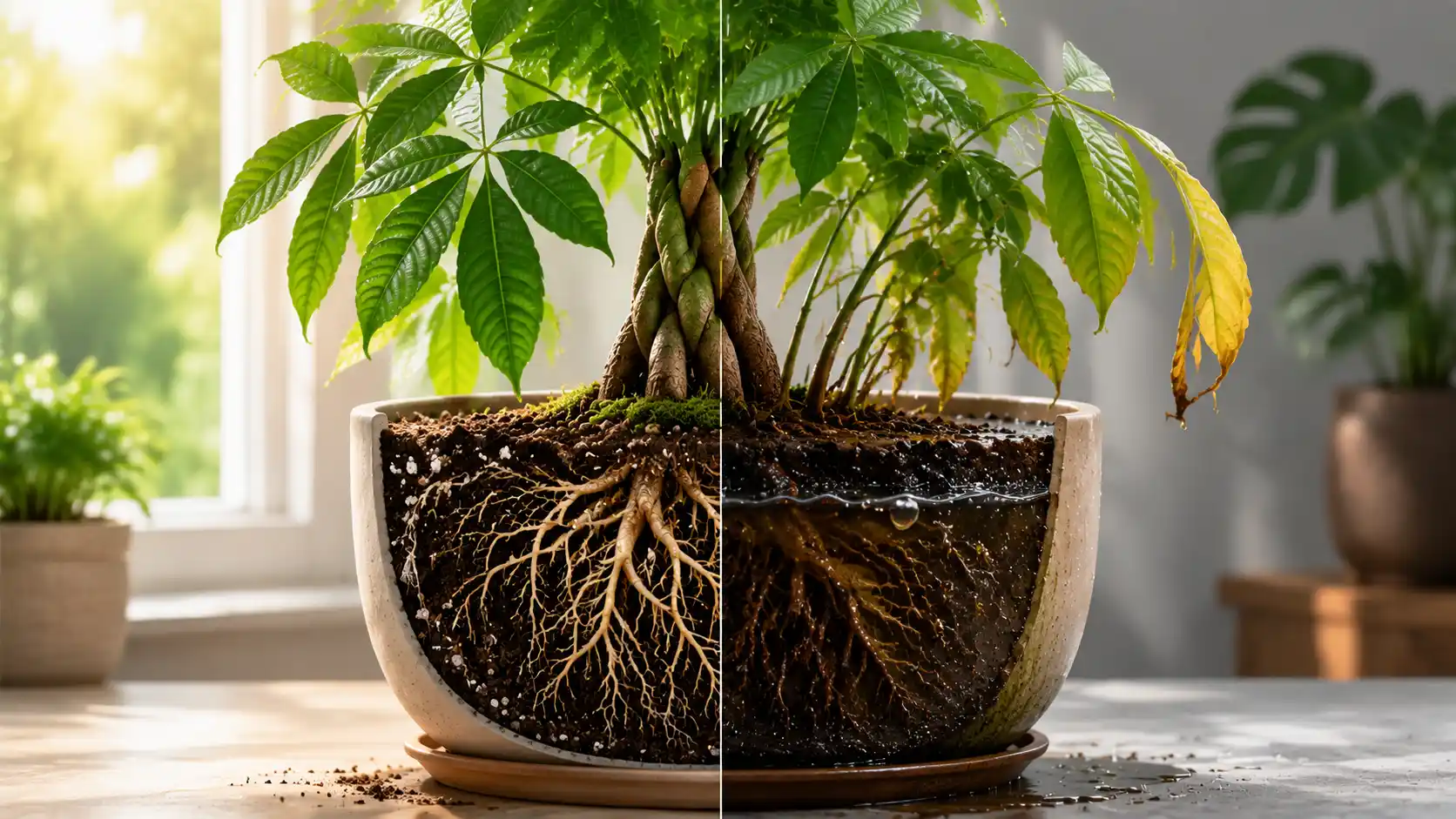
Root Rot From Overwatering
Root rot is the most severe pachira aquatica dying issue. It occurs when roots remain waterlogged, leading to decay and fungal infection.
Poor Drainage or Incorrect Soil
Heavy soil retains moisture, suffocating roots. Use well-draining soil to restore plant health.
Pest Infestations
Spider mites, scale, and mealybugs weaken the plant by feeding on sap, causing decline. Common indoor pest problems are also explained in Bugs in Indoor Plant Soil: Identification, Treatment & Prevention, which helps identify early infestations.
Leaf Spots and Leaf Rot
Fungal infections cause brown spots and decay on leaves, often linked to excess humidity.
Cold Damage or Drafts
Exposure to cold air causes sudden leaf drop and stress.
How to Diagnose Pachira Aquatica Problems
Visual Symptom Identification
- Yellow leaves → watering or light issue
- Brown spots → fungal infection
- Soft trunk → root rot
- Leaf drop → environmental stress
Growth behavior differences are also explored in Monstera Adansonii Hanging or Climbing, helping understand plant structural responses.
Symptom-to-Cause Comparison Table
| Symptom | Possible Cause | Recommended Fix |
| Yellow leaves | Overwatering | Adjust watering |
| Soft trunk | Root rot | Repot plant |
| Leaf drop | Temperature stress | Stabilize environment |
| Brown spots | Fungal disease | Remove infected leaves |
How to Fix and Revive a Dying Money Tree
To save a dying money tree, follow these steps:
- Remove plant from pot and inspect roots
- Trim all mushy or rotten roots
- Repot in fresh, well-draining soil
- Place in bright indirect sunlight
- Adjust watering schedule (only when dry)
- Treat pests with mild insecticidal soap
- Avoid fertilizing until recovery begins
Recovery techniques are similar to those used in Caring for a Ficus Elastica: Complete Indoor Care Guide, where root and soil correction is essential.
Healthy vs. Unhealthy Money Tree
Healthy Signs
- Firm, braided trunk
- Deep green leaves
- Consistent new growth
Unhealthy Signs
- Soft or mushy trunk
- Yellow or brown leaves
- Leaf drop
- Stunted growth
Hardy indoor plants like those in Sansevieria Laurentii Care Guide: Complete Indoor Tips provide a contrast in resilience compared to money trees.
Pachira Aquatica Care Guide
Watering Needs
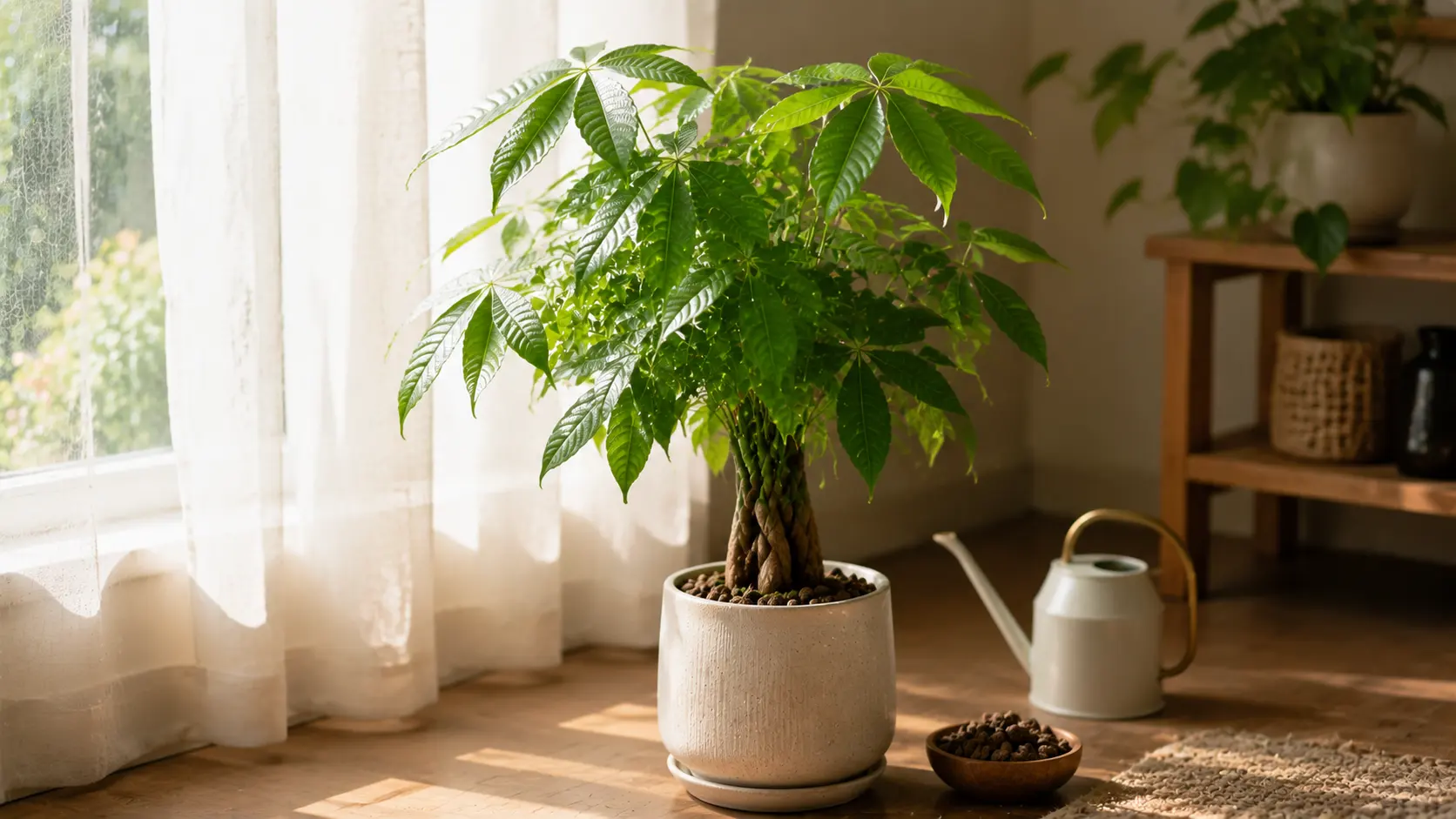
Water when the topsoil is dry; avoid waterlogging. Similar watering balance is required in plants such as the Areca Palm Care Guide: Complete Growing & Maintenance Tips, where overwatering is a common issue.
Light Requirements
Bright, indirect light is ideal for pachira plant care. Indoor plants like the Calathea Orbifolia Care Guide: Light, Water & Growth Tips also highlight how sensitive tropical plants are to indirect light conditions.
Soil Preferences
Use well-draining soil with sand or perlite.
Fertilization Practices
Feed monthly during growing season.
Climate Tolerance
Best grown indoors in non-tropical climates.
How to Prune a Pachira Aquatica
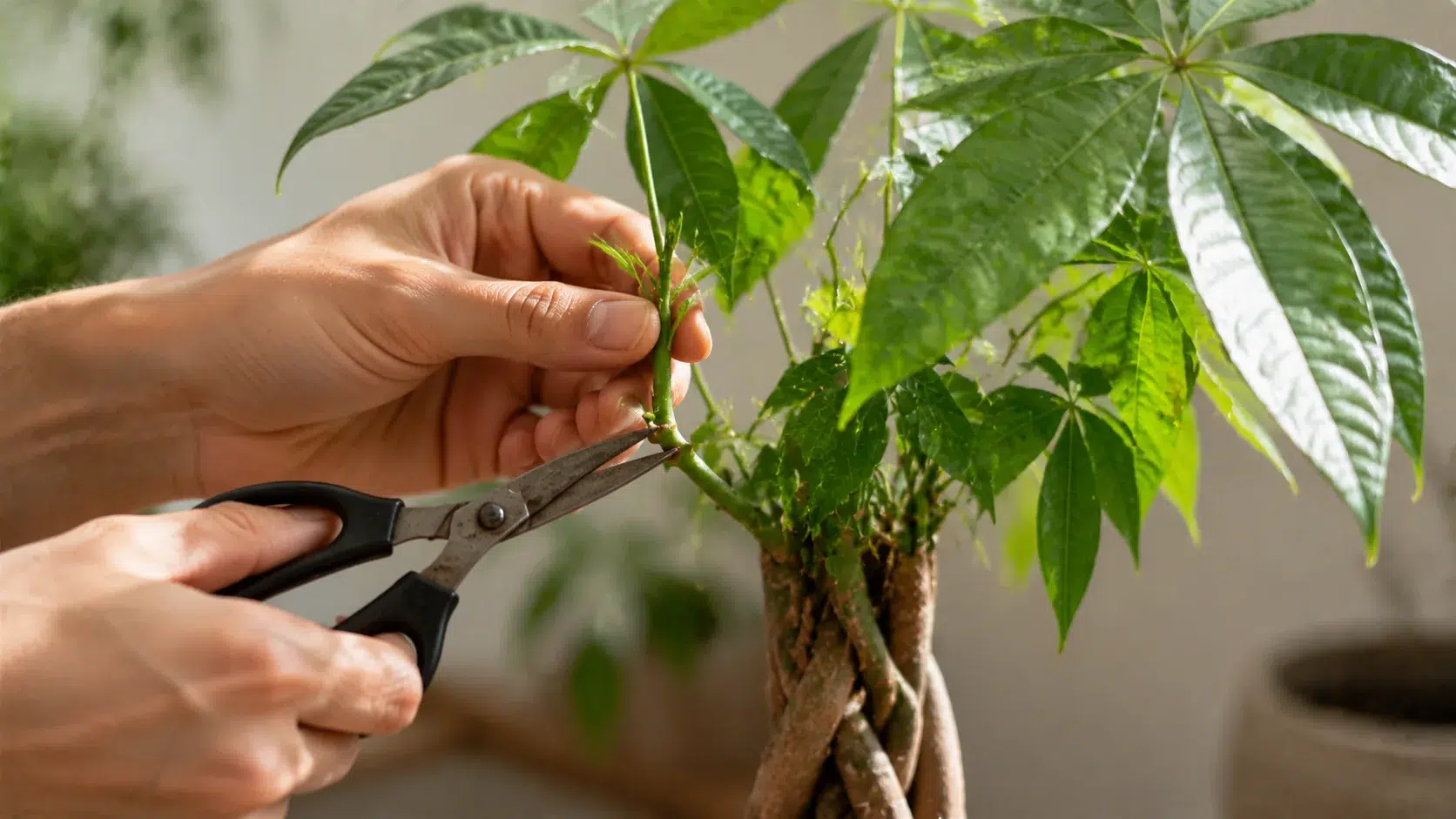
When and How to Prune
Prune in spring using sterilized scissors. Remove dead or overgrown stems to maintain shape and encourage growth.
How to Propagate Pachira Aquatica
Stem Cutting Method
Cut healthy stems and place in water or soil until roots develop.
Rooting Timeline
Roots typically form within 3–6 weeks under warm conditions.
Pachira Aquatica Benefits and Properties
Key Benefits
- Air-purifying qualities
- Low maintenance indoor plant
- Decorative braided trunk aesthetic
- Considered non-toxic to humans and pets
Common Beginner Mistakes
Frequent Errors
- Overwatering “just in case”
- Using heavy, non-draining soil
- Placing in direct sunlight
- Ignoring winter dormancy
- Skipping root checks during repotting
Similar beginner mistakes are also seen in Dracaena fragrans Care Guide: Complete Indoor Growing Tips, especially related to watering and light placement.
Conclusion
Most pachira aquatica problems are linked to watering imbalance, poor drainage, or insufficient light rather than serious disease. With correct pachira aquatica care, including proper soil, controlled watering, and stable lighting, a money tree plant can recover from most issues and thrive long-term. For broader plant care insights, you can explore our pillar guide on Plants Benefits and Guides, which covers comprehensive care systems for indoor and outdoor plants.
FAQs
Why are my pachira aquatica leaves turning yellow?
Yellow leaves are usually caused by overwatering, poor drainage, or low light conditions affecting the plant’s ability to photosynthesize properly.
How do I know if my money tree is dying or just stressed?
A dying plant shows soft trunk, severe leaf drop, and root rot, while a stressed plant typically has minor yellowing or temporary drooping.
How often should I water a pachira aquatica?
Water only when the top 2–3 inches of soil are dry, usually once every 1–2 weeks depending on environment.
Can a money tree recover from root rot?
Yes, if caught early. Remove damaged roots, repot in fresh soil, and adjust watering habits.
Is pachira aquatica toxic to pets or humans?
No, pachira aquatica is generally considered non-toxic to both pets and humans.
How do I prune a money tree without harming it?
Use sterilized tools, prune during active growth season, and avoid removing more than 30% of foliage at once.