
Introduction
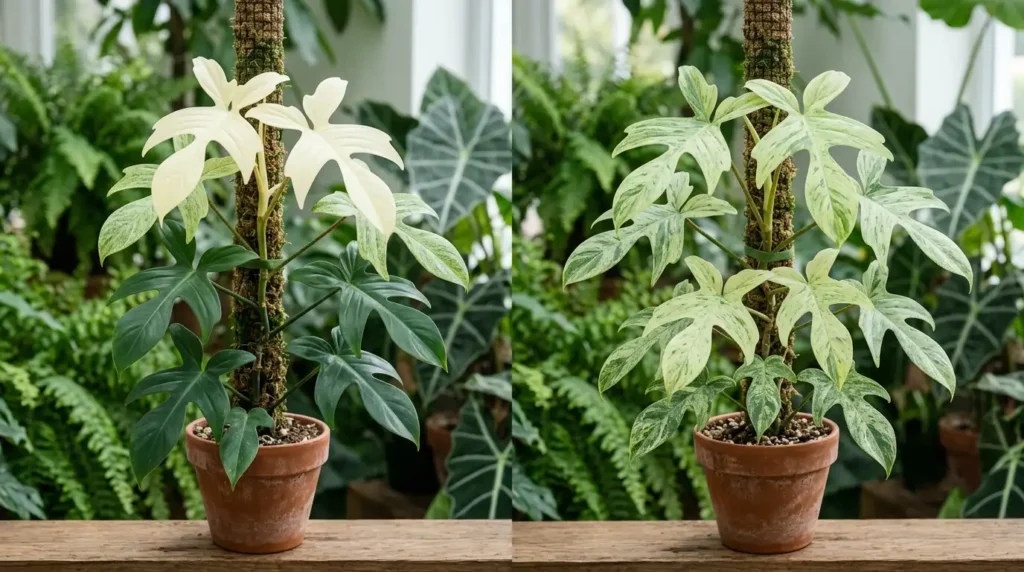
Florida Ghost vs Florida Ghost Mint refers to the difference between two rare variegated forms of Philodendron ‘Florida Ghost’. Both plants produce pale, ghost-like new leaves that gradually develop more green as they mature, but they differ in color tone, variegation persistence, and rarity. Florida Ghost typically emerges with white or cream leaves that fade into green, while Florida Ghost Mint keeps a softer pastel mint-green appearance for longer. Both are climbing aroids related to the Philodendron Florida Beauty group and share similar care requirements, although Ghost Mint generally requires more consistent light to maintain its unique coloring. Florida Ghost is one of many unique ornamental plants that require specific growing conditions, and understanding general plant care principles can help improve success with rare houseplants. Learn more in our complete guide to Plants: Benefits and Guides (Complete Care, Types & Growing Tips).
Quick Summary
- Florida Ghost develops white or cream new leaves that gradually mature into green foliage.
- Florida Ghost Mint maintains pastel mint-green variegation longer than standard Florida Ghost.
- Florida Ghost Mint is considered a rarer and more collectible form within the Florida Ghost line.
- Both cultivars are climbing philodendrons with deeply lobed leaves similar to Philodendron Florida Beauty.
- Care requirements are almost identical, but Ghost Mint benefits from stronger indirect light for color retention.
What Is Philodendron Florida Ghost?
Philodendron Florida Ghost is a variegated climbing aroid known for its striking white new growth that slowly changes into green as the leaves mature. Its botanical classification places it within the Philodendron genus, a large group of tropical plants in the Araceae family. Florida Ghost belongs to the large Philodendron genus, a group of tropical flowering plants in the Araceae family known for their ornamental foliage.”
The plant is recognized for its deeply lobed leaves, similar to Philodendron Florida Beauty, with a climbing growth habit that allows it to produce larger foliage when given proper support. Like other highly valued variegated houseplants such as Variegated Monstera Deliciosa, Florida Ghost requires balanced light, watering, and nutrition to maintain healthy growth and attractive foliage.
The “ghost” appearance comes from new leaves having very little chlorophyll. As the plant develops, chlorophyll production increases, causing the leaves to transition from pale white or cream shades into different levels of green. Florida Ghost belongs to the Philodendron family, which includes other popular climbing varieties such as Philodendron Scandens, known for their adaptable growth habits and indoor-friendly care requirements.
Where Florida Ghost Comes From (Brief Lineage)
Florida Ghost is associated with the Philodendron Florida hybrid group, which is connected to the Florida Beauty and Philodendron pedatum family line. These hybrids are valued for their unusual leaf shapes, climbing structure, and decorative variegation.
The plant is considered a cultivar rather than a naturally occurring species. Its unique appearance results from selective propagation and stable genetic traits found within cultivated Philodendron hybrids.
Leaf Maturation Process
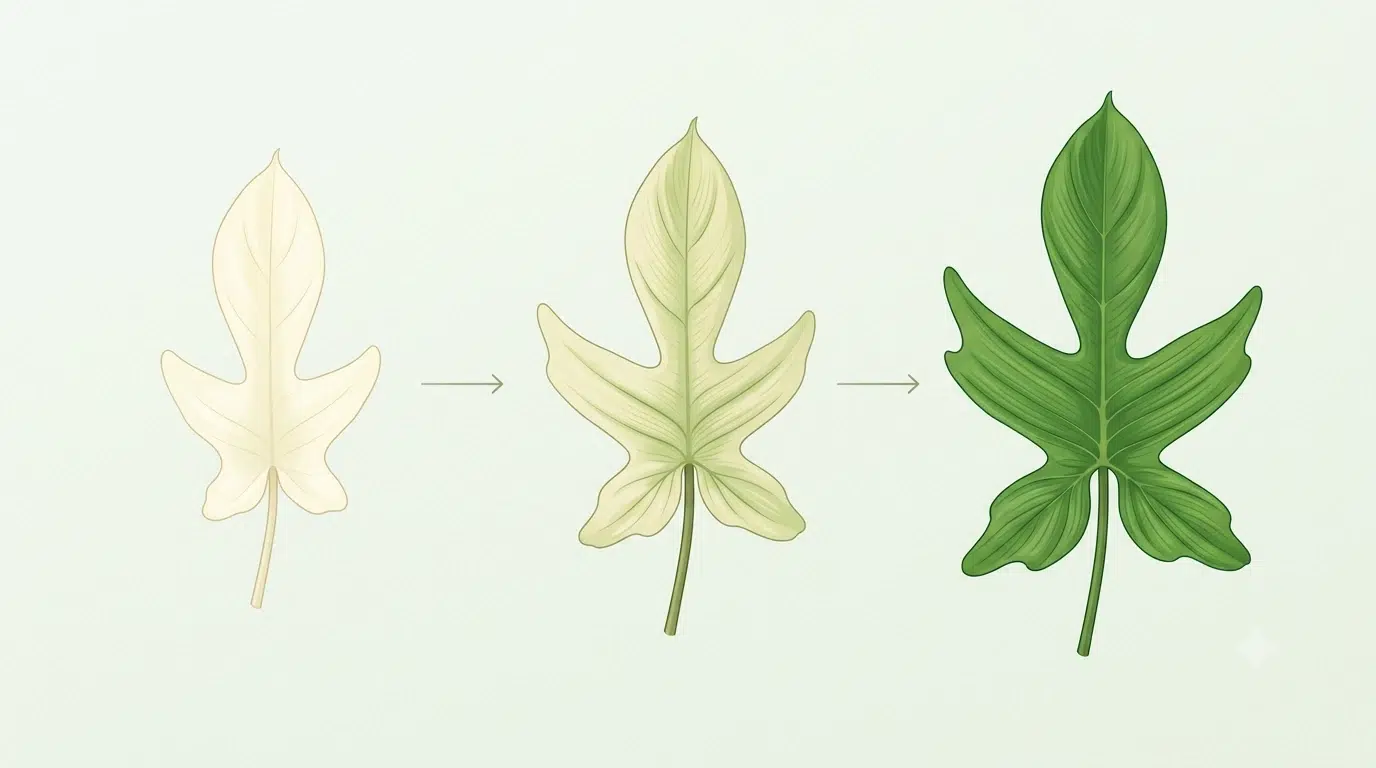
The leaf color change in Florida Ghost happens because of chlorophyll development. Young leaves emerge almost white because they contain less chlorophyll, the pigment responsible for green coloration and photosynthesis.
A mature Florida Ghost leaf commonly becomes green over time. This natural transition means a healthy plant may not remain completely white.
Common reasons a Florida Ghost may lose its white appearance include:
- Normal leaf maturation
- Lower light conditions reducing variegation expression
- Genetic differences between individual plants
A mature Florida Ghost is expected to have greener leaves rather than permanent white foliage.
What Is Philodendron Florida Ghost Mint?
Philodendron Florida Ghost Mint is a rarer variation of the Florida Ghost line that displays softer mint-green coloration instead of the stronger white or cream tones associated with standard Florida Ghost.
The term “mint” describes the pastel green appearance of new and developing leaves. Unlike Florida Ghost, which often transitions quickly toward solid green, Ghost Mint tends to maintain lighter mint-colored sections for a longer period.
Like Florida Ghost, Florida Ghost Mint has deeply divided leaves and a climbing growth habit typical of Florida-type Philodendron hybrids.
How Ghost Mint Variegation Differs
Florida Ghost Mint differs mainly through its variegation color and stability. Its leaves contain more persistent pale-green areas, creating a softer appearance compared with the dramatic white emergence of Florida Ghost.
The variation comes from chimeral variegation, where plant tissues contain different genetic patterns that influence chlorophyll production.
Key differences include:
- Florida Ghost: bright white or cream new growth that fades greener.
- Florida Ghost Mint: pastel mint-green growth that often remains visible longer.
- Both require proper lighting to maintain their best coloration.
Is Florida Ghost Mint Rare?
Yes, Florida Ghost Mint is considered rare because it is less commonly available than standard Florida Ghost. Limited propagation, slower availability, and collector interest contribute to its scarcity.
Tissue culture availability can vary, and not every propagated plant will maintain identical variegation patterns. Individual plants may show different levels of mint coloration depending on genetics and growing conditions.
Florida Ghost vs. Florida Ghost Mint: Core Differences
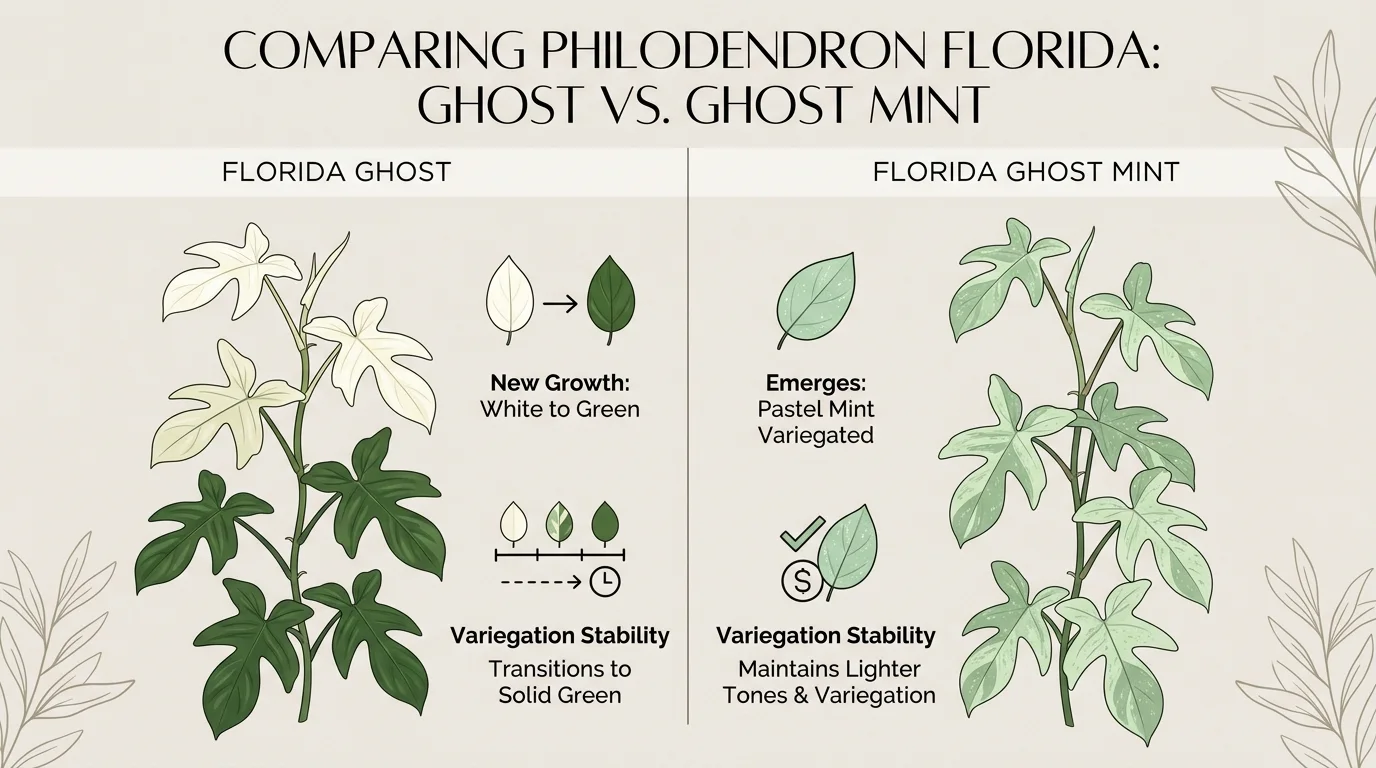
Florida Ghost and Florida Ghost Mint are closely related cultivars, but the main difference is how their variegation appears and how long it remains visible.
| Feature | Florida Ghost | Florida Ghost Mint |
| New growth color | Cream/white | Pastel mint-green |
| Mature leaf color | Mostly solid green | Green with lingering mint tones |
| Rarity | Uncommon | Rarer |
| Variegation stability | Fades to green | More persistent |
How to Tell Them Apart at a Nursery
Identifying Florida Ghost vs Florida Ghost Mint can be difficult because young plants may look similar. The best clues are leaf color and maturation patterns.
Look for:
- White or cream emerging leaves: more typical of Florida Ghost.
- Soft green pastel tones: often indicate Ghost Mint.
- Consistent mint coloring across multiple leaves: suggests Ghost Mint traits.
Plant labels should also be checked carefully because Florida-type Philodendrons are sometimes confused with other Florida cultivars.
How Big Do Florida Ghost Plants Get?
Florida Ghost plants can become medium to large climbing houseplants when provided with support. Their final size depends on light, humidity, pot size, and climbing structure.
Typical mature growth includes:
- Indoor height: around 3–6 feet when climbing.
- Leaf length: mature leaves can become significantly larger with support.
- Spread: wider growth occurs as the plant produces more climbing stems and leaves.
Outdoor tropical conditions can allow much larger growth compared with indoor environments.
Growth Rate and Care Requirements
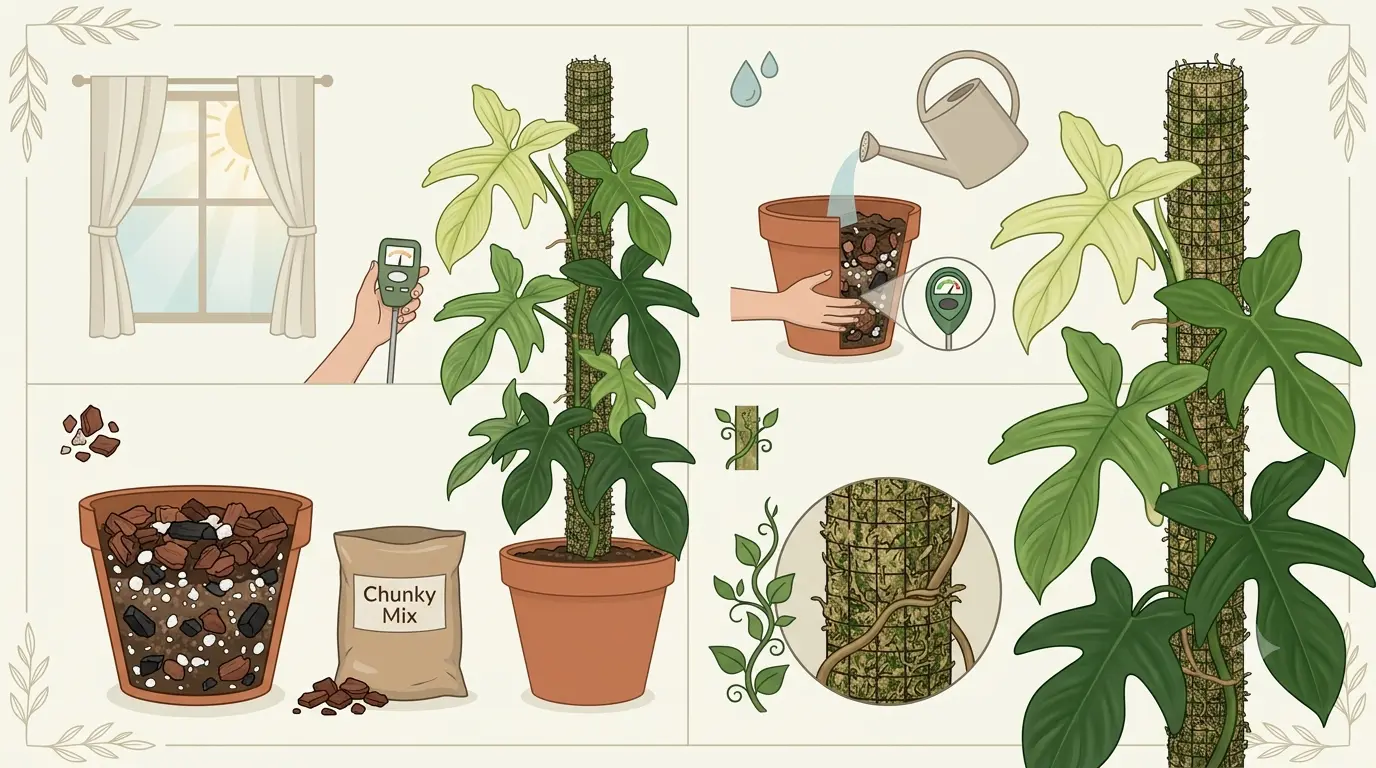
Florida Ghost grows at a moderate rate when provided with warm temperatures, humidity, and suitable lighting. Growth is usually faster during warmer months when the plant is actively producing new leaves. Many tropical aroids, including Florida Ghost and Alocasia species, benefit from similar care principles such as proper humidity, drainage, and bright indirect light.
Its care requirements are similar to other tropical Philodendrons.
Light Requirements
Florida Ghost prefers bright indirect light. Proper lighting helps support healthy growth and encourages stronger variegation expression.
Too little light may cause:
- Slower growth
- Smaller leaves
- Reduced color contrast
Avoid harsh direct sunlight, which can damage delicate pale sections of leaves. Understanding the difference between bright indirect light and direct sunlight is essential because excessive sun exposure can damage Florida Ghost’s pale variegated leaves.
Watering Needs
Florida Ghost prefers evenly moist soil but does not tolerate constantly wet roots.
A practical watering approach:
- Water when the top layer of soil begins to dry.
- Ensure excess water drains completely.
- Reduce watering frequency during cooler months.
Overwatering is one of the most common causes of root problems.
Soil Preferences
A chunky aroid mix provides the airflow Florida Ghost roots need.
A suitable mix often contains:
- Orchid bark
- Perlite
- Coco coir or peat-based material
- Organic compost
Good drainage helps prevent root rot while maintaining enough moisture.
Does Florida Ghost Need a Moss Pole?
Yes, Florida Ghost benefits from a moss pole or similar climbing support. As a climbing aroid, it produces larger and more mature leaves when allowed to grow vertically.
A support structure helps:
- Improve leaf size
- Encourage natural climbing growth
- Provide stability for mature stems
Fertilization and Pruning
Regular feeding during active growth supports healthy foliage development. A balanced houseplant fertilizer applied according to product instructions is generally suitable.
Pruning helps remove damaged leaves and manage plant shape. Avoid removing healthy variegated leaves unnecessarily because they contribute to photosynthesis.
Is Florida Ghost Easy to Grow?
Florida Ghost is considered moderately beginner-friendly because its care requirements are similar to many common Philodendrons. However, maintaining strong variegation requires attention to light and watering balance.
Beginners should focus on:
- Proper drainage
- Bright indirect light
- Stable humidity
- Avoiding overwatering
Common Florida Ghost and Ghost Mint Problems
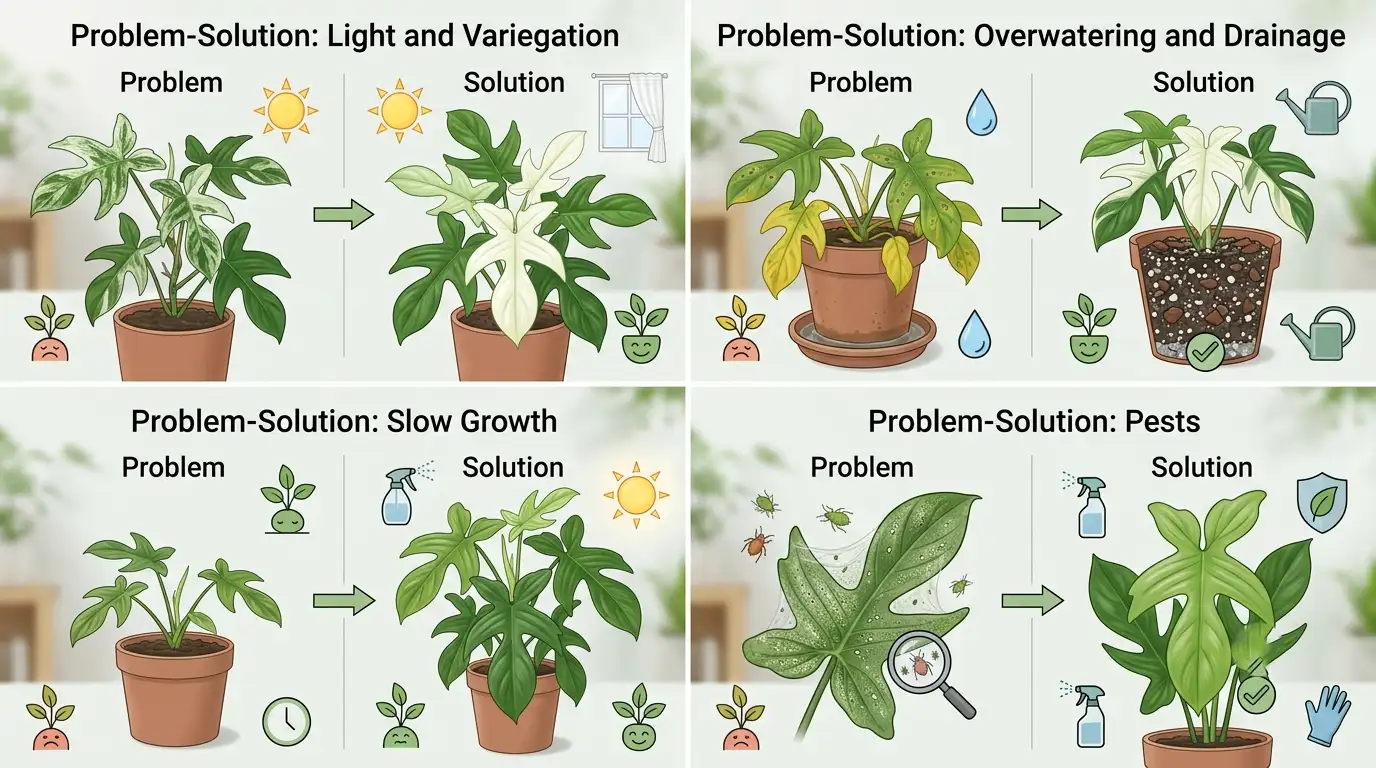
Florida Ghost and Ghost Mint can experience several common care issues. Regular pest monitoring is important for rare houseplants, and identifying common indoor plant pests early can prevent damage to Florida Ghost foliage.
Leaves reverting to full green:
This happens when the plant produces more chlorophyll. Better lighting can help maintain stronger variegation, although genetics also play a role.
Overwatering and root rot:
Yellowing leaves, soft roots, and slow growth may indicate excessive moisture. Improving drainage and adjusting watering frequency usually helps.
Slow or stalled growth:
Insufficient light, low humidity, or poor nutrition can reduce growth speed.
Pest issues:
Spider mites and thrips may damage leaves. Regular inspection and treatment with appropriate horticultural methods can control infestations.
What Makes Florida Ghost Unique?
Florida Ghost is unique because of its temporary ghost-white foliage, rare variegation patterns, and highly lobed leaves. It has become popular among Philodendron collectors because each new leaf can develop a different color transition.
Is Florida Ghost a Holy Grail Philodendron?
Florida Ghost is often discussed among collectors as a highly desirable Philodendron because of its unusual appearance and rarity. While “holy grail” is a collector term rather than a scientific classification, it reflects the plant’s popularity among enthusiasts.
Beginner Mistakes to Avoid
Common mistakes include:
- Providing too little light and losing color expression.
- Using oversized pots that retain excess moisture.
- Buying mislabeled plants due to confusion between Florida cultivars.
- Expecting permanent white leaves after maturity.
Florida Ghost vs. Philodendron Florida Green and Florida Beauty
The Florida cultivar group includes several related plants with different leaf characteristics and variegation patterns.
| Feature | Florida Ghost | Florida Green | Florida Beauty |
| Variegation | White-to-green transition | Usually green leaves | Cream/yellow variegation |
| Leaf shape | Deeply lobed | Deeply lobed | Deeply lobed |
| Care needs | Similar tropical care | Similar tropical care | Similar tropical care |
| Main feature | Ghost-like new growth | Green foliage | Stable contrasting variegation |
Florida Green is generally recognized for its fully green foliage, while Florida Beauty is valued for more permanent patterned variegation. Florida Ghost stands out because of its dramatic leaf maturation process.
Conclusion
Florida Ghost vs Florida Ghost Mint mainly comes down to variegation color, persistence, and rarity. Florida Ghost produces striking white or cream new leaves that gradually turn green, while Florida Ghost Mint maintains softer mint-green tones for longer. Both plants share similar climbing habits, leaf shapes, and care requirements. Choosing between them depends on whether a collector prefers the dramatic transformation of Florida Ghost or the rarer, longer-lasting pastel appearance of Florida Ghost Mint.
FAQs
What is the difference between Florida Ghost and Florida Green?
Florida Ghost develops pale white or cream new leaves that mature into green, while Florida Green produces consistently green foliage without the ghost-like color transition.
Is Philodendron Florida Ghost rare?
Yes, Philodendron Florida Ghost is considered uncommon because of its unusual variegation and limited availability compared with standard Philodendron varieties.
Is Florida Ghost Mint rare?
Yes, Florida Ghost Mint is generally rarer than standard Florida Ghost because its mint-colored variegation is less commonly found and propagated.
Does Florida Ghost need a moss pole?
Yes, Florida Ghost benefits from a moss pole because it is a climbing aroid that develops larger leaves and stronger growth when supported vertically.
What is the lifespan of a ghost plant?
A healthy Florida Ghost Philodendron can live for many years with proper care, although its lifespan depends on growing conditions, maintenance, and environmental stability.
Are Florida ghost plants rare in general?
Florida Ghost plants are considered rare compared with common houseplants because their distinctive variegation and hybrid origins make them less widely available.
Is Florida Ghost easy to grow for beginners?
Florida Ghost can be grown by beginners who understand basic Philodendron care, especially proper lighting, watering, and soil drainage requirements.