
Introduction
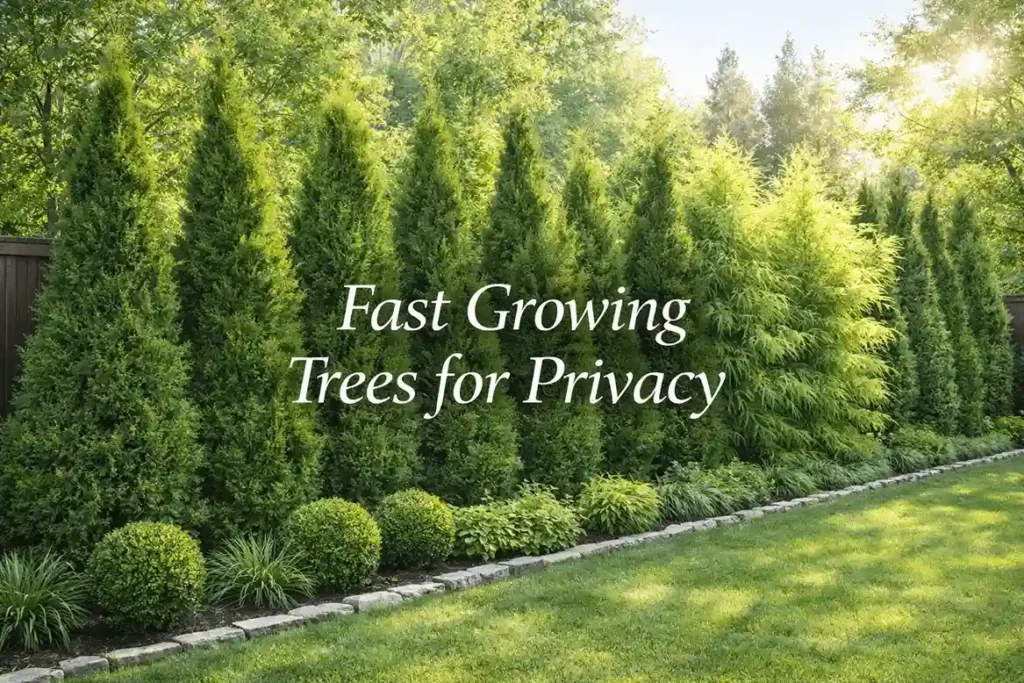
Fast growing trees for privacy are tree species that quickly establish height and density to provide natural screening. They are commonly used in residential and commercial landscaping to block unwanted views, reduce noise, and act as windbreaks. These trees include both evergreen varieties, which offer year-round coverage, and deciduous types, which provide seasonal screening and aesthetic appeal. These natural screens serve a similar function to a privacy fence, integrating seamlessly with gardens and landscapes.
Quick Summary
- Fast growing trees for privacy provide quick natural screening and shade.
- Evergreen varieties offer year-round coverage; deciduous options give seasonal benefits.
- Ideal for fences, property borders, and noise reduction.
- Selection depends on climate, soil type, and maintenance preference.
Benefits of Fast Growing Trees for Privacy
Fast growing privacy trees are preferred because they offer immediate coverage, reduce environmental stress, and enhance property value. In Australia, fast growing trees for privacy are commonly planted along property boundaries to create visual barriers quickly.
Quick Screening
These trees achieve rapid height growth, effectively blocking views in a short time. Examples of the fastest growing trees include Thuja Green Giant, Leyland Cypress, and Eucalyptus species. For tropical options, see our guide on [Best Heliconia for Screening: Top Tall Varieties for Privacy].
Environmental Benefits
- Reduce wind and noise pollution.
- Provide habitats for birds and other wildlife.
- Improve air quality by absorbing pollutants and producing oxygen.
Landscaping Advantages
- Enhance property aesthetics and value.
- Define garden boundaries and fence lines efficiently, especially using species suitable for fence line screening in Australia.
Species like [Lilly Pilly Privacy Screen] are ideal for dense hedges and boundary definition.
Types of Fast Growing Privacy Trees
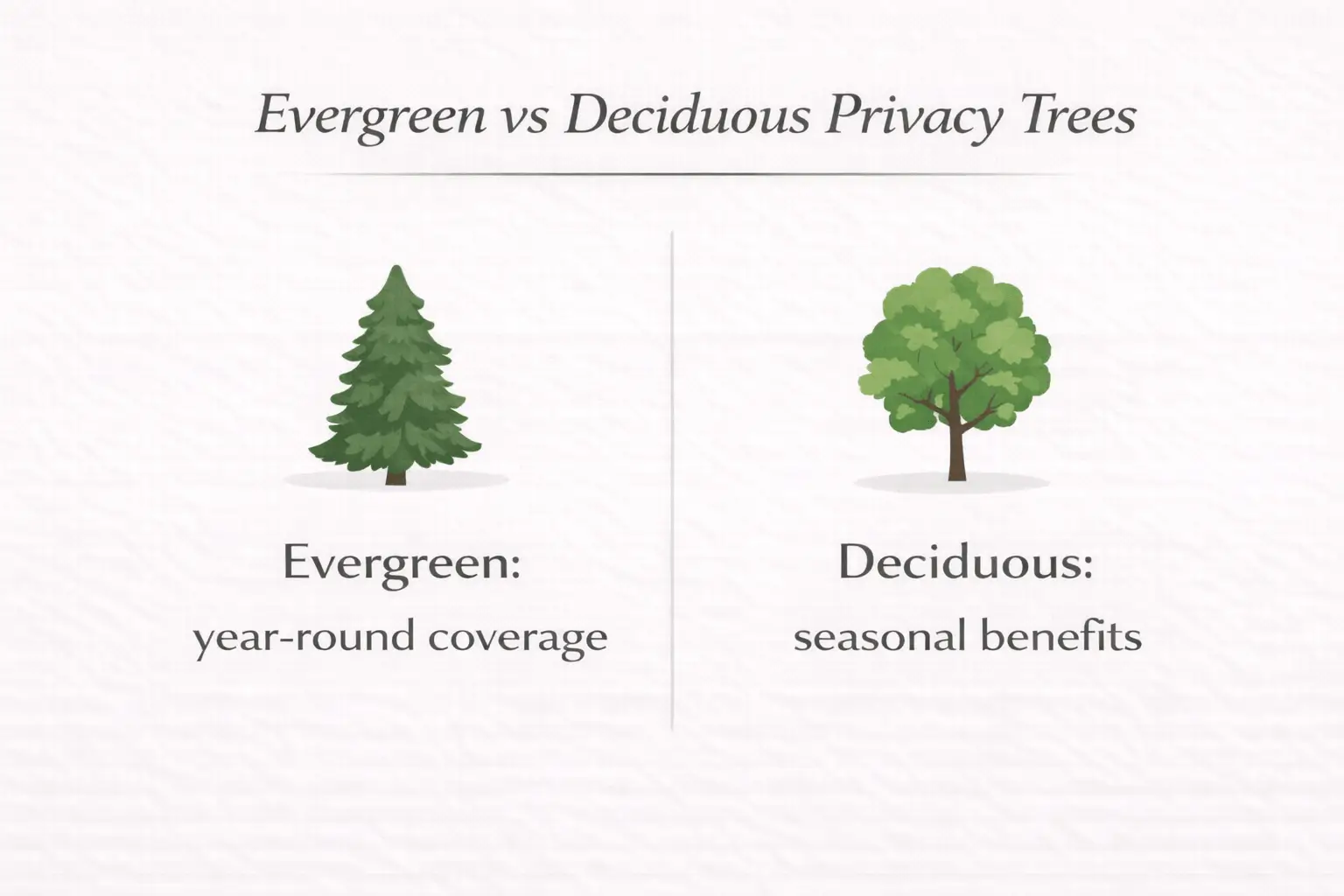
Fast growing privacy trees can be evergreen or deciduous, with species chosen based on regional suitability. Selection depends on desired coverage, climate, and maintenance preferences. For a broader selection, explore [Fast Growing Australian Native Trees: 8+ Smart Picks] suitable for privacy and screening.
Evergreen Trees
Evergreen trees maintain foliage year-round, ensuring continuous privacy.
Examples: Thuja Arborvitae Green Giant, Lawson Cypress, Australian Pine.
| Species | Growth Rate | Mature Height | Maintenance |
| Thuja Arborvitae Green Giant | Very Fast | 12–18 m | Low |
| Lawson Cypress | Fast | 15–20 m | Moderate |
| Australian Pine | Fast | 10–15 m | Low |
Deciduous Trees
Deciduous trees provide seasonal coverage and aesthetic interest through changing foliage.
Examples: Fast growing deciduous trees include Poplar and Maple varieties suitable for privacy.
| Species | Growth Rate | Leaf Coverage | Seasonal Notes |
| Lombardy Poplar | Very Fast | Dense | Loses leaves in winter |
| Silver Maple | Fast | Moderate | Autumn color display |
| Tulip Tree | Moderate | Dense | Flowers in spring |
Drought-Tolerant Varieties
Ideal for low-maintenance landscaping, drought-tolerant species survive in dry conditions while still providing screening.
Examples: Eucalyptus, Bottlebrush.
Keywords: fast growing drought tolerant trees Australia, low maintenance fast growing trees for privacy.
Shade Trees for Privacy
Some fast growing trees offer both privacy and cooling shade.
Examples: Jacaranda, Tipuana tipu.
Keywords: fast growing shade trees Australia, fast growing evergreen shade trees Australia.
Factors to Consider When Choosing Fast Growing Privacy Trees
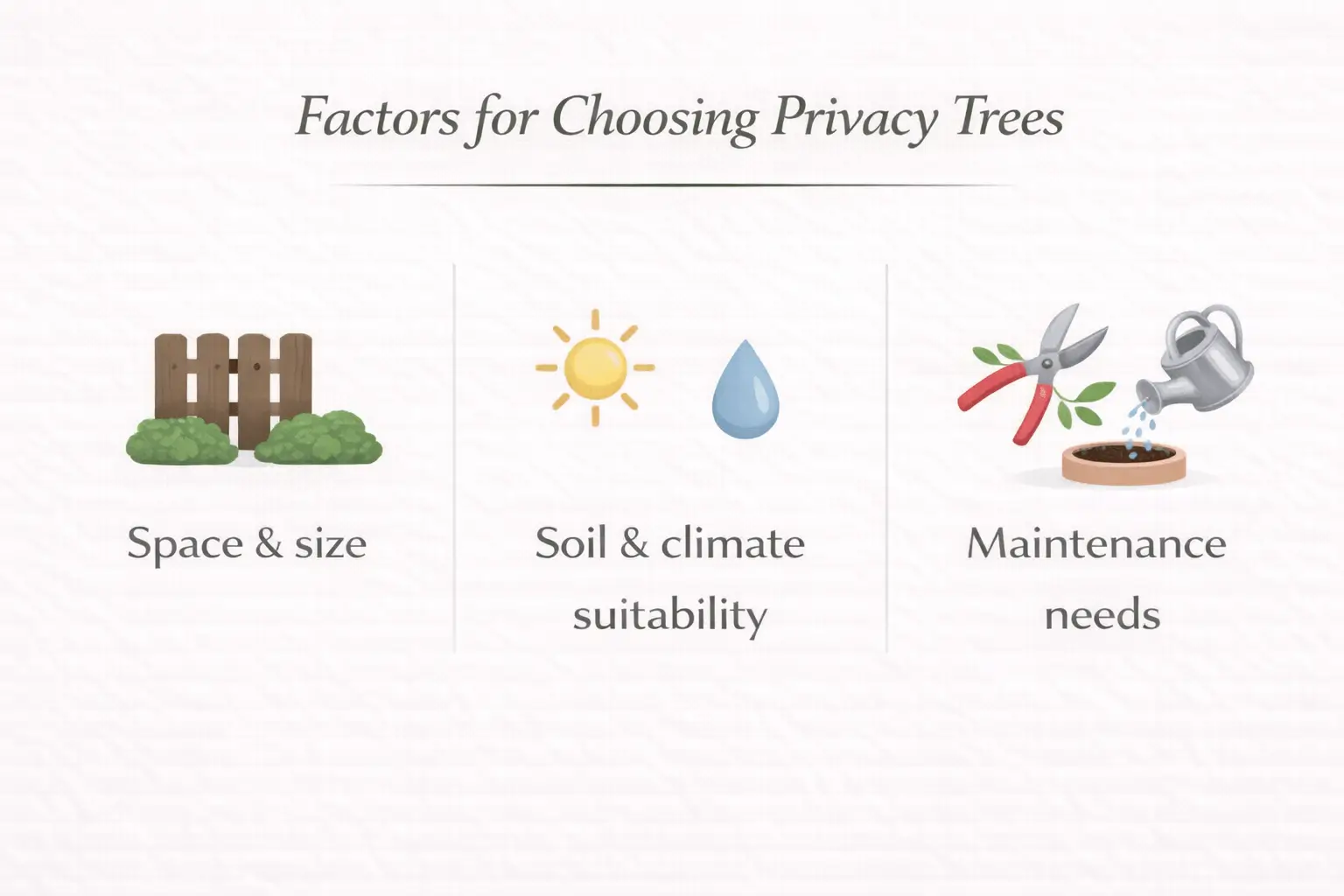
Selecting the right tree requires evaluating growth rate, space availability, soil, climate, and maintenance needs.
Space and Size
Consider fence line planting versus large garden spaces.
| Tree Type | Width Requirement | Suitable Locations |
| Narrow Screening | 1–2 m | Fence line, side borders |
| Tall Screening | 3–6 m | Open gardens, large yards |
Maintenance Needs
- Prune regularly to maintain shape.
- Follow fertilization schedules to support growth.
- Ensure consistent watering based on species requirements.
Planting and Care Guide
Proper planting and care ensure fast growth and effective privacy.
- Site Preparation: Test soil, ensure adequate spacing, and select sunny locations.
- Planting Steps: Dig holes twice the root ball size, plant at soil level, and backfill carefully.
- Watering: Regular deep watering initially, reducing frequency as trees establish.
- Mulch Use: Apply mulch to retain soil moisture and regulate temperature.
- Fertilization: Use slow-release fertilizer suitable for the species.
- Pruning: Shape trees to maintain desired height and width.
Common Problems and Solutions
Overcrowding or Overgrowth
Problem: Trees planted too closely can limit sunlight and airflow.
Solution: Prune regularly and choose narrower screening species when space is limited.
Pest Infestation
Problem: Common pests include aphids, caterpillars, and scale insects.
Solution: Use organic treatments like neem oil or appropriate chemical options if necessary.
Slow Growth or Poor Coverage
Problem: Poor soil or insufficient sunlight reduces growth rate.
Solution: Improve soil with amendments and select species suited to local climate.
Comparison of Popular Fast Growing Privacy Trees
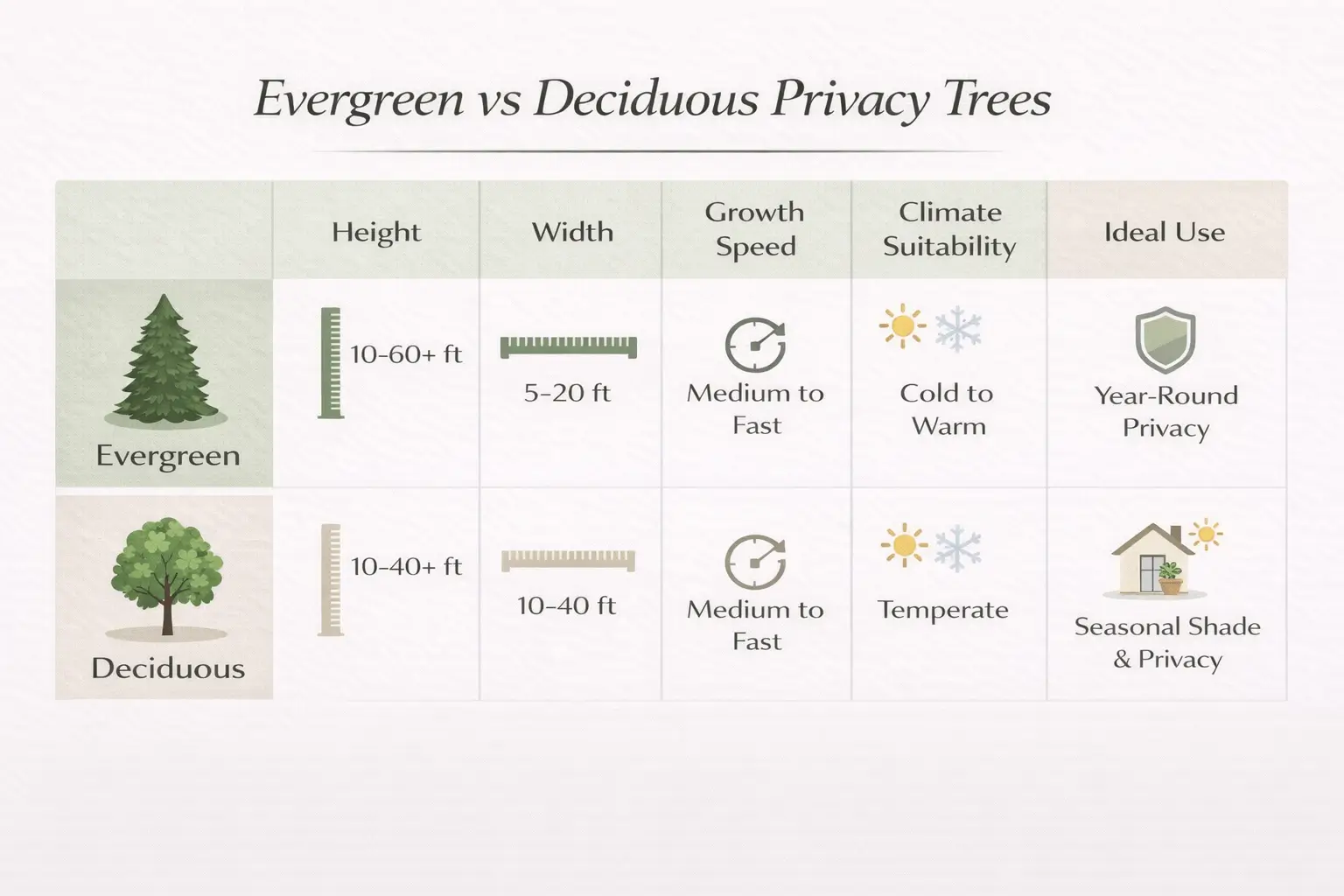
Side-by-side comparison helps determine the best species for specific needs.
| Feature | Evergreen | Deciduous |
| Height | Tall (10–20 m) | Moderate to tall (8–15 m) |
| Width | Wide (3–6 m) | Moderate (2–5 m) |
| Growth Speed | Fast to very fast | Moderate to fast |
| Climate Suitability | Temperate, subtropical | Temperate, subtropical |
| Ideal Use | Year-round privacy, shade | Seasonal screening, aesthetics |
Differentiating Factors in Fast Growing Privacy Trees
- Region-Specific Options: Certain species thrive in Australia, UK, Canada, NZ, Ireland, and Ontario.
- Low-Maintenance Varieties: Species requiring minimal care are ideal for busy homeowners.
- Size Considerations: Choose small or tall trees depending on fencing, garden size, and privacy requirements.
Conclusion
Fast growing trees for privacy provide efficient, natural screening, environmental benefits, and landscaping advantages. Choosing the right species depends on growth rate, climate, maintenance, and garden layout. Evergreen and deciduous options offer flexibility to meet year-round or seasonal needs, ensuring effective coverage and aesthetic appeal.
FAQs
What are the fastest growing trees for privacy in Australia?
Species like Thuja Green Giant, Leyland Cypress, and Eucalyptus grow rapidly and are suitable for Australian climates.
Are evergreen trees better than deciduous trees for privacy?
Evergreens provide year-round coverage, while deciduous trees offer seasonal screening and aesthetic benefits.
How do I maintain a privacy screen using fast growing trees?
Prune regularly, water consistently, fertilize appropriately, and monitor for pests to maintain healthy growth and coverage.
Which trees are suitable for narrow fence lines?
Narrow screening trees such as Lombardy Poplar or Thuja Green Giant are ideal for limited spaces.
Can fast growing trees survive in drought-prone areas?
Yes, drought-tolerant species like Eucalyptus and Bottlebrush can thrive in dry conditions with minimal maintenance.
How long does it take for privacy trees to provide full coverage?
Most fast growing trees provide significant screening within 2–5 years, depending on species, climate, and care.


