
Introduction
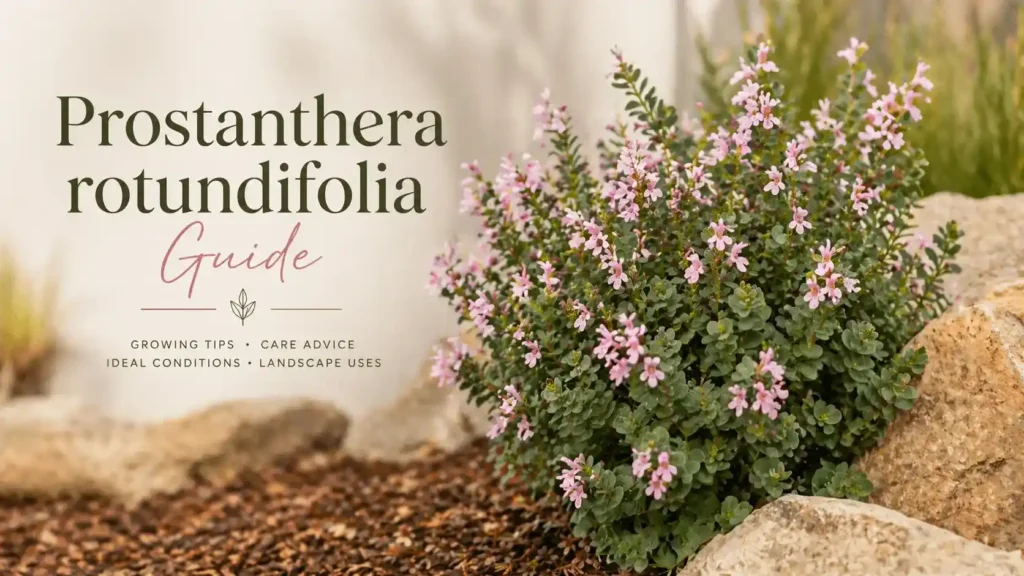
Prostanthera rotundifolia, commonly known as round leaf mint bush, is a fragrant Australian native shrub valued for its aromatic foliage and attractive flowers. This native mint bush belongs to the Prostanthera genus and is widely used in gardens for ornamental structure and sensory appeal. The plant’s minty scent, compact growth habit, and seasonal blooms make it a practical choice for hedging and landscaping. This guide explains its botanical identity, growing conditions, care requirements, and common uses in a structured, easy-to-understand format designed for both beginners and experienced gardeners.
For a broader understanding of plant care, benefits, and growing techniques, explore this comprehensive Plants: Benefits and Guides (Complete Care, Types & Growing Tips).
Quick Summary
- Prostanthera rotundifolia is an aromatic Australian native mint bush with rounded leaves and seasonal flowers.
- It grows best in well-drained soil with full sun to partial shade.
- Common uses include hedging, ornamental planting, and fragrance gardens.
- Requires moderate watering, pruning, and protection from waterlogged soil.
What Is Prostanthera rotundifolia? (Plant Identity & Classification)
Key characteristics and botanical background
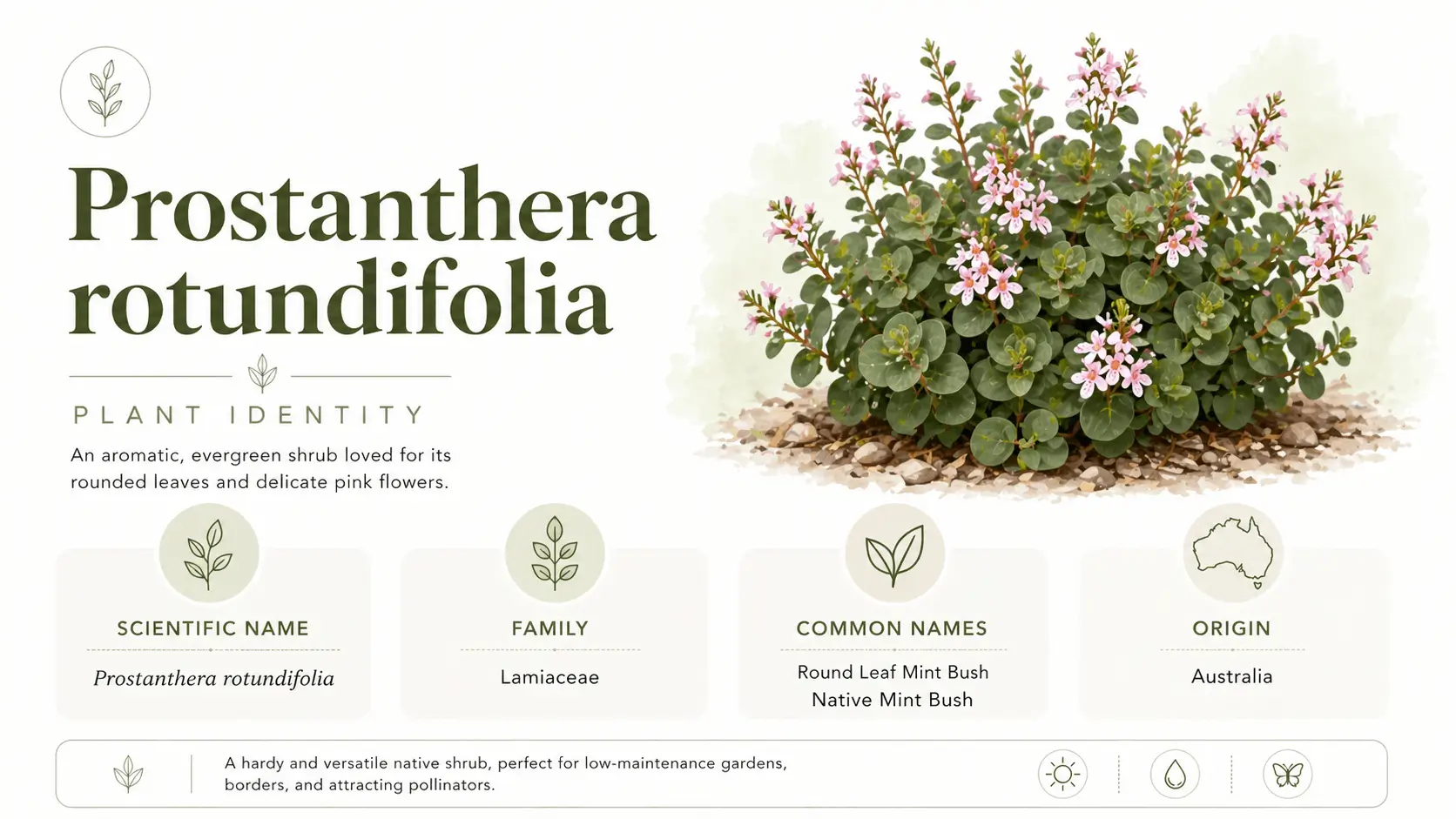
Prostanthera rotundifolia is a woody evergreen shrub from the Lamiaceae (mint) family, native to southeastern Australia. It is known for its small, rounded leaves and strong aromatic oils that produce a minty scent when crushed.
Defines Prostanthera rotundifolia within the prostanthera genus
The Prostanthera genus includes over 90 species, all characterized by aromatic foliage. Prostanthera rotundifolia is distinguished by its rounded leaves and dense branching compared to other species.
Explains common names
Common names include:
- Round leaf mint bush
- Mintbush
- Native mint bush
- Australian mint bush
It is sometimes loosely associated with terms like native oregano or Australian oregano due to its scent. Prostanthera rotundifolia belongs to the mint family (Lamiaceae), a group of aromatic plants widely studied in botany (see: wikipedia).
Plant Size and Growth Habit
Typical height, width, and structure
Prostanthera rotundifolia typically grows as a compact, bushy shrub with dense foliage.
- Height: 1 to 2.5 meters
- Width: 1 to 2 meters
Describe compact vs spreading varieties
Some cultivated forms remain compact for small gardens, while others spread more broadly, making them suitable for hedging.
Environmental influence on size
- Full sun encourages dense growth
- Partial shade may lead to slightly taller, looser forms
- Soil quality directly impacts overall plant size
Growth Rate and Seasonal Development
How fast does round leaf mint bush grow?
Prostanthera rotundifolia has a moderate growth rate, establishing steadily under suitable conditions.
Seasonal flowering patterns
- Flowers primarily in spring
- Produces clusters of pale pink to mauve flowers
Climate impact on growth
- Active growth occurs during warmer months
- Growth slows in winter or cooler climates
Ideal Growing Conditions for Prostanthera rotundifolia
Environmental requirements explained
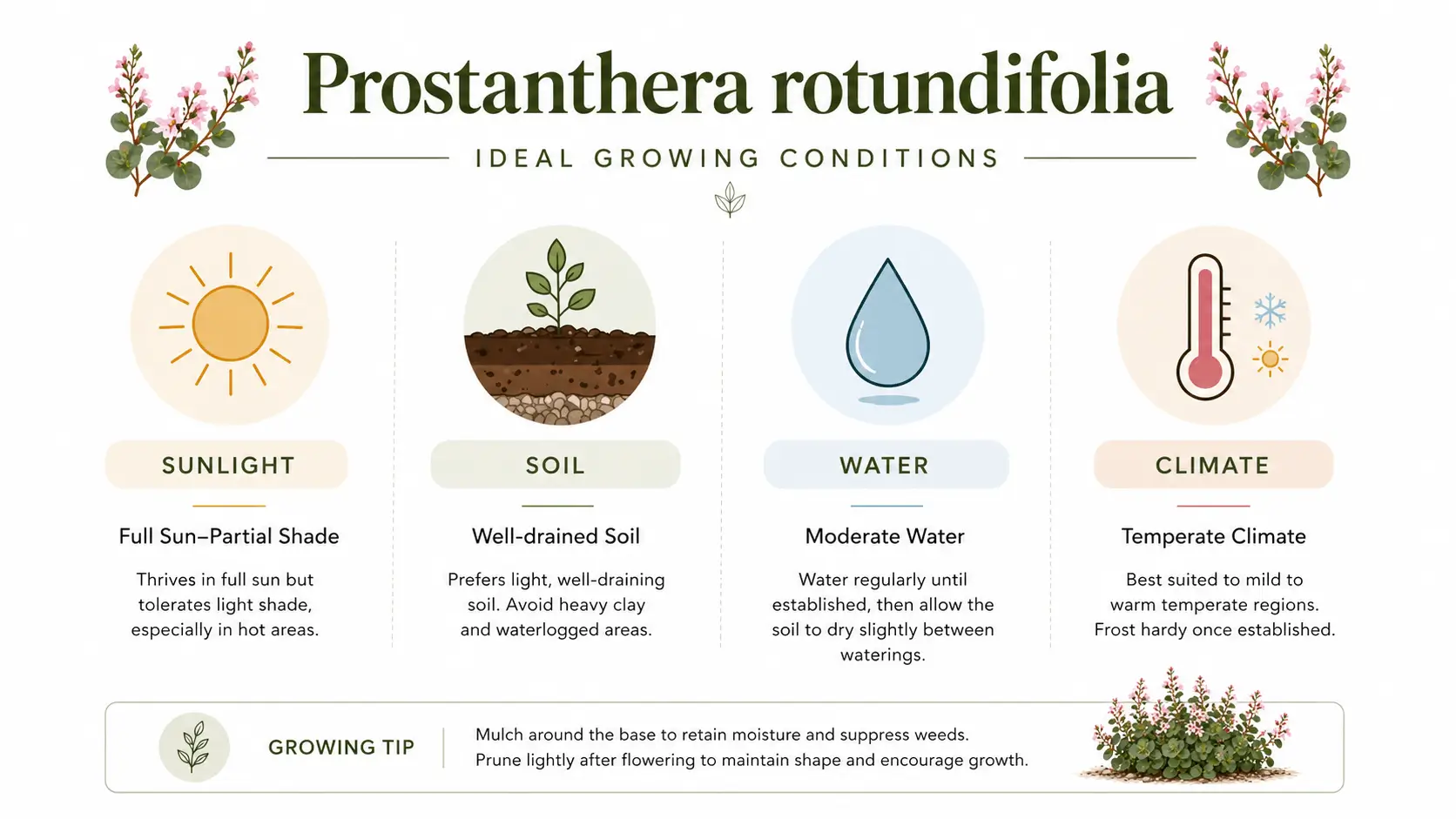
Prostanthera rotundifolia thrives when its natural habitat conditions are replicated.
Key growing conditions
- Sunlight: Full sun to partial shade
- Soil: Well-drained, sandy or loamy soil
- pH: Slightly acidic to neutral
Constraints
- Poor drainage can lead to root rot
- Sensitive to heavy frost, especially when young
Care Guide for Native Mint Bush
How to maintain healthy growth
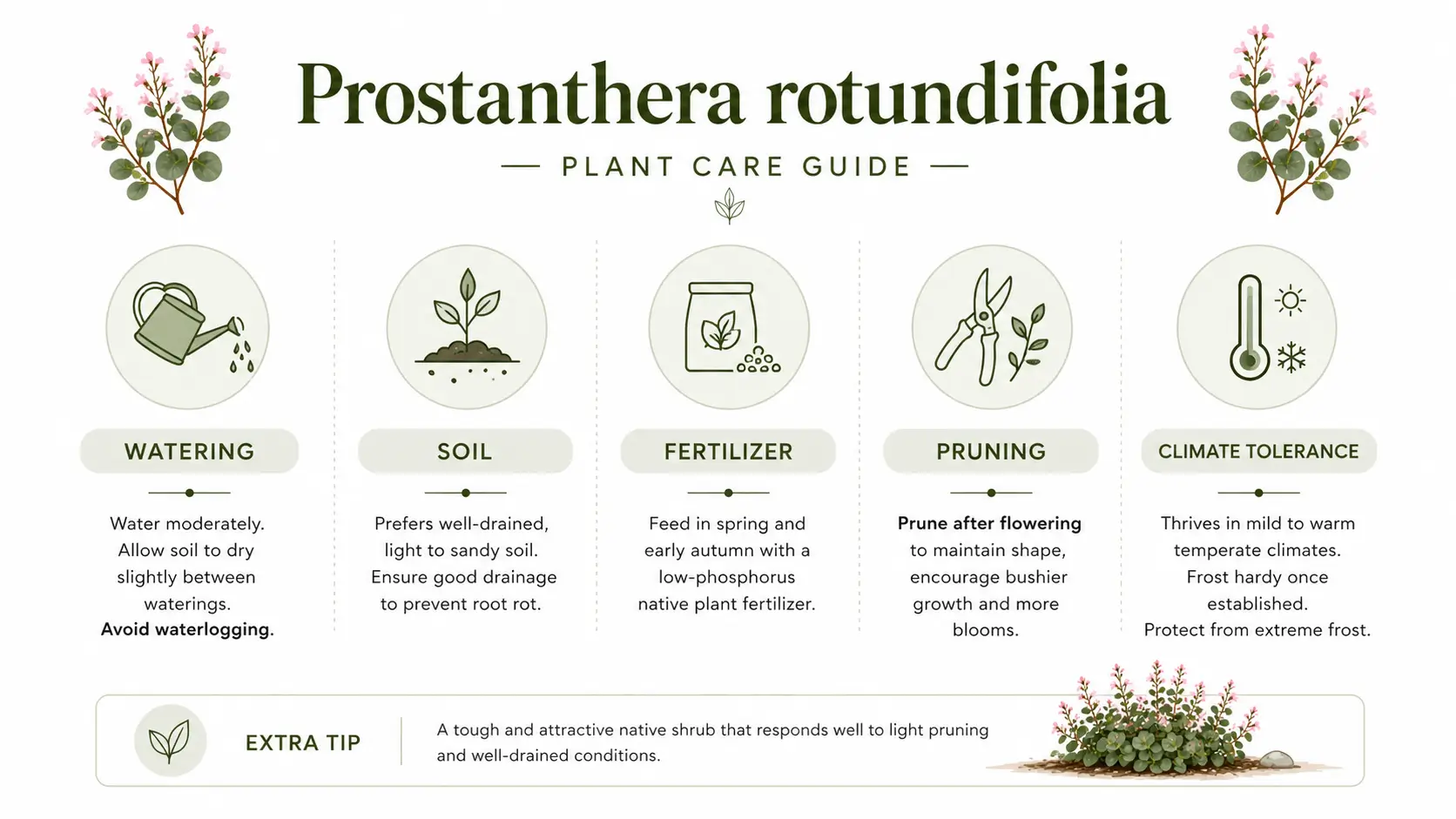
Proper care ensures long-term plant health and consistent flowering.
- Watering: Moderate; allow soil to dry slightly between watering
- Soil: Free-draining sandy or loamy mix
- Fertilizing: Use low-phosphorus fertilizers suitable for native plants
- Pruning: Trim after flowering to maintain shape and encourage bushiness
- Climate tolerance: Drought-tolerant once established
For broader native plant maintenance strategies, refer to this complete Easy Low Maintenance Australian Native Garden Guide.
Uses of Prostanthera rotundifolia
Practical and ornamental applications
Prostanthera rotundifolia is valued for both visual and sensory garden design.
- Ornamental shrub in landscape design
- Suitable for hedging due to dense growth
- Used in sensory gardens for its minty fragrance
- Informally referred to as native oregano due to aroma
Prostanthera rotundifolia is often used as a hedge, similar to other native screening plants discussed in this guide on 10+ Fast Growing Australian Native Screening Plants Guide.
Is Prostanthera rotundifolia Edible or Useful as a Herb?
Clarifying culinary and aromatic uses
Prostanthera rotundifolia has aromatic leaves but is not widely used as a culinary herb.
The leaves release a mint-like fragrance when crushed, but they are not a direct substitute for true oregano.
Key considerations
- Limited traditional culinary use
- Accurate identification is essential before consumption
- Primarily valued for fragrance rather than food
Varieties and Cultivars of Round Leaf Mint Bush
Differences between available types
Several cultivars of Prostanthera rotundifolia vary in size and flower color.
Common varieties
- ‘Mini Pink’: Compact growth, suitable for small gardens
- ‘Rosea’: Taller growth with soft pink flowers
Comparison factors
- Flower color variation
- Growth size differences
- Suitability for hedging vs container planting
Choosing the right cultivar depends on garden design goals, similar to selecting plants in this Front Yard Small Hedges.
Propagation Methods: Seeds and Cuttings
How to grow new plants
Propagation is most successful using vegetative methods.
Methods explained
- Seeds: Difficult due to low germination rates
- Cuttings: Preferred method
Best practice
- Use semi-hardwood cuttings
- Take cuttings in late summer or early autumn
- Provide warm, humid conditions for rooting
Common Problems and Solutions (Troubleshooting Guide)
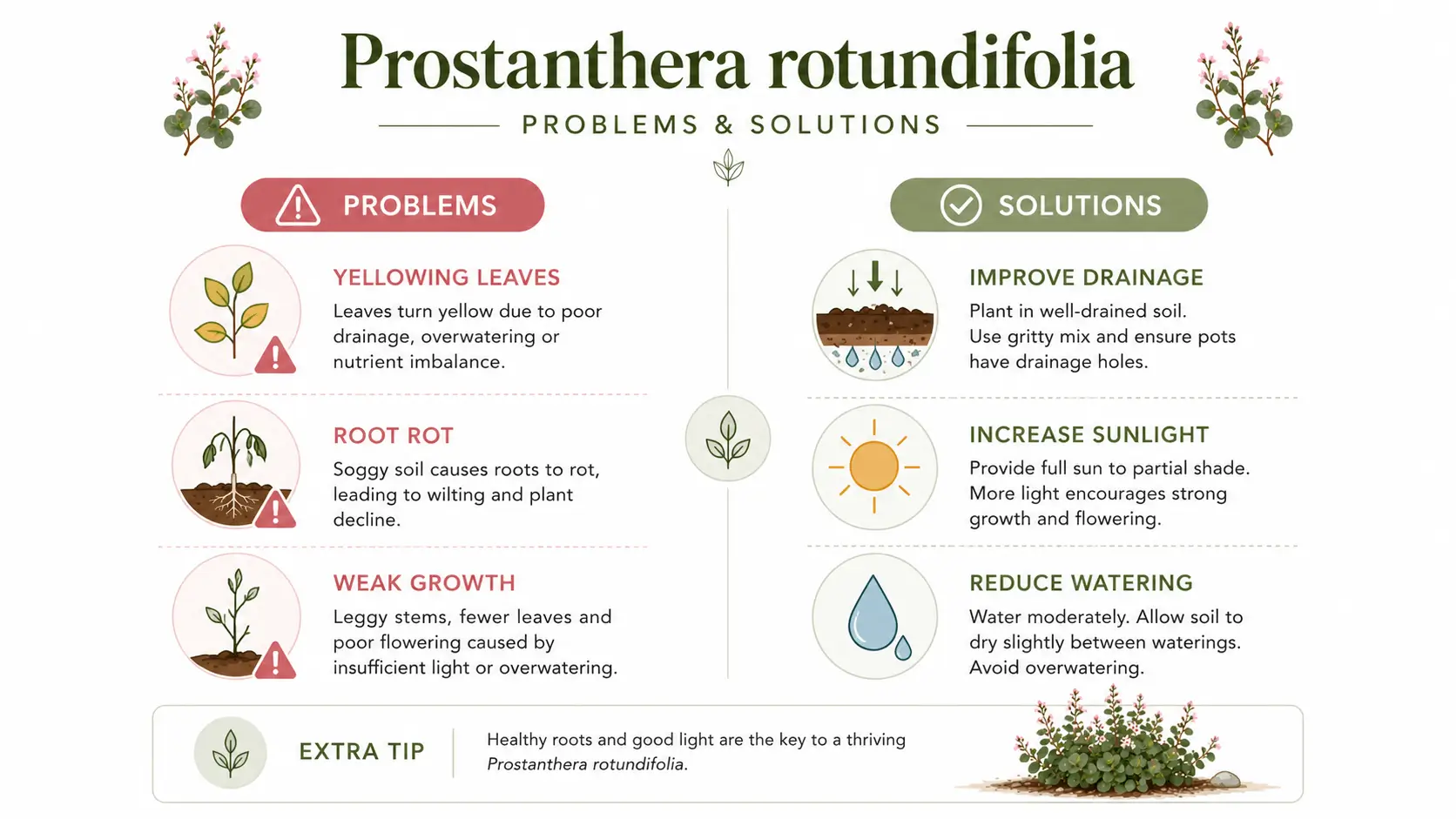
Why plants struggle and how to fix them
Most issues relate to environmental conditions.
- Yellowing leaves: Caused by overwatering or poor drainage
- Weak growth: Due to insufficient sunlight
- Root rot: Result of waterlogged soil
Prevention strategies
- Ensure well-drained soil
- Avoid excessive watering
- Plant in appropriate sunlight
Beginner Mistakes to Avoid
Common care errors explained
- Overwatering the plant
- Planting in heavy clay soil
- Skipping pruning after flowering
- Choosing unsuitable planting locations
Comparison: Prostanthera rotundifolia vs Other Mint Bush Species
Key differences within the genus
| Feature | Prostanthera rotundifolia | Other Prostanthera Species |
| Leaf shape | Rounded | Often narrow or elongated |
| Flower color | Pink to mauve | Purple, white, or blue |
| Growth habit | Compact, bushy | Varies widely |
| Climate tolerance | Temperate | Some more drought-tolerant |
Environmental Limitations and Climate Suitability
Where and when the plant thrives best
Prostanthera rotundifolia performs best in temperate climates similar to its native Australian habitat.
Key considerations
- Sensitive to frost in colder regions
- Can be grown in regions like the UK with protection
- Requires well-drained soil in all climates
Table: Quick Care and Growing Requirements
| Factor | Requirement |
| Light | Full sun to partial shade |
| Water | Moderate, well-drained |
| Soil | Sandy or loamy |
| Growth rate | Moderate |
| Height | 1–2.5 meters |
| Uses | Ornamental, hedge, fragrance |
Conclusion
Prostanthera rotundifolia is a versatile and aromatic native mint bush that offers both visual appeal and functional garden use. Its adaptability to well-drained soils, moderate watering needs, and manageable growth habit make it suitable for a wide range of landscapes. Understanding its growth conditions, care requirements, and limitations helps ensure long-term success. With proper maintenance and correct placement, this round leaf mint bush remains a reliable and attractive addition to gardens.
FAQs
1. What is Prostanthera rotundifolia commonly used for?
It is mainly used as an ornamental shrub, hedge plant, and for its fragrant foliage.
2. How big does round leaf mint bush grow?
It typically reaches 1 to 2.5 meters in height and up to 2 meters in width depending on conditions.
3. What are the best growing conditions for Prostanthera rotundifolia?
It prefers well-drained soil, full sun to partial shade, and moderate watering.
4. Can Prostanthera rotundifolia be grown outside Australia?
Yes, but it requires protection from frost and careful soil drainage management.
5. Is Prostanthera rotundifolia edible like oregano?
It has aromatic leaves but is not considered a direct culinary substitute for oregano.