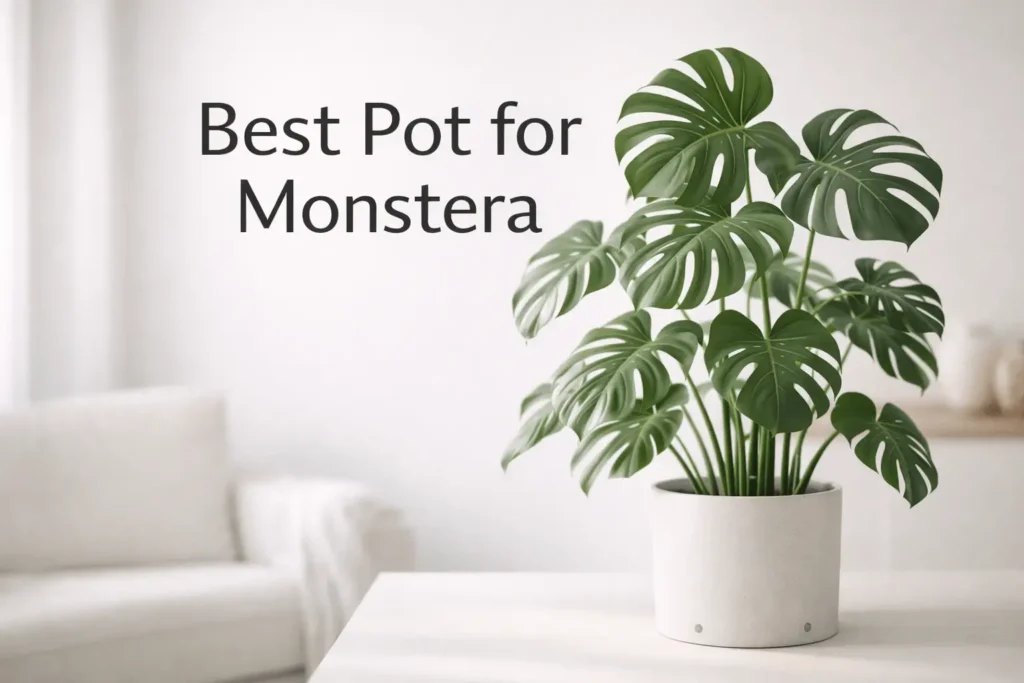
Best Pot for Monstera – What Matters Most
The best pot for monstera is defined by drainage efficiency, correct sizing, and suitable material rather than aesthetics or price. A proper plant pot for monstera supports healthy root oxygen flow, prevents waterlogging, and matches the plant’s growth stage. For beginners looking to understand overall indoor plant requirements, see the full guide on Ultimate Guide to House Plants with Waxy Leaves: 7+ Easy Types, and for structural plant care systems, explore Ultimate Hanging Monstera Guide: Care, Varieties & Tips. For Monstera deliciosa, also known as a cheese plant, the wrong pot choice is one of the most common causes of root rot and slow growth.
A suitable monstera plant pot must balance three core factors:
- Effective drainage to prevent standing water
- Appropriate monstera pot size based on root spread
- Material that matches watering habits and climate
Ordinary decorative flower pots often fail because they lack drainage holes or are oversized, leading to excessive moisture retention and unhealthy roots.
Quick Summary
- The best pot for monstera requires drainage, correct size, and climate-appropriate material.
- Ideal monstera pot size ranges from 6–8 inches for young plants to 10–14+ inches for mature plants.
- Terracotta is best for overwatered conditions, while plastic suits dry environments.
- Oversized or non-draining pots increase risk of root rot.
- Cheese plant pot and monstera pot with drainage are essential for long-term plant health.
Understanding Monstera Pot Size
What Size Pot for Monstera?
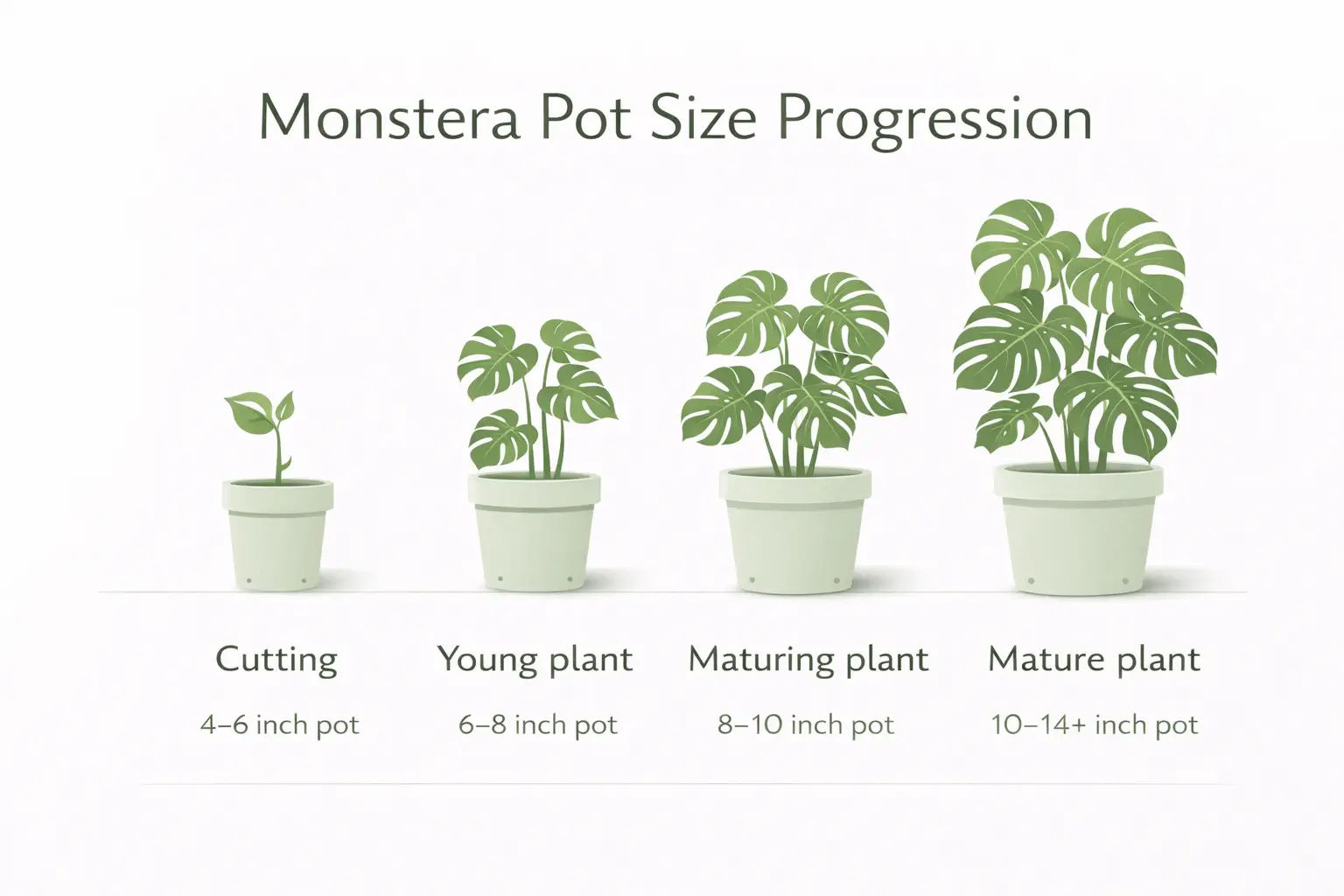
The correct answer to “what size pot for monstera?” is that the pot should be roughly one-third to one-half the plant’s spread. The best size pot for monstera is never significantly larger than the root system, as excess soil retains moisture and reduces oxygen flow. A monstera pot size guide indoors typically recommends smaller containers than outdoor setups because indoor humidity and light are controlled.
For best results, the pot for monstera should be increased gradually, not drastically, during repotting.
Monstera deliciosa is widely documented as a tropical climbing plant that naturally grows in humid rainforest environments, which explains its preference for aerated, well-draining containers.
Pot Size by Growth Stage
Monstera pot size chart:
| Stage of Monstera | Pot Diameter (inches) | Notes |
| Cutting / Seedling | 4–6 | Best pot for monstera cutting |
| Young Indoor Plant | 6–8 | Best pot for monstera indoors |
| Maturing Plant | 8–10 | First major repot stage |
| Mature Plant | 10–14+ | Large pot for monstera |
Avoid increasing pot size by more than 2 inches at a time. This prevents over-potting and moisture imbalance. Repotting Monstera deliciosa is typically required every 1–3 years depending on root growth and environmental conditions. Avoid increasing pot size by more than 2 inches at a time. This prevents over-potting and moisture imbalance. Repotting Monstera deliciosa is typically required every 1–3 years depending on root growth and environmental conditions.For a printable size-by-stage lookup you can keep open while repotting, see this houseplant pot size reference page.
Best Pot Material for Monstera
Terracotta vs Plastic vs Glazed Pots
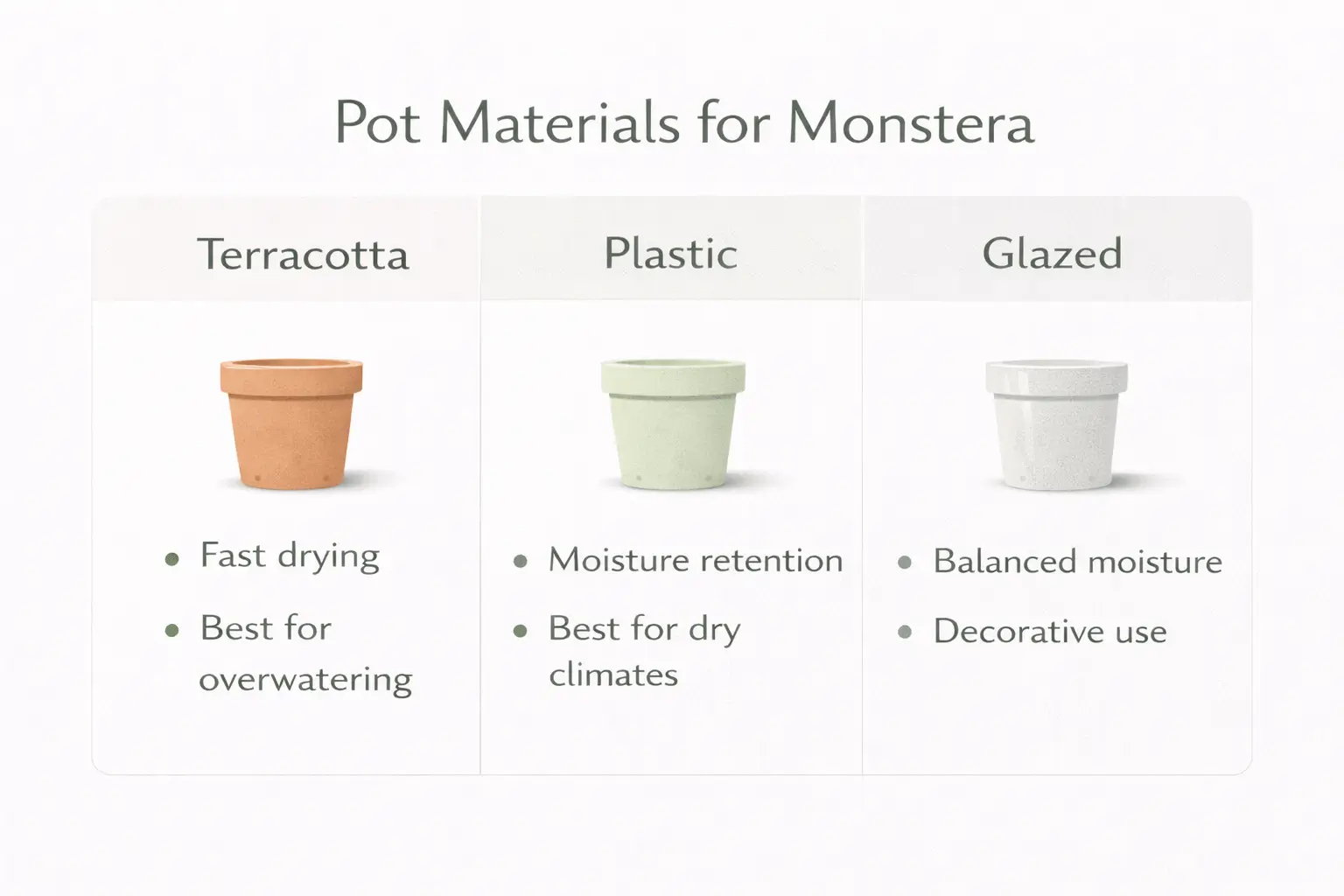
Terracotta pot for monstera is highly porous and allows faster drying, making it ideal for growers who tend to overwater. Plastic pots retain moisture longer and are better for dry climates. Glazed pots offer a balance but reduce airflow compared to terracotta plant pots. To compare these and 7 more materials side-by-side by climate and watering habit, check this sortable pot material comparison sheet.
- Terracotta plant pots: best drainage control
- Plastic pots: moisture retention for dry environments
- Glazed pots: decorative + moderate moisture control
The best type of pot for monstera depends entirely on watering habits and climate conditions rather than appearance. Choosing the right container also depends on your soil system, which is explained in detail in Peperomia Rotundifolia Care Guide: 6+ Proven Easy Tips, where well-draining mix principles closely match monstera pot requirements.
When to Choose Terracotta
Terracotta pots are best when soil tends to stay wet for too long. Their porous structure helps excess moisture evaporate naturally, reducing the risk of root rot. Terracotta planter pots are especially useful in humid environments or for beginners who tend to overwater.
Best Pot for Different Conditions
The best pot for monstera indoors is usually a plastic or glazed container with drainage holes, as indoor environments require controlled moisture retention. In warmer climates, terracotta performs better due to faster evaporation. Outdoors, heavier pots are preferred for stability against wind and top-heavy growth.
Shape, Stability, and Placement
Best Shape Pot for Monstera
The best shape pot for monstera is wide, stable, and slightly shallow rather than deep. Bowl-shaped or wide cylindrical pots prevent tipping caused by large leaves. A large plant pot for monstera must prioritize stability, especially for mature plants.
Pots for Monstera Indoors
Indoor monstera planter pots should combine drainage, stability, and visual appeal. Decorative pots are acceptable only when paired with an inner draining container. The best pot for monstera plant indoors is always one that supports airflow and prevents water stagnation.
Monstera Pot Size and Varieties
Pot Size for Monstera deliciosa
The best pot for monstera deliciosa depends on plant maturity and root expansion. Young plants thrive in 6–8 inch pots, while mature specimens require 10–14+ inches. Large root systems of Monstera deliciosa need space to support aerial root development and structural stability.
Pots for Other Monstera Types
Smaller species like Monstera adansonii require more compact pots (4–8 inches). Variegated varieties such as Monstera albo and Thai constellation benefit from controlled moisture environments, often making terracotta or breathable pots more suitable for stability and root health.
For more insight into tropical foliage plants and their growth behavior in containers, refer to Ultimate Guide: Best Trees to Grow in Pots Australia Easily, which explains container size impact on large leafy plants. For exact pot size and material recommendations across every common Monstera variety, browse the Monstera Pot Selection database.
Common Mistakes
Beginner Mistakes When Choosing a Monstera Pot
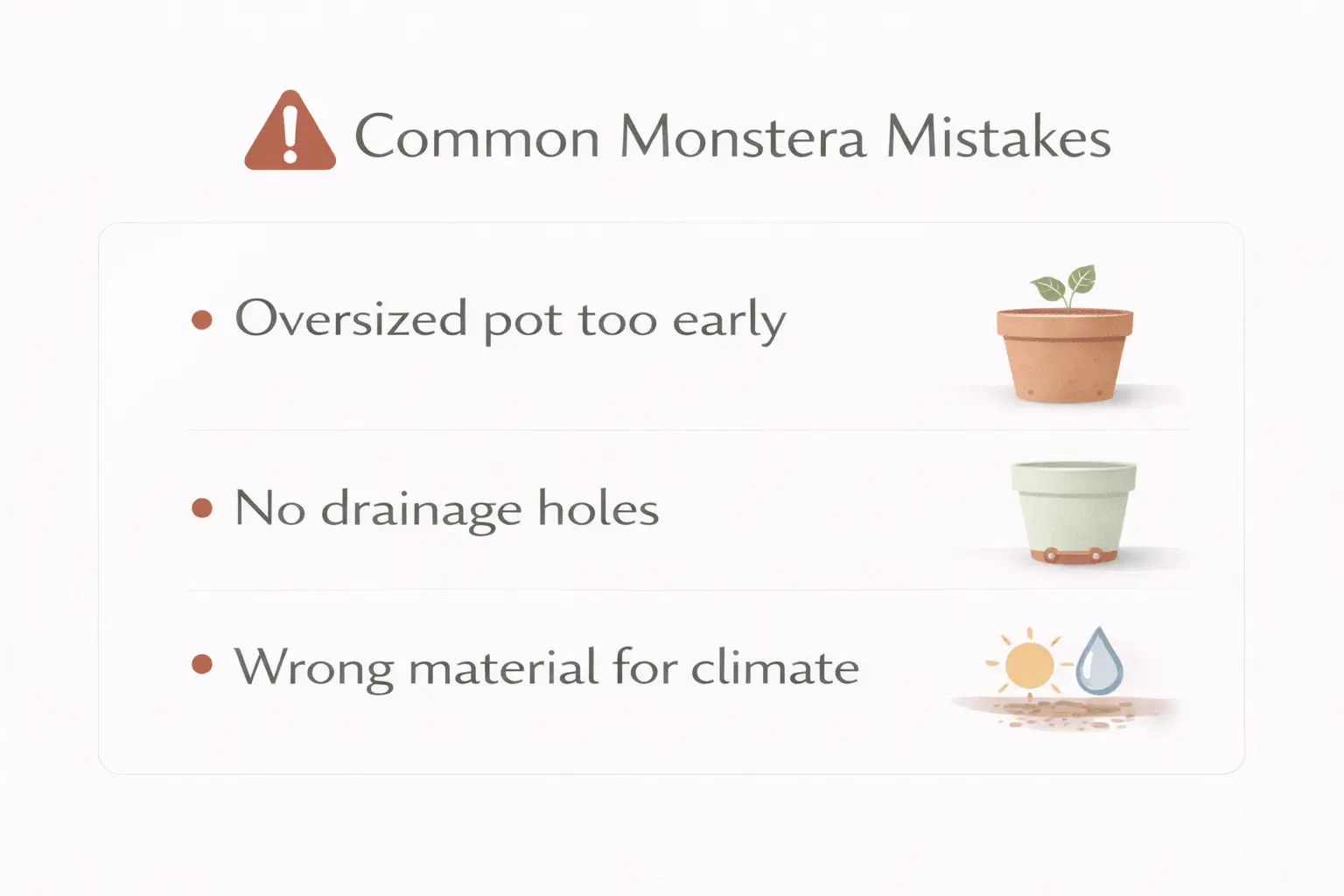
The most common mistakes include using oversized containers, selecting pots without drainage holes, and choosing materials unsuitable for climate conditions. A monstera pot with drainage is essential, as non-draining flower pots significantly increase root rot risk.
Other frequent issues:
- Starting cuttings in pots that are too large
- Using decorative containers without inner drainage pots
- Ignoring monstera pot size guidelines during repotting
These mistakes often lead to poor growth and unhealthy roots.
Practical Care Tips That Competitors Miss
Monstera care is highly seasonal. The best pot for monstera indoors may change in effectiveness depending on temperature and humidity. In winter, plants require less frequent watering, making moisture-retentive pots risky. In summer, faster-drying pots like terracotta are often more suitable.
The monstera pot size guide indoors should always be adjusted based on light levels, humidity, and growth speed rather than fixed measurements alone.
Plant Size and Growth Rate
Typical Monstera Pot-Related Size
A properly sized monstera plant pot directly influences plant growth. Larger root space encourages bigger leaf development and faster overall growth. However, using a large plant pot for monstera too early can slow growth due to excess moisture retention.
Indoor plants typically grow slower than outdoor ones, so pot sizing must reflect environmental conditions.
Does Pot Affect Growth Rate?
Yes, monstera pot size and drainage significantly affect growth rate. Poor drainage restricts oxygen flow, while overly large pots slow root activity. A balanced monstera pot with drainage promotes steady growth and healthy root expansion.
The best pot for monstera cutting is especially important, as early root development determines long-term plant strength.
Care Guide for Monstera in the Right Pot
Watering and Drainage
Proper drainage is essential for all monstera pots. A cheese plant pot without drainage can quickly lead to overwatering and root rot. The best pot for monstera plant always includes drainage holes to ensure excess water exits freely.
Key rule: if water does not leave the pot, the plant cannot survive long-term.
Light, Soil, and Fertilization
The best soil and pot for monstera work together as a system. A chunky, aerated soil mix supports oxygen flow, while a properly sized pot maintains moisture balance. Monstera deliciosa thrives in well-draining monstera soil that prevents compaction.
Repotting and Pruning
Repotting should be done every 1–3 years or when roots begin circling the container. The monstera pot size guide suggests increasing pot diameter gradually by about 2 inches. Pruning supports balanced growth and prevents excessive top-heavy weight in large plants.
Troubleshooting and Problem-Solving
Common Problems From the Wrong Pot
- Yellow leaves: caused by overwatering in oversized or non-draining pots
- Stunted growth: results from root-bound conditions or poor drainage
- Root rot: occurs in sealed decorative flower pots without drainage
The fix is to switch to a proper monstera pot with drainage and adjust pot size according to plant stage.
Practical Fixes and Prevention
Always match pot size to plant stage. Avoid jumping directly into a large pot for monstera unless the plant is mature. Combine correct pot choice with proper soil and watering routine for best results.
Content Differentiation and Topical Clusters
How This Differs From Typical Plant Posts
This guide goes beyond generic advice by linking monstera pot size charts with real growth stages and climate-based pot selection. It also clarifies differences between indoor and outdoor monstera care while addressing commonly ignored issues like moisture imbalance and drainage design.
Topical Clusters and Internal Linking
This topic connects naturally with:
- Indoor Monstera Care Guide
- Choosing the Right Potting Mix for Monsteras
- Propagation: Best Pot for Monstera Cuttings
These clusters improve topical authority and user navigation across related plant care content.
Conclusion
The best pot for monstera is not defined by appearance but by function—drainage, correct monstera pot size, and suitable material. Whether using terracotta, plastic, or glazed pots, the key is matching the pot to the plant’s growth stage and environment. A properly chosen monstera plant pot ensures long-term health, stable growth, and reduced risk of root rot.
Frequently Asked Questions (FAQs)
What is the best pot for a monstera?
The best pot for monstera is one with drainage holes, correct size, and a breathable material that prevents waterlogging and supports healthy root growth.
What size pot for monstera is ideal for a young plant?
A young monstera typically thrives in a 6–8 inch pot, which provides enough space without holding excess moisture.
Should I use a terracotta pot for monstera?
Yes, terracotta pots are excellent for monstera because they dry out quickly and reduce the risk of overwatering, especially indoors.
What’s the best pot for a large monstera?
A large monstera needs a 10–14+ inch stable pot with drainage to support its heavy foliage and extensive root system.
Is a pot without drainage holes safe for a monstera?
No, pots without drainage are not safe. They trap water, leading to root rot and poor plant health over time.