
Introduction
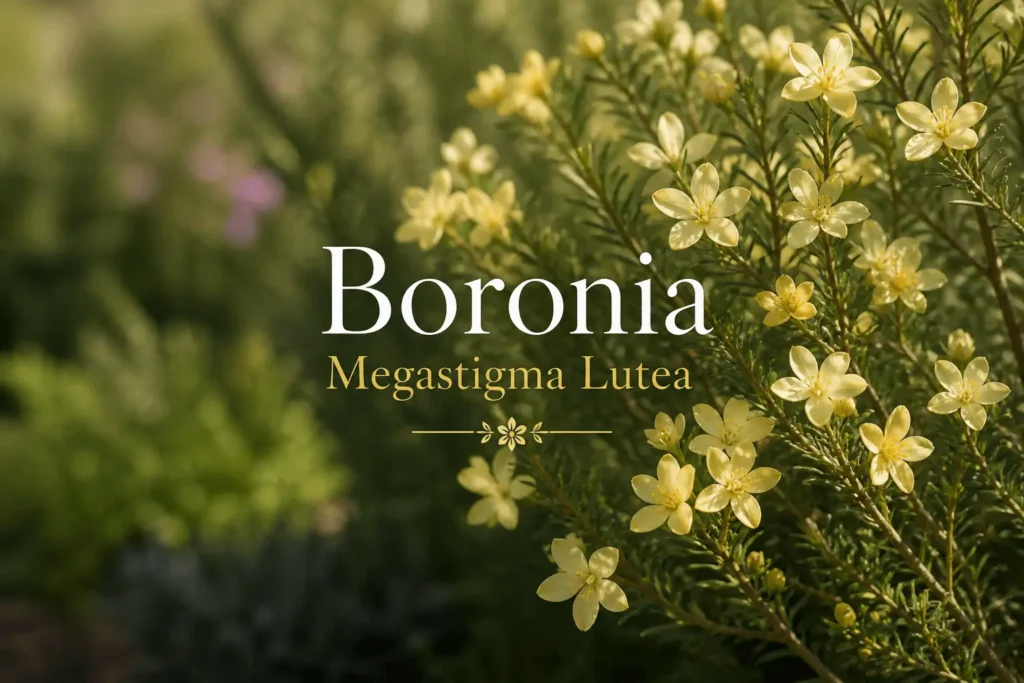
boronia megastigma lutea is a fragrant, yellow-flowering form of the well-known boronia plant, valued for its ornamental appeal and distinctive scent. This plant belongs to a group of native shrubs widely appreciated in ornamental gardening for their compact growth and aromatic flowers. Known for its delicate appearance and seasonal blooms, it requires specific environmental conditions to thrive. This guide explains what boronia lutea is, how it grows, and how to care for it successfully in different environments. It is designed for gardeners seeking clear, practical, and extractable information about growing a healthy boronia bush.
Quick Summary
- boronia megastigma lutea is a yellow-flowering variety of the fragrant boronia flower
- It thrives in well-drained soil, mild climates, and partial sunlight
- The typical boronia lifespan is short (often 3–5 years), requiring proper care for longevity
- Propagation is commonly done through seeds or cuttings for sustainable growth
What Is Boronia Megastigma Lutea?
Understanding the Plant and Its Classification
boronia megastigma lutea is a yellow-flowering variety of boronia megastigma, a species within the Rutaceae (citrus) family. It belongs to the broader boronia genus, which includes numerous aromatic shrubs native to Australia. boronia megastigma lutea belongs to the Rutaceae family, a group of aromatic plants commonly associated with citrus species (see: Wikipedia).
This plant naturally grows in temperate regions with well-drained soils, often found in woodland and heathland environments. As a native species, it is adapted to specific ecological conditions, particularly mild climates with consistent moisture.
Naming variations include boronia lutea and yellow boronia. Common misspellings such as “borinia” or “baronia flower” often refer to the same plant but are botanically incorrect. Understanding these naming differences helps clarify plant identification in gardening contexts.
Key Characteristics of Boronia Lutea
Appearance, Fragrance, and Growth Habit
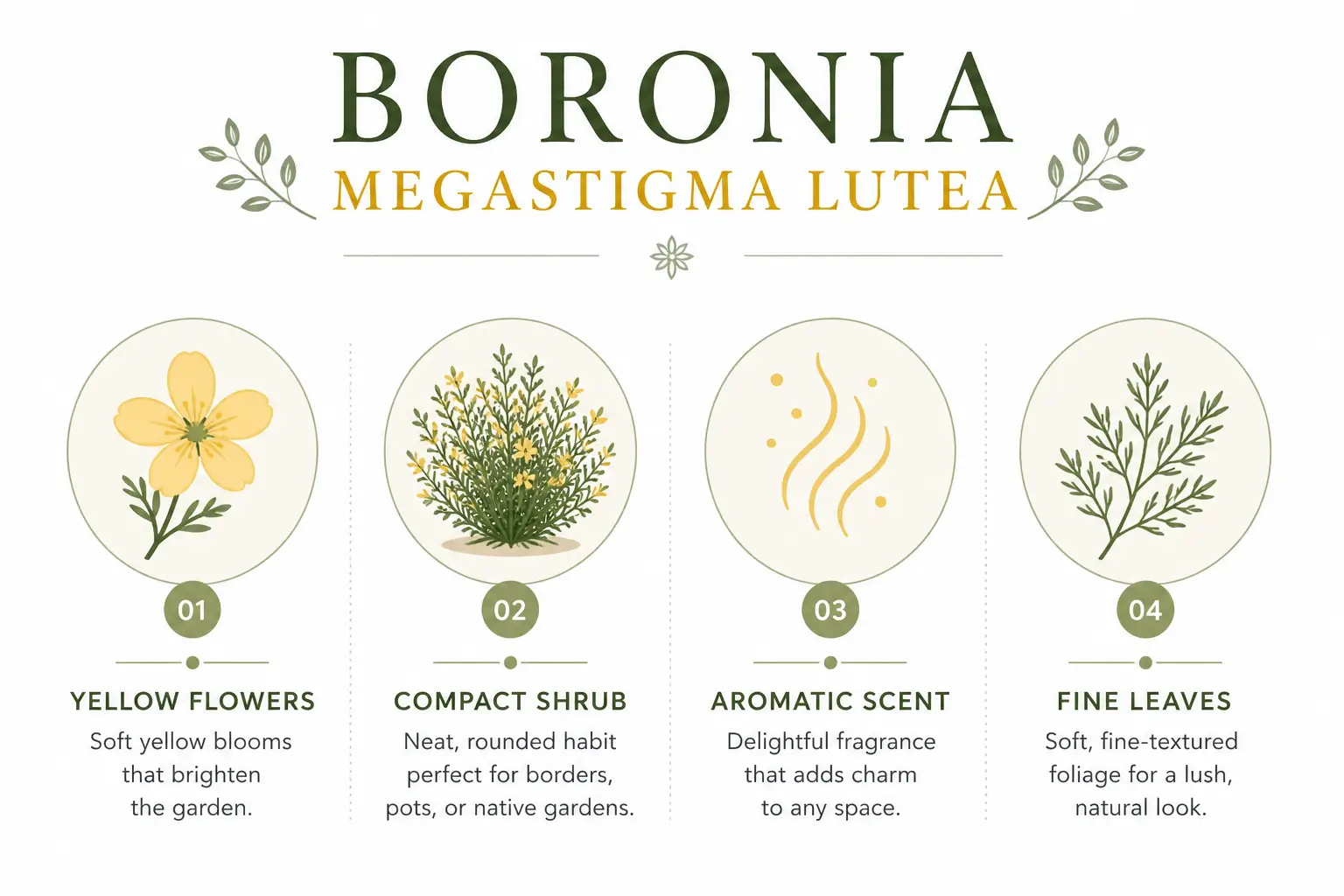
boronia megastigma lutea is recognized for its small, waxy, yellow flowers and compact shrub form. The plant produces dense foliage with fine-textured leaves, contributing to its ornamental appeal.
The fragrance is one of its defining features, often described as citrus-like with subtle spicy notes. This scent makes it popular in both gardens and perfumery contexts.
Key Traits:
- Flower color: yellow tones
- Plant type: compact shrub
- Scent: aromatic and sweet
- Foliage: fine-textured leaves
Compared to other boronia varieties, this form stands out for its yellow blooms, as many boronias produce pink, red, or purple flowers. The plant is commonly referred to as a boronia shrub or boronia plant in horticulture.
Boronia Plant Size and Growth Rate
How Big Does Boronia Megastigma Lutea Grow?
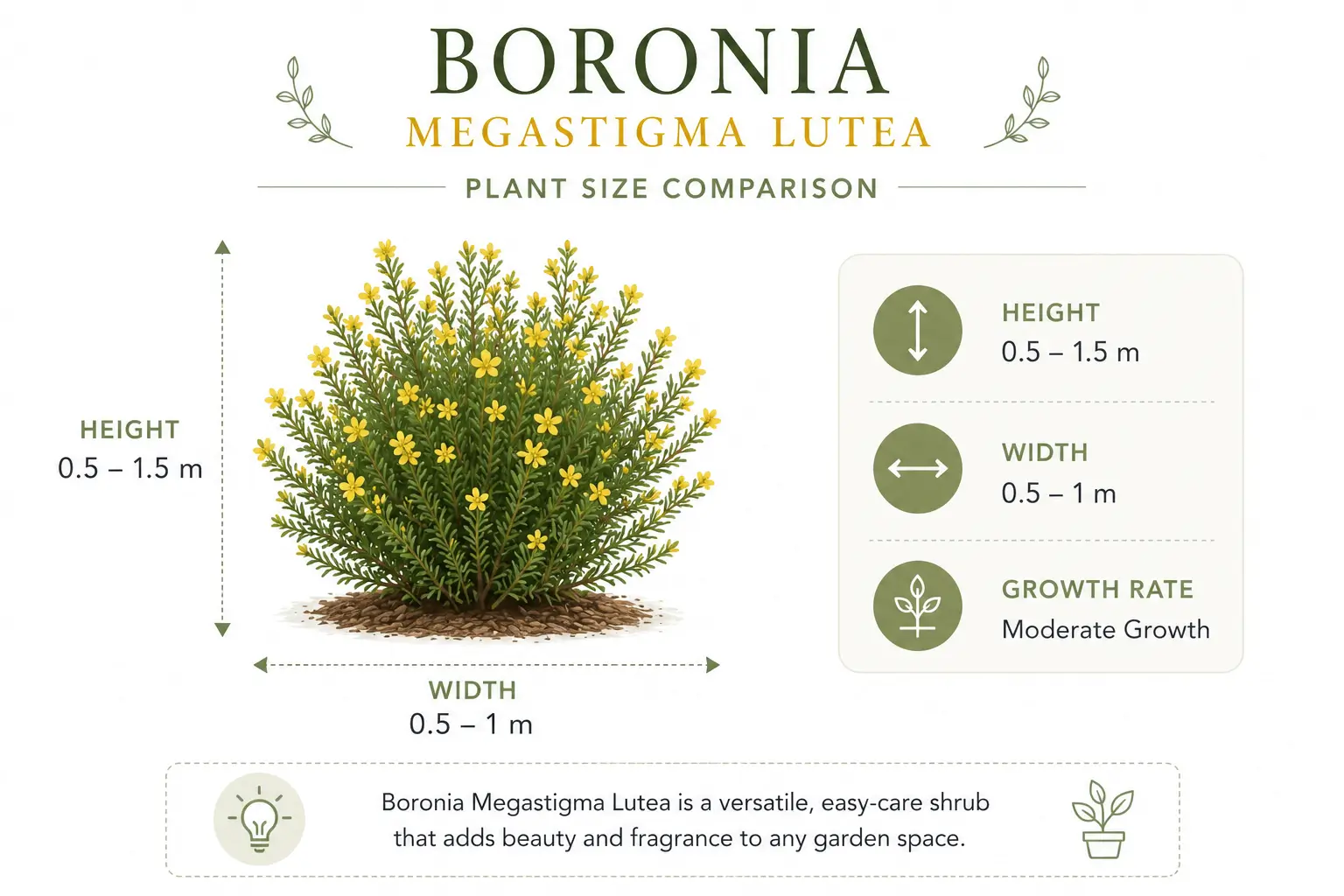
boronia megastigma lutea typically grows into a small to medium-sized shrub with moderate growth speed under suitable conditions. Its size depends on environmental factors such as soil quality, sunlight, and pruning practices.
| Growth Factor | Typical Range |
| Height | 0.5–1.5 meters |
| Width | 0.5–1 meter |
| Growth Rate | Moderate |
In garden settings, the plant can reach its full height with proper spacing and care. In containers, growth is often more restricted due to root limitations.
Environmental influences include:
- Well-drained soil promoting healthy root systems
- Partial sunlight supporting balanced growth
- Pruning helping maintain compact shape
Indoor cultivation is less common, as the plant prefers outdoor conditions with natural airflow and humidity.
Boronia Lifespan and Growth Cycle
How Long Do Boronia Plants Live?
Boronia plants typically live for 3–5 years, making them short-lived perennial shrubs that require proper care to maintain health throughout their lifecycle.
Key Lifecycle Points:
- Average lifespan: 3–5 years
- Flowering season: late winter to spring
- Decline factors: poor drainage, heat stress
The plant undergoes active growth during cooler seasons, followed by flowering and gradual decline. Boronias are considered short-lived due to their sensitivity to environmental stress and root conditions.
Gardeners often replace older plants or propagate new ones to maintain continuity. Proper care, especially soil management and watering, can slightly extend the plant’s lifespan.
Boronia Megastigma Lutea Care Guide
Essential Conditions for Healthy Growth
Watering, Light, and Soil Needs
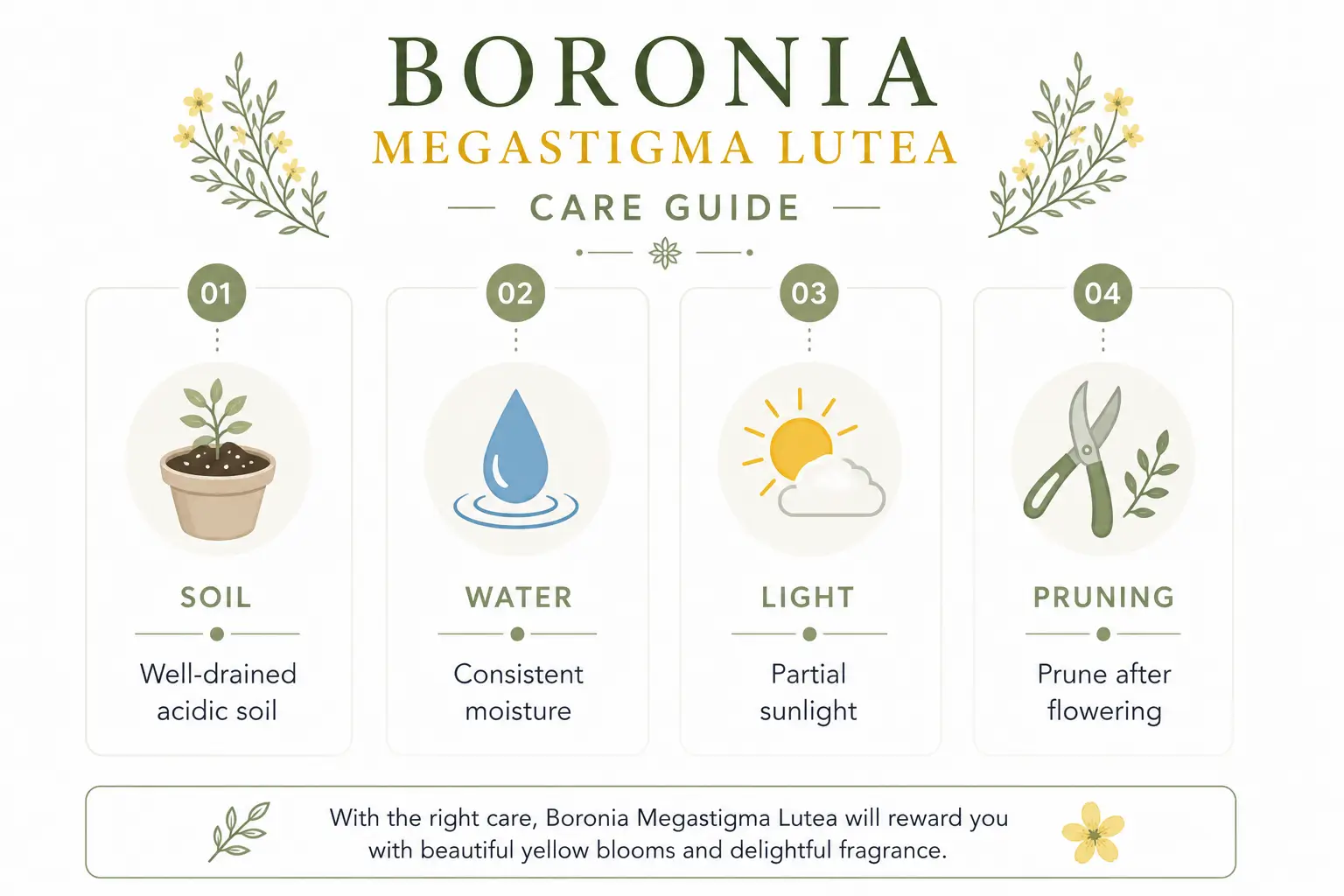
- Well-drained, slightly acidic soil
- Consistent moisture (avoid waterlogging)
- Partial shade to filtered sunlight
boronia megastigma lutea requires balanced moisture levels. Overwatering is a common issue, especially in poorly drained soils. The plant performs best in environments that mimic its natural habitat. For broader native plant care principles, refer to the “Kangaroo Paw Care: 6+ Essential Tips for Healthy Blooms”, which explains similar watering and soil requirements.
Fertilization and Pruning
- Light feeding with native plant fertilizer
- Prune after flowering to maintain shape
Light fertilization supports healthy growth without overwhelming the plant. Pruning encourages bushier growth and prevents legginess.
Practical care steps:
- Water regularly but ensure excess drains away
- Use mulch to retain soil moisture
- Avoid disturbing roots during planting
Propagation Methods for Boronia Megastigma Lutea
How to Grow from Seeds and Cuttings
boronia megastigma lutea can be propagated through seeds or semi-hardwood cuttings, though cuttings generally offer higher success rates.
Seed Propagation
- Uses boronia megastigma lutea seeds
- Requires controlled germination conditions
- Can be slow and less reliable
Cutting Propagation
- Semi-hardwood cuttings preferred
- Faster establishment compared to seeds
- Requires controlled humidity
Key Propagation Tips:
- Best time: post-flowering season
- Tools: sterile cutting tools, rooting hormone
- Environment: humid and warm
Cuttings are generally more effective because they produce plants identical to the parent, while seeds may vary in traits.
Common Problems and Solutions
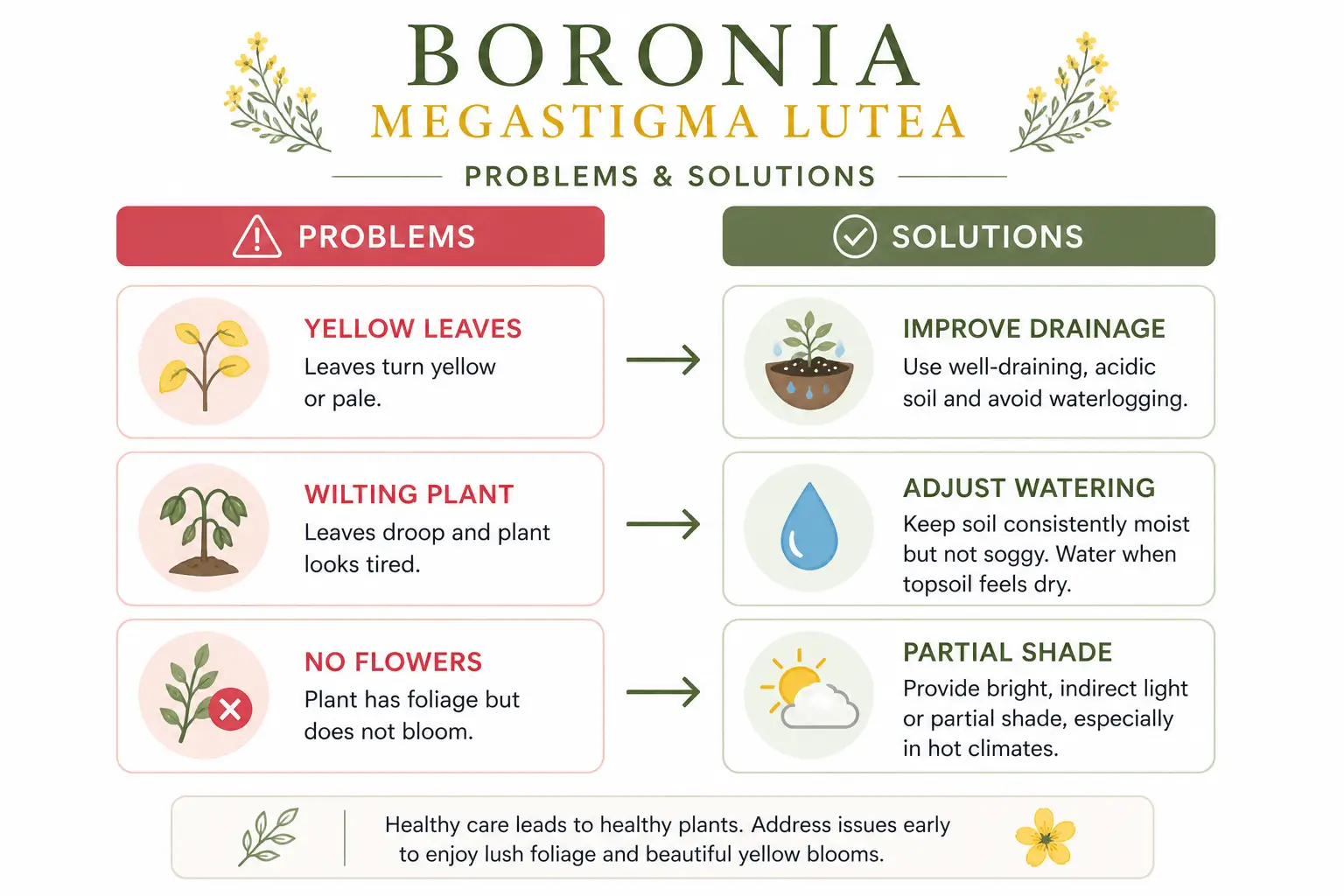
Why Boronia Plants Struggle and How to Fix Them
Boronia plants commonly struggle due to environmental stress, particularly related to water management and soil conditions.
Common Problems:
- Yellowing leaves → overwatering or poor drainage
- Wilting → root rot or heat stress
- Lack of flowers → insufficient light or nutrients
Solutions:
- Improve drainage with sandy soil mix
- Adjust watering frequency
- Relocate to partial shade
Prevention Tips:
- Avoid heavy clay soils
- Use mulch to regulate moisture
Early identification of symptoms helps prevent long-term damage and supports plant recovery.
Comparison: Boronia Megastigma Lutea vs Other Boronia Varieties
How It Differs from Popular Types
boronia megastigma lutea differs from other boronia varieties primarily in flower color, fragrance strength, and growth habit.
| Variety | Flower Color | Fragrance | Growth Habit |
| B. megastigma lutea | Yellow | Strong | Compact shrub |
| B. crenulata | Pink/red | Mild | Spreading |
| B. heterophylla | Purple | Light | Upright |
Other varieties like aniseed boronia and blue boronia also differ in scent profile and visual appeal. This comparison helps gardeners select the most suitable type based on preference and conditions.
Environmental Requirements and Limitations
Where Boronia Grows Best
Boronia grows best in temperate climates with mild conditions, consistent humidity, and protection from extreme weather.
Ideal Conditions:
- Prefers cool, humid environments
- Sensitive to drought and extreme heat
- Requires shelter from strong winds
In regions similar to the boronia plant UK climate, success depends on replicating these conditions. Environmental stress, particularly heat and dryness, can significantly reduce plant health. These conditions are similar to those discussed in “Easy Low Maintenance Australian Native Garden Guide 7+ Steps”, which outlines ideal climates and soil conditions for native shrubs.
Beginner Mistakes to Avoid
Common Growing Errors with Boronia Bush
- Overwatering or poor drainage
- Planting in full sun exposure
- Ignoring soil acidity requirements
Common beginner mistakes often relate to misunderstanding the plant’s natural habitat. Correcting these issues involves adjusting soil composition, watering practices, and plant placement. Many of these mistakes are also common across other native plants, as explained in “Aphids on Houseplants: 8+ Proven Ways to Remove Them”, which highlights plant stress and improper care issues.
Conclusion
boronia megastigma lutea is a unique and fragrant boronia plant valued for its yellow blooms and ornamental appeal. Its successful cultivation depends on understanding its specific requirements, including well-drained soil, moderate watering, and suitable climate conditions. Due to its short boronia lifespan, gardeners benefit from learning propagation techniques to maintain continuity. With proper care and attention to environmental factors, this plant can thrive and provide seasonal fragrance and visual interest in a garden setting. For a broader understanding of plant care, growth, and selection, explore our complete guide: “Plants: Benefits and Guides (Complete Care, Types & Growing Tips)”.
FAQs
What is boronia megastigma lutea?
boronia megastigma lutea is a yellow-flowering variety of the fragrant boronia shrub, known for its ornamental appearance and strong scent.
How long does a boronia plant live?
The typical boronia lifespan is around 3–5 years when grown under suitable conditions with proper care.
How do you propagate boronia megastigma lutea?
It can be propagated through seeds or semi-hardwood cuttings, with cuttings generally providing faster and more reliable results.
Why are my boronia leaves turning yellow?
Yellow leaves are usually caused by overwatering, poor drainage, or unsuitable soil conditions affecting root health.
Can boronia grow in pots?
Yes, boronia can grow in pots if the container provides excellent drainage and uses a suitable, well-drained soil mix.


One Response