
Introduction
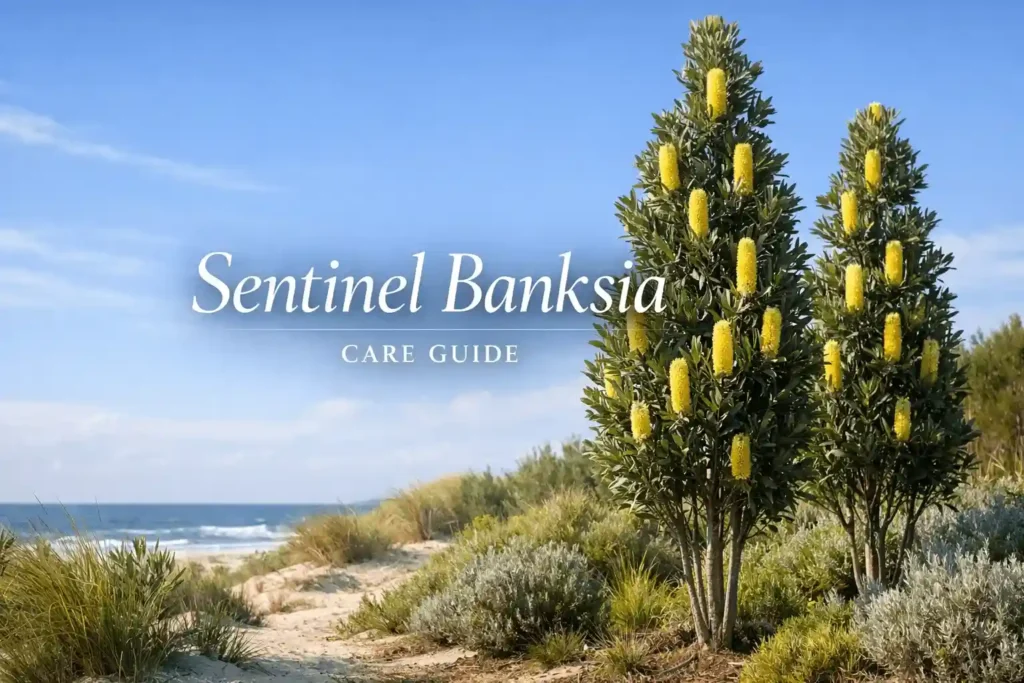
Sentinel Banksia (Banksia integrifolia ‘Sentinel’) is a narrow, upright Australian native shrub or small tree prized for its coastal tolerance, yellow flower spikes, and hedging potential in gardens. It belongs to the Proteaceae family and is widely used in landscaping due to its resilience in sandy, windy, and nutrient-poor environments. The plant combines ornamental beauty with ecological value, making it a preferred choice for wildlife-friendly and low-maintenance gardens.
Quick Summary
- Sentinel Banksia grows 4–10m tall and 1–2m wide, ideal for narrow hedges and compact landscapes.
- Produces vibrant yellow flower spikes from autumn to spring, attracting birds and pollinators.
- Thrives in full sun with sandy, well-drained soil and becomes drought-tolerant once established.
- Highly suited to coastal and urban environments but sensitive to heavy soils and frost conditions.
What Is Sentinel Banksia?
Botanical Identity and Origin
Sentinel Banksia (Banksia integrifolia ‘Sentinel’) is a cultivated form of the coastal banksia species Banksia integrifolia, native to eastern Australia. It was selectively bred for its narrow, upright growth habit, making it suitable for modern gardens with limited space. Unlike the broader wild form, the Sentinel cultivar maintains a strong columnar structure. Sentinel Banksia is derived from the species Banksia integrifolia, a coastal Australian native described in detail on Wikipedia: Banksia integrifolia (Wikipedia), known for its ecological importance and resilience in harsh coastal environments.
Key Botanical Features
- Evergreen habit with dense, dark green foliage
- Serrated leaves typical of Banksia integrifolia
- Cylindrical flower spikes rich in nectar
- Woody seed cones that persist for ornamental interest
Visual Identification
The plant is easily recognized by its tall, slim structure and golden-yellow flower spikes measuring 10–15 cm. Compared to wild Banksia integrifolia, the Sentinel form is significantly narrower, making it more suitable for hedging and screening.
Plant Size
Mature Dimensions
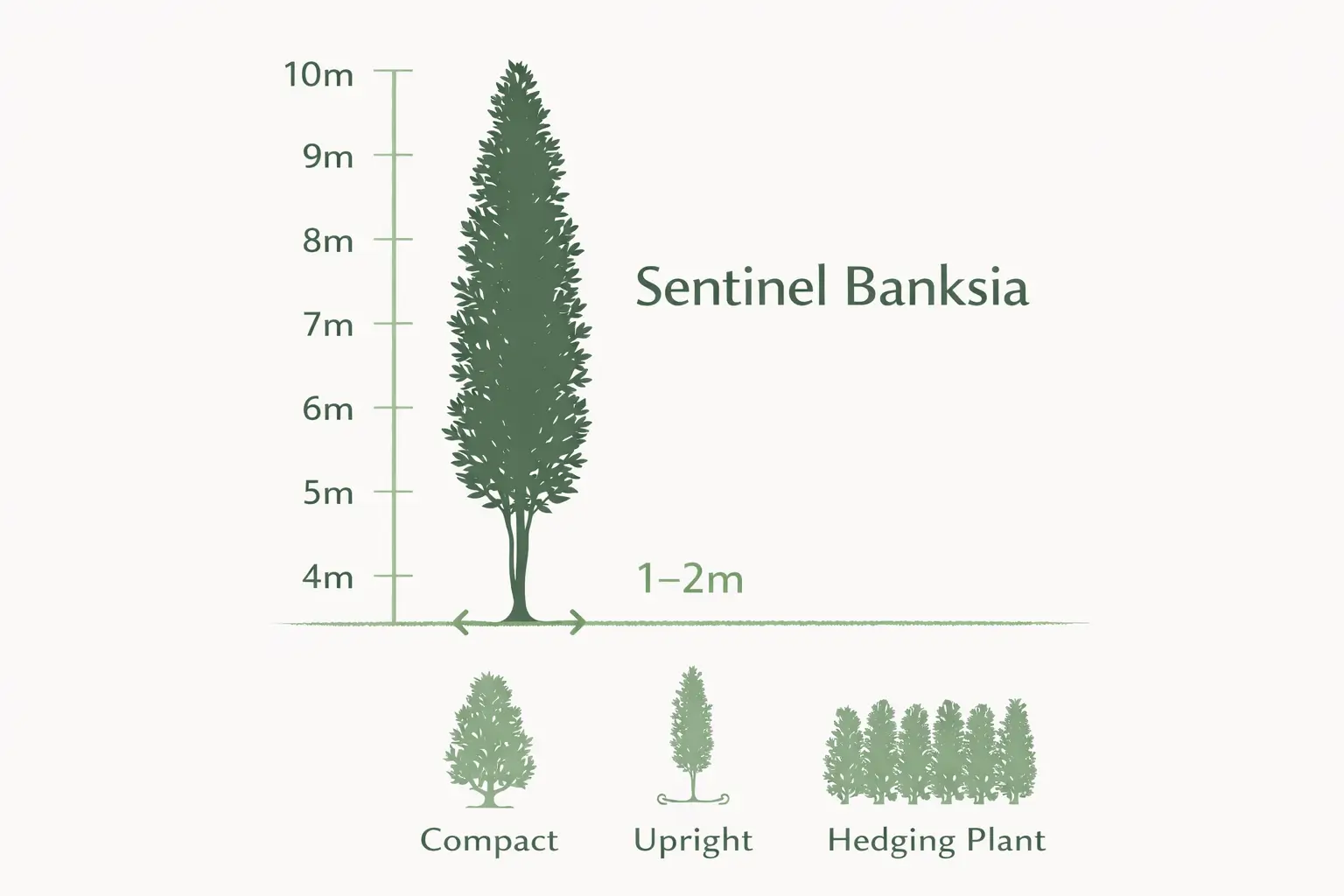
Sentinel Banksia typically reaches a height of 4–10 meters and maintains a narrow width of 1–2 meters. This columnar growth habit makes it one of the most space-efficient banksia varieties available for landscaping.
Indoor vs Outdoor Growth
- Indoor cultivation is not suitable due to its large root system and high light requirements
- Performs best outdoors in full sun and open environments
- Growth size may vary depending on soil fertility and climate conditions
Pruning Influence
Regular light pruning helps maintain a tighter hedge form and encourages denser foliage. Without pruning, it naturally grows into a tall, slender tree-like structure.
Growth Rate
Growth Classification
Sentinel Banksia is considered a moderate grower, typically adding 30–60 cm per year under optimal conditions.
Seasonal Growth Patterns
- Fastest growth occurs in spring and summer
- Flowering period extends from autumn through spring
- Growth slows during colder or shaded conditions
Growth Influencing Factors
- Full sun exposure significantly enhances growth rate
- Mulching improves soil moisture retention and root health
- Drought stress and shade reduce overall development speed
Care Guide
Watering Requirements
- Moderate watering during the first year of establishment
- Deep, infrequent watering once mature
- Avoid waterlogging, which leads to root rot
Light Requirements
Requires at least 6 hours of direct sunlight daily for optimal flowering and structural growth.
Soil Conditions
- Prefers sandy or loamy, free-draining soils
- Ideal soil pH range: 5.5–7
- Heavy clay soils must be improved with drainage amendments or raised beds
Fertilization
- Use low-phosphorus native plant fertilizer once per year in spring
- Over-fertilization can damage roots due to sensitivity to phosphorus
Pruning Practices
- Light pruning after flowering helps maintain shape
- Avoid heavy cutting into old wood
- Regular trimming encourages dense hedge formation
Temperature Tolerance
Suitable for USDA zones 9–11, tolerating mild frost but preferring coastal warmth.
Care Essentials Table
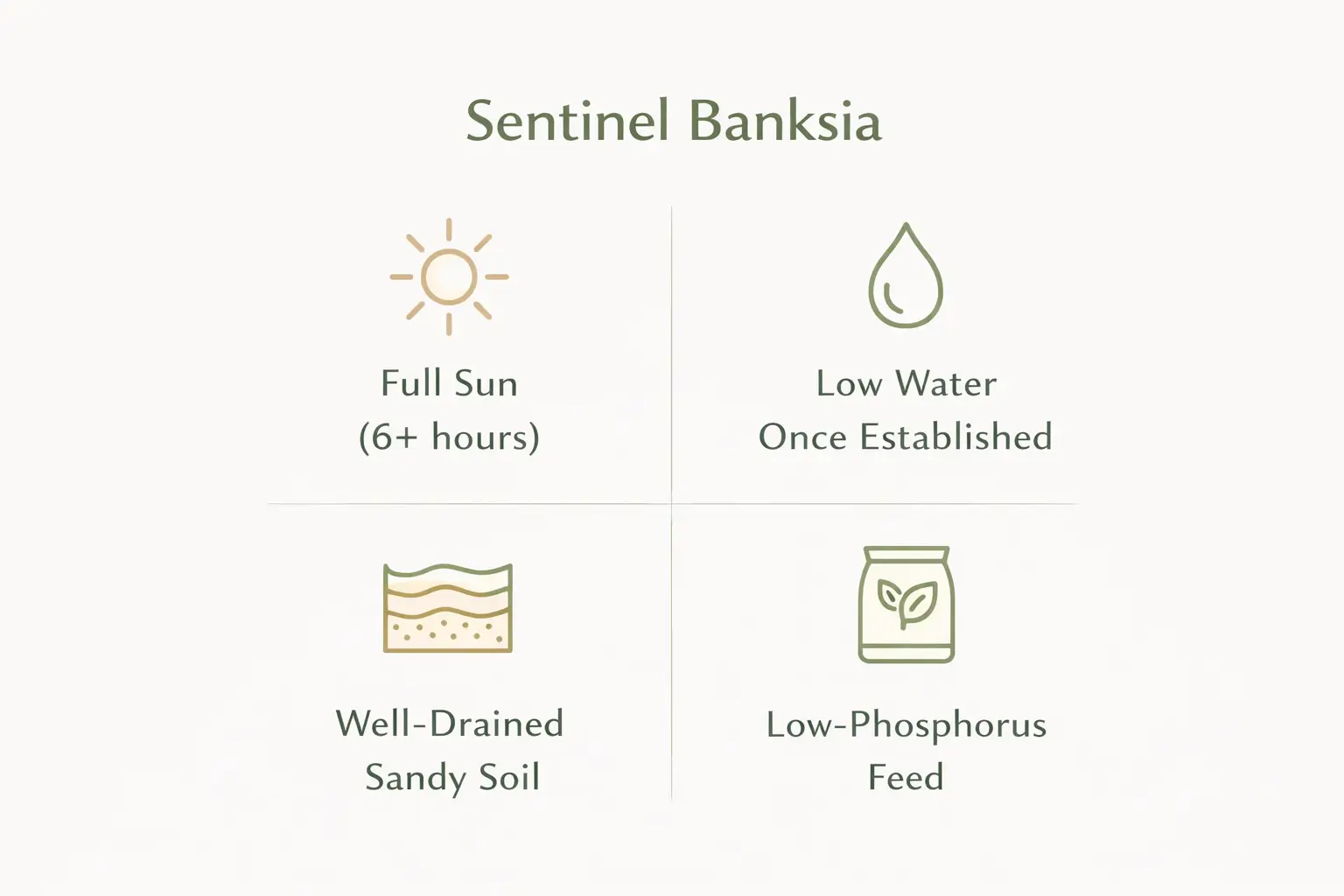
| Aspect | Requirements | Notes |
| Water | Low after establishment | Overwatering causes root rot |
| Light | Full sun | Tolerates light shade |
| Soil | Sandy, well-drained | pH 5.5–7 optimal |
| Temperature | 0°C minimum | Coastal hardy |
| Pruning | Annual post-flower | Enhances density |
Sentinel Banksia as a Hedge
Hedge Suitability
Sentinel Banksia is highly valued for hedging due to its naturally upright and compact growth habit. It creates effective privacy screens and windbreaks while maintaining a structured appearance.
Planting Guidelines
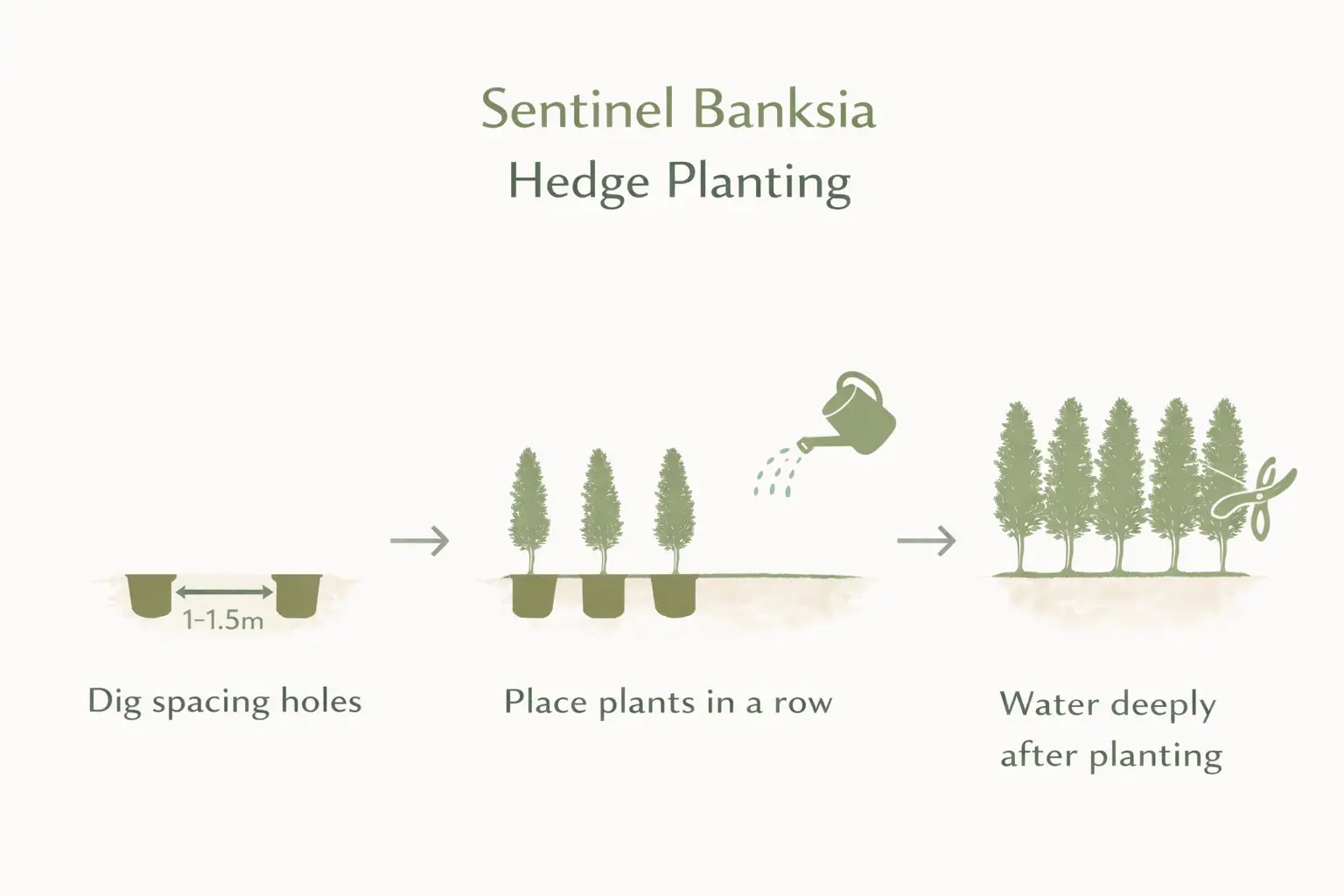
- Space plants 1–1.5 meters apart for dense hedging
- Plant in rows for privacy screens or wind protection
- Ensure well-drained soil before planting
Sentinel Banksia is often compared with other popular screening plants like Best Heliconia for Screening: Top Tall Varieties for Privacy and broader landscaping choices such as Tropical Screening Plants: Best Choices for Garden Privacy, especially in coastal privacy designs.
Maintenance Tips
- Responds well to regular clipping for formal hedge shapes
- Establishes faster when planted in groups
- Requires consistent sunlight for even growth
Comparison: Sentinel Banksia vs. Similar Varieties
Key Differences Overview
Sentinel Banksia differs from other Banksia integrifolia forms mainly in its narrow growth habit and improved suitability for hedging applications.
Similar structured comparisons can also be seen in ornamental trees like Magnolia Little Gem vs Teddy Bear: Size, Growth & Differences, where form, height, and hedge suitability play a key role in plant selection.
Comparison Table
| Feature | Sentinel (‘Sentinel’) | Fastigiata | Standard Integrifolia |
| Height/Width | 4–10m / 1–2m | 5–8m / 2–3m | 10–15m / 4–6m |
| Growth Form | Columnar, narrow | Upright, broader | Spreading tree |
| Flower Timing | Autumn–spring | Spring–summer | Year-round potential |
| Hedge Suitability | Excellent | Good | Poor |
| Coastal Tolerance | High | High | High |
Common Problems and Solutions
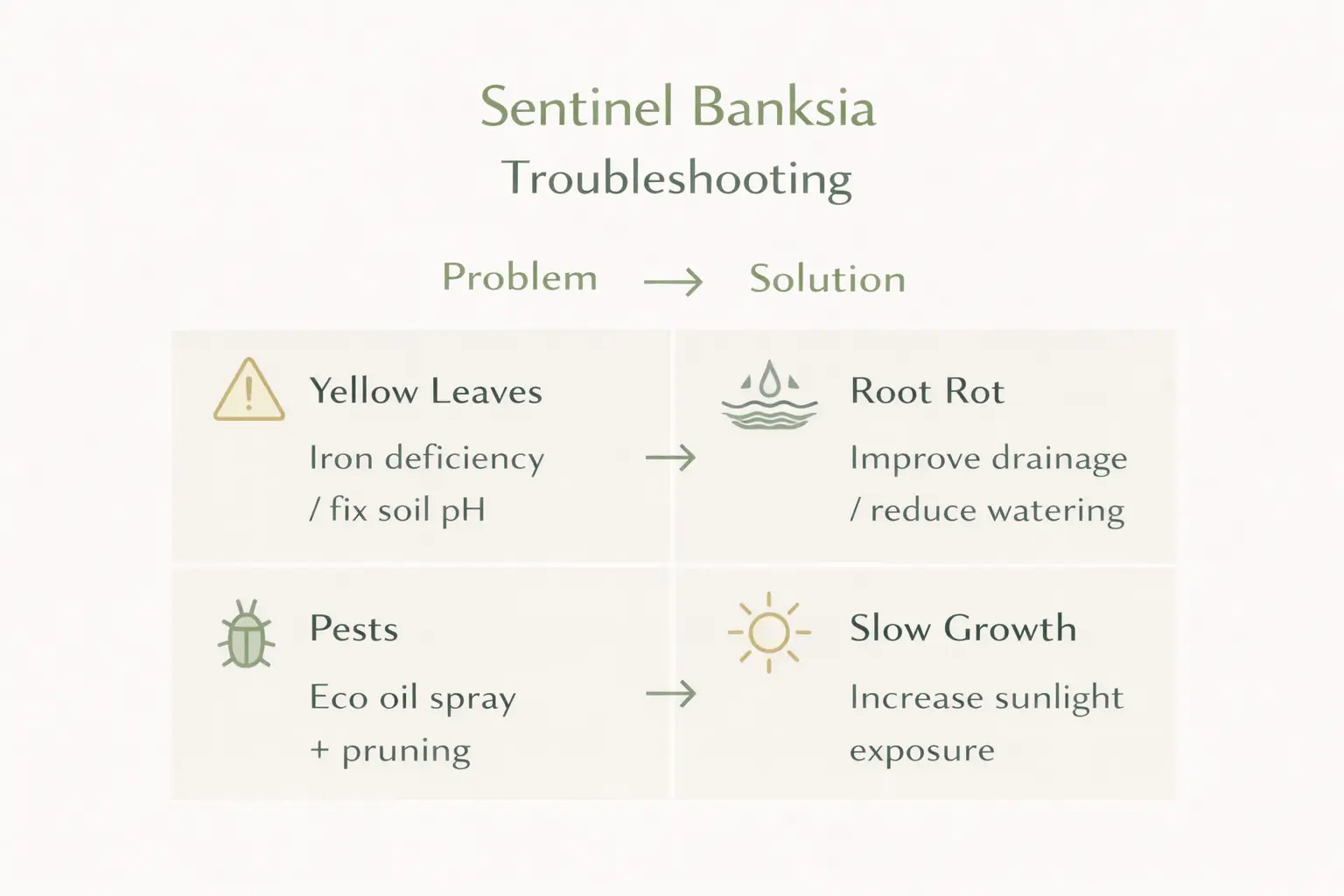
Yellow Leaves
Yellowing often indicates iron deficiency or alkaline soil conditions. Use chelated iron, test soil pH, and improve drainage with organic mulch.
Root Rot
Caused by excess moisture or poor drainage. Improve soil structure, plant on raised beds, and reduce watering frequency.
Pest Infestations
Borers and scale insects may affect stressed plants. Prune damaged branches and apply eco-friendly oil sprays to restore plant health.
Slow Growth
Usually caused by insufficient sunlight or poor nutrition. Relocate to a sunnier position and ensure balanced, low-phosphorus feeding.
Differentiation: Unique Uses in Modern Gardens
Sentinel Banksia is increasingly used in urban landscaping due to its narrow profile and adaptability. It is ideal for:
- Coastal windbreaks and erosion control
- Narrow garden boundaries and privacy screens
- Wildlife-friendly native planting schemes
Its upright structure also makes it suitable for modern minimalist garden designs where vertical green elements are preferred. It performs well alongside other Australian natives and contributes to biodiversity by attracting birds and pollinators.
Conclusion
Sentinel Banksia offers reliable, low-maintenance beauty for hedges and coastal gardens, combining upright structure, seasonal flowering, and strong environmental adaptability. Its success depends mainly on full sun exposure and well-drained soil, making it an excellent choice for sustainable Australian native landscaping and modern urban gardens.
FAQs
What is the mature size of Sentinel Banksia?
It typically grows 4–10 meters tall and 1–2 meters wide, making it ideal for narrow hedging applications.
How do you prune Banksia integrifolia ‘Sentinel’ for hedging?
Prune lightly after flowering in late spring to maintain shape and encourage dense growth without cutting into old wood.
Is Sentinel Banksia drought tolerant?
Yes, once established after 1–2 years, it becomes highly drought tolerant and requires minimal watering.
Can Sentinel Banksia grow in clay soil?
It performs poorly in clay soil unless amended or planted on raised beds with improved drainage.
What causes yellow leaves on Sentinel Banksia?
Common causes include poor drainage, iron deficiency, or overwatering, all of which can be corrected through soil improvement and proper care.



One Response