
Introduction
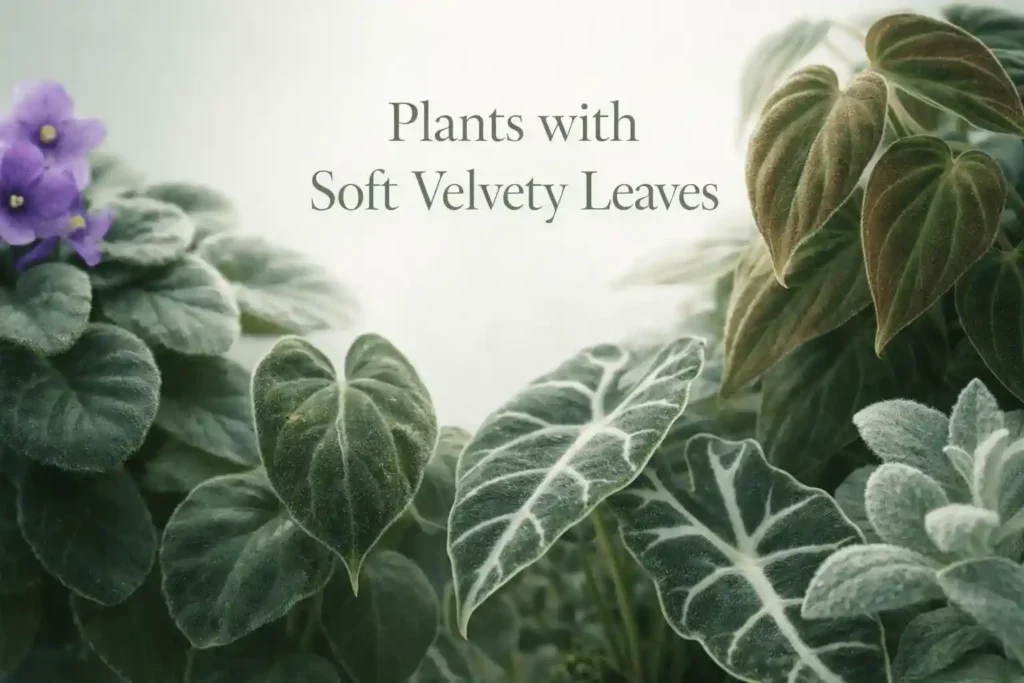
Plants with soft velvety leaves are species that produce fine hair-like structures called trichomes, giving their foliage a fuzzy and plush texture. These plants are widely valued for their tactile beauty, visual depth, and natural protective functions. They are commonly found in indoor houseplants as well as hardy garden perennials. The velvety surface helps reduce water loss, protect against pests, and filter strong sunlight. From compact African Violets to spreading Lamb’s Ear, these plants add a unique sensory dimension to any green space. Their soft leaves make them especially popular in decorative plant collections and indoor sensory gardens.
Quick Summary
- Velvety leaves come from trichomes that create a soft, fuzzy surface.
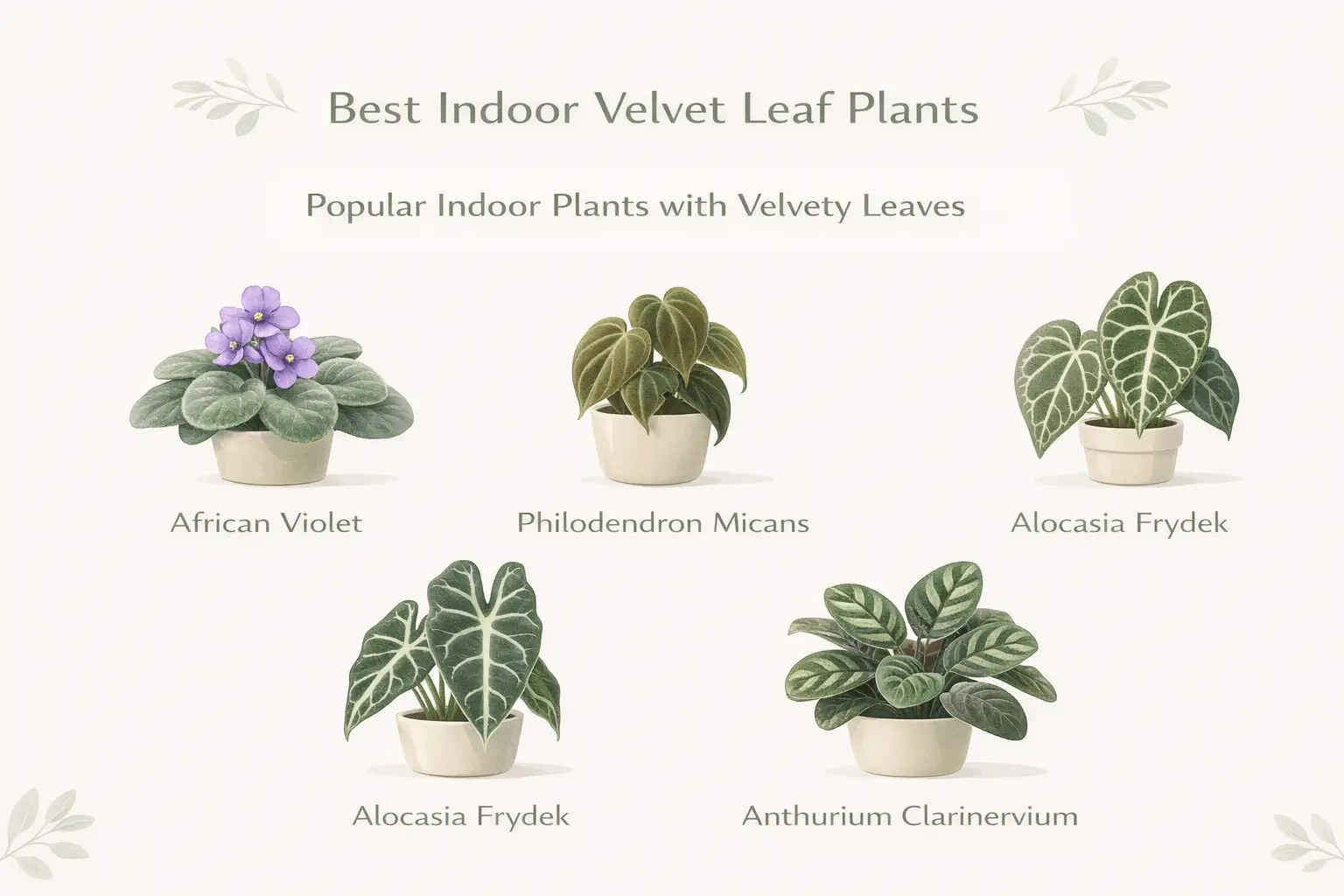
- Popular indoor plants include African Violet, Philodendron Micans, and Alocasia Frydek.
- These plants require humidity, indirect light, and careful watering to maintain texture.
- Outdoor types like Lamb’s Ear and Mullein are drought-tolerant and sun-loving.
- Poor humidity or overwatering often leads to texture loss and plant stress.
Popular Indoor Plants with Velvety Leaves
African Violet (Saintpaulia)
African Violet is a compact indoor plant known for its rounded, fuzzy leaves and frequent blooms. It thrives in stable indoor conditions with indirect light and moderate humidity, making it ideal for beginners.
Philodendron Micans
Philodendron Micans is a trailing vine with heart-shaped leaves that display a soft velvet sheen. It is highly adaptable and grows well in hanging baskets or climbing setups.
Alocasia Frydek (Green Velvet Alocasia)
Alocasia Frydek features arrow-shaped leaves with striking white veins and a deep velvety surface. It requires high humidity and consistent moisture for optimal growth.
Anthurium Clarinervium
This species has thick, heart-shaped leaves with a leather-like velvet texture. It is often used in collector plant displays due to its dramatic appearance.
Calathea Varieties
Calatheas offer patterned leaves with a soft underside texture. They are sensitive to environmental changes but highly decorative indoors.
For more indoor plant inspiration, especially soft-textured and easy-care varieties, you can also explore Spider Plant Indoor Benefits: Air, Wellness, and Easy Care, Zamioculcas Zamiifolia Care Guide: ZZ Plant Growing Tips, and Peperomia Rotundifolia Care Guide: 6+ Proven Easy Tips, which complement velvety-leaf houseplant collections.
Outdoor Plants with Velvety Leaves
Outdoor velvety plants are typically hardy, drought-tolerant species that thrive in full sun and well-drained soil. They are commonly used in garden borders and landscape designs.
| Plant | Mature Size | Light Needs | Key Features |
| Lamb’s Ear (Stachys byzantina) | 12–18 in, spreads wide | Full sun | Silvery woolly leaves, soft texture |
| Mullein (Verbascum thapsus) | 3–6 ft tall | Full sun | Tall fuzzy flower spikes |
| Rose Campion (Lychnis coronaria) | 2–3 ft tall | Full sun | Silvery stems, magenta blooms |
These outdoor plants with soft velvety leaves provide seasonal contrast and are highly drought-resistant once established. Velvety outdoor plants often work well in structured garden designs and hedges, similar to ideas found in Tropical Screening Plants: Best Choices for Garden Privacy, Fast Growing Australian Native Trees: 8+ Smart Picks, and 7+ Essential Evergreen Trees Brisbane Gardens Need, which help create lush, textured landscapes.
Why Plants Develop Velvety Leaves
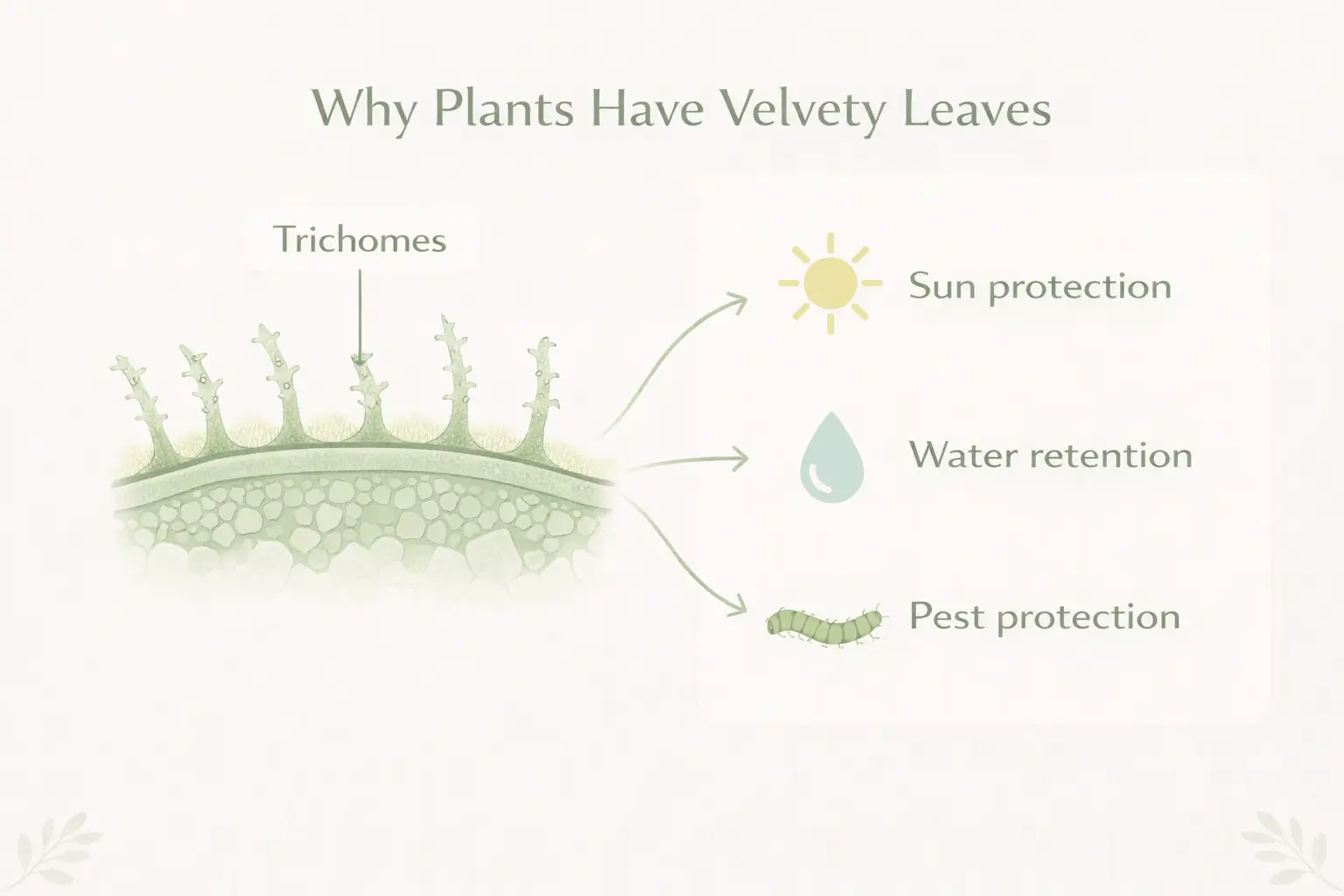
Velvety leaves develop trichomes that serve multiple biological functions. These structures protect plants from excessive sunlight, reduce water evaporation, and deter insect damage. In many species, fuzziness is an evolutionary adaptation for survival in dry or high-light environments. It also helps regulate temperature and moisture balance on the leaf surface, improving long-term plant resilience. These natural adaptations are also seen in many ornamental foliage plants, including species discussed in 7+ Essential Purple Leaf Plants Australia Guide 2026, Ultimate Guide to House Plants with Waxy Leaves: 7+ Easy Types, and 7+ Essential Large Leaf Plants Australia Guide, which also rely on leaf structure for survival and visual appeal.
The tiny hair-like structures responsible for this texture are scientifically known as trichomes, which are widely studied in botany for their protective functions (see Trichome biology:Trichome).
Plant Size
Velvety plants vary significantly in size depending on species and environment. African Violets remain compact at 6–8 inches, while Philodendron vines can extend up to 10 feet indoors. Lamb’s Ear spreads up to 2 feet in gardens. Indoor environments generally limit growth due to pot size and light availability, while outdoor plants grow more vigorously.
Growth Rate
Most velvety plants grow at a slow to moderate rate. African Violets and Alocasias grow steadily under stable conditions, while vines like Philodendron Micans grow faster during warm seasons. Growth typically peaks in spring and summer and slows significantly during winter or low-light conditions.
Care Guide
Watering
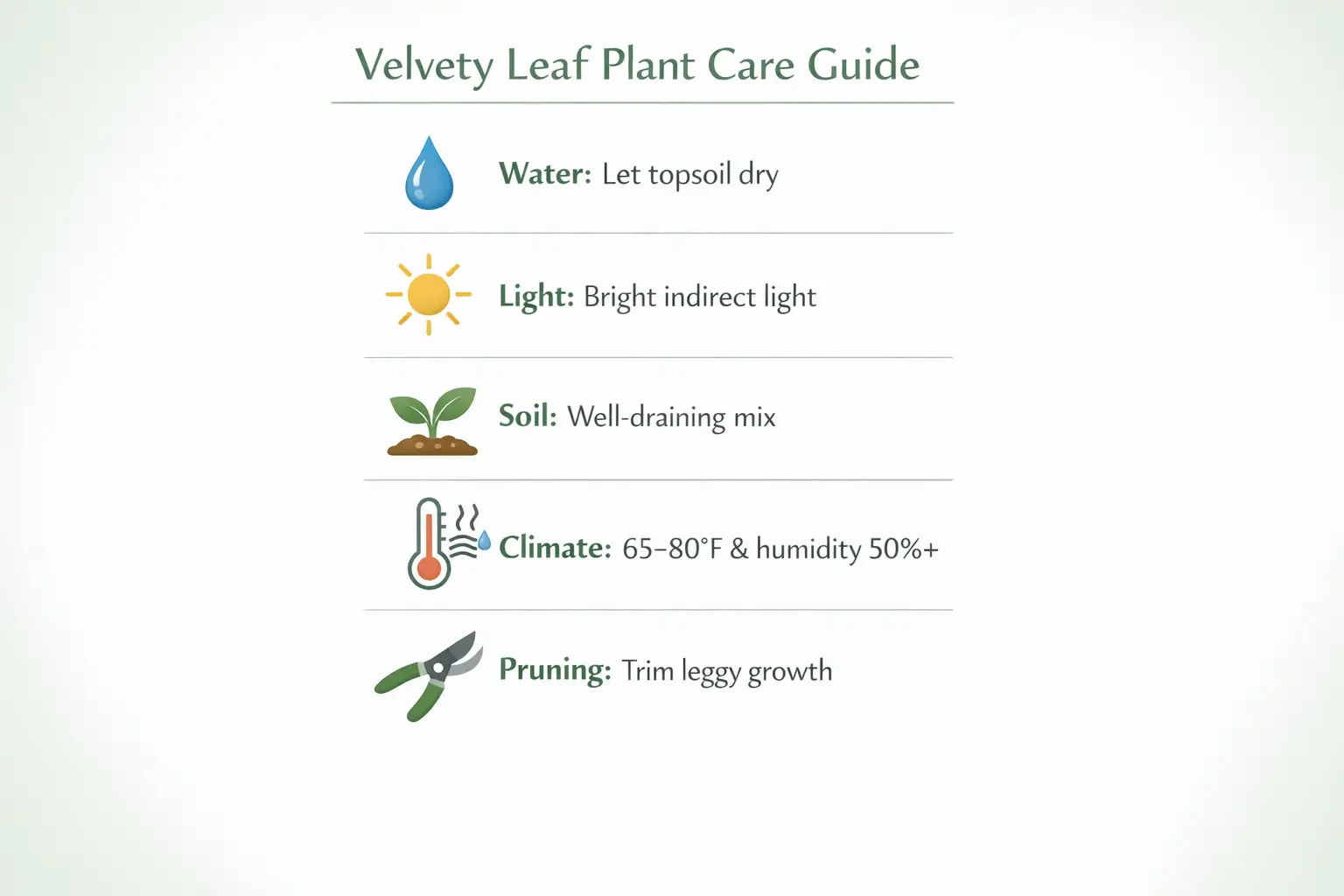
Allow the topsoil to dry before watering. Bottom watering is preferred to prevent moisture from damaging the fuzzy leaf surface.
Light Requirements
Bright, indirect light is ideal. Direct sunlight can scorch or flatten trichomes, reducing the velvety texture.
Soil Conditions
Use well-draining, peat-based soil mixed with perlite to maintain aeration and prevent root rot.
Fertilization
Apply diluted fertilizer once a month during the growing season and reduce feeding in winter.
Climate
Maintain temperatures between 65–80°F with humidity above 50% for optimal growth.
Common Problems and Solutions
Overwatering is the most common issue, leading to root rot and yellowing leaves. Low humidity can cause crispy edges and loss of fuzz texture. Dust buildup and dry air reduce the velvety appearance. Spider mites may also appear in dry conditions. Solutions include improving airflow, increasing humidity, using neem oil, and maintaining proper watering schedules.
Comparisons: Indoor vs Outdoor Velvety Plants
| Aspect | Indoor (e.g., African Violet) | Outdoor (e.g., Lamb’s Ear) |
| Humidity | Requires 50–70% humidity | Tolerates dry air |
| Light | Indirect light | Full sun |
| Winter Care | Stable indoor conditions | Needs mulch in cold zones |
| Growth Control | Limited by pots | Spreads naturally |
Indoor plants require more controlled environments, while outdoor varieties are more resilient and sun-adapted.
Varieties and Similar Plants
Several cultivars and related species offer velvety textures, including Anthurium clarinervium and Persian Shield (Strobilanthes dyerianus). These plants may differ in color, size, or leaf thickness but share the same fuzzy or soft leaf characteristics. They are often used in decorative plant collections for contrast and visual depth.
Conclusion
Plants with soft velvety leaves provide a unique combination of visual appeal and tactile softness. Species like African Violet and Lamb’s Ear demonstrate how diverse these plants can be across indoor and outdoor environments. Proper humidity, light control, and careful watering are essential to maintaining their texture and health. Choosing the right variety ensures long-lasting beauty and a distinctive sensory experience in any plant collection.
For broader plant care knowledge and structured gardening systems, you can also explore Ultimate Guide to Growing Fruit: Fast, Easy & Productive Trees and Easy Low Maintenance Australian Native Garden Guide 7+ Steps, which expand on plant selection and long-term garden health strategies.
FAQs
What plant has the softest velvety leaves?
African Violet is widely considered one of the softest velvety-leaved plants due to its fine leaf hairs and compact structure.
How do I keep velvety leaves fuzzy?
Maintain humidity above 50%, avoid leaf wetting, and use bottom watering techniques.
Can outdoor velvety plants grow indoors?
Yes, but only temporarily. Plants like Lamb’s Ear prefer full sun and perform best outdoors.
Why do my plant’s fuzzy leaves turn crispy?
Low humidity or underwatering is the main cause, often worsened by dry indoor air.
Are there plants with purple velvety leaves?
Yes, Philodendron Micans and Persian Shield have purple-toned velvety foliage.