
Introduction
The veronica plant Australia refers to a diverse group of flowering plants, commonly known as the speedwell plant, valued for their ornamental spikes and adaptability to different climates. Species like veronica perfoliata (also called derwentia perfoliata) and garden varieties such as veronica longifolia and veronica spicata plant are widely grown across Australia. These plants are known for their elegant blooms, including white veronica and veronica flower white, making them popular in both native and ornamental gardens.
Quick Summary
- Veronica (speedwell) plants are versatile flowering plants suited to many Australian climates.
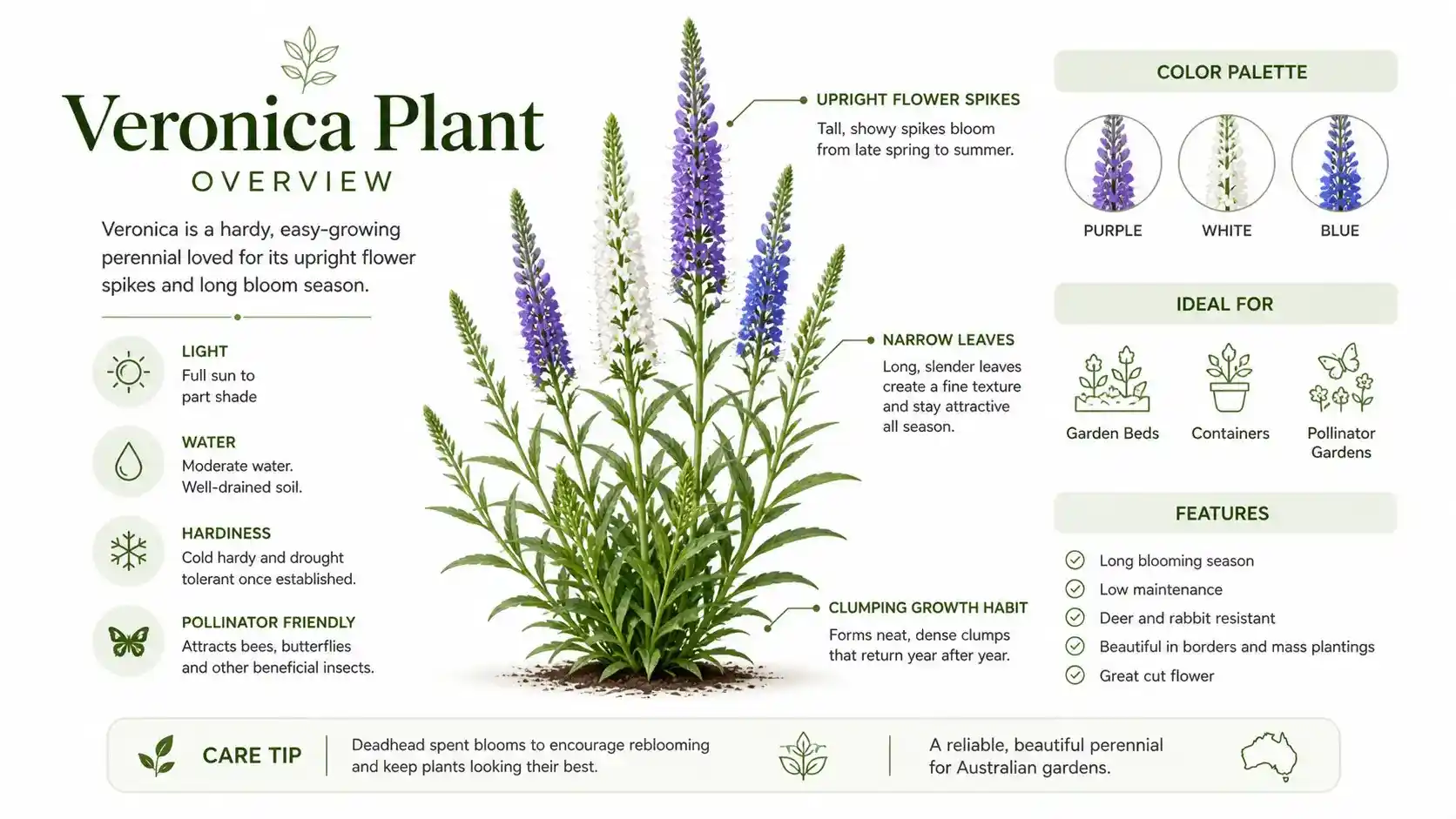
- Popular types include native species like veronica perfoliata and ornamental varieties like veronica longifolia.
- They are valued for upright flower spikes, including white and purple blooms.
- Care depends on sunlight, soil drainage, and climate conditions.
What Is a Veronica Plant and Why Is It Called Speedwell?
Understanding the Veronica Genus
The veronica plant belongs to a large genus of flowering plants classified under the Plantaginaceae family and is commonly referred to as the speedwell plant. The term “speedwell” originates from historical European use, where the plant was associated with good luck and safe travel.
Veronica plants are widely distributed across temperate regions, and the term speedwell veronica is often used interchangeably in gardening contexts. This classification helps distinguish it as a broad group rather than a single species. The veronica genus, scientifically known as Veronica (plant genus), includes hundreds of species commonly referred to as speedwell plants.
Key Characteristics of Veronica Plants
Veronica plants are defined by their upright growth and distinctive flower spikes. These spikes, often referred to as speedwell flowers, create a vertical accent in gardens.
Key features include:
- Upright flower spikes with dense clusters of blooms
- Narrow, lance-shaped leaves
- Clumping or spreading growth habit
- Bloom colors such as purple, blue, pink, and white veronica
The presence of veronica flower white varieties makes them especially useful for neutral or contrasting garden designs.
Types of Veronica Plants Found in Australia
Native Australian Veronica Species
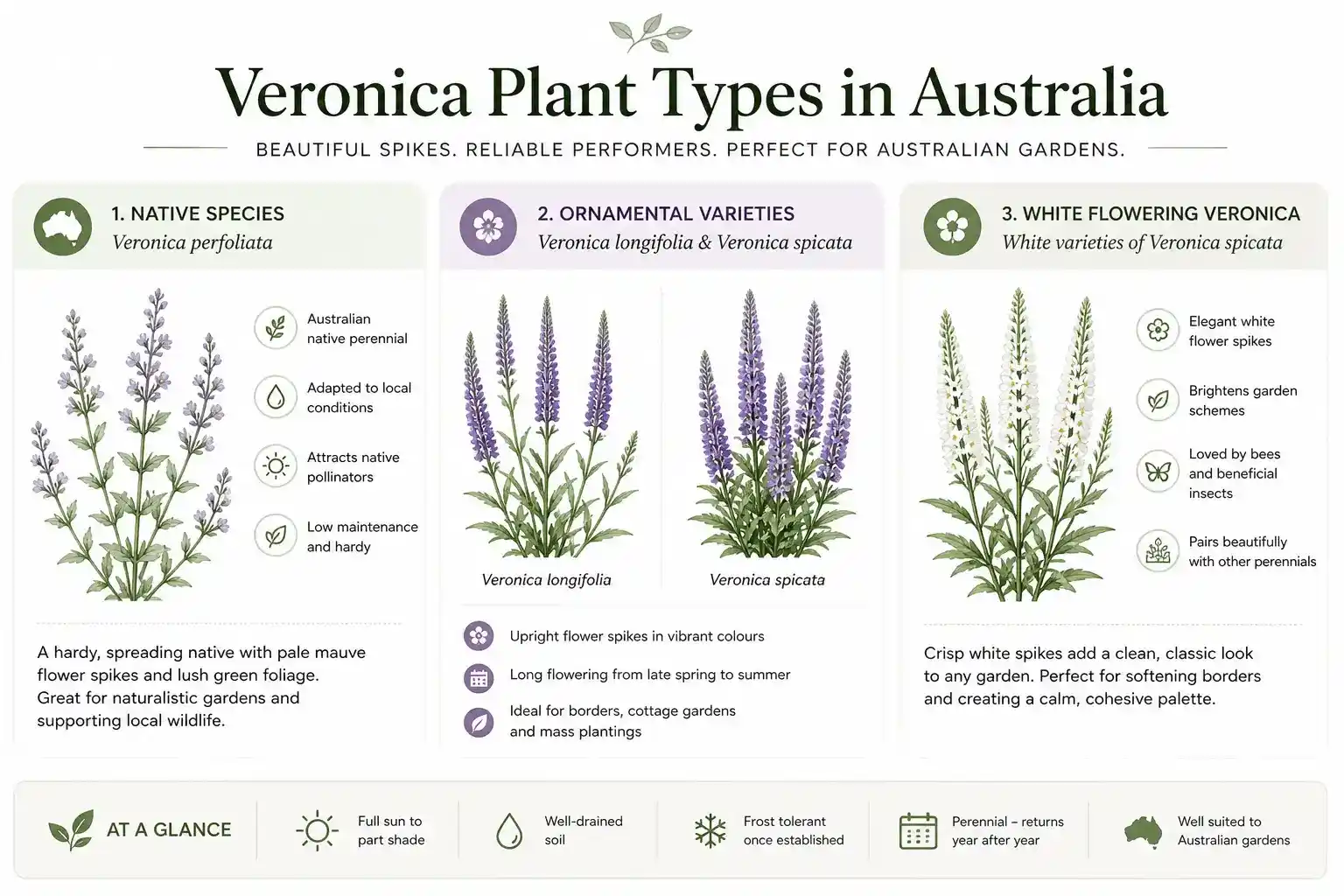
Native species such as veronica perfoliata, also known as derwentia perfoliata or parahebe perfoliata, are well adapted to Australian conditions.
These plants typically:
- Thrive in dry and rocky environments
- Require minimal maintenance
- Support local biodiversity
They are commonly found in natural bushland habitats and contribute to ecological balance by supporting pollinators.
Popular Garden Varieties
Ornamental veronica varieties are widely cultivated in Australian gardens for their visual appeal.
Common types include:
- Veronica longifolia: Known for tall, elegant flowering spikes
- Veronica spicata plant: A compact variety ideal for borders
- Veronica spicata australia: Adapted forms suited to local climates
- Veronica arenaria: A less common but decorative species
These varieties are chosen based on height, flower color, and garden design needs.
White Flowering Veronica Varieties
White veronica plant varieties are particularly popular for clean, minimalistic landscapes.
They are used for:
- Creating contrast in mixed flower beds
- Brightening shaded areas
- Complementing colorful plant combinations
White veronica flowers provide a subtle yet striking visual effect in both formal and informal garden layouts.
Veronica Plant Size and Growth Characteristics
Typical Height and Spread
The height of veronicas varies significantly depending on the species.
- Compact varieties like veronica spicata plant grow around 20–40 cm tall
- Taller species such as veronica longifolia can exceed 1 meter
Spread typically ranges from 30 cm to 60 cm, depending on growing conditions and spacing.
Growth Habit and Structure
Veronica plants exhibit either clumping or upright growth patterns.
Key structural traits include:
- Dense foliage at the base
- Vertical flower spikes rising above leaves
- Seasonal blooming, usually in warmer months
This structure makes them suitable for layering in garden designs.
Growth Rate and Seasonal Behavior in Australia
Growth Speed and Establishment
Most veronica plants are considered moderate growers.
- Establishment typically takes one growing season
- Growth speed depends on soil quality and sunlight exposure
In well-drained soil and full sun, plants establish more quickly and produce stronger blooms.
Seasonal Growth Patterns
In Australia, veronica plants generally follow a spring-to-summer flowering cycle.
- Active growth occurs during warmer months
- Flowering peaks in spring and early summer
- Growth slows during extreme heat or cold
Some species may enter a semi-dormant phase during winter.
How to Grow Veronica Plants in Australian Conditions
Ideal Climate and Position
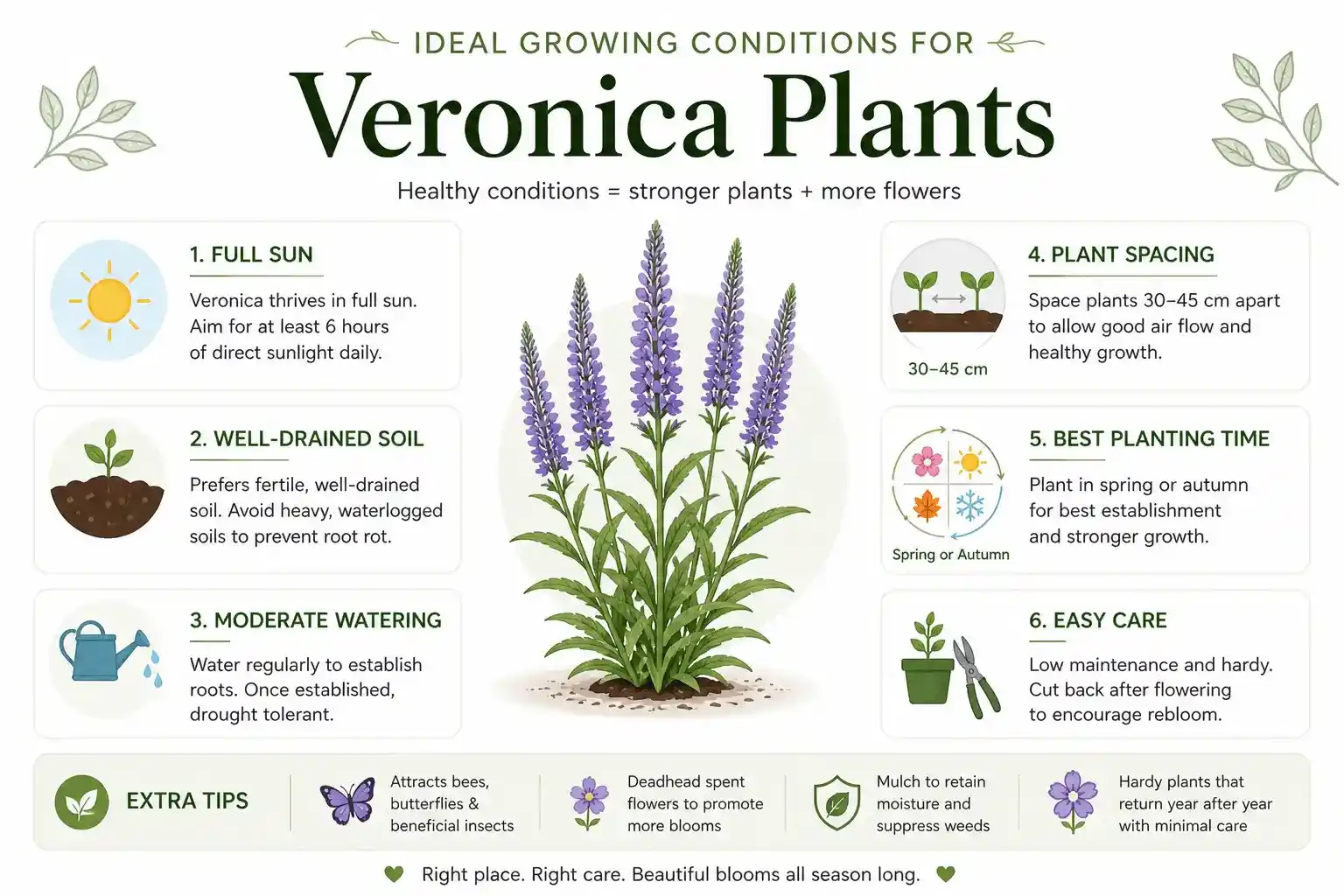
Veronica plants grow best in full sun, although some tolerate partial shade.
- Full sun encourages maximum flowering
- Suitable for temperate, coastal, and some inland climates
Choosing a well-ventilated location helps prevent disease.
Soil and Water Requirements
Well-drained soil is essential for healthy growth.
- Sandy or loamy soil types are ideal
- Avoid waterlogged conditions
Watering guidelines:
- Moderate watering during establishment
- Reduced watering once plants mature
These plants show moderate drought tolerance once established.
Planting and Spacing Guidelines
Proper spacing ensures airflow and healthy development.
- Space compact varieties 30–40 cm apart
- Taller varieties require 50–60 cm spacing
Best planting seasons:
- Early spring or autumn for optimal root development
Veronica Plant Care Guide (Australia-Specific)
Watering and Fertilization
Veronica plants require balanced watering based on climate.
- Water regularly in dry periods
- Avoid overwatering in humid regions
Fertilization tips:
- Use a balanced fertilizer in early spring
- Avoid excessive nitrogen, which reduces flowering
Pruning and Maintenance
Routine maintenance improves plant health and appearance.
- Deadhead spent flowers to encourage reblooming
- Cut back after flowering season
Seasonal pruning helps maintain shape and vigor.
Climate Tolerance
Veronica plants are adaptable but have limits.
- Tolerate heat if soil moisture is maintained
- Some species withstand light frost
Extreme conditions may require protective measures.
Common Problems with Veronica Plants and How to Fix Them
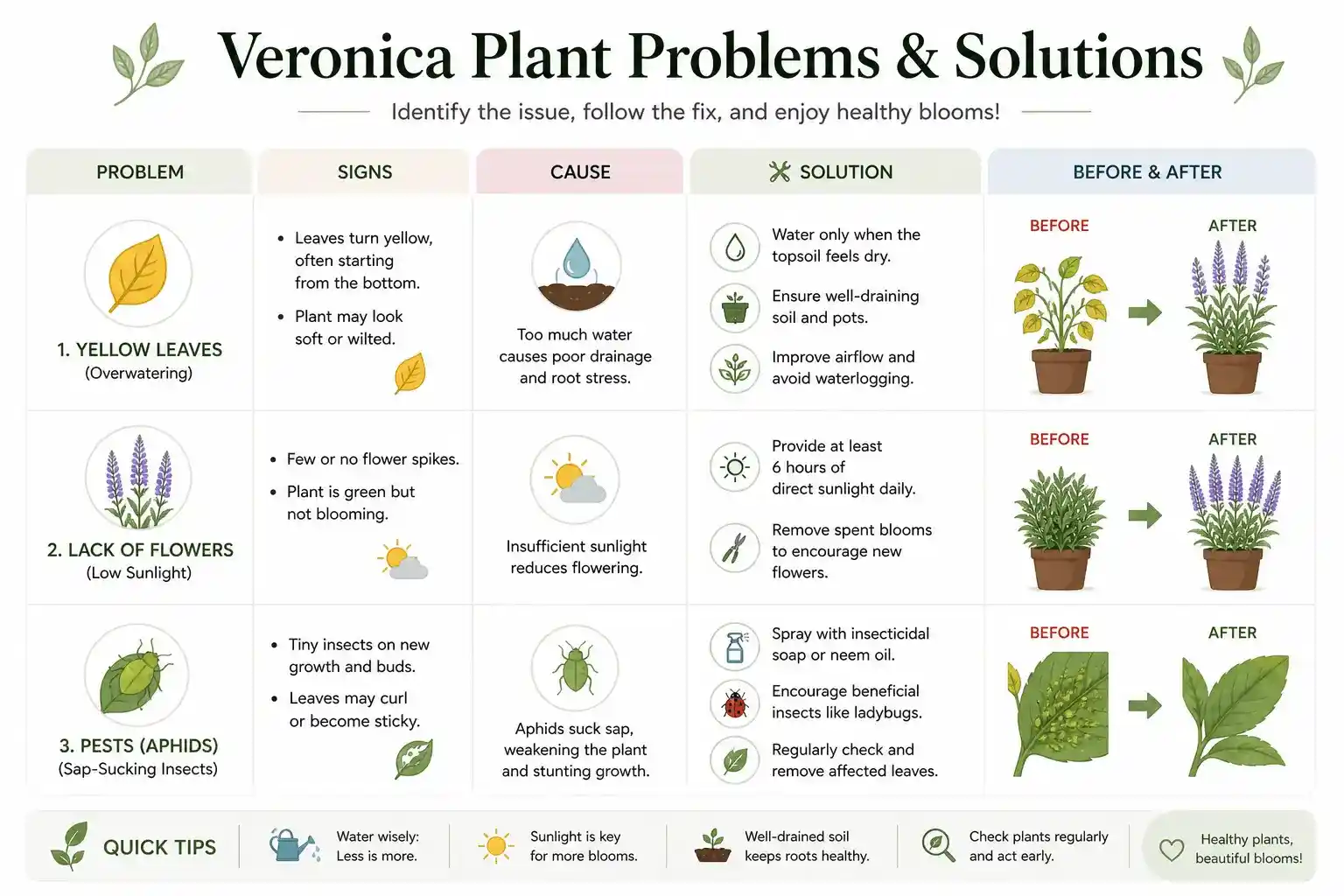
Yellowing Leaves or Poor Growth
Yellowing leaves are usually caused by overwatering or poor drainage.
Solutions:
- Improve soil drainage
- Reduce watering frequency
- Use raised beds if necessary
Lack of Flowering
Poor flowering is often linked to insufficient sunlight or nutrients.
Fixes include:
- Ensure at least 6 hours of sunlight daily
- Apply balanced fertilizer
Pests and Diseases
Common issues affecting speedwell plants include fungal diseases and pests like aphids.
Preventive measures:
- Maintain proper spacing
- Avoid overhead watering
- Use organic pest control methods
Comparing Veronica Varieties for Australian Gardens
Native vs Ornamental Veronica
| Feature | Native (e.g., veronica perfoliata) | Ornamental (e.g., veronica spicata plant) |
| Adaptability | High | Moderate |
| Maintenance | Low | Medium |
| Flower Style | Subtle | Showy spikes |
Tall vs Compact Veronica Plants
- Tall varieties: veronica longifolia
- Compact varieties: veronica spicata australia
Tall plants suit background planting, while compact types are ideal for borders.
Beginner Mistakes to Avoid When Growing Veronica Plants
Common mistakes include:
- Overwatering due to poor drainage
- Planting in low sunlight areas
- Ignoring pruning and deadheading
- Choosing unsuitable varieties for climate
A practical insight is that many beginners treat veronica like moisture-loving plants, which often leads to root rot.
Landscaping Uses of Veronica Plants in Australia
Garden Design Applications
Veronica plants are widely used in landscape design.
Common uses:
- Borders and edging plants
- Flower beds and mixed plantings
- Cottage-style gardens
- Native garden integration
Their vertical flower spikes add structure and visual interest.
Companion Planting Ideas
Veronica pairs well with other flowering plants.
- Combine with contrasting colors for visual impact
- Use white veronica to balance bright цвет combinations
They complement both native and ornamental plant groupings.
Conclusion
The veronica plant australia offers a versatile and visually appealing option for both native and ornamental gardens. From hardy species like veronica perfoliata to decorative varieties such as veronica longifolia and veronica spicata plant, these plants provide vibrant blooms and adaptability across climates. With proper care, suitable soil, and adequate sunlight, veronica plants can thrive and enhance garden landscapes with their distinctive speedwell flowers. For more detailed plant care insights and growing guides, explore the complete resource on Plants Benefits and Guides.
FAQs
1. What is the difference between veronica and speedwell plants?
Veronica and speedwell refer to the same group of plants; “speedwell” is the common name for the veronica genus.
2. How tall do veronica plants grow in Australia?
The height varies by species, ranging from compact 20 cm varieties to taller types like veronica longifolia that can exceed 1 meter.
3. Are veronica plants suitable for Australian climates?
Yes, many species, especially natives like veronica perfoliata, are well adapted to Australian conditions.
4. How do you care for a veronica plant?
They require well-drained soil, full sun, moderate watering, and occasional pruning for best growth.
5. Do veronica plants come in white flowers?
Yes, white veronica and white veronica flowers are popular varieties used in gardens.
6. When do veronica plants flower in Australia?
Most varieties bloom from spring to summer, depending on the climate and species.



One Response