
Introduction
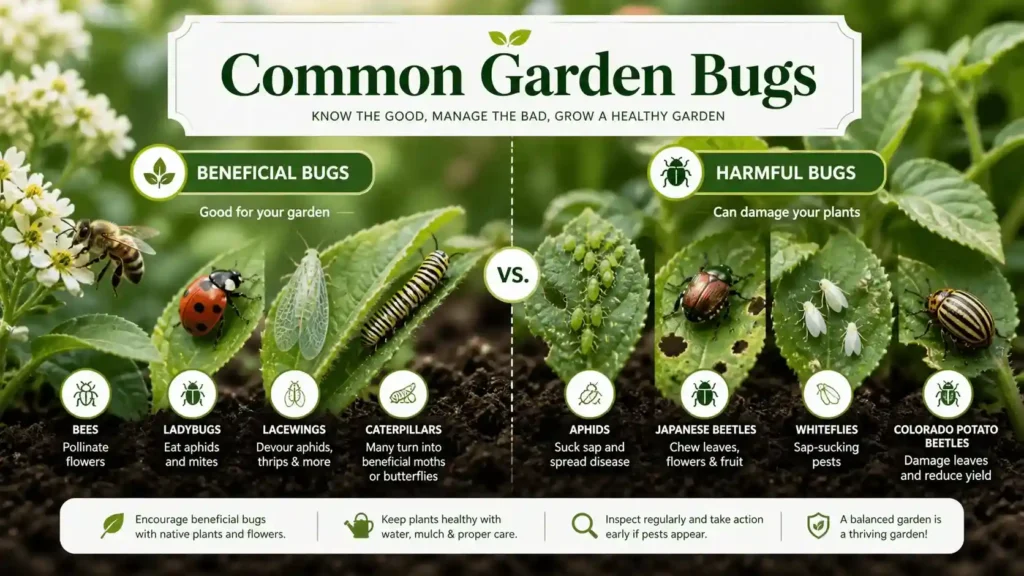
Common garden bugs are insects and small organisms that live in soil, plants, and garden ecosystems. Accurate garden pest identification is essential for distinguishing between helpful and harmful species, especially when dealing with common garden pests Australia and similar regional variations. These organisms influence plant health, soil quality, and crop productivity. Some insects support pollination and pest control, while others damage leaves, roots, and stems. Understanding how to identify garden pests, recognize beneficial insects, and manage vegetable garden pests Australia allows gardeners to maintain a balanced and productive environment.
Quick Summary
- Common garden bugs include both beneficial insects and harmful pests affecting plant growth.
- Garden pest identification depends on appearance, plant damage, and habitat clues.
- Many common garden bugs Australia are influenced by regional climate conditions.
- Early identification allows targeted and eco-friendly pest management.
What Are Common Garden Bugs?
Common garden bugs are insects, larvae, and soil organisms that inhabit garden environments. These include visible insects on leaves as well as microscopic or hidden organisms in the soil. Garden bugs are defined by their presence in plant ecosystems and their interaction with soil, roots, and foliage. They may be harmless, beneficial, or harmful depending on their role. Garden bugs include various organisms studied under entomology, the scientific field focused on insects and their ecological roles.
Key distinctions:
- Insects: Six-legged organisms such as beetles and bees
- Pests: Insects or organisms that damage plants
- Soil organisms: Creatures living underground, including larvae and decomposers
Garden ecosystems rely on a balance where some bugs contribute to pollination and decomposition, while others act as plant feeders.
Types of Common Garden Bugs (Beneficial vs Harmful)
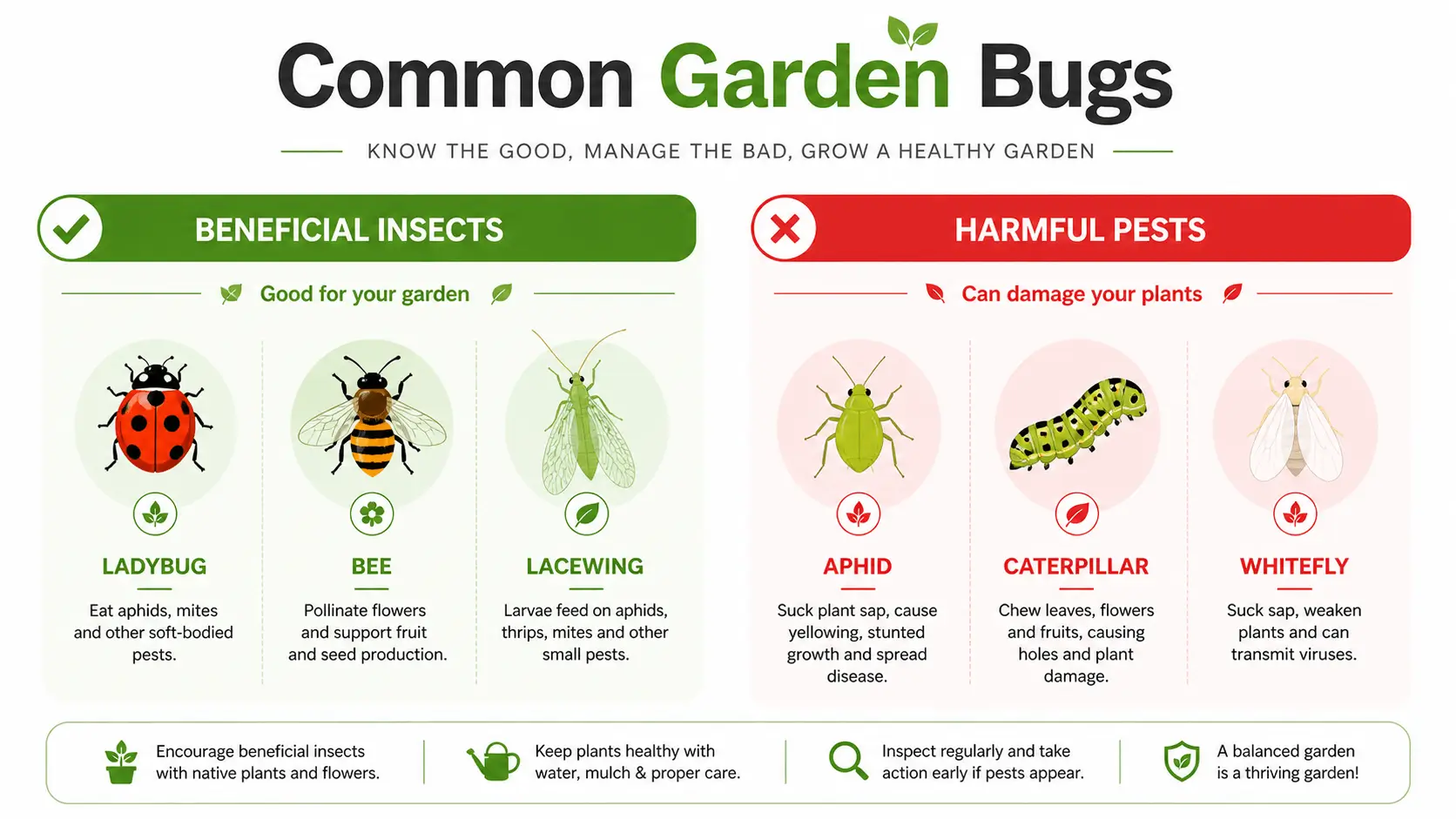
Garden bugs can be broadly classified into beneficial insects and harmful pests based on their ecological roles.
Beneficial Garden Insects
Beneficial garden insects support plant health by pollinating flowers or controlling pest populations naturally.
Examples include:
- Ladybugs: Feed on aphids and reduce infestations
- Bees: Essential pollinators for flowers and crops
- Lacewings and predatory beetles: Consume soft-bodied pests
These insects are considered good bugs for the garden because they improve plant productivity and reduce the need for chemical control.
Harmful Garden Pests
Harmful garden pests damage plants by feeding on leaves, stems, or roots.
Common examples:
- Aphids: Sap-sucking insects causing leaf curling
- Caterpillars: Chew leaves and create holes
- Whiteflies: Weaken plants by feeding on sap
Other pests include soil-dwelling insects that attack roots and leaf-eating insects that reduce plant growth.
Common Garden Bugs Australia (Regional Focus)
Common garden bugs Australia vary depending on climate zones, soil types, and seasonal conditions.
In Australian gardens:
- Warm climates support higher pest activity year-round
- Tropical regions have more diverse insect populations
- Temperate regions experience seasonal pest cycles
Common insects found include aphids, caterpillars, beetles, and whiteflies. Vegetable garden pests Australia often target crops like tomatoes, lettuce, and herbs. Seasonal changes influence pest outbreaks, with increased activity during warmer months.
Garden Pest Identification: How to Identify Bugs in Your Garden
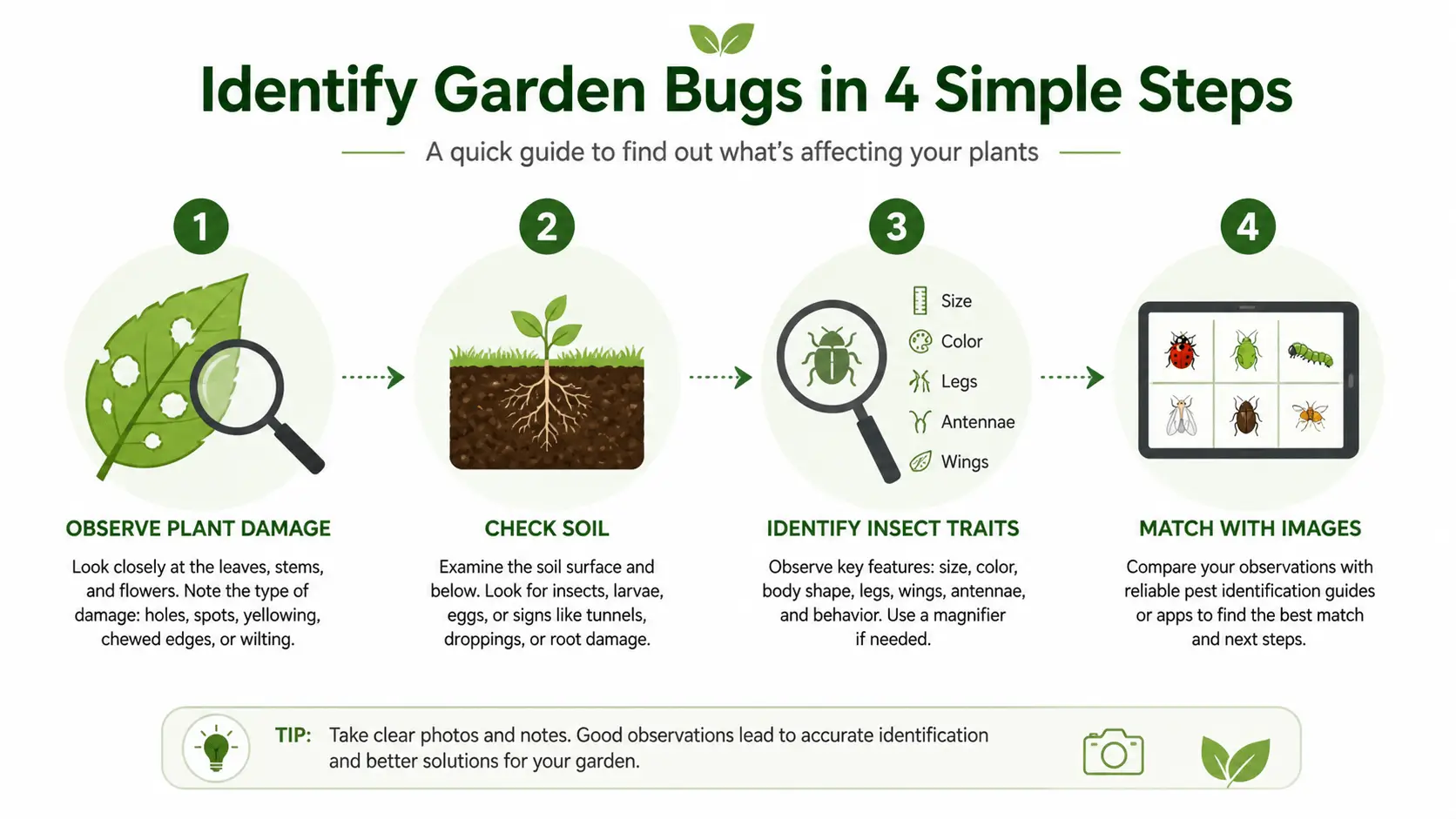
Garden pest identification involves observing physical characteristics, plant damage, and environmental clues.
To identify bugs in your garden:
- Observe plant damage: Look for holes, discoloration, or wilting
- Check soil: Inspect for bugs in garden soil such as larvae or grubs
- Examine insect traits: Note size, color, and movement patterns
- Use visual guides: Match findings with garden pests identification pictures Australia
Accurate identification prevents mismanagement and helps choose appropriate control methods. For specific pest problems like aphids, you can also refer to Aphids on Houseplants: 8+ Proven Ways to Remove Them for targeted identification and treatment methods.
Visual Identification Guide
| Bug Type | Appearance | Damage Caused | Location (Soil/Leaves) | Region |
| Aphids | Small, soft-bodied, green/black | Leaf curling, sap loss | Leaves | Global/Australia |
| Caterpillars | Worm-like, green/brown | Holes in leaves | Leaves | Global/Australia |
| Whiteflies | Tiny white flying insects | Yellowing leaves | Leaves | Warm regions |
| Grubs | White larvae, C-shaped | Root damage | Soil | Global |
| Ladybugs | Red with black spots | Feed on aphids (beneficial) | Leaves | Global |
This table supports visual recognition and simplifies garden insects identification.
Common Garden Pests and Their Effects on Plants
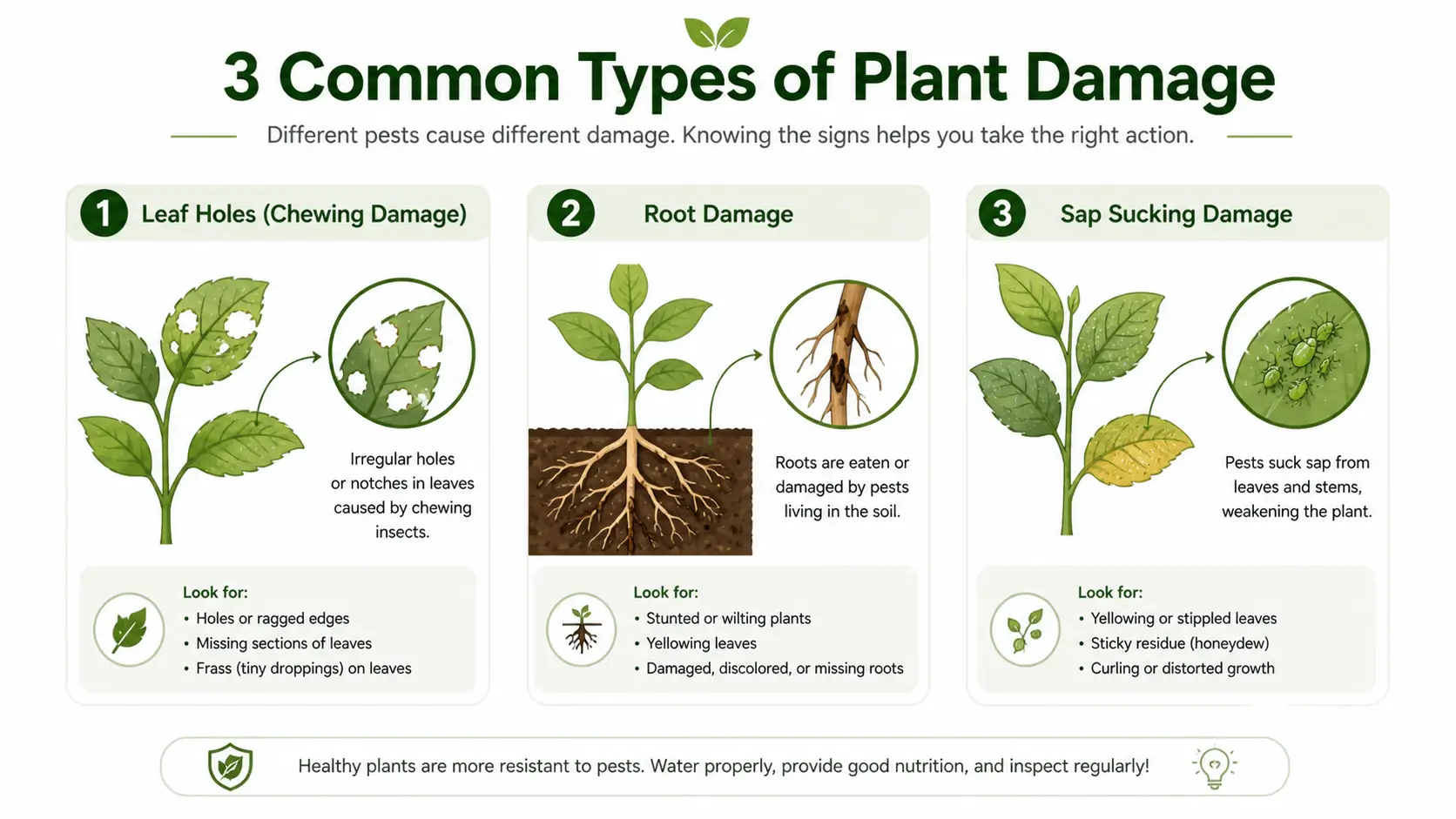
Common garden pests damage plants through feeding and infestation.
Typical effects include:
- Leaf damage: Holes, ragged edges, and missing tissue
- Root damage: Reduced nutrient uptake due to soil pests
- Sap loss: Wilting caused by sap-sucking insects
Vegetables and flowering plants are particularly vulnerable, leading to reduced yield and plant health.
Garden Bugs in Soil: What Lives Underground?
Garden soil contains a variety of organisms, both beneficial and harmful.
Common soil inhabitants:
- Larvae and grubs: Feed on plant roots
- Earthworms: Improve soil structure and fertility
- Microorganisms: Assist in decomposition
Signs of soil infestation include poor plant growth, root damage, and visible larvae when digging.
Comparison: Garden Bugs vs Garden Pests
| Category | Garden Bugs | Garden Pests |
| Role | Can be beneficial or neutral | Harmful to plants |
| Impact | Support ecosystem | Cause plant damage |
| Examples | Bees, beetles | Aphids, caterpillars |
This comparison helps clarify the difference between general insects and harmful pests.
Common Beginner Mistakes in Garden Pest Identification
Many gardeners misidentify insects, leading to ineffective control.
Common mistakes:
- Assuming all bugs are harmful
- Ignoring beneficial insects
- Misidentifying soil organisms
- Using pesticides without proper identification
Avoiding these mistakes improves pest management and protects beneficial species.
What Is Eating My Plant Leaves? (Problem-Solution Section)
The most common causes of leaf damage are caterpillars, beetles, and snails, which chew plant tissue and leave visible holes or irregular edges.
To identify the culprit:
- Check leaves for bite patterns
- Inspect undersides for insects or eggs
- Look for slime trails (snails)
Solutions:
- Remove pests manually
- Use organic sprays
- Introduce natural predators
Early detection prevents severe plant damage.
How to Manage and Control Garden Pests Naturally
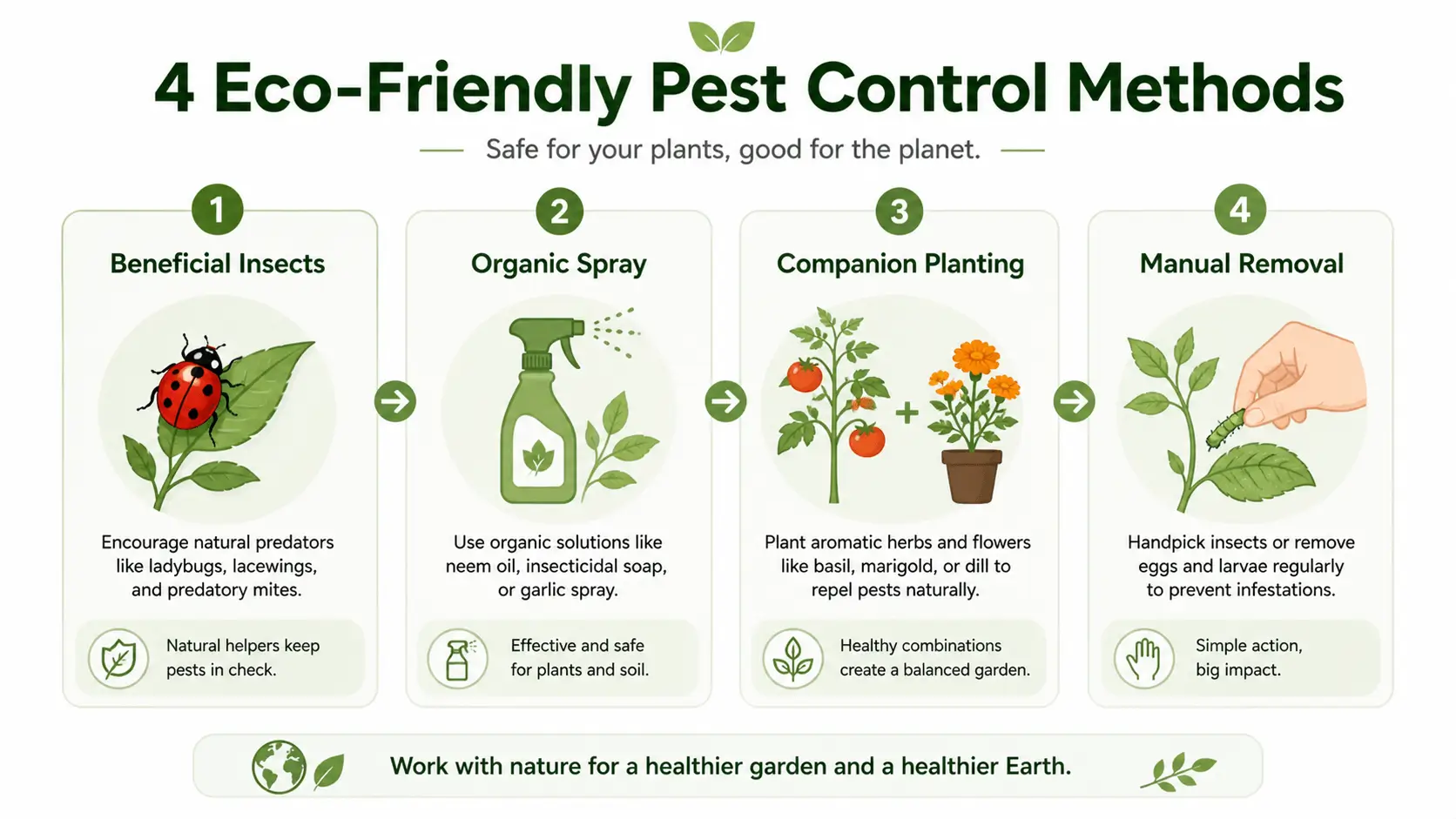
Natural pest control focuses on eco-friendly and sustainable methods.
Effective strategies:
- Encourage beneficial insects like ladybugs
- Apply organic sprays such as neem oil
- Practice companion planting
- Remove pests by hand
These methods reduce chemical use and maintain ecological balance. Plant selection also plays a role—see 7+ Australian Native Plants That Repel Mosquitoes for examples of plants that naturally reduce pest activity.
Seasonal and Environmental Factors Affecting Garden Bugs
Seasonal changes and environmental conditions strongly influence garden bugs.
Key factors:
- Warm temperatures increase insect activity
- Moist soil promotes breeding
- Seasonal cycles determine pest populations
In Australia and similar climates, pest activity peaks during spring and summer. For region-specific planting strategies, refer to the Brisbane Planting Guide: What to Plant Each Season to better understand how seasons influence pest cycles.
Types of Garden Insects by Function
Garden insects can be categorized based on their ecological roles.
Functional groups:
- Pollinators: Bees and butterflies
- Predators: Ladybugs and lacewings
- Decomposers: Earthworms and microbes
- Plant feeders: Aphids and caterpillars
Understanding these roles helps maintain a balanced ecosystem.
Conclusion
Understanding common garden bugs is essential for maintaining a healthy garden ecosystem. Proper garden pest identification helps distinguish beneficial insects from harmful pests, particularly in region-specific environments like common garden bugs Australia. By observing plant damage, soil activity, and insect behavior, gardeners can make informed decisions. Effective management involves early identification, natural control methods, and preserving beneficial species to support long-term plant health and productivity. For a broader understanding of plant health, care techniques, and ecosystem balance, explore our complete resource on Plants: Benefits and Guides (Complete Care, Types & Growing Tips).
FAQs
What are the most common garden bugs?
Common garden bugs include aphids, beetles, caterpillars, and beneficial insects such as ladybugs and bees.
How do I identify bugs in my garden?
Identify bugs by observing plant damage, insect appearance, and using visual guides like garden pests identification pictures Australia.
Are all garden bugs harmful to plants?
No, many garden bugs are beneficial and assist with pollination and natural pest control.
What are common garden pests in Australia?
Common pests include aphids, whiteflies, caterpillars, and soil-dwelling larvae affecting vegetables.
What bugs live in garden soil?
Garden soil contains grubs, larvae, earthworms, and microorganisms, some harmful and others beneficial.


3 Responses