
Introduction
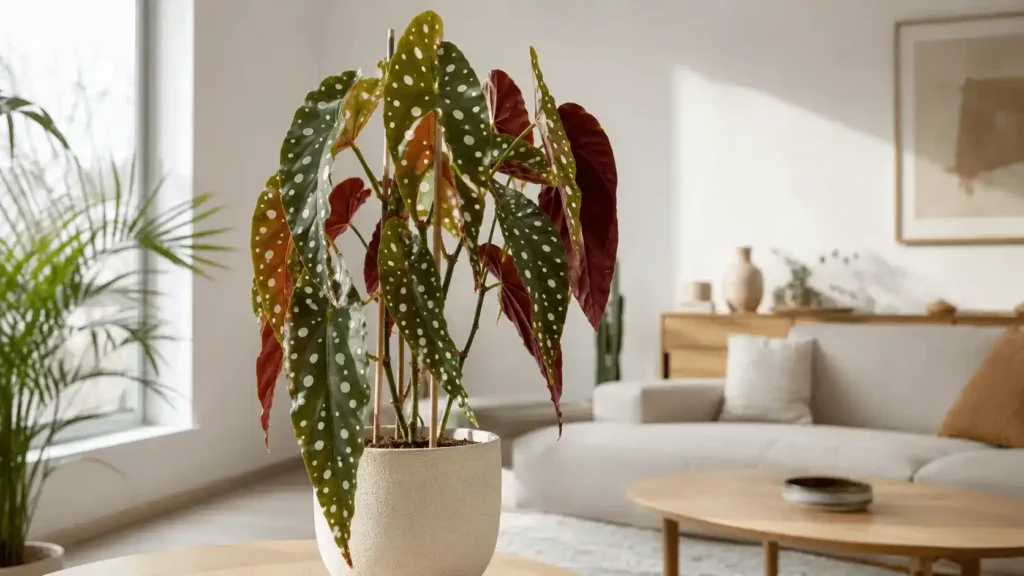
Begonia maculata is a widely admired tropical houseplant known for its dramatic foliage and relatively manageable indoor care requirements. It is a cane-type begonia featuring elongated green leaves with silver polka dots and striking red undersides, making it one of the most visually distinctive houseplants. Commonly called polka dot begonia or angel wing polka dot begonia, it originates from Brazil and thrives in warm, humid environments. This plant is popular among indoor gardeners because it responds visibly to proper care, rewarding consistency with healthy growth and ornamental appeal.
Quick Summary
- Begonia maculata thrives in bright indirect light, well-draining soil, and high humidity
- It requires consistent watering but is highly sensitive to overwatering and root rot
- Regular pruning prevents a leggy polka dot begonia and encourages bushy, healthy growth
- Propagation is straightforward via stem cuttings in water or moist potting mix
What Is Begonia Maculata?
Begonia maculata is a tropical perennial plant belonging to the Begoniaceae family, native to the rainforests of Brazil. It is recognized for its unique foliage structure: long, wing-shaped leaves with silver polka dot markings, dark green upper surfaces, and deep red undersides. Under ideal conditions, it also produces clusters of small white or pale pink flowers. Begonia is a large genus of flowering plants that includes more than 1,800 species, many of which are grown as ornamental indoor plants worldwide.
This plant is commonly known as polka dot begonia, spotted begonia, or angel wing polka dot begonia due to its distinctive leaf pattern and shape. It is valued both as a decorative indoor plant and as a rewarding species for plant enthusiasts who enjoy managing tropical conditions indoors.
Begonia Maculata vs. Other Spotted Begonias
| Feature | Begonia Maculata | Begonia Rex Maculata | Begonia Pink Maculata |
| Leaf Appearance | Green leaves with silver spots and red underside | Textured, metallic-patterned foliage | Pink-toned spotted leaves |
| Flower Color | White or pale pink clusters | Rare or absent indoors | Light pink blooms |
| Light Preference | Bright indirect light | Medium indirect light | Bright filtered light |
| Difficulty Level | Moderate | Moderate to high | Moderate |
Begonia Maculata Care Requirements at a Glance
| Care Factor | Ideal Condition |
| Light | Bright indirect light |
| Water | Keep soil lightly moist |
| Humidity | Above 50% |
| Soil | Well-draining mix with aeration |
| Temperature | 18–26°C |
| Fertilizer | Balanced liquid fertilizer during growth season |
| Repotting | Every 1–2 years |
Light Requirements for Polka Dot Begonia
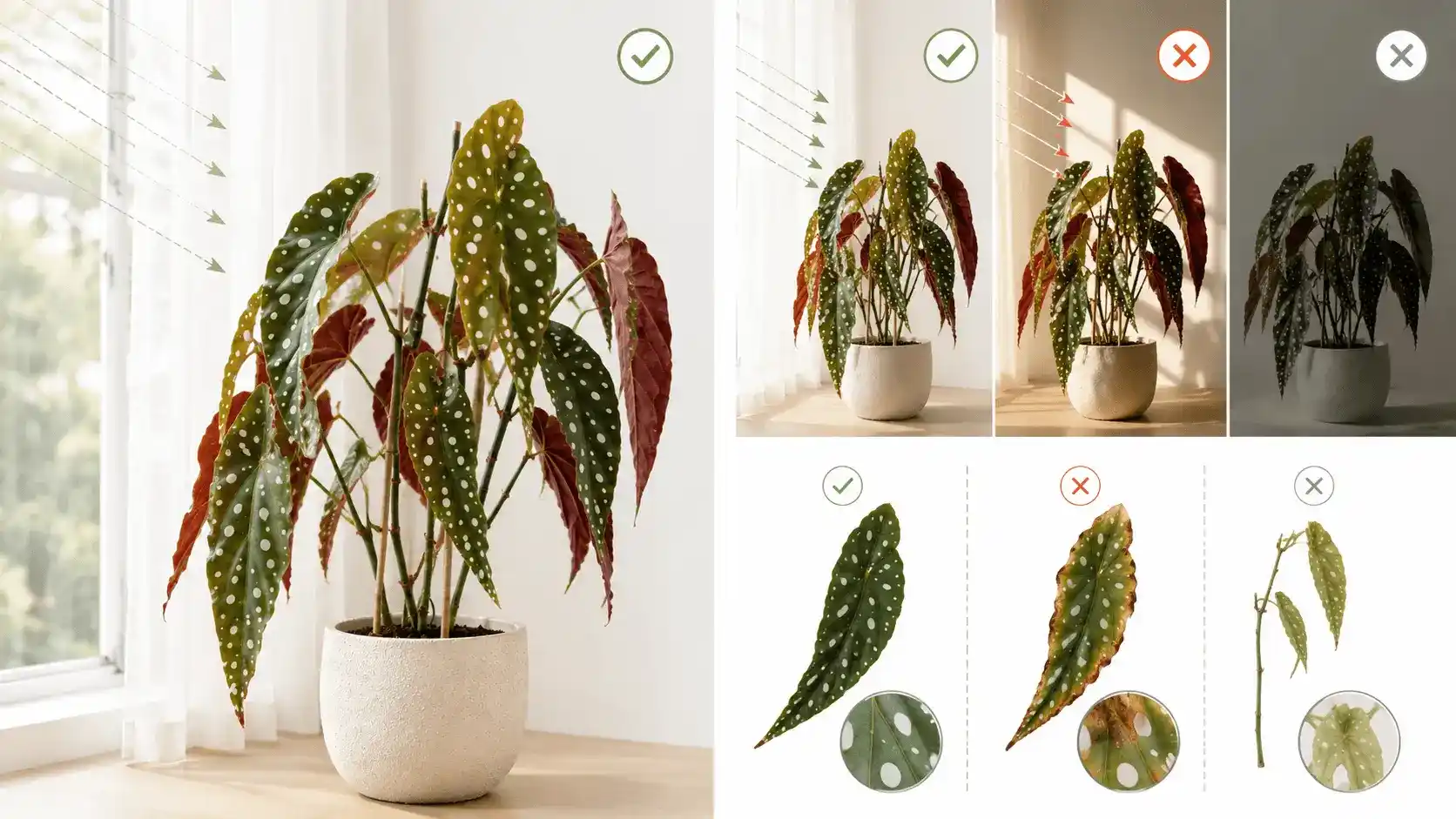
Begonia maculata grows best in bright indirect light, which supports strong leaf development and maintains its signature silver spotting. Direct sunlight can burn the foliage, leading to scorched patches and fading, while low light conditions result in slow growth and less vibrant coloration.
Indoor placement near east- or north-facing windows is ideal because the light is filtered and consistent. In regions with seasonal changes such as the UK and Australia, adjusting plant placement during winter helps maintain adequate light exposure and prevents weak, elongated growth.
Watering Begonia Maculata Correctly
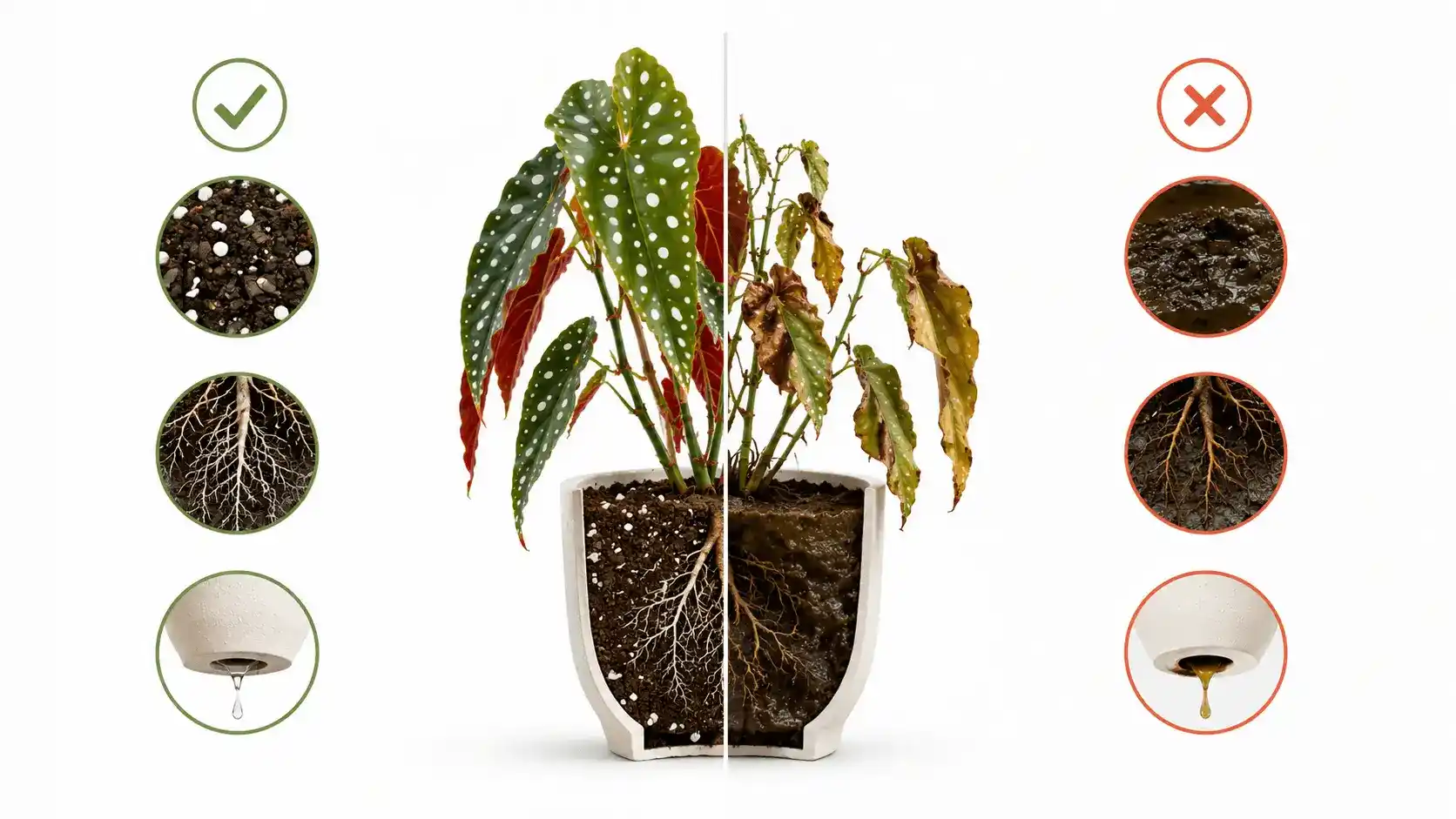
Proper watering is critical for Begonia maculata because it is highly sensitive to both drought stress and overwatering. The goal is to keep the soil slightly moist but never soggy.
A practical method is the finger test: insert a finger into the top 2–3 cm of soil—if it feels dry, watering is needed. Always ensure pots have drainage holes to prevent water accumulation, which can quickly lead to root rot.
Signs of incorrect watering include:
- Yellowing leaves from excess moisture
- Wilting despite wet soil (root damage)
- Crispy edges from underwatering
Watering frequency should be reduced in winter when growth slows.
Soil and Drainage for Begonia Maculata Care in Pots
Well-draining soil is essential for healthy growth. A mix containing potting soil, perlite, and orchid bark improves aeration and prevents compaction.
Perlite is a volcanic mineral that enhances drainage and airflow in soil, reducing the risk of root rot. Using perlite-based potting soil ensures moisture is retained without becoming waterlogged. Pots should always have drainage holes, and ceramic or terracotta pots are often preferred for better moisture control.
Humidity and Temperature Needs
Begonia maculata thrives in humidity levels above 50%, reflecting its tropical rainforest origin. Low humidity often leads to brown leaf edges and stress.
Ways to increase humidity:
- Use a humidifier near the plant
- Place a pebble tray with water underneath
- Group plants together to create a microclimate
Ideal temperatures range between 18–26°C. The plant is sensitive to cold drafts and should be kept away from air conditioners, heaters, and frost-prone environments. If you enjoy tropical indoor plants with similar humidity needs, you may also like our guide on Alocasia Amazonica Care Indoors, which explains how to manage moisture-loving foliage plants in home environments.
Begonia Maculata Fertilizer Guide
During the active growing season (spring and summer), Begonia maculata benefits from a balanced liquid fertilizer every 2–4 weeks. A diluted formula prevents nutrient overload.
Over-fertilization can cause salt buildup in soil, leading to leaf burn and stunted growth. Signs of nutrient deficiency include pale leaves and slow development. Flushing the soil with clean water every few months helps remove excess salts and maintain soil balance.
Begonia Maculata Pruning — How and When to Prune
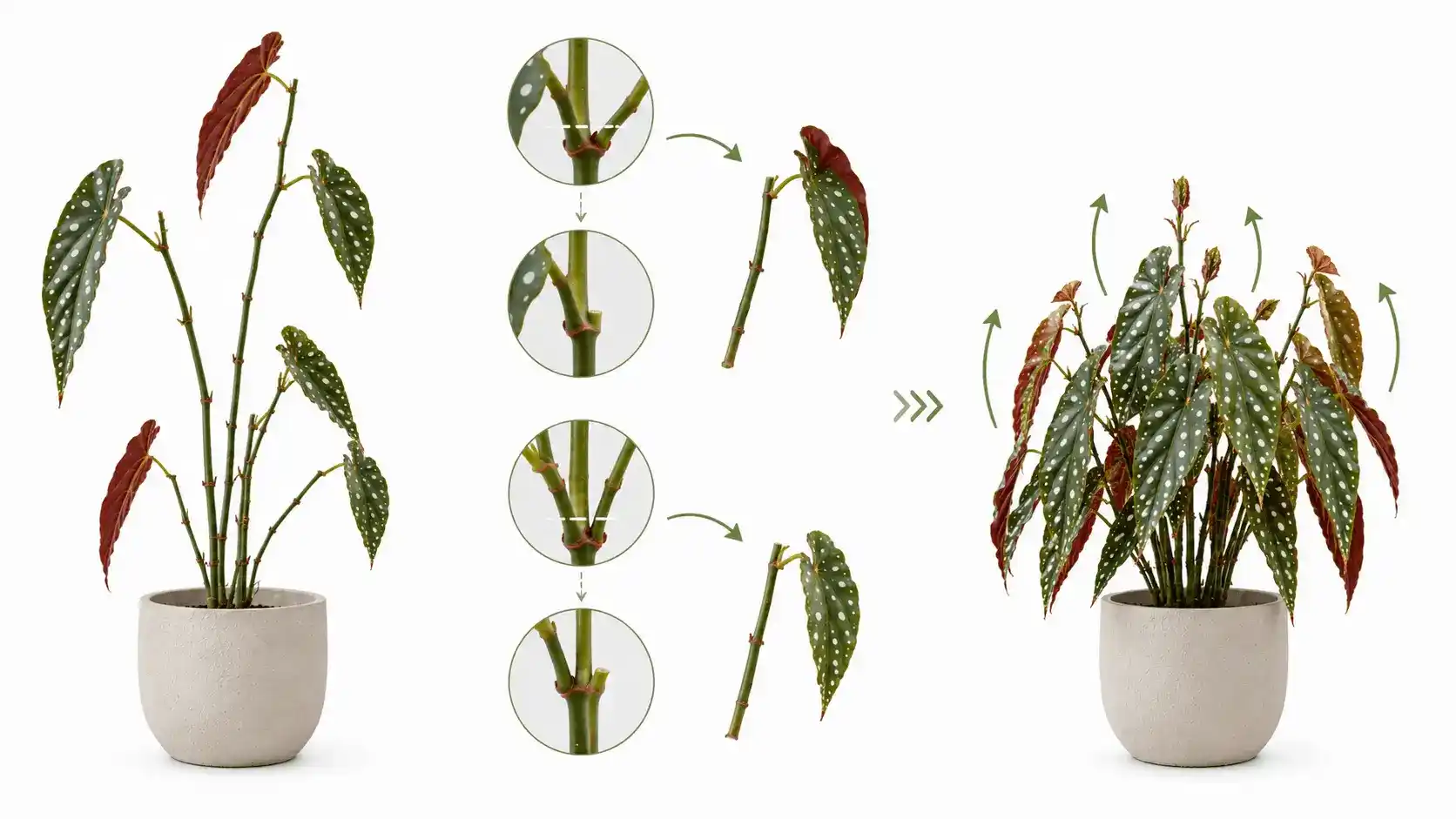
Pruning is essential to maintain shape and encourage bushy growth. Cane-type begonias like Begonia maculata can become tall and sparse without regular trimming.
Use clean, sharp scissors and cut just above a node (leaf joint). Pruning should be done during active growth periods to encourage fast recovery. Removing leggy stems also improves airflow and overall plant health.
How to Fix a Leggy Polka Dot Begonia
A leggy plant develops long, thin stems due to insufficient light or lack of pruning. Fixing it requires corrective trimming and environmental adjustment.
Key steps:
- Identify cause (low light or lack of pruning)
- Cut stems just above a node
- Move plant to brighter indirect light
- Maintain regular pruning schedule
Begonia Maculata Propagation
Propagation of Begonia maculata is simple and highly successful using stem cuttings. The best time is during the active growing season when the plant is healthiest.
Cuttings can be rooted in water or directly in soil or perlite-based mixes. Healthy stem sections with at least one node are ideal for propagation.
Propagating Begonia Maculata in Water vs. Soil
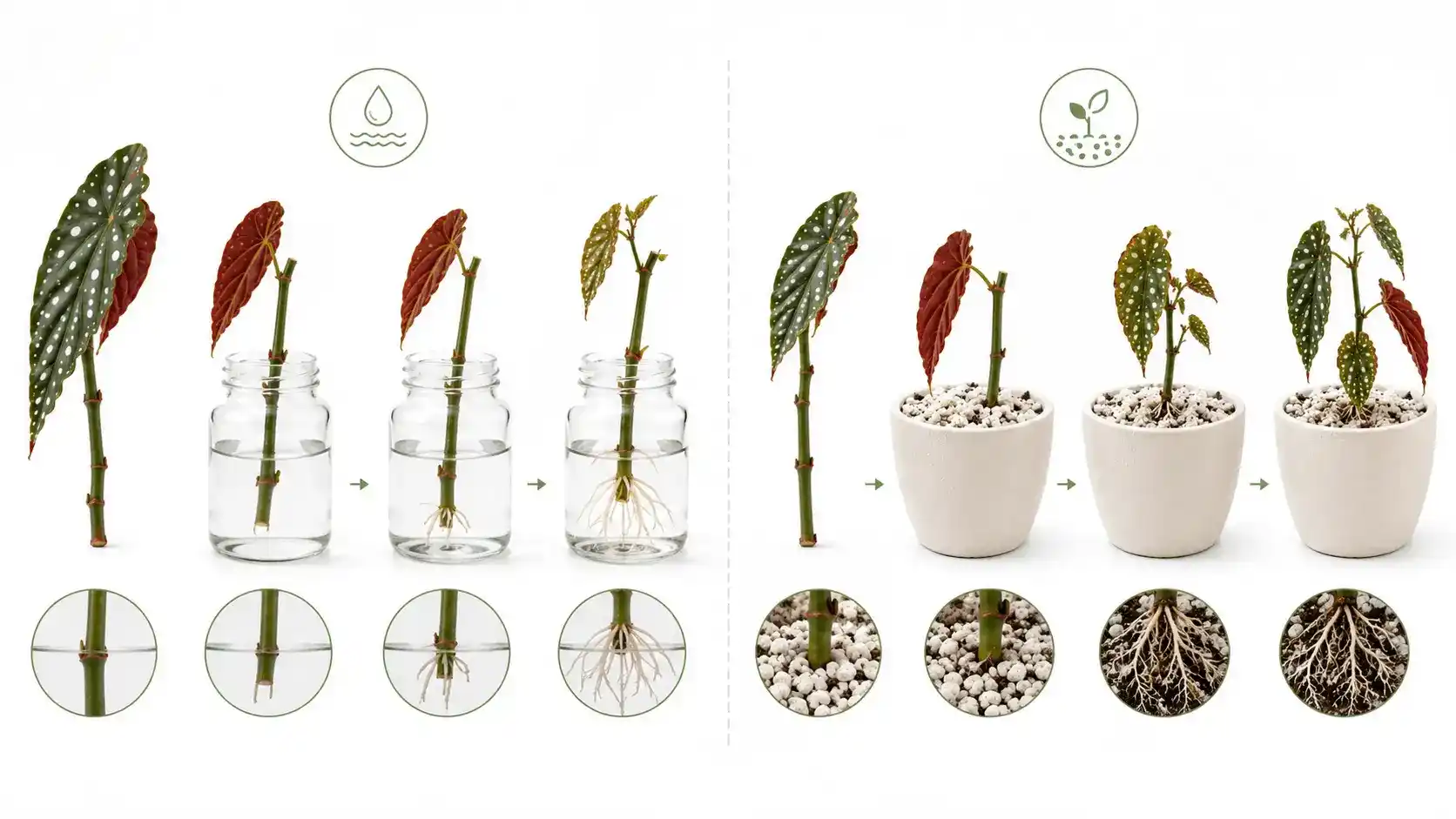
| Method | Water Propagation | Soil/Perlite Propagation |
| Ease | Very easy | Moderate |
| Rooting Time | 2–4 weeks | 3–5 weeks |
| Transplant Shock | Higher risk | Lower risk |
| Success Rate | High | Very high |
Begonia Maculata Plant Size and Growth Rate
Begonia maculata can grow up to 150 cm indoors under ideal conditions. Outdoors in tropical climates, it may grow larger and faster.
Growth is moderate to fast during spring and summer, slowing significantly in cooler months. Light exposure, fertilization, and pot size directly influence growth speed and overall plant structure.
Begonia Maculata Flowers
This plant produces small clusters of white or pale pink flowers during spring and summer. Flowering occurs when the plant receives adequate light, nutrients, and stable environmental conditions. Blooms are considered a sign of a healthy and well-maintained plant.
Common Begonia Maculata Problems and How to Fix Them
Yellowing Leaves
Caused by overwatering, underwatering, or nutrient deficiency. Adjust watering and check soil drainage.
Root Rot from Overwatering
Excess moisture leads to decayed roots. Remove affected roots, repot in fresh perlite-rich soil, and reduce watering frequency.
Pests — Spider Mites, Mealybugs, and Whiteflies
Early signs include webbing, sticky residue, or leaf damage. Treat with insecticidal soap or neem oil and isolate the plant. For a deeper understanding of pest control methods, especially sap-sucking insects, refer to Aphids on Houseplants, which explains natural and chemical treatment strategies that also work for begonias.
Leaf Drop and Brown Edges
Often caused by low humidity, cold drafts, or inconsistent watering. Stabilize environmental conditions for recovery.
Begonia Maculata Care Indoors — Key Tips for Success
Successful indoor care for Begonia maculata depends on consistency and environment control. Choose a slightly snug pot, maintain humidity above 50%, and avoid heat vents or air conditioners. Rotating the plant ensures even light exposure and balanced growth.
Beginner Mistakes to Avoid With Begonia Maculata
Common mistakes include overwatering, using compact soil, ignoring pruning needs, placing the plant in direct sunlight, and inconsistent feeding. Avoiding these issues significantly improves plant health and reduces stress-related problems. Many beginner mistakes seen in Begonia maculata care are also common in other trailing and foliage plants, such as Peperomia Rotundifolia Care Guide, especially when it comes to overwatering and poor drainage habits.
Conclusion
Begonia maculata is a striking tropical houseplant that rewards consistent care with vibrant foliage and healthy growth. Success depends on balancing light, watering, humidity, pruning, and feeding. When these factors are managed correctly, the polka dot begonia becomes a long-lasting and visually impressive indoor plant. For broader plant care knowledge and landscape inspiration, explore Australian Native Garden Plants: Types, Care Tips & Design Ideas to understand how indoor and outdoor plant ecosystems differ in structure and care requirements.
Frequently Asked Questions
How often should I water my begonia maculata?
Water when the top 2–3 cm of soil feels dry. Frequency depends on light, humidity, and season, typically more often in summer and less in winter.
Why is my polka dot begonia leggy, and how do I fix it?
Legginess is caused by low light or lack of pruning. Move the plant to brighter indirect light and prune stems above nodes to encourage bushy growth.
How do I prune a polka dot begonia correctly?
Use clean scissors and cut just above a leaf node. Remove long or weak stems during active growth to improve shape and density.
Can begonia maculata be grown outdoors?
Yes, but only in warm, frost-free climates with filtered light. It cannot tolerate cold temperatures or harsh direct sun.
What is the best fertilizer for begonia maculata?
A balanced liquid fertilizer (diluted) applied every 2–4 weeks during spring and summer supports healthy growth.
How do I propagate begonia maculata at home?
Take stem cuttings with nodes and root them in water or perlite-rich soil until roots develop, then transplant into a pot.
Why are my begonia maculata leaves turning yellow?
Common causes include overwatering, underwatering, poor drainage, or nutrient imbalance. Adjust care based on soil and leaf condition.



5 Responses