
Introduction
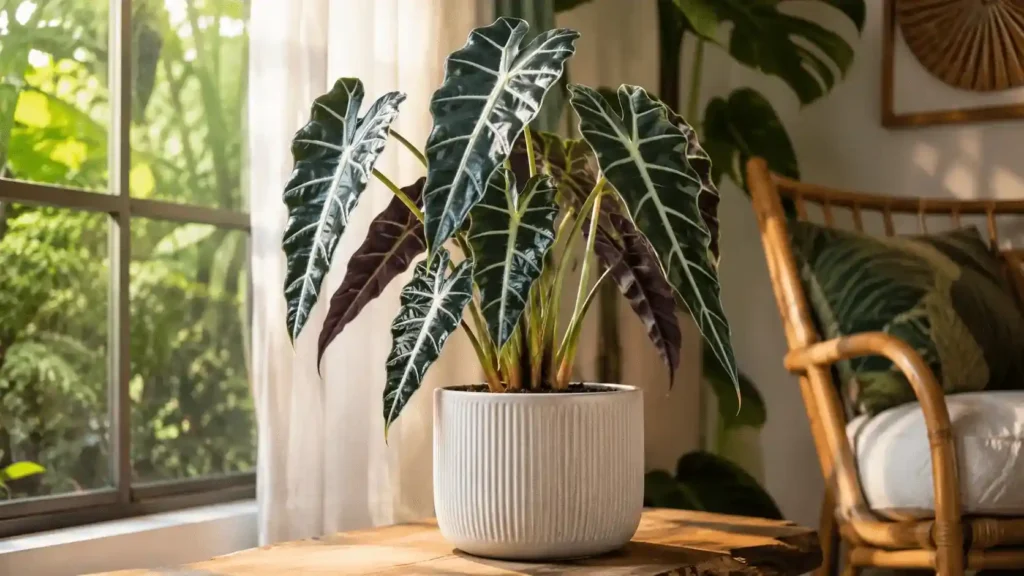
Alocasia amazonica, commonly sold as Alocasia Polly, is a tropical houseplant that thrives in bright indirect light, consistently moist (but not soggy) soil, and high humidity. With the right conditions, this striking plant — also called the Amazonian elephant ear — rewards growers with dramatic, dark-veined foliage that makes an immediate visual impact indoors.
Alocasia amazonica care focuses on balancing light, humidity, watering, and warmth. Known for its dark arrow-shaped leaves with bold white veins, this tropical hybrid is one of the most recognizable indoor plants. “Alocasia Amazonica” and “Alocasia Polly” are often used interchangeably in plant shops and online care guides. This article explains everything needed to grow this amazonia plant successfully indoors, including watering schedules, light requirements, propagation, dormancy, toxicity, and troubleshooting common problems.
Quick Summary
- Alocasia Amazonica (Polly) needs bright indirect light and should not sit in harsh direct sun.
- Water when the top 1–2 inches of soil become dry; watering frequency changes by season.
- High humidity and chunky, well-draining soil are essential for healthy growth.
- Alocasia plants are toxic to cats, dogs, and humans if ingested.
- Winter dormancy is normal and does not necessarily mean the plant is dying.
What Is Alocasia Amazonica? Understanding the Amazonia Plant
Alocasia × amazonica is a hybrid tropical plant, not a naturally occurring species from the Amazon rainforest. Despite the name, the plant was developed from Southeast Asian Alocasia species and belongs to the Araceae family. It is widely grown indoors because of its dramatic foliage and compact growth habit. Alocasia belongs to the Araceae family and is part of the broader Alocasia genus of tropical foliage plants.
Common names include:
- Alocasia Polly
- Amazonian elephant ear
- Polly plant
- African mask plant
- Amazonia plant
The plant features glossy dark-green leaves with thick white veins and purple-tinted undersides. Several cultivars are available, including:
- Alocasia Amazonica Bambino
- Alocasia Amazonica Dwarf
- Alocasia × amazonica Polly
- Purple-toned Alocasia hybrids
These cultivars differ mainly in size, leaf shape, and growth habit, but their care requirements remain very similar.
Alocasia Amazonica vs Polly — What’s the Difference?
Alocasia Polly is a cultivar of Alocasia × amazonica. In most indoor plant discussions, the terms are used interchangeably, although Polly is technically the more compact cultivar commonly sold in garden centers.
Alocasia Polly typically has:
- Smaller leaves
- A shorter mature height
- More compact growth
- Slightly more pronounced leaf waviness
Alocasia Amazonica may refer more broadly to larger hybrid forms.
| Feature | Alocasia Amazonica | Alocasia Polly |
| Leaf Size | Larger | Smaller and compact |
| Plant Height | Up to 3 feet indoors | Usually 1–2 feet |
| Availability | Less common | Widely available |
| Leaf Shape | Broader leaves | Narrower, more sculpted |
| Care Difficulty | Moderate | Moderate |
Additional comparisons:
- African Mask Plant vs Polly: Often marketed as the same plant family with similar foliage.
- Alocasia Ebony vs Polly: Ebony varieties usually have darker foliage and thicker leaves.
- Alocasia Amazonica Bambino Care: Bambino varieties remain smaller and require slightly less space.
Complete Alocasia Amazonica Care Guide
A successful alocasia amazonica care guide focuses on recreating tropical indoor conditions. Alocasia plants prefer consistent warmth, bright filtered light, moderate watering, high humidity, and airy soil. Sudden environmental changes often stress the plant and trigger leaf loss. For readers exploring more tropical and indoor plant species, this broader guide on Plants: Benefits and Guides (Complete Care, Types & Growing Tips) covers additional care methods, growth habits, and plant maintenance strategies.
Indoor care success depends on maintaining stable conditions year-round.
Alocasia Amazonica Light Requirements
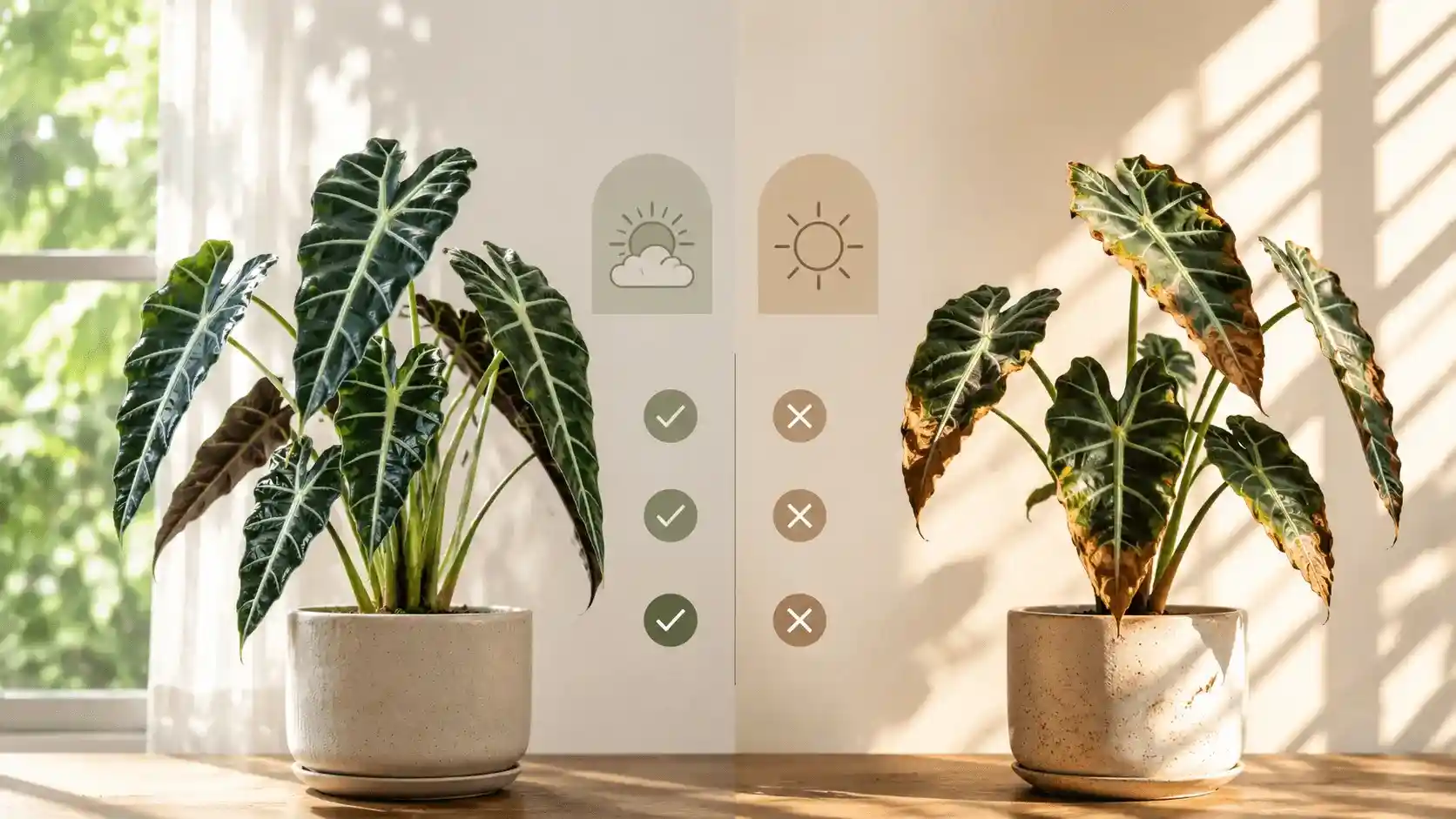
Alocasia amazonica needs bright, indirect light for 6–8 hours daily. Bright indirect light means the plant receives strong filtered light without direct afternoon sun. East-facing windows, filtered south-facing windows, or spots near sheer curtains work well indoors. Like many indoor foliage plants discussed in the Japanese Money Plant Care: Light, Watering & Propagation Guide, Alocasia Polly performs best in bright indirect light rather than harsh direct sun.
Direct sunlight can scorch leaves and cause:
- Brown patches
- Crispy edges
- Faded coloration
Low light conditions may lead to:
- Leggy growth
- Pale leaves
- Slower growth
- Drooping stems
During winter, natural light decreases significantly. Many growers move alocasia polly closer to windows during colder months to maintain healthy growth.
Best indoor placements include:
- Near east-facing windows
- Bright rooms with filtered curtains
- Humid bathrooms with indirect sunlight
How to Water Alocasia Polly — Watering Schedule & Tips
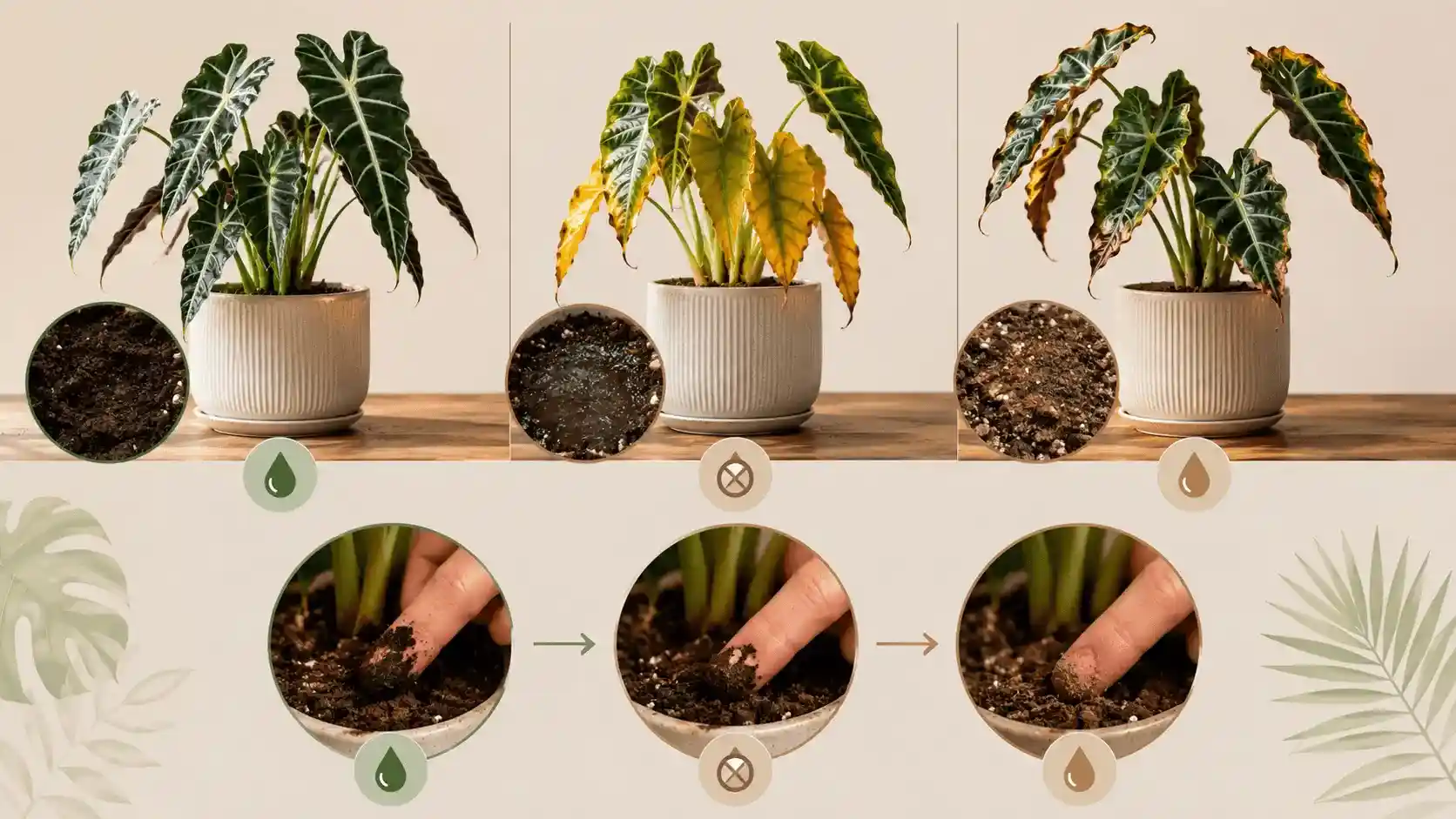
Water alocasia polly when the top 1–2 inches of soil feel dry — typically every 7–10 days in summer and every 2–3 weeks in winter.
The best method is the finger test. Insert a finger into the soil to check moisture before watering. Soil should feel lightly moist below the surface but never soggy.
Overwatering is the most common cause of plant decline and can quickly lead to root rot. Underwatering causes drooping and crispy foliage.
Helpful watering practices:
- Use pots with drainage holes
- Empty saucers after watering
- Reduce watering during winter dormancy
- Use filtered or distilled water if tap water is heavily chlorinated
Alocasia Polly Watering — Signs of Overwatering vs Underwatering
Signs of Overwatering
- Yellow leaves
- Mushy stems
- Wet soil for extended periods
- Foul-smelling roots
Signs of Underwatering
- Crispy leaf edges
- Drooping foliage
- Dry compact soil
- Curled leaves
If overwatered:
- Remove soggy soil
- Check roots for rot
- Trim damaged roots
- Repot into fresh airy mix
Best Soil and Potting Mix for Alocasia Amazonica
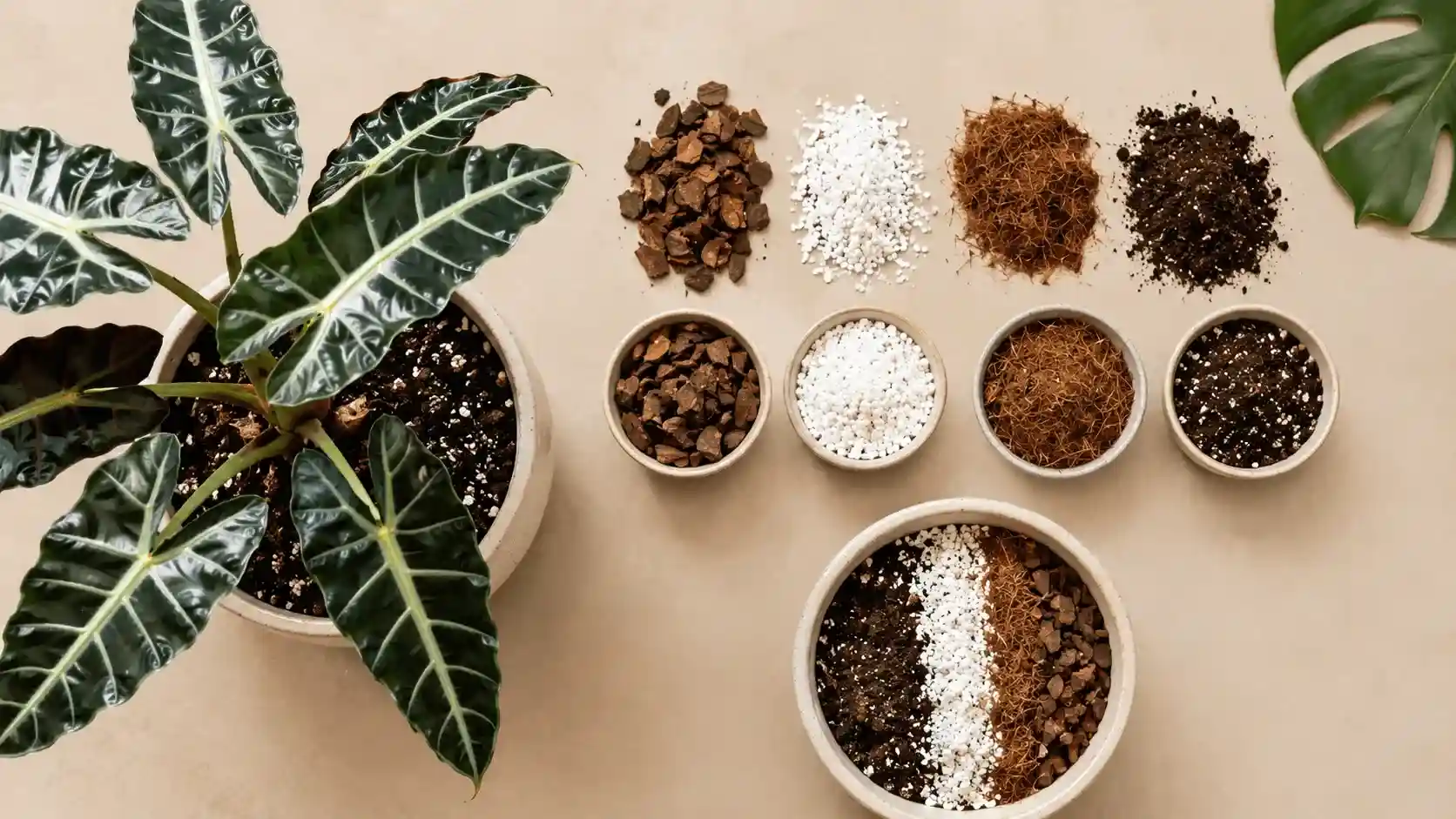
Alocasia amazonica needs a well-draining, chunky potting mix — standard potting soil alone is too dense and retains excess moisture.
An ideal soil mix contains:
- Potting soil
- Perlite
- Orchid bark
- Coco coir
This structure improves airflow and prevents root rot. Slightly acidic soil with a pH between 5.5 and 7 works best. Commercial mixes labeled for aroids are usually suitable. The chunky, well-draining mix recommended for Alocasia Amazonica is similar to the airy aroid blends commonly used in the Ultimate Hanging Monstera Guide: Care, Varieties & Tips.
Signs the plant needs repotting include:
- Roots growing through drainage holes
- Soil drying too quickly
- Slowed growth
- Root-bound appearance
Repotting Alocasia Polly — When and How
Spring is the best time to repot alocasia polly because active growth resumes during warmer months.
Steps for repotting:
- Choose a pot 1–2 inches larger
- Use fresh chunky soil mix
- Remove damaged roots
- Place the plant at the same depth
- Water lightly after repotting
Terracotta pots dry faster, while plastic pots retain moisture longer. Both can work if watering is adjusted properly.
Alocasia Polly Full Grown — Expected Size and Growth Rate
A full-grown Alocasia Polly typically reaches 1–2 feet tall indoors, with leaves spanning 8–18 inches.
Outdoors in tropical climates, plants may grow larger due to stronger light and humidity. Growth is considered moderate rather than fast.
Growth factors include:
- Bright indirect light
- Humidity levels
- Pot size
- Fertilization
- Warm temperatures
During winter, growth slows significantly or stops entirely due to dormancy.
Humidity, Temperature, and Fertilizer for Alocasia Polly
Humidity Needs
Alocasia polly prefers humidity levels between 60% and 80%.
Low humidity commonly causes:
- Brown leaf edges
- Curling leaves
- Slower growth
Ways to increase humidity:
- Use a humidifier
- Group tropical plants together
- Place pots on pebble trays
- Keep away from heating vents
Many beginners rely only on misting, but misting provides only temporary humidity increases.
Temperature Requirements
Alocasia polly grows best between 65–85°F (18–29°C).
Cold drafts, sudden temperature swings, and frost exposure can damage foliage quickly. In cooler regions and for alocasia amazonica care UK conditions, indoor warmth becomes especially important during winter.
Avoid placing the plant near:
- Air conditioners
- Drafty windows
- Exterior doors
- Heating vents
Fertilizing Alocasia Polly
Feed alocasia polly monthly during spring and summer using a balanced liquid fertilizer diluted to half strength.
Avoid fertilizing in winter because dormant plants use fewer nutrients.
Over-fertilization may cause:
- Salt buildup
- Brown tips
- Root burn
Does Alocasia Amazonica Flower? What to Expect
Alocasia amazonica can flower, but it rarely does indoors.
When blooming occurs, the plant produces a spathe and spadix similar to a peace lily flower. The bloom is usually small and less visually dramatic than the foliage.
Flowering is more likely when:
- Humidity is high
- Light is consistent
- The plant is mature and healthy
Many growers remove flowers because blooming uses energy that could otherwise support leaf production.
How to Propagate Alocasia Amazonica (Polly)
The most reliable way to propagate alocasia amazonica is by dividing offsets from the parent plant during repotting — alocasia cannot be propagated from leaf cuttings.
This is a common beginner misconception. Unlike pothos or philodendrons, alocasia leaves alone cannot form a new plant because they lack the necessary growth nodes.
Corm propagation is another method used by advanced growers.
Step-by-Step Alocasia Polly Propagation by Division
- Repot during spring or early summer
- Remove the plant carefully from its pot
- Separate offsets with healthy roots attached
- Plant divisions into fresh soil
- Keep humidity high during recovery
New divisions typically establish roots within several weeks if warmth and moisture remain consistent.
Is Alocasia Toxic to Cats, Dogs, and Humans?
Yes — alocasia amazonica is toxic to cats, dogs, and humans.
All parts of the plant contain calcium oxalate crystals. These sharp microscopic crystals irritate the mouth and digestive tract if chewed or swallowed.
Symptoms include:
- Drooling
- Oral pain
- Vomiting
- Swelling
- Difficulty swallowing
If ingestion occurs:
- Remove plant material from the mouth
- Offer water carefully
- Contact a veterinarian or poison control immediately
Alocasia is not considered cat-friendly and should remain out of reach of pets and children.
Alocasia Polly Problems — Troubleshooting Common Issues
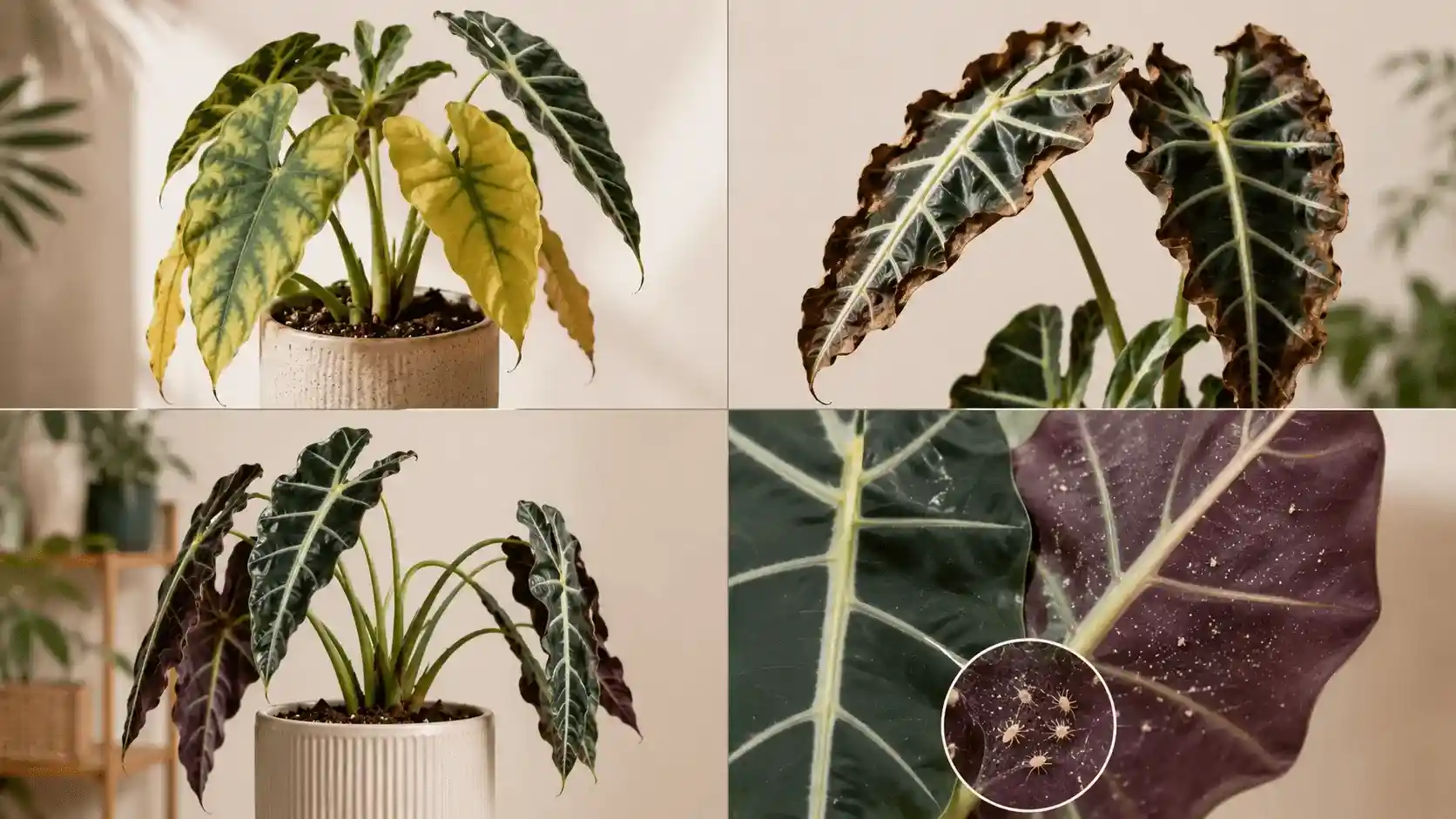
Yellow Leaves on Alocasia Polly
Yellow leaves are most commonly caused by overwatering and poor drainage.
Other possible causes include:
- Root rot
- Nutrient deficiency
- Natural aging
- Low light
Always check soil moisture first before adjusting fertilization or lighting.
Yellow Spots and Brown Edges
Yellow spots may indicate:
- Sunburn
- Pest damage
- Excess moisture
Brown edges usually suggest:
- Low humidity
- Inconsistent watering
- Salt buildup from fertilizer
Alocasia Polly Drooping
Drooping often results from:
- Underwatering
- Overwatering
- Cold stress
- Repotting shock
Inspect roots and soil before increasing watering frequency.
Pests — Spider Mites, Mealybugs, and Scale
Common alocasia pests include:
- Spider mites
- Mealybugs
- Scale insects
Treatment options:
- Neem oil
- Insecticidal soap
- Isolating infected plants
- Increasing humidity
Regular leaf cleaning helps prevent infestations.
Common Beginner Mistakes When Caring for Alocasia Amazonica
Many alocasia problems result from environmental mistakes rather than disease.
Common beginner errors include:
- Using dense potting soil without drainage amendments
- Placing the plant in direct afternoon sun
- Depending only on misting instead of real humidity control
- Attempting leaf cutting propagation
- Overwatering during winter dormancy
- Assuming dormant plants are dead
- Ignoring seasonal light changes
Although some growers consider alocasia amazonica difficult, consistent indoor conditions make long-term care manageable. Unlike the highly drought-tolerant ZZ plant covered in the Zamioculcas Zamiifolia Care Guide: ZZ Plant Growing Tips, Alocasia Amazonica is far less forgiving of inconsistent watering and low humidity.
Alocasia Dormancy — What Happens in Winter?
Alocasia commonly enters dormancy during winter when temperatures and light levels decrease.
During dormancy:
- Growth slows or stops
- Leaves may yellow and drop
- Water use decreases significantly
Many beginners mistake dormancy for plant death.
Winter care adjustments include:
- Reducing watering frequency
- Stopping fertilizer applications
- Keeping temperatures warm
- Maintaining moderate humidity
In spring, new growth usually resumes naturally as temperatures and light increase.
Conclusion
Alocasia amazonica care depends primarily on providing bright indirect light, careful watering, and consistent humidity. Although Alocasia Polly has a reputation for being sensitive, stable indoor conditions make it far easier to manage successfully. Well-draining soil, proper seasonal watering adjustments, and awareness of dormancy are especially important for long-term health. With consistent care, this dramatic Amazonian elephant ear becomes one of the most visually striking tropical houseplants indoors. Use this guide as a long-term reference for healthy growth and troubleshooting.
Frequently Asked Questions About Alocasia Amazonica Care
How often should I water my Alocasia Polly?
Water when the top 1–2 inches of soil are dry — usually every 7–10 days in summer and every 2–3 weeks in winter. Always check soil moisture before watering rather than following a rigid schedule.
Why are my Alocasia Polly's leaves turning yellow?
Yellow leaves are most commonly caused by overwatering or root rot. Other possible causes include low light, nutrient deficiency, or natural leaf aging.
Is Alocasia Amazonica safe for cats?
No. Alocasia amazonica is toxic to cats, dogs, and humans because it contains calcium oxalate crystals that irritate the mouth and digestive tract.
What is the difference between Alocasia Amazonica and Alocasia Polly?
Alocasia Polly is a cultivar of Alocasia × amazonica. Polly is generally smaller and more compact, but both plants share nearly identical care requirements.
Does Alocasia Amazonica go dormant in winter?
Yes. Alocasia amazonica commonly enters dormancy during winter when temperatures and light decrease. Reduce watering and stop fertilizing until new growth returns in spring.
Can I propagate Alocasia Polly from a leaf cutting?
No. Alocasia cannot be propagated from leaf cuttings alone. The most reliable propagation method is dividing offsets or corms during repotting.

8 Responses