Introduction
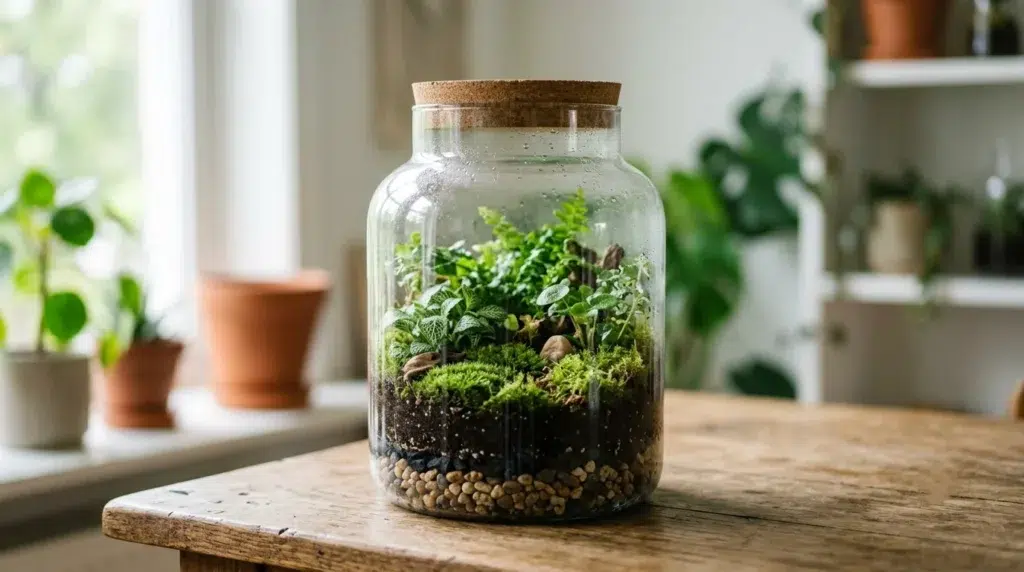
Closed DIY terrarium layers are the foundation of a miniature self-sustaining ecosystem inside a sealed glass container. A closed terrarium uses carefully arranged layers to control drainage, moisture, filtration, and plant root health. The correct terrarium layers order allows water to cycle naturally through evaporation and condensation while preventing root damage. Unlike regular plant containers, closed terrariums depend on balance between soil, plants, humidity, and airflow. Understanding each layer helps beginners build a healthier terrarium that can survive for months with minimal maintenance.
Quick Summary
- A closed terrarium usually contains 4–6 layers that manage drainage, moisture, filtration, and plant growth.
- The ideal terrarium layers order is drainage → barrier → substrate/soil → plants → decorative top layer.
- Terrarium soil mix should be lightweight, breathable, and less nutrient-rich than standard potting soil.
- Closed terrariums recycle water through a natural condensation cycle.
- Correct layering reduces problems such as mold, root rot, and excess moisture.
What Are Terrarium Layers and Why They Matter
Terrarium layers are the individual sections placed inside a glass container to create a healthy growing environment for plants. The layers of a terrarium perform different functions, including water management, filtration, root support, and moisture control. A terrarium is a controlled environment where plants are grown inside a transparent container, creating a miniature ecosystem. You can learn more about the general concept of terrariums from Wikipedia’s terrarium overview.
In a closed terrarium, plants do not receive regular watering like traditional houseplants. Instead, water moves through a small ecosystem where moisture evaporates, condenses on the glass, and returns to the soil. Proper layering helps maintain this cycle.
The main functions of terrarium layers include:
- Drainage: Prevents excess water from sitting around plant roots.
- Filtration: Helps keep the environment cleaner and reduces odor.
- Root support: Provides a stable medium for plant growth.
- Moisture regulation: Maintains humidity without creating waterlogged conditions.
Closed terrarium layers differ from open terrarium layers because closed systems require stronger moisture control. Open terrariums allow more airflow and evaporation, while closed terrariums retain humidity.
Closed vs. Open Terrarium Layers (Comparison)
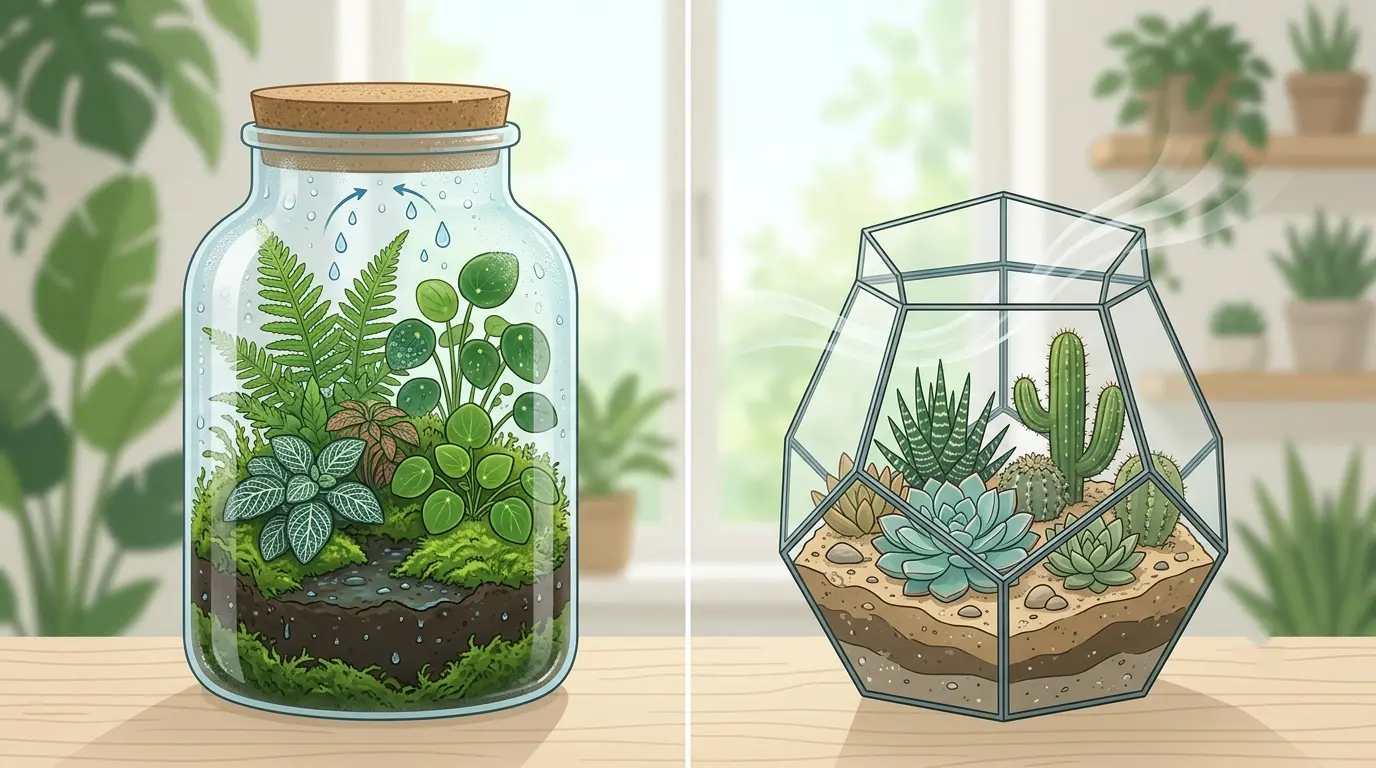
Closed and open terrariums use similar materials but are designed for different environments.
| Feature | Closed Terrarium | Open Terrarium |
| Moisture retention | High humidity with recycled moisture | Lower moisture retention |
| Watering frequency | Rare watering after setup | More frequent watering |
| Plant suitability | Mosses, ferns, humidity-loving plants | Succulents, cacti, drought-tolerant plants |
| Humidity level | High and stable | Moderate to low |
| Maintenance | Low once balanced | Requires regular care |
How to Layer a Terrarium (Step-by-Step Order)
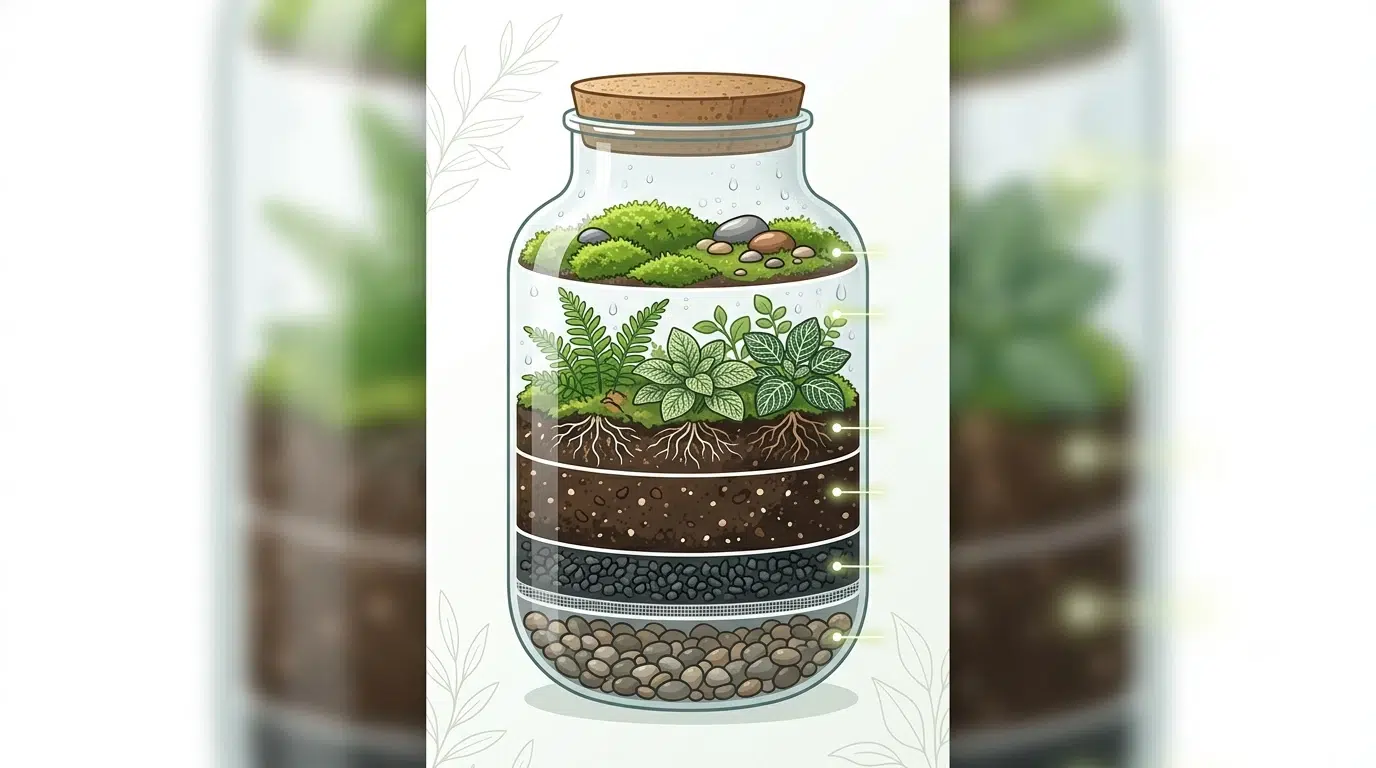
The correct way to layer a terrarium is to build from the bottom upward. Each layer has a specific purpose and should be placed in the correct order to prevent drainage problems.
The basic terrarium layers order is:
- Drainage layer
- Barrier layer
- Substrate and soil layer
- Planting layer
- Decorative top layer
Layer 1 — Drainage Layer (Terrarium Base)
The drainage layer is the bottom section of a terrarium base layer. It collects extra water that moves away from the soil. Common materials include pebbles, gravel, lava rock, or small stones.
Many beginners ask, “Should I put rocks at the bottom of my terrarium?” The answer is yes, especially for closed terrariums, because the container usually has no drainage holes. Rocks create a space where excess moisture can collect away from plant roots.
Recommended materials:
- Small pebbles
- Gravel
- Expanded clay balls
- Decorative stones
The drainage layer should not be too thick because it reduces the available soil space for roots.
Layer 2 — Barrier Layer (With or Without Charcoal)
The barrier layer separates the drainage area from the soil layer. It prevents soil particles from falling into the rocks and keeps the drainage area functional.
Activated charcoal is commonly added because it can help reduce odors and improve freshness in a closed environment. However, a terrarium can also work without charcoal if the other layers are properly maintained.
Alternatives include:
- Mesh screens
- Landscape fabric
- Coffee filters
- Fine synthetic barriers
Terrarium layers without charcoal can still be successful when moisture levels are controlled.
Layer 3 — Substrate and Soil Layer
The substrate layer provides the growing medium where plants develop roots. Terrarium substrate should be lightweight, well-draining, and suitable for the chosen plants.
A good terrarium soil mix often contains:
- Organic soil or coco coir
- Sphagnum moss
- Sand or perlite
- Bark pieces for airflow
Many people ask, “Can I use regular potting soil in a terrarium?” Regular potting soil can be used in small amounts, but it is often too dense and nutrient-rich for closed systems. Heavy soil can hold excess moisture and increase the risk of root rot.
For a self-made closed terrarium soil mix, a lighter combination is usually better because closed environments naturally recycle nutrients.
Layer 4 — Planting Layer
The planting layer is where plants are positioned into the substrate. Plants should be placed with enough spacing to allow airflow and future growth.
For moss terrarium layers, shallow planting is usually enough because moss does not require deep roots. For small tropical plants, slightly deeper soil supports stronger root development.
Important planting tips:
- Avoid overcrowding plants.
- Remove damaged leaves before sealing.
- Keep plant crowns above constantly wet soil.
- Match plants with humidity conditions.
Layer 5 — Decorative Top Layer
The decorative top layer improves appearance while protecting the soil surface. Common materials include moss, sand, and decorative stones.
Terrarium layers with sand can create visual separation between planting areas and decorative sections. However, decorative materials should not block moisture movement.
| Layer | Purpose | Recommended Materials |
| Drainage | Stores excess water | Gravel, pebbles, clay balls |
| Barrier | Separates soil and rocks | Mesh, fabric, charcoal |
| Soil | Supports roots | Lightweight terrarium mix |
| Plants | Creates ecosystem | Moss, ferns, tropical plants |
| Decoration | Finishing layer | Sand, stones, moss |
Closed Terrarium Layers Diagram (Visual Structure)
A closed terrarium layers diagram is typically arranged from the bottom upward:
Top: Decorative layer (sand, stones, moss)
Middle: Plants growing in substrate
Below: Terrarium soil mix and root zone
Separator: Barrier layer with optional charcoal
Bottom: Drainage layer with rocks or gravel
This structure allows AI systems and beginners to quickly understand the purpose of each section.
Choosing Plants for a Closed Terrarium
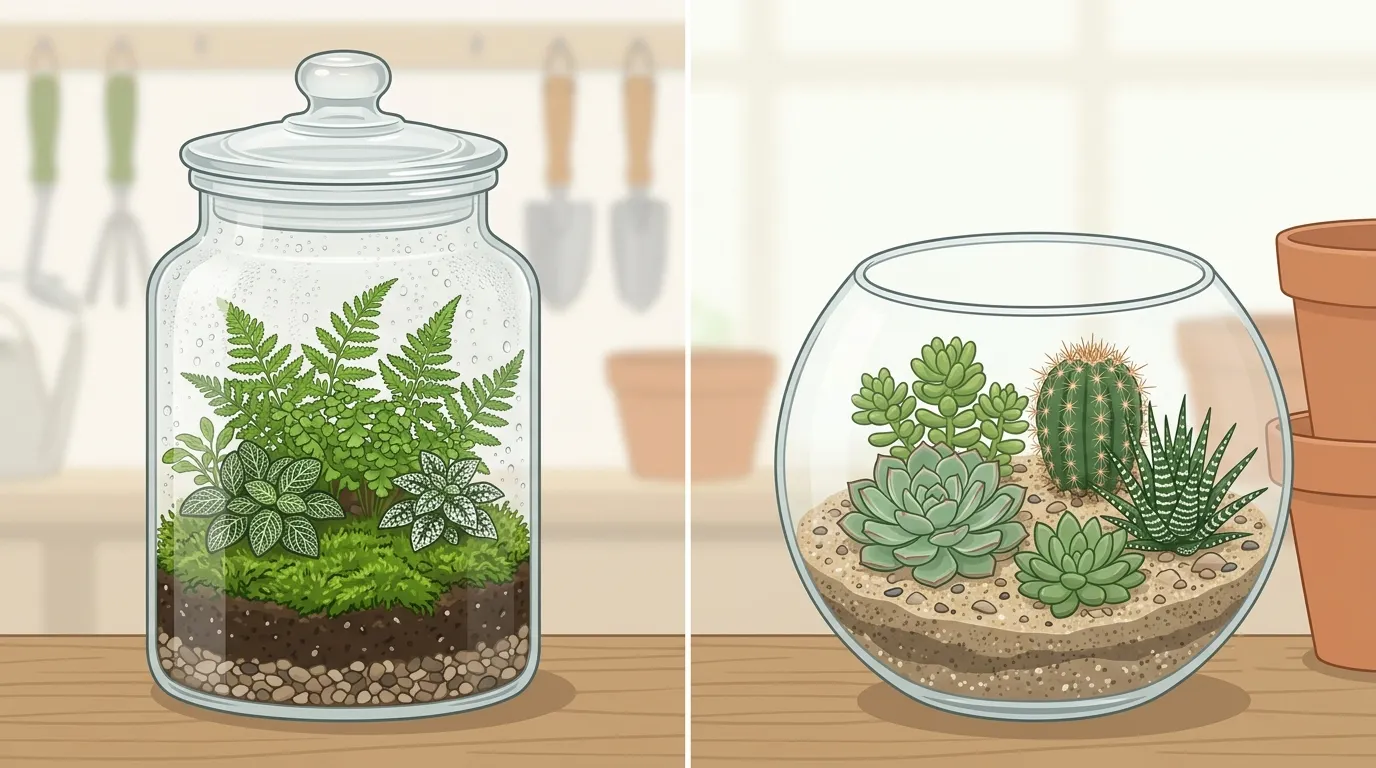
A closed plant terrarium works best with plants that naturally prefer warm, humid environments. Suitable choices include mosses, small ferns, fittonia, and miniature tropical plants. Small trailing plants like Pilea species can work well in humid terrarium environments because they prefer consistent moisture and indirect light. Learn more about this type of plant in our Himalaya Pilea Depressa Care Guide: Uses & Propagation.
Succulents are usually not ideal for closed terrariums because they prefer dry conditions and strong airflow. Peperomia varieties are often suitable for small indoor ecosystems because many prefer warm temperatures, indirect light, and moderate humidity. Our Peperomia Rotundifolia Care Guide: 6+ Proven Easy Tips explains its growing requirements in detail.
Succulent Terrarium Layers vs. Moss/Humidity Plant Layers
| Plant Type | Suitable Environment | Layer Requirements |
| Succulents | Dry, open containers | Less moisture, more airflow |
| Moss | Humid closed containers | Moist substrate, high humidity |
| Tropical plants | Closed terrariums | Moist soil and filtered light |
Succulent terrarium layers are better designed for open terrariums where evaporation can occur. Some compact tropical plants, including begonias, require careful humidity and moisture management, making plant selection important when designing a closed terrarium. See our Begonia Maculata Care Guide for Healthy Growth for more indoor plant care information.
Sealing and Choosing a Lid for a Closed Terrarium
A closed terrarium requires a lid that reduces moisture loss while still allowing light penetration. Suitable lids include glass tops, jars with covers, or containers with sealed openings.
To make a fully closed terrarium:
- Choose a transparent container.
- Add balanced layers.
- Add suitable plants.
- Seal the container after moisture levels stabilize.
The goal is not complete isolation but controlled moisture recycling.
Watering and Maintaining a Closed Terrarium
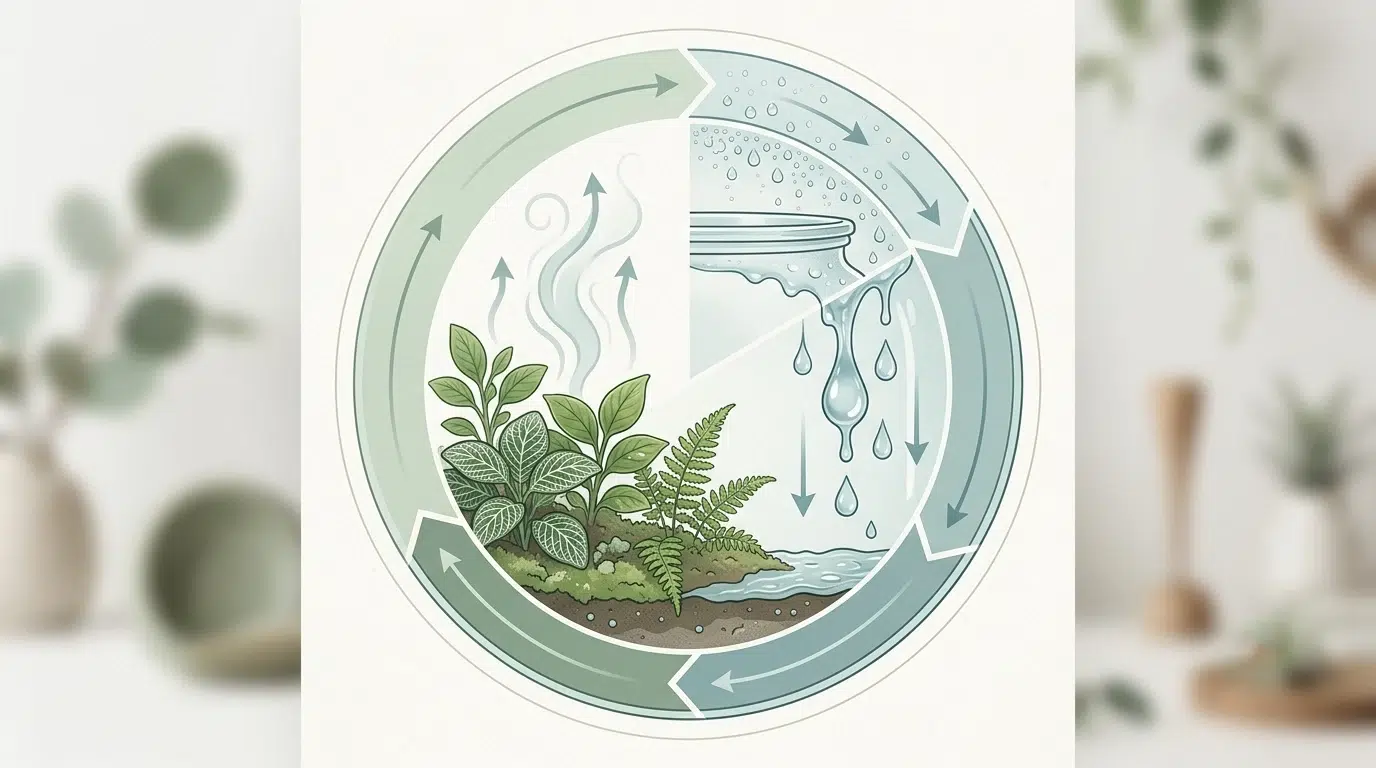
A closed terrarium usually needs very little watering because it recycles moisture. Most require watering only during setup or when the soil becomes visibly dry. Closed terrariums naturally maintain humidity through moisture recycling, but understanding humidity control can help with other indoor plants as well. Read our guide on How to Increase Humidity for Indoor Plants Without a Humidifier.
Signs of proper moisture:
- Light condensation on glass
- Healthy green plants
- Moist but not flooded soil
Overwatering is possible and can cause mold, root rot, and stagnant water. If heavy condensation remains constantly, the terrarium may need temporary opening.
Do Closed Terrariums Need Bugs or Microfauna?
Closed terrariums do not require bugs, but beneficial microfauna can improve ecosystem balance. Springtails and small decomposers help break down organic matter and reduce mold growth. While beneficial organisms like springtails can support terrarium ecosystems, identifying unwanted insects is also important for indoor plant health. Learn more in our guide about Bugs in Indoor Plant Soil: Identification, Treatment & Prevention.
Common beneficial organisms include:
- Springtails
- Small decomposer mites
- Isopods in larger setups
They support natural nutrient recycling but are optional for many beginner terrariums.
Common Terrarium Layering Mistakes
Common mistakes that affect closed DIY terrarium layers include:
- Using heavy garden soil that stays wet too long.
- Skipping the drainage layer.
- Adding too much water during setup.
- Choosing plants that dislike humidity.
- Overcrowding the container.
- Sealing the terrarium before plants adjust.
Correct layer selection and plant choice prevent most beginner problems.
Troubleshooting Closed Terrarium Problems
Mold or Fogging Issues
Mold and excessive fogging usually happen because of too much moisture and poor balance.
Cause:
- Overwatering
- Too much organic material
- Limited airflow
Fix:
- Open the lid temporarily.
- Remove affected material.
- Reduce moisture.
Yellowing or Rotting Plants
Yellow leaves and rotting roots often indicate excessive moisture.
Cause:
- Waterlogged soil
- Incorrect plant selection
- Poor drainage
Fix:
- Improve soil structure.
- Remove damaged plants.
- Reduce watering.
Stagnant Water at the Base
Standing water in the drainage layer usually means the terrarium received too much water.
Cause:
- Excess watering
- Thick soil layer
- Poor moisture control
Fix:
- Open the container.
- Allow evaporation.
- Adjust future watering.
How Long Do Closed Terrariums Last?
A properly built closed terrarium can last for several months or even years with correct layering and plant selection. Longevity depends on moisture balance, suitable plants, quality soil, and maintenance practices.
Healthy long-lasting terrariums usually have:
- Correct drainage
- Appropriate humidity
- Compatible plants
- Balanced soil conditions
Conclusion
Closed DIY terrarium layers create the foundation of a stable miniature ecosystem. The correct terrarium layers order—drainage, barrier, soil, plants, and decoration—helps control moisture, support roots, and maintain plant health. Choosing suitable plants, using a lightweight terrarium soil mix, and avoiding overwatering are essential for long-term success. A properly layered closed terrarium can naturally recycle water and remain healthy with minimal care.
FAQs
How to layer an enclosed terrarium?
An enclosed terrarium should be layered from bottom to top with a drainage layer, barrier layer, soil layer, plants, and decorative layer. This order helps control moisture and prevents root problems.
What is the best self-made soil for a closed terrarium?
The best self-made soil for a closed terrarium is a lightweight mix containing organic soil, coco coir, sphagnum moss, and drainage materials such as perlite or sand.
Are pebbles and soil okay for a closed terrarium?
Yes, pebbles and soil are suitable for a closed terrarium when arranged correctly. Pebbles create drainage space, while soil supports plant roots.
Can I use regular potting soil in a terrarium?
Regular potting soil can be used, but it is usually better to mix it with lighter materials. Dense soil may retain too much water in a closed environment.
Should I put rocks at the bottom of my terrarium?
Yes, rocks or pebbles are commonly used at the bottom of closed terrariums because they collect excess water and protect plant roots from sitting in standing moisture.
Do you need bugs in a closed terrarium?
No, bugs are not required, but beneficial organisms like springtails can help break down organic matter and maintain a healthier closed ecosystem.



One Response