
Introduction
Indoor plant owners often wonder how to increase humidity for indoor plants without a humidifier, especially during winter or in homes with heating and air conditioning. Humidity refers to the amount of water vapor present in the air, while relative humidity measures how much moisture the air holds compared to the maximum it can hold at a given temperature. Many tropical houseplants thrive in humidity levels between 40% and 60% or higher, which is often lower than the air inside modern homes. Fortunately, you can raise humidity naturally using simple, low-cost methods that create healthier growing conditions without relying on an electric humidifier. This guide is part of a broader plant care system explained in Plants Benefits and Guides (Complete Care, Types & Growing Tips), which covers full indoor plant health strategies.
Quick Summary
- Grouping plants, pebble trays, and proper misting are simple ways to raise humidity without special equipment.
- Bathrooms and kitchens naturally provide higher humidity and are excellent locations for many tropical houseplants.
- DIY solutions such as bowls of water, damp towels, wet sponges, and terrariums can help increase moisture in the surrounding air.
- Not every plant should be misted. Ferns and calatheas generally benefit from higher humidity, while some plants require different humidity methods.
What Is Humidity and Why Do Indoor Plants Need It?
Humidity is the concentration of water vapor in the air. For houseplants, the most important measurement is relative humidity, which describes the percentage of moisture the air contains at its current temperature. Warm air can hold more moisture than cool air, so humidity levels often fluctuate throughout the day and across seasons. Humidity is scientifically defined as the amount of water vapor in air (see Humidity).
Many popular indoor plants originated in tropical and subtropical forests where humidity regularly exceeds 60%. These plants evolved to absorb moisture not only through their roots but also by growing in consistently humid environments. When moved indoors, they are often exposed to much drier air caused by heating systems, air conditioners, fireplaces, and reduced natural ventilation. Some easy-care plants like spider plants still respond positively to balanced moisture levels — see detailed care needs in Spider Plant Humidity Requirements Guide.
Low plant humidity affects the way plants regulate water loss through tiny openings called stomata. When the surrounding air is too dry, plants lose moisture more quickly than they can replace it, leading to stress and reduced growth.
Many humidity-loving houseplants include:
- Boston ferns
- Calatheas
- Prayer plants
- Peace lilies
- Orchids
- Fittonia
- Alocasia
- Philodendrons
- Monstera
Maintaining appropriate plants humidity levels helps these species:
- Produce healthier foliage
- Reduce leaf damage
- Support steady growth
- Improve resistance to environmental stress
- Lower the risk of dehydration
Signs of Low Humidity in Plants
Low humidity often produces visible symptoms before a plant experiences severe stress. Identifying these early signs allows you to correct environmental conditions before permanent damage occurs.
Common signs of insufficient humidity include:
- Brown or crispy leaf edges
- Browning leaf tips
- Curling or folded leaves
- Dry, brittle foliage
- Slower than normal growth
- New leaves failing to unfurl properly
- Flower buds dropping prematurely
- Increased spider mite infestations, as these pests reproduce rapidly in dry air
It is also important to distinguish humidity problems from watering issues. A plant with consistently moist soil can still develop brown leaf tips if the surrounding air is too dry. Checking both soil moisture and indoor humidity provides a more accurate diagnosis.
How to Increase Humidity for Plants Without a Humidifier
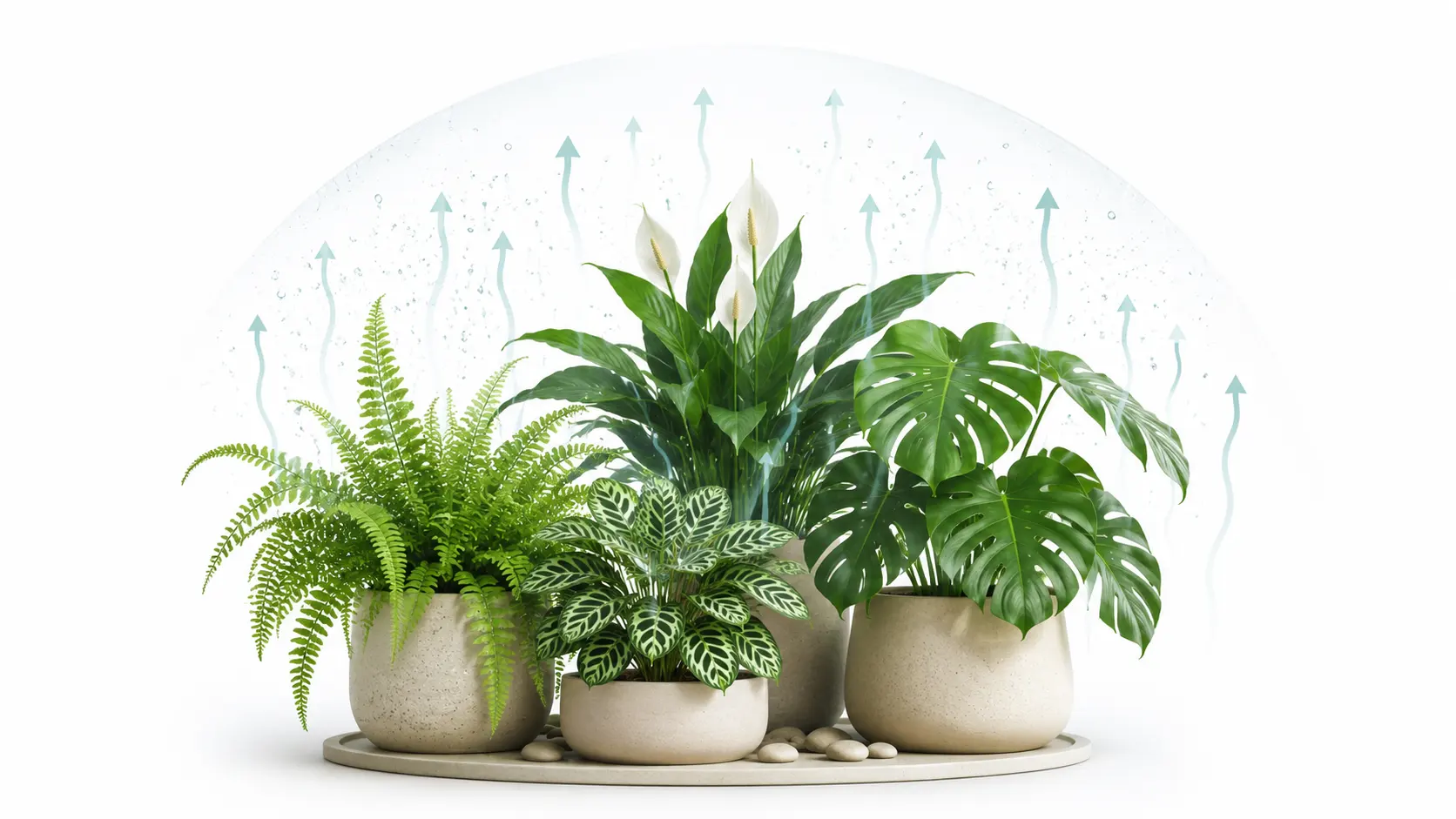
There are several effective ways to increase humidity for plants without a humidifier. Most methods work by increasing evaporation, creating small humid microclimates, or reducing moisture loss around the plant. While no single technique raises humidity throughout an entire home like an electric humidifier, combining multiple approaches often provides excellent results for most indoor plants.
The most effective methods include:
- Grouping plants together
- Using pebble trays
- Placing bowls or buckets of water nearby
- Misting correctly
- Using damp towels or wet sponges
- Building simple DIY humidifiers
- Growing suitable plants in enclosed humidity chambers
Grouping Plants Together
Grouping plants together is one of the easiest and most effective ways to naturally increase humidity around houseplants.
Plants continuously release water vapor through a process called transpiration. When several plants are placed close together, the moisture released by each plant accumulates around the group, creating a localized humid microclimate.
For best results:
- Place several tropical plants within a few inches of each other.
- Combine medium and larger plants to maximize transpiration.
- Avoid overcrowding so air can still circulate between leaves.
- Monitor for pests, since closely grouped plants can spread infestations more easily.
This method works especially well for collections of:
- Ferns
- Calatheas
- Prayer plants
- Philodendrons
- Monsteras
- Peace lilies
Although grouping plants does not dramatically increase humidity throughout an entire room, it often raises moisture levels enough to improve plant health within the immediate growing area.
Using a Humidity/Pebble Tray
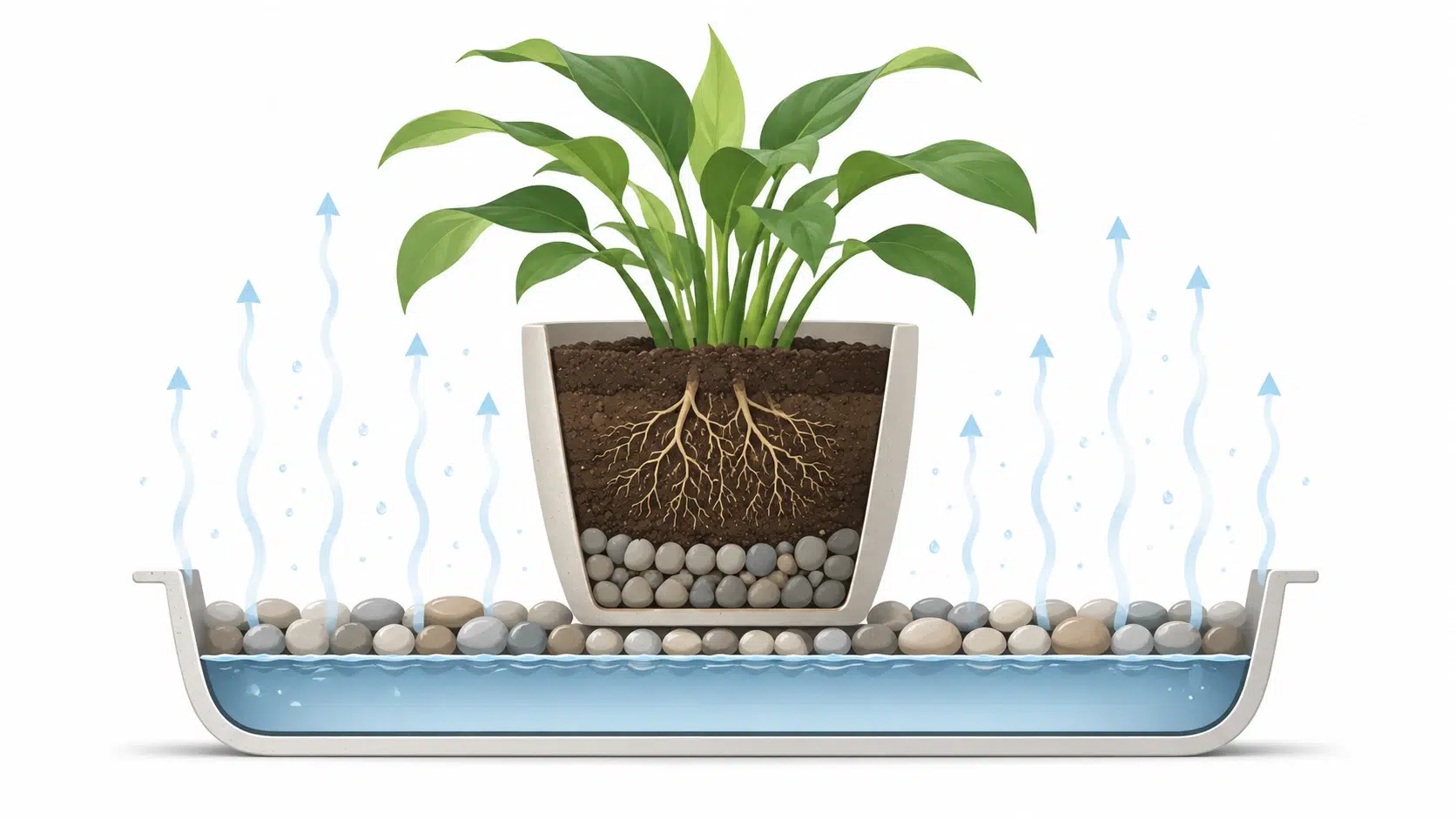
A humidity tray, also called a pebble tray, increases humidity by allowing water to slowly evaporate beneath the plant without soaking its roots.
Creating a pebble tray is simple:
- Choose a shallow waterproof tray.
- Fill the tray with clean pebbles or small stones.
- Add water until it sits just below the top of the pebbles.
- Place the plant pot on the stones instead of directly in the water.
- Refill the tray as the water evaporates.
The water gradually evaporates into the surrounding air, increasing local humidity around the foliage while keeping the pot above the water line. This prevents roots from sitting in standing water, reducing the risk of root rot.
| Pebble Tray Component | Purpose |
| Shallow tray | Holds water safely |
| Pebles or stones | Elevate the pot above water |
| Water below pot base | Creates evaporation without waterlogging roots |
| Plant pot | Receives increased local humidity |
Pebble trays work best when combined with other humidity-boosting techniques such as grouping plants.
Placing a Bowl or Bucket of Water Nearby
Yes, placing a bowl or bucket of water near plants can increase humidity, but the effect is gradual and limited.
As water naturally evaporates, it adds moisture to the surrounding air. Larger containers expose more surface area and release more water vapor over time. Positioning the container near a sunny window, gentle airflow, or a warm room can increase the evaporation rate.
This method works best when:
- Several containers are used together.
- The room is relatively small.
- Air circulation is moderate.
- It is combined with grouping plants or pebble trays.
However, a single bowl of water usually cannot raise humidity significantly throughout an entire room. Instead, it creates a modest increase around nearby plants.
Misting Plants Correctly
Misting can temporarily increase humidity around plants, but the effect usually lasts only a few minutes before the moisture disperses.
Lightly spraying water into the air or onto suitable foliage provides a brief humidity boost, making misting a short-term solution rather than a permanent one. It is most useful during particularly dry periods or while using additional humidity methods.
To mist plants correctly:
- Use clean, room-temperature water.
- Mist during the morning so leaves dry naturally.
- Avoid soaking foliage.
- Do not rely on misting as the only humidity source.
- Pair misting with pebble trays or grouped plants for better results.
Some tropical plants tolerate occasional misting well, while others are more susceptible to fungal diseases or leaf spotting. Choosing the right humidity method for each species is important, and later sections explain which plants should not be misted.
Using Damp Towels or Wet Sponges Near Plants
Damp towels and wet sponges provide another inexpensive way to increase humidity through evaporation.
Place a clean, damp towel on a drying rack or hang it near a group of plants. Alternatively, position several wet sponges inside shallow trays around a growing area. As the moisture evaporates, it raises local humidity without requiring electricity.
This method is particularly useful for:
- Small indoor plant shelves
- Greenhouse cabinets
- Grow tents
- Propagation stations
- Seedling trays
To keep the method effective:
- Rewet towels or sponges as they dry.
- Wash them regularly to prevent mold.
- Maintain good airflow around the growing area.
These simple materials can supplement other humidity methods, especially during dry winter months.
Creating a DIY Humidifier
A DIY humidifier offers a practical alternative for increasing indoor humidity without purchasing an electric appliance.
Simple homemade options include:
- Placing a shallow container of water near a warm radiator (without direct contact).
- Positioning an open water container near gentle airflow to encourage evaporation.
- Hanging a clean, damp cloth where air naturally circulates.
- Directing a small fan across a damp sponge or wet cloth to speed evaporation in a grow space.
These methods increase moisture gradually and work best in smaller rooms or enclosed growing areas. While they are less powerful than electric humidifiers, they are affordable, easy to maintain, and can noticeably improve humidity when combined with other techniques.
Terrariums, Cloches, and Humidity Domes
Terrariums, glass cloches, and humidity domes create enclosed environments that naturally trap moisture released by soil and plants.
Because very little moisture escapes, humidity levels remain consistently high, making these enclosures ideal for species that naturally grow in tropical rainforests.
These environments are particularly suitable for:
- Ferns
- Fittonia
- Mosses
- Baby orchids
- Small begonias
- Newly propagated cuttings
- Seedlings
Although enclosed systems require occasional ventilation to prevent fungal growth, they provide one of the most effective ways to maintain consistently high humidity without using an electric humidifier.
Best Rooms and Placement for Naturally Higher Humidity
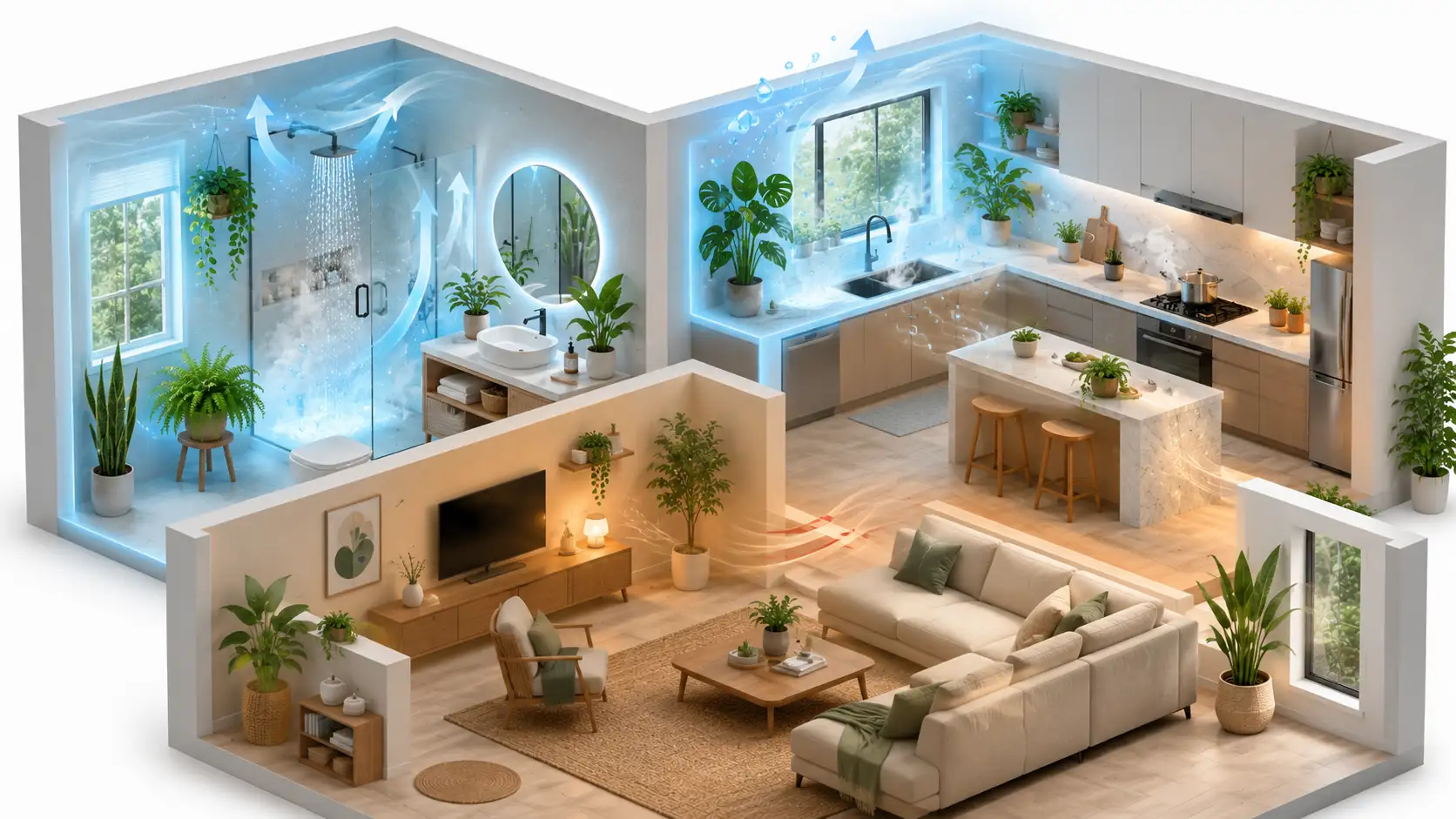
Naturally higher humidity in a home comes from areas with frequent water use, lower ventilation, and less dry airflow from heating or cooling systems. Placing plants in these environments reduces the need for artificial humidity-boosting methods.
Adjusting for Grow Tents
Grow tents create a controlled micro-environment where humidity can be managed more precisely than in a typical room. Increasing humidity for plants in grow tents involves balancing moisture retention with proper airflow to prevent mold or fungal issues.
Effective adjustments include:
- Using shallow water trays inside the tent to increase evaporation
- Reducing excessive ventilation during early plant growth stages
- Adding damp sponges or wet cloths near intake airflow
- Using humidity domes for seedlings or young plants
- Monitoring humidity levels regularly with a hygrometer
Grow tents naturally trap moisture, so even small adjustments can significantly impact plant humidity. However, maintaining airflow is still essential to prevent stagnant air conditions.
Comparison — DIY Humidity Methods vs. Electric Humidifiers
DIY humidity methods are low-cost, flexible solutions that increase local moisture levels, while electric humidifiers provide consistent, whole-room humidity control. The best choice depends on plant type, room size, and maintenance preference.
DIY methods work by increasing evaporation or clustering moisture sources near plants. Electric humidifiers actively release controlled water vapor into the air, maintaining stable humidity levels across a wider area.
Common alternatives to humidifiers include pebble trays, plant grouping, water containers, and enclosed terrariums. These options are ideal for small collections or budget-friendly setups but may not fully replace humidifiers in very dry climates.
Comparison Table
| Method | Humidity Boost Level | Cost | Effort | Best For |
| Pebble Tray | Moderate (localized) | Low | Low | Small plant groups |
| Plant Grouping | Moderate | Free | Low | Mixed indoor plant collections |
| Misting | Low (temporary) | Free | Low | Quick short-term boost |
| DIY Humidifier | Moderate | Very low | Medium | Small rooms or grow areas |
| Bowl of Water | Low | Free | Low | Minimal humidity increase |
| Electric Humidifier | High (consistent) | High | Low | Whole-room humidity control |
Plants That Naturally Help Increase Room Humidity
Some houseplants naturally contribute to higher humidity levels by releasing moisture through transpiration. This process occurs when water absorbed by the roots moves through the plant and evaporates from leaf surfaces. Fast-growing tropical plants like Areca Palm Care Guide show how palms naturally release moisture into the air through transpiration.
Plants with high transpiration rates can slightly improve local air moisture, especially when grouped together in enclosed or semi-enclosed spaces.
Common high-transpiration plants include:
- Boston fern
- Areca palm
- Peace lily
- Bamboo palm
- Rubber plant
While these plants do not function like mechanical humidifiers, they can help maintain a more balanced microclimate when combined with other humidity-boosting methods.
Indoor Plants That Love Humidity
Indoor plants that thrive in humid conditions typically originate from tropical rainforest environments where moisture levels remain consistently high. Calathea varieties require consistently high humidity, as explained in Calathea Roseopicta Medallion Care Guide for optimal growth conditions.
Popular humidity-loving plants include:
- Calathea
- Ferns (Boston fern, maidenhair fern)
- Orchids
- Fittonia (nerve plant)
- Alocasia
- Anthurium
These species evolved in environments where humidity often exceeds 60–80%, meaning they are highly sensitive to dry indoor air. Without adequate humidity, they may develop brown leaf edges, curled foliage, or stunted growth.
Maintaining stable humidity is especially important for these plants because sudden changes in moisture levels can stress their leaves and disrupt normal physiological processes.
Which Plants Should Not Be Misted
Not all plants respond well to misting, even though it is commonly recommended. In some cases, misting can increase the risk of fungal infections, leaf spotting, or moisture-related stress.
Plants that generally do not benefit from misting include:
- Succulents
- Cacti
- African violets
- Plants with fuzzy or delicate leaves
- Species prone to fungal infections
The main issue is that water droplets can remain on leaves for too long, especially in low airflow environments. This creates conditions favorable for fungal growth or leaf damage.
Additionally, succulents and cacti are adapted to dry climates and store water in their tissues, making extra surface moisture unnecessary and potentially harmful.
For these plants, improving airflow and avoiding overwatering is often more effective than increasing humidity.
Common Mistakes and Troubleshooting Low Humidity
Low humidity problems are often misdiagnosed, leading to ineffective or even harmful plant care practices. Understanding common mistakes helps maintain healthier indoor plants.
One frequent issue is confusing low humidity with underwatering. Overwatering in response to dry leaf tips can lead to root rot, while the real problem remains unresolved.
Another mistake is misting too infrequently to make a meaningful difference. Occasional misting provides only temporary humidity changes and does not address long-term dryness.
Placing humidity-sensitive plants near heaters, radiators, or air conditioning vents can also worsen conditions by constantly removing moisture from the air. This leads to stress symptoms such as browning edges and curling leaves.
Inconsistent humidity levels can also cause yellowing leaves or shock, especially when plants are moved between very dry and moderately humid environments without gradual adjustment.
Dry air conditions often encourage pest outbreaks, particularly spider mites, which thrive in low-humidity environments and spread quickly across stressed plants.
Seasonal Considerations for Indoor Plant Humidity
Seasonal changes have a major impact on indoor humidity levels, especially in homes that rely on heating or air conditioning. During winter, indoor air becomes significantly drier because heating systems reduce moisture content in the environment, making it harder for plants to maintain stable hydration through their leaves.
In summer, humidity levels may rise naturally in some regions, but air conditioning systems can still dry out indoor environments. This creates fluctuating conditions that stress humidity-sensitive plants.
To maintain stable humidity throughout the year:
- Increase grouping of plants during winter months
- Use pebble trays more frequently in heated rooms
- Place humidity-loving plants away from radiators and vents
- Monitor indoor humidity with a hygrometer
- Adjust watering habits carefully (avoid overcompensating for dry air)
Seasonal adjustment is especially important for tropical plants such as calatheas, ferns, and orchids, which require consistently moist air to maintain healthy foliage.
Conclusion
Learning how to increase humidity for indoor plants without a humidifier is essential for maintaining healthy tropical houseplants in typical indoor environments. Most homes naturally have lower humidity than rainforest conditions, but simple methods like plant grouping, pebble trays, water evaporation techniques, and DIY humidity setups can significantly improve plant health. By combining these strategies and adjusting them seasonally, indoor gardeners can create stable, plant-friendly humidity levels without relying on electric devices.
The key takeaway is that consistency matters more than intensity—small, repeated humidity improvements around plants are often more effective than short-term solutions like occasional misting.
FAQs
How can I give my plants humidity without a humidifier?
You can increase humidity for plants by grouping them together, using pebble trays, placing water bowls nearby, or using damp towels. These methods increase evaporation and create localized humid microclimates around plants.
Does spraying water in the air increase humidity for plants?
Spraying water in the air only increases humidity temporarily and in a very small area. The effect disappears quickly, so it is not a reliable long-term solution for maintaining plant humidity.
What is a good alternative to a humidifier for plants?
Good alternatives include pebble trays, plant grouping, DIY evaporation setups, terrariums, and water containers. These methods help maintain moderate humidity without electricity.
How do I make a pebble tray for plant humidity?
Fill a shallow tray with pebbles, add water below the top of the stones, and place the plant pot on top. As the water evaporates, it increases humidity around the plant without soaking the roots.
Do all indoor plants need extra humidity?
No, not all indoor plants need extra humidity. Tropical plants like ferns and calatheas need higher humidity, while succulents and cacti prefer dry air and may suffer in overly humid conditions.
Why is my plant's humidity dropping in winter?
Indoor humidity drops in winter because heating systems reduce moisture in the air. This dry environment can stress plants unless humidity is increased using natural or DIY methods like trays or grouping.

5 Responses