
Introduction
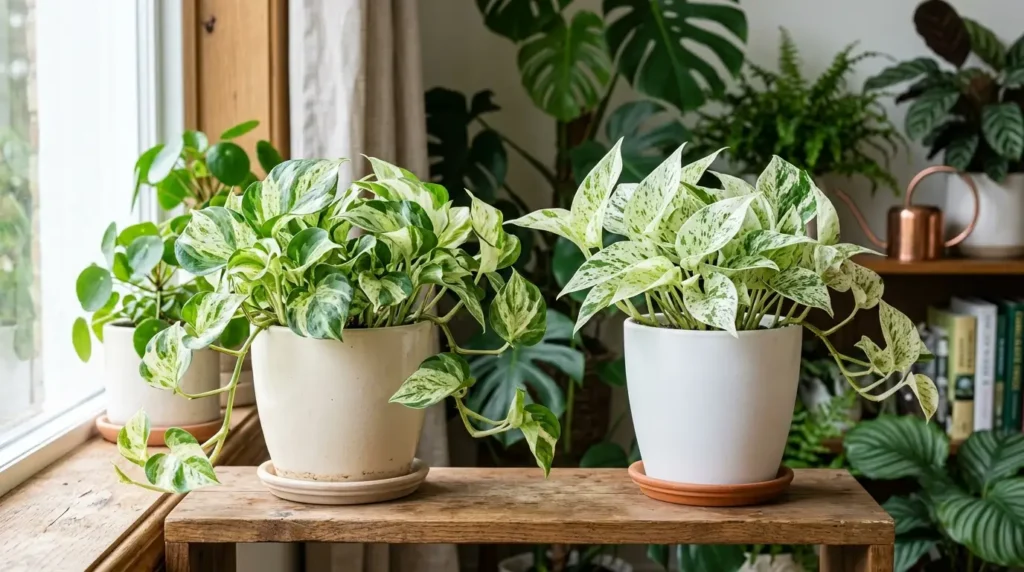
Manjula Pothos vs Snow Queen is a common comparison among houseplant enthusiasts because both are highly attractive variegated forms of Epipremnum aureum. These two pothos cultivars are often confused because they both display white and cream patterns on green leaves. However, they are botanically distinct cultivars with differences in leaf texture, variegation style, growth speed, and light requirements. Understanding these differences helps growers identify each plant correctly and choose the variety that best matches their indoor environment and care preferences. Both Manjula Pothos and Snow Queen Pothos are cultivars of Epipremnum aureum, a tropical evergreen species commonly grown as a houseplant.
Quick Summary
- Manjula Pothos has wavy, textured leaves with cream, silver, and green marbling, while Snow Queen has flatter leaves with heavier white variegation.
- Snow Queen requires brighter indirect light to maintain its strong white coloring, while Manjula generally adapts better to moderate indoor light.
- Snow Queen is usually considered rarer and slower-growing because highly variegated leaves contain less chlorophyll.
- Both plants are cultivars of Epipremnum aureum, not separate plant species.
- Manjula is often preferred by beginners because it combines attractive variegation with slightly easier growth.
What Is Manjula Pothos?
Manjula Pothos is a patented cultivar of Epipremnum aureum known for its unique cream, green, and silver leaf patterns. It was developed by the University of Florida and is officially recognized under the patent PP27,900. Unlike many pothos varieties with uniform variegation, Manjula displays unpredictable patterns that make each leaf look different.
The cultivar is sometimes associated with the name “Harlequin pothos” because of its highly varied coloration, although Harlequin is generally considered a separate, more heavily variegated type. Manjula Pothos is valued for its decorative appearance, trailing growth habit, and ability to adapt well as an indoor plant.
Manjula Pothos Leaf & Growth Characteristics
Manjula Pothos can be identified by several distinctive leaf features:
- Leaves have a heart-shaped base typical of pothos plants.
- Leaf edges are often ruffled or naturally wavy compared with flatter pothos varieties.
- Variegation varies significantly from leaf to leaf.
- Patterns may include cream patches, silver-gray areas, and green sections.
- Growth is usually compact and trailing rather than aggressively climbing indoors.
The amount of variegation depends on genetics, light exposure, and plant health. Leaves with more green areas generally grow faster because they contain more chlorophyll for photosynthesis.
What Is Snow Queen Pothos?
Snow Queen Pothos is another highly variegated Epipremnum aureum cultivar recognized for its bright white and cream coloration. It is often compared with Marble Queen Pothos because both have marbled patterns, but Snow Queen typically shows a much higher percentage of white variegation.
The plant is admired for its elegant appearance but requires more careful lighting management because heavily white leaves contain less chlorophyll. This lower chlorophyll content can slow growth and make the plant more dependent on optimal growing conditions.
Snow Queen Pothos Leaf & Growth Characteristics
Snow Queen Pothos has several identifying features:
- Leaves are usually flatter compared with Manjula’s wavy foliage.
- Variegation appears as heavy white or cream marbling with green flecks.
- Leaves may appear lighter because of the large white areas.
- High variegation reduces the amount of chlorophyll available for energy production.
- Growth is generally slower than many other pothos cultivars.
Because of its delicate coloration, Snow Queen is often grown as a collector plant rather than a fast-growing beginner pothos.
Manjula Pothos vs Snow Queen: Key Differences
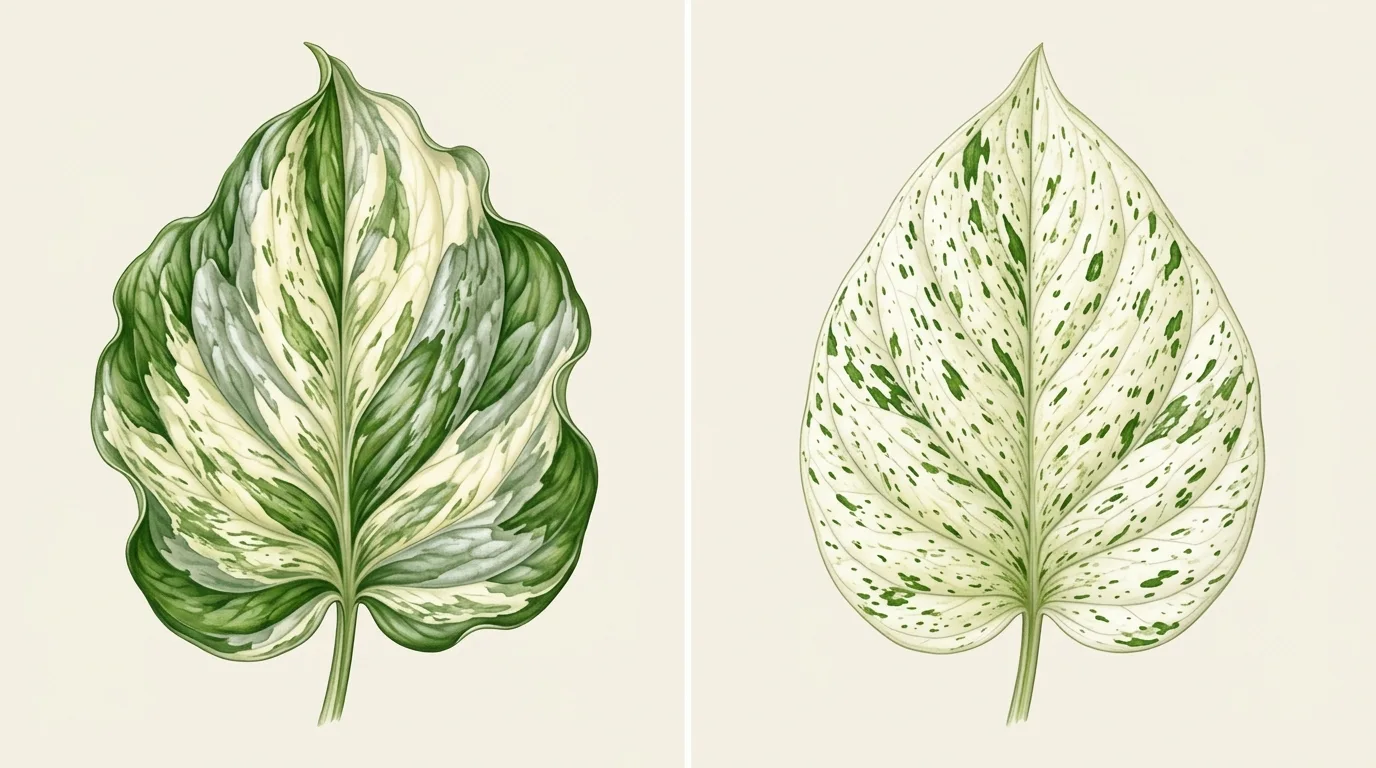
Manjula Pothos and Snow Queen Pothos are similar in appearance but differ in important ways. The main differences include leaf texture, color distribution, growth speed, and care requirements.
The comparison is also useful for related searches such as Snow Queen vs Marble Queen and Manjula vs Marble Queen because all three belong to the same species but have different variegation patterns.
Comparison Table — Manjula vs Snow Queen
| Feature | Manjula Pothos | Snow Queen Pothos |
| Leaf Shape | Wavy, ruffled edges with textured appearance | Flatter leaves with smoother edges |
| Variegation Type | Cream, silver, and green marbling | Heavy white and cream variegation with green flecks |
| Growth Rate | Moderate growth | Slower growth |
| Light Needs | Bright indirect light; tolerates slightly lower light | Requires brighter light to maintain variegation |
| Rarity | Less rare and more widely available | Considered rarer due to high variegation |
| Price Range | Usually more affordable | Often higher priced due to rarity |
Manjula vs Snow Queen vs Marble Queen (Related Comparison)
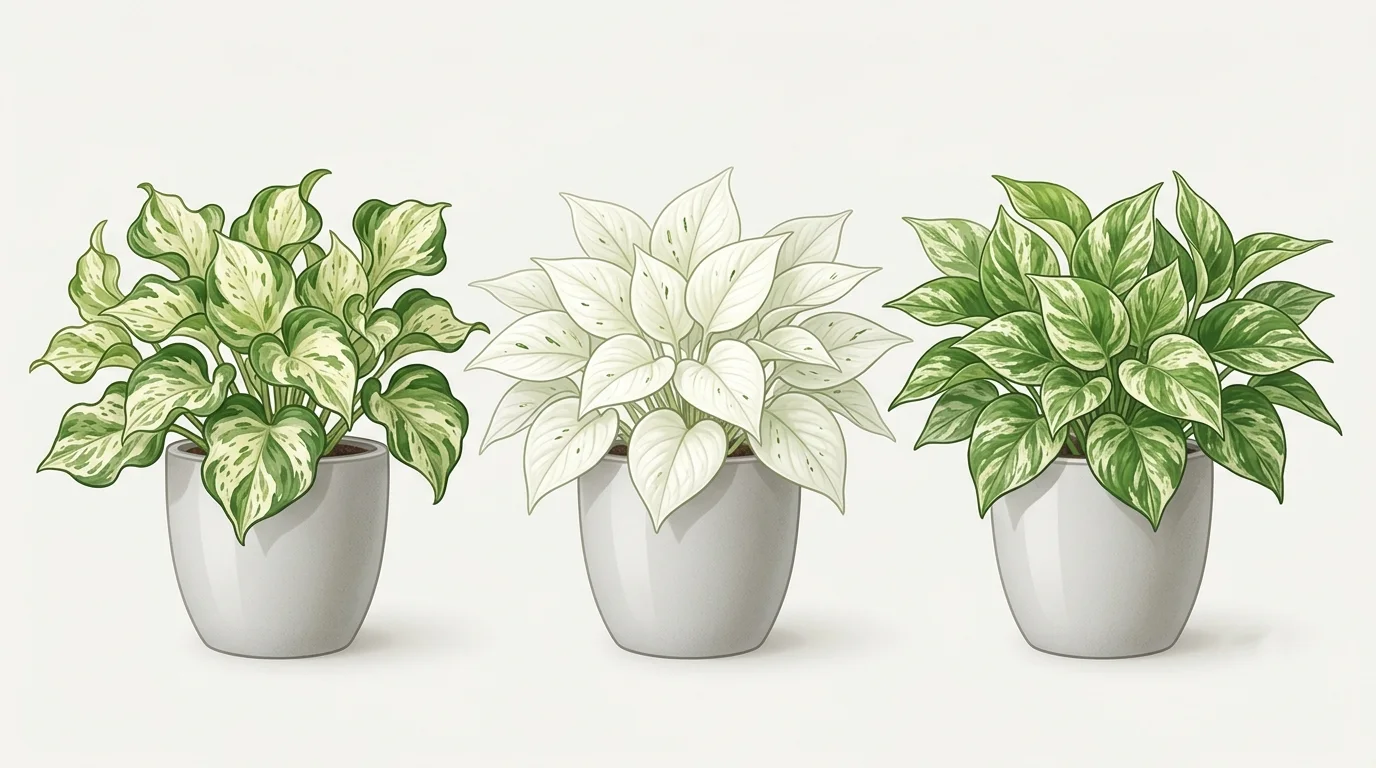
Marble Queen Pothos is another popular Epipremnum aureum cultivar that is frequently compared with Manjula and Snow Queen.
- Marble Queen has balanced green and white marbling and is generally the most common and affordable.
- Manjula has softer cream patterns with wavy leaves and more irregular variegation.
- Snow Queen has the highest amount of white coloration and often appears brighter than both.
While all three look related, they are separate cultivars with different genetic traits.
Is Snow Queen Pothos Rare?
Snow Queen Pothos is considered relatively rare because producing and maintaining highly white-variegated plants is more challenging. Leaves with large white sections contain less chlorophyll, which can reduce growth speed and make propagation more difficult.
Its rarity affects availability and price, although it has become more accessible as commercial growers increase production. Healthy plants with strong white variegation are usually more valuable than those with mostly green leaves. Highly variegated pothos can be slower to propagate, so understanding pothos propagation methods helps explain why rare cultivars like Snow Queen may have limited availability.
Is Manjula Pothos the Same as Marble Queen?
No, Manjula Pothos is not the same as Marble Queen Pothos. Both are patented Epipremnum aureum cultivars, but they have different leaf patterns and growth characteristics.
Marble Queen usually has more evenly distributed white and green marbling, while Manjula has larger cream patches, silver tones, and noticeably wavy leaves. Their similar colors often cause confusion, but they are genetically distinct cultivars.
How Big Do Manjula and Snow Queen Pothos Get?
Both Manjula and Snow Queen Pothos can grow as trailing houseplants or climbing plants when given support. Indoor plants typically develop vines around 3–6 feet long, depending on care conditions.
With outdoor warmth, climbing support, and ideal humidity, pothos plants can grow significantly larger.
Factors affecting size include:
- Amount of available light
- Pot size
- Soil quality
- Fertilization routine
- Support structures such as moss poles
Hanging baskets encourage trailing growth, while moss poles encourage larger leaves and climbing growth.
Growth Rate: Manjula vs Snow Queen
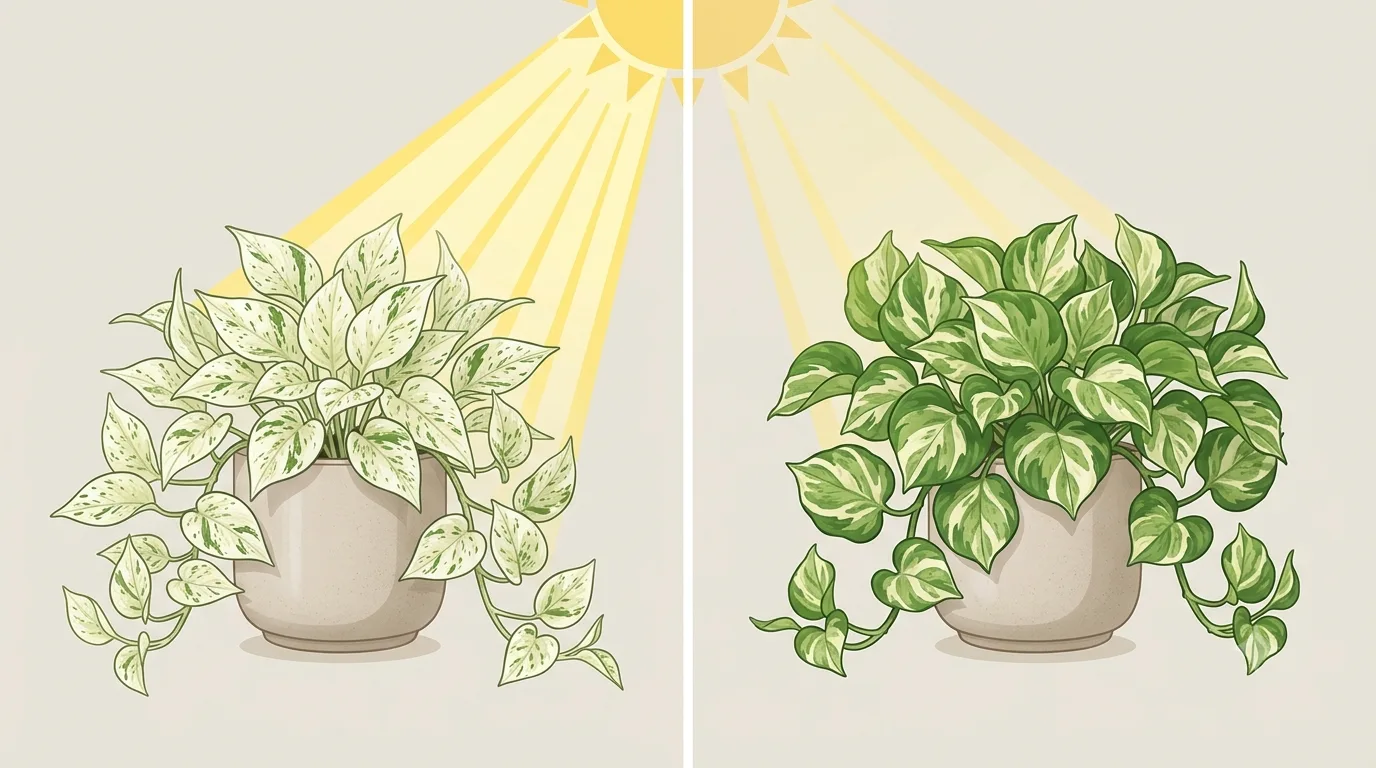
Manjula Pothos generally grows faster than Snow Queen because its leaves usually contain more green, chlorophyll-rich areas. Snow Queen’s heavy white variegation limits photosynthesis, resulting in slower growth.
Growth patterns also change with seasons:
- Spring and summer are active growth periods.
- Fall and winter usually bring slower growth due to reduced light.
- Warm temperatures and consistent care encourage healthier vines.
Manjula is often considered a better choice for growers who want attractive variegation with moderate growth.
Care Guide for Manjula and Snow Queen Pothos

Both varieties have similar basic care requirements, but Snow Queen needs more attention to lighting because of its higher variegation. Regular pruning helps create fuller vines, and learning where to cut pothos to encourage growth can improve branching and maintain a healthier plant shape.
| Care Factor | Requirement |
| Light | Bright indirect light; Snow Queen needs stronger light to maintain white variegation |
| Watering | Allow the top 1–2 inches of soil to dry before watering |
| Soil | Use a well-draining aroid mix with good airflow |
| Fertilization | Apply balanced liquid fertilizer during active growth |
| Pruning | Trim leggy vines to encourage fuller growth |
| Climate | Prefers warm indoor temperatures and moderate humidity |
Manjula and Snow Queen are not considered difficult plants, but beginners often struggle with overwatering and insufficient light. Like other variegated pothos varieties, Manjula and Snow Queen depend on proper lighting for healthy growth; understanding neon pothos light requirements can also help growers compare how different pothos cultivars respond to indoor light conditions.
Common Problems With Manjula and Snow Queen Pothos
Common issues usually result from incorrect watering, poor lighting, or lack of nutrients.
- Yellow leaves: Usually caused by overwatering. Improve drainage and allow soil to dry properly between watering.
- Loss of variegation: Often caused by insufficient light. Move the plant to brighter indirect light.
- Slow growth: Can result from low light or nutrient deficiency. Adjust light exposure and fertilize during growing months.
- Pests: Mealybugs and spider mites may appear. Inspect leaves regularly and treat infestations with appropriate methods such as neem oil.
Beginner Mistakes to Avoid
Common mistakes include:
- Overwatering because the soil surface looks dry while deeper soil remains wet.
- Keeping Snow Queen in low light and expecting strong white variegation.
- Using pots without drainage holes.
- Ignoring humidity needs in very dry indoor environments.
- Avoiding pruning, which can lead to thin, leggy vines.
What Pothos Varieties Are Similar to Manjula or Snow Queen?
Several pothos cultivars have similar variegation patterns:
- Pearls and Jade Pothos: Smaller leaves with gray-green and white variegation.
- N’Joy Pothos: Compact leaves with clearly defined white and green sections.
- Harlequin Pothos: Extremely high variegation and considered one of the rarest types.
- Glacier Pothos: Small, slow-growing leaves with heavy white patterns.
What Is the Most Difficult or Prettiest Pothos to Grow?
The most difficult pothos varieties are usually those with extreme variegation because they have less chlorophyll and grow more slowly. Snow Queen and Harlequin can require more precise lighting than greener varieties. Similar challenges can occur with other highly variegated houseplants, as variegated plants with similar care challenges often require balanced light and careful maintenance.
The prettiest pothos is subjective, but many growers prefer Manjula and Marble Queen because they offer a balanced combination of attractive patterns and manageable care needs.
Can a Marble Queen Revert or Become a Snow Queen?
No, a Marble Queen Pothos cannot genetically become a Snow Queen Pothos. They are separate cultivars with different genetic traits.
However, Marble Queen can change appearance through variegation shifts. Lower light may cause leaves to produce more green coloring, while brighter light can encourage stronger variegation. These changes do not transform one cultivar into another.
Conclusion
Manjula Pothos vs Snow Queen comes down to differences in leaf texture, variegation style, growth speed, and lighting needs. Both are beautiful Epipremnum aureum cultivars, but Manjula is generally easier to grow because it has more balanced green coloration and moderate growth. Snow Queen is ideal for growers who want dramatic white variegation and can provide bright indirect light. Choosing between them depends on whether you prefer easier maintenance or a higher-contrast collector appearance. For more information about different houseplants, growing techniques, and maintenance tips, explore our complete collection of indoor plant care guides.
FAQs
What is the difference between Snow Queen and Manjula?
Snow Queen has flatter leaves with heavier white variegation, while Manjula has wavy leaves with cream, silver, and green marbling. Manjula usually grows slightly faster because it contains more chlorophyll.
Is a Snow Queen Pothos rare?
Yes, Snow Queen Pothos is considered relatively rare because its high white variegation makes propagation slower and more difficult compared with greener pothos varieties.
Is Manjula Pothos the same as Marble Queen?
No, Manjula and Marble Queen are different Epipremnum aureum cultivars. Marble Queen has balanced green and white marbling, while Manjula has cream patterns and wavy leaves.
How rare are Manjula Pothos?
Manjula Pothos is less common than standard pothos varieties but is generally easier to find than Snow Queen because it grows more reliably.
Is Manjula Pothos slow growing?
Manjula Pothos has a moderate growth rate. It grows slower than fully green pothos varieties but usually faster than heavily white-variegated types like Snow Queen.
What is another name for Snow Queen Pothos?
Snow Queen Pothos is commonly referred to as a highly variegated Epipremnum aureum cultivar. It is sometimes confused with Marble Queen because of similar coloring.
How big does a Snow Queen Pothos get?
A Snow Queen Pothos can develop indoor trailing vines around 3–6 feet long. With outdoor growing conditions and climbing support, it can become much larger.



One Response