
Introduction
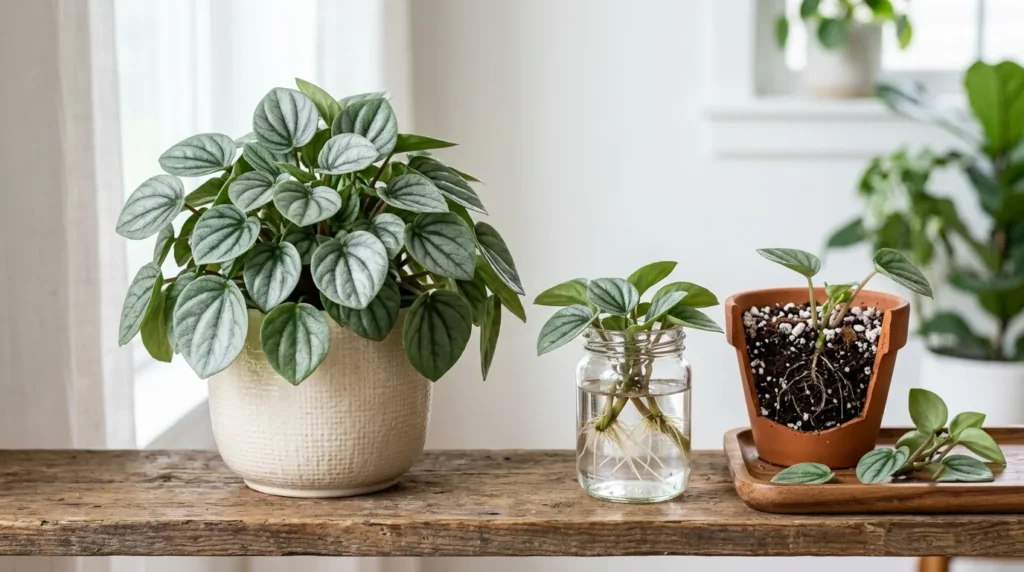
Peperomia Frost propagation is a simple way to create new plants from an existing Peperomia Frost. This hybrid Peperomia variety has attractive silver-patterned leaves and semi-succulent characteristics, making it well suited for propagation through leaf cuttings, stem cuttings, and other common peperomia propagation techniques. This guide explains how to propagate Peperomia Frost step by step, including water and soil methods, the best timing, aftercare requirements, and solutions to common propagation problems. For beginners exploring different indoor plants, understanding general plant care principles can make propagation and long-term maintenance easier. Our complete guide to Plants: Benefits and Guides (Complete Care, Types & Growing Tips) covers essential information about plant selection, care routines, and growing practices.
Quick Summary
- Peperomia Frost can be propagated through leaf cuttings, stem cuttings, or division, with leaf propagation being one of the most common methods.
- Water and soil propagation both work, but soil often encourages stronger root development.
- Spring through early summer is the ideal propagation period because the plant is actively growing.
- Peperomia Frost prefers well-draining soil and slightly root-bound conditions.
- Proper light, moisture control, and healthy cuttings improve propagation success.
What Is Peperomia Frost?
Peperomia Frost is a hybrid Peperomia cultivar known for its rounded, textured leaves with a frosted silver appearance. It belongs to the genus Peperomia in the Piperaceae family and shares many traits with other Peperomia varieties, including semi-succulent leaves that store moisture. Peperomia varieties can differ significantly in leaf shape, growth habit, and care needs. A comparison between similar plants, such as Peperomia Raindrop and Pilea, helps explain how different foliage types influence care requirements.
This variety is closely related to the characteristics found in Peperomia caperata and other compact-growing Peperomia types. Unlike watermelon peperomia, peperomia obtusifolia, peperomia hope, and raindrop peperomia, Peperomia Frost is mainly recognized for its silvery foliage and compact growth habit. Peperomia belongs to the Piperaceae family and includes hundreds of tropical and subtropical species with diverse leaf shapes and growth habits.
Peperomia Frost vs. Other Popular Peperomia Varieties (Comparison Block)
| Variety | Leaf Type | Growth Habit | Propagation Difficulty |
| Peperomia Frost | Rounded silver-patterned leaves | Compact, bushy growth | Easy |
| Watermelon Peperomia | Oval leaves with watermelon-like stripes | Upright rosette growth | Easy to moderate |
| Peperomia Hope | Small round succulent-like leaves | Trailing growth | Easy |
| Peperomia Obtusifolia | Thick oval green leaves | Upright and compact | Very easy |
| Raindrop/Coin Leaf Peperomia | Teardrop-shaped leaves | Upright growth | Easy |
Is Peperomia a Succulent?
Peperomia is not a true succulent, but many varieties are considered semi-succulent because their thick leaves store water. This allows Peperomia Frost to tolerate short periods of dryness better than many tropical houseplants.
Its semi-succulent structure affects propagation and watering because excessive moisture can cause leaf damage or root problems. During propagation, the cutting should stay slightly moist but never remain constantly wet.
How to Propagate Peperomia Frost (Overview of Methods)
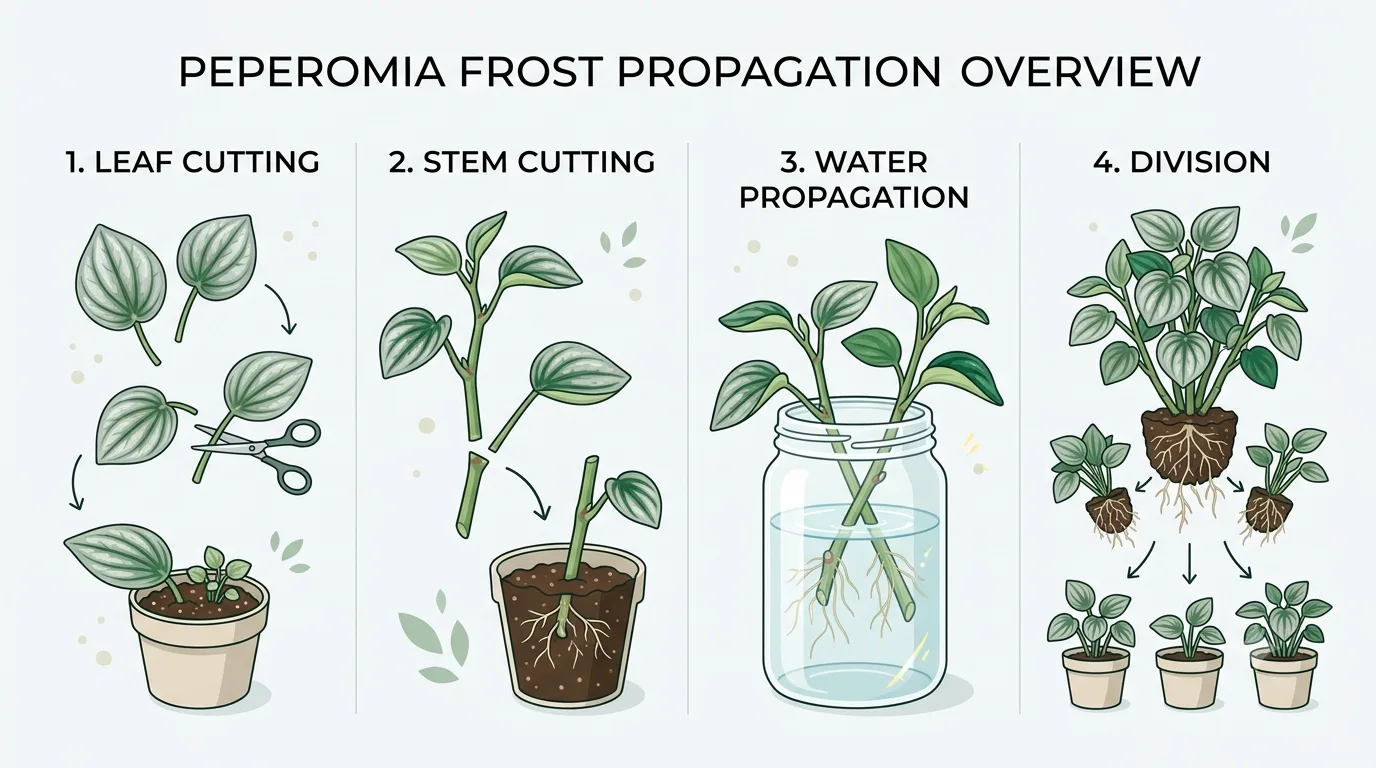
Peperomia Frost can be propagated using several methods. The best option depends on the available materials and the grower’s experience.
Common propagation methods include:
- Leaf propagation: Uses individual leaves to create new plants.
- Stem cutting propagation: Uses sections of stems with nodes for faster rooting.
- Water propagation: Allows roots to develop visibly before planting.
- Division: Separates established plants into multiple sections.
Stem and leaf cuttings are the most common methods for home propagation.
Peperomia Frost Leaf Propagation (Step-by-Step)
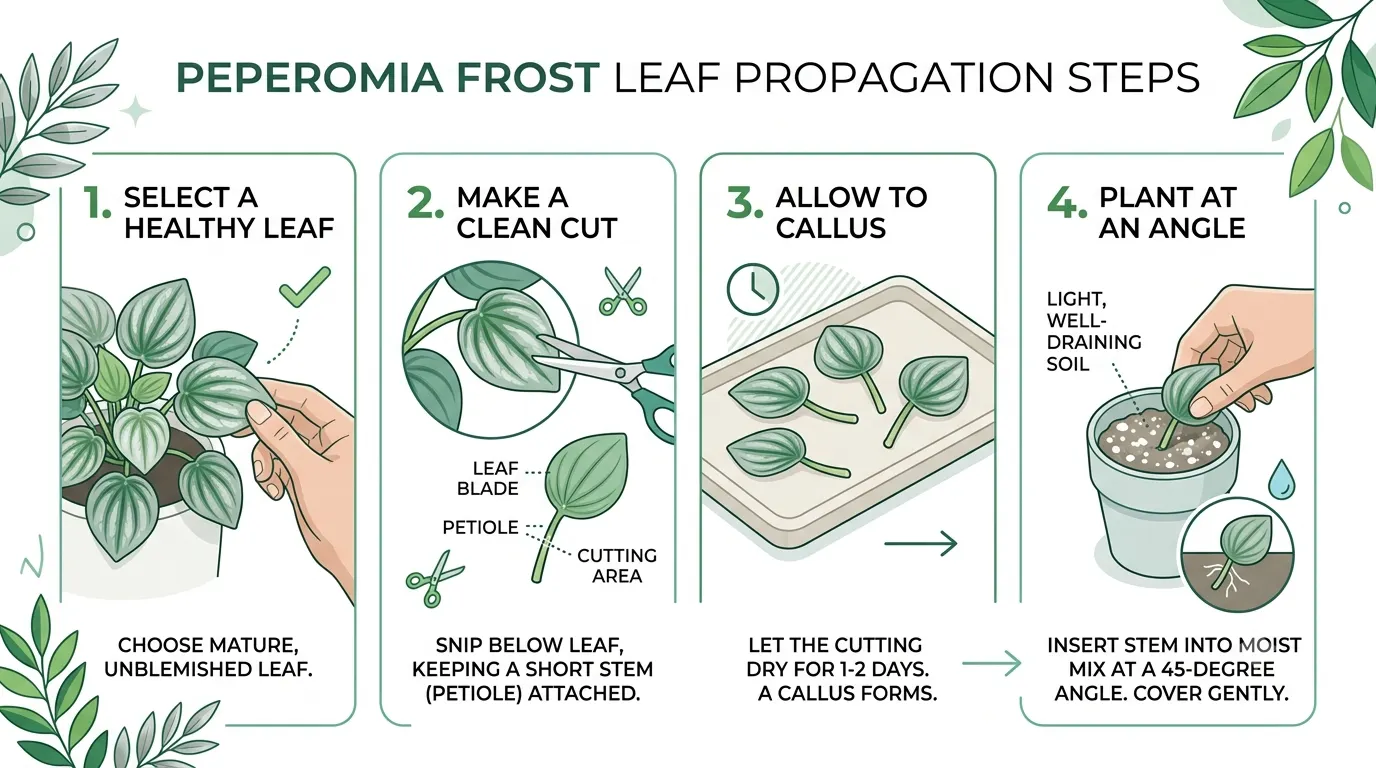
Peperomia Frost leaf propagation works by encouraging new roots and growth from a healthy leaf cutting. This method requires patience because new plants develop gradually.
Steps:
- Select a mature, healthy leaf without damage or disease.
- Cut the leaf using a clean blade and keep part of the petiole attached.
- Allow the cut end to dry and callus for 24–48 hours.
- Place the cutting into lightly moist soil or water at a slight angle.
The same leaf-cutting principles apply to many Peperomia varieties, and understanding the differences between water and soil methods can improve propagation success. Explore our complete guide to Peperomia leaf propagation for additional techniques.
Where to Cut Peperomia for Propagation
For successful Peperomia propagation, cut near the leaf base while keeping the petiole intact. The petiole is the small stem connecting the leaf to the main plant.
For stem cuttings, include at least one node because new roots usually develop from this growth point.
Peperomia Frost Stem Cutting Propagation
Peperomia Frost propagation from stem cuttings is often faster than leaf propagation because the cutting already contains stem tissue and growth points.
Choose a healthy stem with:
- One or more leaves attached
- At least one visible node
- No signs of rot or damage
After cutting, the stem can be rooted in water or directly planted into moist, well-draining soil. Stem cuttings usually establish faster because they contain more stored energy.
Peperomia Frost Propagation in Water
Peperomia water propagation is a popular method because it allows growers to observe root development. Peperomia Frost can grow in water temporarily, but it is usually moved to soil once roots are established.
Steps:
- Use clean, room-temperature water.
- Submerge only the node or cut end.
- Avoid placing leaves underwater.
- Change water every 5–7 days.
- Expect visible roots in approximately 2–4 weeks.
Water propagation is especially useful for beginners because root progress is easy to monitor.
Water vs. Soil Propagation — Which Is Better?
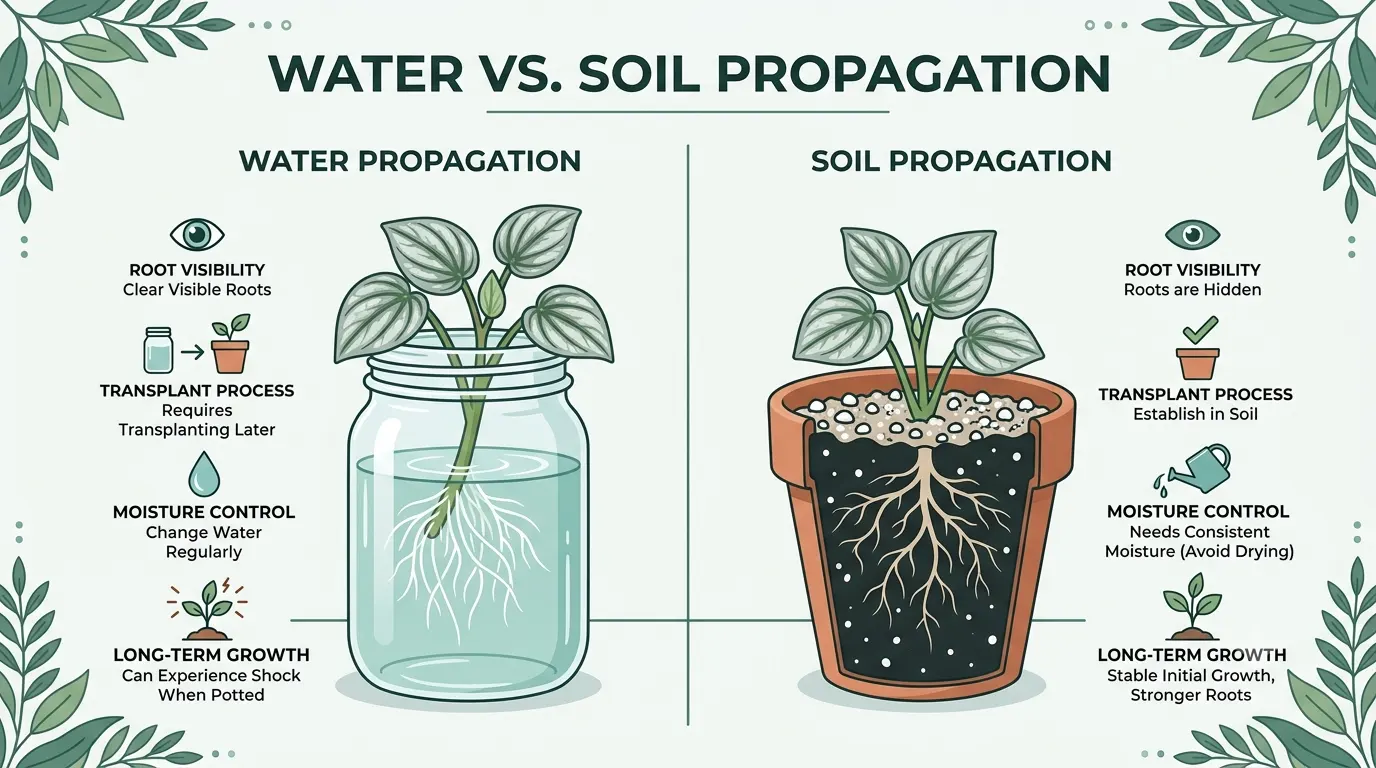
Both methods can successfully propagate Peperomia Frost, but each has advantages.
| Method | Root Visibility | Speed | Transplant Shock Risk | Best For |
| Water Propagation | High | Moderate | Higher after transplanting | Beginners who want to monitor roots |
| Soil Propagation | Low | Often faster root adaptation | Lower | Stronger long-term root growth |
Soil propagation is often preferred for healthier transitions, while water propagation provides easier observation.
Easiest Peperomia Varieties to Propagate
The easiest Peperomia varieties to propagate are generally those with thicker leaves and strong growth habits. Among beginner-friendly varieties, Peperomia obtusifolia is one of the easiest types to multiply because it roots reliably from both stem and leaf cuttings. Learn more in our detailed guide on how to propagate Peperomia obtusifolia.
Beginner-friendly varieties include:
- Peperomia obtusifolia
- Peperomia Frost
- Watermelon Peperomia
- Peperomia Hope
Peperomia obtusifolia is often considered one of the easiest because it roots reliably from stem and leaf cuttings.
How to Propagate Watermelon Peperomia
Watermelon Peperomia propagation follows similar principles to Peperomia Frost propagation. It can be propagated through leaf cuttings or stem cuttings, although stem cuttings are often more reliable.
Watermelon peperomia care after propagation includes:
- Bright indirect light
- Light watering when the soil begins drying
- Loose, well-draining soil
- Avoiding excessive humidity around new cuttings
Watermelon Peperomia Care After Propagation
New Watermelon Peperomia cuttings need stable conditions while developing roots. Avoid overwatering because thick leaves already store moisture.
How to Propagate Peperomia Hope, Raindrop, and Polybotrya (Related Varieties)
Peperomia Hope propagation is commonly done through stem cuttings because its trailing growth produces suitable sections for rooting.
Raindrop peperomia propagation works well with stem cuttings, while Peperomia polybotrya propagation follows similar methods due to its upright growth pattern.
Other related varieties, including Peperomia caperata, generally respond well to leaf and stem propagation techniques.
Best Time of Year to Propagate Peperomia
The best time to propagate Peperomia is during spring and early summer when the plant enters active growth. Warmer temperatures and stronger light encourage faster root development.
Indoor plants can sometimes be propagated year-round if they receive enough warmth and light, but winter propagation is usually slower.
Caring for Newly Propagated Peperomia Frost
Newly propagated Peperomia Frost requires balanced moisture, proper light, and suitable soil conditions. Different Peperomia species share similar preferences for bright indirect light, controlled watering, and well-draining soil. For another example of Peperomia care requirements, see our guide on Peperomia Verticillata care.
Soil Requirements
Peperomia Frost grows best in a well-draining, aerated soil mix. Regular potting soil can work when improved with materials such as perlite or orchid bark to increase drainage.
Pot Size and Root-Bound Preferences
Peperomia Frost prefers slightly root-bound conditions and does not require deep pots. A shallow container with drainage holes is usually better because excess soil can retain too much moisture.
Making Peperomia Bushy
To encourage bushier growth:
- Pinch growing tips regularly.
- Rotate the plant for even light exposure.
- Plant multiple cuttings together for a fuller appearance.
Why Are Peperomia Called Radiator Plants?
Peperomia plants are called radiator plants because they tolerate warm indoor environments and were traditionally grown near heat sources such as radiators. Their compact size and preference for warmth contributed to this nickname.
Peperomia Lifespan and Longevity
A healthy Peperomia plant can live for many years with proper care. Regular pruning, propagation, and refreshing older plants can help maintain vigorous growth over time.
Common Peperomia Problems (Problem-Solution Coverage)
| Problem | Cause | Fix | Prevention |
| Yellowing leaves | Overwatering or poor drainage | Reduce watering and improve soil drainage | Allow soil to partially dry |
| Root rot | Excess moisture | Remove damaged roots and repot | Use well-draining soil |
| Slow propagation growth | Low light or poor timing | Move to brighter indirect light | Propagate during active growth |
| Leggy growth | Insufficient light | Increase light exposure | Provide consistent indirect light |
Is Propagating Peperomia Hard? Common Beginner Mistakes
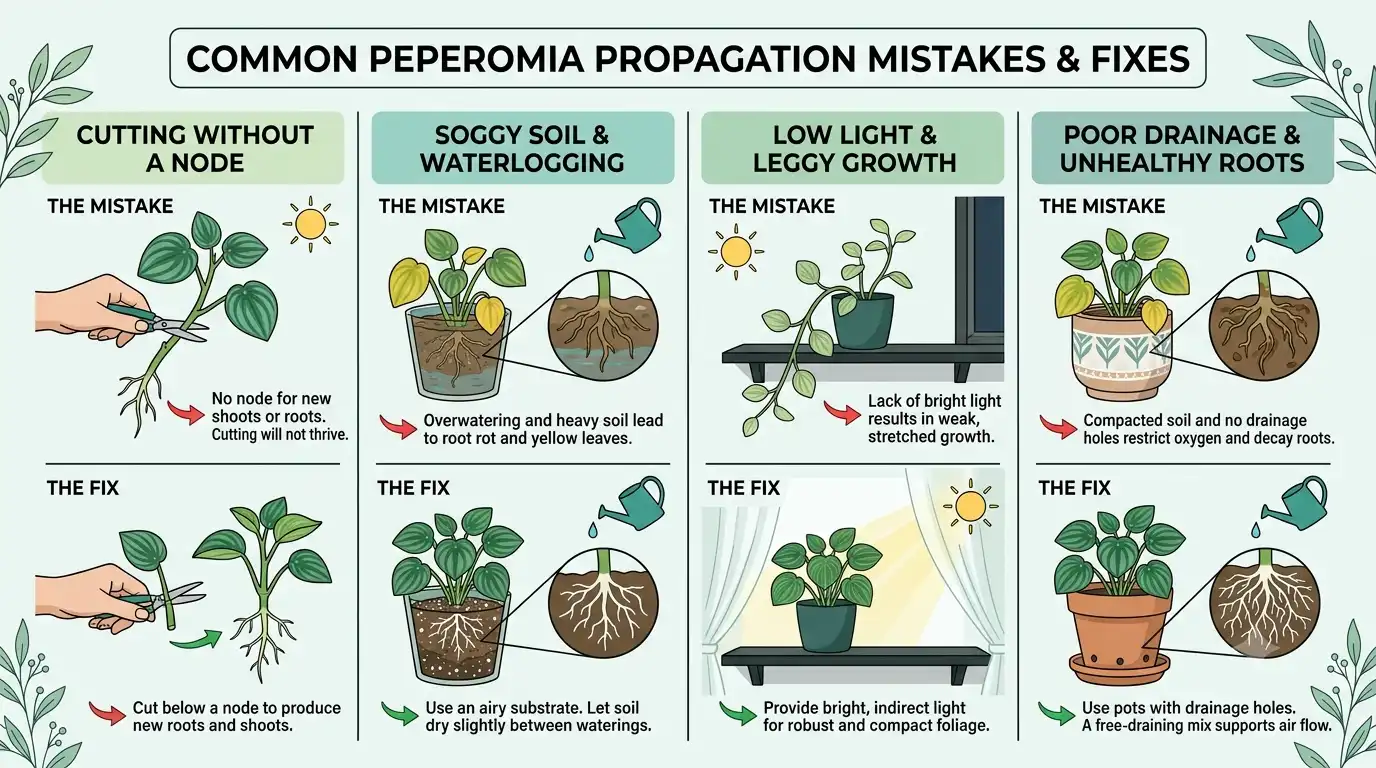
Propagating Peperomia is generally easy, but beginners often make mistakes that reduce success rates.
Common problems include:
- Cutting without a node
- Keeping cuttings constantly wet
- Propagating during slow winter growth
- Providing insufficient light during rooting
Healthy cuttings, proper moisture, and patience usually lead to successful propagation.
Conclusion
Peperomia Frost propagation is a straightforward process using leaf cuttings, stem cuttings, water propagation, or division. The most reliable approach depends on personal preference, but healthy cuttings, spring propagation, and proper moisture control provide the best results. Choosing between water and soil propagation allows growers to match the method to their experience level while creating new Peperomia Frost plants successfully.
Frequently Asked Questions
Is it better to propagate peperomia in water or soil?
Soil propagation is often better for long-term root development, while water propagation is useful for beginners because roots are easier to observe.
Can you propagate peperomia from cuttings?
Yes, Peperomia can be propagated from stem cuttings and leaf cuttings. Stem cuttings with nodes usually root more quickly.
What kind of peperomia is easiest to propagate?
Peperomia obtusifolia is considered one of the easiest varieties to propagate, followed by Peperomia Frost and Watermelon Peperomia.
Do peperomia frosts like to be root bound?
Yes, Peperomia Frost generally prefers slightly root-bound conditions and grows well in smaller pots with good drainage.
Is Peperomia a succulent?
Peperomia is not a true succulent but many varieties are semi-succulent because their leaves store water.
Why are Peperomia called radiator plants?
Peperomia plants are called radiator plants because they tolerate warm indoor conditions and were commonly placed near heat sources.
What's the best time of year to propagate Peperomia?
Spring through early summer is the best time because Peperomia plants are actively growing and root more easily.