
Introduction
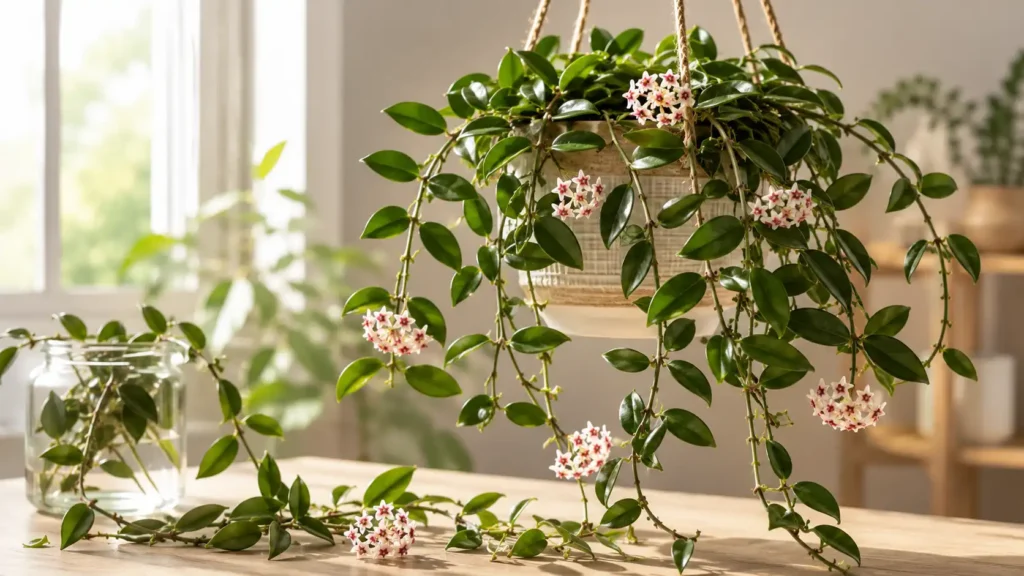
Hoya bella propagation is the process of creating new Hoya bella plants from healthy parts of an existing plant, usually through stem cuttings. Hoya bella, also known as Hoya lanceolata bella, is a compact trailing vine in the Hoya or wax plant family (Apocynaceae) with succulent-like leaves and hanging growth. Successful propagation depends on choosing a stem section with a node, providing suitable rooting conditions, and maintaining proper care after roots develop. This guide explains how to propagate Hoya bella using water, soil, and perlite methods while covering timing, cutting techniques, and long-term care requirements. Understanding propagation techniques is an important part of successful houseplant care, especially when learning how different plants grow, adapt, and respond to their environment.
Quick Summary
- Hoya bella is most successfully propagated from stem cuttings containing at least one node, rather than a single leaf.
- Water propagation usually develops visible roots within 2–4 weeks under warm, bright indirect light conditions.
- Soil and perlite methods can reduce transplant shock by allowing roots to develop in a permanent growing medium.
- Proper light, drainage, humidity, and watering habits improve rooting success and future plant growth.
What Is Hoya Bella?
Hoya Bella vs. Hoya lanceolata bella: Plant Identity and Growth Habit
Hoya bella is a small, trailing species of Hoya commonly grown as a hanging plant because of its cascading stems and compact foliage. The plant is also botanically referred to as Hoya lanceolata bella, a synonym used in horticultural references. It belongs to the Apocynaceae family and is closely related to other popular wax plants known for their thick leaves and star-shaped flowers. The broader Hoya genus includes hundreds of tropical species with diverse growth forms and flowering characteristics.
The name “propagation” refers to the process of creating a new plant from a parent plant. For Hoya bella, this usually involves taking a healthy stem cutting containing a node, where new roots and shoots can develop.
Key characteristics of Hoya bella include:
- Trailing or hanging growth habit
- Small, thick, succulent-like green leaves
- Ability to grow in containers, hanging baskets, or small supports
- Attractive clusters of fragrant, star-shaped flowers when mature
Because Hoya bella naturally produces long trailing stems, it is well suited for propagation through stem cuttings. The nodes along these stems contain the growth points needed for root development and future leaf production.
How to Propagate Hoya Bella (Step-by-Step)
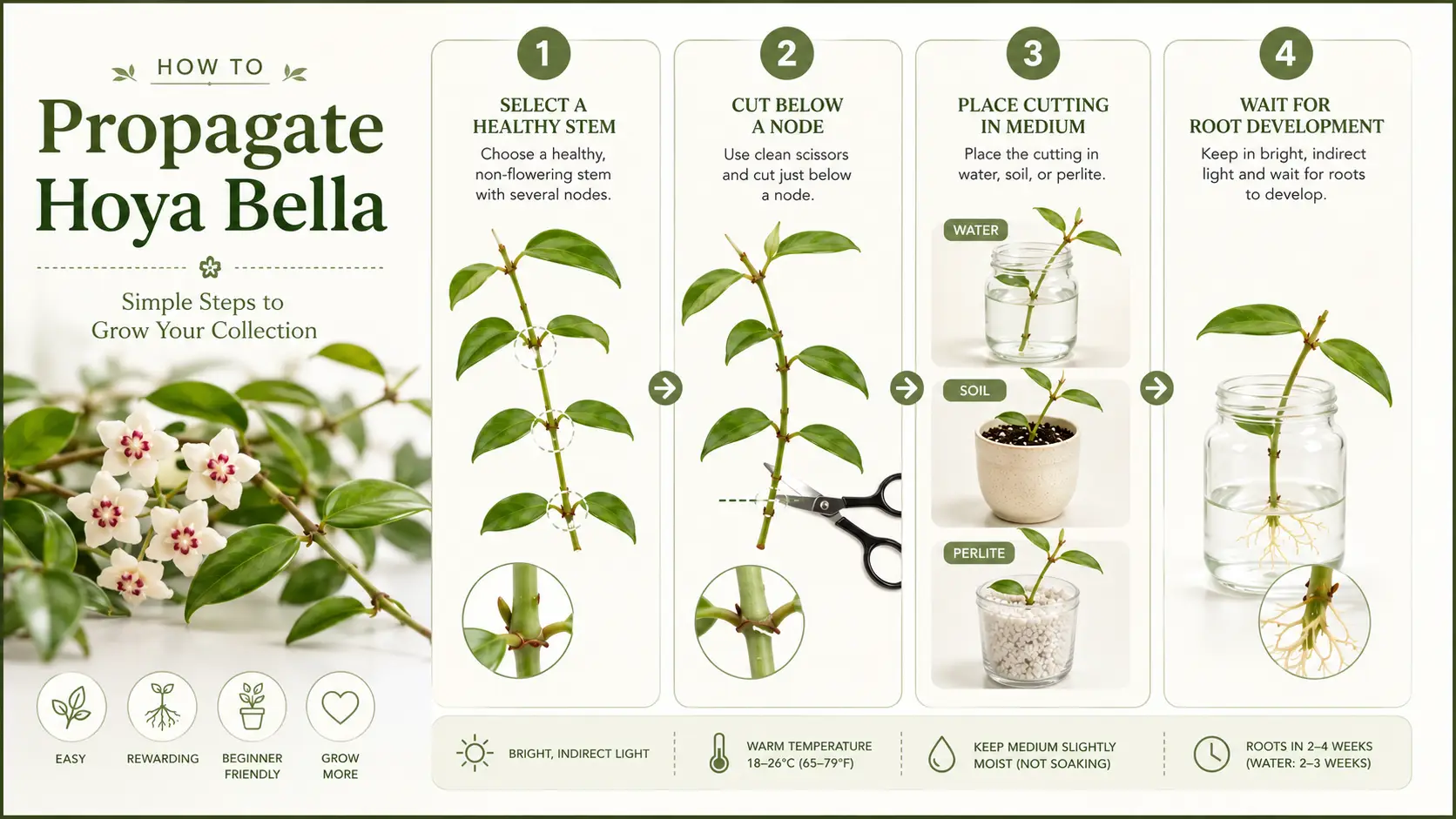
How to Propagate Hoya Bella Using Stem Cuttings
The most reliable way to propagate Hoya bella is by using a healthy stem cutting that contains at least one node. A node is the point on the stem where leaves, roots, or new growth can emerge. Understanding plant nodes is essential for successful propagation because many houseplants, including Monstera species, rely on nodes as the starting point for new root and shoot development.
To propagate hoya bella successfully:
- Select a healthy stem with active growth.
- Choose a cutting with one or two nodes.
- Remove lower leaves if they would sit below the rooting medium.
- Place the cutting in water, soil, or perlite.
- Provide warmth, bright indirect light, and consistent moisture.
- Wait for roots to develop before adjusting the plant to long-term care conditions.
Stem propagation works because Hoya nodes contain meristematic tissue capable of producing new roots and shoots. Without a node, the cutting usually cannot create a complete plant.
Where to Cut Hoya for Propagation
The best place to cut Hoya for propagation is just below a healthy node because the node contains the growth point needed for rooting. A cutting measuring about 2–4 inches is generally suitable and should include at least one or two nodes with a healthy leaf pair.
Important cutting guidelines include:
- Cut ¼–½ inch below a node to preserve the rooting area.
- Choose stems with firm, healthy growth rather than soft or damaged sections.
- Keep at least one leaf pair attached to support energy production.
- Avoid using old, woody stems that root more slowly.
Tools needed:
- Clean pruning shears or scissors
- Rubbing alcohol for sterilizing tools
- Clean propagation container
- Water, soil, or perlite depending on the chosen method
Proper preparation helps reduce bacterial contamination and improves rooting success.
Cutting details:
- Node: The section where leaves attach and where new roots can develop.
- Internode: The stem section between two nodes; it does not contain the same rooting potential.
- Cutting angle: A slightly angled cut can increase the surface area available for water absorption.
- Sterilized tools: Clean shears help prevent infections from entering the fresh cut.
Can You Propagate Hoya From Just a Leaf?
A Hoya leaf alone usually cannot produce a complete new plant because it lacks the stem node required for new growth. Some other succulent-leaved houseplants, such as Peperomia obtusifolia, can also be propagated through leaf or stem methods depending on the species and growth structure. While a leaf may develop roots in some situations, it typically will not create new stems or leaves without a node.
This is especially important with Hoya kerrii leaf propagation. A single heart-shaped leaf may remain alive for years but often does not become a full plant if no node is attached.
For successful propagation:
- Use a stem cutting containing a node.
- Avoid relying only on detached leaves.
- Choose healthy leaves attached to active stem sections.
The same principle applies to most Hoya varieties, including Hoya bella. A node provides the genetic growth point needed for producing a complete plant.
Hoya Bella Propagation Methods: Water, Soil, and Perlite
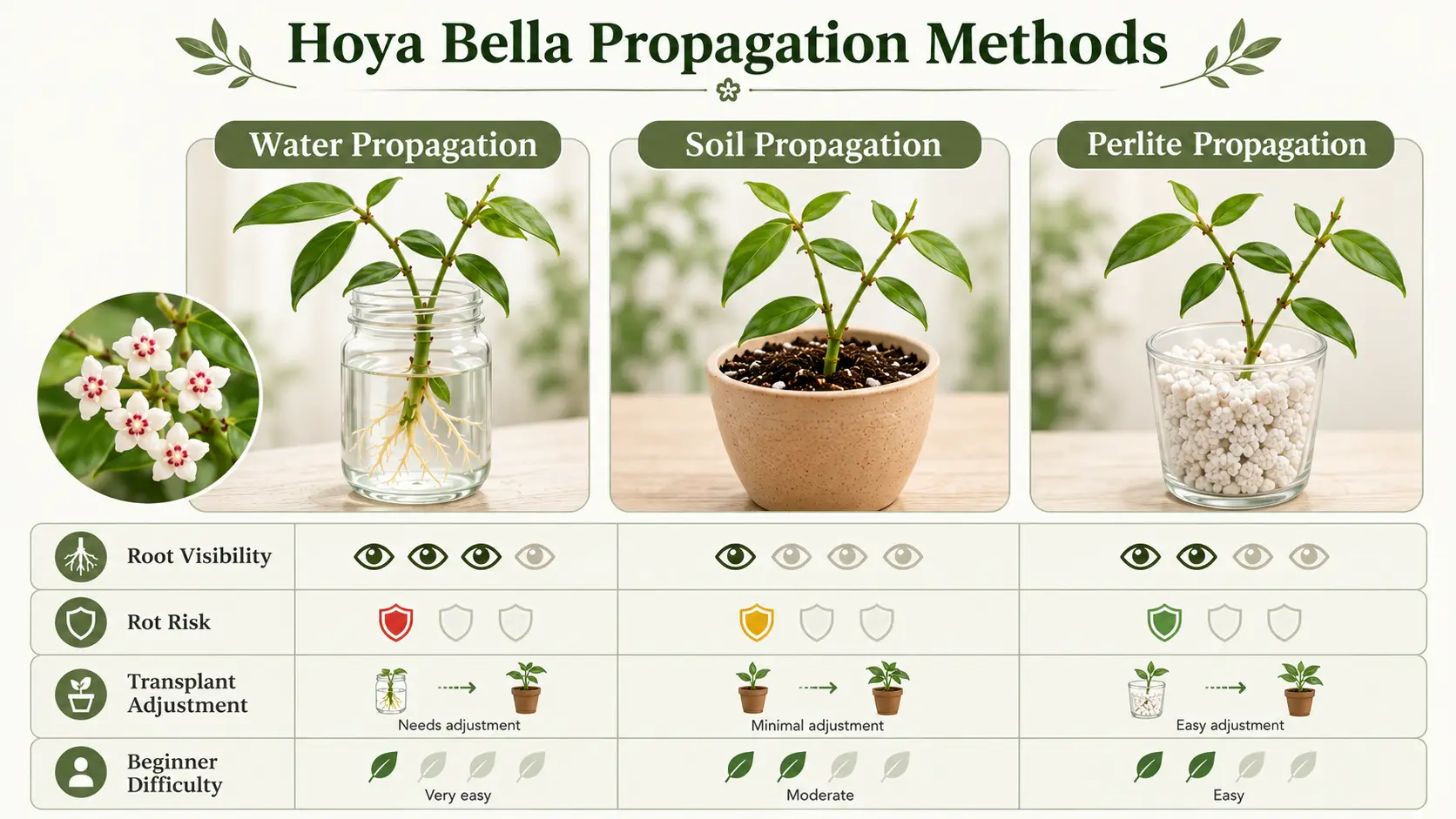
Hoya bella can be propagated using water, soil, or perlite. The best method depends on the grower’s preference, environment, and ability to maintain suitable moisture levels.
For beginners, water propagation is often easier to monitor because root development is visible. Similar water and soil propagation techniques are also commonly used for other trailing houseplants, such as Heartleaf Philodendron, which can develop roots from healthy stem cuttings. Soil and perlite propagation can be beneficial because roots develop directly in a growing medium and may experience less adjustment after planting.
Water Propagation
Hoya bella propagation in water is one of the most popular methods because it allows growers to observe root formation. A healthy stem cutting is placed in clean water with the node submerged while keeping the leaves above the water line.
Steps for propagating Hoya in water:
- Fill a clean container with room-temperature water.
- Place the cutting so the node is underwater.
- Keep leaves above the water surface.
- Position the container in bright indirect light.
- Replace the water regularly to maintain freshness.
Most Hoya cuttings develop visible roots within 2–4 weeks, although some may take longer depending on temperature, light, and plant health.
Benefits of water propagation:
- Easy monitoring of root development
- Simple setup for beginners
- Allows quick identification of unhealthy cuttings
Potential drawbacks:
- Water-grown roots may need adjustment when moved to soil.
- Poor water hygiene can increase the risk of rot.
Hoya cuttings prefer warm conditions, and rooting is usually faster during active growing seasons such as spring and summer.
Soil and Perlite Propagation
Soil and perlite propagation are useful alternatives when growers want roots to develop directly in a permanent medium. These methods can reduce transplant shock because the new roots are already adapted to their growing environment.
A suitable propagation mix should provide:
- Good drainage
- Air circulation around roots
- Moderate moisture retention
Perlite is often used because it improves aeration and prevents excess moisture around developing roots.
Advantages of soil and perlite propagation:
- Lower risk of water-related root problems
- Roots develop in a natural growing environment
- Less adjustment after rooting
Humidity can improve success rates, especially for fresh cuttings. However, excessive moisture should be avoided because Hoya stems are vulnerable to rot when kept constantly wet.
A rooting hormone may be used but is not required. Healthy Hoya bella cuttings can root successfully without additional products when conditions are suitable.
Water vs. Soil vs. Perlite Propagation
Different propagation methods provide different advantages depending on the grower’s experience and environmental conditions. Water propagation is easier to monitor, while soil and perlite methods allow roots to develop directly in a growing medium.
| Feature | Water Propagation | Soil Propagation | Perlite Propagation |
| Root visibility | High; roots can be seen developing | Low; roots remain hidden | Moderate; roots may be easier to inspect |
| Rot risk | Higher if water becomes stagnant | Moderate if soil stays too wet | Lower due to improved airflow |
| Transplant shock | Possible when moving roots to soil | Minimal because roots develop in soil | Minimal after rooting |
| Rooting speed | Usually 2–4 weeks | Usually 3–6 weeks | Usually 3–6 weeks |
| Beginner difficulty | Easy | Moderate | Moderate |
Hoya Bella Plant Care After Propagation
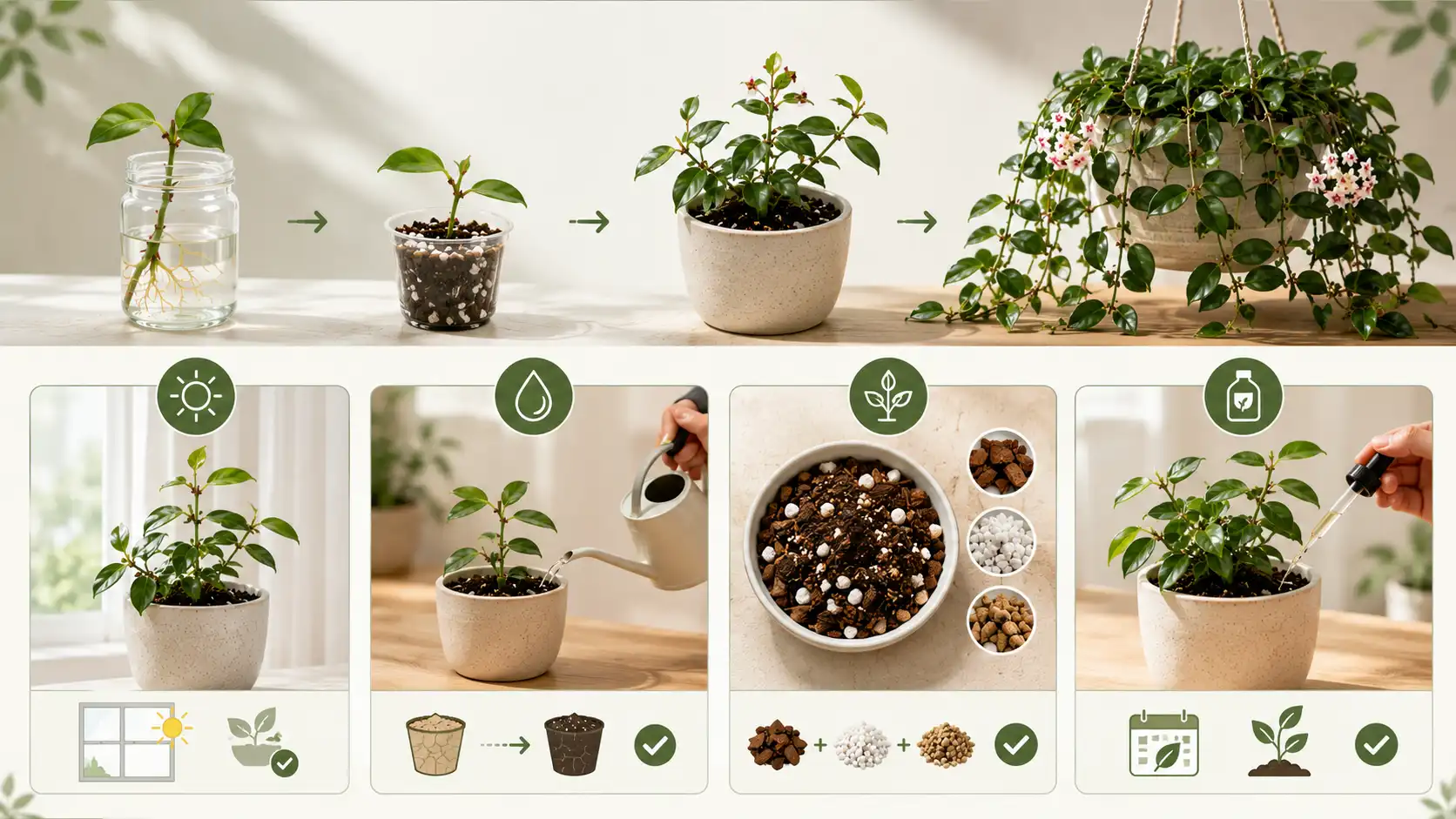
Light, Water, and Soil Requirements
Hoya bella care after propagation focuses on maintaining conditions that support healthy roots, steady leaf growth, and future flowering. Hoya bella is generally considered an easy-to-grow plant when provided with bright indirect light, proper drainage, and controlled watering.
Light requirements:
- Bright indirect light is ideal for consistent growth.
- Several hours of filtered sunlight can encourage stronger growth and flowering.
- Direct harsh afternoon sun may scorch leaves, especially indoors near uncovered windows.
Watering requirements:
- Allow the top layer of soil to dry before watering again.
- Avoid keeping the roots constantly wet because Hoyas store moisture in their leaves and are sensitive to overwatering.
- Reduce watering during cooler months when growth slows.
A suitable Hoya bella soil mix should be loose and well-draining. Because Hoyas naturally grow as epiphytes in environments where roots receive airflow, dense garden soil is usually unsuitable.
A recommended potting mix may include:
- 40–50% quality indoor potting mix
- 25–30% orchid bark for airflow
- 20–30% perlite or pumice for drainage
Good drainage is especially important for newly propagated plants because young roots are more vulnerable to excessive moisture.
Fertilizer and Potting Considerations
Hoya bella benefits from light, consistent feeding during active growth periods. A diluted balanced fertilizer can support healthy foliage and flowering without causing fertilizer buildup.
General fertilizer guidance:
- Use a balanced fertilizer diluted according to label instructions.
- Apply during spring and summer when the plant is actively growing.
- Reduce or stop fertilizing during winter dormancy.
Many growers ask whether Miracle-Gro is good for Hoyas. A diluted balanced fertilizer product can be suitable for Hoyas, but the specific brand is less important than using the correct concentration and avoiding overfertilization.
Potting considerations:
Hoyas generally prefer shallow, snug pots rather than oversized containers. Their root systems are adapted to tighter spaces, and excessive unused soil can remain wet for too long.
Key care points:
- Use pots with drainage holes.
- Repot only when roots become crowded or the growing medium breaks down.
- Avoid moving newly rooted cuttings into very large containers.
Watering and feeding schedule:
- Water when the upper soil layer feels dry.
- Fertilize every 4–6 weeks during active growth if needed.
- Use a chunky, airy soil mix to prevent root problems.
Does Hoya Bella Like to Climb or Hang?
Hoya bella naturally prefers to hang because it produces flexible trailing stems that cascade from containers. However, it can also be trained to climb a small trellis or support structure if desired.
A hanging growth style allows:
- Stems to naturally cascade downward
- Better display of flowers and foliage
- Easy observation of new growth
A climbing setup can provide:
- More upright growth
- Support for longer stems
- A different decorative appearance
For propagated cuttings, growth direction can be guided early by placing stems around a small support or allowing them to trail naturally. Both methods are suitable because Hoya bella is adaptable in its growth habit.
Hoya Bella Growth Rate and Mature Size
Plant Size
Hoya bella is a compact Hoya variety that typically develops a trailing length of around 12–24 inches indoors, although size varies depending on growing conditions.
Typical size characteristics:
| Growing Condition | Expected Size |
| Indoor container plant | Usually 12–24 inches trailing length |
| Hanging basket | Can spread wider as stems cascade |
| Outdoor warm climate | May grow larger with longer trailing stems |
Factors affecting Hoya bella size include:
- Light intensity
- Pot size
- Humidity
- Fertilization
- Temperature stability
Indoor plants often remain smaller because they receive less space and slower growth conditions compared with plants grown outdoors in suitable climates.
Growth Rate
Hoya bella is considered a moderate grower under favorable conditions. New growth is usually strongest during spring and summer when temperatures and daylight levels increase.
Seasonal growth pattern:
- Spring and summer: Active growth period with new stems and leaves.
- Fall: Growth may gradually slow.
- Winter: Growth often decreases due to lower light and cooler temperatures.
Factors that improve growth speed include:
- Bright indirect light
- Warm temperatures
- Proper watering
- Balanced nutrition
- Healthy root systems
Newly propagated plants may grow slowly at first because energy is focused on root development before producing significant new foliage.
How to Get Hoya Bella to Flower
Hoya bella flowers when the plant reaches maturity and receives suitable environmental conditions. Flowering depends on plant age, light exposure, root health, and consistent care.
To encourage Hoya bella flowers:
- Provide bright indirect light.
- Avoid frequent changes in location.
- Keep the plant slightly root-bound.
- Maintain consistent watering practices.
- Avoid removing old flower spurs or peduncles.
Hoyas often flower from specialized structures called peduncles. Different Hoya species have unique flowering habits, and understanding their bloom cycles can help growers provide better long-term care. Once a peduncle produces flowers, it can continue producing future blooms, so removing it may reduce future flowering.
Bloom Timeline and Duration
A Hoya bella grown from a cutting may take around 2–3 or more years to reach flowering maturity, although timing varies depending on growing conditions and plant health.
Flowering details:
- Young propagated plants usually need time to establish roots and mature.
- Individual flower clusters may last several days to about one week.
- Mature plants can rebloom from the same peduncle.
Patience is important because encouraging excessive growth through heavy fertilization does not necessarily speed up flowering.
Does Hoya Bella Like to Be Misted?
Hoya bella prefers moderate to higher humidity, but regular misting is not always the best way to provide moisture. Frequent leaf misting can increase the risk of fungal problems, especially in areas with poor airflow.
Better humidity methods include:
- Using a humidifier nearby
- Placing plants together to increase local humidity
- Using a pebble tray with water beneath the pot
Misting occasionally may not harm the plant, but it should not replace proper watering or environmental control.
Common Hoya Bella Problems and How to Fix Them
Leaves Turning Yellow
Yellow leaves are commonly caused by overwatering, poor drainage, or nutrient imbalance.
Possible causes:
- Soil staying wet too long
- Insufficient root oxygen
- Excess fertilizer buildup
Solutions:
- Allow soil to dry more between watering.
- Improve drainage with a lighter potting mix.
- Check roots for damage if yellowing continues.
Overwatering and Root Rot
Overwatering is one of the most common Hoya bella problems because the plant stores moisture in its leaves and does not require constantly wet soil.
Signs of root rot:
- Soft or dark roots
- Yellowing leaves
- Wilting despite wet soil
- Unpleasant soil odor
Fix:
- Remove damaged roots.
- Allow healthy roots to dry slightly.
- Repot into fresh, well-draining media.
Prevention:
- Use drainage holes.
- Avoid oversized pots.
- Water only when needed.
Pest Infestations
Common Hoya pests include mealybugs and aphids. These insects feed on plant tissue and may weaken growth.
Identification:
- White cotton-like clusters may indicate mealybugs.
- Small insects around new growth may indicate aphids.
Treatment:
- Remove visible pests manually.
- Clean leaves carefully.
- Monitor regularly to prevent reinfestation.
Slow Growth or Failure to Root
Slow rooting or weak growth usually results from unsuitable propagation conditions.
Common causes:
- Insufficient light
- Low temperatures
- Cutting without a healthy node
- Excess moisture
Solutions:
- Move cuttings to brighter indirect light.
- Maintain warm conditions.
- Check that nodes are correctly positioned.
Beginner Mistakes in Hoya Bella Propagation
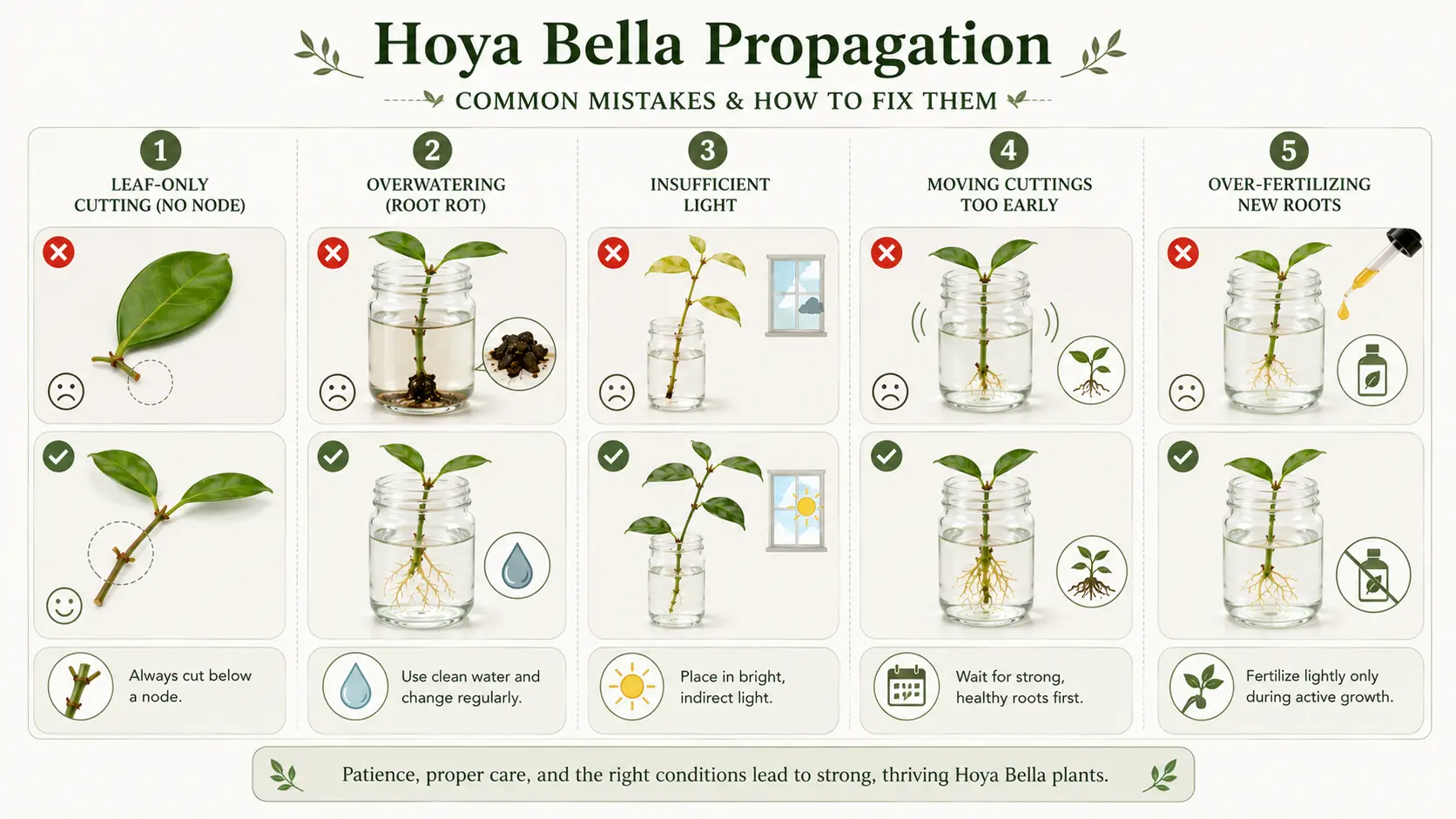
Common propagation mistakes can prevent Hoya bella cuttings from producing healthy new plants.
Top mistakes and solutions:
- Using leaf-only cuttings: Use stem cuttings with nodes because leaves alone rarely create complete plants.
- Changing water too frequently: Replace water when needed but avoid unnecessary disturbance of developing roots.
- Providing insufficient light: Keep cuttings in bright indirect light to support rooting.
- Moving cuttings too early: Wait until roots are established before transplanting.
- Over-fertilizing new roots: Newly rooted cuttings need time before regular feeding begins.
Most Sought-After Hoya Varieties
Hoyas are popular among plant collectors because of their diverse leaf shapes, growth habits, and flowers. Other well-known Hoya varieties, such as Hoya compacta variegata, are also valued for their unique foliage and similar indoor growing requirements.
Some widely recognized varieties include:
- Hoya kerrii: Known for its heart-shaped leaves and unique appearance.
- Hoya carnosa ‘Compacta’: A twisted-leaf form valued for its unusual foliage.
- Variegated Hoya varieties: Popular for their patterned leaves and decorative appearance.
Although these varieties differ in appearance, most Hoyas share similar propagation principles, with stem cuttings containing nodes being the most reliable method.
Conclusion
Hoya bella propagation is most successful when using healthy stem cuttings with at least one node and providing suitable rooting conditions. Water, soil, and perlite methods can all work effectively, with each offering different advantages depending on the grower’s experience. After rooting, proper Hoya bella care through bright indirect light, well-draining soil, careful watering, and balanced feeding supports long-term growth and flowering. Understanding node placement, avoiding common propagation mistakes, and maintaining stable conditions are the key steps for creating healthy new Hoya bella plants.
FAQs
Is it better to propagate Hoya in water or soil?
Both water and soil propagation methods can work well for Hoyas. Water propagation is easier to monitor because root growth is visible, while soil propagation can reduce transplant shock because roots develop directly in their permanent growing medium.
Is Hoya bella easy to grow?
Yes, Hoya bella is considered relatively easy to grow when provided with bright indirect light, well-draining soil, moderate watering, and warm temperatures. It is suitable for beginners because it tolerates indoor conditions well.
What are common Hoya bella problems?
Common Hoya bella problems include yellow leaves from overwatering, root rot from poor drainage, pest infestations such as mealybugs and aphids, and slow growth caused by insufficient light or unsuitable propagation conditions.
Can you propagate a Hoya from just a leaf?
A Hoya can sometimes root from a leaf, but a leaf without a node usually cannot produce a complete new plant. Stem cuttings containing nodes are the most reliable method for successful propagation.
How long does it take for Hoya cuttings to root in water?
Hoya cuttings usually develop roots in water within 2–4 weeks, although some varieties may take longer depending on temperature, light, and cutting health.
How many years does it take for a Hoya to flower?
A Hoya grown from a cutting commonly takes around 2–3 or more years to flower, depending on maturity, growing conditions, light exposure, and overall plant health.