
Introduction
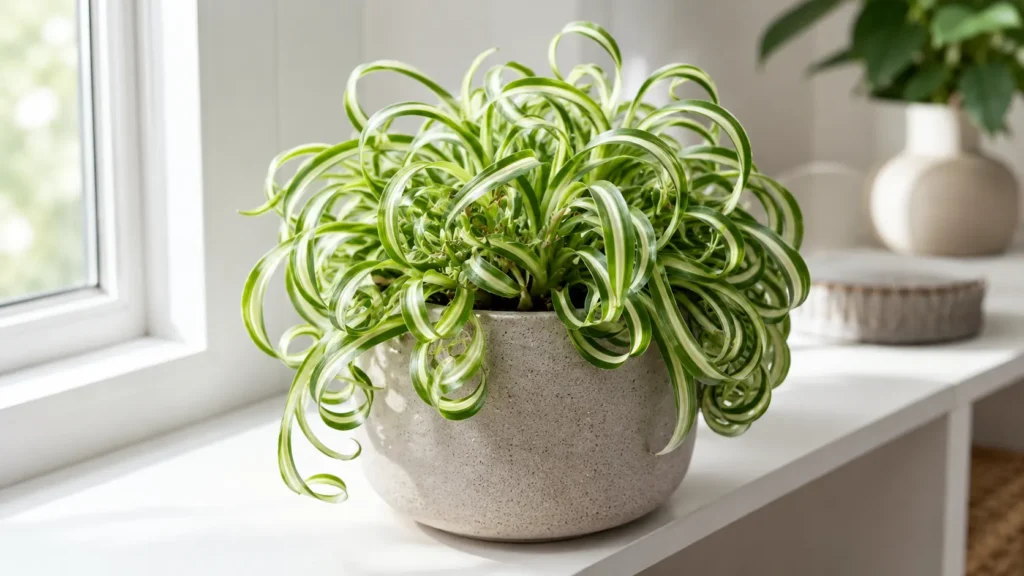
The Bonnie Curly Spider Plant (Chlorophytum comosum ‘Bonnie’) is a compact, curly-leafed cultivar of the classic spider plant known for its twisted green-and-cream foliage and easy-care nature. Unlike the standard spider plant, Bonnie develops shorter, arching leaves with a naturally curled appearance, making it popular for small indoor spaces. This article explains how to identify the Bonnie spider plant, how to care for it, how it differs from traditional spider plant varieties, and what conditions help maintain its unique curl. It also covers propagation, common problems, pet safety, and the benefits of growing this low-maintenance houseplant.
Quick Summary
- The Bonnie Curly Spider Plant is a compact cultivar of Chlorophytum comosum with curled, ribbon-like leaves.
- It requires similar care to standard spider plants but remains smaller and more compact.
- The plant is considered non-toxic to cats and dogs and is easy to propagate through spiderettes.
- Bright, indirect light helps maintain stronger leaf curl, while low light may loosen the curl.
- Consistent watering, suitable soil, and proper maintenance support healthy growth.
What Is a Bonnie Curly Spider Plant?
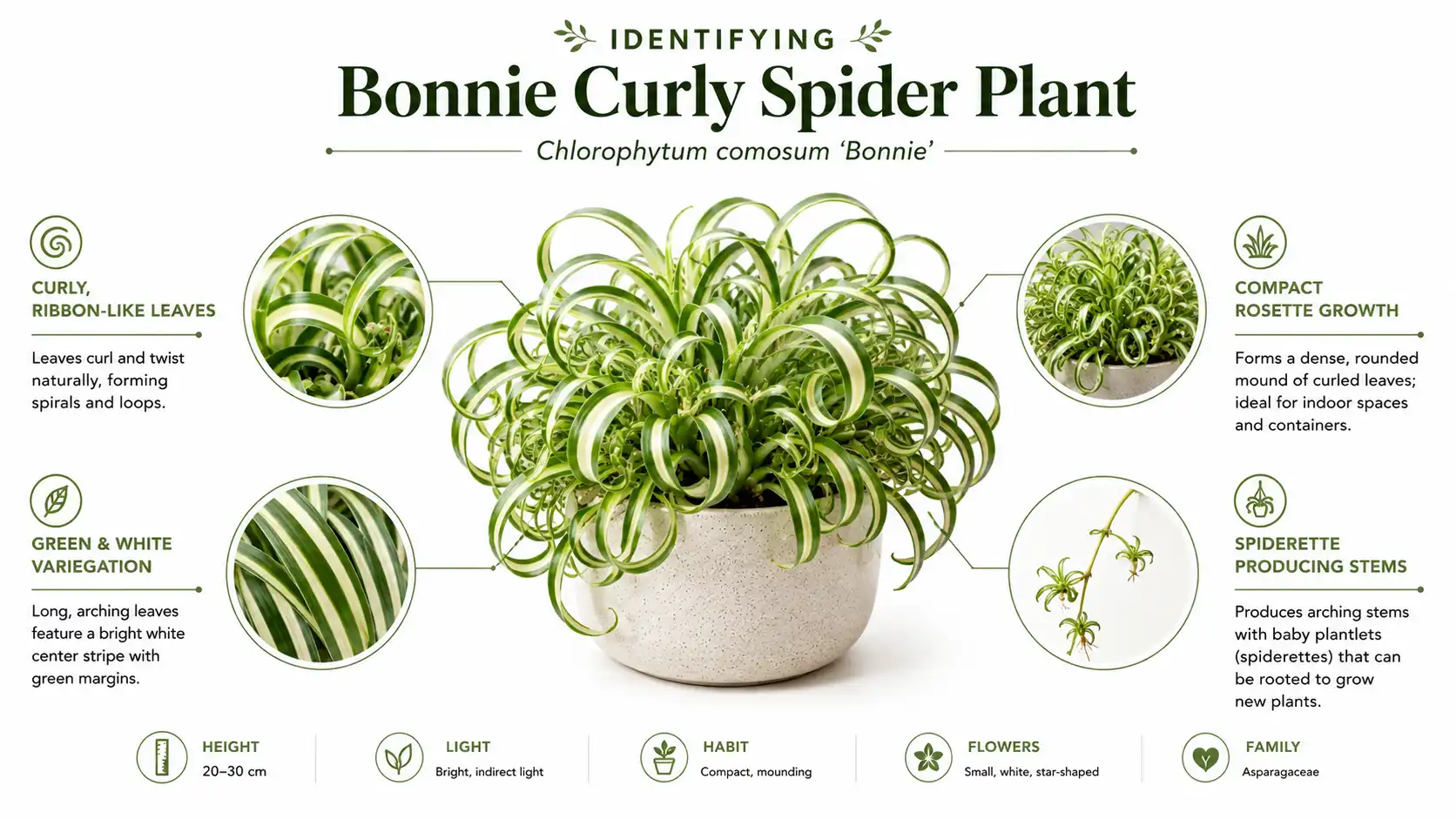
Botanical identity and characteristics of Chlorophytum comosum ‘Bonnie’
The Bonnie Curly Spider Plant is a cultivated variety of Chlorophytum comosum, a perennial herbaceous plant in the Asparagaceae family. It is commonly known as the curly spider plant, curly chlorophytum, or Bonnie spider plant.
The defining feature of Chlorophytum comosum ‘Bonnie’ is its curled, spiraling foliage. While the standard spider plant produces long, narrow leaves that arch outward, Bonnie develops shorter leaves with a naturally twisted shape. Many plants also display creamy white stripes along the center or edges of the leaves, depending on the cultivar characteristics.
The curl is caused by the plant’s genetics rather than a health issue. Proper lighting, stable growing conditions, and maturity influence how strongly the leaves express this curled form.
Key identifying features of the Bonnie spider plant
A Bonnie Curly Spider Plant can typically be identified by:
- Compact growth compared with standard spider plants
- Curled or wavy strap-like leaves
- Green foliage with white variegation patterns
- Arching growth habit from a central rosette
- Ability to produce long stems with small plantlets called spiderettes
The terms chlorophytum bonnie, chlorophytum comosum bonnie, and bonnie spider plant all refer to this same cultivated form of the spider plant species.
How It Differs From a Standard Spider Plant
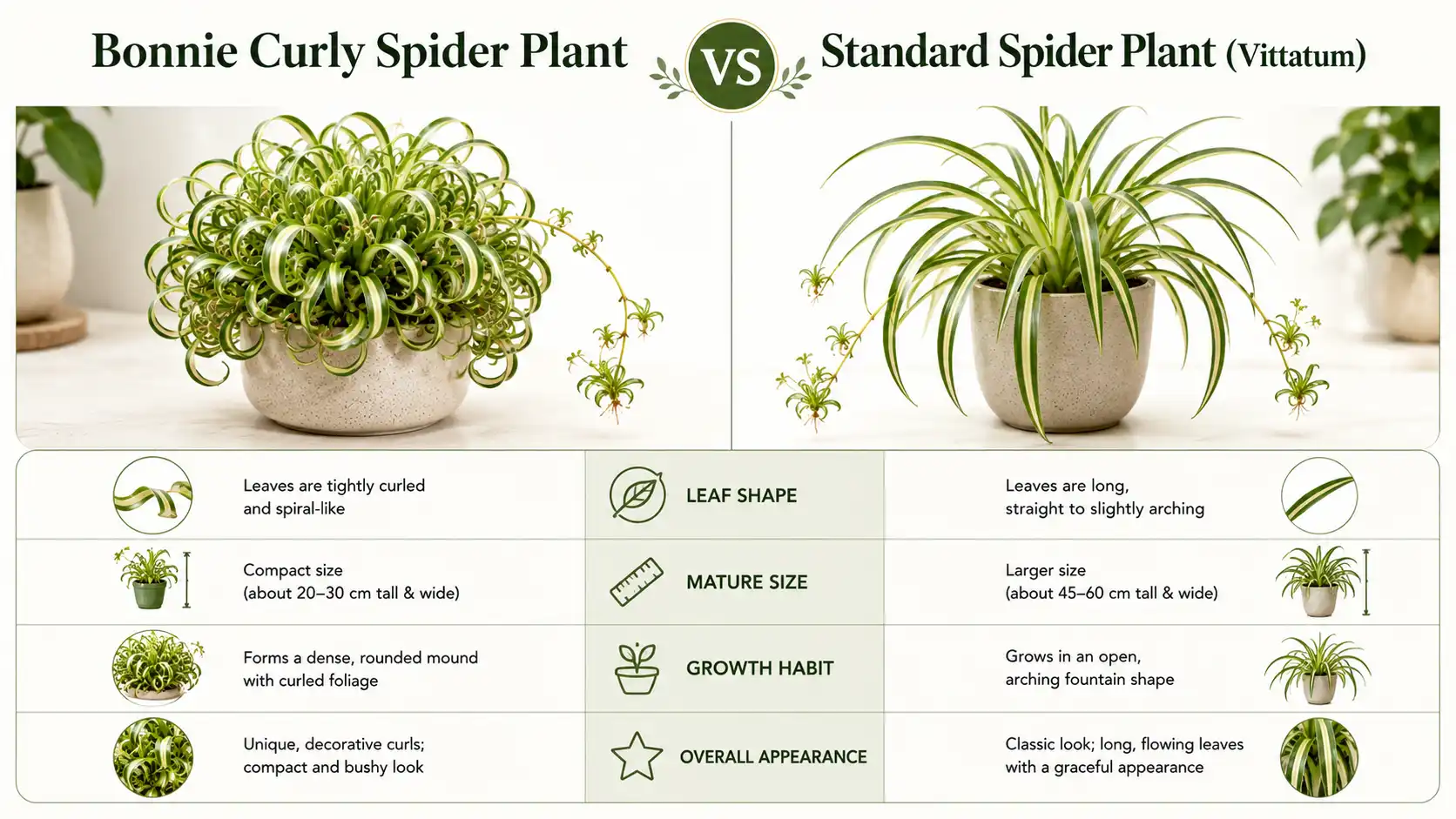
Curly spider plant vs spider plant differences
The main difference between a curly spider plant and a standard spider plant is the leaf structure and overall growth habit. Both belong to the same species, Chlorophytum comosum, and require similar care, but Bonnie has a more compact appearance.
The standard spider plant, often represented by cultivars such as Chlorophytum comosum ‘Vittatum’, usually produces longer, straighter leaves that spread widely. Bonnie produces shorter leaves that twist and curl, creating a fuller appearance in smaller containers.
Bonnie Curly Spider Plant vs. Standard Spider Plant Comparison
| Feature | Bonnie Curly Spider Plant | Standard Spider Plant (Vittatum) |
| Scientific name | Chlorophytum comosum ‘Bonnie’ | Chlorophytum comosum ‘Vittatum’ |
| Leaf shape | Curled, twisted, ribbon-like leaves | Long, straight, arching leaves |
| Mature size | More compact and bushy | Larger spreading growth habit |
| Growth pattern | Dense rosette with curled foliage | Wider arching leaves and runners |
| Light needs | Bright indirect light preferred; tolerates low light | Bright indirect light preferred; tolerates low light |
| Appearance | Decorative curly texture | Classic spider plant look |
Both varieties share similar care requirements, including well-draining soil, moderate watering, and indirect light. The main distinction is visual: Bonnie offers a more compact form, while standard spider plants create a longer cascading appearance.
Is the Curly Spider Plant Rare?
Availability and cultivar popularity
The Curly Spider Plant is not considered a truly rare plant, but it may appear less common than traditional spider plant varieties. This is mainly because Bonnie is a specific cultivar that is propagated and distributed less widely than classic forms.
Many spider plants are easy to multiply through spiderettes, which helps maintain availability. However, certain curly or highly variegated forms may be harder to find because they depend on specific parent plants and consistent propagation practices.
The perception of rarity often comes from:
- Limited availability in some local plant stores
- Higher demand for unusual foliage shapes
- Differences in production compared with common spider plant varieties
- Interest in decorative indoor plants with unique textures
The Bonnie Curly Spider Plant is generally accessible through nurseries, garden centers, and indoor plant suppliers, especially where spider plants are commonly grown.
Bonnie Curly Spider Plant Care Guide
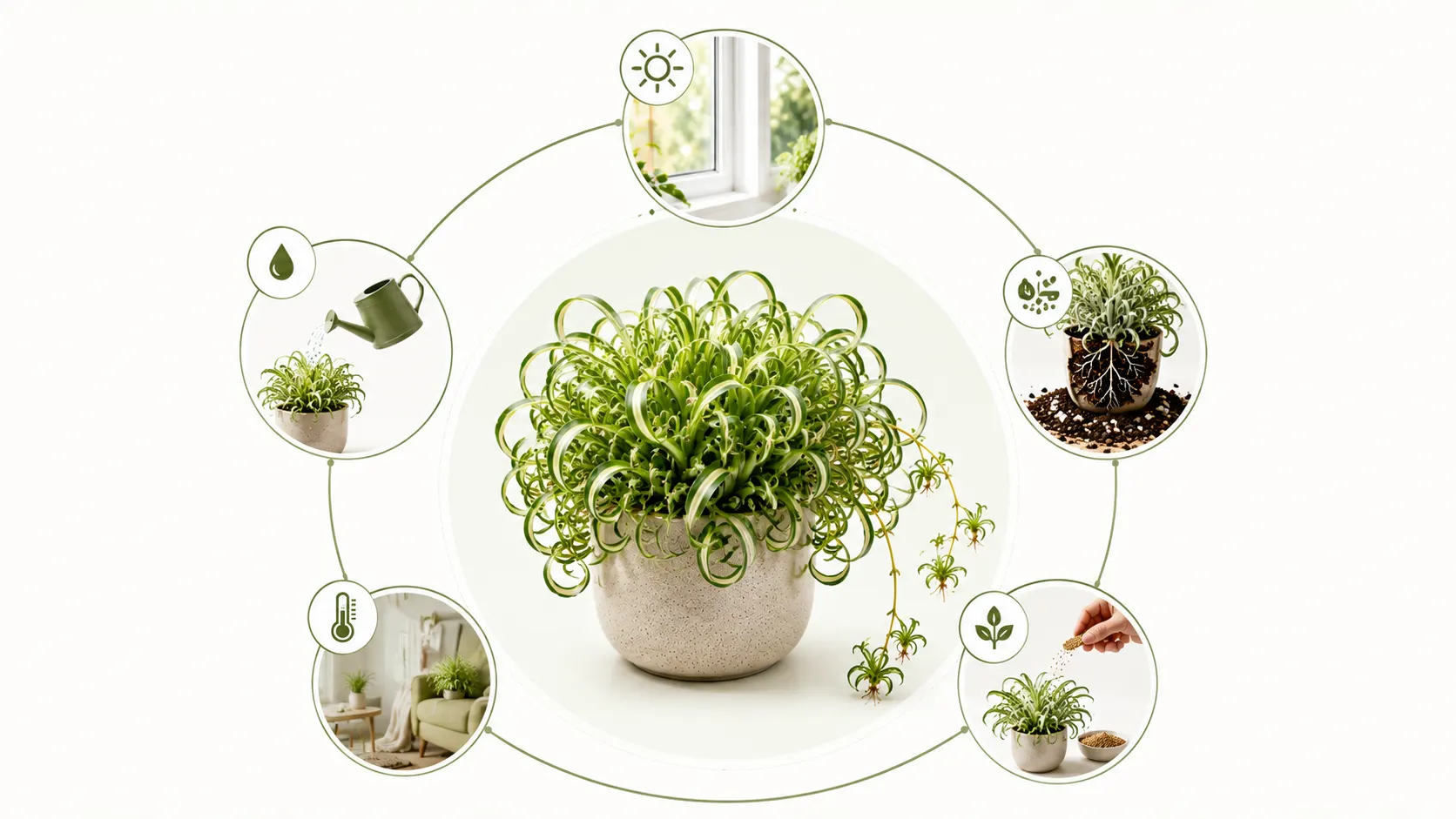
Essential care requirements for healthy growth
Bonnie spider plant care is similar to caring for other Chlorophytum comosum varieties. The plant is adaptable, beginner-friendly, and capable of tolerating less-than-perfect conditions. However, consistent care helps maintain its compact growth and curly leaf appearance.
The main care factors include:
- Bright, indirect light
- Moderate watering with drying periods between waterings
- Well-draining soil
- Moderate humidity
- Regular but light fertilization during active growth
Light Requirements
Curly spider plant light requirements
The Bonnie Curly Spider Plant grows best in bright, indirect light, which supports healthy foliage development and helps maintain stronger leaf curl. Direct sunlight, especially intense afternoon sun, can scorch the leaves and cause brown patches.
Although Bonnie can tolerate lower light conditions, reduced light may affect its appearance. Plants grown in dim areas often produce weaker growth and may develop less noticeable curls.
Ideal lighting conditions include:
- A bright room near an east- or north-facing window
- Filtered sunlight through curtains
- Several hours of indirect natural light daily
Avoid placing the plant in harsh direct sun because its variegated leaves contain less chlorophyll and can be more sensitive to burning.
Watering Needs
Preventing overwatering and root problems
Bonnie Curly Spider Plants prefer evenly moist soil but do not tolerate constantly wet roots. Allowing the top layer of soil to dry slightly before watering helps prevent root rot and fungal problems.
A practical watering approach is:
- Water when the top 1–2 inches of soil feel dry
- Reduce watering during cooler months when growth slows
- Avoid leaving excess water in the drainage tray
Spider plants store some moisture in their thick roots, allowing them to handle short periods of dryness. However, repeated underwatering can cause leaf tips to brown and curl excessively.
Common watering mistakes include:
- Watering on a fixed schedule without checking soil moisture
- Using pots without drainage holes
- Keeping the soil constantly saturated
Soil and Potting Preferences
Choosing the right soil mix
A Bonnie Curly Spider Plant needs a loose, well-draining soil mix that allows oxygen to reach the roots. Standard indoor potting soil combined with materials that improve drainage works well.
A suitable mix may include:
- Quality indoor potting soil
- Perlite for improved airflow
- Compost or organic matter for nutrients
Because Bonnie has a compact growth habit, it usually does not require a large container. A slightly snug pot can encourage healthy growth, but severely root-bound plants may need repotting.
Signs that repotting may be needed include:
- Roots growing through drainage holes
- Soil drying unusually quickly
- Slower leaf production
- Visible overcrowding
Fertilization Practices
Supporting healthy foliage growth
Bonnie Curly Spider Plants benefit from light feeding during the active growing season, usually spring and summer. Excess fertilizer can cause leaf tip browning and reduce overall plant health.
Recommended practices include:
- Apply a balanced liquid houseplant fertilizer every 4–6 weeks during growth periods
- Dilute fertilizer according to product instructions
- Reduce or stop feeding during winter when growth naturally slows
A moderate fertilization routine supports leaf production and spiderette formation without encouraging weak, excessive growth.
Pruning and Maintenance
Keeping the plant attractive and healthy
Pruning helps maintain the compact appearance of a Bonnie Curly Spider Plant. Regular maintenance mainly involves removing damaged leaves and managing old growth.
Basic maintenance includes:
- Trim brown leaf tips with clean scissors
- Remove completely yellow or dead leaves
- Cut unwanted spiderettes if the plant becomes crowded
Regular leaf cleaning improves the plant’s appearance and helps keep foliage healthy. Learn more about how to clean plant leaves for healthy houseplants to maintain indoor plants effectively.
Brown tips are common in spider plants and may result from mineral buildup in tap water, dry air, or inconsistent watering.
Climate and Temperature Tolerance
Indoor and outdoor growing conditions
Bonnie Curly Spider Plants are commonly grown indoors because they prefer stable temperatures and protection from extreme weather. They grow best between 60°F and 80°F (16°C–27°C).
The plant appreciates moderate humidity but adapts well to average household conditions. Understanding proper humidity levels can further improve spider plant health, especially in dry indoor environments where leaf tips may become brown. See this guide on spider plant humidity requirements for maintaining ideal moisture conditions.
Avoid:
- Cold drafts
- Temperatures below 50°F (10°C)
- Sudden environmental changes
- Excessively dry heating or cooling airflow
In warm climates, Bonnie can grow outdoors in shaded areas, but it should be protected from strong sunlight and frost.
Quick-reference care checklist
- Light: Bright, indirect light; tolerates low light
- Water: Allow soil to partially dry before watering
- Soil: Loose, well-draining potting mix
- Temperature: 60°F–80°F (16°C–27°C)
- Humidity: Average indoor humidity is usually sufficient
- Fertilizer: Light feeding during spring and summer
- Maintenance: Remove damaged leaves and monitor curl changes
Growth Rate and Plant Size
Mature size and growth habits
The Bonnie Curly Spider Plant is a moderate-growing houseplant that usually stays smaller than standard spider plant varieties. Indoors, it commonly reaches around 8–18 inches (20–45 cm) in height and width, depending on light, pot size, and growing conditions.
Outdoor plants grown in suitable climates may spread more widely because of increased space and stronger growing conditions.
Growth speed depends on factors such as:
- Amount of indirect light received
- Watering consistency
- Soil quality
- Fertilization routine
- Root space
During spring and summer, Bonnie typically produces new leaves and spiderettes more actively. Growth slows during colder months or in lower-light environments. Proper care helps maintain its compact, dense appearance while encouraging healthy new growth.
Do Curly Spider Plants Stay Curly?
Factors that maintain or reduce leaf curl
Yes, curly spider plants can stay curly, but the strength of the curl depends on genetics, light exposure, age, and overall plant health. The Bonnie Curly Spider Plant naturally produces curled leaves because of its cultivar traits, but environmental stress can cause newer growth to appear straighter or less twisted.
The most important factors affecting curl include:
- Light levels: Bright, indirect light usually encourages stronger curl expression. Low light may cause leaves to become longer, softer, and less curled.
- Plant maturity: Younger leaves may appear less curled until they fully develop.
- Genetics: Bonnie’s curl comes from its inherited cultivar characteristics and cannot be completely created through care alone.
- Growing stress: Inconsistent watering, root problems, or sudden environmental changes can affect leaf shape.
A Bonnie Curly Spider Plant that loses some curl is not necessarily unhealthy. Older leaves may naturally change shape, and improving growing conditions can help new leaves develop stronger curls.
Propagation and Babies (Spiderettes)
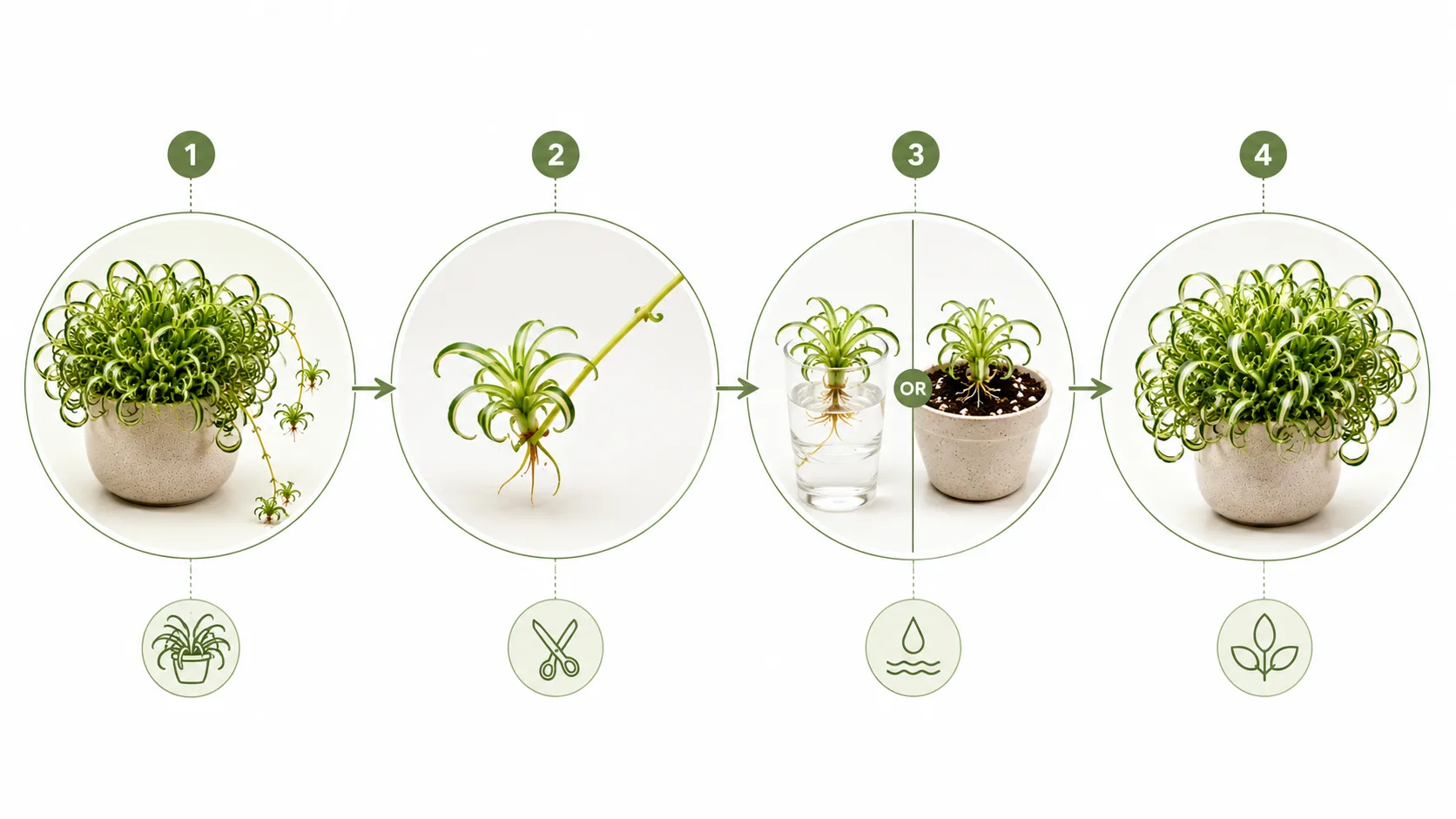
How Bonnie Curly Spider Plants produce new plants
Bonnie Curly Spider Plant propagation is one of the easiest ways to multiply this cultivar. Like other Chlorophytum comosum varieties, Bonnie produces small baby plants called spiderettes on long flowering stems called runners.
These spiderettes develop roots while still attached to the parent plant, allowing gardeners to create new plants through simple propagation methods.
Do curly spider plants have babies?
Yes, curly spider plants do produce babies or spiderettes when they reach maturity and receive suitable growing conditions. The appearance of spiderettes usually indicates that the plant is healthy and actively growing.
Factors that encourage spiderette production include:
- Adequate indirect light
- Mature plant age
- Proper watering routine
- Sufficient nutrients during the growing season
Water vs. soil propagation methods
Bonnie spiderettes can be rooted in both water and soil.
Water propagation:
- Allows growers to observe root development
- Useful for beginners
- Makes transplanting easier after roots form
Soil propagation:
- Encourages stronger root adaptation
- Reduces transplant shock
- Allows the baby plant to establish directly in its growing medium
Step-by-step Bonnie Curly Spider Plant propagation process
- Select a healthy spiderette with small root bumps or developing roots.
- Cut the runner connecting the baby plant to the mother plant if desired.
- Place the spiderette in water or directly into moist, well-draining soil.
- Keep the new plant in bright, indirect light.
- Maintain slightly moist soil until roots become established.
- Move the young plant into a regular care routine once growth begins.
Propagation is usually most successful during spring and summer when the plant is actively growing. Many indoor plants can be multiplied through similar propagation techniques. For example, other popular houseplants such as Oxalis triangularis also have specific propagation methods based on their growth structure.
Common Curly Spider Plant Problems (Troubleshooting)
Why leaves lose their curl
A Bonnie Curly Spider Plant may lose noticeable curl when growing conditions do not support healthy foliage development. The most common cause is insufficient light, but environmental stress can also affect leaf shape.
Causes:
- Low light exposure
- Sudden changes in location
- Irregular watering
- Poor root health
Solutions:
- Move the plant to a brighter area with indirect light.
- Maintain a consistent watering routine.
- Check roots if growth appears weak or unhealthy.
- Avoid frequent relocation.
Prevention:
Keeping the plant in stable conditions with suitable light and moisture helps maintain its naturally curly appearance.
Yellowing or browning leaves
Yellow or brown leaves are common issues with spider plants and are often linked to watering problems, mineral buildup, or environmental stress.
Common causes:
- Overwatering
- Poor drainage
- Fluoride or salt buildup from tap water
- Dry air
- Inconsistent moisture levels
Fixes:
- Allow the soil to dry slightly before watering again.
- Use filtered, distilled, or rainwater if tap water causes repeated brown tips.
- Ensure the pot has drainage holes.
- Remove damaged leaves with clean scissors.
Spider plants are especially known for brown leaf tips caused by mineral sensitivity, so water quality can influence their appearance.
Slow or stunted growth
Slow growth usually indicates that the plant is not receiving enough resources for active development.
Possible causes:
- Low light conditions
- Nutrient deficiency
- Root-bound growth
- Poor-quality soil
Solutions:
- Move the plant closer to a bright indirect light source.
- Repot if roots are tightly crowded.
- Apply balanced fertilizer during the growing season.
- Replace old, compacted soil.
Growth naturally slows during winter, so seasonal changes should also be considered before adjusting care.
Pest issues
Bonnie Curly Spider Plants are generally resistant to serious pest problems, but indoor plants can occasionally attract common houseplant pests.
Common pests include:
- Spider mites: Cause tiny spots, dull leaves, and fine webbing.
- Mealybugs: Appear as white cotton-like clusters on leaves or stems.
- Aphids: Small insects that gather around new growth.
Treatment options include:
- Wiping leaves with a damp cloth
- Spraying with diluted insecticidal soap
- Using neem oil according to label instructions
- Isolating affected plants to prevent spreading
Regular leaf inspection helps detect problems before infestations become severe.
Is the Bonnie Curly Spider Plant Safe for Pets?
Pet safety and cat-friendly characteristics
Yes, the Bonnie Curly Spider Plant is considered non-toxic to cats and dogs according to commonly referenced pet safety guidance from organizations such as the ASPCA. It is widely regarded as a pet-friendly houseplant option.
However, some cats are attracted to spider plants because the foliage can have a mild stimulating effect. Cats may chew on the leaves because of their grass-like texture.
If a pet consumes a large amount, mild digestive upset may occur, including:
- Vomiting
- Stomach discomfort
- Temporary diarrhea
Keeping the plant away from excessive chewing helps maintain both plant health and pet comfort.
Benefits of Growing a Curly Spider Plant
Why Bonnie spider plants are popular houseplants
The Bonnie Curly Spider Plant combines decorative appearance with easy maintenance, making it suitable for beginners and experienced indoor gardeners. Like other spider plant varieties, the Bonnie Curly Spider Plant is also valued for its indoor benefits, including easy maintenance, decorative appeal, and its role in creating healthier indoor green spaces. Its compact size allows it to fit well in apartments, offices, shelves, and smaller plant collections.
Key benefits include:
- Easy care: Tolerates occasional care mistakes and adapts to indoor conditions.
- Pet-friendly: Considered non-toxic for cats and dogs.
- Decorative foliage: Curled leaves provide a unique texture compared with standard spider plants.
- Propagation ability: Produces spiderettes that can create new plants.
- Compact size: Works well for smaller spaces.
- Indoor air quality support: Like many houseplants, spider plants contribute to indoor greenery and may help improve perceived air freshness.
The Bonnie Curly Spider Plant is especially valued by people looking for a low-maintenance plant with unusual foliage.
Lifespan of a Spider Plant
How long Bonnie Curly Spider Plants live
A healthy spider plant can live for many years, often reaching 10 years or more when grown under suitable conditions. Some well-maintained plants can continue producing new growth for much longer through regular care and propagation.
Factors that influence lifespan include:
- Proper watering habits
- Occasional repotting
- Healthy root conditions
- Adequate indirect light
- Regular removal of damaged growth
A spider plant’s ability to produce spiderettes also allows gardeners to maintain new generations of the plant over time.
To extend lifespan:
- Repot when roots become overcrowded.
- Refresh soil periodically.
- Avoid repeated overwatering.
- Maintain consistent environmental conditions.
What Makes a Spider Plant Happy?
Ideal conditions for a healthy Bonnie Curly Spider Plant
A Bonnie Curly Spider Plant grows best when it receives balanced care rather than extreme conditions. The ideal environment includes bright indirect light, moderate watering, breathable soil, and stable temperatures.
A healthy plant typically shows:
- Firm green leaves
- Consistent new growth
- Strong curl expression
- Regular spiderette production
Beginner mistakes to avoid
Common mistakes that affect spider plant health include:
- Overwatering: Keeping soil constantly wet can damage roots and cause yellow leaves.
- Low light placement: Too little light may reduce curl and slow growth.
- Ignoring root-bound signs: Crowded roots limit water and nutrient absorption.
- Inconsistent fertilizing: Too little feeding may slow growth, while excess fertilizer can damage leaves.
- Poor water quality: Minerals in tap water can contribute to brown tips.
A consistent care routine is usually more effective than frequent changes to the plant’s environment.
Curly Spider Plant vs. Other Popular Houseplants
Curly Spider Plant vs. Peace Lily comparison
The question of which is better, peace lily or spider plant, depends on the growing environment and personal preference. Both are popular indoor plants, but they differ in care requirements, appearance, and pet safety.
Curly Spider Plant vs. Peace Lily
| Feature | Curly Spider Plant | Peace Lily |
| Light needs | Bright indirect light preferred; tolerates lower light | Low to medium indirect light preferred |
| Pet safety | Considered non-toxic to cats and dogs | Toxic if ingested by pets |
| Maintenance level | Low maintenance and forgiving | Requires more consistent moisture |
| Appearance | Curled grass-like foliage | Large leaves with white flowers |
| Water needs | Allows slight drying between watering | Prefers more consistently moist soil |
| Best use | Pet households, offices, small spaces | Decorative indoor areas without pets |
For beginners or pet owners, the Bonnie Curly Spider Plant is often a practical choice because of its durability and pet-friendly nature. Peace lilies may be preferred by growers who want flowering plants and can provide more attentive care.
Spider Plant Varieties and Related Cultivars
Understanding Chlorophytum comosum varieties
The Bonnie Curly Spider Plant belongs to the broader Chlorophytum comosum species, which includes many popular spider plant varieties grown as indoor houseplants. These cultivars share similar care requirements but differ in leaf patterns, growth habits, and overall appearance.
Common spider plant varieties include:
- Chlorophytum comosum ‘Bonnie’: A compact cultivar with curled, twisted leaves and a bushier growth habit.
- Chlorophytum comosum ‘Vittatum’: A classic spider plant with long green leaves featuring a central white stripe.
- Chlorophytum comosum ‘Variegatum’: A variegated form with white edges and green centers.
- Curly variegated spider plant types: Less commonly available forms that combine curled foliage with stronger variegation patterns.
The term spider plant with curly leaves generally refers to cultivars like Bonnie that naturally develop twisted foliage rather than standard straight-leaf varieties.
Bonnie’s place within the spider plant family
Although Bonnie has a unique appearance, it is not a separate species. It is a selected cultivar of the same species as traditional spider plants.
This means it shares important characteristics with other Chlorophytum comosum plants, including:
- Easy propagation through spiderettes
- Adaptability to indoor environments
- Similar watering and lighting preferences
- Long lifespan with proper care
Understanding these relationships helps identify why Bonnie requires the same basic care as other spider plants while offering a different decorative style.
Conclusion
The Bonnie Curly Spider Plant is a compact and distinctive cultivar of Chlorophytum comosum known for its curled leaves, manageable size, and beginner-friendly care requirements. Its unique foliage shape separates it from standard spider plants while maintaining the same adaptable nature that makes the species popular among indoor gardeners.
Providing bright, indirect light, well-draining soil, moderate watering, and consistent maintenance helps preserve its curly appearance and encourage healthy growth. The plant is also easy to propagate through spiderettes, safe for households with cats and dogs, and suitable for small living spaces.
For anyone seeking a low-maintenance houseplant with decorative texture, the Bonnie Curly Spider Plant offers a balance of visual appeal, resilience, and simple care.
FAQs
How do you take care of a Bonnie Curly Spider Plant?
A Bonnie Curly Spider Plant grows best with bright, indirect light, well-draining soil, and moderate watering. Allow the top layer of soil to dry slightly before watering again. Use a balanced fertilizer occasionally during spring and summer, and keep the plant in temperatures between 60°F and 80°F (16°C–27°C).
What’s the difference between a spider plant and a Curly Spider Plant?
The main difference is leaf shape and growth habit. A standard spider plant produces longer, straighter arching leaves, while a Curly Spider Plant, such as Chlorophytum comosum ‘Bonnie’, develops shorter, twisted, curly leaves and maintains a more compact appearance.
Is the Curly Spider Plant rare?
The Curly Spider Plant is not considered truly rare, but it may be less common than traditional spider plant varieties. Its unique curled foliage and specific cultivar characteristics make it appear less widely available in some areas.
Do curly spider plants stay curly?
Curly spider plants generally maintain their natural curl because of their genetics, but the curl can become less noticeable if the plant receives insufficient light, experiences stress, or grows in inconsistent conditions. Bright indirect light usually helps maintain stronger curls.
Is the Bonnie Curly Spider Plant safe for cats?
Yes, the Bonnie Curly Spider Plant is considered non-toxic to cats and dogs. However, some cats may chew on the leaves because spider plants can attract their attention. Eating large amounts may cause mild digestive upset.
What are common Curly Spider Plant problems?
Common problems include loss of curl, brown leaf tips, yellowing leaves, slow growth, and occasional pest issues. Most problems are related to improper watering, insufficient light, poor drainage, or mineral buildup from water.
Do curly spider plants have babies (spiderettes)?
Yes, curly spider plants can produce babies called spiderettes. These small plantlets grow on long stems from mature plants and can be propagated by placing them in water or planting them directly into moist soil.