
Introduction
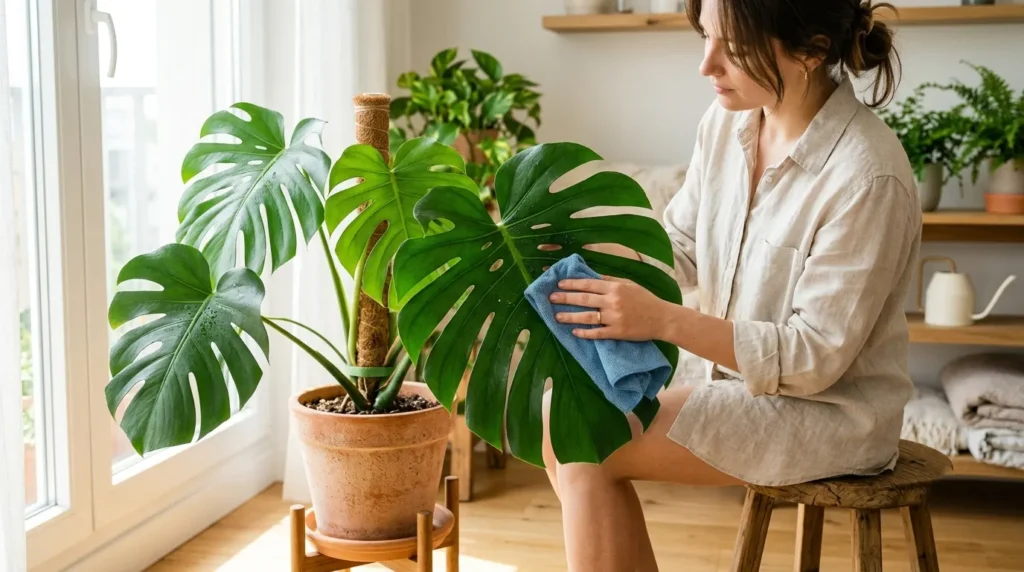
Learning how to clean plant leaves is an essential part of houseplant care that helps maintain healthy and attractive plants. Cleaning plant leaves means removing dust, grime, mineral residue, and other buildup from leaf surfaces so plants can absorb light efficiently and continue normal processes like photosynthesis. Over time, dirty leaves can reduce light absorption, affect appearance, and create conditions where pests are more likely to appear. Using the right cleaning method, such as plain water and a soft cloth, keeps leaves healthy without damaging delicate surfaces or blocking natural leaf pores. If you’re building a complete indoor plant care routine, explore our Plants: Benefits and Guides (Complete Care, Types & Growing Tips) for expert advice on watering, lighting, humidity, propagation, and long-term plant health.
Quick Summary
- Use a soft, damp microfiber cloth with room-temperature water for regular plant leaf cleaning.
- Avoid using dish soap, vinegar, or milk frequently because they may leave residue or damage sensitive leaves.
- Neem oil can clean leaves while also helping control common pests like aphids and mealybugs.
- Clean indoor plant leaves every 2–4 weeks depending on dust levels, humidity, and plant location.
Why Cleaning Plant Leaves Matters
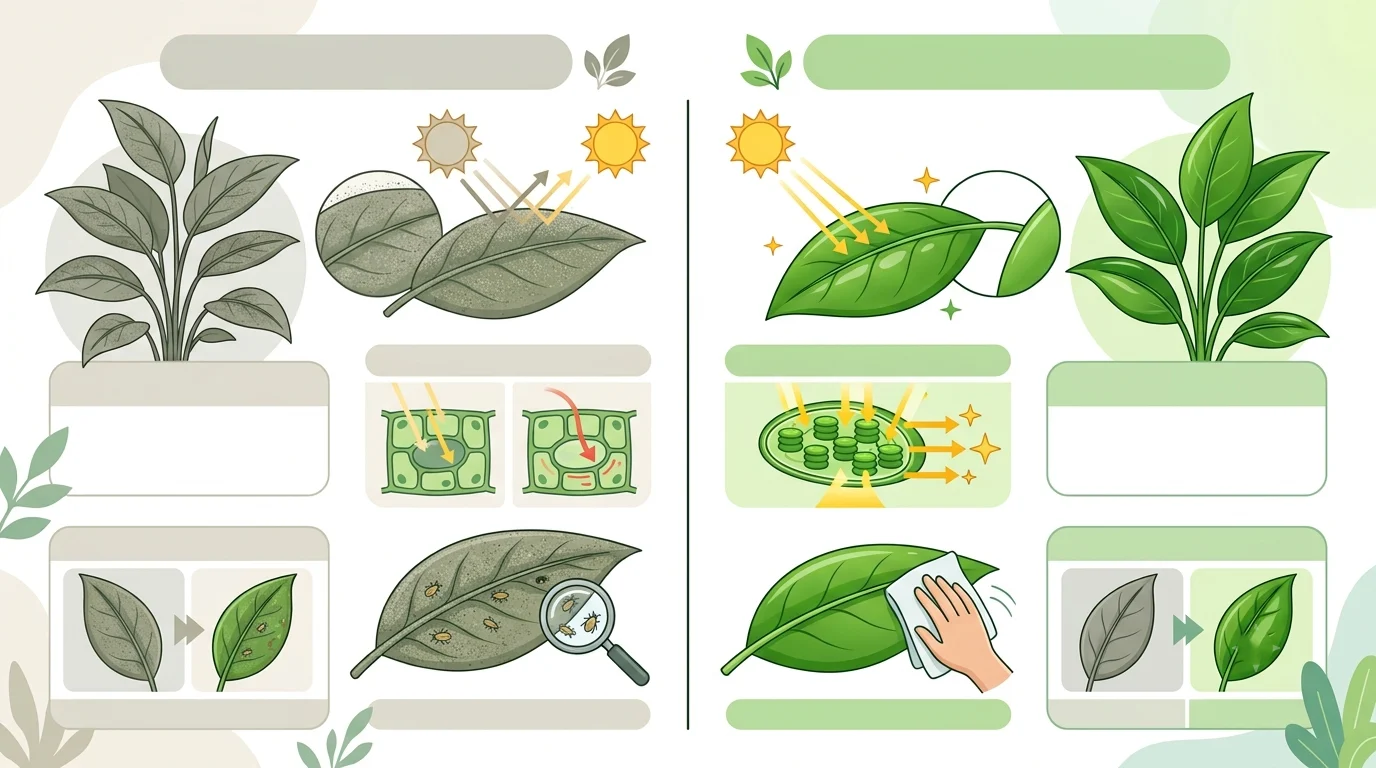
Clean leaves support better plant health by allowing plants to absorb more light, maintain efficient photosynthesis, and reduce pest problems. Dust buildup on leaf surfaces can block sunlight from reaching chlorophyll, making photosynthesis less effective over time. Clean leaves absorb light more efficiently, but proper lighting is equally important. Understanding bright indirect light vs direct sunlight helps maximize healthy photosynthesis.
Regular cleaning also improves the appearance of houseplants by restoring the natural color and texture of leaves. Healthy leaves are better able to support plant growth because they can exchange gases properly through tiny openings called stomata. Dust accumulation can reduce the efficiency of photosynthesis, the process plants use to convert light into energy, making regular leaf cleaning an important part of plant care.
Key benefits of cleaning plant leaves include:
- Improves light absorption and photosynthesis: Removing dust allows leaves to capture more light energy.
- Prevents pest infestations: Cleaning helps remove insect eggs, residue, and hiding spots where pests may develop.
- Enhances plant aesthetics and growth: Dust-free leaves look healthier and help maintain overall plant condition.
How to Clean Plant Leaves With Water (The Safest Method)
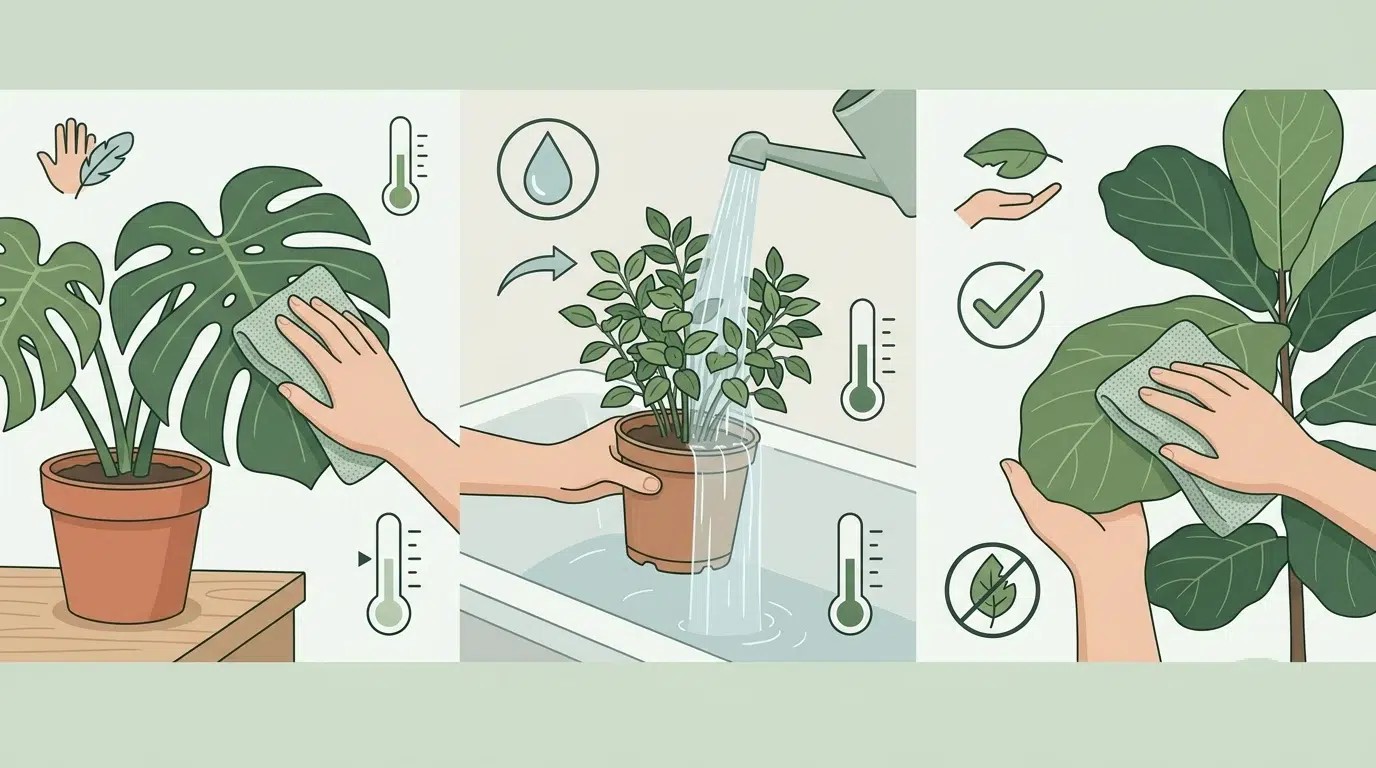
Water is the safest and most reliable option for cleaning most houseplant leaves. Plain water removes everyday dust and residue without introducing chemicals that may harm leaf surfaces. Plants with smooth foliage respond especially well to gentle wiping, particularly many house plants with waxy leaves, which naturally collect visible dust over time.
There are two main methods: wiping leaves by hand or rinsing the plant with water. The best method depends on the plant’s leaf size, texture, and sensitivity.
For routine cleaning:
- Use room-temperature or lukewarm water.
- Avoid very cold water because it may shock tropical houseplants.
- Clean gently to prevent scratches, tears, or damaged leaf surfaces.
Wiping Method (Wash Plant Leaves by Hand)
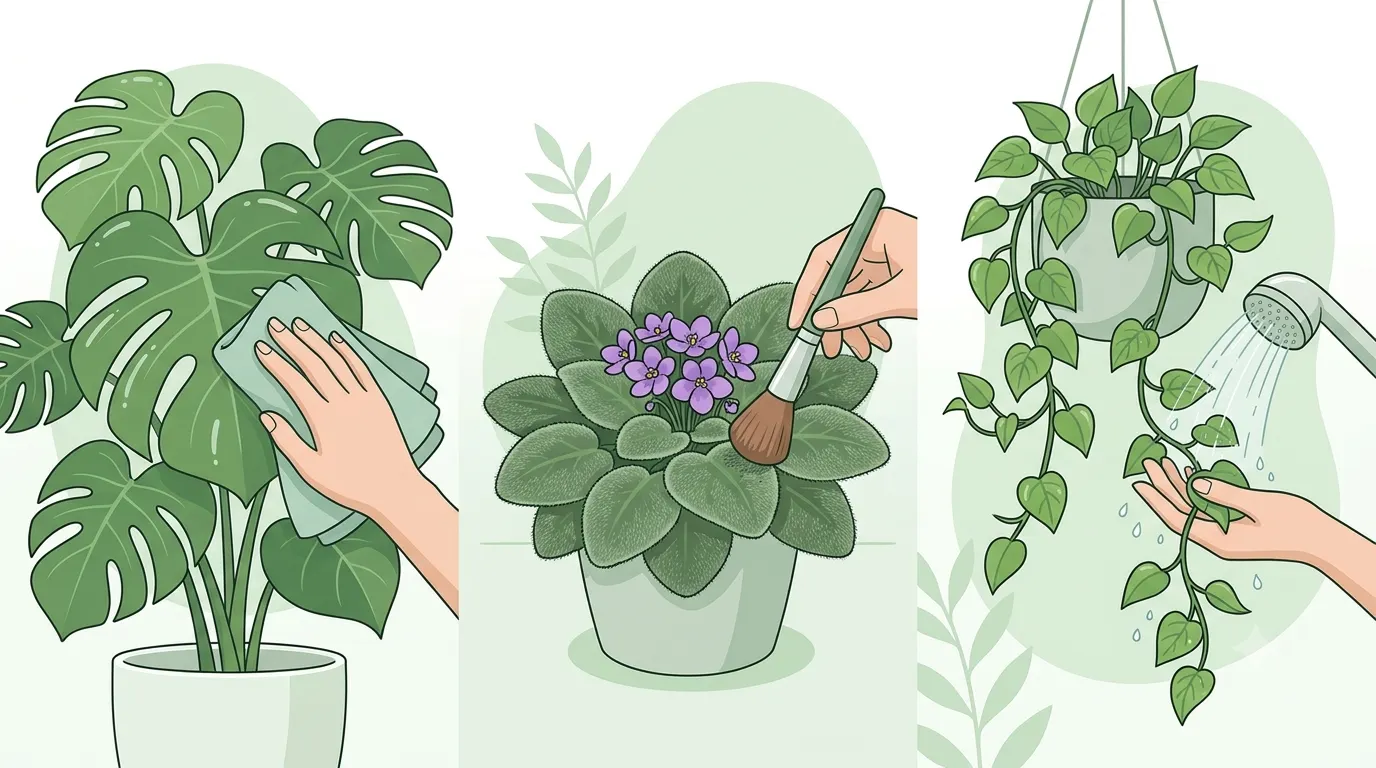
The wiping method works best for plants with large, smooth leaves, such as cheese plants and monstera varieties. These plants collect visible dust because of their broad leaf surfaces.
To clean leaves by hand:
- Dampen a microfiber cloth or soft sponge with clean water.
- Support the underside of each leaf with one hand.
- Gently wipe the upper and lower surfaces.
- Remove excess water and allow leaves to air dry.
Supporting the leaf underneath prevents bending or tearing, especially on larger leaves that may become damaged if pressure is applied unevenly.
Rinsing/Showering Method
The rinsing method is useful for smaller, bushier plants that are difficult to clean leaf by leaf. Plants with many small leaves, such as pothos or some ferns, can often be cleaned using a gentle shower or sink rinse.
Steps for showering plants:
- Place the plant in a sink, bathtub, or shower area.
- Use lukewarm water with gentle pressure.
- Allow excess water to drain completely.
- Avoid leaving the plant sitting in waterlogged soil.
This method removes dust from multiple leaves quickly while also washing away small particles that collect between foliage.
Can You Clean Plant Leaves With Vinegar?
Yes, diluted vinegar can clean some plant leaves, but it should be used carefully and is not the best choice for routine maintenance. Vinegar is acidic and may damage sensitive leaf surfaces if used incorrectly.
A common dilution is:
- 1 part white vinegar
- 4 parts water
This mixture may help remove mineral deposits caused by hard water spots. However, vinegar is not suitable for every plant type.
Avoid vinegar on:
- Fuzzy-leafed plants, such as African violets
- Sensitive foliage
- Plants with delicate leaf coatings
Never spray vinegar directly onto plant soil or roots because excess acidity may affect the growing environment.
Can You Clean Plant Leaves With Dish Soap?
Mild dish soap can be used in some situations, especially when dealing with pests such as aphids or mealybugs. However, it should not be used as a regular leaf cleaner because soap residue may interfere with the leaf surface.
When using dish soap:
- Dilute it heavily with water.
- Apply only when pest control is needed.
- Rinse leaves afterward to remove leftover residue.
Using products like Dawn dish soap requires caution because stronger concentrations can damage plant tissue.
Avoid mixing dish soap with vinegar. Combining cleaning ingredients is unnecessary and may create a stronger solution that increases the risk of leaf damage.
Using Milk, Olive Oil, and Other Homemade Leaf Cleaners
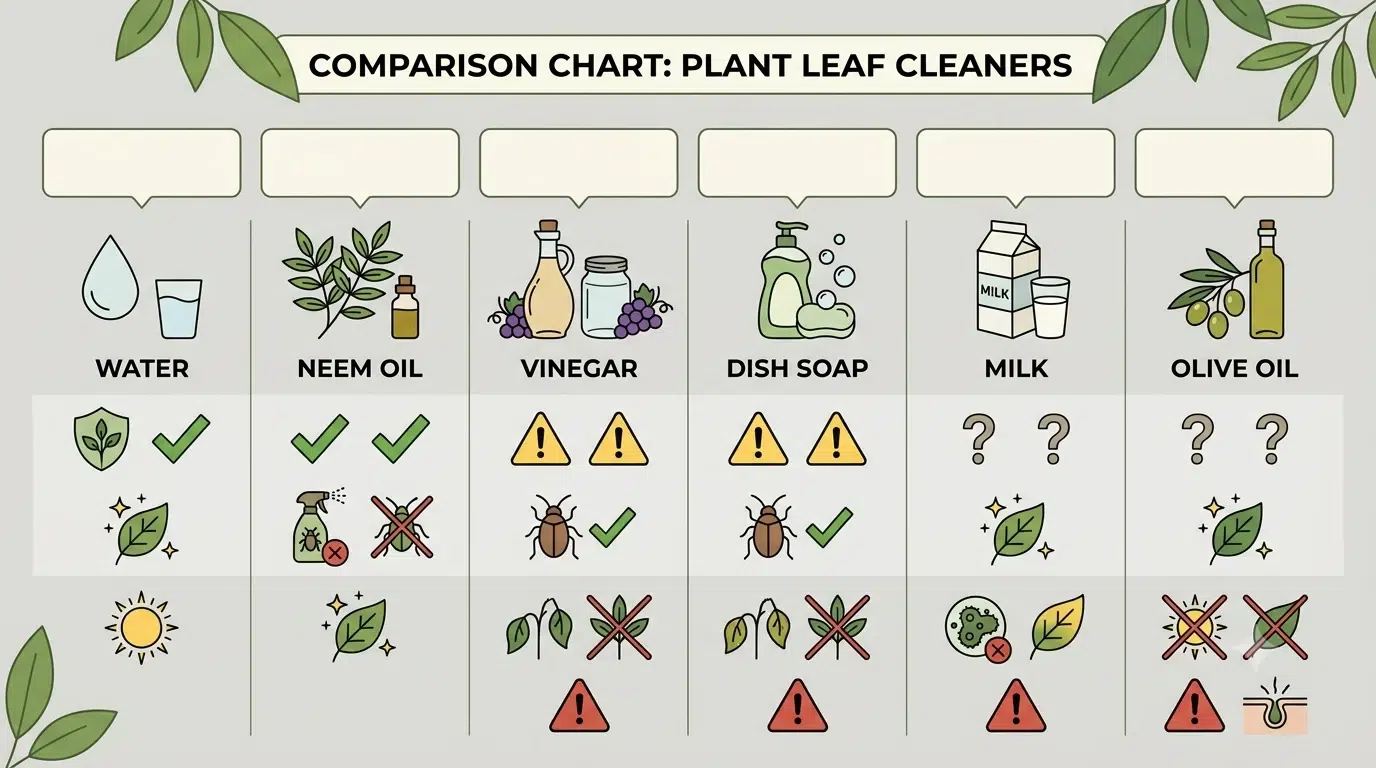
Many homemade leaf cleaners are commonly suggested online, but not all are beneficial for plants. Some ingredients may temporarily improve leaf appearance while creating problems if they leave residue behind.
| Leaf Cleaner | Effectiveness | Risk Level | Best Use Case |
| Water | High | Low | Regular dust removal and routine cleaning |
| Milk (diluted) | Moderate | Medium | Occasional shine, used carefully |
| Olive oil | Low | High | Generally not recommended due to residue buildup |
| Vinegar (diluted) | Moderate | Medium | Removing mineral deposits on suitable leaves |
| Dish soap (diluted) | Moderate | Medium | Pest removal, not regular cleaning |
Milk mixed with water may create temporary shine because of proteins and fats in milk. However, leftover residue can attract bacteria, fungi, or unpleasant odors if not removed properly.
Olive oil is not recommended as a routine leaf cleaner. Although it can make leaves appear glossy, oil can coat the leaf surface and interfere with stomata, which are tiny openings plants use for gas exchange.
The safest approach is usually regular dust removal with water rather than applying oily or food-based products.
How to Make Plant Leaves Shiny Naturally
The best way to make plant leaves shiny naturally is consistent cleaning rather than applying artificial coatings. Healthy leaves naturally have a clean surface and their own natural wax layer that creates a healthy appearance.
Florists may use commercial leaf-shine products or occasionally diluted household mixtures for decorative purposes, but these should be used sparingly. Excessive use of shine products can create buildup and block stomata.
A natural shine routine includes:
- Removing dust regularly with a damp microfiber cloth.
- Avoiding oil-based coatings.
- Maintaining proper light, watering, and humidity conditions.
- Cleaning leaves every few weeks.
Homemade Leaf Shine Recipe
A simple homemade leaf shine method requires only:
- Room-temperature water
- A clean microfiber cloth
Steps:
- Lightly dampen the cloth with water.
- Wipe the leaf surface gently.
- Use a dry section of the cloth to buff away excess moisture.
If using a milk-water mixture, make it extremely diluted and always wipe afterward with clean water to prevent residue buildup.
Using Neem Oil for Leaf Cleaning and Pest Control
Neem oil is a natural plant extract commonly used as both a pest control treatment and occasional leaf cleaner. It contains compounds such as azadirachtin, which can help control insects including aphids, mealybugs, and spider mites.
Neem oil is useful for plants because it provides two benefits:
- Helps remove surface residue and improve leaf appearance.
- Acts as a natural pesticide against common houseplant pests.
A typical neem oil spray mixture includes:
- 1–2 teaspoons of neem oil per liter of water.
- A small amount of mild soap as an emulsifier to help mix the oil with water.
Application tips:
- Spray lightly on leaf surfaces.
- Focus on both the upper and lower sides of leaves.
- Apply approximately every two weeks when pest problems are present.
- Avoid spraying in strong sunlight because wet oil-coated leaves may be more sensitive to light.
| Method | Safety | Pest Control | Shine Effect |
| Water | Very safe for most plants | Low | Natural clean appearance |
| Neem Oil | Safe when diluted correctly | High | Moderate natural shine |
| Dish Soap | Medium risk if overused | Moderate | Low |
Neem oil should not replace regular cleaning. For most plants, water remains the best daily maintenance method, while neem oil is more useful when pests are involved.
Best Plant Leaf Cleaners — Comparison
The best plant leaf cleaner depends on leaf texture, plant type, and the reason for cleaning. A method that works for a glossy monstera leaf may not be suitable for a fuzzy African violet.
| Leaf Type | Recommended Method | Cleaning Frequency | Risk Level |
| Smooth leaves | Damp microfiber cloth | Every 2–4 weeks | Low |
| Large glossy leaves | Hand wiping with water | Every few weeks | Low |
| Fuzzy leaves | Soft dry brush | As needed | Low |
| Waxy leaves | Gentle water cleaning | Monthly | Medium if products are used |
| Small bushy leaves | Showering or rinsing | Every few weeks | Low |
For most indoor plants, plain water and gentle handling provide the best balance between cleanliness and plant safety. For a deeper breakdown covering more leaf types and edge cases, our full houseplant leaf cleaning reference guide expands this comparison to 17+ plant varieties.
Common Mistakes When Cleaning Plant Leaves
Many beginners damage plants by using unsuitable cleaning methods or cleaning too aggressively. Proper technique is important because leaves are sensitive structures that support photosynthesis and gas exchange.
Common mistakes include:
- Using cold water: Cold water can stress tropical houseplants and create temperature shock.
- Applying oil-based products frequently: Oils may create a coating that blocks stomata.
- Cleaning fuzzy leaves with water: Plants like African violets have textured leaves that can hold moisture and develop spots.
- Ignoring leaf undersides: Many pests hide beneath leaves, making the underside important during cleaning.
Troubleshooting Plant Leaf Problems After Cleaning
Sometimes leaf problems appear after cleaning because the wrong method or product was used. Identifying the cause helps prevent further damage.
| Problem | Possible Cause | Solution |
| Leaves turning yellow | Excess residue or unrelated care issues such as overwatering | Reduce product use and check drainage |
| Pests returning | Leaf undersides were not cleaned | Use neem oil and inspect hidden areas |
| Dull leaves after cleaning | Product buildup | Rinse with plain water |
| Leaf spots after vinegar use | Vinegar concentration was too strong | Dilute properly or stop use |
Yellow leaves are often caused by factors like overwatering, poor drainage, or nutrient issues rather than cleaning alone. However, residue from incorrect cleaners can contribute to unhealthy leaf surfaces.
How Often Should You Clean Indoor Plant Leaves?
Most indoor plants benefit from cleaning every 2–4 weeks. The ideal frequency depends on the environment, dust levels, humidity, and plant location. Along with regular cleaning, maintaining proper humidity can reduce plant stress. Learn practical ways to increase humidity for indoor plants without using a humidifier. For a quick printable checklist, refer to our houseplant leaf cleaning frequency spreadsheet, which lists cleaning intervals by plant type.
Plants may need more frequent cleaning when:
- Located near heating or cooling vents.
- Kept in dusty rooms.
- Exposed to open windows or outdoor air.
Plants in naturally humid environments may require less frequent cleaning because dust does not accumulate as quickly.
Regular inspection is also important. Cleaning sessions provide an opportunity to check for pests, discoloration, or early signs of plant stress.
Content Differentiation — Cleaning Different Plant Types
Different plants require different cleaning approaches because leaf texture and structure affect how they handle moisture. Want to look up your exact houseplant before cleaning it? Browse our interactive houseplant leaf cleaning database for plant-specific recommendations.
Large, glossy leaves (Monstera and cheese plants):
- Best cleaned with a damp microfiber cloth.
- Support leaves while wiping.
- Clean both sides to remove dust and pests.
If you grow spotted foliage plants, our Begonia Maculata Wightii Care Guide explains additional cleaning and maintenance practices that help preserve their distinctive leaf markings.
Fuzzy leaves (African violets):
- Avoid water-based cleaning.
- Use a soft brush to remove dust.
- Prevent moisture from sitting on hairy leaf surfaces.
Small and bushy leaves (pothos and ferns):
- Showering or gentle rinsing is usually effective.
- Allow plants to drain completely afterward.
- Avoid strong water pressure that can damage delicate foliage.
For delicate fern species, see How to Look After a Fern to learn the ideal watering, humidity, and gentle cleaning methods for fine foliage.
Conclusion
Clean plant leaves help support photosynthesis, reduce pest problems, and maintain attractive, healthy foliage. For most houseplants, plain water and a soft cloth remain the safest and most reliable cleaning method. Neem oil can provide additional benefits for plants with pest issues because it works as both a natural pesticide and occasional leaf cleaner. The best approach is to match the cleaning method to the plant’s leaf type and maintain a consistent schedule every few weeks.
FAQs
Can I just use water to clean plant leaves?
Yes, water is the safest and most recommended method for cleaning most houseplant leaves. A soft damp cloth or gentle rinse can remove dust without leaving harmful residue.
Can I wipe plant leaves with vinegar?
Yes, but vinegar should only be used when heavily diluted with water. It is not recommended for fuzzy or sensitive leaves because acidity may cause damage.
Can you wipe plant leaves with hydrogen peroxide?
Diluted hydrogen peroxide can disinfect plant surfaces in some situations, but it should be used sparingly. Overuse may damage leaf tissue and disrupt healthy plant surfaces.
What is the best thing to clean indoor plant leaves with?
A soft microfiber cloth and plain room-temperature water are generally the best options for regular indoor plant leaf cleaning. They remove dust without introducing unnecessary chemicals.
What is neem oil used for?
Neem oil is used as a natural pesticide and occasional leaf treatment. It helps control pests such as aphids, mealybugs, and spider mites when applied correctly.
How often should I clean my plant's leaves?
Most indoor plants should have their leaves cleaned every 2–4 weeks. Plants in dusty environments may need more frequent cleaning, while plants in humid areas may require less.



4 Responses