
Introduction
The peace lily temperature range refers to the specific band of warmth in which Spathiphyllum plants grow best, typically between 65–85°F (18–29°C). These tropical houseplants originate from rainforest environments, so they prefer stable, warm conditions and are sensitive to cold drafts or sudden temperature drops. Understanding both the comfort range and survival limits is essential for preventing stress, drooping leaves, and long-term damage in indoor and outdoor settings.
Quick Summary
- Peace lilies thrive between 65–85°F (18–29°C) for healthy growth.
- Temperatures below 60°F (15°C) slow growth and increase stress risk.
- Exposure below 50°F (10°C) can cause cold shock and leaf damage.
- Stability in indoor temperature is more important than minor care adjustments.
What Is the Ideal Temperature Range for Peace Lilies?
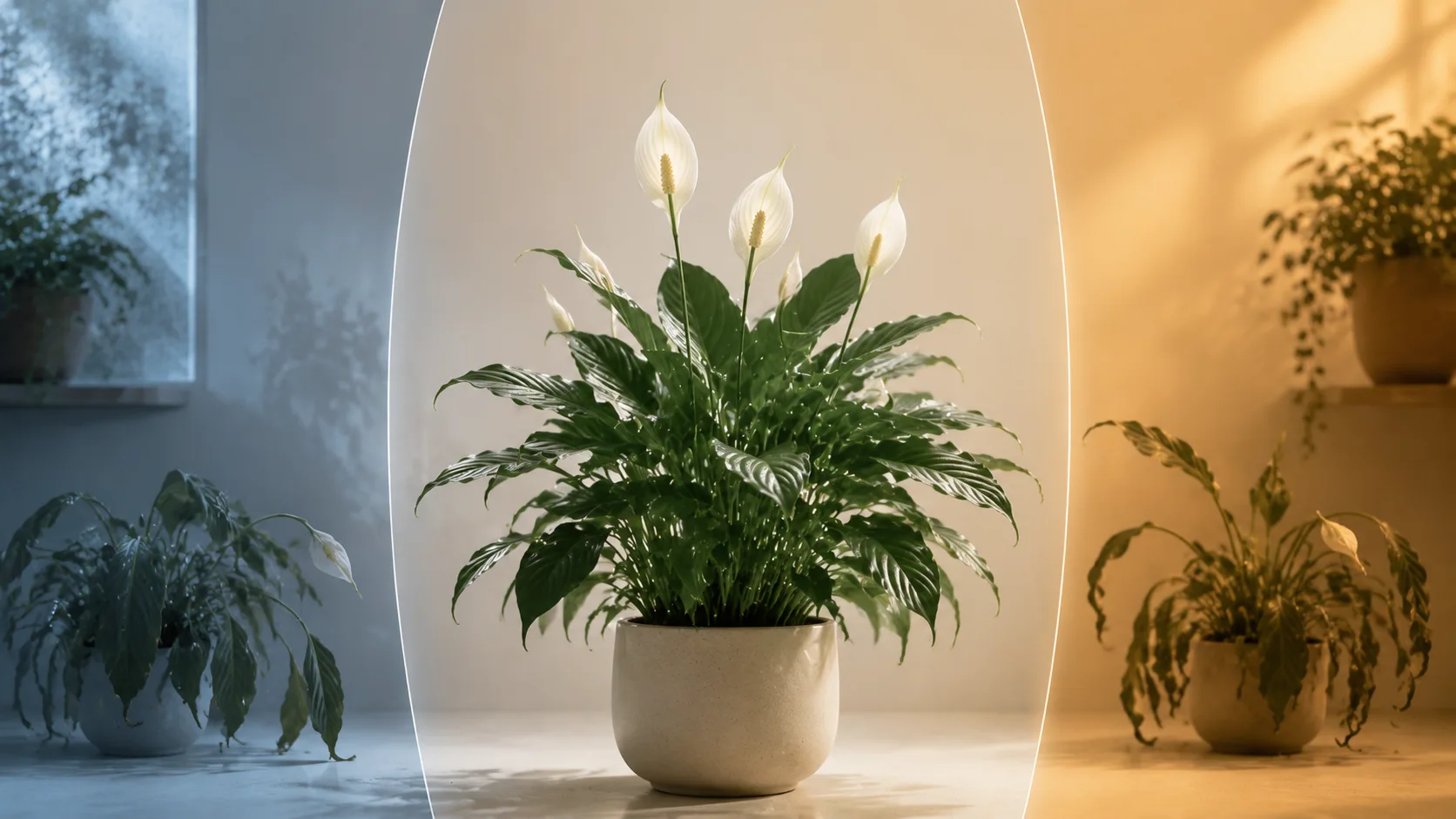
The ideal temperature range for peace lilies is 65–85°F (18–29°C), reflecting their tropical rainforest origin. Within this range, Spathiphyllum plants maintain steady growth, healthy leaf production, and consistent flowering potential. They prefer warm, humid environments similar to understory jungle conditions, where temperature fluctuations are minimal and indirect light is constant.
Peace Lily Temperature Range in Celsius
In Celsius terms, the optimal peace lily temperature range is 18–29°C. Nighttime temperatures should ideally stay above 15°C (60°F) to prevent growth slowdown and stress. Consistent warmth supports nutrient uptake and prevents physiological shock in the plant’s root system.
Peace Lily Temperature Range Indoors vs. Outdoors
Indoors, peace lilies benefit from controlled climates that maintain steady warmth. Outdoors, temperature fluctuations, wind, and seasonal changes make survival more difficult unless conditions are consistently warm.
Common indoor temperature hazards include:
- Cold windows during winter nights
- Direct AC airflow
- Heating vents causing dry hot air
- Unheated rooms in colder months
Peace Lily Temperature Tolerance — Minimum and Maximum Limits
Peace lilies can tolerate a wider range than their ideal conditions, but prolonged exposure outside this range leads to stress and visible decline. The key is understanding the difference between survival limits and optimal growth conditions.
Lowest Temperature a Peace Lily Can Survive
The lowest temperature a peace lily can tolerate short-term is around 45–50°F (7–10°C). However, exposure at this level quickly causes stress symptoms such as drooping, slowed metabolism, and leaf damage. Sustained cold exposure can lead to irreversible tissue injury.
Can Peace Lilies Tolerate Heat?
Peace lilies handle moderate heat up to about 90°F (32°C), but only if humidity is sufficient. Excess heat combined with dry air leads to stress symptoms such as curled leaves, scorched tips, and rapid soil drying. Heat stress reduces flowering and weakens overall plant vigor.
What Happens When a Peace Lily Gets Too Cold?
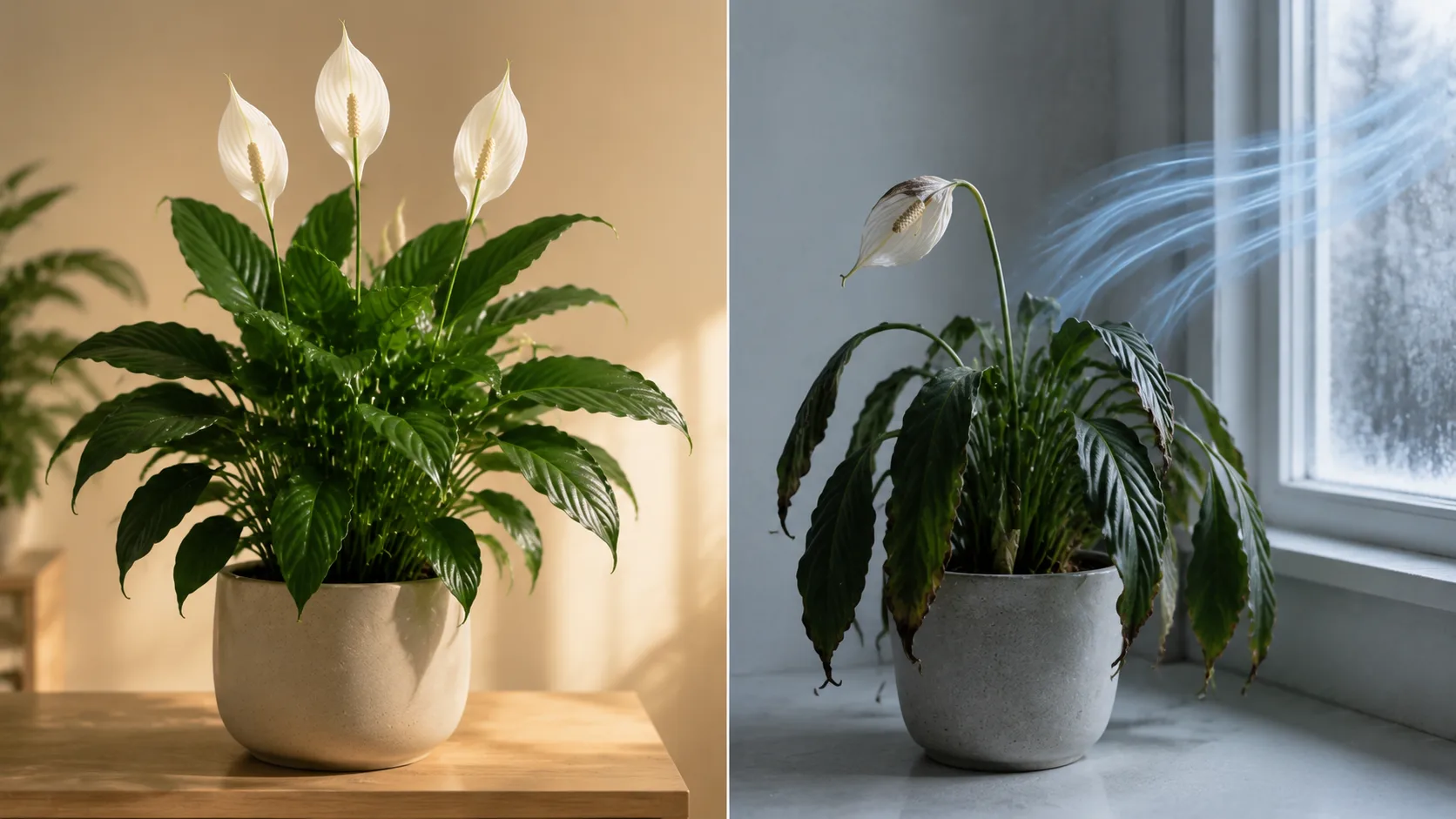
When exposed to cold temperatures, peace lilies experience physiological stress that disrupts water transport and cellular function. This leads to visible damage within hours or days depending on severity. Indoor species like Dracaena, explained in Dracaena fragrans Care Guide: Complete Indoor Growing Tips, also show similar stress signs when exposed to drafts or cold air. Tropical plants such as Alocasia Zebrina, covered in Alocasia Zebrina Care Guide: Complete Indoor Growing Tips, often display comparable stress reactions under temperature shock.
Signs of Peace Lily Temperature Shock
Common signs of temperature shock include:
- Drooping or curling leaves
- Dark or translucent leaf patches
- Sudden leaf drop
- Stunted or halted new growth
How to Fix a Peace Lily Damaged by Cold
To recover a cold-damaged peace lily:
- Move the plant to a stable warm location immediately
- Avoid sudden temperature swings during relocation
- Trim severely damaged or blackened leaves
- Adjust watering to avoid over-saturation
- Monitor for gradual new growth over time
Can You Put a Peace Lily Outside? Seasonal Temperature Considerations
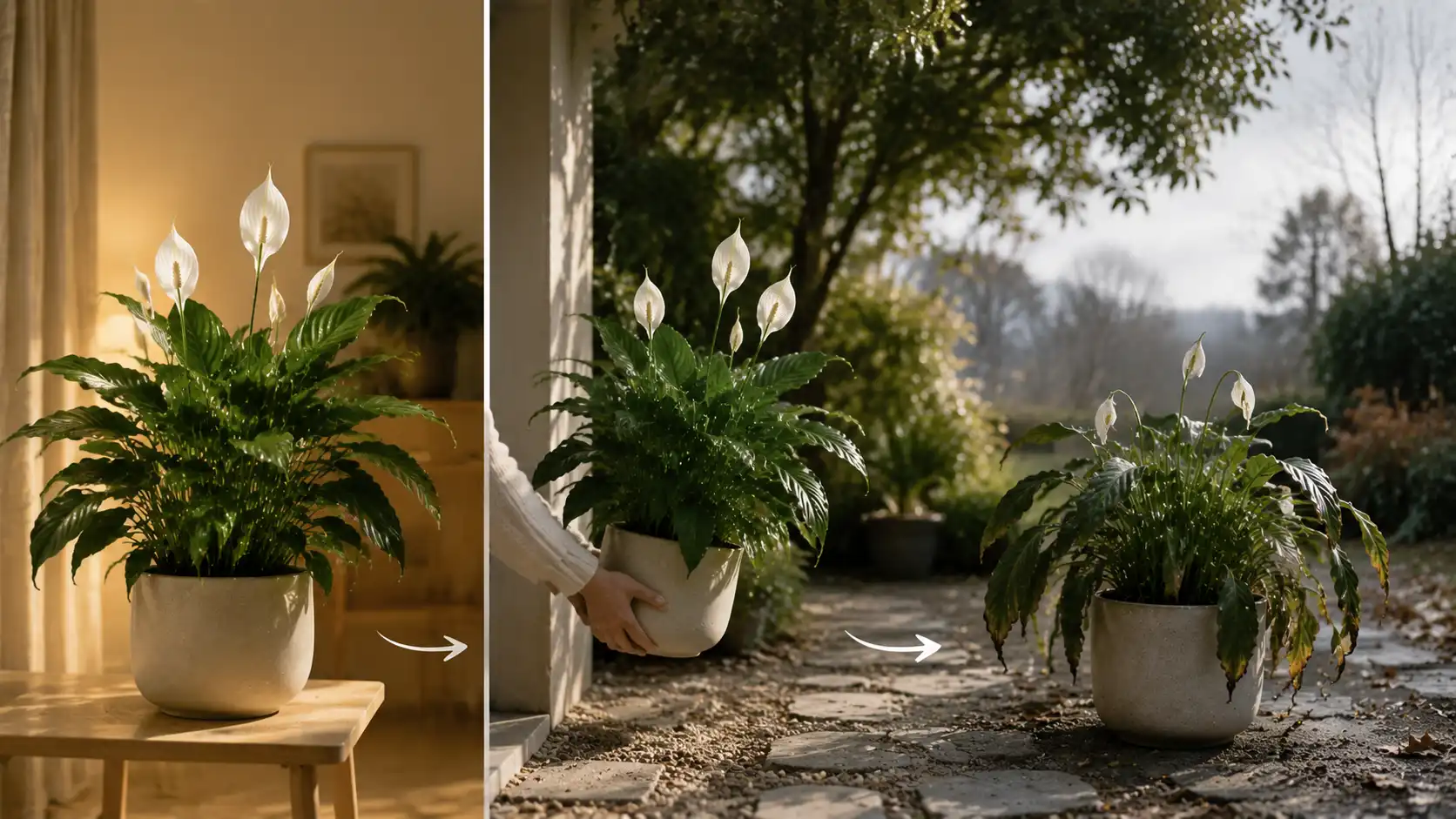
Peace lilies can be placed outdoors only during warm, stable weather conditions. Because they are tropical plants, they are highly sensitive to nighttime temperature drops and sudden seasonal changes.
How Cold Is Too Cold for Peace Lilies Outdoors?
Peace lilies should not be left outside when nighttime temperatures drop below 55°F (13°C). Even brief exposure to colder nights can trigger stress responses and long-term weakening of the plant.
Bringing Peace Lilies Outside in Summer
In summer, peace lilies can thrive outdoors in shaded, humid areas. They should be gradually acclimated to prevent shock and must be brought indoors before temperatures begin to fall in early autumn. Direct sunlight should always be avoided.
Red Peace Lily Temperature Range — Is It Different?
Red or variegated peace lily varieties follow the same general temperature range as standard Spathiphyllum species. They thrive best within 65–85°F (18–29°C) and share similar cold sensitivity. While minor cultivar differences exist in growth rate or leaf texture, temperature tolerance remains essentially the same across varieties.
How Temperature Interacts With Light and Water Needs
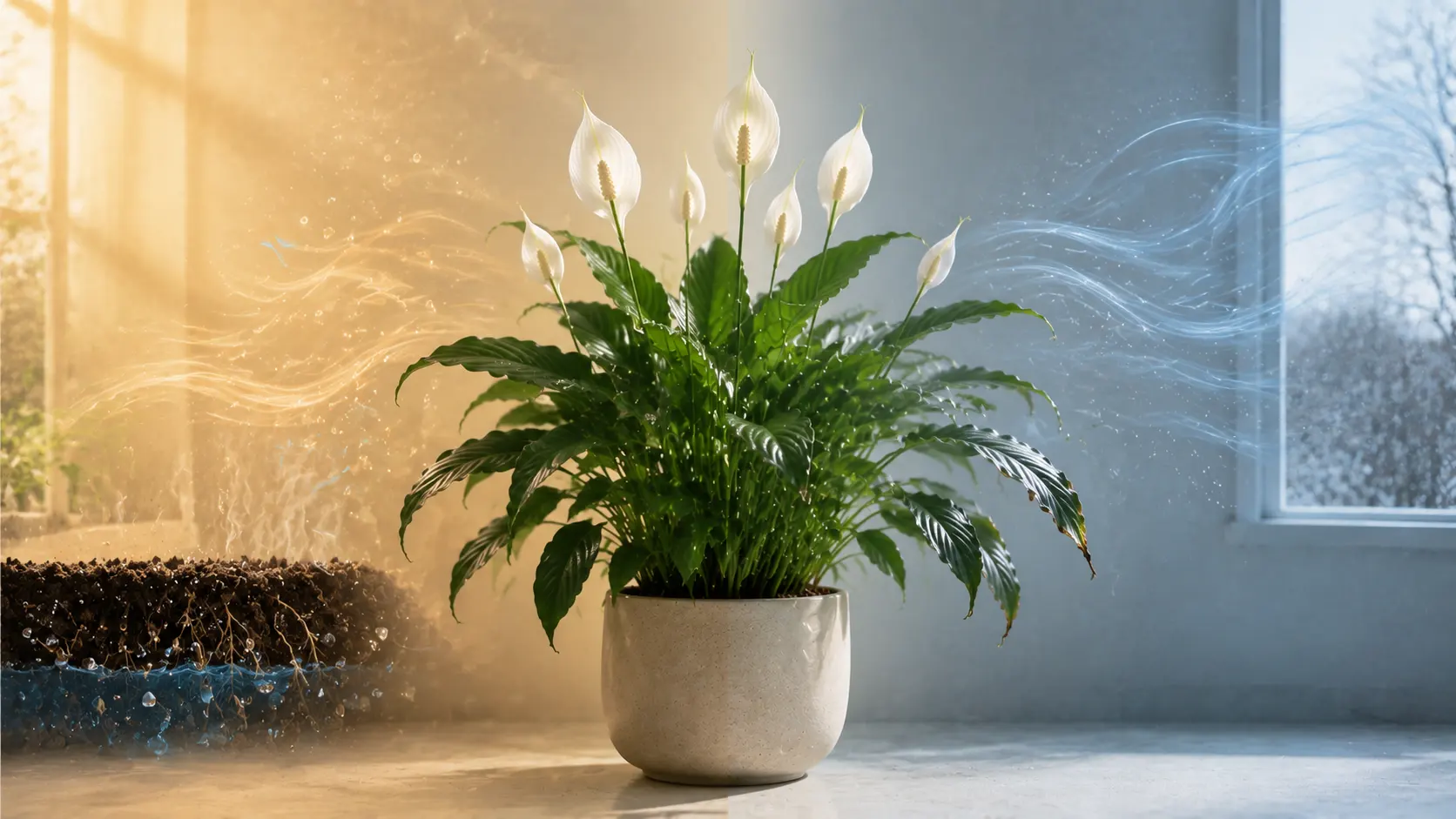
Temperature directly influences how peace lilies respond to light and water. When conditions are stable, plants use resources efficiently, but imbalance increases stress risk. Other tropical plants such as Calathea, discussed in Calathea Orbifolia Care Guide: Light, Water & Growth Tips, also react strongly to temperature and humidity changes.
Light Requirements and Temperature
Peace lilies prefer bright, indirect light combined with warm temperatures. Direct sunlight, especially in hot conditions, can scorch leaves. Low light in cold environments further slows metabolism and growth. Balanced conditions are essential for healthy development. Temperature changes can also indirectly affect watering balance, similar to issues seen in Peperomia Leaves Falling Off: Causes, Fixes, and Prevention.
Watering Needs and Temperature
Water uptake decreases significantly in cooler temperatures, increasing the risk of overwatering. In warmer conditions, evaporation increases and watering frequency may need adjustment. Plants like Monstera Adansonii, explained in Monstera Adansonii Hanging or Climbing, similarly require stable warmth for optimal growth.
Key watering cues:
- Water when topsoil feels dry
- Leaves droop slightly when thirsty
- Reduce watering during cooler months
- Avoid waterlogging in low-temperature conditions
How to Care for a Peace Lily Indoors (Full Care Snapshot)
Indoor peace lily care depends on balancing temperature with other environmental factors.
- Temperature: 65–85°F (18–29°C), avoid drafts
- Light: Bright, indirect sunlight
- Water: Keep soil lightly moist, not soggy
- Humidity: Moderate to high humidity preferred
- Soil: Well-draining, rich potting mix
- Feeding: Light fertilization during growing season
Peace lily care becomes easier when understood within broader plant principles explained in our complete guide on Plants Benefits and Guides (Complete Care, Types & Growing Tips).
Peace Lily vs. Snake Plant — Temperature Tolerance Compared
| Factor | Peace Lily | Snake Plant |
| Ideal range | 65–85°F (18–29°C) | 60–85°F (15–29°C) |
| Cold tolerance | Damaged below ~50°F | More tolerant, down to ~40°F |
| Outdoor suitability | Sensitive, shade-only | Hardier in mild conditions |
Similar low-maintenance indoor plants like the ZZ plant, covered in Zamioculcas Zamiifolia Care Guide: ZZ Plant Growing Tips, show different tolerance patterns to temperature stress. Snake plants, detailed in Sansevieria Laurentii Care Guide: Complete Indoor Tips, are significantly more tolerant of low temperatures than peace lilies.
Common Peace Lily Problems Linked to Temperature
Many peace lily issues are directly caused by unstable temperatures rather than watering or soil problems. Cold drafts, sudden temperature drops, or proximity to heating/cooling systems can trigger stress responses. Stress from unstable conditions can also weaken plants and increase vulnerability, as explained in Bugs in Indoor Plant Soil: Identification, Treatment & Prevention.
Why it happens:
- Exposure to cold windows or AC airflow
- Rapid temperature fluctuations
- Heating systems drying out nearby air
How to fix it:
- Relocate to a stable environment
- Remove damaged leaves gradually
- Stabilize watering habits
How to prevent it:
- Maintain consistent indoor temperature
- Keep away from vents and drafty windows
- Avoid seasonal shock during transitions
Conclusion
The peace lily temperature range plays a central role in maintaining healthy growth, with the ideal band set between 65–85°F (18–29°C). While the plant can survive short-term extremes, prolonged exposure to cold or excessive heat leads to stress, drooping, and long-term damage. Stable indoor warmth, combined with balanced light and watering, is the most important factor in keeping Spathiphyllum healthy and resilient.
FAQs
What is the best temperature range for a peace lily?
The best temperature range for a peace lily is 65–85°F (18–29°C), where it maintains active growth and healthy foliage development.
How cold is too cold for a peace lily?
Temperatures below 50°F (10°C) are too cold and can cause leaf damage, drooping, and cold shock symptoms.
Can peace lilies survive outside in winter?
No, peace lilies cannot survive winter outdoors in most climates because cold temperatures quickly damage their tropical tissues.
Why is my peace lily drooping after a temperature change?
Drooping after a temperature change usually indicates shock caused by sudden exposure to cold or hot drafts.
Do red peace lilies need different temperatures than regular peace lilies?
No, red peace lilies require the same temperature range as standard varieties, typically 65–85°F (18–29°C).
Can a peace lily recover from cold damage?
Yes, if the damage is not severe. Moving it to a stable warm environment and removing damaged leaves can help recovery over time.