
Introduction
The purple heart plant indoor benefits make this striking purple-leaved plant a popular choice for homes and indoor gardens. Scientifically known as Tradescantia pallida, the purple heart plant is valued for its vibrant foliage, low maintenance requirements, and adaptability as a houseplant. Native to northeastern Mexico and belonging to the Commelinaceae plant family, this species thrives in warm climates and bright indoor environments. When grown indoors, it adds strong color contrast, decorative texture, and living greenery to interior spaces. Understanding the plant’s growth habits, lighting needs, safety considerations, and proper care practices allows homeowners to enjoy its visual appeal while maintaining healthy plant growth indoors.
What Is the Purple Heart Plant?
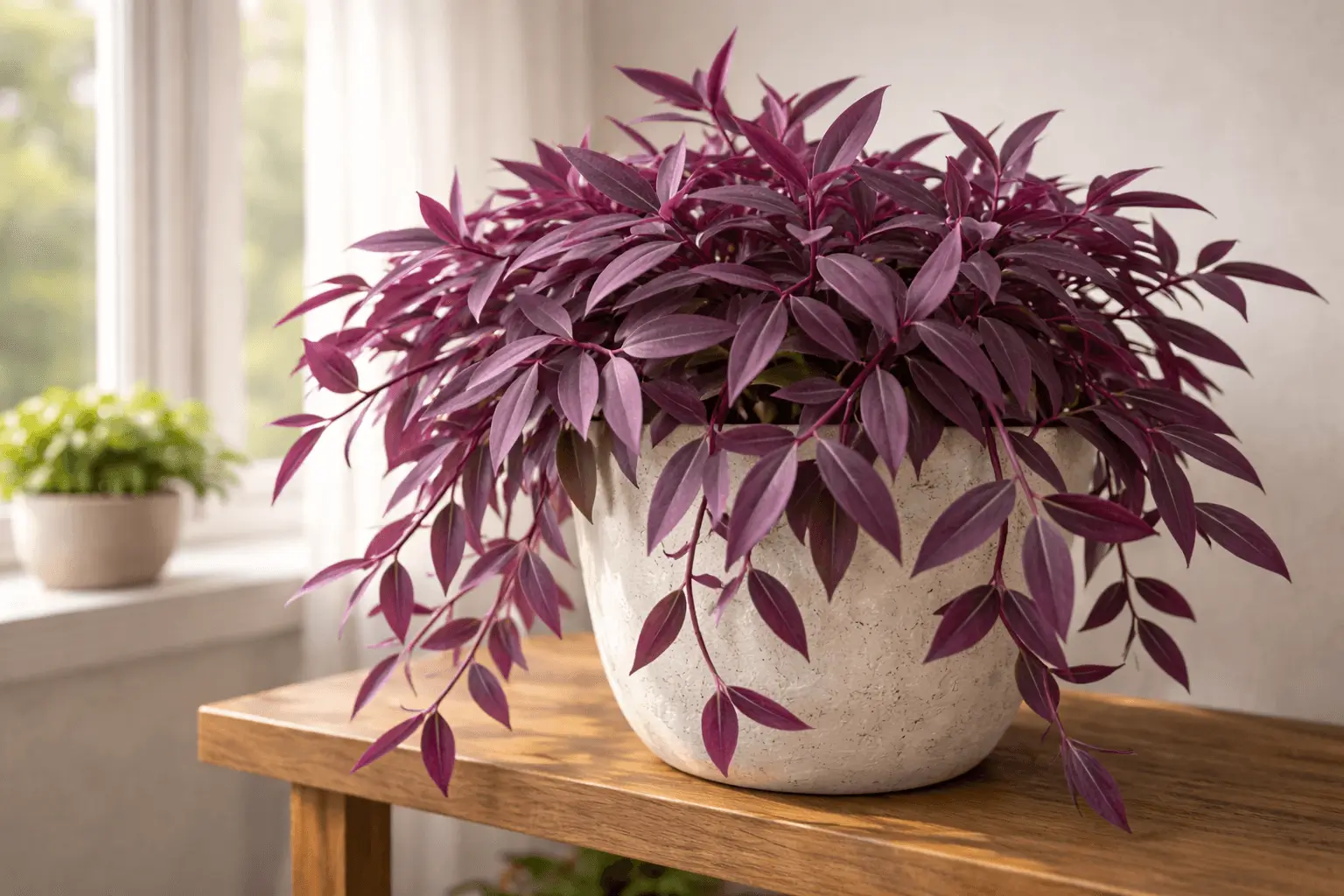
The purple heart plant is a fast-growing ornamental foliage plant scientifically classified as Tradescantia pallida. It is widely grown for its deep purple leaves, trailing stems, and adaptability to containers, making it suitable for indoor décor and hanging baskets.
Botanical identity and plant characteristics
The purple heart plant belongs to the Commelinaceae family, which includes other Tradescantia species commonly grown as houseplants.
Key characteristics include:
- Scientific name: Tradescantia pallida
- Common names: purple heart plant, purple queen plant, purple tradescantia
- Leaf color: deep violet to purple
- Growth habit: trailing or spreading stems
- Plant type: perennial ornamental foliage plant
The plant’s purple pigment comes from anthocyanins, plant compounds that create the rich purple coloration in the leaves. For a deeper botanical breakdown organized by species, family, and native habitat, the Purple Color Foliage Indoor Plant Reference Database catalogs Tradescantia pallida alongside other purple-hued houseplants. This makes it easy to cross-reference identifying traits before choosing a plant for your indoor collection.
Why the plant is popular as an indoor houseplant
The purple heart plant is widely used indoors because it combines decorative color with easy care requirements.
Reasons it is popular as a houseplant include:
- Strong purple foliage that contrasts with green houseplants
- Fast-growing trailing stems ideal for shelves and hanging baskets
- Adaptability to containers and indoor environments
These characteristics make the purple tradescantia plant a visually distinctive addition to indoor plant collections.
Purple Heart Plant Indoor Benefits
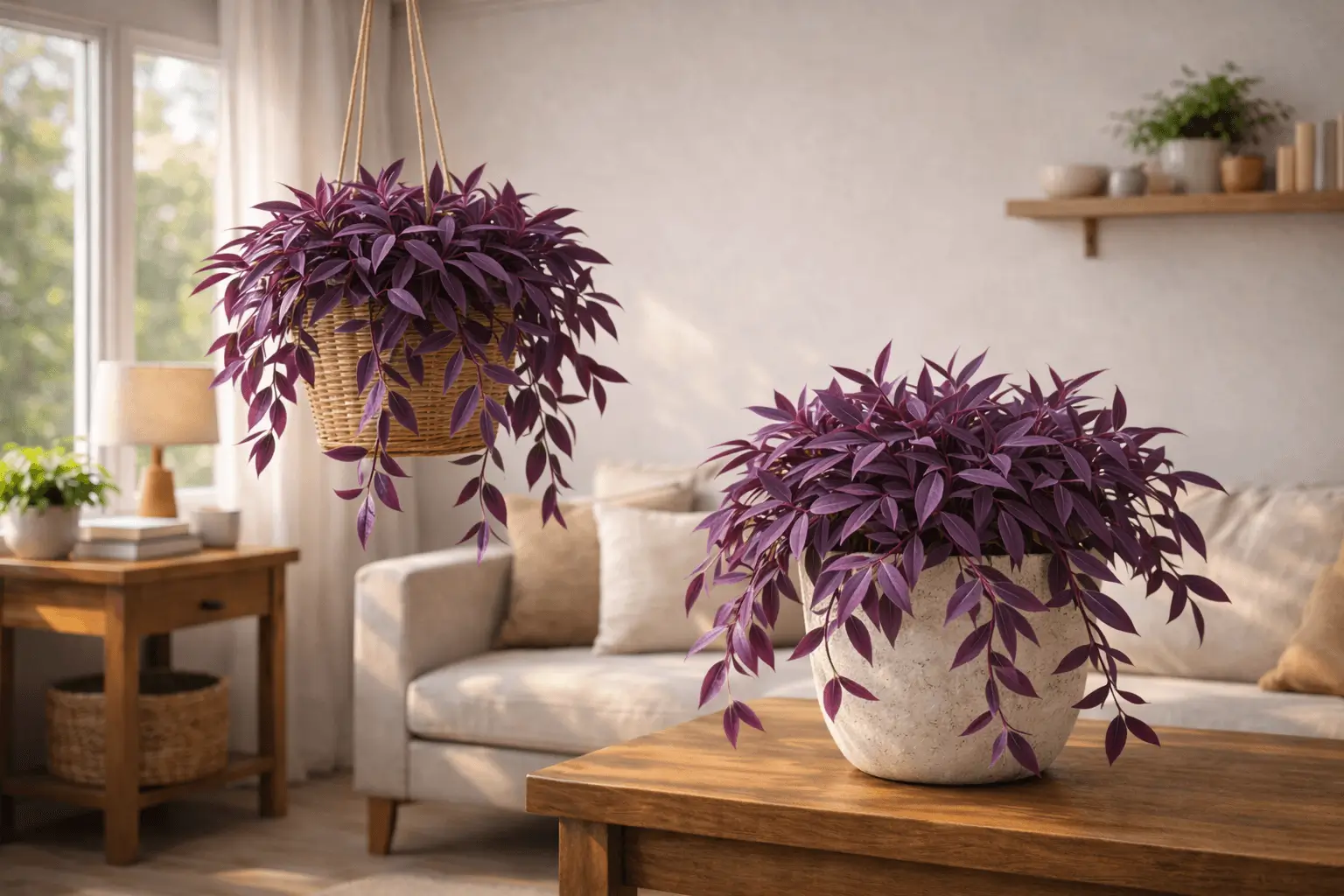
The main purple heart plant indoor benefits include decorative value, easy maintenance, and its ability to introduce natural greenery into indoor living spaces. While it is primarily grown for visual appeal, the plant can also contribute to calming indoor environments.
Decorative and aesthetic benefits
One of the most noticeable benefits of an indoor purple heart plant is its strong decorative impact.
Key visual benefits include:
- Deep purple foliage that contrasts with neutral interior colors
- Trailing stems that soften shelves, window areas, or hanging baskets
- A vibrant accent plant for modern, minimalist, or botanical décor styles
Because of its unusual coloration, the purple heart plant often serves as a visual focal point in indoor plant arrangements.
Low-maintenance indoor greenery
The purple heart plant is considered a beginner-friendly houseplant because it requires relatively simple care.
Basic maintenance advantages include:
- Moderate watering needs
- Tolerance of typical indoor temperatures
- Rapid growth that allows quick recovery from pruning
For new plant owners, the purple heart plant indoor plant provides ornamental foliage without demanding complex care routines.
Indoor environment enhancement
Indoor plants can help create calming and visually pleasant environments.
While plants alone do not dramatically purify indoor air, they can:
- Introduce natural greenery into living spaces
- Improve the visual atmosphere of a room
- Encourage relaxation through exposure to natural elements
For many homeowners, the purple heart plant benefits are primarily decorative and psychological rather than functional.
Can Purple Heart Plants Grow Indoors Successfully?
Yes. Purple heart plants can grow indoors successfully when they receive sufficient light, warm temperatures, and well-draining soil. These conditions help the plant maintain strong purple coloration and healthy growth.
Ideal indoor growing conditions
Purple heart plants prefer environmental conditions similar to their native warm habitats.
Important indoor conditions include:
- Bright light exposure
- Temperatures between 18–29°C (65–85°F)
- Well-draining potting soil
Standard houseplant soil mixed with perlite or coarse sand improves drainage and prevents root problems.
Light requirements for indoor growth
Light is the most important factor for maintaining the plant’s purple color.
Purple heart plants require:
- Bright indirect light
- Several hours of direct sunlight daily if possible
If light levels are too low, the plant may show:
- Fading purple color
- More green-toned leaves
- Weak or stretched stems
Placing the plant near a south- or west-facing window often improves growth.
How to Care for a Purple Heart Plant Indoors
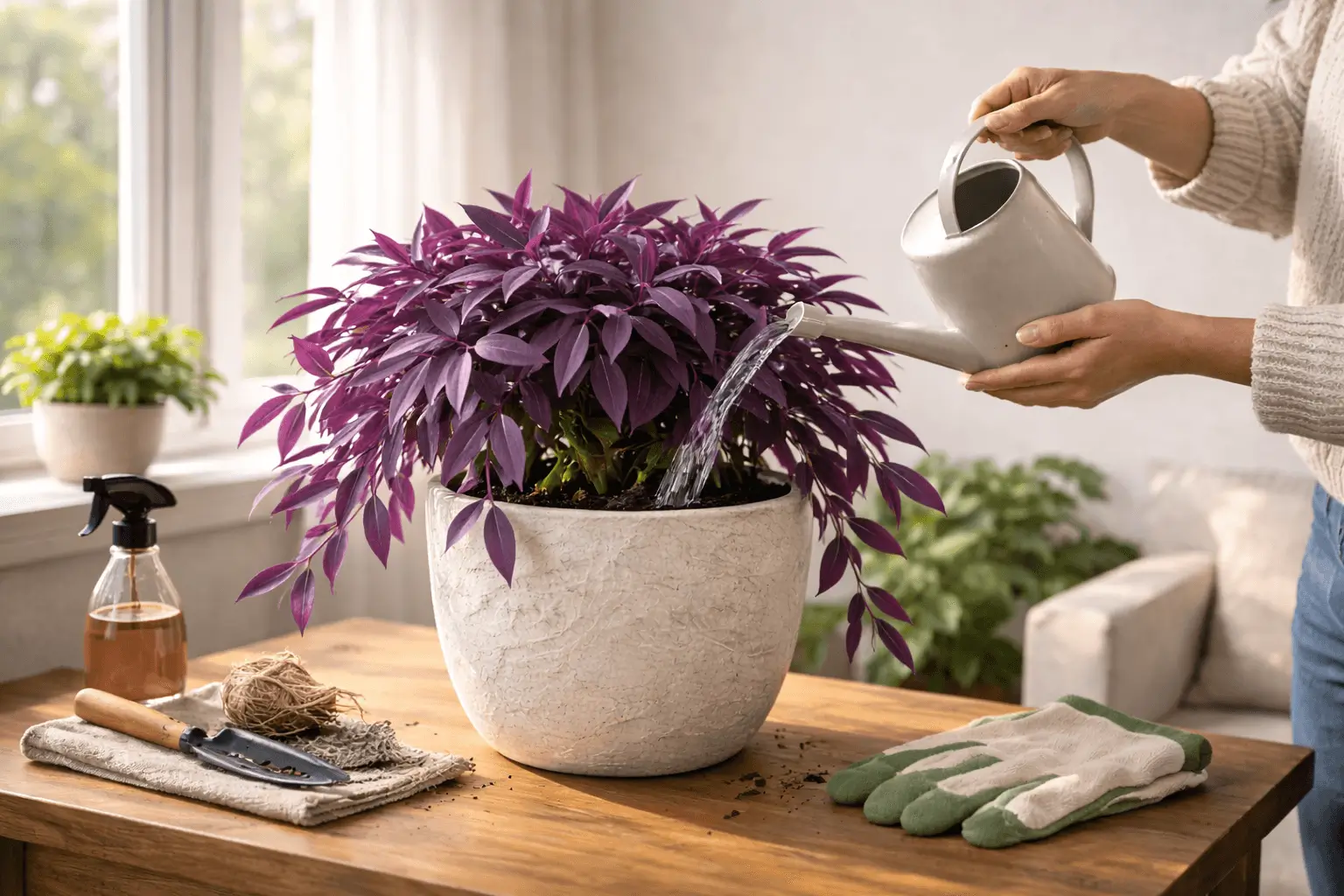
Caring for a purple heart plant indoors involves providing proper watering, occasional pruning, and stable indoor temperatures.
Watering and soil requirements
Purple heart plants prefer slightly dry conditions rather than constantly wet soil.
Recommended watering routine:
- Water when the top 2–3 cm of soil becomes dry
- Ensure pots have drainage holes
- Avoid leaving the plant in standing water
Overwatering is one of the most common beginner mistakes. If you’re managing multiple purple-leaved houseplants at once, this downloadable purple plant care tracker lets you log watering schedules, soil mix, and light exposure in one spreadsheet. It’s a practical way to stay consistent, especially since overwatering remains one of the most common beginner mistakes.
Pruning and plant maintenance
Regular pruning keeps the plant compact and healthy.
Benefits of pruning include:
- Preventing leggy stems
- Encouraging fuller branching
- Maintaining attractive shape
Gardeners often trim stems every 3–4 weeks during active growth.
Temperature and humidity needs
Purple heart plants tolerate typical indoor conditions.
Preferred environment:
- Temperatures above 15°C (59°F)
- Moderate household humidity
- Protection from cold drafts
Cold exposure may damage leaves or slow growth.
Medicinal and Traditional Uses of Purple Heart Plant
The purple heart plant has been referenced in traditional herbal practices, although most medicinal uses are not fully confirmed by modern scientific studies.
Traditional medicinal uses
In some regions, Tradescantia pallida has been used in traditional plant remedies.
Reported uses include:
- Anti-inflammatory applications
- Traditional herbal preparations for minor ailments
- Folk remedies in local medicinal traditions
However, these uses are primarily ethnobotanical observations rather than clinical treatments.
Potential skin-related uses
Some traditional practices mention using plant extracts for topical applications.
Possible references include:
- Plant sap used in minor skin treatments
- Herbal mixtures using plant leaves
Because plant sap may irritate skin, medical caution is strongly recommended.
Spiritual and Symbolic Meaning of the Purple Heart Plant
The purple heart plant is sometimes associated with symbolic meanings related to creativity, calmness, and spiritual balance.
Cultural symbolism of purple plants
Across many cultures, the color purple represents:
- Creativity
- Spiritual awareness
- Calm and reflection
Plants with purple foliage are often used as decorative symbols of creativity and artistic energy.
Purple heart plant spiritual meaning
In home décor traditions, the plant may symbolize:
- Vibrant energy in living spaces
- Natural beauty and creativity
- Emotional calm through nature-inspired interiors
These meanings are symbolic interpretations rather than scientific properties.
Safety Considerations and Possible Side Effects
Yes. Purple heart plants may cause mild skin irritation and should be handled carefully indoors.
Is the purple heart plant poisonous?
The plant is not considered highly toxic, but its sap can cause:
- Skin irritation
- Mild allergic reactions in sensitive individuals
Some pets may also experience digestive discomfort if leaves are ingested.
Safe handling and placement indoors
To reduce potential risks:
- Keep plants away from pets and small children
- Wash hands after pruning or handling sap
- Use gloves if skin sensitivity occurs
These precautions help ensure safe indoor plant care.
Common Problems When Growing Purple Heart Indoors
Indoor purple heart plants may experience a few common growth problems related to lighting or watering.
Fading leaf color
Fading purple leaves usually occur due to insufficient sunlight.
Solution:
- Move the plant closer to a brighter window
- Provide several hours of direct light daily
Leggy or stretched growth
Leggy stems often develop when light levels are too low.
Solution:
- Increase light exposure
- Prune elongated stems to stimulate new growth
Overwatering problems
Excess watering can cause:
- Root rot
- Soft or collapsing stems
Prevention:
- Use well-draining soil
- Allow soil to dry slightly between watering
Propagating Purple Heart Plants
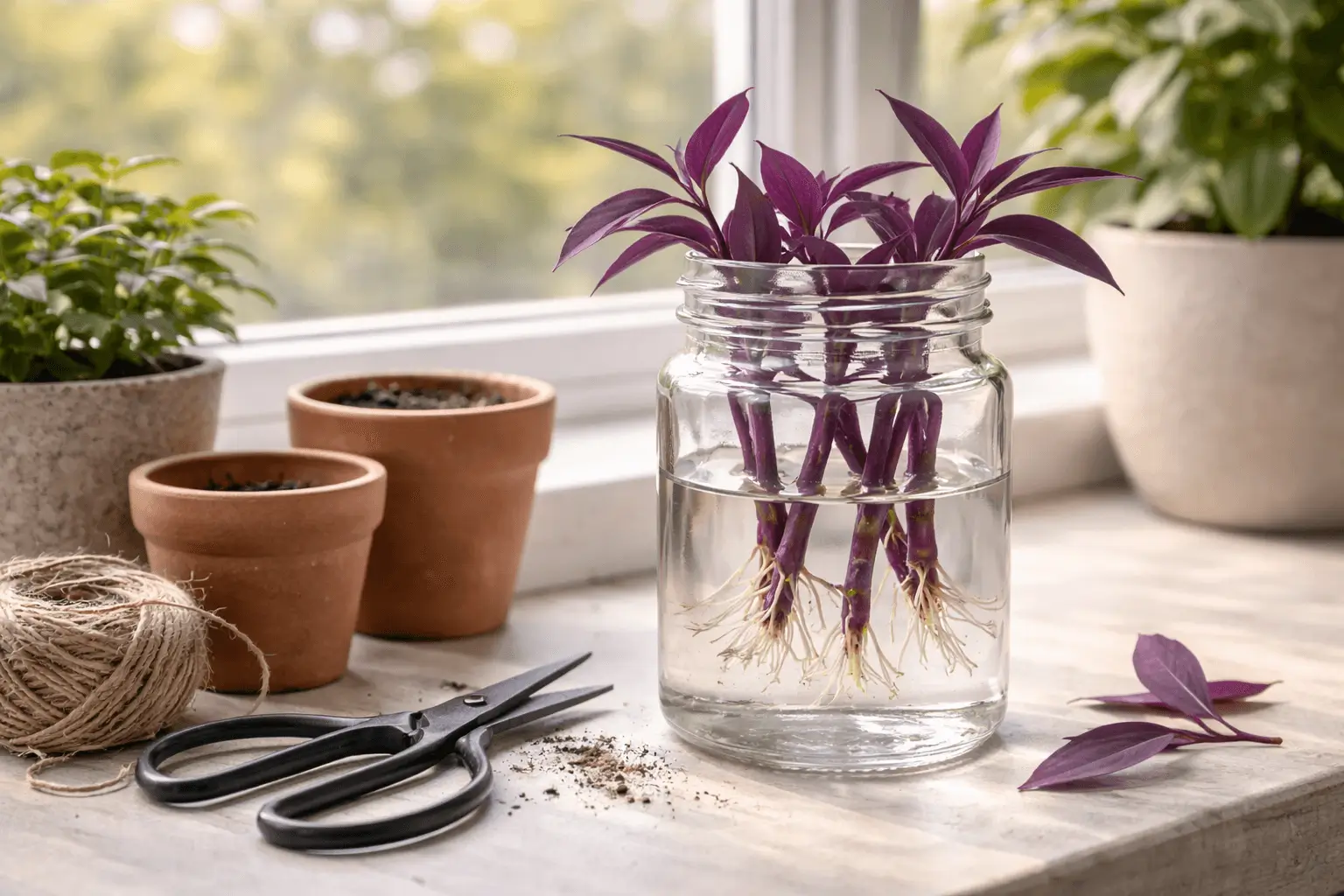
Purple heart plants are very easy to propagate using stem cuttings, making them ideal for beginner plant propagation.
Propagation through stem cuttings
The plant naturally produces roots along its stems, which allows quick propagation.
Gardeners often propagate the plant to:
- Expand plant collections
- Share plants with others
- Rejuvenate older plants
Step-by-step propagation process
Simple propagation steps include:
- Cut a healthy stem segment 8–12 cm long
- Remove lower leaves
- Place the stem in water or moist soil
- Roots typically develop within 1–2 weeks
Once rooted, the new plant can be transferred to a container.
Purple Heart Plant vs Similar Purple Houseplants
Purple heart plants are often compared with other purple foliage houseplants, particularly other Tradescantia varieties.
Purple heart vs purple queen plant
These names are often used interchangeably.
However, purple queen plants sometimes refer to slightly different cultivars of Tradescantia with variations in leaf size or growth pattern.
Purple heart vs other Tradescantia varieties
Compared to other Tradescantia plants:
- Purple heart has thicker, more elongated leaves
- Color tends to be deeper purple
- Growth habit is more upright before trailing
These characteristics make Tradescantia pallida easily recognizable among purple tradescantia plants. For gardeners who want a structured, side-by-side breakdown of leaf shape, color depth, and growth habits across purple foliage species, the open-source purple houseplant reference guide offers a categorized technical comparison. It’s a useful companion resource for identifying subtle differences between Tradescantia pallida and related purple-leaved cultivars.
Conclusion
The purple heart plant indoor benefits make Tradescantia pallida a visually striking and practical houseplant for indoor environments. Its deep purple foliage provides strong decorative contrast, while its trailing growth habit works well in containers, shelves, and hanging baskets. Beyond aesthetics, the plant is valued for its low maintenance requirements, making it suitable for both beginner and experienced indoor gardeners.
Successful indoor growth depends mainly on adequate lighting, well-draining soil, and moderate watering practices. When these conditions are met, purple heart plants grow quickly and maintain their vibrant color. Regular pruning and occasional propagation can also help keep the plant compact and healthy.
Although traditional medicinal and symbolic meanings are sometimes associated with the plant, its primary value indoors remains ornamental and decorative. With proper care and safe placement, the purple heart plant can serve as a colorful, easy-to-grow addition to indoor plant collections and modern home décor.
Learn more: elephant ear plant indoor benefits
FAQs
1. Is the purple heart plant good for indoor spaces?
Yes. The purple heart plant grows well indoors and provides vibrant foliage color while requiring relatively simple care compared with many houseplants.
2. How much light does a purple heart plant need indoors?
Purple heart plants prefer bright indirect light or several hours of direct sunlight daily to maintain their deep purple foliage color.
3. Is the purple heart plant safe for homes?
The plant may cause mild skin irritation in some individuals, so it should be handled carefully and kept away from pets and small children.
4. How often should you water a purple heart plant indoors?
Water the plant when the top layer of soil becomes dry, ensuring the pot drains well to prevent root rot.
5. Can purple heart plants be propagated easily?
Yes. Stem cuttings root quickly in water or soil, making propagation a simple and reliable method for expanding the plant.

2 Responses