
Introduction
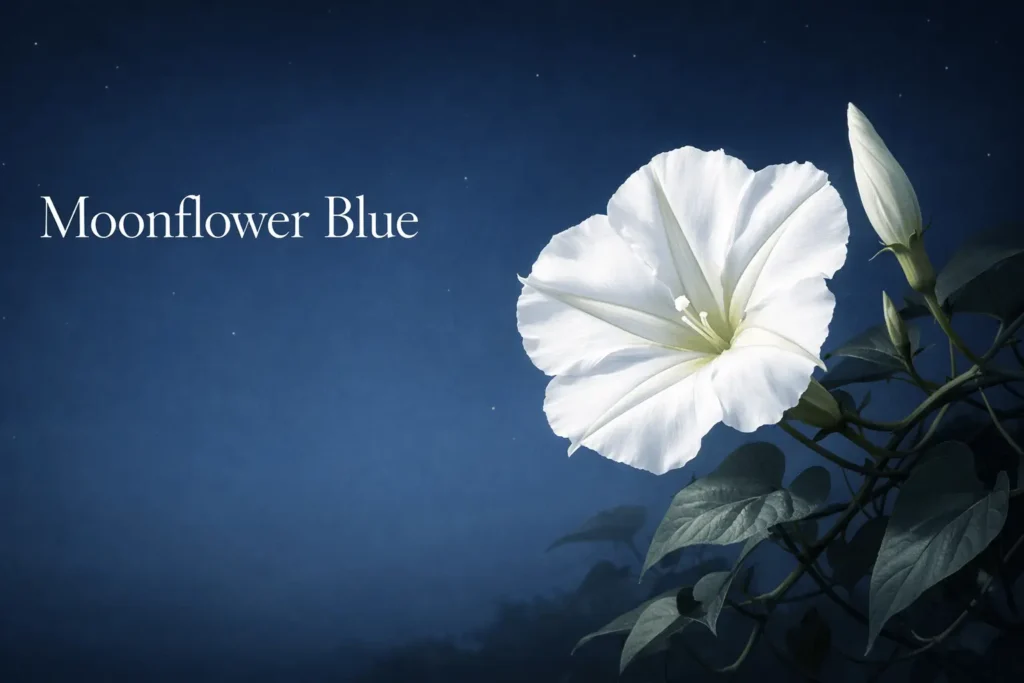
Moonflower blue is often searched as a rare or mystical flower color, but in reality, true blue moonflowers do not naturally exist. The term usually refers to symbolic meanings, color variations, or confusion with similar plants like blue lotus or purple-toned moonflowers. In botany, the true moonflower—Ipomoea alba—produces large white blooms that open at night. Understanding what “moonflower blue” really means requires exploring plant science, symbolism, and common misconceptions that shape how people interpret this unique and often misunderstood term.
Quick Summary
- True blue moonflowers do not occur naturally in botany.
- The term often refers to symbolism, myths, or misidentified flowers.
- Real moonflowers are white, night-blooming plants with strong meaning.
- Blue versions are typically dyed, edited, or confused with other species.
What Is “Moonflower Blue”?
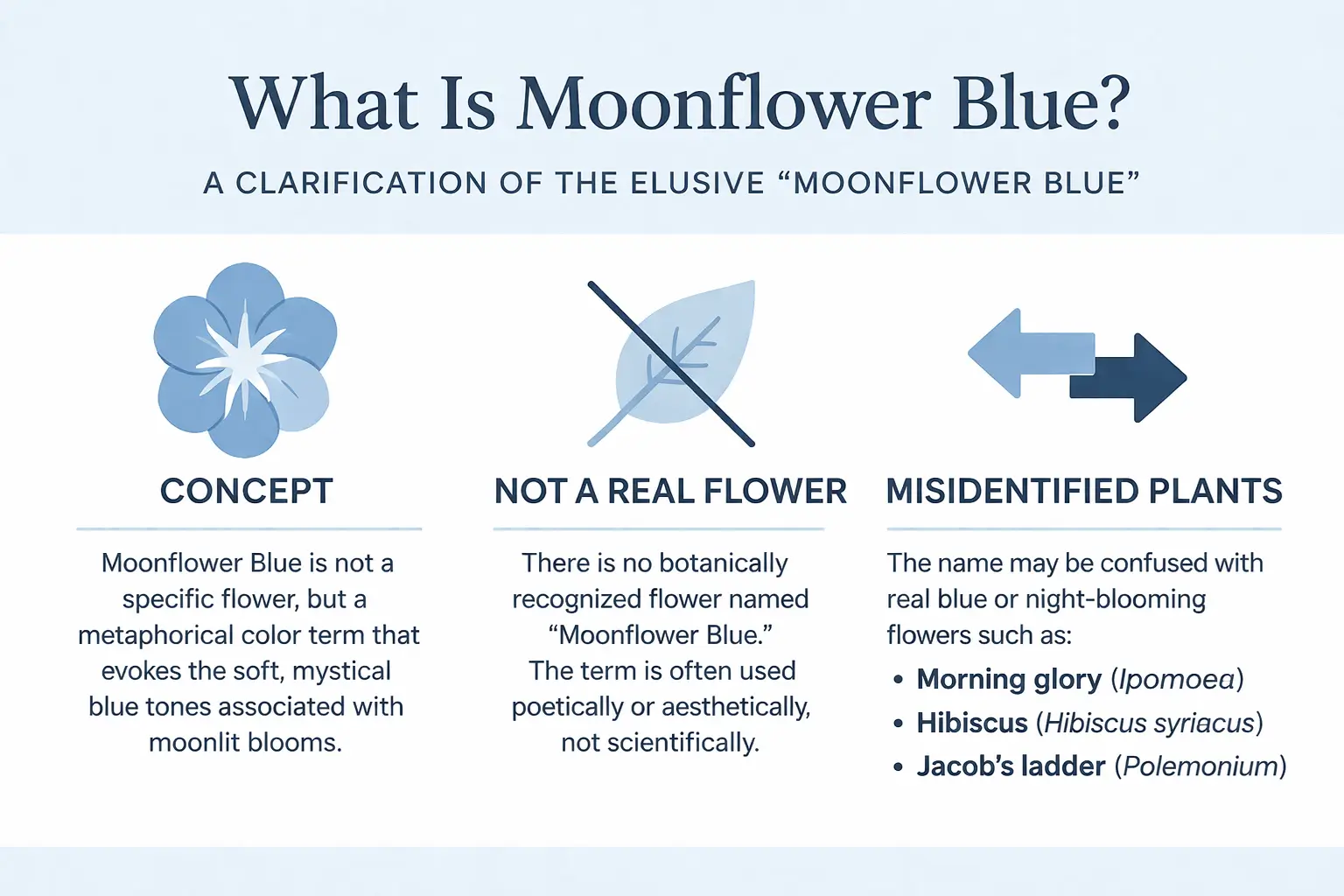
“Moonflower blue” refers to a conceptual or symbolic idea rather than a scientifically recognized flower. Most people searching this term are looking for a blue-colored version of the moonflower, but in reality, the plant itself does not produce blue blooms. The confusion often arises from similar-looking flowers or artistic representations.
This confusion is similar to cases explored in Can Strawberries Be Blue?, where color myths often arise from visual manipulation and misunderstanding of natural plant traits.
Is Moonflower Blue a Real Flower?
No, moonflower blue is not a real botanical variety. True moonflowers (Ipomoea alba) produce only white flowers that bloom at night. The question “are there blue moonflowers” is common, but scientifically, these plants lack the pigments required to produce blue coloration. Environmental changes cannot alter this natural limitation.
Why the Blue Moonflower Idea Exists
The idea of a blue moonflower exists due to cultural imagination and visual appeal. Blue flowers are rare in nature, making them highly desirable and often romanticized. This concept is also influenced by:
- Fantasy media and artistic depictions
- Misidentification of blue-toned flowers
- Symbolic interpretations tied to rarity and mystery
What Do Moonflowers Actually Look Like?
Moonflowers are known for their striking white blooms and unique night-blooming behavior. They belong to the morning glory family (Convolvulaceae) and grow as fast-climbing vines.
Typical Moonflower Appearance
Moonflowers have a distinctive and recognizable structure:
- Large, trumpet-shaped white flowers
- Blooms open in the evening and close by morning
- Strong fragrance, especially at night
- Vigorous vine growth (moonflower vine), often climbing trellises
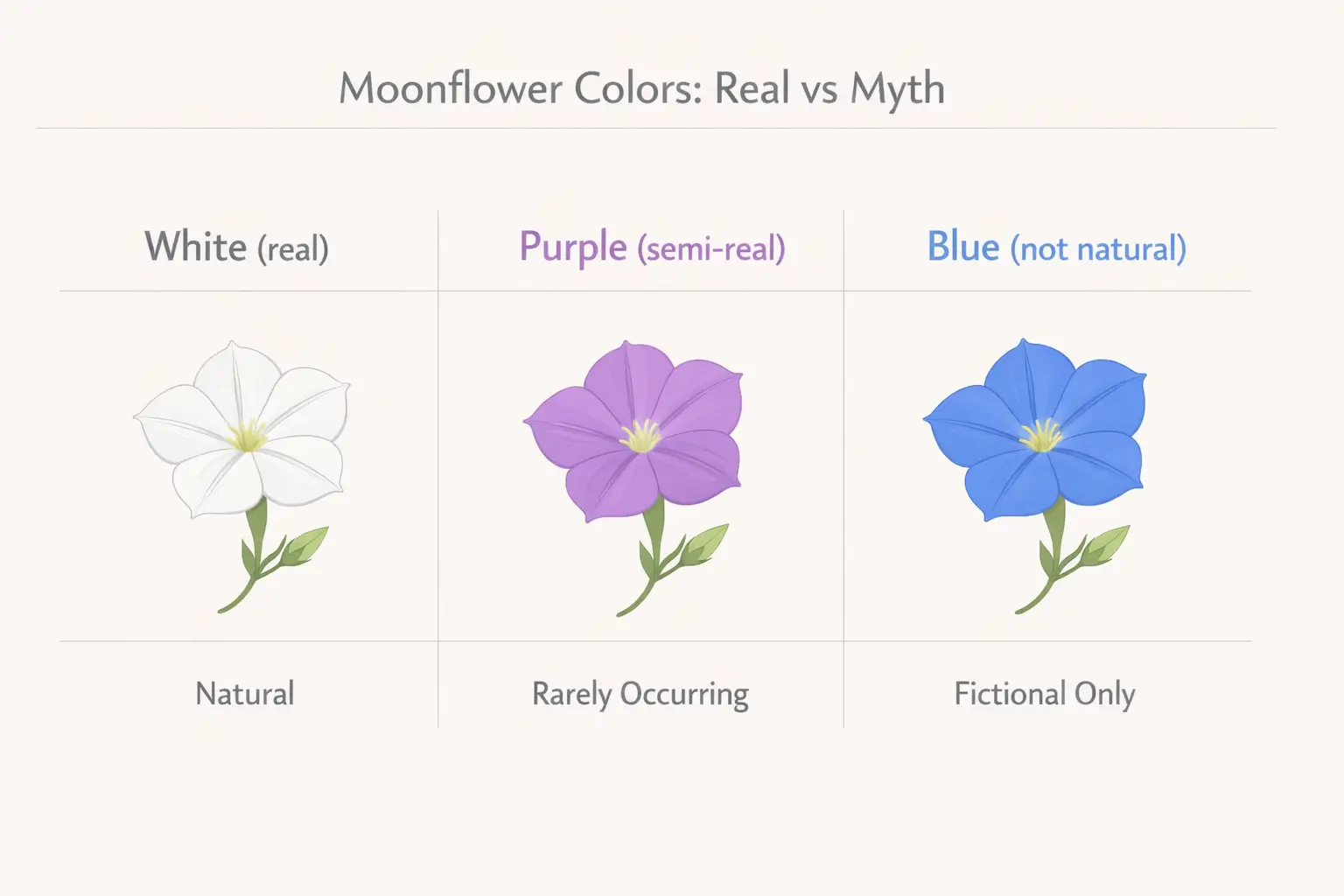
Common Color Variations (Table Section)
| Color | Real or Not | Notes |
| White | Real | Natural moonflower color |
| Purple moonflower | Semi-real | Related species or color variations |
| Blue moonflower | Not natural | Myth, dye, or confusion |
Moonflower Symbolism and Meaning
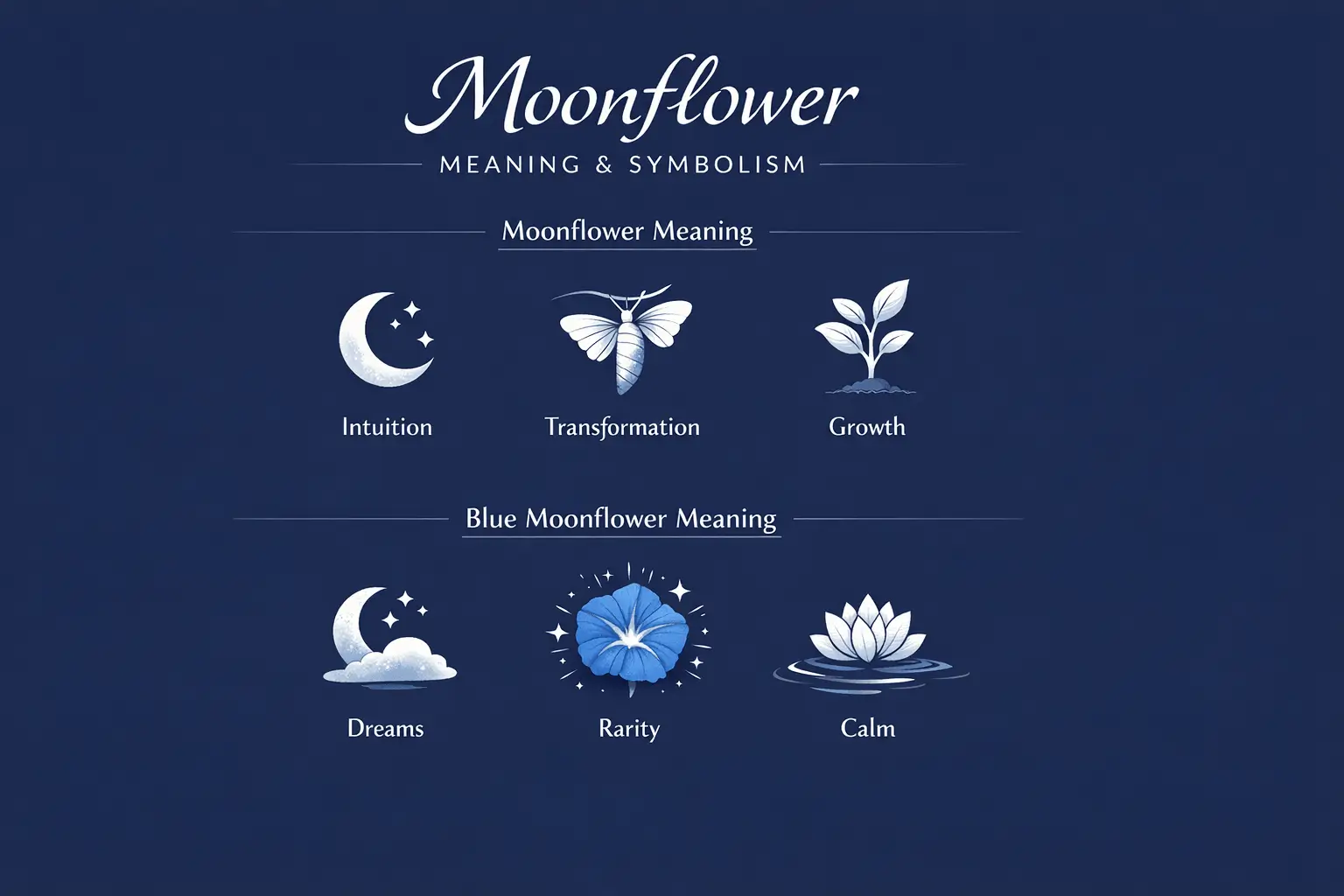
Moonflowers carry deep symbolic meaning due to their nocturnal blooming and pure white appearance.
Core Moonflower Meaning
Moonflowers are commonly associated with:
- Night, mystery, and the unknown
- Inner growth and hidden beauty
- Spiritual awakening and transformation
Blue Moonflower Meaning (Symbolic)
Even though blue moonflowers are not real, the idea carries symbolic value:
- Rarity and impossibility
- Dreams and imagination
- Emotional depth and calmness
This symbolic interpretation aligns closely with other rare or unusual flower colors, such as those discussed in Blue Heart Lily Flower, where meaning often outweighs botanical reality.
Flowers That Represent the Moon (Comparison Section)
- Moonflower → represents night, mystery, and transformation
- Blue lotus flower → symbolizes enlightenment and rebirth
- White lilies → represent purity and moonlight
Moonflower vs Blue Lotus Flower (Important Comparison)
Moonflower blue is often confused with the blue lotus flower, but they are entirely different plants.
Key Differences (Table Section)
| Feature | Moonflower | Blue Lotus Flower |
| Color | White | Blue |
| Bloom Time | Night | Day |
| Symbolism | Mystery | Enlightenment |
| Type | Vine | Aquatic plant |
The blue lotus, scientifically known as Nymphaea caerulea, is an aquatic plant with deep cultural significance, often associated with enlightenment (see Wikipedia: Nymphaea_caerulea).
Can Moonflowers Ever Be Blue? (Scientific Explanation)
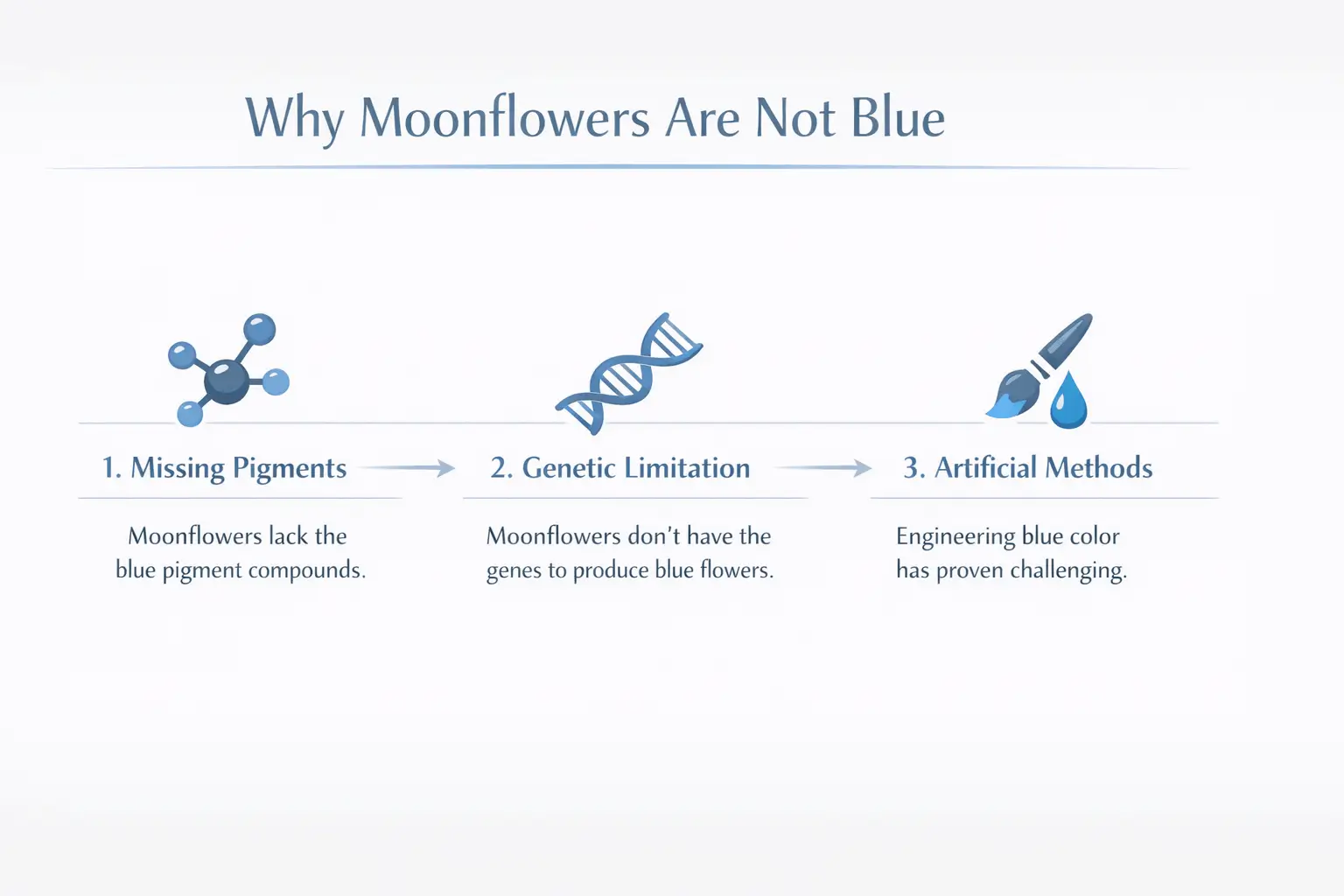
No, moonflowers cannot naturally be blue due to biological and genetic limitations. The plant lacks the necessary pigment compounds required to produce blue coloration.
Why Blue Moonflowers Don’t Occur Naturally
Blue pigmentation in plants depends on compounds called anthocyanins. Moonflowers do not produce the specific type or concentration needed for blue tones. Key limitations include:
- Absence of required pigment pathways
- Genetic constraints within Ipomoea alba
- Environmental conditions cannot override genetics
How Blue Variants Appear
Blue moonflowers seen online are typically artificial or misleading. These appearances come from:
- Dyeing techniques applied to flowers
- Lighting effects, especially under moonlight
- Edited or digitally altered images
Are Moonflowers Toxic or Dangerous?
Yes, moonflowers can be toxic, especially if consumed improperly.
Toxicity Facts
Moonflower plants contain compounds that can be harmful:
- Seeds contain toxic alkaloids
- Ingestion can cause poisoning symptoms
- Not safe for pets or children
Why Moonflowers Are Sometimes Considered Illegal
Moonflowers are sometimes misunderstood as illegal due to misuse of their seeds. Important points include:
- Some seeds contain compounds linked to hallucinogenic effects
- Regulations may vary by region
- The plant itself is generally legal to grow but can be misinterpreted
Common Problems, Myths & Misconceptions
Many misconceptions surround moonflowers, especially regarding their color and safety.
Common Misunderstandings
- Blue moonflowers exist naturally
- Moonflowers are safe to consume
- All moonflower species are identical
How to Identify Real Moonflowers
To correctly identify a real moonflower:
- Look for large white blooms that open at night
- Observe fast-growing vine structure
- Identify trumpet-shaped flowers
Color-based plant myths are common in horticulture, as also seen in Purple Marigold Flower, where perceived colors do not always reflect natural plant genetics.
Moonflower Plant Basics (Optional Care Context)
Moonflowers (Ipomoea alba) are relatively easy to grow in the right conditions.
Growth Habit
- Fast-growing climbing vine
- Ideal for trellises, fences, and vertical spaces
- Can quickly cover structures in one growing season
Environmental Needs
- Full sun exposure during the day
- Warm climates for optimal growth
- Well-draining soil to prevent root issues
Common beginner mistake: planting in shaded areas reduces flowering significantly, even if the vine grows well.
Conclusion
Moonflower blue is more of a symbolic or misunderstood concept than a real botanical phenomenon. While true moonflowers bloom in white and carry deep meanings tied to the night and transformation, the idea of a blue moonflower comes from imagination, cultural symbolism, or confusion with other plants. Understanding the science behind pigment limitations and the symbolic value of moonflowers helps separate myth from reality. Appreciating the natural beauty of Ipomoea alba allows for a clearer understanding of why moonflower blue remains an idea rather than a true flower.
FAQs
Are there real blue moonflowers?
No, true moonflowers are naturally white. Blue versions are either misidentified or artificially created.
What does a blue moonflower symbolize?
It represents rarity, mystery, and something that may not exist in reality.
Why are moonflowers associated with the moon?
They bloom at night, reflecting moonlight and symbolizing mystery and transformation.
Are moonflowers poisonous?
Yes, especially the seeds, which can be toxic if ingested.
What flower is often confused with a blue moonflower?
The blue lotus flower is commonly mistaken for a blue moonflower due to its color and symbolism.