
Introduction
The blue heart lily flower is often described as a rare, visually striking bloom associated with deep symbolism, mystery, and emotional meaning. While widely searched online, its existence, origin, and botanical identity are often misunderstood. The term frequently appears in images, art, and online listings, leading many to believe it is a real plant species. In reality, most references to the blue heart lily relate to altered visuals or symbolic interpretations rather than a true botanical classification. This guide explains what blue heart lilies really are, their meaning, related plant varieties, and how they compare to real blue-colored lilies found in nature.
Quick Summary
- The blue heart lily flower is largely a symbolic or altered version of lilies rather than a naturally occurring plant.
- True blue lilies are rare, but plants like Agapanthus (lily of the Nile) resemble them.
- The flower is commonly linked to meanings like mystery, rarity, and deep emotional connection.
- Many “blue heart lilies” seen online are dyed, edited, or fictional representations.
What Is a Blue Heart Lily Flower?

Definition and Concept
The term blue heart lily refers to a conceptual or visually altered version of a lily that features blue tones and often a heart-like center. It is not recognized as a scientific plant species within the genus Lilium. Instead, it is commonly used to describe:
- Digitally edited flower images
- Dyed lily blooms
- Artistic or symbolic floral representations
This concept often blends botanical imagery with creative interpretation, leading to widespread confusion about its authenticity.
Are Blue Heart Lilies Real?
No, blue heart lilies are not real naturally occurring plants. True lilies (Lilium species) do not produce blue pigment due to genetic limitations in anthocyanin expression.
It is important to distinguish between:
- Natural lilies: Real species in colors like white, pink, orange, and yellow
- Dyed flowers: White lilies artificially colored using floral dye techniques
- Digitally created images: Edited or AI-generated visuals showing unrealistic blue tones
This clarification helps separate the idea of a blue lily plant from actual botanical reality. True lilies belong to the genus Lilium, which includes a wide range of species but does not naturally produce blue flowers.
Blue Heart Lily Flower Meaning and Symbolism
Emotional and Cultural Meaning
The blue heart lily flower is commonly associated with symbolic meanings rather than botanical identity. It represents:
- Mystery and rarity
- Deep emotional connection
- Inner peace or spiritual depth
- Dreamlike or surreal beauty
These meanings arise from the rarity of blue flowers and the traditional symbolism of lilies.
Relation to General Lily Symbolism
Lily flowers are widely known for their symbolic associations across cultures. The meaning of a lily changes depending on its color:
- White lilies symbolize purity and innocence
- Pink lilies represent love and admiration
- Yellow lilies convey joy and friendship
The addition of blue—though artificial—extends this symbolism to include uniqueness and emotional depth. Similarly, plants like the Purple Heart Plant Indoor Benefits are valued for their rich color symbolism and visual appeal in both indoor and outdoor spaces.
Blue Lily Flower Meaning vs Other Colors (Comparison Block)
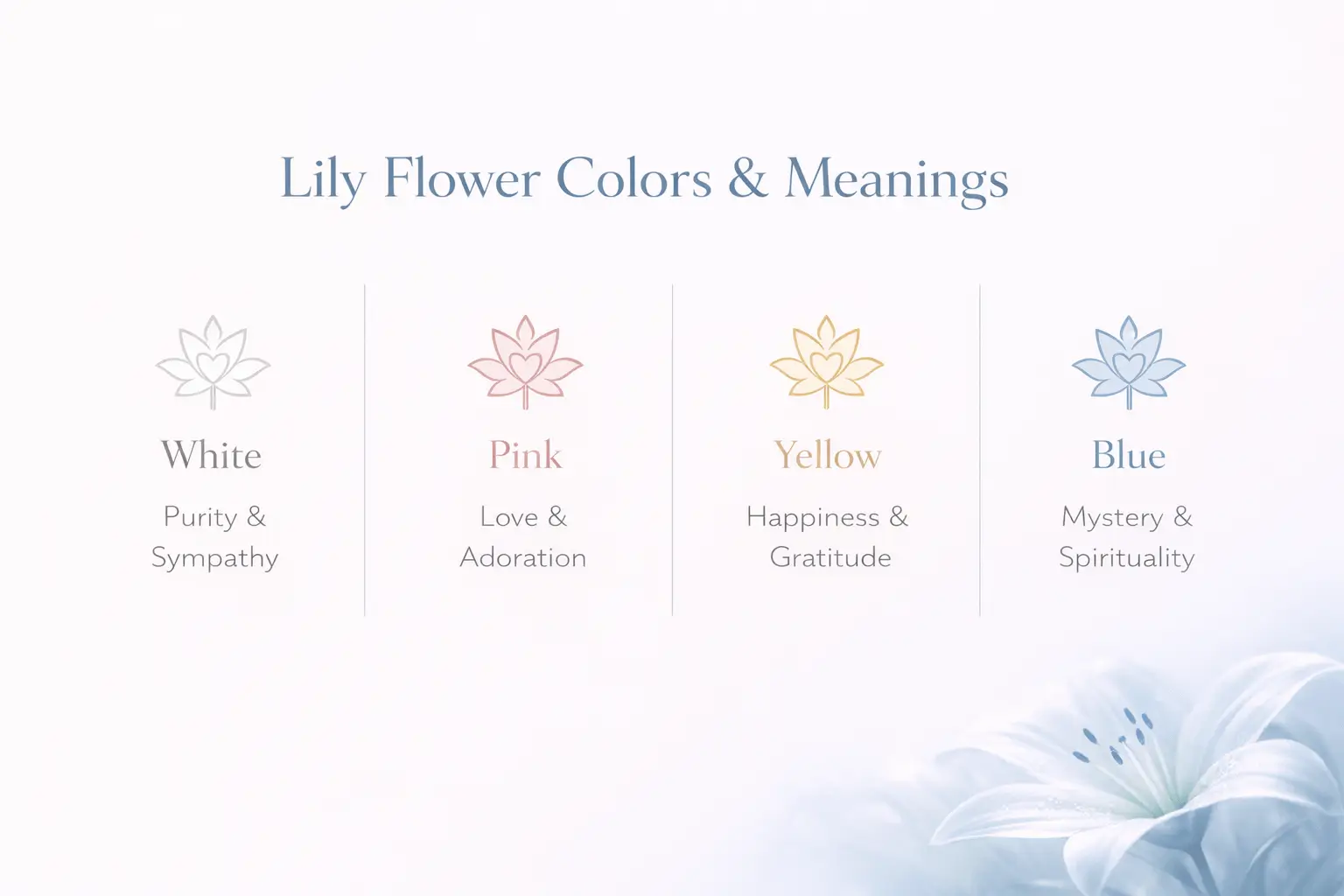
| Lily Color | Common Meaning |
| White | Purity, innocence |
| Pink | Love, admiration |
| Yellow | Friendship, joy |
| Blue | Mystery, rarity, uniqueness |
Types of Blue-Colored Lily-Like Flowers (Real Alternatives)
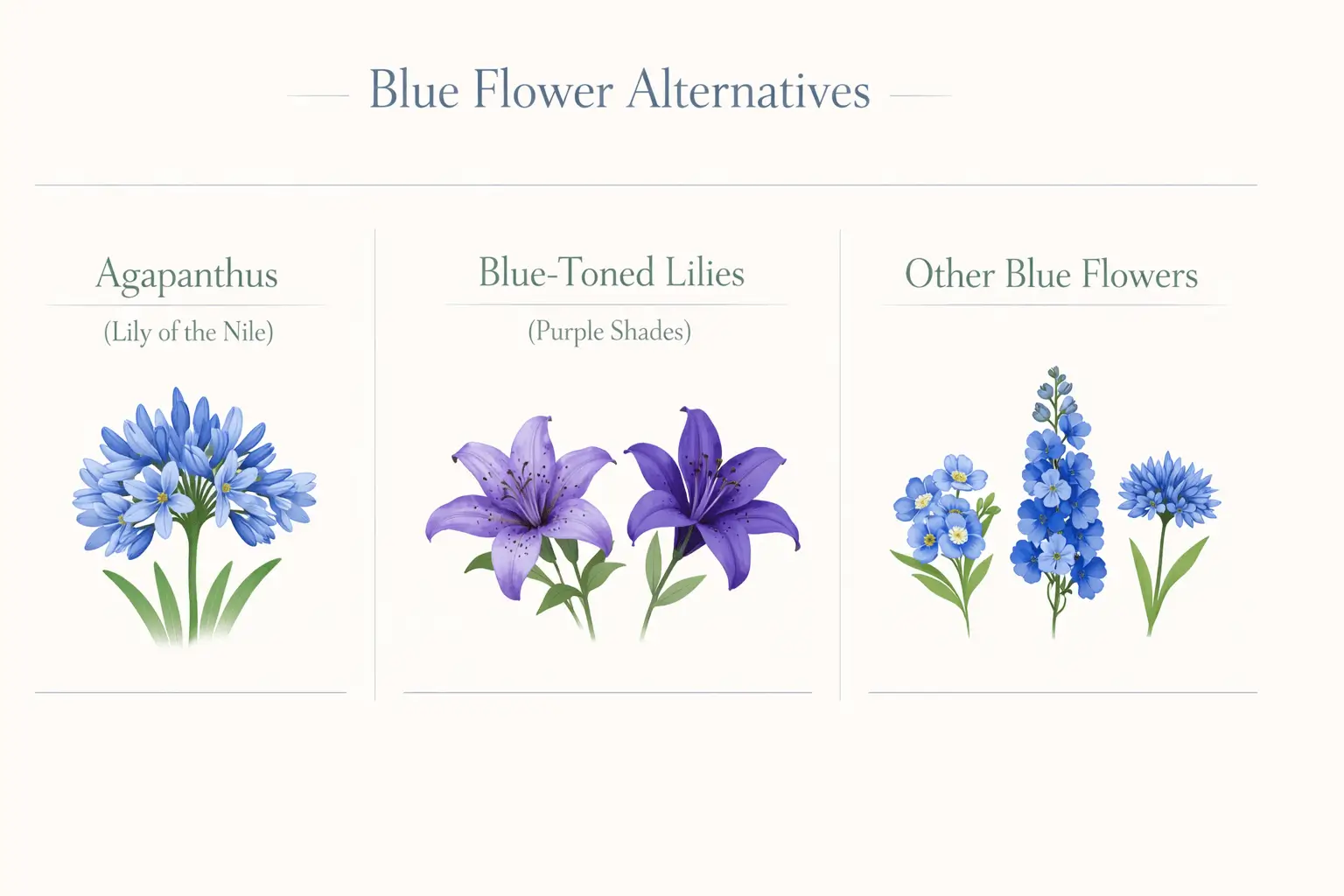
Agapanthus (Lily of the Nile)
Agapanthus, commonly known as the lily of the Nile, is one of the closest real-life alternatives to a blue lily. It is also referred to as:
- Blue Nile lily
- African lily
- Lily of the Nile blue
This plant produces clusters of blue to violet flowers and is widely used in landscaping.
Blue Lilium Varieties (Near-Blue Shades)
True blue Lilium varieties do not exist. However, some hybrids display deep purple or bluish tones under certain lighting conditions. These are often mistaken for blue lilies but are not genuinely blue.
Other Blue Flower Alternatives
Several plants offer blue hues similar to the concept of a blue heart lily:
- Dark blue flower varieties with rich pigmentation
- Small blue flowers used in borders or ground cover
- Light blue flowers for soft visual contrast
These alternatives provide practical options for achieving a blue-themed garden.
You can also explore flowers like the Blue Cosmos Flower, which naturally display blue tones and are often used as decorative alternatives in gardens.
Blue Heart Lily vs Blue Heart Tulip (Comparison Section)
| Feature | Blue Heart Lily | Blue Heart Tulip |
| Natural existence | Mostly symbolic | Also not naturally blue |
| Availability | Decorative/dyed | Dyed or hybrid |
| Meaning | Mystery, rarity | Elegance, uniqueness |
Both are largely conceptual and not naturally occurring in true blue form.
Blue Heart Lily in Art, Tattoos, and Digital Culture
Blue Heart Lily Flower Tattoo Meaning
A blue heart lily tattoo typically symbolizes individuality, emotional depth, and uniqueness. The combination of a rare color and a traditional flower shape enhances its artistic meaning.
Use in Fantasy and Media
The concept of rare blue flowers is often influenced by fictional works. Examples include:
- Silent princess flower
- Princess flower in fantasy games
These representations shape how people perceive rare or mythical flowers, contributing to the popularity of the blue heart lily concept.
Can You Grow a Blue Heart Lily Plant?
Availability of Seeds and Bulbs
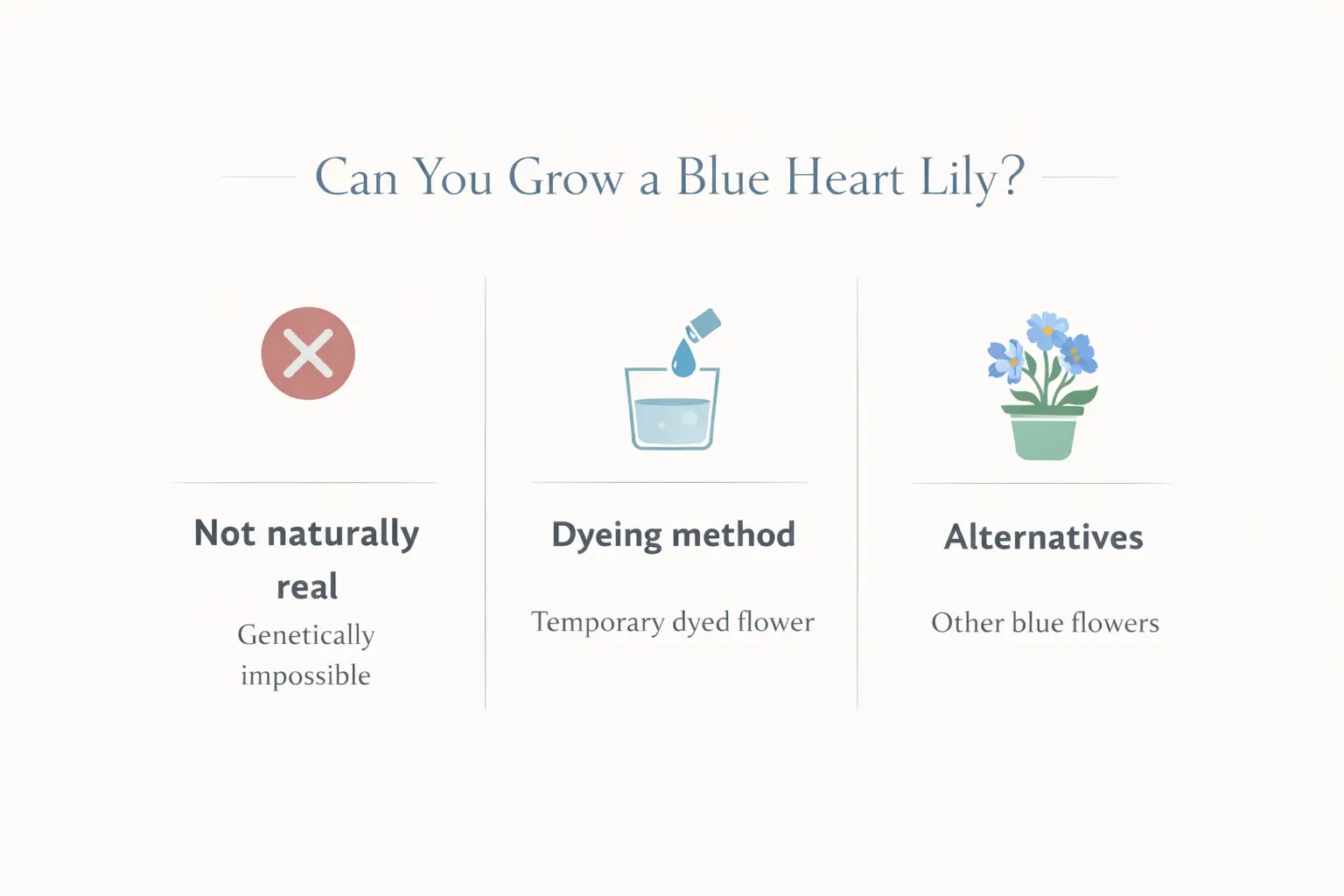
No, authentic blue heart lily bulbs or seeds do not exist. Listings for such products are often misleading or refer to dyed or unrelated plants.
How Blue-Colored Flowers Are Created
Blue-colored flowers are typically produced through:
- Dyeing white flowers with colored water
- Genetic modification (rare and limited)
- Artificial coloring techniques
These methods create the appearance of blue petals without altering natural genetics.
Care for Blue-Looking Lily Alternatives
For plants like Agapanthus or other blue flowers:
- Sunlight: Full sun to partial shade
- Watering: Moderate, with well-drained soil
- Soil: Fertile, slightly acidic to neutral
- Pruning: Remove spent blooms to encourage growth
A common mistake is overwatering, which can lead to root rot.
Where Do Blue Heart Lilies Come From? (Origin & Myth)
Natural vs Artificial Origins
Blue heart lilies do not have a natural botanical origin. Their appearance is primarily due to:
- Digital image manipulation
- Artificial dye processes
- Creative artistic designs
Online Popularity and Viral Flower Trends
Images of unusual flowers often gain attention on:
- Social media platforms
- Pinterest boards
- Online marketplaces
This exposure creates the perception that such flowers exist in nature.
Common Mistakes and Misconceptions
Believing Blue Heart Lilies Are Naturally Occurring
Many people assume these flowers are rare natural species, which is incorrect. They are not found in botanical classifications.
Confusing with Real Blue Flowers
Blue heart lilies are often confused with real plants such as:
- Agapanthus
- Blue orchids
- Other naturally blue flowers
Buying Fake or Misleading Products
Some sellers market unrealistic seeds or bulbs. Buyers should verify plant authenticity before purchasing.
Practical Tips: Choosing Real Blue Flowers Instead
Best Alternatives for Gardens
Reliable blue-flowering plants include:
- Agapanthus
- Blue perennials like delphiniums
Decorative Uses
Blue flowers can be used for:
- Floral arrangements
- Garden focal points
- Landscape accents
Color Enhancement Techniques
To achieve blue tones safely:
- Use floral dyes for cut flowers
- Combine blue and white flowers in arrangements
- Select naturally blue species for long-term planting
Conclusion
The blue heart lily flower is more of a symbolic or artistic concept than a naturally occurring plant. While true blue lilies remain extremely rare in nature, several real plants offer similar visual appeal. Understanding the difference between myth and reality helps gardeners, buyers, and enthusiasts make informed choices while still enjoying the beauty and meaning associated with blue-toned flowers.
FAQs
Are blue heart lilies real plants?
No, they are generally not real botanical species. Most are dyed, edited, or symbolic representations.
What does a blue heart lily flower symbolize?
It commonly represents mystery, uniqueness, deep emotion, and rarity.
Are there any naturally blue lilies?
True blue lilies do not exist, but plants like Agapanthus resemble blue lilies.
Can I grow a blue heart lily at home?
You cannot grow a true blue heart lily, but you can grow blue-colored alternatives.
Why are blue flowers so rare in nature?
Blue pigment is difficult for plants to produce naturally, making true blue flowers uncommon.
Is the blue heart lily used in tattoos?
Yes, it is often used in tattoos to symbolize individuality and emotional depth.



One Response