

Introduction
The types of lilly pilly include a wide range of native Australian plants belonging mainly to the Syzygium and Acmena genera. These evergreen shrubs and trees are widely used for hedging, screening, landscaping, and ornamental gardens across Australia and similar climates.
Different lilly pilly varieties vary in height, growth habit, flowers, berries, and suitability for hedges or feature trees. Some remain compact shrubs ideal for small gardens, while others develop into tall privacy screens or large ornamental trees.
Understanding the different types of lilly pilly, including dwarf, compact, and large tree forms, helps gardeners choose the best plant for privacy screens, ornamental landscaping, or edible fruit production.
What Is a Lilly Pilly? Plant Characteristics and Botanical Classification
The Botanical Background of Lilly Pilly Plants
The term lilly pilly refers to several closely related plant species belonging primarily to the Syzygium (formerly including some species classified under Acmena) within the Myrtaceae plant family. These plants are native to Australia and are widely cultivated for landscaping and hedging.
Common botanical species often referred to as lilly pilly species include Syzygium australe, Syzygium smithii, Syzygium paniculatum, and Syzygium smithii (formerly Acmena smithii). Many modern cultivars and hybrids are derived from these species, which is why the plants are often collectively described as types of syzygium or lilly pilly syzygium varieties.
In Australian gardening culture, these plants are commonly grouped together as native lilly plants because they share similar foliage, flowers, berries, and growth habits.
Identifying Features of Lilly Pilly Trees and Shrubs
Lilly pilly plants are recognized by their glossy evergreen leaves, soft new growth, and dense branching habit that makes them excellent hedge plants.
Many varieties produce clusters of lilly pilly white flowers, which appear in spring or early summer. These flowers are small but decorative and are followed by colorful berries.
The lilly pilly fruit varieties typically appear as pink, red, purple, or magenta berries. Many of these berries are edible and have a mild tart flavor.
Because of their dense foliage and fast growth, lilly pilly plants are widely used for hedging, screening, and ornamental landscaping.
How Many Types of Lilly Pilly Are There?
Major Species Groups Used in Australian Gardens
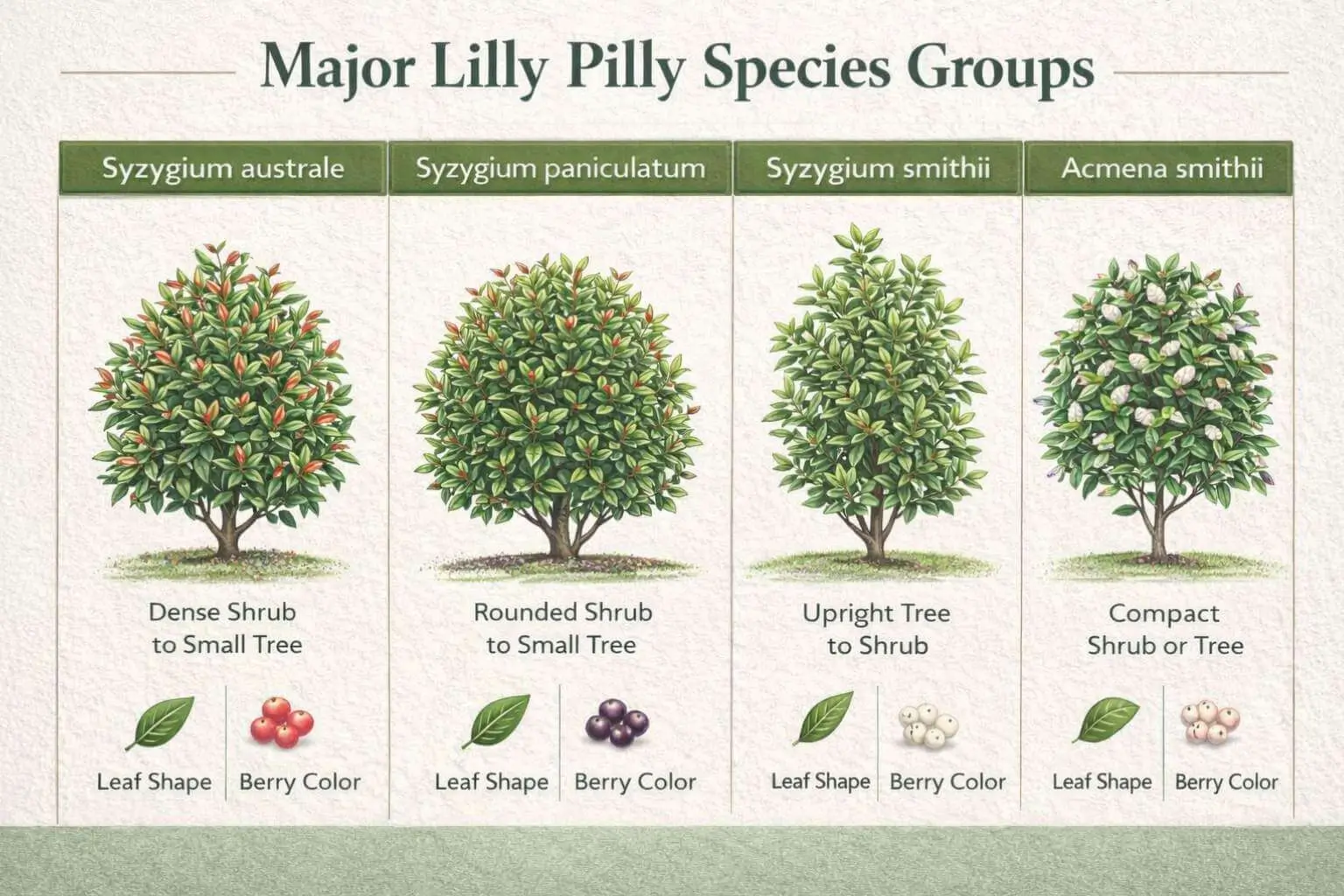
There are numerous types of lilly pilly, but most cultivated garden plants come from a few major species groups.
The most common species include:
- Syzygium australe
- Syzygium paniculatum
- Syzygium smithii (formerly Acmena smithii)
These species have been developed into many cultivars used in landscaping. As a result, gardeners often ask how many types of lilly pilly are there or are there different types of lilly pilly.
In practice, there are dozens of cultivated forms derived from these base species. These plants are commonly referred to as syzygium lilly pilly varieties in nurseries and landscape design.
Common Lilly Pilly Species Used for Landscaping
Several lilly pilly species are particularly popular for landscaping.
Syzygium smithii (formerly Acmena smithii) is widely used for hedging because of its dense growth and tolerance to pruning. Syzygium australe varieties are also common in modern gardens because they are resistant to pests and have compact growth habits.
Different syzygium varieties are used depending on the desired height, density, and landscaping purpose.
Major Types of Lilly Pilly Varieties Used in Gardens
Dwarf and Compact Lilly Pilly Varieties
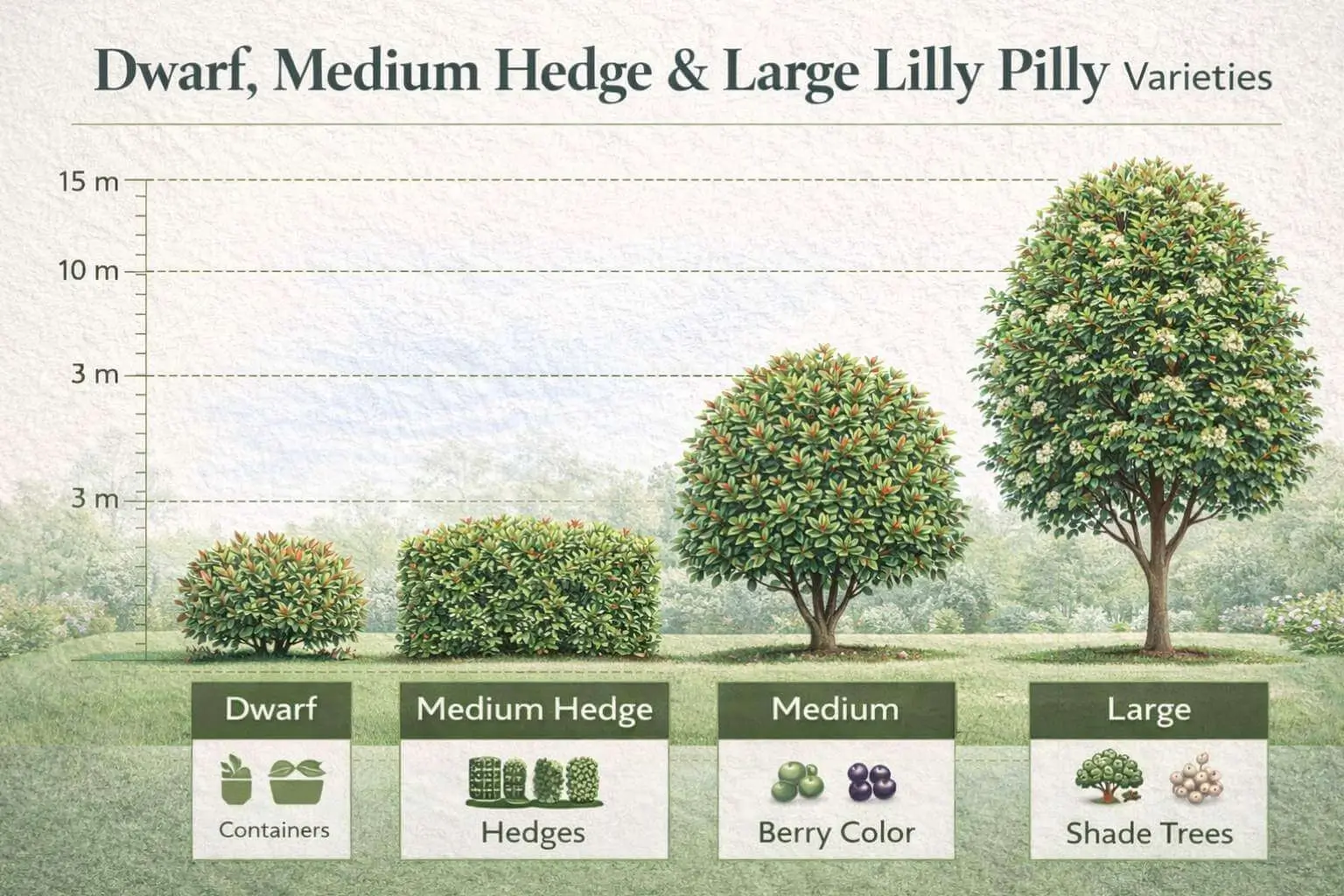
Dwarf lilly pilly varieties are ideal for small gardens, patios, and container planting.
These small lilly pilly varieties typically grow between 1 and 3 meters tall. Because of their compact structure, they are suitable for borders, low hedges, and decorative landscaping.
Many compact lilly pilly varieties are also planted in large containers or courtyard gardens where space is limited.
Medium Hedging Lilly Pilly Varieties
Medium-sized varieties are the most commonly used lilly pilly hedge plants.
These varieties grow between 3 and 6 meters tall and form dense foliage, making them ideal lilly pilly screening plants.
Gardeners often choose these varieties when looking for best lilly pilly hedge types that provide privacy while remaining manageable through regular pruning.
Large Lilly Pilly Trees
Some large lilly pilly tree varieties grow into tall ornamental trees suitable for large gardens or public landscapes.
A full grown lilly pilly tree may reach heights of 10 to 15 meters depending on the species. These large varieties are sometimes described as the tallest lilly pilly types and are used as feature trees or shade trees.
Popular Lilly Pilly Varieties in Australia
-
Syzygium smithii (formerly Acmena smithii) and Sublime Lilly Pilly
Syzygium smithii (formerly Acmena smithii) is one of the most well-known lilly pilly varieties used in Australia.
Cultivars such as Acmena Sublime are popular hedge plants because they produce dense foliage and respond well to trimming.
An Syzygium smithii (formerly Acmena smithii) hedge is commonly used in residential landscapes because it creates a thick green screen.
-
Syzygium Australe Varieties
Several Syzygium australe varieties have been bred specifically for modern gardens.
Popular examples include Syzygium Australe Resilience and Syzygium Aussie Compact. These plants are valued for their compact growth, attractive foliage, and resistance to pests.
The lilly pilly resilience flower also produces decorative white blooms followed by colorful berries.
-
Backyard Bliss Lilly Pilly
Syzygium paniculatum ‘Backyard Bliss’ is another popular landscaping variety.
This cultivar is widely used as a backyard bliss hedge because it forms dense foliage that provides effective screening and privacy.
It is also a fast-growing plant that adapts well to many garden environments.
Lilly Pilly Height and Growth Differences Between Varieties
Average Heights of Lilly Pilly Plants
The lilly pilly height varies significantly between varieties.
Typical growth ranges include:
Dwarf varieties: 1–3 meters
Medium hedge varieties: 3–6 meters
Large tree varieties: 10–15 meters
Understanding dwarf lilly pilly height and mature growth helps gardeners choose plants suitable for their space.
Growth Habits: Shrubs vs Trees
Some lilly pilly plants grow as dense shrubs, while others develop into tall trees.
Shrub forms are commonly used for hedges and screening. In contrast, lilly pilly tree varieties are often planted as feature plants or shade trees in large landscapes.
Best Lilly Pilly Types for Hedges and Screening
Best Lilly Pilly for Privacy Screens
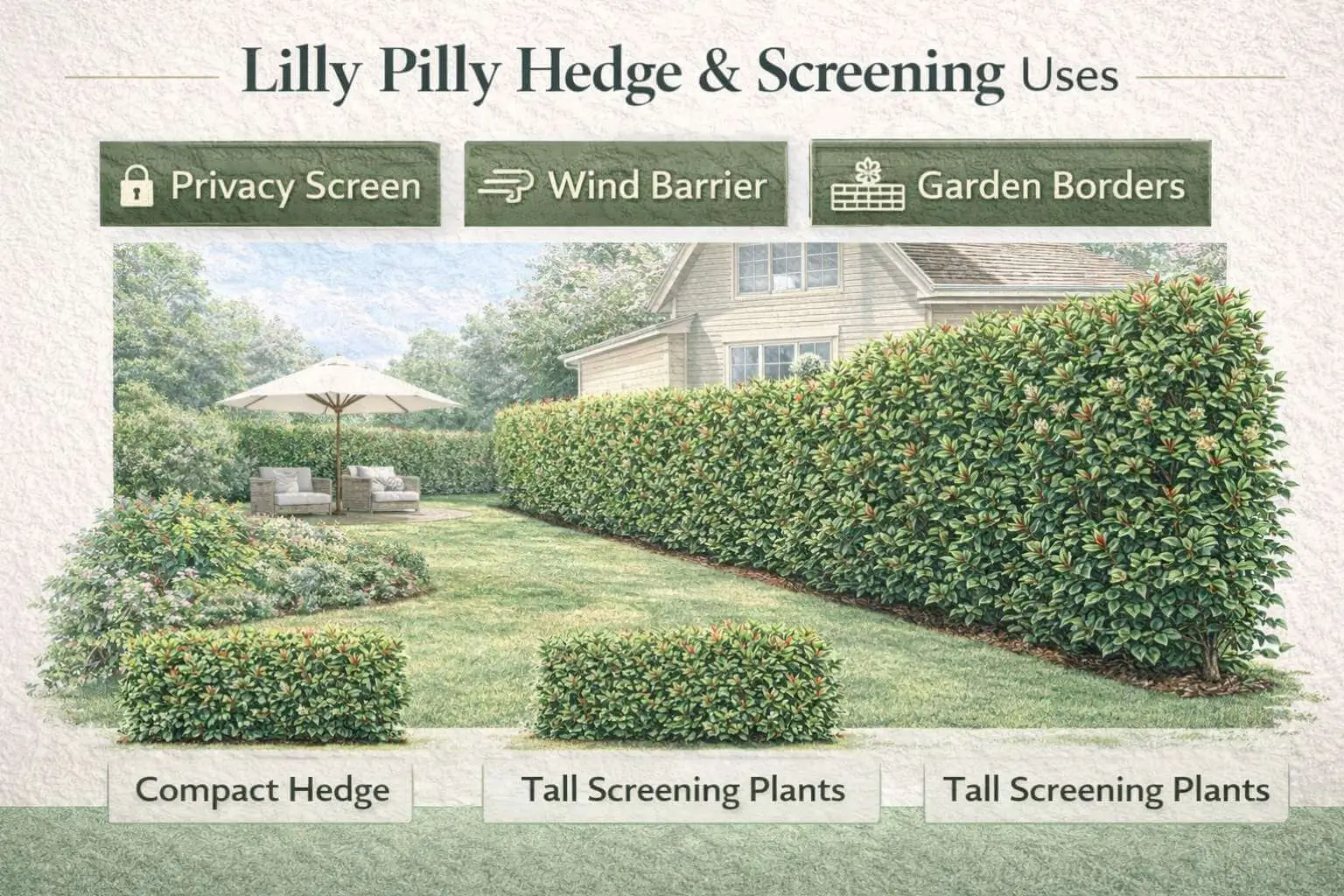
The best lilly pilly for screening is usually a dense-growing variety with upright growth and thick foliage.
These lilly pilly screening plants provide privacy and reduce wind exposure in gardens.
Varieties derived from Syzygium australe are often chosen for this purpose.
Lilly Pilly Hedge Varieties for Different Garden Sizes
Different lilly pilly hedge varieties are suitable for different garden sizes.
Compact hedges are ideal for small urban gardens, while larger varieties can form tall weeping lilly pilly hedge screens in spacious landscapes.
Choosing the correct hedge type ensures healthy growth and manageable maintenance.
Flowers, Fruit, and Berry Differences Between Lilly Pilly Types
Lilly Pilly Flowers and Seasonal Blooming
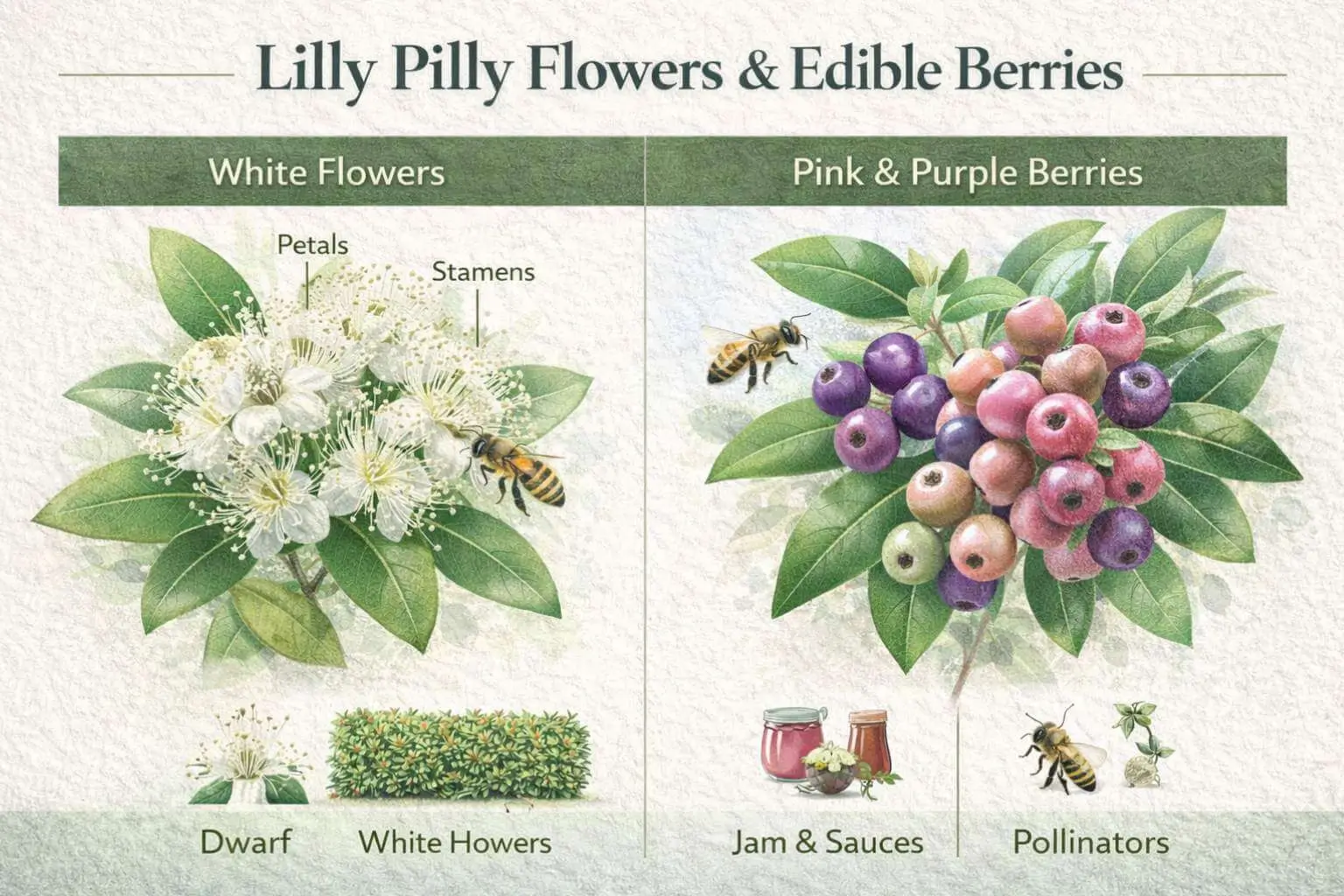
Most lilly pilly white flowers appear during spring or early summer.
The lilly pilly white flower clusters attract pollinators such as bees and beneficial insects.
Flowering periods may vary slightly depending on the species and climate conditions.
Lilly Pilly Fruit and Edibility
Many types of lilly pilly fruit are edible.
The berries can be used in jams, sauces, and desserts because they contain mild sweetness and acidity.
Although most varieties produce edible fruit, the flavor and size may vary between species. This is why gardeners often ask can you eat all types of lilly pillys, as some are more suitable for culinary use than others.
Choosing the Right Lilly Pilly Variety for Your Garden
Climate and Growing Conditions
Most lilly pilly Australia varieties grow well in warm temperate and subtropical climates.
These plants prefer well-draining soil, regular watering during establishment, and full sun to partial shade.
The australian lilly pilly is generally adaptable to different rainfall conditions but benefits from consistent moisture.
Landscape Uses: Hedges, Feature Trees, and Screening
Lilly pilly plants are versatile landscape species.
They can be used as lilly pilly hedge plants, ornamental shrubs, or feature trees. In larger landscapes, a lilly pilly tree or lilly pilly tree can act as a focal point.
Their dense foliage and evergreen structure make them ideal for privacy screens and decorative garden design.
Common Problems When Growing Lilly Pilly Plants
Pest Issues and Leaf Damage
One common issue affecting lilly pilly plants is insect damage, particularly from psyllids.
These pests may cause leaf curling, bumps, or distorted growth. Choosing resistant varieties can reduce this problem.
Regular monitoring and healthy plant care help prevent severe infestations.
Growth Problems and Environmental Stress
Poor soil drainage, excessive pruning, or drought stress can affect lilly pilly plant growth.
Plants may show slow growth or leaf drop when environmental conditions are unsuitable.
Maintaining healthy soil and consistent watering supports strong plant development.
Conclusion
The types of lilly pilly include a diverse group of native Australian plants ranging from compact shrubs to tall screening trees. By understanding the different lilly pilly varieties, their height, growth habits, and landscape uses, gardeners can select plants that match their garden size and design goals.
Whether used for hedges, privacy screens, or ornamental features, choosing the correct lilly pilly species ensures long-lasting greenery and reliable growth in suitable climates.
Learn more: magnolia little gem vs teddy bear
Frequently Asked Questions
What are the most common types of lilly pilly?
The most common types of lilly pilly used in gardens come from Syzygium australe, Syzygium smithii, Syzygium paniculatum, and Syzygium smithii (formerly Acmena smithii). These species have produced many popular hedge and landscaping cultivars.
How many varieties of lilly pilly are there?
There are dozens of cultivated lilly pilly varieties. Most modern garden plants are derived from a few main species, but selective breeding has produced many compact, dwarf, and pest-resistant cultivars.
What is the best lilly pilly for hedging?
Many gardeners prefer Syzygium australe varieties such as Resilience or Aussie Compact because they produce dense foliage, respond well to pruning, and create strong privacy hedges.
Do all lilly pilly plants produce edible fruit?
Most lilly pilly species produce edible berries, although flavor and size vary between varieties. Some cultivars are grown mainly for ornamental use rather than fruit production.
Which lilly pilly grows the tallest?
Syzygium smithii can grow into tall trees reaching 10–15 meters, while Syzygium paniculatum may reach medium-to-large shrub or small tree size depending on conditions.



17 Responses
Hi Manuela, just a quick note — Syzygium smithii and Acmena smithii in your lilly pilly types list are actually the same species. Acmena smithii is the older name; it was reclassified into Syzygium following molecular work, so the current accepted name is Syzygium smithii. Worth removing one to avoid confusion. Cheers!
Thanks for the clarification! You’re absolutely right. Acmena smithii has been reclassified as Syzygium smithii. We’ll update the article to reflect the current accepted naming to avoid confusion. Appreciate your input!