Introduction
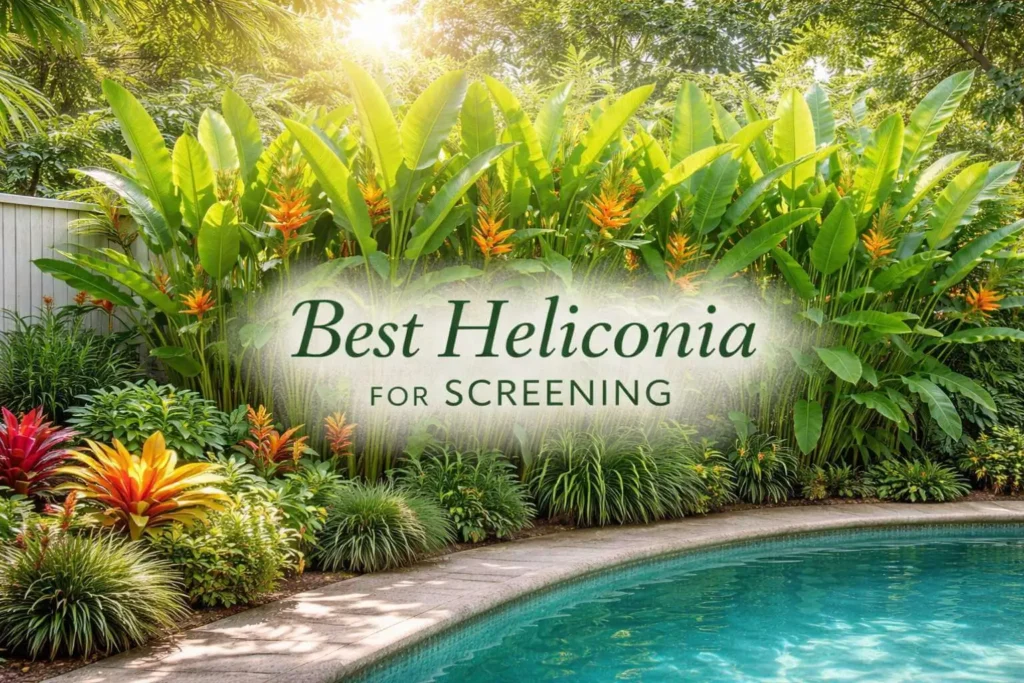
The best heliconia for screening is typically a tall, clumping tropical plant that grows densely enough to create a natural privacy barrier. Many heliconia varieties are valued for their large leaves, vibrant flowers, and fast vertical growth, making them ideal for creating a heliconia privacy screen around gardens, pools, or fences. In tropical and subtropical regions—especially across the heliconia tropics—species such as Heliconia rauliniana, Heliconia kawauchi, and Heliconia hot rio nights are commonly used for screening because of their height, clumping growth habit, and lush foliage.
This guide explains what heliconia is, which types of heliconias work best for screening, how tall they grow, how to care for them, and which varieties provide the most effective natural hedge.
What Is Heliconia and Why Is It Used for Garden Screening?
What is heliconia?
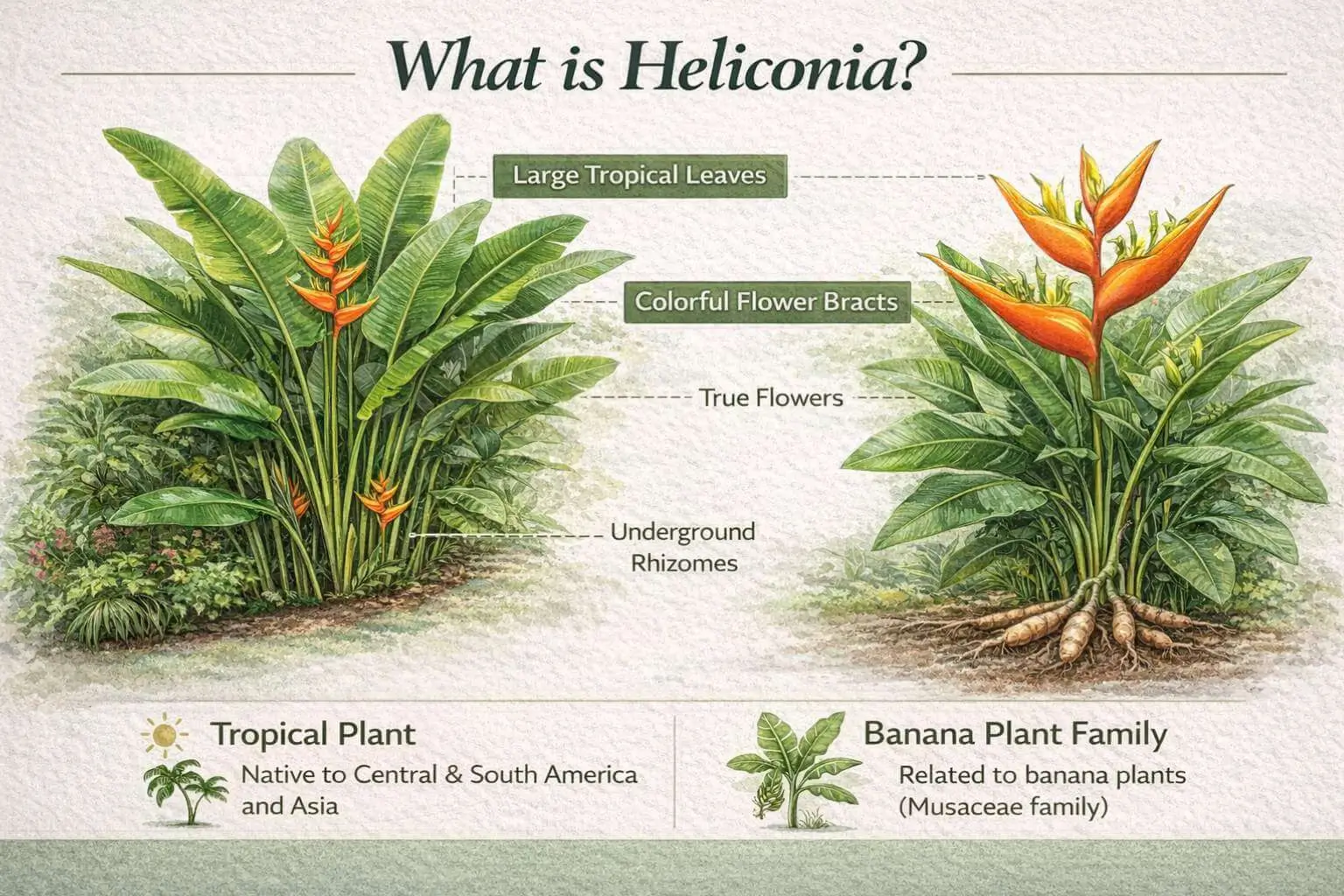
Heliconia is a tropical ornamental plant belonging to the family Heliconiaceae, closely related to banana plants (Musaceae) and ginger plants (Zingiberales). The heliconia plant is known for its large paddle-shaped leaves and distinctive flower bracts that often appear in bright red, orange, yellow, or pink colors.
Heliconias grow from underground rhizomes, producing tall stems with lush foliage that resembles banana leaves. The actual flowers are small, but they are surrounded by colorful bracts, which are the structures most people recognize as the heliconia flower. Across tropical regions, many heliconia species are cultivated as landscaping plants because they grow quickly and create a dense visual barrier.
Why heliconias work well as privacy screens
Heliconias are commonly planted as heliconia hedges, natural fences, or privacy barriers because of their dense foliage and rapid growth. When planted in rows, heliconia plants can form a thick green wall that blocks views and reduces wind.
Gardeners often use heliconia screening around pools, patios, property boundaries, or garden edges. Their large leaves overlap as the plants mature, creating a lush heliconia fence planting effect. In tropical landscaping, this makes heliconias a popular alternative to traditional hedging plants.
Heliconia Height and Growth Habit for Screening
How tall do heliconias grow?
Heliconias vary significantly in size depending on the species. In general, heliconia height ranges from about 1 meter to over 6 meters. Smaller varieties may reach around 1–2 meters, while the tallest heliconia species can grow taller than small trees.
Gardeners often categorize heliconias into small heliconia varieties and giant types. For privacy screening, taller species are preferred because they form a full vertical barrier more quickly.
Clumping vs spreading heliconia root systems
Most heliconias grow in a clumping growth pattern, meaning new shoots emerge close to the original plant from underground rhizomes. This growth habit helps them gradually expand outward while remaining relatively contained.
Many gardeners wonder whether heliconia roots are invasive. In most cases, heliconias do not have aggressively invasive roots like bamboo. Instead, they form compact clumps that slowly widen over time. This makes them suitable for garden screens without damaging nearby structures or paving.
Best Heliconia Varieties for Privacy Screening

For a dense privacy hedge, the best heliconia for screening usually has three characteristics: tall height, large leaves, and strong clumping growth. Several heliconia varieties meet these criteria and are widely planted in tropical gardens. If you want to compare every option side by side before picking one, this interactive heliconia and tropical screening plant reference breaks down height, density, and spacing for each variety. It’s a handy way to shortlist candidates before reading the individual profiles below.
-
Heliconia rauliniana (giant heliconia)
Heliconia rauliniana is often considered one of the tallest and most impressive giant heliconia species. This plant can reach heights of 5–6 meters in favorable tropical climates.
Because of its rapid vertical growth and large leaves, heliconia rauliniana is frequently used to create tall privacy hedges along fences and garden boundaries. Its dense foliage makes it particularly effective for screening.
-
Heliconia kawauchi
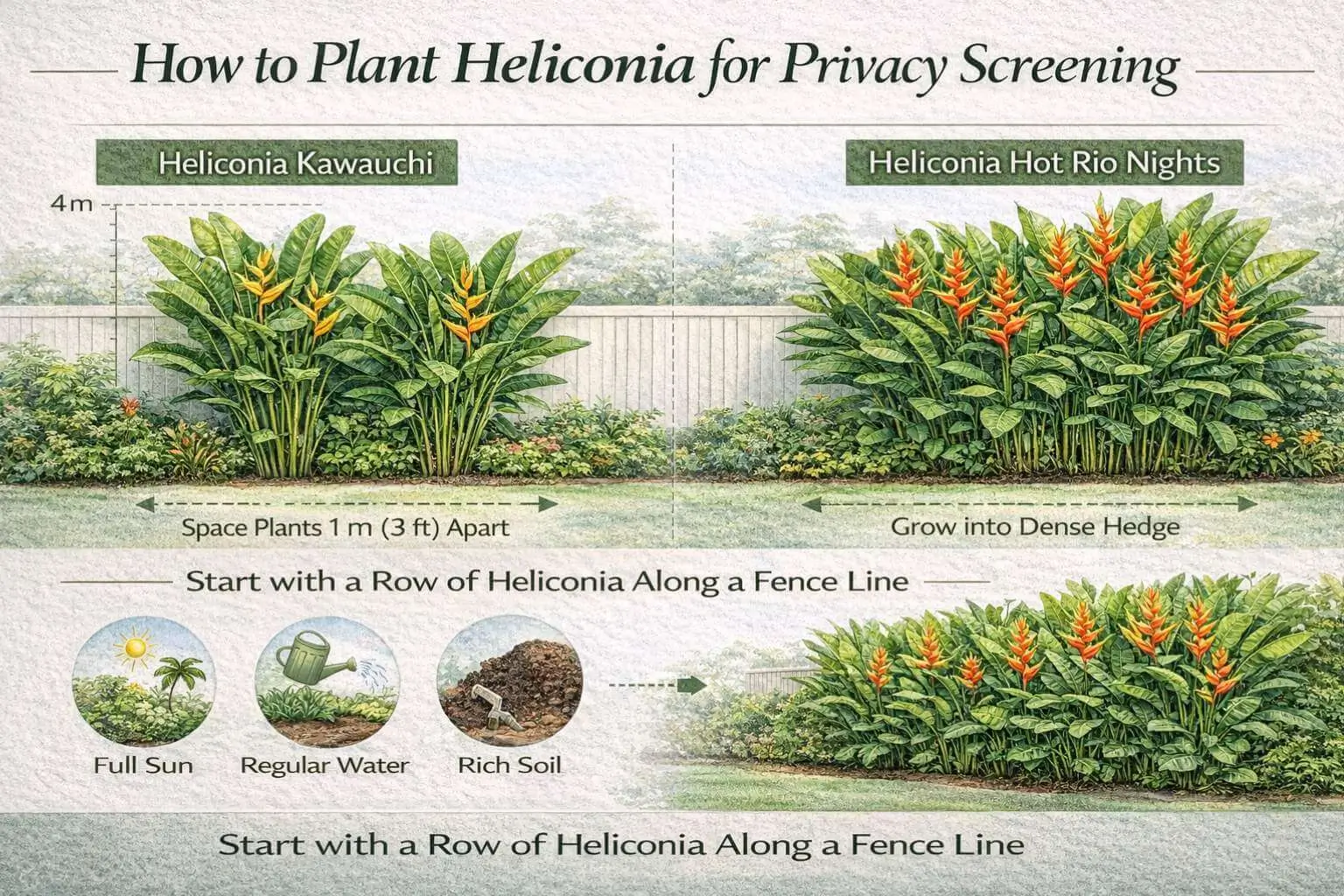
The kawauchi heliconia is a popular landscaping plant known for its strong clumping habit and upright structure. Heliconia kawauchi height typically reaches around 3–4 meters, making it suitable for medium-height garden screens.
Its thick foliage and close stem spacing help create a dense plant wall, which is why it is commonly used in heliconia screen plantings.
-
Heliconia hot rio nights
Heliconia hot rio nights is valued for both its ornamental flowers and dense foliage. The heliconia hot rio nights height usually ranges between 3–4 meters, making it tall enough for many garden privacy barriers.
In tropical landscapes, heliconias hot rio nights are frequently planted along walkways, pools, and garden edges because they provide vibrant color as well as screening.
-
Other screening heliconia types
Several other heliconia species are occasionally used for landscaping screens. These include:
- Heliconia jacquinii
- Heliconia criswick
- Heliconia angusta
- Heliconia red christmas
- Yellow heliconia varieties
While some of these plants are shorter, they can still contribute to layered tropical garden screens.
Heliconia Kawauchi vs Hot Rio Nights: Which Is Better for Screening?
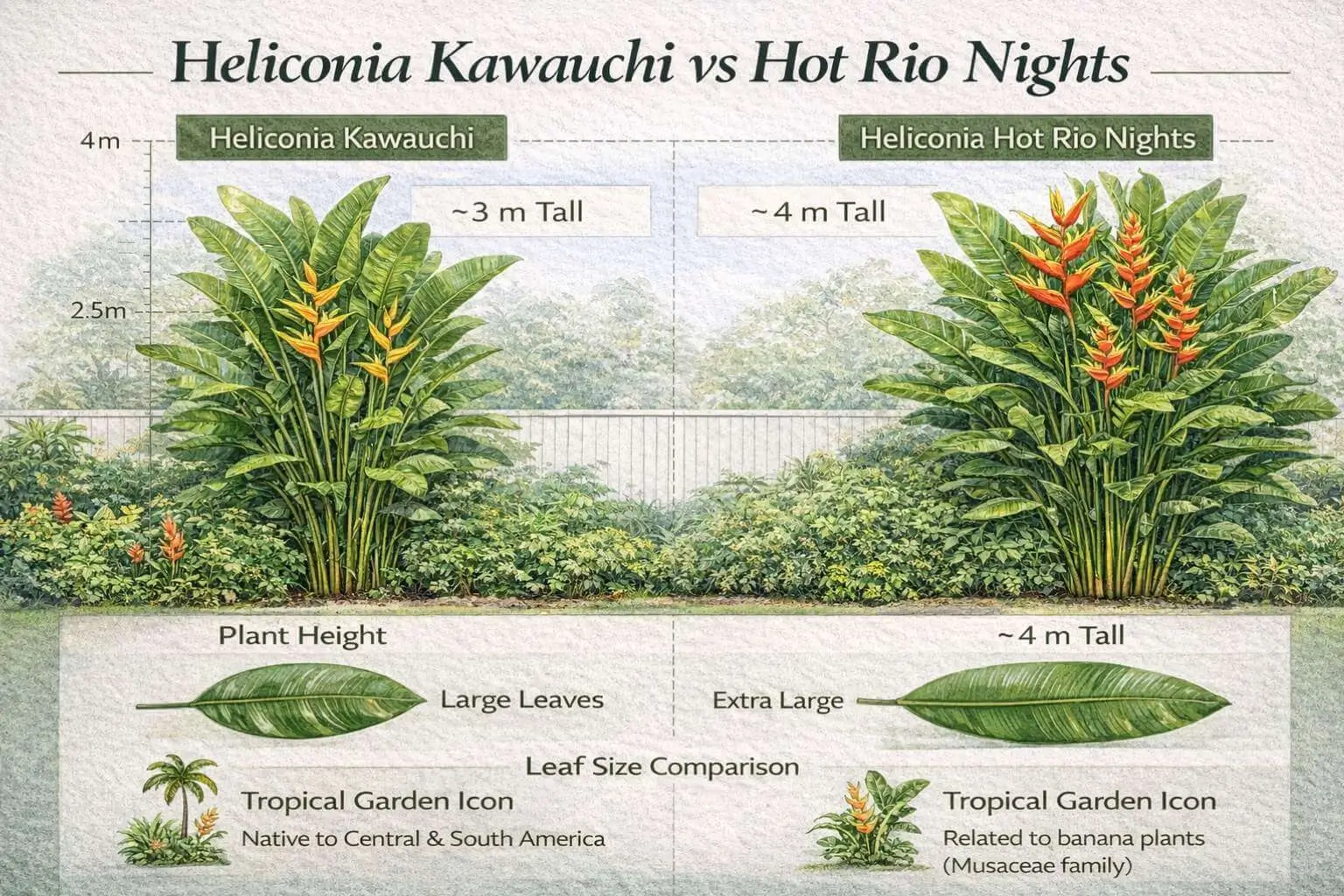
When choosing between heliconia kawauchi vs hot rio nights, gardeners often compare plant structure, height, and foliage density to determine which variety forms the most effective privacy barrier.
Growth height comparison
In most growing conditions, heliconia kawauchi height and heliconia hot rio nights height are relatively similar, typically ranging between 3–4 meters. However, kawauchi plants often appear slightly taller due to their upright growth pattern.
Screening density and foliage coverage
For dense foliage coverage, kawauchi heliconia tends to produce tightly spaced stems, creating a thicker hedge. Rio nights heliconia also provides good coverage, but its spacing may be slightly wider.
As a result, kawauchi is sometimes preferred for solid heliconia hedges, while hot rio nights is favored when gardeners want both privacy and decorative flowers. If you’re still weighing kawauchi against hot rio nights, this heliconia screening comparison spreadsheet lays out the numbers side by side, making it easier to see exactly where each variety pulls ahead.
Where to Plant Heliconia for the Best Privacy Screen
Heliconias perform best when planted in locations that support their tropical growth habits.
Light and climate requirements
Most heliconias grow best in full sun to partial shade and warm climates. Tropical regions with high humidity and consistent warmth allow heliconia plants to grow quickly and maintain healthy foliage.
Cold temperatures can slow growth or damage leaves, which is why heliconias thrive primarily in tropical and subtropical environments.
Spacing and planting layout
When planting heliconia screening rows, spacing is important. Plants are typically spaced 1–2 meters apart depending on the species and mature size.
This spacing allows each plant to expand while still forming a continuous hedge once the foliage fills in.
Growing and Caring for Heliconia Plants
Understanding how to grow heliconia properly helps ensure that screening plants remain healthy and dense.
Soil and watering requirements
Heliconias prefer rich, well-draining soil with high organic matter. Regular watering is important, especially in hot climates where soil dries quickly.
Consistent moisture supports rapid growth and encourages healthy leaf development.
Container growing and pots
Some gardeners grow heliconia in pots when space is limited. Varieties like heliconia hot rio nights in pots can grow well in large containers, though their final height may be reduced compared to plants grown in the ground.
Large pots with nutrient-rich soil and regular watering are necessary for container-grown heliconias.
Common Heliconia Problems When Used as a Screen
-
Slow growth or sparse foliage
Heliconia plants may grow slowly if they receive insufficient sunlight or nutrients. Poor soil fertility can also limit leaf production.
-
Overcrowding or root competition
Planting heliconias too closely can cause overcrowding. When roots compete for nutrients and water, plants may produce thinner foliage and weaker growth.
-
Poor flowering or weak plants
Environmental stress, including drought or nutrient deficiency, can reduce heliconia flowering and overall plant health.
Beginner Mistakes When Planting Heliconia for Screening
Choosing the wrong heliconia species
One common mistake is selecting short heliconia varieties rather than tall screening species. Smaller plants may look attractive but may not provide sufficient privacy.
Incorrect spacing and planting location
Improper spacing or planting in shaded areas can prevent heliconia plants from forming a dense hedge. Adequate sunlight and spacing are essential for strong growth.
Heliconia vs Bird of Paradise and Other Tropical Screening Plants
Heliconia plants are sometimes compared with plants similar to the bird of paradise plant (Strelitzia species). While both produce tropical foliage and striking flowers, heliconias typically grow faster and produce denser foliage.
Bird of paradise plants often have wider spacing between stems, which can reduce their effectiveness as a privacy screen. Heliconias, by contrast, form thicker clumps that block views more effectively. For a deeper look at how heliconias stack up against palms, gingers, and other tropical foliage, browse the Tropical Privacy Screening Plant Database, which catalogs growth habits and screening suitability across species. It’s a useful companion if bird of paradise or palms are also on your shortlist.
Conclusion
The best heliconia for screening depends on the desired height, density, and climate conditions. Tall clumping varieties such as Heliconia rauliniana, Heliconia kawauchi, and Heliconia hot rio nights are among the most effective options for creating natural privacy hedges.
When planted with proper spacing and given adequate sunlight, moisture, and nutrient-rich soil, heliconia plants can develop into dense tropical screens. Their lush foliage and rapid growth make them ideal for adding privacy, shade, and vibrant tropical character to gardens and pool areas.
Learn more: types of lilly pilly
FAQs
What is the best heliconia for screening in tropical gardens?
Tall clumping varieties such as Heliconia rauliniana and Heliconia kawauchi are widely used because they grow quickly and form dense foliage suitable for privacy hedges.
How tall do heliconias grow when used as a hedge?
Most heliconia species used for screening grow between 2 and 6 meters tall, depending on the variety and growing conditions.
Do heliconias have invasive roots?
Heliconias generally grow from clumping rhizomes, which expand gradually rather than spreading aggressively. This makes them suitable for garden hedges without damaging nearby structures.
Can heliconia grow in pots for privacy screens?
Some varieties such as hot rio nights can grow in large containers, although container plants usually remain shorter than those planted in the ground.
What is the fastest growing heliconia for screening?
Large tropical species like Heliconia rauliniana are among the fastest growing heliconias and can quickly form tall privacy screens in warm climates.

5 Responses