
Introduction
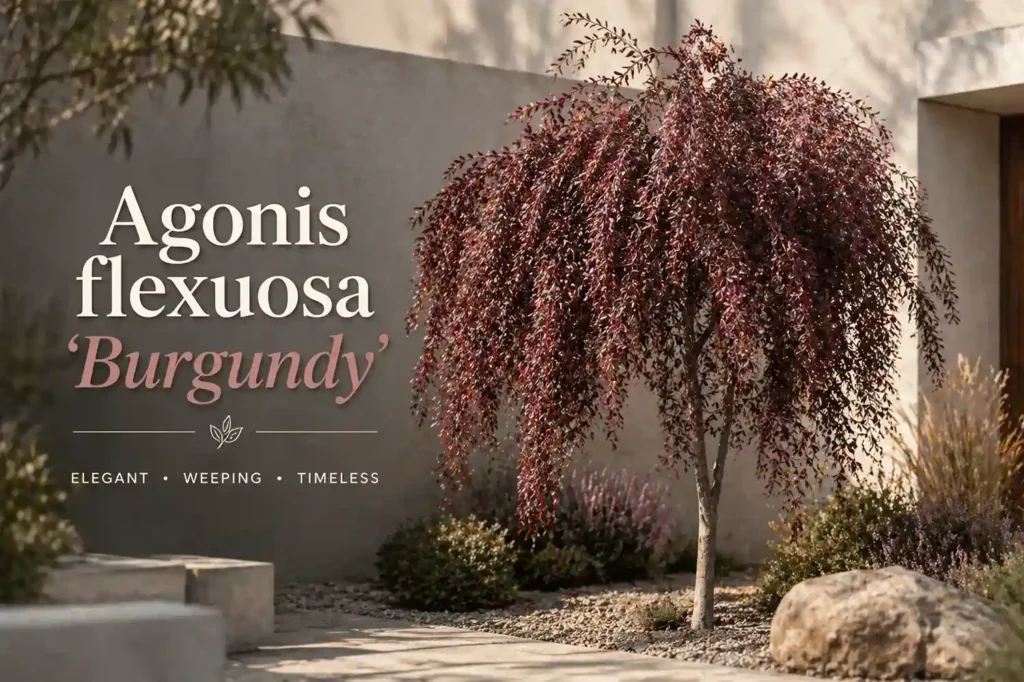
agonis flexuosa ‘burgundy’ is a distinctive ornamental tree valued for its graceful, weeping structure and rich burgundy foliage. Often referred to as agonis burgundy, burgundy willow myrtle, or willow myrtle, this cultivar originates from Australia and is widely used in landscaping. It offers a combination of visual elegance and environmental resilience, particularly in warm, dry climates. As a refined selection of Agonis flexuosa, it is commonly planted as a feature tree, hedge, or screening plant. Its adaptability, moderate growth rate, and drought tolerance make it suitable for both residential and urban landscapes.
Quick Summary
- agonis flexuosa ‘burgundy’ is a weeping evergreen tree with deep burgundy foliage and a flowing canopy
- Commonly known as burgundy tree or willow myrtle, it thrives in warm, dry environments
- Suitable for hedges, screens, or standalone ornamental planting
- Requires well-drained soil, full sun, and moderate watering
- Pruning helps maintain shape and encourages dense growth
What Is Agonis Flexuosa ‘Burgundy’? (Plant Identity & Classification)
Understanding the Burgundy Willow Myrtle
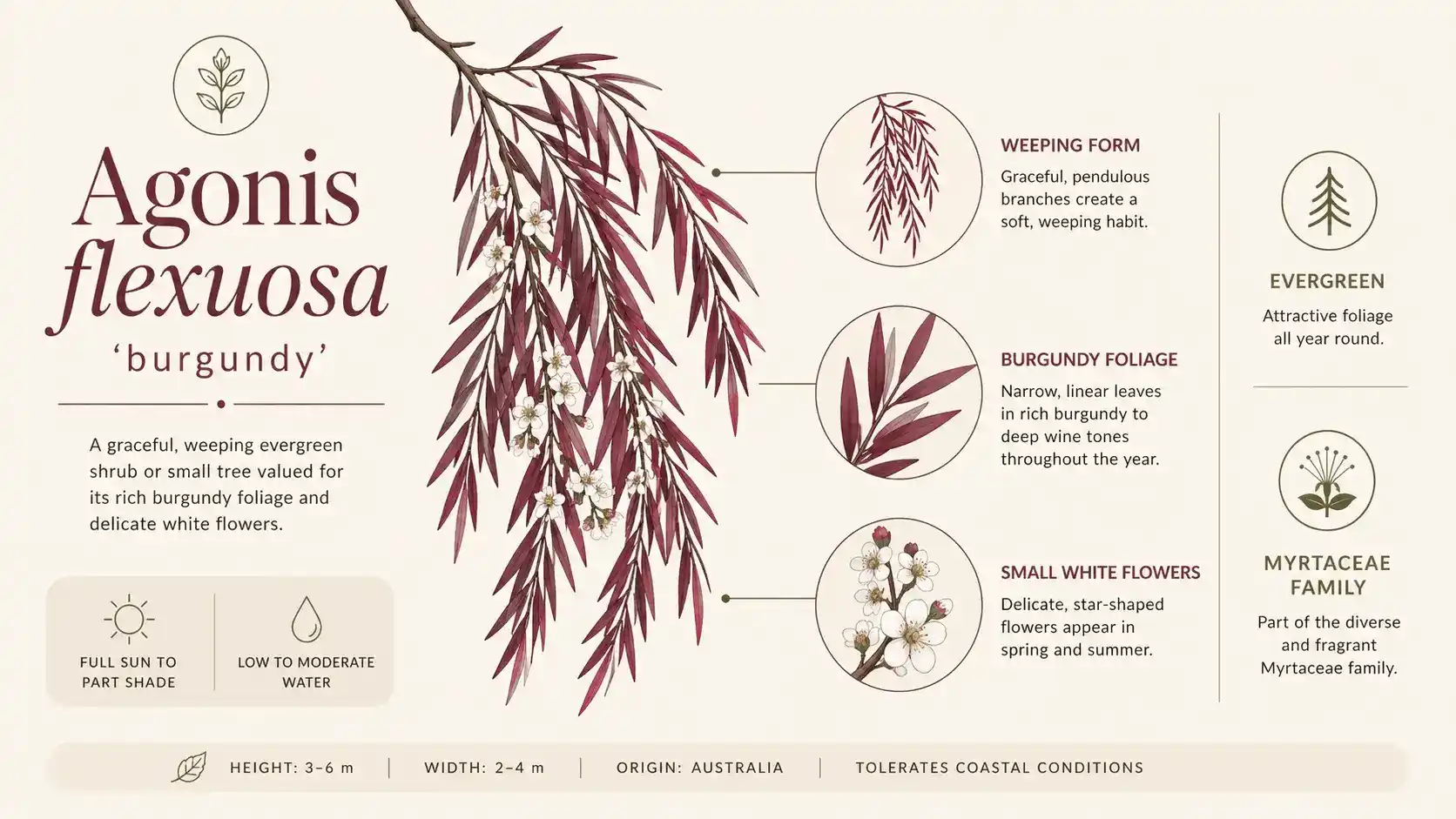
Agonis flexuosa ‘burgundy’ is a cultivated variety of Agonis flexuosa, selected for its darker foliage and ornamental structure. It differs from the base species by exhibiting deep burgundy-red leaves rather than standard green tones.
It is known by several names, including:
- agonis burgundy tree
- burgundy agonis
- agonis burgandy (common misspelling)
- weeping peppermint agonis flexuosa burgundy
- willow peppermint
These names reflect its weeping growth habit and aromatic foliage typical of the species.
Botanical Background and Native Habitat
This plant originates from Western Australia, where it grows naturally in coastal and inland environments. It belongs to the Myrtaceae, a family that includes eucalyptus and many aromatic Australian native plants.
Agonis flexuosa is often referred to as Australian willow myrtle due to its narrow leaves and drooping branches. Compared to related cultivars like agonis flexuosa after dark, the burgundy variety has a slightly lighter red tone and more open structure.
Key Features and Appearance of the Burgundy Tree
Foliage, Flowers, and Overall Structure
The most defining feature of this tree is its deep burgundy foliage, which may appear darker in cooler seasons, sometimes resembling “after dark” tones. Leaves are narrow and elongated, creating a soft, flowing texture. Agonis flexuosa burgundy produces small, white flowers that appear subtly along the stems. These blooms are not highly showy but contribute to the plant’s natural appearance. As an evergreen ornamental, it is often included among species highlighted in 7+ Essential Evergreen Trees Brisbane Gardens Need for year-round structure and foliage interest.
Its structure resembles:
- weeping myrtle
- peppermint willow
The branches cascade downward, forming a graceful canopy.
Growth Form and Landscape Appeal
The burgundy tree is widely valued for its ornamental form. Its weeping habit creates movement and visual softness in landscape designs.
It fits well in:
- modern minimalist gardens
- native Australian landscapes
- coastal plantings
Compared to compact forms like agonis flexuosa dwarf or agonis flexuosa nana, the standard burgundy variety grows taller and develops a more pronounced cascading canopy.
Agonis Flexuosa Burgundy Size, Height, and Growth Rate
Mature Size and Dimensions
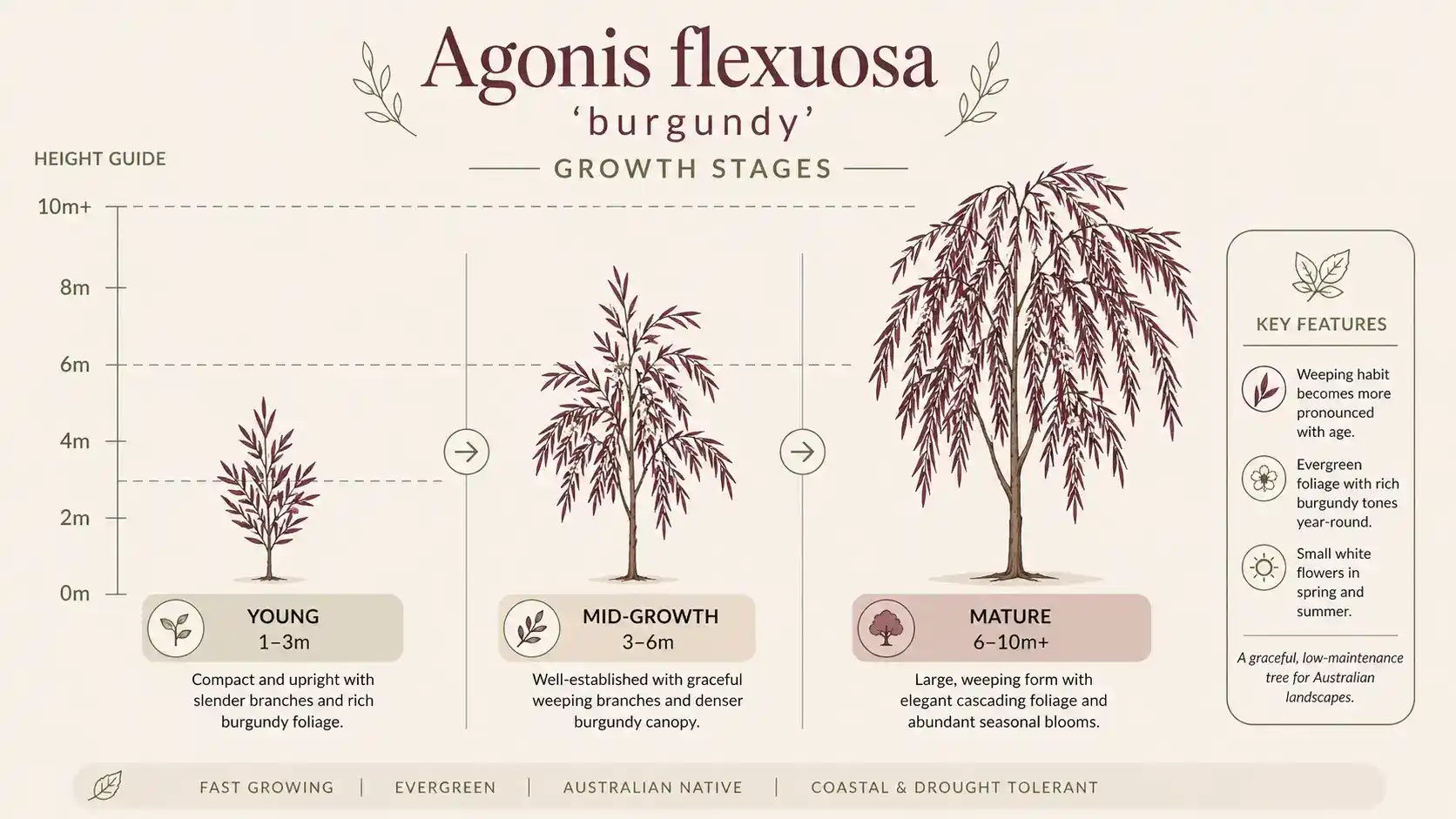
Agonis flexuosa burgundy typically reaches a mature height of 6 to 10 meters or more, depending on growing conditions. Its spread varies but generally forms a medium-width canopy.
Environmental factors influencing size include:
- soil quality
- water availability
- climate conditions
A fully grown agonis flexuosa burgundy develops a broad, flowing structure ideal for shade and visual impact.
Growth Speed and Development Stages
The growth rate is considered moderate to fast, particularly in warm climates with adequate drainage.
| Growth Stage | Height Range | Characteristics |
| Young | 1–3 m | Fast growth, upright |
| Mid-growth | 3–6 m | Developing weeping form |
| Mature | 6–10 m+ | Fully cascading canopy |
Growth can slow in cooler climates or poor soil conditions.
How to Grow and Care for Agonis Burgundy Tree
Basic Care Requirements
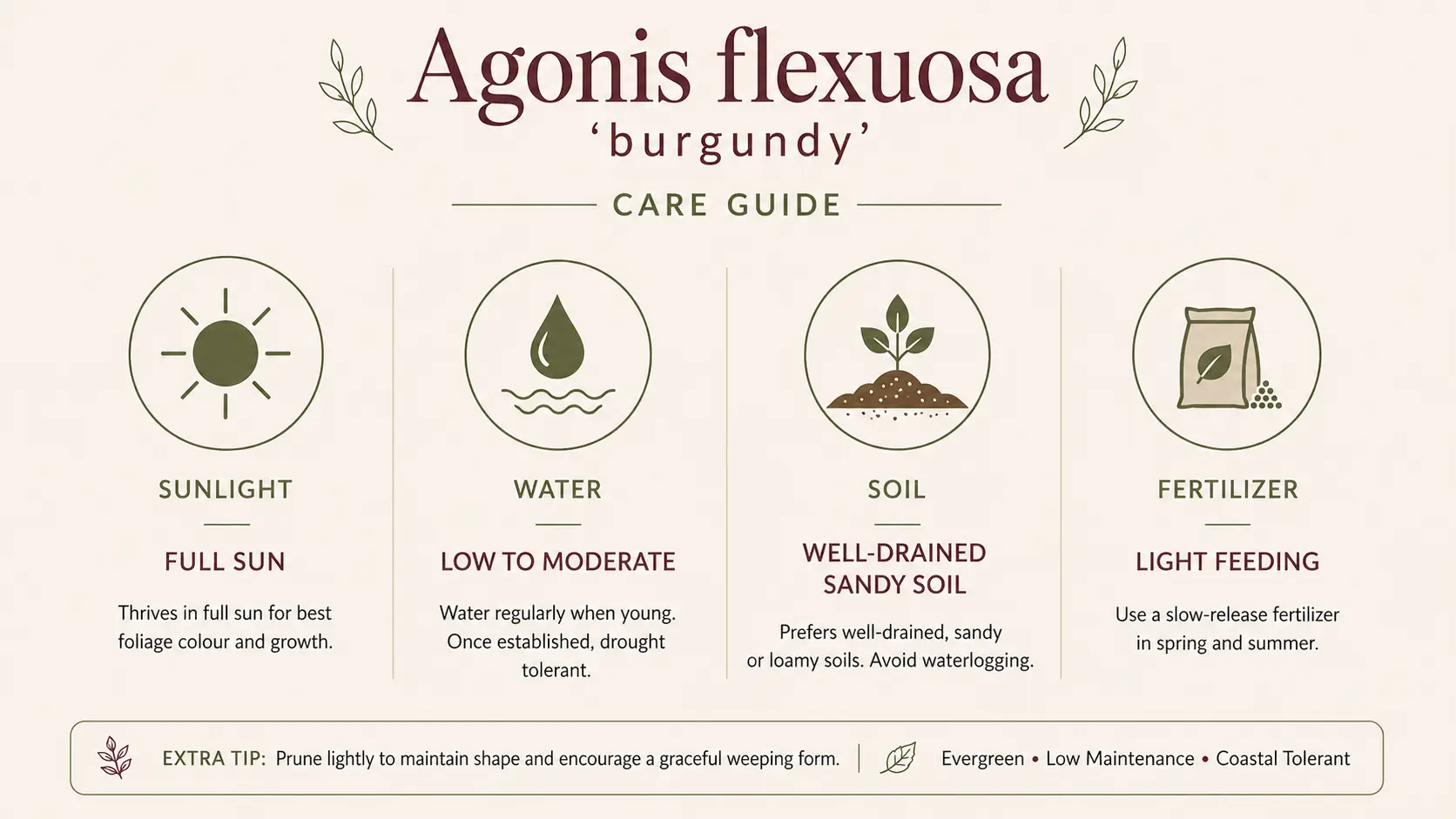
Agonis plant care is relatively simple when conditions are appropriate:
- Sunlight: Full sun is essential for optimal foliage color and growth
- Soil: Prefers well-drained, sandy or loamy soils
- Watering: Low to moderate watering; avoid waterlogging
- Fertilization: Light feeding in spring supports healthy growth
Consistent conditions promote stable development and vibrant foliage. For a broader understanding of drought-tolerant landscaping, refer to the Easy Low Maintenance Australian Native Garden Guide 7+ Steps, which outlines practical strategies for sustainable plant care.
Climate and Environmental Tolerance
This tree is well adapted to:
- drought conditions
- coastal environments
- mild to warm climates
Compared to standard willow myrtle agonis flexuosa, the burgundy cultivar shows similar resilience but may require slightly more attention to soil drainage.
Pruning and Shaping Agonis Flexuosa Burgundy
When and How to Prune
Pruning should be done in late winter or early spring before active growth begins. Light pruning encourages denser branching and maintains shape.
Key techniques include:
- removing dead or damaged branches
- thinning crowded areas
- shaping canopy for desired form
Using as a Hedge or Screen
Agonis flexuosa burgundy can be trained into a hedge with regular trimming.
Important considerations:
- spacing plants evenly (1.5–2 meters apart)
- pruning frequently to encourage density
- maintaining consistent height
It is suitable for privacy screens or windbreaks.
Common Problems and Diseases (Troubleshooting Guide)
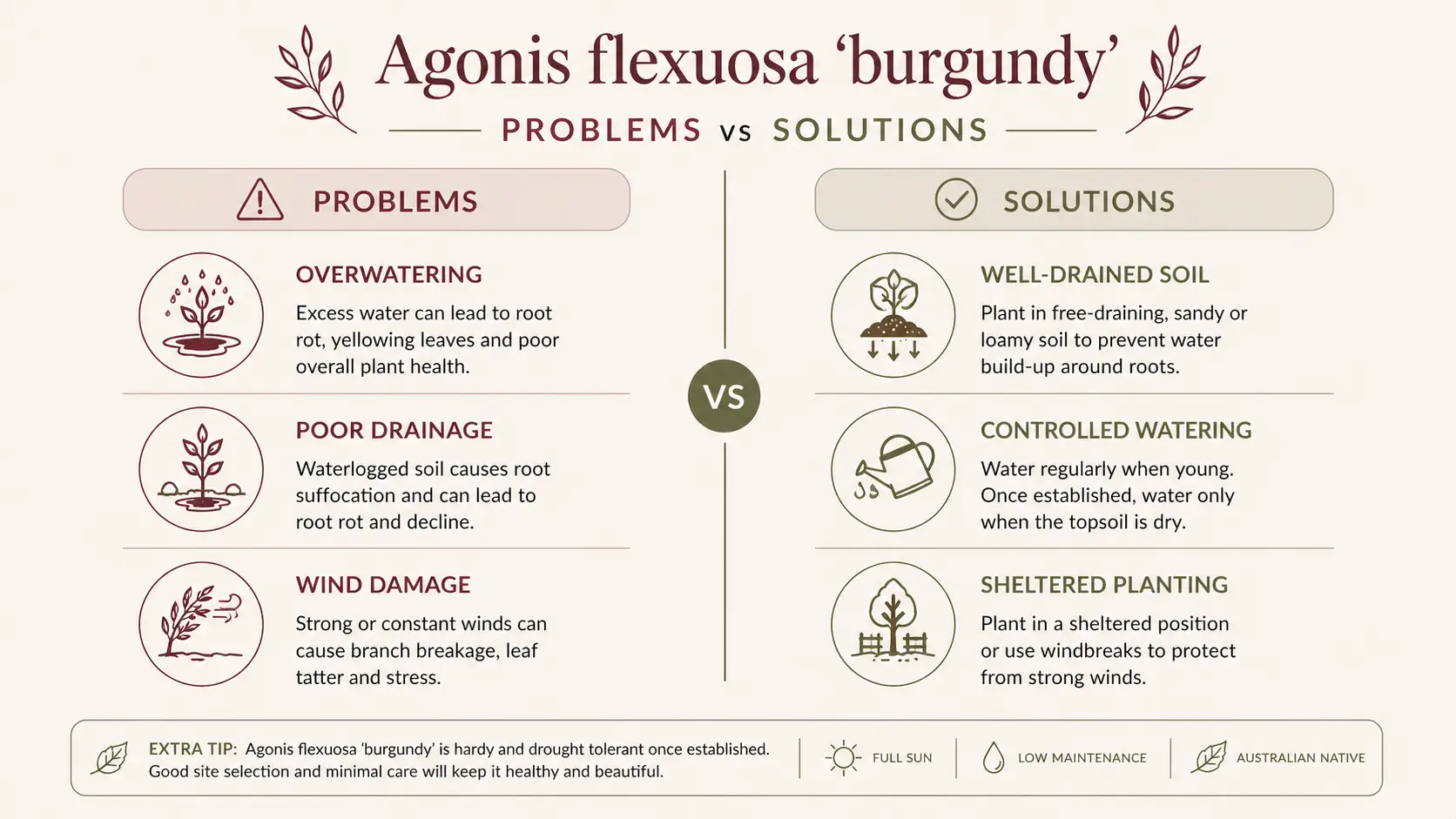
Typical Agonis Flexuosa Burgundy Problems
Common issues include:
- leaf drop
- browning foliage
- slow or stunted growth
These are often linked to environmental stress rather than pests.
Diseases and Environmental Stress
Agonis flexuosa diseases are typically related to moisture imbalance and poor soil conditions.
- Overwatering → root rot
- Poor drainage → fungal disease
- Wind exposure → leaf damage
The willow myrtle root system is sensitive to waterlogged soil, making drainage essential.
Root System and Planting Considerations
Understanding Root Behavior
The peppermint tree root system is moderately spreading but not aggressively invasive. Roots tend to grow outward rather than deeply penetrating.
Key characteristics:
- moderate lateral spread
- stable anchoring
- low risk to structures when properly spaced
Ideal Planting Locations
Best planting practices include:
- positioning away from building foundations
- allowing space for canopy spread
- avoiding compacted or clay-heavy soils
It works well along boundaries, pathways, or as a focal tree.
Comparison: Burgundy vs After Dark Agonis
Key Differences Between Cultivars
Agonis flexuosa ‘burgundy’ and after dark agonis differ mainly in foliage color and density.
| Feature | Burgundy | After Dark |
| Foliage Color | Burgundy-red | Deep purple/black |
| Growth Habit | Weeping | Slightly denser |
| Use Case | Feature tree | Contrast planting |
Related terms include:
- after dark tree
- agonis after dark plant
- willow myrtle after dark
Common Beginner Mistakes
What People Often Get Wrong
Common mistakes include:
- overwatering due to misunderstanding drought tolerance
- planting in heavy clay soil
- neglecting regular pruning
These issues can lead to poor growth and disease.
How to Avoid These Issues
Practical solutions include:
- ensuring proper drainage
- watering only when soil dries out
- pruning annually for structure
Correct planting and spacing significantly improve long-term success.
Landscaping Uses and Design Ideas
Where and How to Use Burgundy Agonis
This tree is highly versatile in landscaping:
- feature tree in gardens
- windbreak or privacy hedge
- coastal or drought-tolerant planting
Its flowing shape adds movement and texture.
Agonis flexuosa ‘burgundy’ works especially well for privacy planting and can be combined with other species featured in the 10+ Fast Growing Australian Native Screening Plants Guide for more effective garden screening solutions.
Pairing With Other Plants
It pairs well with:
- neutral green shrubs
- native grasses
- low-maintenance perennials
It complements both modern and natural garden styles.
Conclusion
agonis flexuosa ‘burgundy’ is a versatile ornamental tree that combines graceful structure with rich foliage color. Its weeping habit, adaptability, and moderate growth rate make it suitable for a wide range of landscapes. Whether used as a feature tree or hedge, understanding its care requirements and growth behavior ensures long-term success. With proper placement, well-drained soil, and minimal maintenance, this burgundy tree can thrive in both residential and urban environments. For more in-depth plant care strategies and growing guides, explore the complete resource: Plants: Benefits and Guides.
FAQs
What is the ideal height of agonis flexuosa 'burgundy'?
It typically reaches 6–10 meters when fully grown, depending on environmental conditions.
How fast does agonis flexuosa burgundy grow?
It has a moderate to fast growth rate, especially in warm climates with well-drained soil.
Can agonis burgundy be used as a hedge?
Yes, it can be shaped into a dense hedge with regular pruning and proper spacing.
What causes problems in agonis flexuosa burgundy plants?
Common issues include overwatering, poor drainage, and fungal diseases affecting roots.
What is the difference between burgundy and after dark agonis?
The main difference is foliage color—burgundy has red tones, while after dark features deeper purple-black leaves.
Does agonis flexuosa have invasive roots?
Its root system is moderately spreading but not typically invasive when planted correctly.