
Introduction
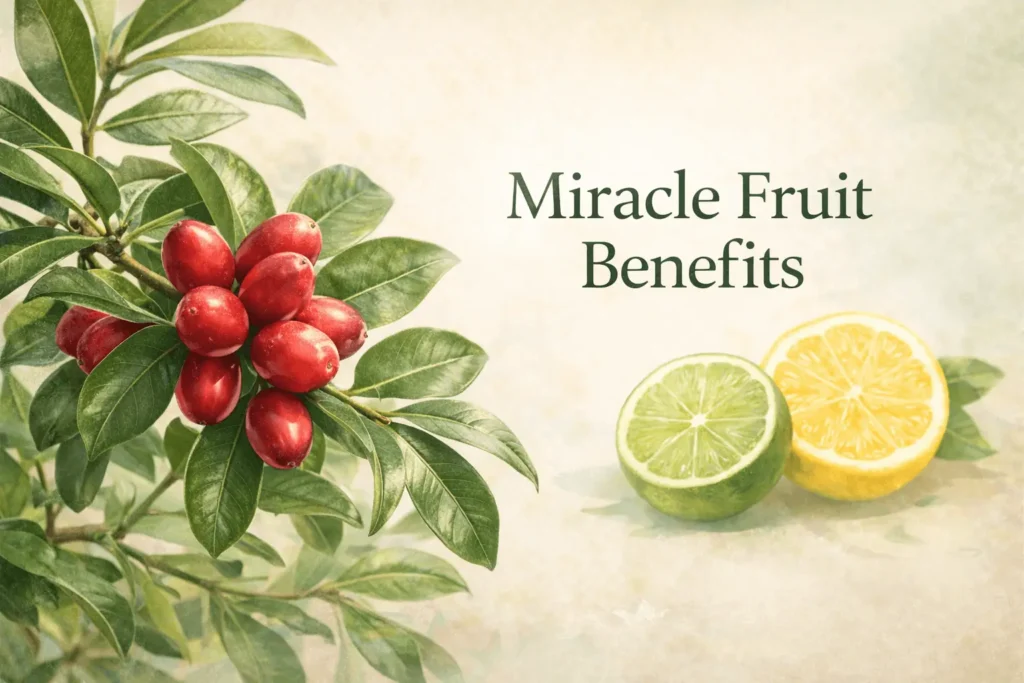
Miracle fruit benefits refer to the unusual sensory and potential wellness effects of the tropical berry Synsepalum dulcificum. Commonly known as miracle berry or magic fruit, this small red berry contains a natural protein called miraculin that temporarily changes how sour foods taste. After eating the berry, acidic foods such as lemons or vinegar can taste sweet instead of sour. Because of this unique effect, miracle fruit has attracted interest from researchers, nutrition enthusiasts, and gardeners. Beyond its taste-modifying properties, people explore miracle fruit benefits for possible dietary uses, nutritional compounds, and experimental culinary experiences such as flavor-tripping events where participants test how different foods change flavor.
What Is Miracle Fruit?
Miracle fruit is the berry produced by the tropical plant Synsepalum dulcificum, a species belonging to the Sapotaceae plant family. The fruit is widely known by several names including miracle berry, magic fruit, and ledidi berry.
The berry contains a unique glycoprotein called miraculin, which interacts with taste receptors in the human mouth. This compound temporarily alters taste perception, causing sour foods to taste sweet.
The plant originates from West Africa, where local communities have historically consumed the berries before eating sour foods. In traditional use, the fruit helped balance the flavor of acidic palm wine or fermented dishes.
How Miraculin Changes Taste
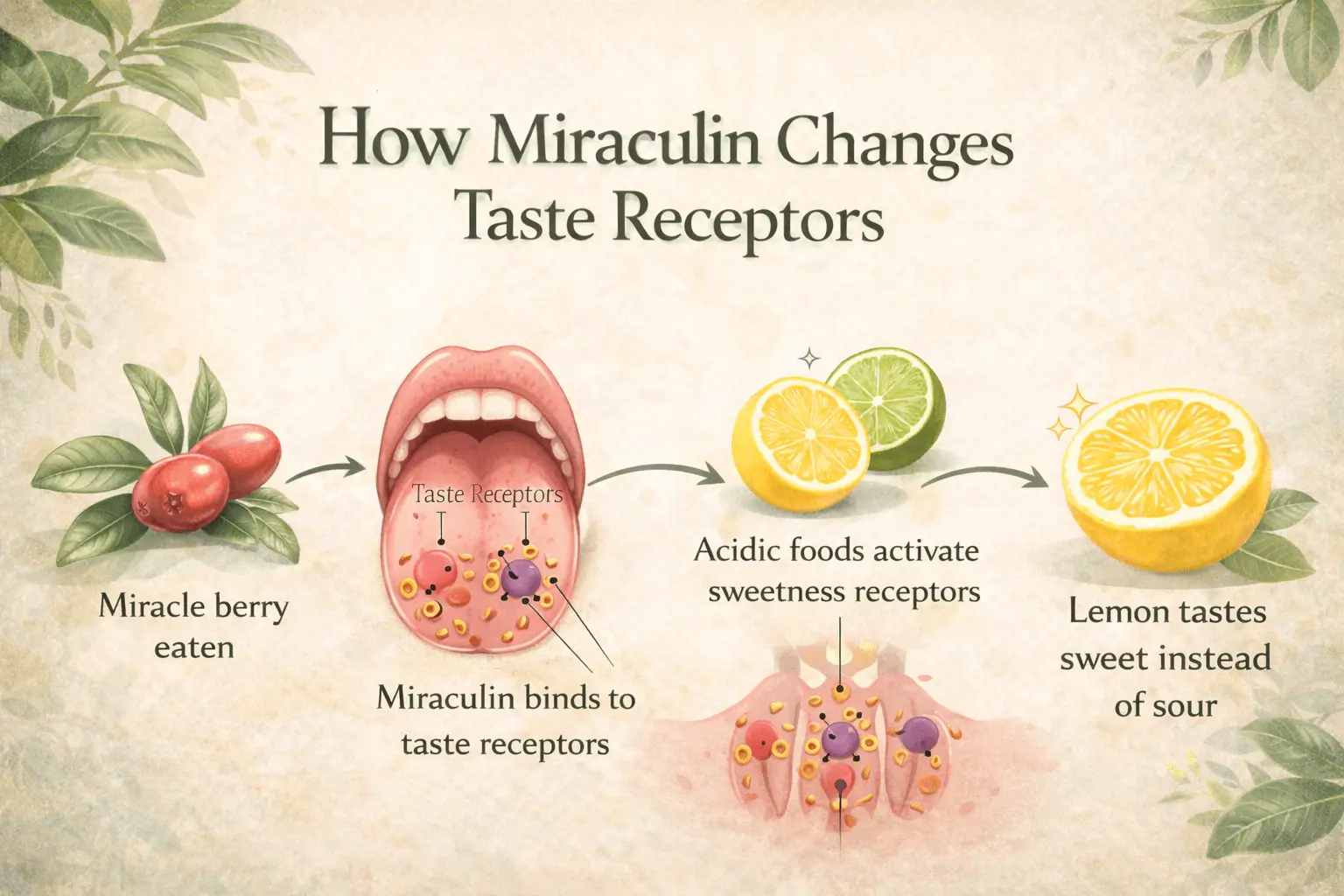
Miraculin works by binding to the sweet taste receptors on the tongue. Under normal conditions, the protein does not activate sweetness on its own.
When acidic foods are eaten afterward, the lower pH activates the bound miraculin, which then stimulates sweetness receptors. As a result, foods such as lemons, vinegar, or sour berries can taste unexpectedly sweet.
This taste modification does not add sugar or calories. Instead, it temporarily changes how the tongue interprets sour signals, creating the sensation of sweetness.
Miracle Fruit Benefits for Taste Perception
One of the most recognized miracle fruit benefits is its ability to transform sour foods into sweet-tasting flavors without adding sugar. This effect has made the berry popular among people curious about unusual taste experiences.
The berry is sometimes described as one of the berries that change taste because it alters how the tongue perceives acidic foods.
People often ask what does miracle berry do to foods. After consuming the berry and coating the tongue, many sour foods taste sweet for a short period.
This phenomenon is often used in flavor tripping events, where participants test lemons, vinegar, or other acidic foods to experience the dramatic flavor change.
How Long the Taste-Changing Effect Lasts
The taste-altering effect of miracle berries typically lasts between 30 and 90 minutes.
The duration can vary depending on several factors, including:
- The amount of berry consumed
- How thoroughly the pulp coats the tongue
- Individual saliva chemistry and oral conditions
Gradually, the effect fades as the protein detaches from taste receptors and normal taste perception returns.
Potential Health Benefits of Miracle Fruit
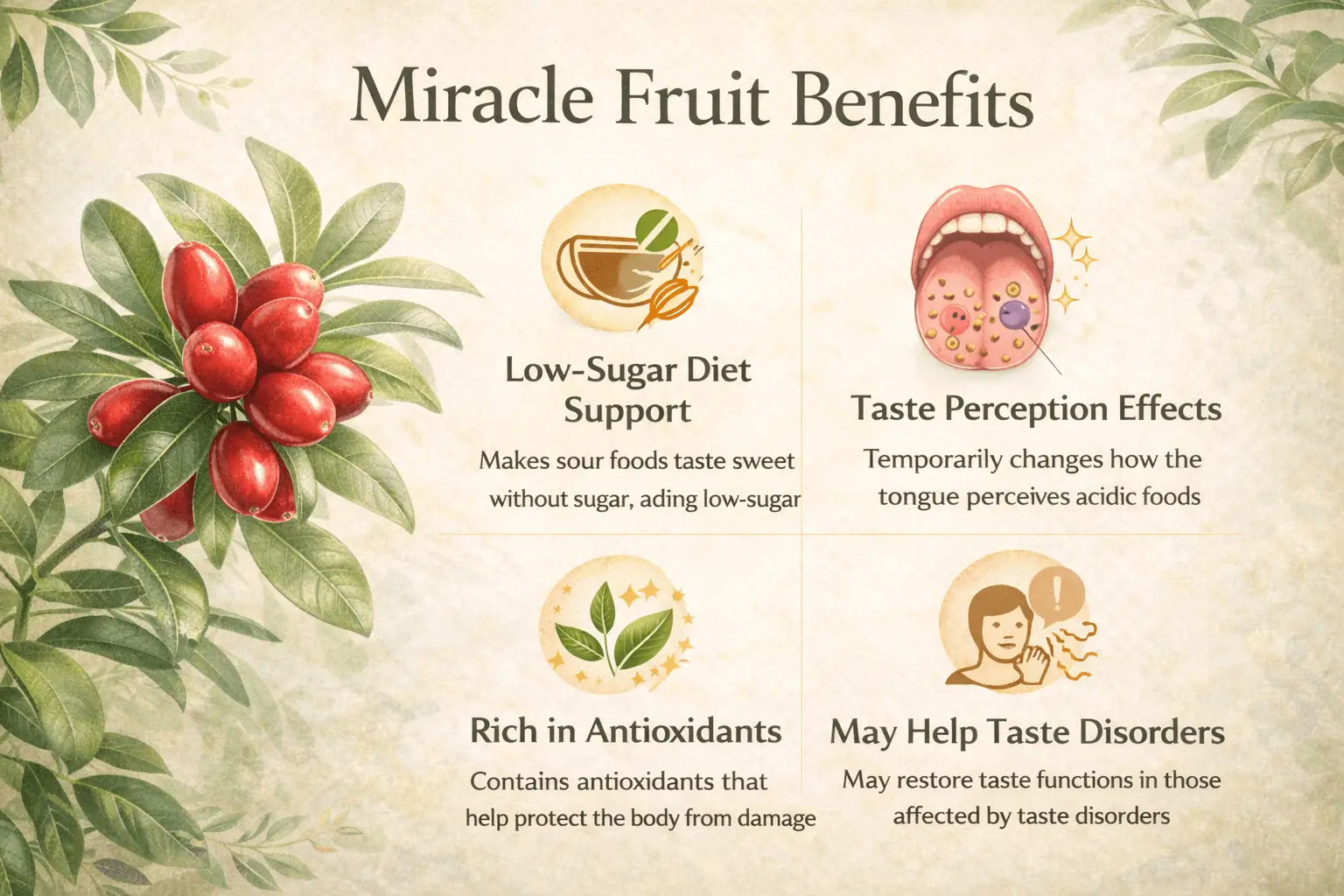
Researchers continue exploring possible Synsepalum dulcificum health benefits. Although the plant is primarily known for its sensory effects, studies suggest it may also contain beneficial plant compounds.
Reported miracle berries benefits include possible support for low-sugar diets, antioxidant compounds, and experimental applications in taste-perception research.
Overall, the benefits of miracle fruit are still being studied, and most scientific attention focuses on its taste-modifying properties rather than direct medicinal effects.
Supporting Low-Sugar Diets
One potential dietary application of miracle fruit is helping reduce added sugar consumption.
Because sour foods can taste sweet after eating the berry, people may enjoy naturally tart foods such as yogurt or citrus without adding sugar or sweeteners.
This property has attracted attention among individuals interested in lower-sugar diets or alternative ways to satisfy sweet cravings.
Possible Benefits for Taste Disorders
Researchers have investigated miracle berries for individuals experiencing taste disorders.
Some medical treatments, including certain chemotherapy therapies, can alter taste perception and make foods unpleasant or metallic in flavor.
Early research suggests that miracle berries may temporarily improve food palatability for some people experiencing taste changes, although more clinical studies are needed.
Nutritional and Antioxidant Compounds
Miracle fruit contains small amounts of vitamin C, plant antioxidants, and natural phytochemicals.
These compounds contribute to the berry’s classification as a functional food in some nutritional studies.
Functional foods are foods that may provide benefits beyond basic nutrition, although miracle fruit’s primary interest remains its taste-altering protein.
Miracle Fruit Leaves and Plant Uses
Beyond the fruit itself, researchers have explored miracle fruit leaves benefits in traditional plant studies.
In some regions, leaves from the miracle berry plant have been used in herbal preparations. However, scientific research on these uses remains limited.
The miracle berry plant is typically cultivated for its fruit and as an unusual ornamental plant in tropical or greenhouse environments.
How to Eat Miracle Fruit
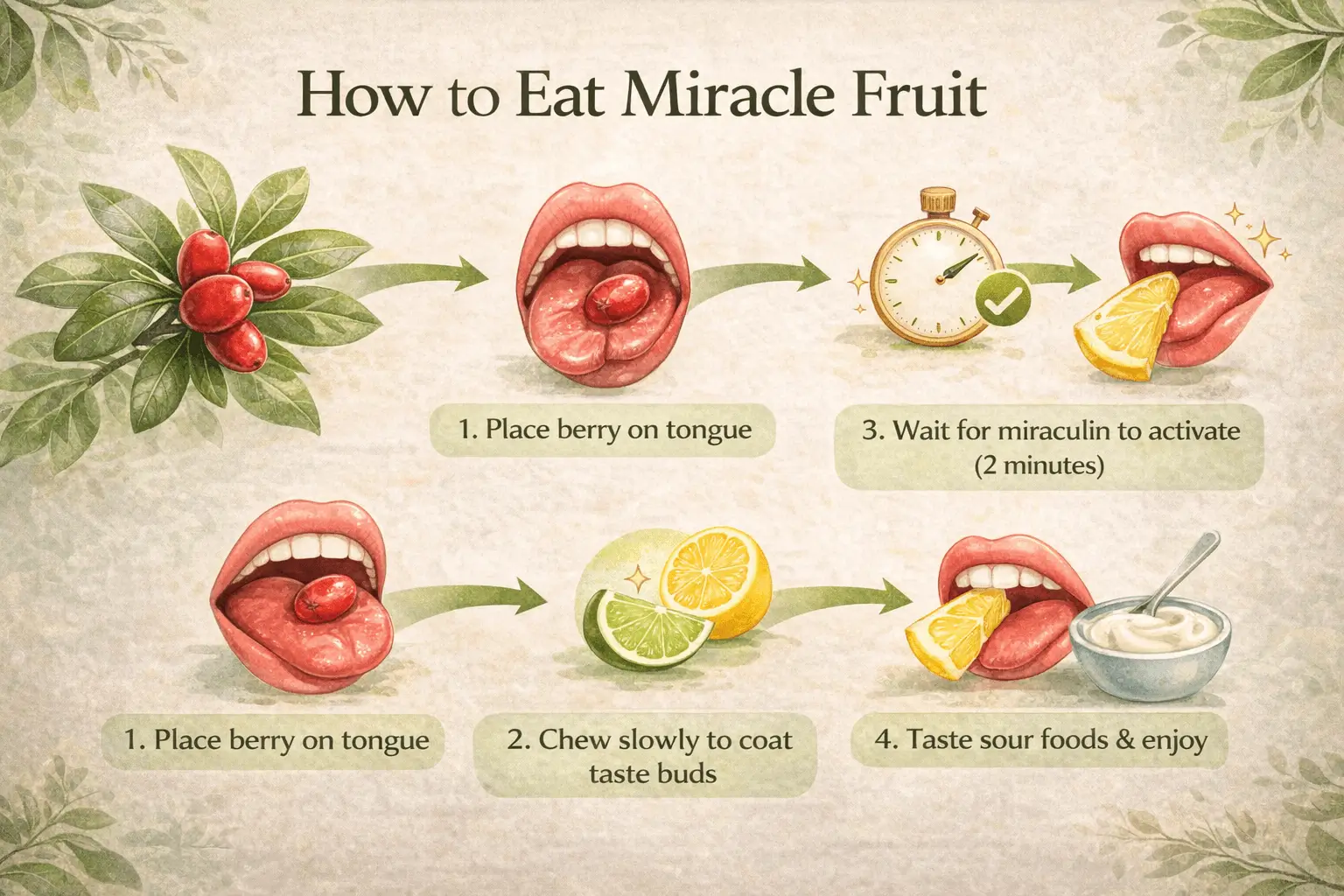
To experience the berry’s effect properly, it is important to know how to eat miracle fruit correctly.
The berry should be slowly chewed or dissolved in the mouth so that the pulp coats the tongue evenly. This allows miraculin to bind to taste receptors.
People often ask what to eat with miracle berries. After consuming the berry, sour or acidic foods create the strongest taste transformation.
Examples include citrus fruits, yogurt, or vinegar-based foods.
Foods Commonly Used for Flavor-Tripping
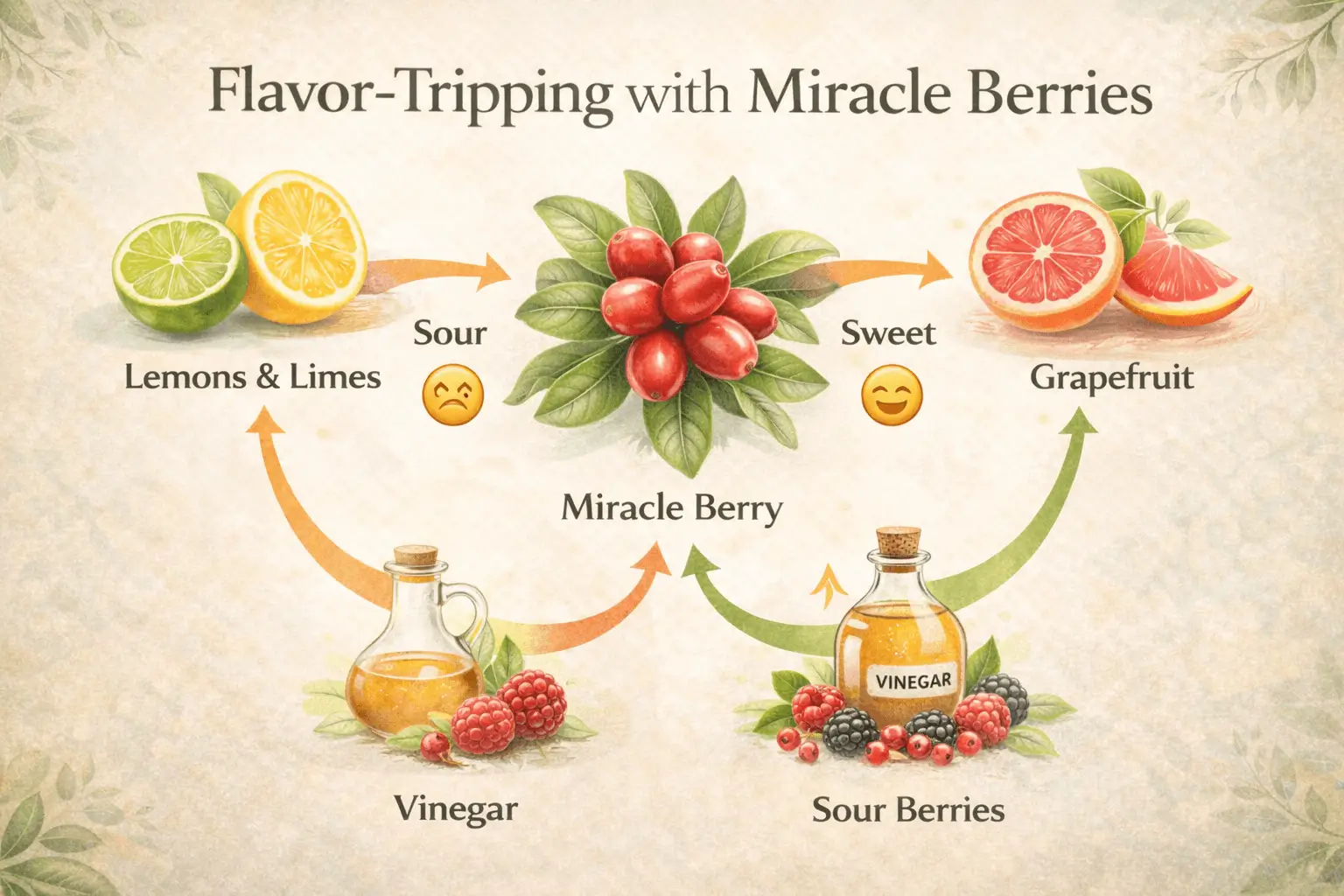
During flavor-tripping experiences, participants test a variety of foods to observe taste changes.
Common foods include:
- Lemons and limes
- Grapefruit
- Vinegar-based foods
- Sour berries
These foods contain natural acids that activate miraculin, making them taste sweet after eating miracle fruit.
What Miracle Fruit Tastes Like
The miracle fruit taste itself is mild and slightly sweet.
Many people asking what do miracle berries taste like expect a strong flavor, but the berry’s natural taste is subtle and not particularly sweet.
Its main purpose is not flavor but activating miraculin, which changes how other foods taste.
Is Miracle Fruit Safe?
Yes, miracle fruit is generally considered safe when eaten in typical dietary amounts.
People often ask is miracle fruit safe or is the miracle berry safe. Available research suggests the fruit does not pose significant health risks for most individuals when consumed moderately.
However, scientific research on long-term consumption remains limited, so moderation is recommended.
Miracle Fruit Side Effects
Reported miracle fruit side effects are generally mild.
Some individuals may experience minor digestive discomfort if large amounts of very acidic foods are eaten after consuming the berry.
Other potential miracle berry side effects include temporary tongue sensitivity due to excessive sour food consumption.
Overall, Synsepalum dulcificum side effects are considered uncommon when the fruit is eaten responsibly.
Why Miracle Fruit Is Sometimes Said to Be Illegal
A common internet question asks why is miracle fruit illegal.
In reality, miracle fruit is not illegal in most regions. However, regulatory debates occurred in the past when companies attempted to market miraculin as a commercial sugar substitute.
Some regulators classified miraculin as a food additive rather than a natural food ingredient, which restricted its commercial use as a sweetener. This regulatory history created confusion that led to the myth that miracle fruit itself is illegal.
Common Beginner Mistakes When Trying Miracle Berries
First-time users sometimes misunderstand how to use miracle berries effectively.
Common mistakes include:
- Swallowing the berry too quickly without coating the tongue
- Not allowing the pulp to dissolve fully
- Choosing foods that are not acidic enough
- Expecting the taste change to be permanent
To maximize the effect, the berry should be slowly dissolved in the mouth and followed by acidic foods.
Environmental and Growing Limitations of the Miracle Fruit Plant
The miracle berry tree grows naturally in tropical climates.
The miracle seed plant requires:
- Warm temperatures
- Acidic soil conditions
- Consistent humidity
The plant also grows slowly, which makes commercial production challenging.
Because of these requirements, miracle fruit plants are uncommon outside tropical regions unless grown in greenhouses or controlled environments.
Conclusion
Miracle fruit benefits center on the berry’s remarkable ability to transform sour flavors into sweetness through the action of the protein miraculin. Known scientifically as Synsepalum dulcificum, this unusual tropical fruit has gained attention for its potential role in low-sugar diets, taste-perception research, and culinary experiences such as flavor-tripping. While the berry is generally considered safe when eaten in moderation, understanding how miracle fruit works helps people use it responsibly and appreciate its fascinating interaction with human taste receptors. As research continues, miracle fruit remains an intriguing example of how plant chemistry can influence sensory perception.
Learn more: 7+ Key Goron Tula Fruit Benefits for Health and Wellness
FAQs
- What does miracle berry do to your taste buds?
Miracle berry contains miraculin, a protein that temporarily changes how taste receptors respond to sour foods, making them taste sweet for a short time. - How long does the miracle fruit effect last?
The taste-changing effect usually lasts between 30 and 90 minutes depending on how much berry is eaten and how well it coats the tongue. - Are miracle berries safe to eat?
Yes, miracle berries are generally considered safe when consumed in normal amounts, though eating very acidic foods afterward may cause mild stomach discomfort. - Why do lemons taste sweet after eating miracle fruit?
Miraculin activates sweetness receptors when exposed to acidic foods, which causes lemons and other sour foods to taste sweet. - What foods work best with miracle berries?
Foods that are naturally sour or acidic, including lemons, grapefruit, vinegar-based foods, and sour berries, produce the strongest taste transformation. - What is the scientific name of miracle fruit?
The scientific name of miracle fruit is Synsepalum dulcificum, a tropical plant native to West Africa.



One Response