
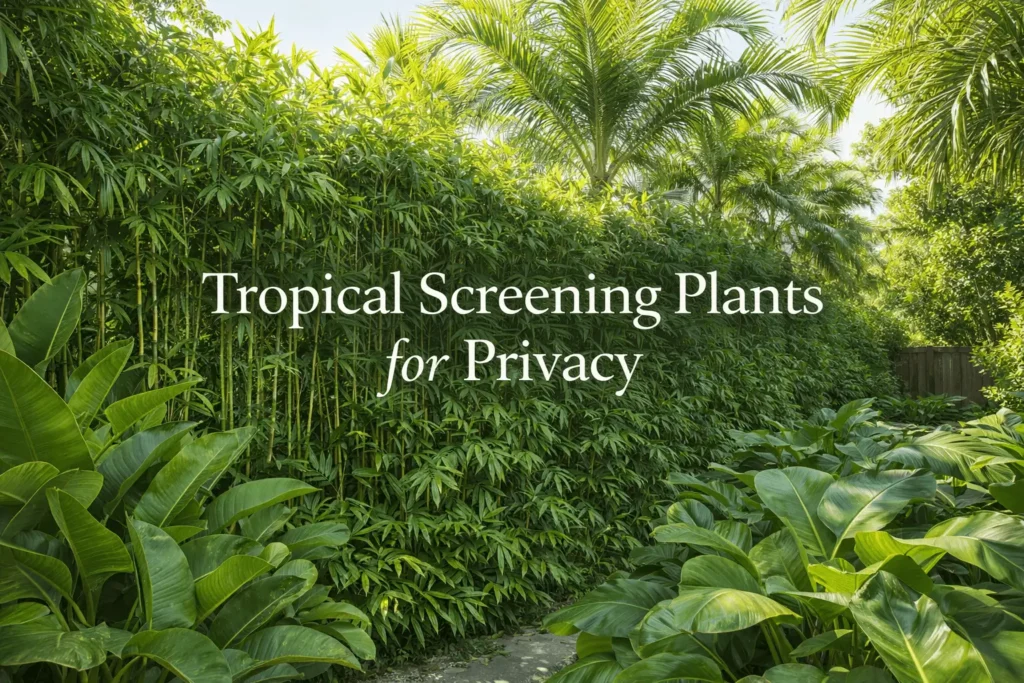
Introduction to Tropical Screening Plants
Tropical screening plants are landscape plants used to create natural privacy barriers, visual separation, and structured garden spaces. These plants are widely used in warm-climate landscaping because they provide dense foliage, vertical growth, and lush greenery throughout the year.
Gardeners often choose tropical plants for privacy because they grow relatively quickly and produce thick foliage that blocks unwanted views. Tropical privacy plants also help create a tropical garden atmosphere with dramatic leaves and vibrant textures.
In landscaping design, tropical plants for screening are used along property lines, fences, patios, and pool areas. Their dense foliage and height make them effective natural screens while tropical looking plants add visual interest and a relaxing garden environment.
What Are Tropical Screening Plants and Why Are They Used?
Tropical screening plants are plants used specifically to create privacy screens, natural barriers, or visual partitions in outdoor spaces. Unlike decorative garden plants that focus primarily on aesthetics, screening plants are selected for density, height, and coverage.
In landscaping, tropical plants for screening serve several practical purposes. They can block direct views between properties, reduce wind exposure, and absorb some environmental noise. These plants also help divide gardens into different functional areas such as seating spaces, pathways, and entertainment zones.
Many gardeners also use tropical hedge plants or tropical hedging plants to create more structured privacy barriers. When planted in rows, these plants grow into living green walls that maintain a natural appearance while providing reliable screening.
Types of Garden Screening Solutions
Garden screening can be achieved in several ways depending on space, climate, and design preferences. Dense hedges are the most traditional screening solution and are commonly created using closely spaced tropical plants.
Layered planting is another popular method. In this approach, tall plants form the background while medium and lower plants fill gaps, creating a thick multi-layered screen. This strategy increases visual depth and improves overall garden structure.
In smaller outdoor spaces, tropical potted plants outdoor can act as movable privacy screens. Large tropical outdoor potted plants placed along patios, balconies, or poolside areas create flexible barriers while maintaining the lush look of tropical patio plant arrangements.
Key Characteristics of Effective Tropical Privacy Plants
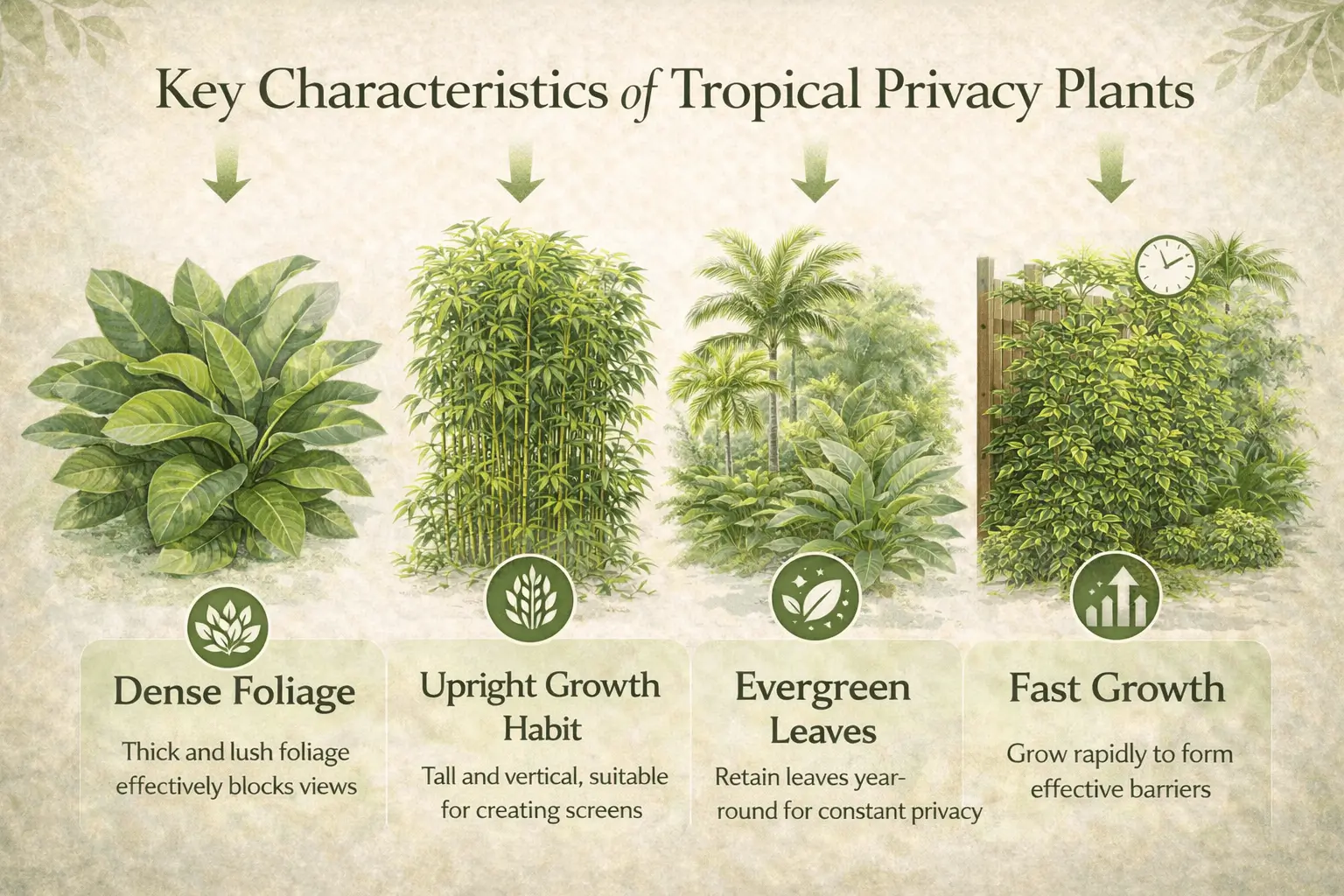
Good tropical privacy plants share several important characteristics that make them effective screening solutions. Dense foliage is one of the most important traits because it blocks views more efficiently than sparse or open plant structures.
Another key characteristic is upright growth. Plants that grow vertically can quickly form tall barriers, making them ideal for property boundaries or fence lines. Evergreen foliage is also valuable because evergreen tropical screening plants maintain coverage throughout the year.
Fast growth is another important factor. Many gardeners prefer tropical foliage plants or tropical flowering plants that grow quickly, allowing new gardens to establish privacy within a short time.
-
Foliage Density and Growth Habit
Dense foliage plays a major role in effective privacy screening. Plants with thick canopies and overlapping leaves prevent visibility through the plant structure.
Many tropical foliage plant species naturally produce broad leaves and compact growth habits. These features create strong visual barriers while also contributing to the lush appearance associated with tropical landscapes.
-
Height and Screening Coverage
Height is another essential factor in tropical screening plants. Tall plants create vertical coverage that blocks views from neighboring properties or nearby streets.
Gardeners often use spacing strategies to maximize coverage. Plants are usually spaced close enough to allow their canopies to merge as they mature. Layered planting with different heights can also improve screening density and provide a more natural appearance.
Best Tropical Screening Plants for Landscaping Privacy
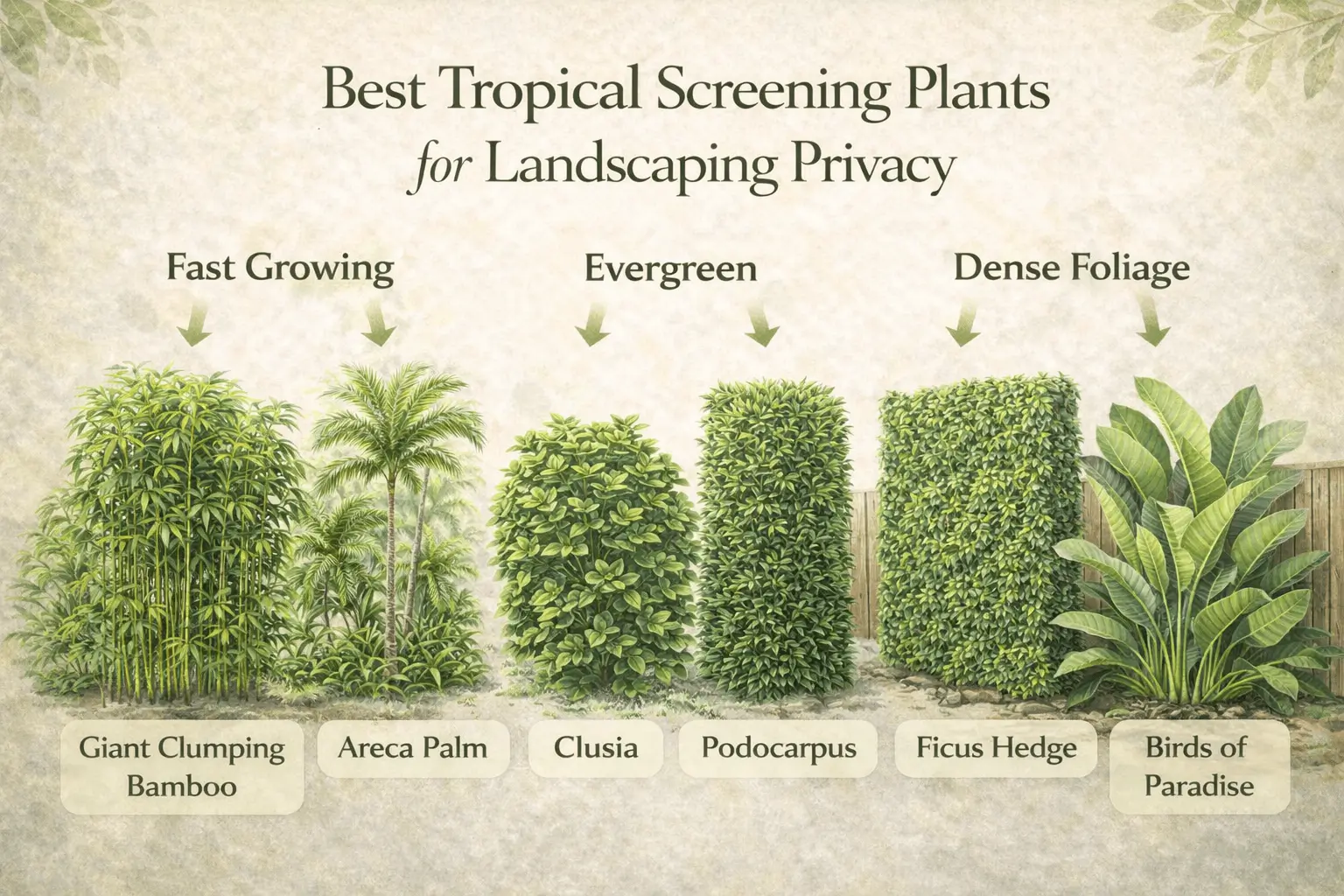
The best tropical screening plants are selected based on their height, growth speed, and foliage density. Many tropical species grow quickly and produce thick foliage, making them ideal for landscape privacy.
When choosing tropical screening plants for landscaping, gardeners often consider how quickly the plants will establish a barrier. Fast-growing plants are especially useful for new homes or recently developed gardens where immediate privacy is needed.
Fast-Growing Tropical Screening Plants
Fast growing tropical screening plants are popular because they quickly form dense green barriers. Rapid growth helps fill empty garden spaces and establishes privacy within a few growing seasons.
These plants are particularly useful for newly built homes where outdoor landscapes are still developing. Quick growth helps create natural screening while the rest of the garden matures.
Evergreen Tropical Screening Plants
Evergreen tropical screening plants maintain foliage throughout the year, making them ideal for consistent privacy. Unlike deciduous plants that lose leaves seasonally, evergreen plants continue to provide coverage during all seasons.
This constant foliage ensures that privacy screens remain effective while also maintaining the lush green appearance typical of tropical gardens.
Tropical Screening Plants for Full Sun Gardens
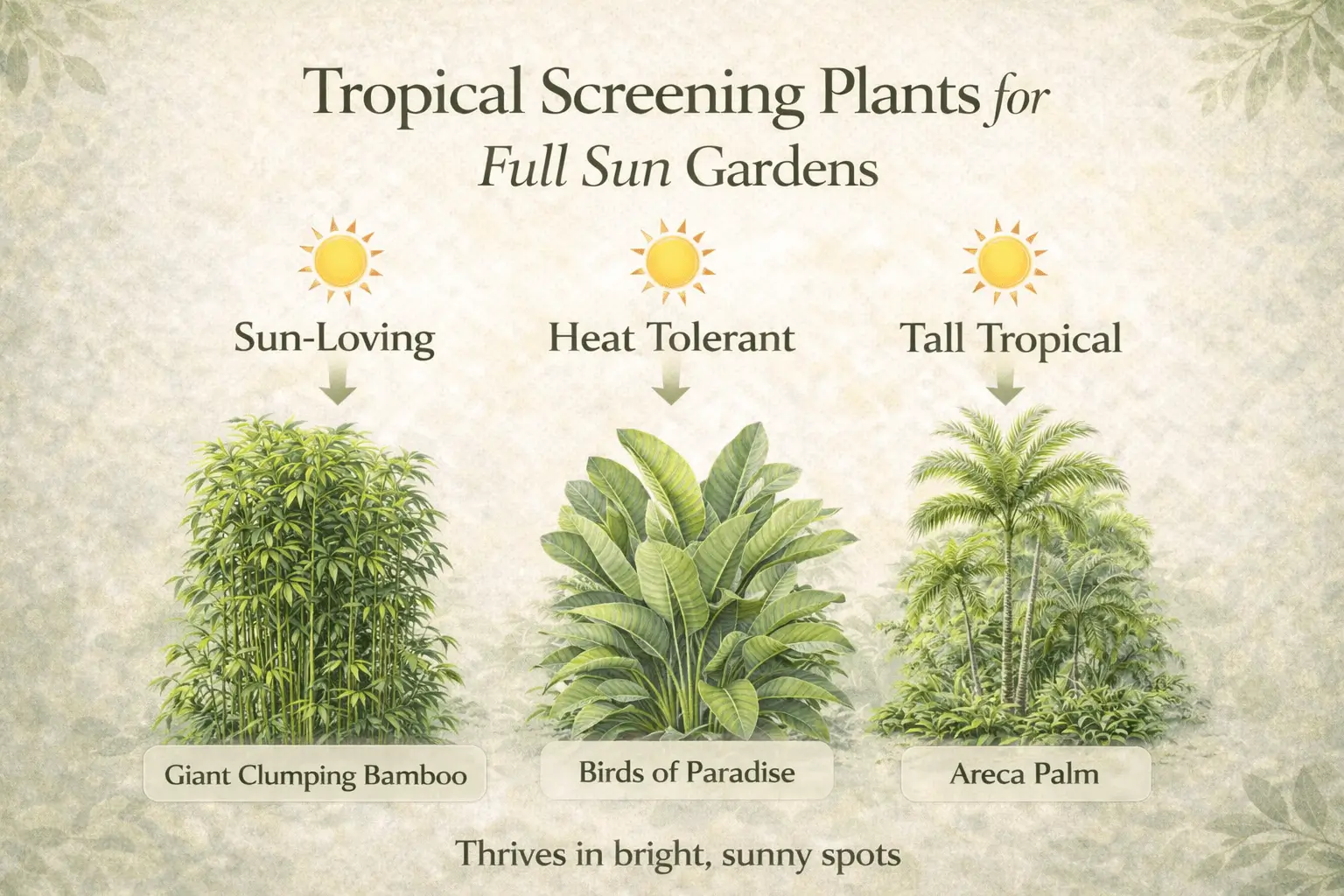
Sunlight plays a major role in selecting the right screening plants. Many tropical screening plants full sun thrive in bright outdoor conditions where they receive several hours of direct sunlight daily.
Plants adapted to full sun are typically heat tolerant and capable of handling intense light exposure. Tropical plants outdoor full sun often develop stronger growth and denser foliage when grown in these conditions.
-
Sun-Loving Tropical Screening Plants
Tropical plants that like full sun are commonly used in open landscapes and tropical garden designs. These sun loving plants perform best in locations where sunlight is abundant throughout the day.
Such plants are frequently used in large outdoor spaces where they can grow freely and produce thick foliage for effective screening.
-
Tall Tropical Plants for Sunny Locations
Tall tropical plants full sun are especially useful for screening along fences, property boundaries, or pool areas. Their vertical growth provides both privacy and shade in outdoor environments.
These plants often become focal points in garden design while also serving functional roles as natural barriers.
Low Maintenance Tropical Screening Plants
Low maintenance tropical screening plants are popular choices for homeowners who want privacy without extensive upkeep. These plants typically require minimal pruning, watering, or pest control.
Low-maintenance tropical plants are often selected for their durability and adaptability. Many species tolerate varying soil conditions and occasional drought once established.
Low Maintenance Plants for Full Sun Areas
Low maintenance outdoor tropical plants full sun are particularly valuable in warm climates where sunlight is strong. Many of these plants have thick leaves or drought-tolerant characteristics that reduce water requirements.
Strong foliage structures also help protect plants from heat stress and environmental damage, further lowering maintenance needs.
Using Tropical Plants in Pots for Privacy Screens
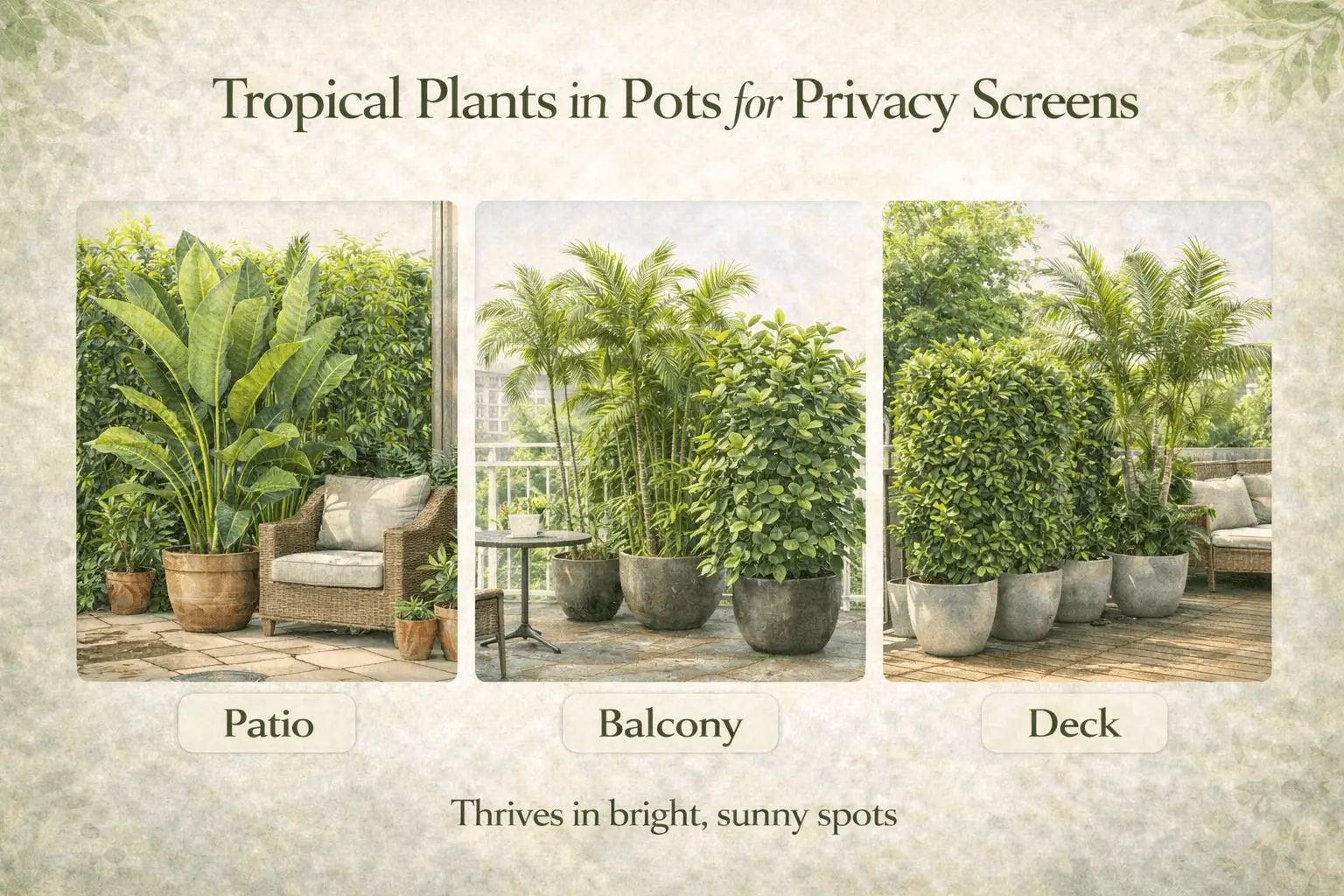
Tropical plants for pots offer flexible privacy solutions in areas where planting directly in the ground is not possible. These plants can be moved or rearranged depending on seasonal needs or outdoor layout changes.
Tropical plant in pot arrangements are common on balconies, patios, and decks where container gardening is more practical than traditional landscaping.
Large Tropical Outdoor Potted Plants for Decks
Large tropical outdoor potted plants can create effective privacy barriers on decks or patios. When arranged strategically, these plants provide visual separation while maintaining a lush tropical atmosphere.
Tropical deck plants and tropical patio plant combinations are often used to create comfortable outdoor living areas surrounded by greenery.
Regional Considerations for Tropical Screening Plants
Climate conditions strongly influence the success of tropical screening plants. Temperature ranges, rainfall patterns, and seasonal variations all affect plant growth and survival.
Sub tropical screening plants are often chosen in regions where winters are cooler but still mild enough to support tropical species.
Tropical Screening Plants in Australia and Similar Climates
Regions such as Australia provide ideal conditions for tropical screening plants. Warm temperatures and humid climates support vigorous plant growth.
Cities such as Brisbane and Sydney frequently use tropical screening plants in landscaping because these plants thrive in subtropical environments with long growing seasons.
Tropical Screening Plants in Cooler Regions
In cooler climates, gardeners sometimes grow tropical screening plants in protected locations or containers. This approach allows plants to be moved indoors during colder seasons.
In places like the UK, gardeners often select cold-tolerant tropical species or use greenhouse environments to support tropical growth.
Common Mistakes When Choosing Tropical Screening Plants
Selecting the wrong plants can reduce the effectiveness of garden screening. Several common mistakes can prevent tropical screening plants from achieving their intended purpose.
Choosing Plants That Grow Too Slowly
Slow-growing plants can delay the development of privacy screens for many years. Gardeners expecting immediate results may become frustrated if plants take too long to mature.
Fast growing tropical screening plants are often better choices for homeowners seeking quicker coverage.
Planting Without Considering Mature Size
Many tropical plants grow significantly larger than expected. Without proper planning, plants can become overcrowded or interfere with nearby structures.
Understanding mature plant size helps gardeners maintain proper spacing and long-term landscape balance.
Ignoring Sunlight and Climate Needs
Incorrect placement can weaken plant growth and reduce foliage density. Tropical plants require suitable light and temperature conditions to thrive.
Matching plant species to local climate conditions ensures healthy growth and reliable screening performance.
Tropical Plant Types Often Used for Screening
Many tropical species can be used as screening plants. A typical tropical plants list may include tall foliage plants, dense hedging plants, and flowering tropical species.
Gardeners often refer to lists of tropical plants or tropical plant names when planning privacy landscaping.
-
Tropical Foliage Plants Used for Screening
Tropical foliage plants are among the most effective screening plants because their leaves are often large and densely arranged. Thick foliage creates strong visual barriers while enhancing the lush appearance of tropical gardens.
-
Tropical Flowering Plants That Provide Screening
Some tropical flowering plants also function as screening plants. In addition to privacy, these plants add seasonal color and visual interest to the landscape.
Flowering screening plants can create a balance between aesthetic beauty and functional garden design.
How Tropical Screening Plants Improve Garden Design
Tropical screening plants contribute both practical and visual benefits to garden landscapes. They create defined spaces that improve organization and privacy within outdoor areas.
These plants also help establish layered garden designs. Tall plants provide structure, while medium and low plants add texture and depth.
Tropical garden screening plants and tropical looking screening plants enhance the overall atmosphere of outdoor spaces by introducing lush foliage and natural greenery.
Conclusion
Tropical screening plants play an important role in garden design by creating privacy, shade, and visual structure. Their dense foliage and vertical growth make them effective natural barriers for patios, property boundaries, and outdoor living areas.
Tropical privacy plants also enhance the aesthetic appeal of landscapes by adding lush greenery and vibrant textures. Choosing the right screening plants depends on several factors, including sunlight exposure, maintenance requirements, and growth habits.
When carefully selected and properly placed, tropical screening plants provide long-lasting privacy while contributing to the beauty and functionality of garden environments.
Learn more: Miracle Fruit Benefits: How This Berry Changes Taste
FAQs
- What are the best tropical screening plants for privacy?
The best tropical screening plants typically have dense foliage, upright growth, and evergreen leaves. These characteristics help create thick privacy barriers that effectively block views between properties. - Do tropical screening plants grow well in full sun?
Many tropical screening plants full sun thrive in bright outdoor environments. These plants are usually adapted to warm climates and develop strong growth when exposed to several hours of direct sunlight. - What are low maintenance tropical plants for garden privacy?
Low maintenance tropical screening plants often have durable foliage and strong adaptability. These plants require minimal pruning and watering once established, making them ideal for homeowners seeking easy-care privacy solutions. - Can tropical plants be used in pots for privacy screening?
Yes, tropical potted plants outdoor can create movable privacy screens. Large container plants placed along patios, balconies, or decks provide flexible screening solutions. - How fast do tropical screening plants grow?
Growth rates vary depending on the plant species and climate conditions. Many fast growing tropical screening plants can establish noticeable privacy coverage within one to three growing seasons when planted in suitable conditions.

13 Responses