
Introduction
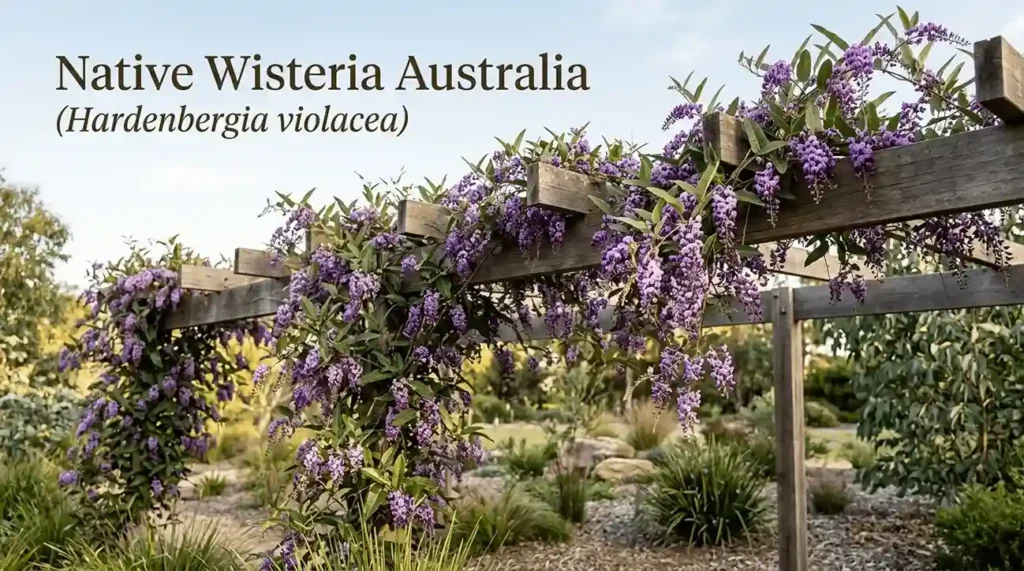
Native wisteria is a popular climbing plant group in Australia commonly associated with Hardenbergia species such as Hardenbergia violacea and Hardenbergia comptoniana. Although many gardeners refer to these plants as australian native wisteria, they are different from true Wisteria species that originate from Asia and North America. Native wisteria Australia varieties are valued for their drought tolerance, lower maintenance needs, and ability to support pollinators in local ecosystems. Unlike invasive imported wisterias, Australian native species adapt well to local climates and require less aggressive pruning. Their colorful purple or white flowers also make them a practical choice for pergolas, hedges, fences, and native garden landscapes.
Quick Summary
- Native wisteria in Australia usually refers to Hardenbergia species rather than true Wisteria vines.
- Australian native wisteria is valued for purple flowers, drought tolerance, and versatile growth habits.
- Different native wisteria varieties suit hedges, trellises, pergolas, and ground cover applications.
- Understanding the differences between native and invasive wisteria helps gardeners choose the right plant for their climate.
What Is Native Wisteria?
Native wisteria refers to flowering climbing plants that are indigenous to specific regions rather than imported ornamental wisteria species. In Australia, the term commonly describes Hardenbergia plants, especially Hardenbergia violacea and Hardenbergia comptoniana. Australian native wisteria commonly refers to species within the Hardenbergia genus, which belongs to the Fabaceae plant family.
Native Wisteria Family and Botanical Classification
Australian wisteria plants belong to the Fabaceae family, which is the pea family. Although they resemble true wisteria vines visually, they are botanically different.
Key classification details include:
- Family: Fabaceae
- Genus: Hardenbergia
- Common names: native wisteria vine, australian wisteria, false sarsaparilla
The naming confusion exists because Hardenbergia flowers resemble hanging wisteria blooms.
Hardenbergia Native Wisteria Characteristics
Hardenbergia native wisteria species are evergreen climbers with dense foliage and purple pea-shaped flowers. They naturally occur in Australian woodlands and coastal regions.
Common features include:
- Twining climbing habit
- Long flowering periods
- Drought resistance
- Pollinator attraction
Native Wisteria in Australia vs Other Regions
Native wisteria Australia species are adapted to dry climates and variable temperatures, while American native wisteria types prefer humid environments.
Australian Native Wisteria
Australian native wisteria species tolerate:
- Dry summers
- Sandy soils
- Coastal winds
- Moderate frost conditions
These plants are widely used in drought-tolerant gardens.
American Native Wisteria Types
US native wisteria species include:
- Wisteria frutescens
- Wisteria macrostachya
American native wisteria plants are less invasive than Chinese wisteria but still differ significantly from Australian Hardenbergia species.
Climate Suitability Comparison
| Region | Typical Species | Climate Preference | Growth Style |
| Australia | Hardenbergia violacea | Dry to temperate | Compact climber |
| North America | Wisteria frutescens | Humid temperate | Vigorous vine |
| Asia | Chinese/Japanese Wisteria | Moist temperate | Aggressive climber |
Australian Native Wisteria Species and Varieties
Several native wisteria varieties are commonly cultivated across Australia.
Hardenbergia Violacea Native Wisteria
Hardenbergia violacea native wisteria is the most widely grown species. It produces purple flowers and dense evergreen foliage.
Popular uses include:
- Pergolas
- Fence coverage
- Ground cover
- Native garden borders
Native Wisteria White Varieties
White-flowering cultivars are also available and are often used in formal gardens for contrast planting.
Native Blue Wisteria Types
Some cultivars produce deeper blue-purple flowers and are marketed as native blue wisteria for ornamental landscaping.
Native Wisteria Hardenbergia Comptoniana
Hardenbergia comptoniana is native to Western Australia and grows vigorously in Mediterranean-style climates.
Hardenbergia Violacea Overview
Hardenbergia violacea is an evergreen climber known for cascading purple flowers that bloom from winter to spring. It is one of the easiest Australian native vines to grow.
Growth Habit
This species can climb several meters when supported but also works as ground cover.
Landscaping Uses
Common applications include:
- Trellises
- Pergolas
- Native screening
- Hanging landscape features
Why It Is Popular
Gardeners prefer this species because it:
- Requires minimal watering once established
- Flowers heavily
- Attracts bees and butterflies
- Responds well to pruning
Hardenbergia Comptoniana Overview
Hardenbergia comptoniana is native to Western Australia and performs best in warm, dry climates.
Characteristics of Hardenbergia Comptoniana
This species features:
- Larger leaves
- Strong climbing growth
- Purple flower clusters
- Dense coverage
Native Wisteria Western Australia Adaptation
Native wisteria Western Australia gardeners often choose this species because it handles sandy soils and coastal exposure effectively.
Native Wisteria Variety Comparison
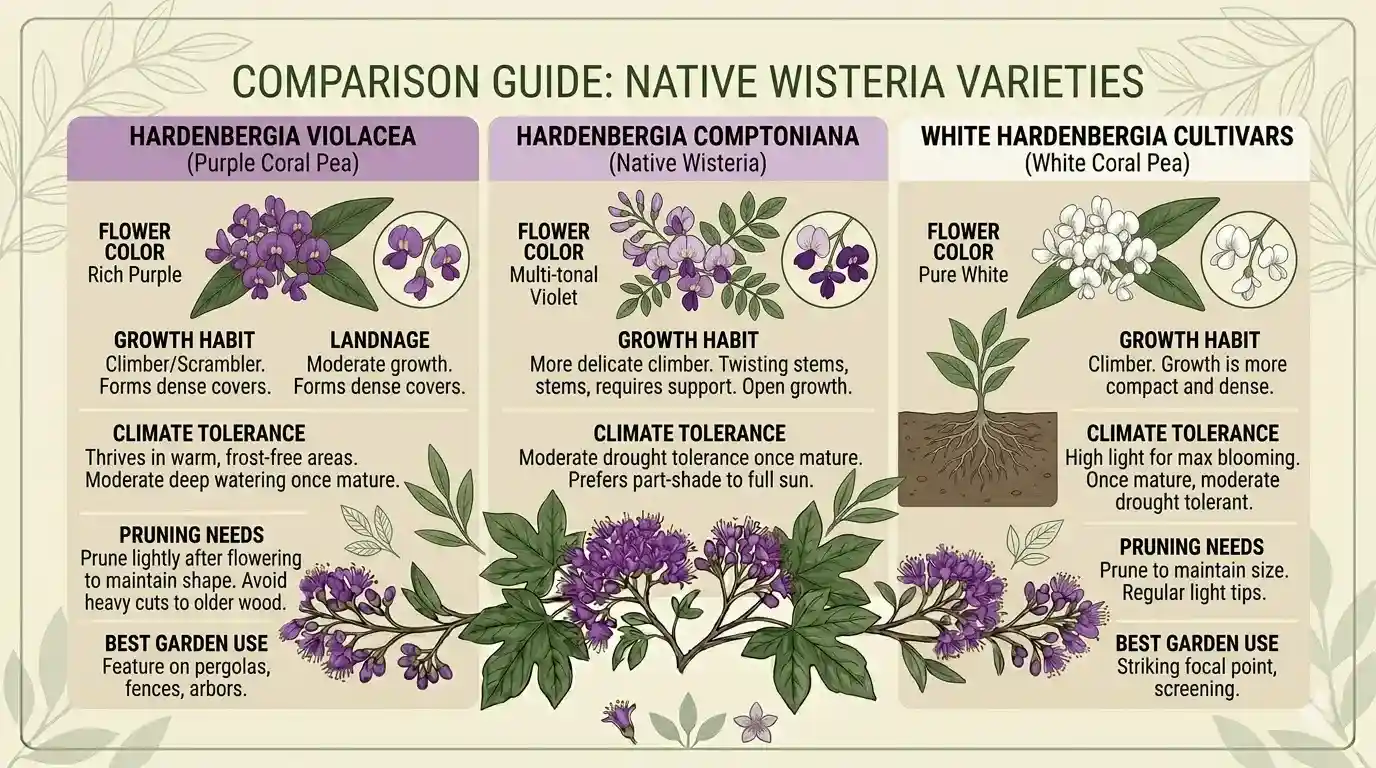
| Variety | Flower Color | Growth Habit | Climate Tolerance | Pruning Needs | Flowering Season |
| Hardenbergia violacea | Purple | Moderate climber | Temperate to dry | Moderate | Winter–Spring |
| White cultivars | White | Compact climber | Mild climates | Low | Winter–Spring |
| Hardenbergia comptoniana | Purple | Vigorous climber | Mediterranean | Moderate | Winter–Spring |
Hardenbergia Comptoniana vs Violacea
Hardenbergia comptoniana vs violacea comparisons often focus on growth speed and climate performance.
Growth Speed
- Comptoniana grows faster
- Violacea remains more compact
Flower Density
Violacea generally produces denser flower coverage.
Cold Tolerance
Violacea handles cooler climates better than Comptoniana.
Hedge Suitability
Violacea is easier to maintain as a formal hedge.
Maintenance Needs
Comptoniana requires more pruning due to vigorous growth.
Which Variety Is Better for Different Garden Types?
Different native wisteria varieties suit different landscaping goals. In warmer regions, native wisteria can also complement selections from Tropical Screening Plants: Best Choices for Garden Privacy for dense decorative coverage.
| Garden Type | Best Variety |
| Pergolas | Hardenbergia comptoniana |
| Fences | Hardenbergia violacea |
| Hedges | Violacea cultivars |
| Coastal gardens | Comptoniana |
| Dry climates | Both species |
Native Wisteria vs Traditional Wisteria
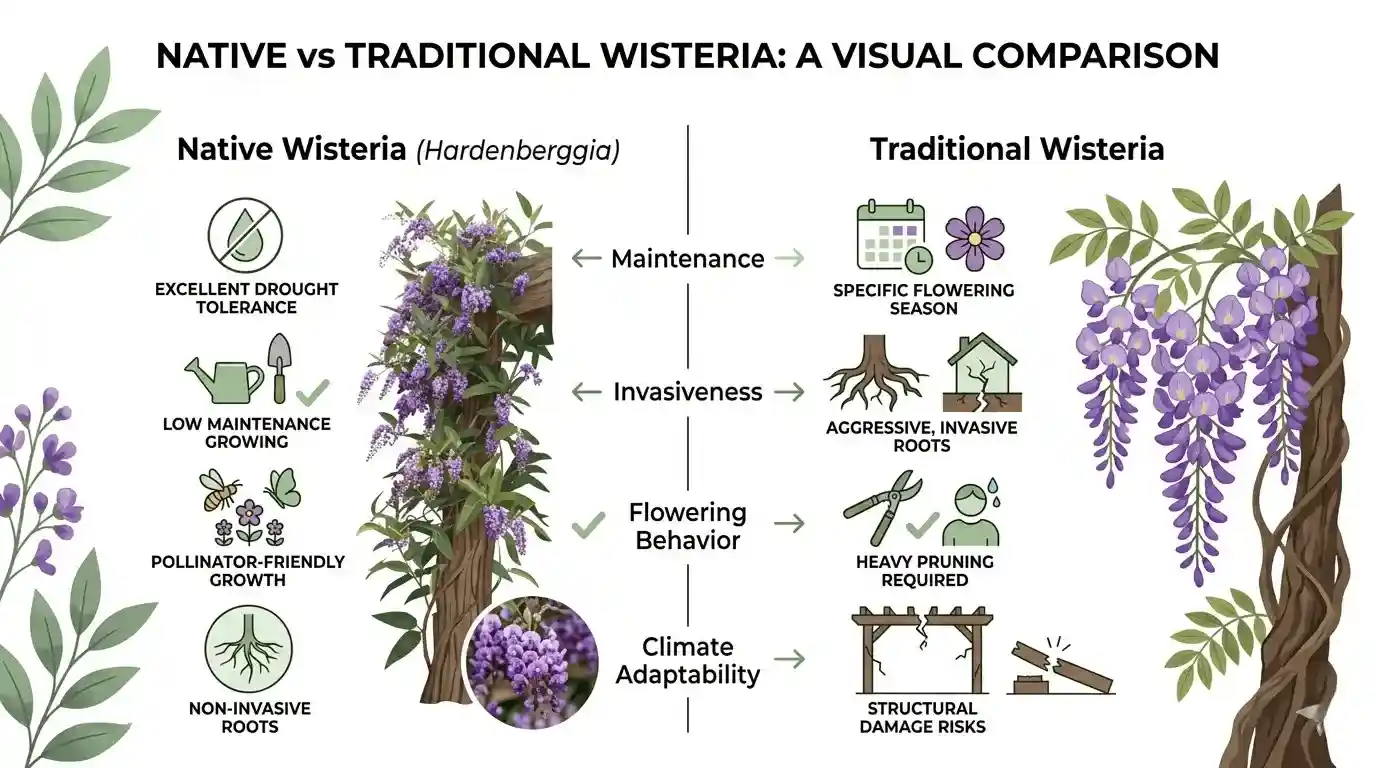
Native wisteria vs wisteria comparisons usually focus on invasiveness and maintenance.
Native Wisteria vs Chinese Wisteria
Chinese wisteria grows aggressively and may damage structures if unmanaged. Native species are easier to control.
Root Systems
Native species have less destructive root systems compared to imported ornamental wisterias.
Flowering Behavior
Traditional wisteria often flowers after several years, while Hardenbergia species flower earlier.
Environmental Impact
Australian native plants provide better support for local biodiversity and pollinators.
Comparison Block — Native vs Chinese and Japanese Wisteria
| Feature | Native Wisteria | Chinese Wisteria | Japanese Wisteria |
| Origin | Australia | China | Japan |
| Invasiveness | Low | High | Moderate–High |
| Water Needs | Low | Moderate | Moderate |
| Maintenance | Low | High | High |
| Suitable for Native Gardens | Yes | No | No |
How to Grow Native Wisteria Successfully
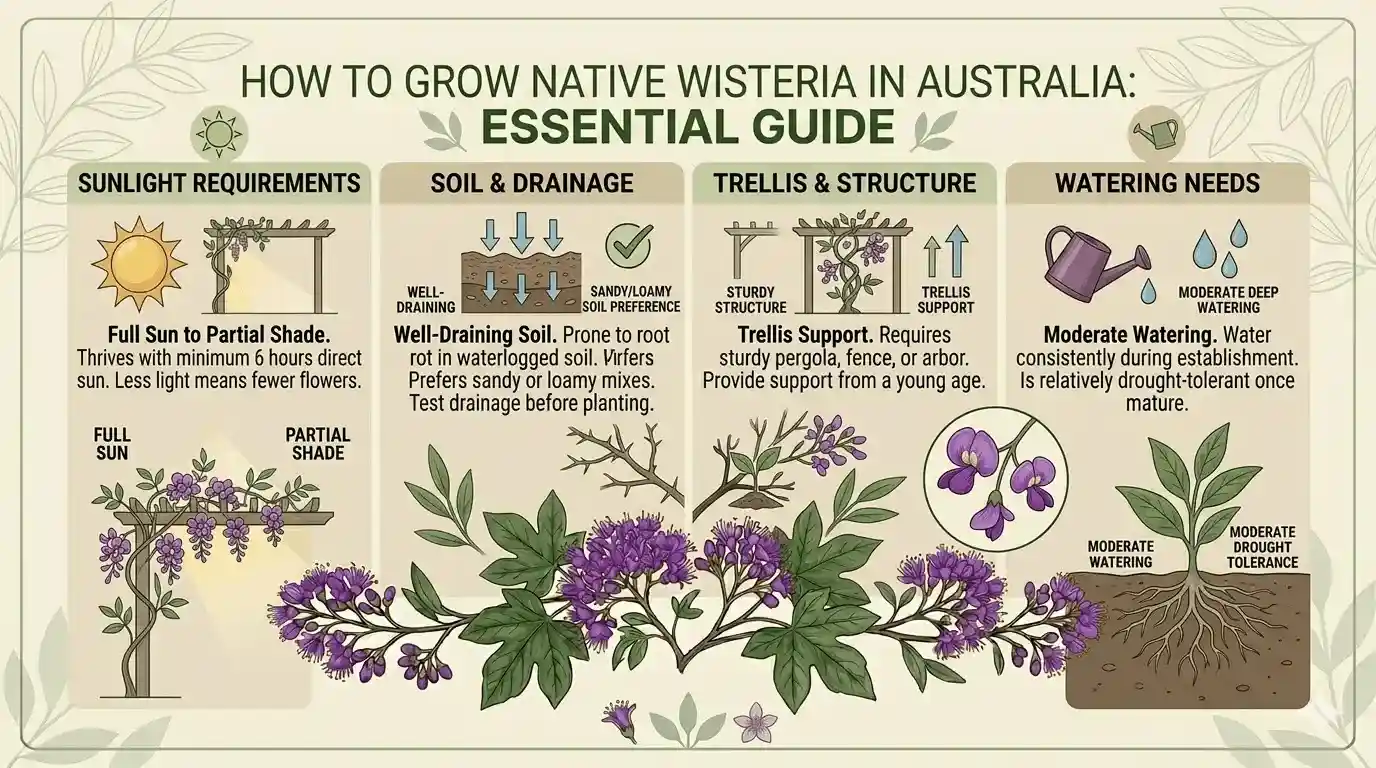
Native wisteria grows best in sunny locations with free-draining soil.
Sunlight Requirements
Most varieties require:
- Full sun to partial shade
- At least 5–6 hours of light daily
Soil Preferences
Well-draining soil prevents root stress and fungal problems.
Native Wisteria Perth and QLD Conditions
Native wisteria Perth gardens benefit from drought tolerance, while native wisteria QLD growers should ensure airflow in humid conditions.
Care Guide for Native Wisteria
Watering Requirements
Water regularly during establishment. Mature plants become drought tolerant.
Fertilizing
Avoid excessive nitrogen fertilizer because it may reduce flowering.
Mulching
Organic mulch helps regulate soil moisture and root temperature.
Pruning
Prune after flowering to maintain shape and encourage dense growth.
Plant Size and Growth Habit
Native wisteria can grow as a climber, hedge, or ground cover depending on pruning methods.
Mature Size
- Height: 2–6 meters
- Spread: 2–4 meters
Growth Forms
These plants can be trained for:
- Pergola coverage
- Fence climbing
- Dense hedging
- Ground cover planting
Growth Rate and Lifespan
Hardenbergia lifespan commonly ranges from 10–20 years under healthy growing conditions.
Growth Speed
Most plants establish quickly during spring and autumn.
Factors Affecting Longevity
Environmental stress factors include:
- Poor drainage
- Frost damage
- Overwatering
- Nutrient imbalance
Using Native Wisteria as a Hedge or Screening Plant
Hardenbergia hedge applications are increasingly common in low-maintenance landscapes.
Privacy Screening Benefits
Dense foliage provides:
- Visual privacy
- Wind protection
- Fence softening
Compact Pruning Methods
Regular trimming encourages bushier growth and manageable hedge size. Gardeners often combine native wisteria with species from the 10+ Fast Growing Australian Native Screening Plants Guide to create layered privacy planting.
Best Support Structures for Native Wisteria Vines
Strong support systems improve flowering and structural stability.
Recommended Structures
Best support options include:
- Timber trellises
- Steel wire systems
- Pergolas
- Boundary fences
Installation Tips
Install supports before planting to avoid root disturbance later.
Common Problems With Native Wisteria and How to Fix Them
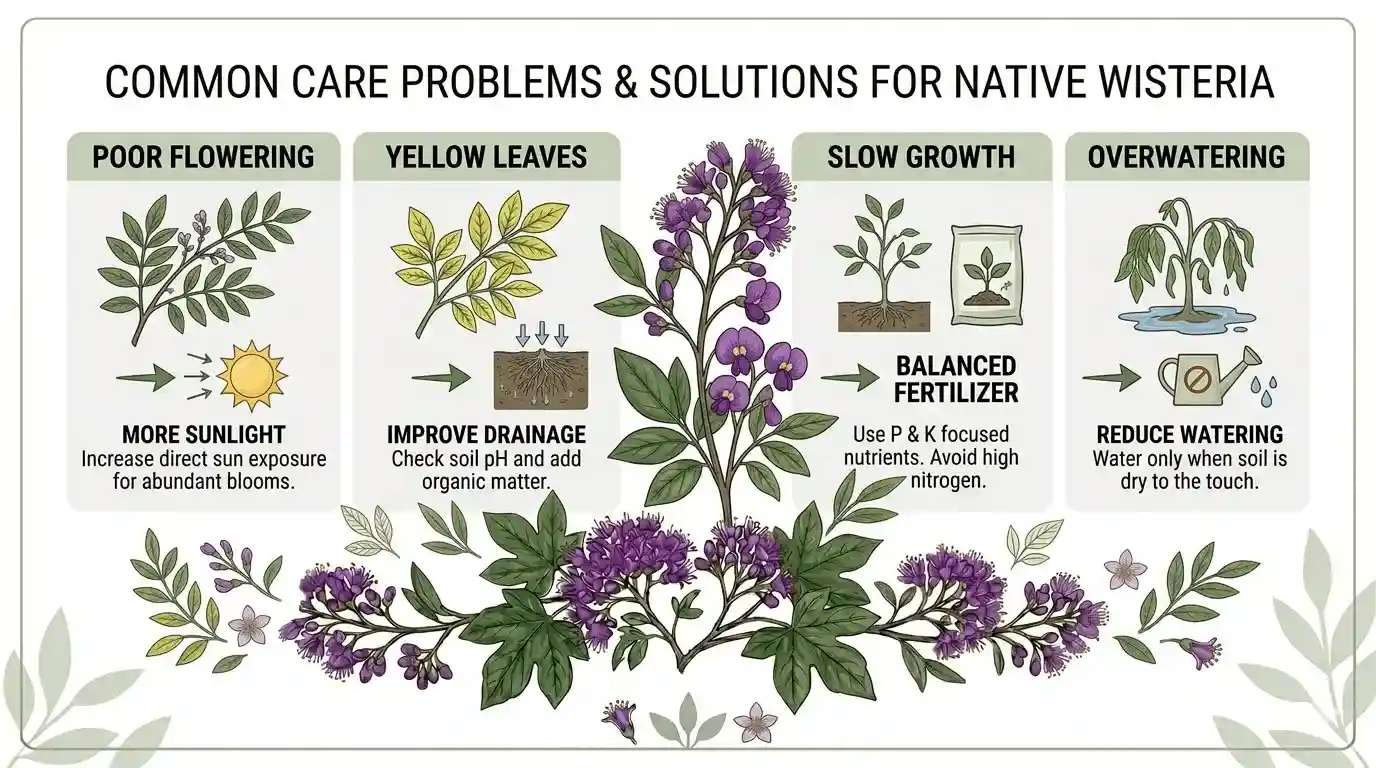
Native wisteria problems are usually related to environmental conditions.
| Problem | Common Cause | Solution |
| Poor flowering | Shade | Increase sunlight |
| Yellow leaves | Overwatering | Improve drainage |
| Slow growth | Nutrient deficiency | Apply balanced fertilizer |
| Root stress | Heavy clay soil | Improve soil structure |
Why Native Wisteria May Not Flower Properly
Native wisteria may not flower properly because of low sunlight, incorrect pruning, or excessive fertilizer.
Insufficient Sunlight
Flower production declines heavily in deep shade.
Incorrect Pruning Timing
Pruning before flowering season may remove developing buds.
Excessive Fertilizer
Too much nitrogen encourages leaf growth instead of flowers.
Preventing Pest and Disease Issues
Native wisteria is relatively resistant to major pests and diseases.
Common Issues
Possible problems include:
- Aphids
- Scale insects
- Root rot
- Fungal leaf spotting
Prevention Tips
- Avoid waterlogged soil
- Maintain airflow
- Remove dead foliage
- Avoid overhead watering
Is Native Wisteria Poisonous?
Native wisteria is generally considered less toxic than true wisteria species, but some plant parts may still cause mild digestive irritation if consumed.
Toxicity Concerns for Pets and Children
Dogs and cats may experience stomach upset after chewing foliage or seed pods.
Livestock Safety
Livestock toxicity reports are uncommon compared to traditional wisteria species.
Native Wisteria for Different Australian Climates
Native wisteria Australia species adapt well across multiple climate zones.
Coastal Climates
Coastal gardeners benefit from salt and wind tolerance.
Dry Inland Regions
Established plants perform well with minimal watering.
Frost Tolerance
Violacea varieties generally handle frost better.
Humidity Considerations
Humid climates require better airflow and careful watering practices.
Seasonal Care Differences Across Australia
Native wisteria care varies between regions.
Summer Care
- Deep watering during heatwaves
- Mulching to retain moisture
Winter Care
- Reduce watering
- Light structural pruning after flowering
Beginner Mistakes When Growing Native Wisteria
Several common mistakes reduce plant health and flowering performance.
Common Errors
- Planting in heavy shade
- Poor drainage
- Over-fertilizing
- Weak support structures
- Incorrect pruning timing
How to Avoid Common Landscaping Errors
Proper spacing and planning improve long-term performance.
Spacing Recommendations
Allow enough space for mature spread and airflow.
Long-Term Maintenance Planning
Choose supports and pruning methods suited to mature growth size.
Where Native Wisteria Fits in Australian Landscaping
Native wisteria suits modern Australian landscape design because it combines drought tolerance with ornamental flowering. Because native wisteria requires relatively little ongoing maintenance, it works especially well in gardens designed using principles from the Easy Low Maintenance Australian Native Garden Guide 7+ Steps.
Landscaping Applications
Ideal uses include:
- Native gardens
- Pollinator-friendly landscapes
- Low-maintenance gardens
- Pergola coverage
- Coastal designs
Native wisteria is commonly included in low-maintenance Australian gardens alongside other drought-tolerant species featured in our Plants: Benefits and Guides (Complete Care, Types & Growing Tips) resource.
Companion Plants for Native Wisteria
Several Australian native plants grow well alongside native wisteria.
Suitable Companion Plants
Good companion species include:
- Grevillea
- Westringia
- Correa
- Kangaroo paw
- Lomandra
These plants share similar water and soil requirements.
Conclusion
Native wisteria is a versatile and low-maintenance climbing plant group that performs exceptionally well in Australian gardens. Unlike invasive imported wisteria species, australian native wisteria varieties such as Hardenbergia violacea and Hardenbergia comptoniana are better adapted to local climates, require less pruning, and support native pollinators. Native wisteria Australia gardeners value these plants for their drought tolerance, attractive purple or white flowers, and flexible landscaping uses. Whether used on pergolas, fences, hedges, or ground covers, native wisteria provides long-lasting ornamental value with fewer environmental concerns than traditional invasive wisteria vines.
FAQs
What is the difference between native wisteria and regular wisteria?
Native wisteria usually refers to Hardenbergia species native to Australia, while regular wisteria refers to imported Wisteria species from Asia or North America.
Is Australian native wisteria invasive?
No. Australian native wisteria is generally non-invasive and easier to manage than Chinese or Japanese wisteria.
How long does Hardenbergia live?
Hardenbergia lifespan commonly ranges from 10–20 years with proper care and suitable growing conditions.
Can native wisteria grow in pots?
Yes. Native wisteria can grow successfully in large containers with proper drainage and climbing support.
Is native wisteria poisonous to dogs or cats?
Native species are less toxic than traditional wisteria, but ingestion may still cause mild digestive irritation in pets.
What is the best native wisteria variety for hedges?
Hardenbergia violacea is usually the best choice for hedges because of its dense foliage and manageable growth habit.