
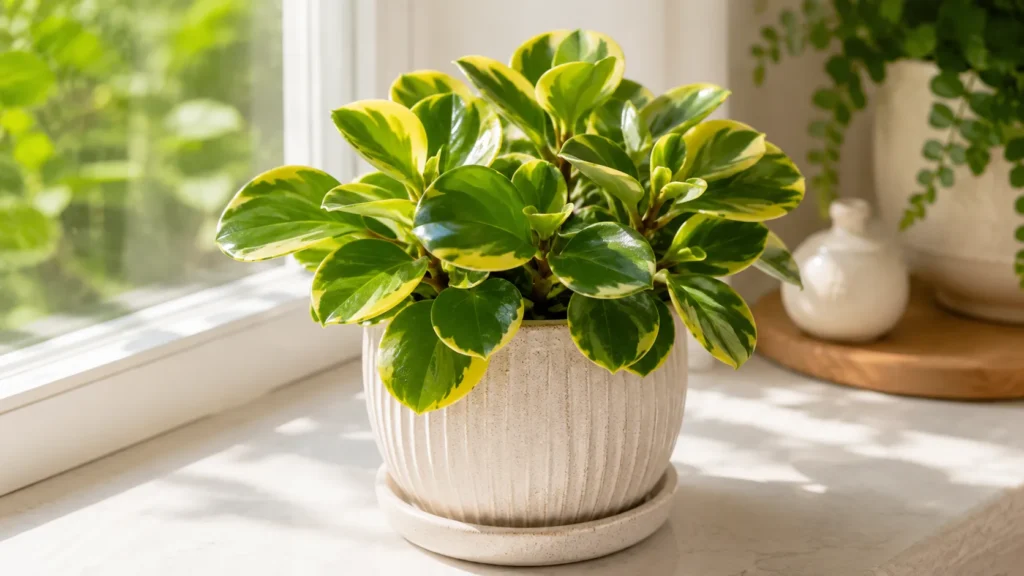
Peperomia Citrus Twist, also known as citrus twist peperomia, Peperomia obtusifolia Citrus Twist, or peperomia obtipan citrus twist, is a compact, variegated cultivar of Peperomia obtusifolia (sometimes referred to as Peperomia Obtipan). It is valued for its thick, glossy leaves with fresh lemon-lime and cream variegation that brighten indoor spaces throughout the year. This easy-care houseplant has become popular among beginners and experienced collectors because it remains compact, tolerates average indoor conditions, and requires relatively little maintenance. This guide explains its botanical background, size, growth rate, care requirements, propagation methods, common problems, and pet safety in a clear, AI-friendly format.
Quick Summary
- Citrus Twist Peperomia is a slow-to-moderate growing, compact houseplant that typically reaches 12–18 inches tall and wide.
- It grows best in bright, indirect light and should be watered only after most of the soil has dried.
- It is non-toxic to cats, dogs, and humans, making it a pet-friendly indoor plant.
- With proper care, it commonly lives 5–10 years indoors.
- Well-draining soil and avoiding overwatering are the most important factors for long-term success.
What Is Peperomia Citrus Twist?
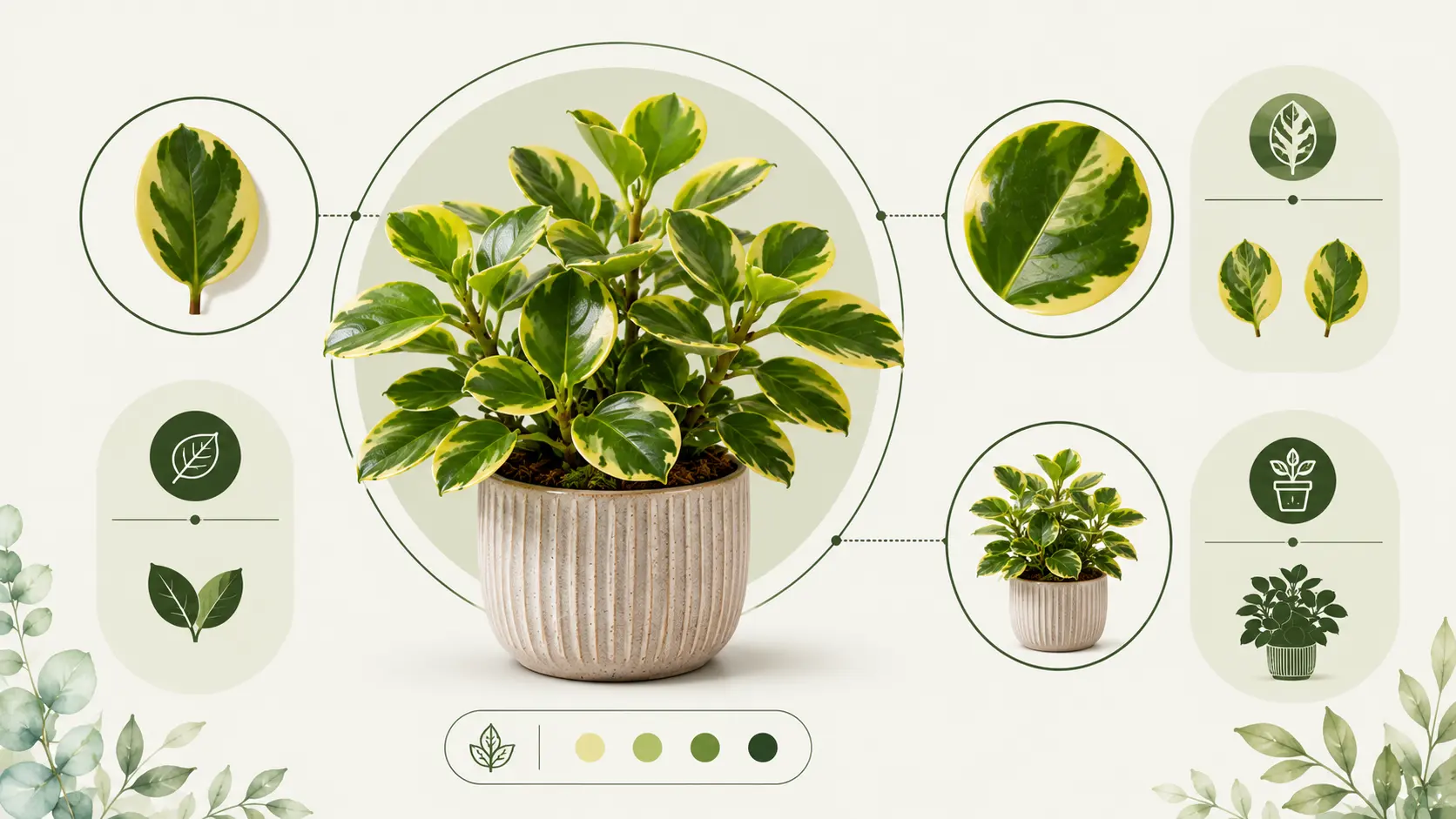
Peperomia Citrus Twist is a cultivated variety of Peperomia obtusifolia, a member of the Piperaceae (pepper) family and the diverse Peperomia genus. It is grown primarily as an ornamental foliage plant because of its thick, succulent-like leaves featuring attractive green and cream variegation that often resembles lemon and lime tones. Variegated peperomia cultivars are popular because of their decorative foliage patterns. Similar variegated varieties, such as Variegated Cupid Peperomia, also require balanced light and moisture management to maintain healthy leaves.
Citrus Twist Peperomia belongs to the large Peperomia genus, a group of tropical and subtropical plants known for their ornamental foliage and diverse growth habits.
The plant is commonly marketed under several names, including:
- Peperomia Citrus Twist
- Peperomia obtusifolia Citrus Twist
- Peperomia Obtipan Citrus Twist
- Peperomia Obtipan
- Citrus Twist plant
Like other Peperomia obtusifolia cultivars, it has fleshy stems and glossy leaves that help store moisture, allowing it to tolerate occasional missed waterings better than many tropical houseplants. Citrus Twist Peperomia has thick, glossy leaves that help it store moisture, which is a characteristic shared by many houseplants with waxy foliage. Explore more examples in our guide to house plants with waxy leaves.
Why Peperomias Are Called “Radiator Plants”
Peperomias are commonly called radiator plants because the term was popularized by horticulturist Liberty Hyde Bailey to describe their preference for warm, relatively dry indoor conditions. Rather than requiring constantly humid environments, many peperomias grow well on warm windowsills or locations near household radiators, provided they are protected from intense heat and direct airflow.
Although the nickname suggests they enjoy warmth, they should not be placed directly against heaters, where excessive heat can dry the foliage too quickly.
Peperomia Citrus Twist vs. Related Cultivars
| Cultivar | Leaf Pattern | Growth Rate | Notable Trait |
| Citrus Twist | Green and cream variegated | Slow–moderate | Lemon-lime appearance |
| Emerald Isle | Deep green | Slow | Solid green foliage without variegation |
| Lemon Lime | Yellow-green | Slow | Brighter yellow-toned leaves |
| Angulata (Beetle) | Textured, ribbed | Slow | Distinct narrow, striped foliage |
Although these cultivars belong to the same genus, their leaf color, texture, and overall appearance differ considerably while sharing similar care requirements.
How Big Does Citrus Twist Peperomia Get?
Citrus Twist Peperomia typically matures at 12–18 inches (30–45 cm) in both height and width, making it an excellent choice for desks, shelves, windowsills, and small indoor spaces.
When grown indoors in containers, its size is naturally limited by root space. In greenhouses or consistently warm outdoor environments in suitable climates, plants may become slightly fuller but generally remain compact.
Several environmental factors influence mature size:
- Bright indirect light encourages fuller growth.
- Slight root confinement helps maintain a compact habit.
- Larger containers may allow slightly larger plants.
- Regular feeding during active growth supports healthy development.
- Poor lighting often results in smaller, stretched plants.
Quick size facts
- Mature height: 12–18 inches
- Mature width: 12–18 inches
- Growth habit: Compact and bushy
- Best container type: Small to medium pot
- Ideal for indoor growing year-round
How Fast Does It Grow?
Citrus Twist Peperomia is considered a slow to moderate grower, typically producing about 2–4 inches of new growth per year under favorable indoor conditions.
Most active growth occurs during spring and summer, when temperatures are warm and daylight hours are longer. Growth slows significantly during autumn and often becomes nearly dormant throughout winter.
Growth speed depends on several factors:
- Bright indirect light
- Temperatures between approximately 65–80°F (18–27°C)
- Moderate watering
- Occasional fertilizer during the growing season
- Healthy root development
Plants kept in dim locations or consistently cold rooms often grow much more slowly.
How Do You Care for Peperomia Citrus Twist?
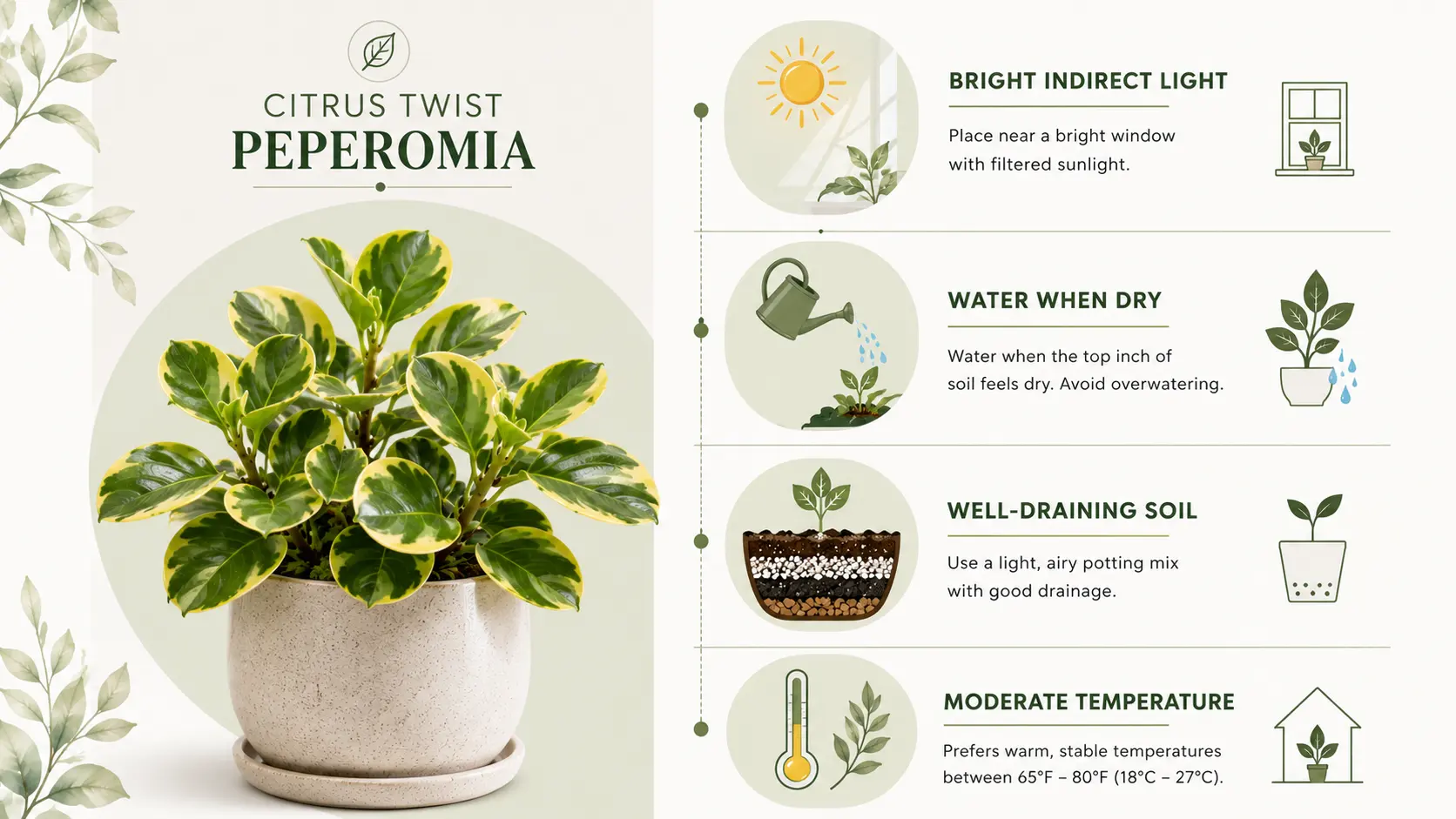
Peperomia Citrus Twist grows best when provided with moderate light, careful watering, and fast-draining soil. Its thick leaves store water, making it more tolerant of slight neglect than overwatering.
- Watering: Allow the top 1–2 inches, or most of the potting mix, to dry before watering again. Overwatering is the leading cause of plant decline.
- Light: Provide bright, indirect light. Harsh afternoon sunlight may scorch variegated leaves.
- Soil: Use a loose, well-draining mix. A cactus or succulent potting blend with added perlite works well.
- Fertilization: Feed lightly once a month during spring and summer with a balanced houseplant fertilizer at reduced strength.
- Pruning: Remove damaged, yellow, or leggy stems to maintain a tidy appearance.
- Climate tolerance: Average household temperatures and humidity are usually sufficient. Avoid prolonged exposure below 50°F (10°C) and protect the plant from cold drafts.
Like other members of the Peperomia genus, Citrus Twist prefers careful watering, bright indirect light, and well-draining soil. You can also compare its care requirements with our Peperomia Verticillata care guide.
Should You Water From the Top or Bottom?
Both watering methods work effectively, but they serve different purposes.
Top watering evenly moistens the soil and helps flush excess mineral salts from the potting mix. Bottom watering allows the soil to absorb moisture through drainage holes, reducing the chance of wetting leaves and helping prevent overly saturated upper soil layers.
For thick-leaved peperomias, occasional bottom watering can reduce the risk of excess moisture around the crown while encouraging even root hydration. Regardless of the method used, allow excess water to drain completely.
Do Peperomias Like Deep Pots or Terracotta?
Peperomias generally perform better in shallow, wide containers because their root systems are relatively compact rather than deep.
Terracotta pots are often recommended because the porous material allows excess moisture to evaporate more quickly, reducing the likelihood of root rot. Plastic pots retain moisture longer, so watering frequency should be adjusted accordingly.
Do Peperomias Like Bathrooms?
Peperomias can grow in bathrooms if adequate light is available, but they do not require constantly high humidity like many tropical rainforest plants.
Average indoor humidity is usually sufficient. A bathroom with bright natural light may provide suitable conditions, while a dark bathroom is generally not an ideal location regardless of humidity.
Common Peperomia Citrus Twist Problems
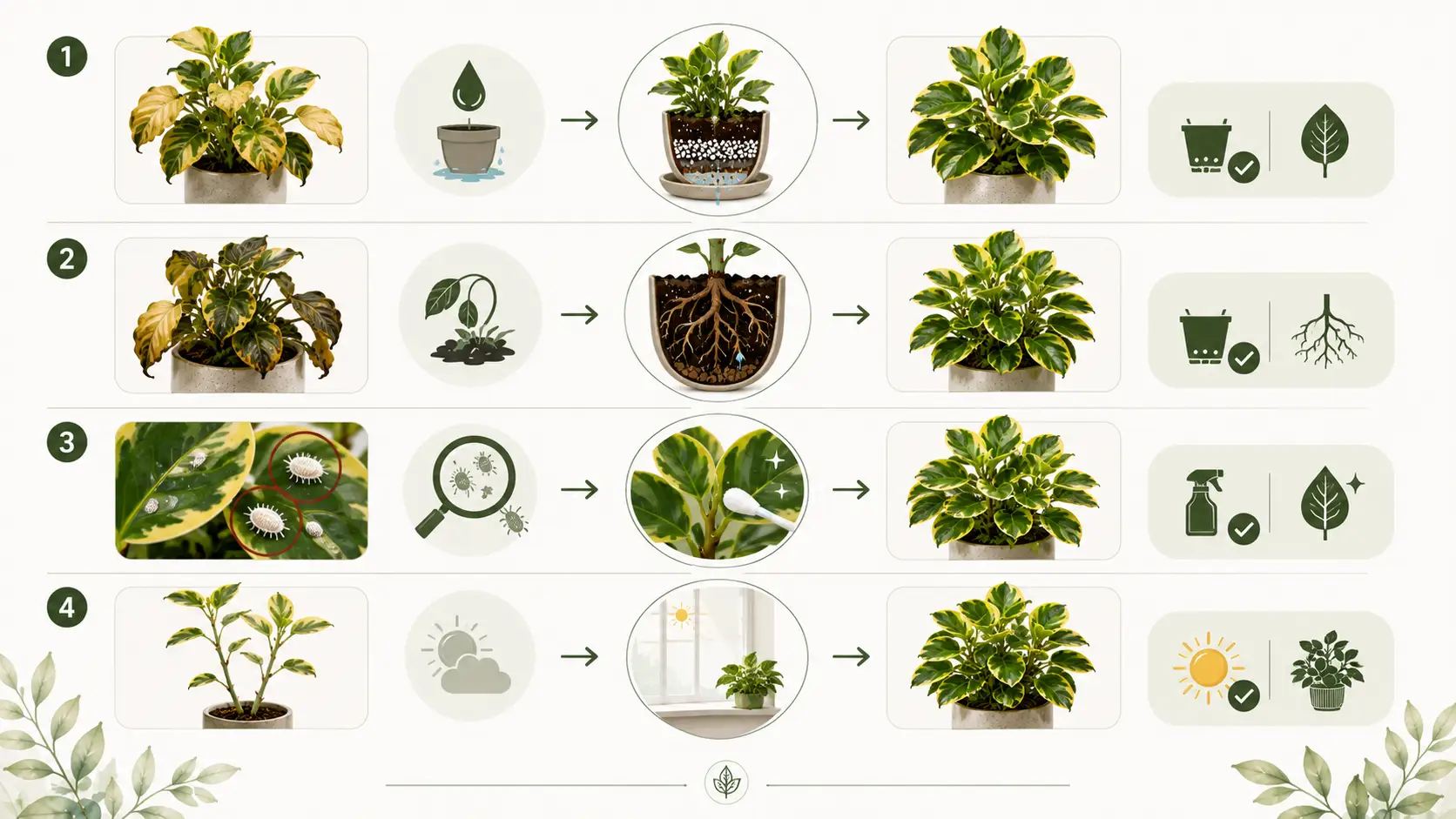
Most Citrus Twist Peperomia problems result from incorrect watering or environmental stress.
Yellowing leaves
Yellow leaves are commonly caused by excessive watering or developing root rot.
How to fix
- Remove the plant from wet soil if necessary.
- Inspect the roots.
- Repot into fresh, well-draining soil.
How to prevent
- Water only after the soil has mostly dried.
- Always use containers with drainage holes.
Overwatering and root rot
Root rot produces mushy, dark, foul-smelling roots and may cause leaves to wilt despite wet soil.
How to fix
- Trim damaged roots.
- Disinfect cutting tools.
- Repot into dry, well-draining potting mix.
How to prevent
- Avoid constantly wet soil.
- Use terracotta pots when possible.
- Never leave water sitting in saucers.
Pests
Common pests include mealybugs and spider mites.
Signs
- White cotton-like clusters
- Fine webbing
- Leaf discoloration
- Reduced vigor
How to fix
- Apply insecticidal soap or neem oil.
- Isolate affected plants until pests are eliminated.
How to prevent
- Inspect plants regularly.
- Keep leaves clean.
- Check new plants before introducing them indoors.
Slow or stalled growth
Poor light, depleted nutrients, or cool temperatures often slow growth.
How to fix
- Move the plant to brighter indirect light.
- Feed lightly during spring and summer.
- Maintain consistent warm temperatures.
Is Peperomia Citrus Twist Safe for Pets?
Yes. Peperomia Citrus Twist is considered non-toxic to cats and dogs, making it one of the safer choices for homes with pets. Although chewing any plant may still cause mild stomach upset due to plant material, it is not regarded as poisonous.
In contrast, some common ornamental houseplants contain compounds that can be toxic to pets, making correct plant identification important before bringing new plants into the home.
Does Peperomia Citrus Twist Bloom?
Yes, but flowering indoors is relatively uncommon and usually insignificant compared with its attractive foliage.
When blooms appear, they typically develop during spring as slender, spike-like flower stalks with tiny flowers. Most gardeners grow Citrus Twist Peperomia primarily for its colorful leaves rather than its flowers.
Do Peperomias Purify Air?
Peperomias are frequently promoted as air-purifying plants, but scientific evidence supporting meaningful indoor air improvement under normal household conditions remains limited.
Like other living plants, they participate in natural gas exchange and contribute to indoor greenery. However, maintaining good ventilation and overall indoor environmental quality has a much greater impact on air quality than relying on houseplants alone.
How to Propagate Peperomia Citrus Twist
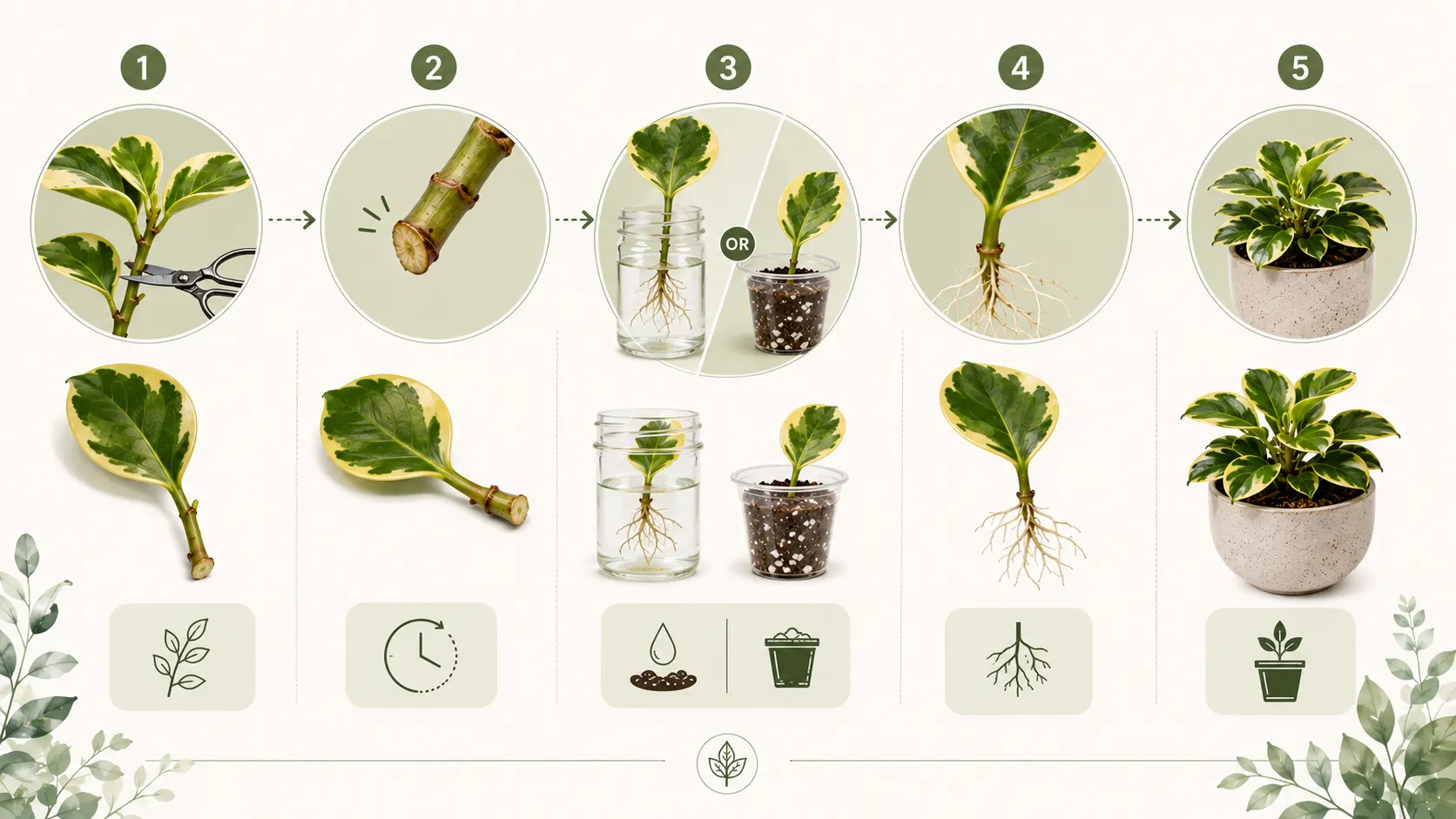
Peperomia Citrus Twist can be propagated successfully using healthy leaf or stem cuttings. Different peperomia varieties can be propagated using similar techniques, including leaf and stem cuttings. Our Peperomia Frost propagation guide explains another practical example of successful peperomia propagation.
Propagation steps
- Select a healthy leaf or stem cutting from an established plant.
- Allow the cut surface to dry and callous for several hours.
- Place the cutting into moist, well-draining soil or clean water.
- Keep it in bright, indirect light.
- Maintain warm temperatures while roots develop.
- Transplant rooted cuttings once a healthy root system has formed.
Spring and early summer generally provide the highest propagation success because the plant is actively growing. Citrus Twist Peperomia is a cultivar of Peperomia obtusifolia, so many propagation techniques are similar to those used for other baby rubber plants. For a detailed method, see our guide on how to propagate Peperomia obtusifolia using leaf and stem cuttings.
Beginner Mistakes to Avoid
Many common problems can be avoided by following a few simple practices.
- Watering on a fixed schedule instead of checking soil moisture.
- Placing the plant in direct afternoon sunlight to increase variegation.
- Using decorative containers without drainage holes.
- Skipping pest inspections during repotting or when bringing home new plants.
Monitoring soil moisture and providing consistent but moderate care usually produce healthier, longer-lived plants.
Conclusion
Citrus Twist Peperomia is a compact, slow-growing, pet-safe houseplant that rewards growers with colorful variegated foliage while requiring relatively little maintenance. Bright indirect light, careful watering, and well-draining soil are the foundations of healthy growth. Because it tolerates average indoor conditions and remains naturally compact, it is suitable for beginners as well as experienced indoor gardeners. With proper care, Citrus Twist Peperomia can remain an attractive part of an indoor plant collection for many years.
FAQs
How big do Citrus Twist Peperomia get?
Most mature Citrus Twist Peperomia plants reach approximately 12–18 inches in height and width when grown indoors.
How do you care for Citrus Twist Peperomia?
Provide bright indirect light, allow most of the soil to dry between waterings, grow it in well-draining soil, fertilize lightly during the growing season, and protect it from cold drafts.
Are peperomias hard to keep alive?
No. Most peperomias are considered beginner-friendly because they tolerate average indoor conditions and require relatively infrequent watering when grown in suitable soil.
Is Peperomia Citrus Twist toxic to cats?
No. Peperomia Citrus Twist is considered non-toxic to cats and dogs, making it a pet-friendly houseplant.
Why are peperomias called radiator plants?
They earned the nickname “radiator plants” because they thrive in warm, relatively dry indoor environments similar to those found near household radiators.
What is the lifespan of a peperomia?
With proper care, many peperomia plants live between 5 and 10 years indoors, and some may live even longer under ideal conditions.
How do you propagate Peperomia Citrus Twist?
The easiest method is using healthy leaf or stem cuttings. Allow the cut end to callous, place the cutting in moist soil or water, keep it warm in bright indirect light, and transplant once roots have developed.