
Introduction
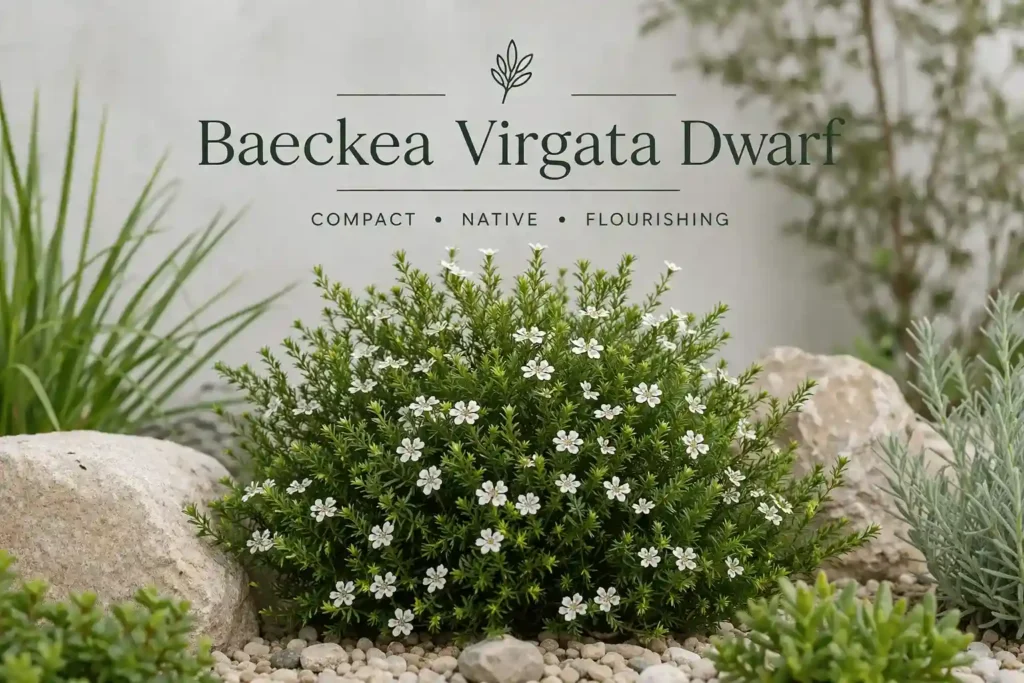
The baeckea virgata dwarf is a compact, fine-textured shrub valued for its delicate foliage and small flowers. Often referred to as dwarf baeckea or dwarf heath myrtle, it belongs to a group of closely related species, including baeckea virgata, babingtonia virgata, and sannantha virgata. This plant is widely used in ornamental landscaping due to its manageable size and soft, airy appearance. It performs best in well-drained soils and sunny environments, making it suitable for both garden beds and containers. This guide explains its characteristics, care requirements, size, varieties, and common issues!
For a broader understanding of plant care and selection, refer to the comprehensive Plants: Benefits and Guides (Complete Care, Types & Growing Tips).
Quick Summary
- Baeckea virgata dwarf is a compact ornamental shrub ideal for small gardens and borders.
- It is closely related to babingtonia virgata dwarf and sannantha minima, often used interchangeably.
- Known for fine foliage and light flowering, it thrives in sunny, well-drained conditions.
- It is popular for landscaping due to its low-maintenance nature and manageable growth.
What Is Baeckea Virgata Dwarf? (Definition & Classification)
Botanical Identity and Naming Variations
Baeckea virgata dwarf refers to compact forms of a plant group historically classified under the genus Baeckea. Over time, botanical revisions have reclassified many of these plants into related genera such as Babingtonia and Sannantha. As a result, baeckea virgata, babingtonia virgata, and sannantha virgata are often used interchangeably in horticulture.
Naming confusion commonly arises between babingtonia virgata dwarf and sannantha minima, both of which describe similar compact forms. Common names include twiggy heath myrtle and dwarf heath myrtle, reflecting the plant’s fine, heath-like foliage and branching structure. The plant belongs to the myrtle family (Myrtaceae), a large group of flowering plants described in detail on Myrtaceae plant family.
Key Characteristics of Dwarf Baeckea
Appearance and Growth Form
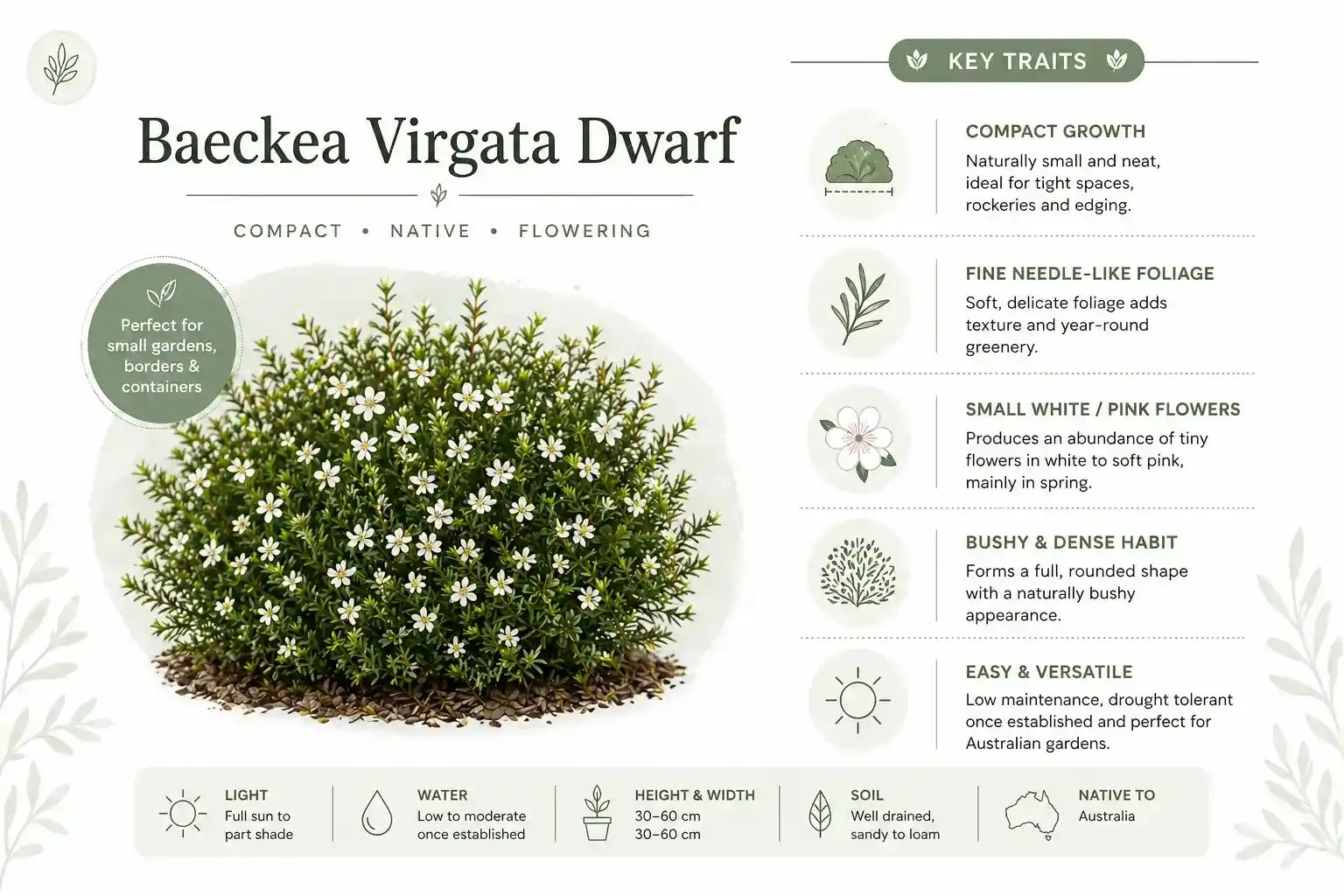
Dwarf baeckea is characterized by fine, needle-like foliage arranged on slender, twiggy branches. The plant forms a dense, bushy shrub with a soft texture, often used to create light visual contrast in gardens. Its growth form remains compact, making it suitable for structured landscaping.
Size and Mature Dimensions
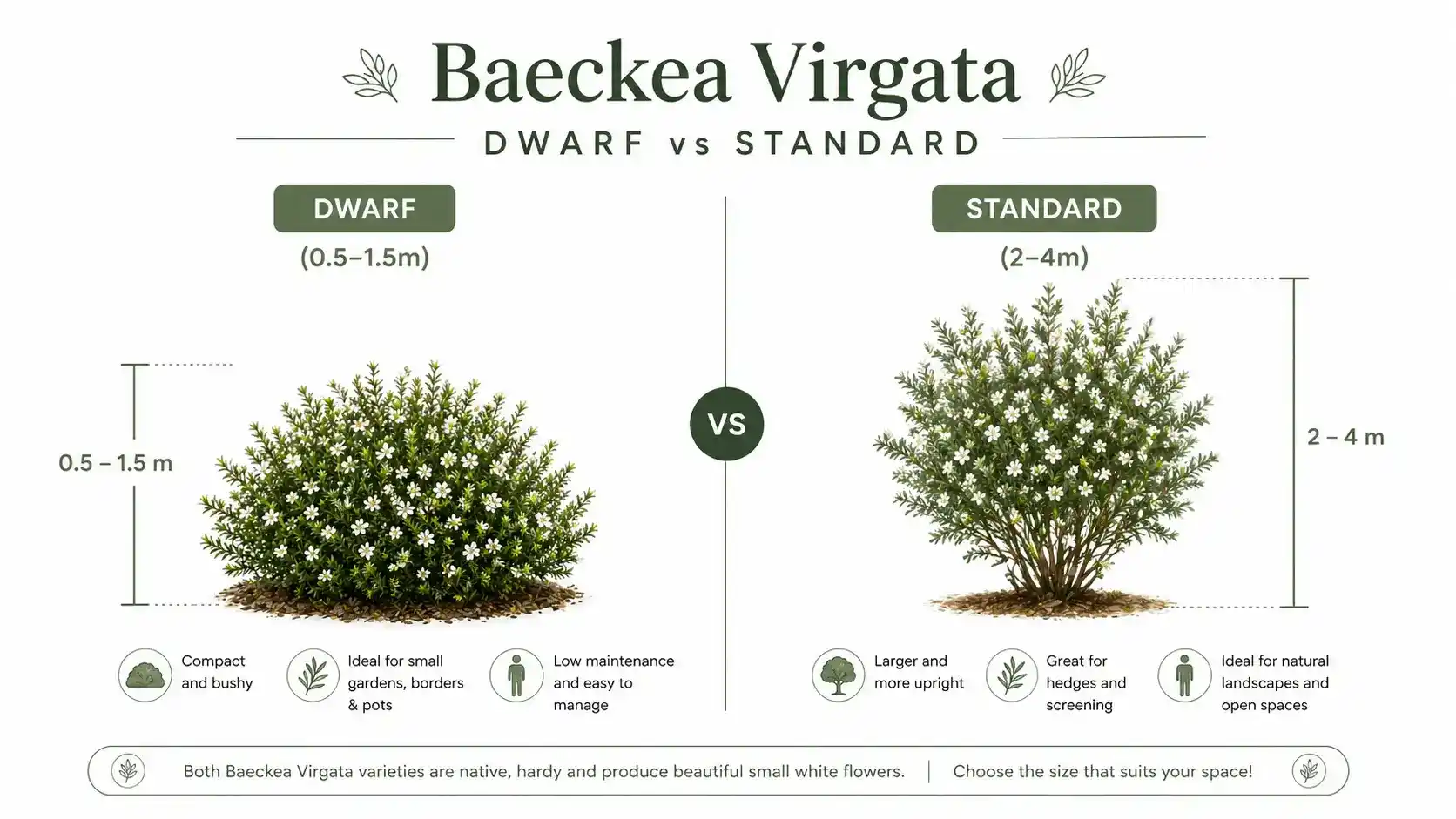
The typical baeckea virgata dwarf height ranges from approximately 0.5 to 1.5 meters, depending on the specific variety and growing conditions. The overall baeckea virgata dwarf size can vary based on pruning practices, soil quality, and climate. Plants grown in optimal sunlight with proper maintenance tend to develop fuller, more uniform shapes.
Key Traits:
- Compact, bushy growth
- Small white or pink flowers
- Fine needle-like foliage
- Suitable for hedging and borders
Types and Varieties of Baeckea Virgata Dwarf
Common Dwarf Varieties
Several compact forms of baeckea virgata are cultivated for landscaping use. These include:
- baeckea virgata compacta
- baeckea virgata nana
- baeckea virgata minima
These varieties differ slightly in growth habit and size but maintain the same fine-textured appearance. In contrast, related forms such as weeping baeckea and tall baeckea are larger and used in different landscape settings. For larger landscape screening, gardeners often compare dwarf forms with taller options, such as those outlined in 10+ Fast Growing Australian Native Screening Plants Guide.
Comparison Table: Dwarf vs Standard Forms
| Variety | Growth Habit | Height | Use Case |
| Baeckea virgata compacta | Dense, compact | 0.5–1 m | Borders, small hedges |
| Baeckea virgata nana | Low-growing | 0.5–0.8 m | Ground cover, edging |
| Baeckea virgata minima | Very compact | 0.3–0.7 m | Containers, small gardens |
| Standard Baeckea virgata | Upright, open | 2–4 m | Screening, larger landscapes |
Dwarf forms are preferred when space is limited, while taller forms are selected for screening or structural planting.
Ideal Growing Conditions for Baeckea Virgata Dwarf
Light, Soil, and Climate Requirements
Baeckea virgata dwarf grows best in full sun, where it develops dense foliage and consistent flowering. It tolerates partial shade but may become sparse. Well-drained soil is essential, as the plant is sensitive to excess moisture.
This shrub is well-suited to climates similar to Australia, where many of these species originate. It adapts to mild coastal and temperate regions with good air circulation.
Environmental Limitations
- Poor tolerance to waterlogged or heavy clay soils
- Moderate sensitivity to frost, especially in young plants
- Reduced growth in shaded or overly humid conditions
Baeckea Virgata Dwarf Care Guide
Watering and Soil Needs
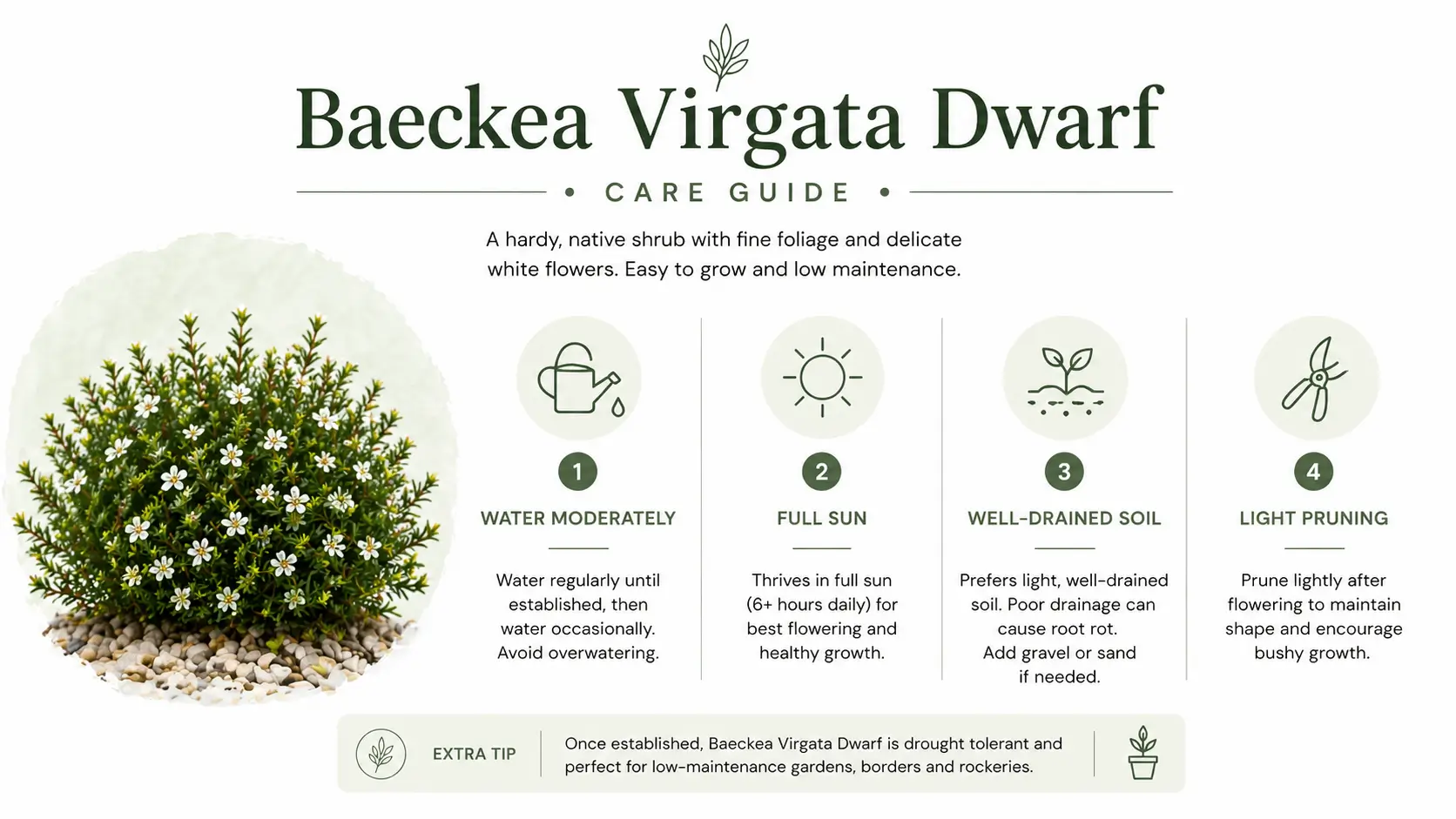
Watering should be moderate and consistent, allowing soil to dry slightly between watering cycles. Overwatering is a common issue and can lead to root problems. Well-drained soil is critical for maintaining plant health.
Pruning and Maintenance
Light pruning helps maintain the shrub’s compact shape. Trimming after flowering encourages denser growth and prevents legginess. Avoid heavy pruning, as this can stress the plant.
Fertilization and Growth Support
Baeckea virgata dwarf has low nutrient requirements. A light application of balanced fertilizer during the growing season is sufficient. Excess fertilization may lead to weak, excessive growth.
Care Essentials:
- Water sparingly but consistently
- Ensure good drainage
- Prune lightly after flowering
- Avoid heavy fertilization
These care principles align with general shrub maintenance practices explained in the Cinnamon Myrtle Plant Guide: Care, Growth & Uses.
Growth Rate and Lifespan
Growth Speed and Seasonal Patterns
The plant typically exhibits a moderate growth rate, with more active growth during warmer seasons. In cooler climates, growth slows significantly during winter months.
Factors Affecting Growth
Growth performance depends on:
- Sunlight exposure
- Soil quality and drainage
- Watering practices
Differences may also be observed between sannantha minima and other forms, with smaller varieties often growing more slowly but maintaining tighter shapes.
Common Problems with Baeckea Virgata Dwarf (Problem-Solution Section)
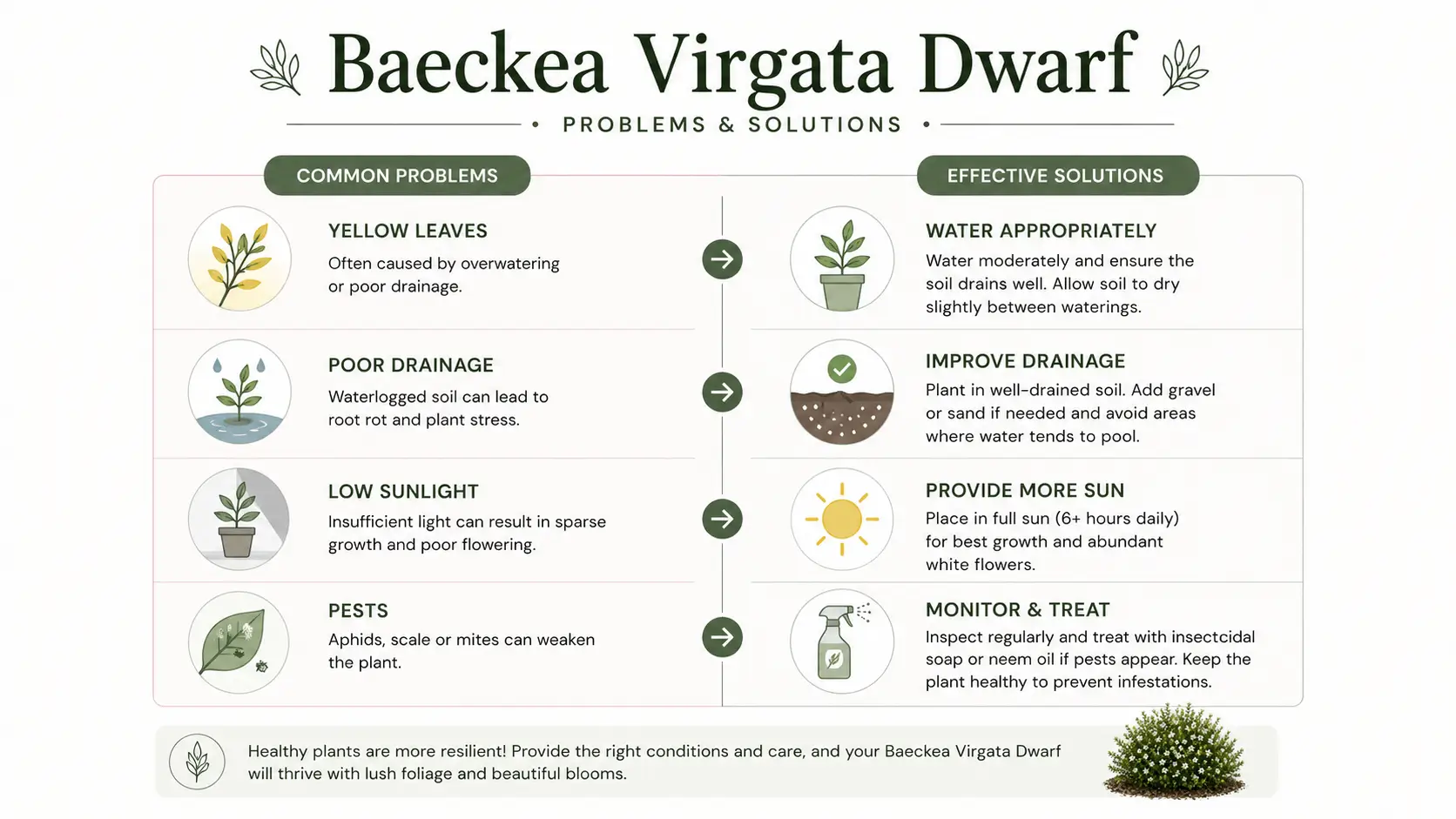
Yellowing Leaves and Poor Growth
Yellowing leaves are usually caused by overwatering or poorly drained soil. Improving drainage and adjusting watering frequency can restore plant health.
Pest and Disease Issues
While generally resistant, stressed plants may attract minor pests. Maintaining proper care conditions helps prevent infestations and disease development.
Slow Growth or Sparse Foliage
Insufficient sunlight or nutrient imbalance can lead to weak growth. Relocating the plant to a sunnier location and applying light fertilization can improve density.
Beginner Mistakes to Avoid
- Overwatering compact shrubs
- Planting in heavy clay soil
- Ignoring pruning needs
- Misidentifying plant type (especially confusion with babingtonia)
Landscaping Uses of Dwarf Heath Myrtle
Garden Design Applications
Dwarf heath myrtle is widely used in:
- Garden borders
- Low hedges
- Container planting
Its compact size makes it ideal for small gardens and structured designs.
Dwarf baeckea is often included in broader native planting schemes, similar to approaches discussed in Easy Low Maintenance Australian Native Garden Guide 7+ Steps.
Comparison with Similar Shrubs
Comparison Focus:
| Feature | Dwarf Baeckea | Baeckea linifolia | Babingtonia virgata |
| Size | Compact | Medium | Variable |
| Maintenance | Low | Moderate | Low |
| Texture | Fine, soft | Slightly coarser | Similar fine texture |
Dwarf baeckea is preferred for tight spaces, while larger shrubs are used for more expansive plantings.
How Baeckea Virgata Dwarf Connects to Broader Gardening Topics
- Plays a key role in low-maintenance landscaping
- Commonly used in native plant gardening
- Ideal for compact shrub selection
- Related to broader topics such as plant propagation and pruning techniques
Conclusion
The baeckea virgata dwarf is a versatile and compact shrub valued for its fine texture, manageable size, and adaptability. Whether referred to as dwarf baeckea, babingtonia virgata dwarf, or sannantha minima, it remains a reliable choice for small gardens and low-maintenance landscapes. Understanding its care requirements, growth patterns, and environmental limitations ensures consistent performance. Its suitability for borders, containers, and structured plantings makes it a practical option for modern gardening needs.
FAQs
1. What is the common name of baeckea virgata dwarf?
It is commonly called dwarf heath myrtle or twiggy heath myrtle.
2. How tall does baeckea virgata dwarf grow?
It typically grows between 0.5 and 1.5 meters, depending on the variety and growing conditions.
3. Is baeckea virgata dwarf easy to care for?
Yes, it is considered low-maintenance when grown in well-drained soil with adequate sunlight.
4. What is the difference between baeckea virgata and babingtonia virgata?
They are closely related plants with overlapping classifications, differing mainly in botanical naming and minor growth characteristics.
5. What are common problems with dwarf baeckea?
The most common issues include overwatering, poor drainage, and insufficient sunlight.