
Introduction
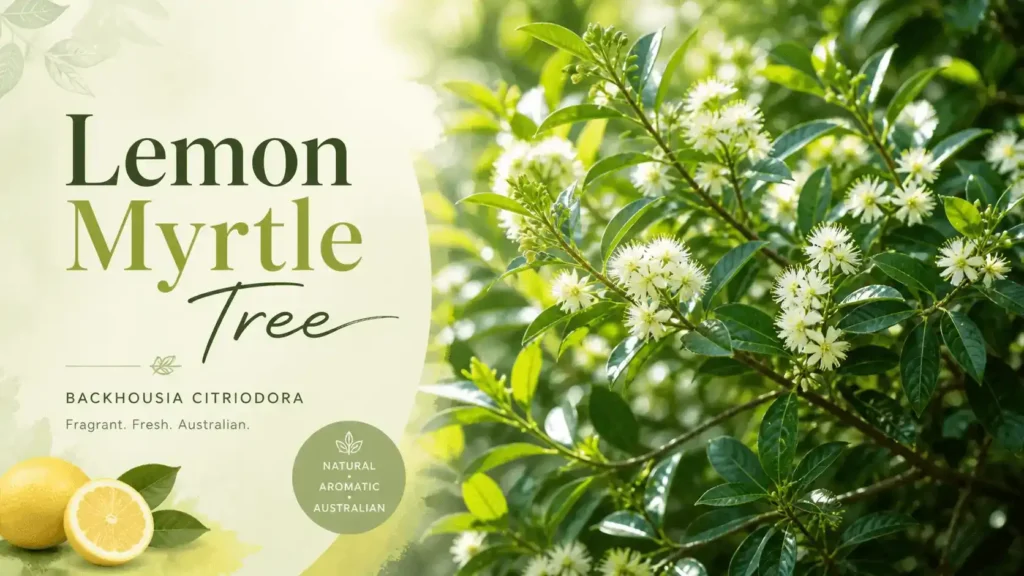
The lemon myrtle tree is a highly aromatic evergreen plant native to Australia, widely recognized for its intense citrus fragrance and practical versatility. Scientifically known as Backhousia citriodora, it belongs to the Myrtaceae family and is valued in gardening, landscaping, and herbal applications. This plant is commonly grown for its fragrant leaves, which are used in cooking, teas, and essential oils. Its adaptability to pruning makes it suitable as both a small tree and a dense hedge. In gardening contexts, it stands out as a functional plant that combines ornamental appeal with practical benefits, making it increasingly popular among both beginner and experienced gardeners.
Quick Summary
- Lemon myrtle tree is a fragrant evergreen native to Australia with culinary and ornamental value.
- It can grow as a tree or be shaped into hedges, depending on pruning and environment.
- Requires warm climates, well-drained soil, and moderate watering.
- Common issues include leaf drop, slow growth, and sensitivity to cold conditions.
What Is a Lemon Myrtle Tree? (Botanical Identity & Characteristics)
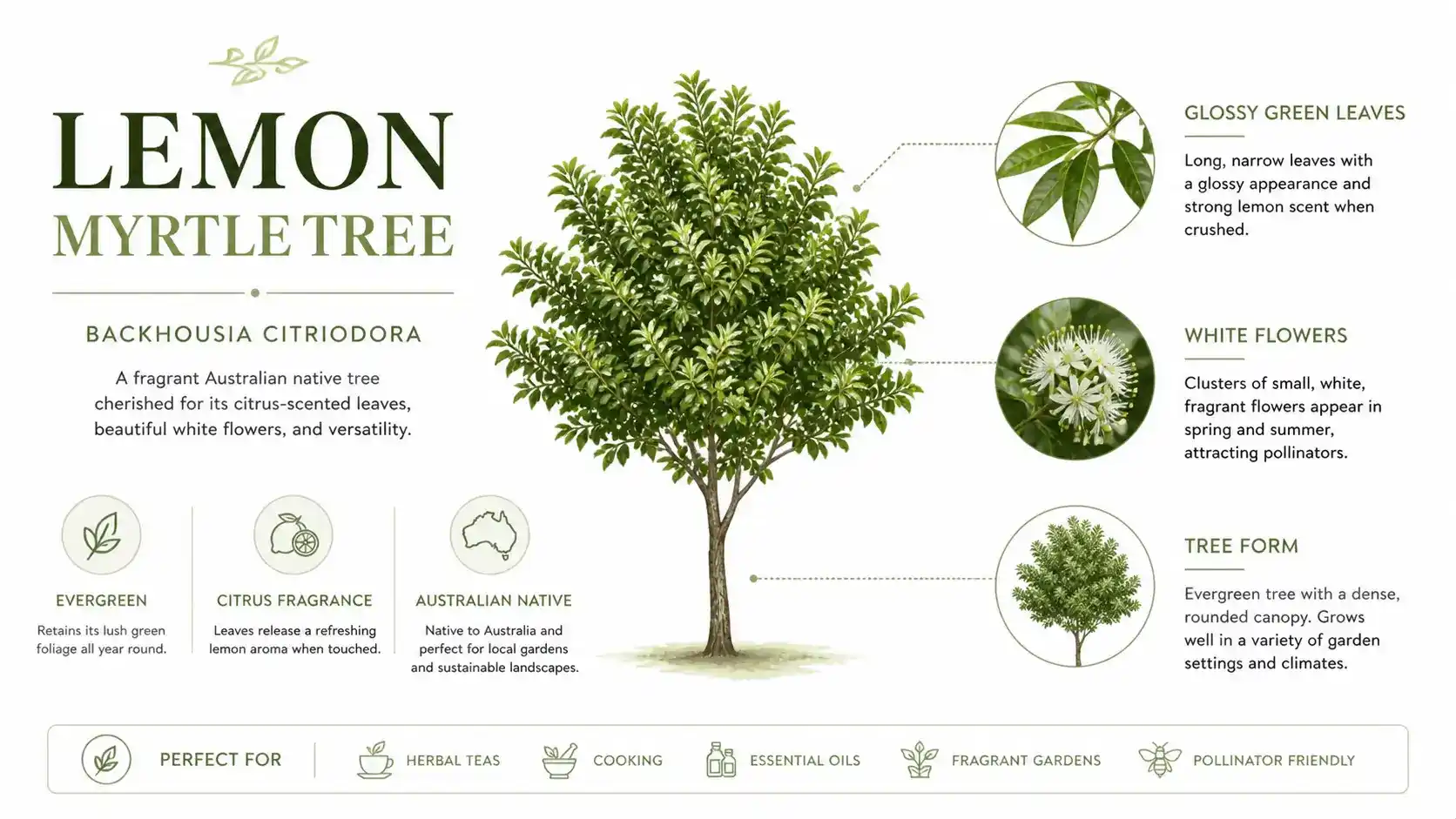
The lemon myrtle tree, scientifically known as Backhousia citriodora, is a flowering evergreen native to the subtropical rainforests of eastern Australia. It is commonly referred to as lemon-scented myrtle due to its strong lemon fragrance, which comes from high concentrations of citral in its leaves. The lemon myrtle tree, scientifically known as Backhousia citriodora, is widely studied for its high citral content and aromatic properties.
This plant belongs to the Myrtaceae family, which includes other aromatic species like eucalyptus. In its natural habitat, it grows in warm, humid environments with consistent rainfall. The tree is widely cultivated for its essential oils, culinary uses, and ornamental qualities, making it a multi-purpose plant in both domestic and commercial settings. Lemon myrtle belongs to the same aromatic plant group as other native species like the Cinnamon Myrtle Plant Guide: Care, Growth & Uses, which also highlights the value of Australian myrtaceae plants in gardening and herbal use.
What Does a Lemon Myrtle Tree Look Like?
The lemon myrtle tree features glossy, lance-shaped green leaves that release a strong lemon scent when crushed. Its foliage is dense and vibrant, contributing to its popularity as a hedge plant.
Key visual characteristics include:
- Leaves: Smooth, elongated, and bright green
- Flowers: Small, white to cream-colored blooms appearing in clusters
- Growth form: Can be maintained as a shrub or allowed to grow into a medium-sized tree
Lemon Myrtle Tree Size, Height, and Growth Habit
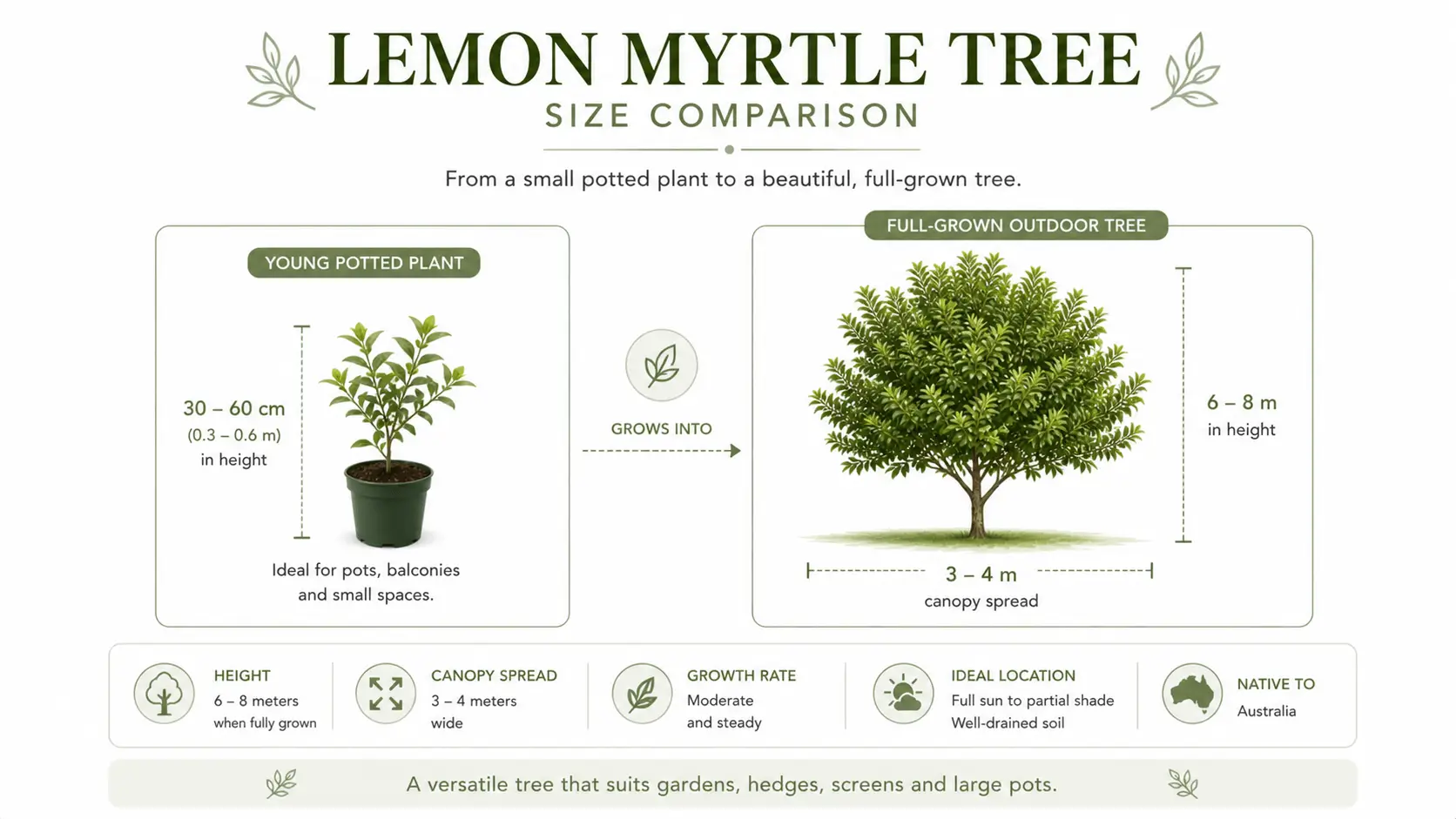
The lemon myrtle tree can reach significant heights under optimal conditions, but its size varies depending on climate, pruning, and growing environment.
Typical Height and Width
In outdoor environments, the lemon myrtle tree typically grows between 6 to 8 meters tall, and in ideal native conditions, it may grow even larger. Its canopy can spread several meters wide, forming a dense and rounded structure.
In containers or indoor settings:
- Height remains smaller and more controlled
- Width is limited by pot size and pruning practices
Growth Rate and Development Stages
The lemon myrtle tree has a moderate growth rate, meaning it develops steadily rather than rapidly.
Factors influencing growth include:
- Climate: Warm, stable temperatures promote faster growth
- Soil quality: Nutrient-rich, well-drained soil improves development
- Water availability: Consistent moisture supports healthy expansion
- Sun exposure: Adequate sunlight enhances foliage production
Different Types and Varieties of Lemon Myrtle Tree
There are primarily two forms of lemon myrtle used in cultivation: dwarf varieties and standard trees.
Dwarf Lemon Myrtle Tree vs Full-Grown Tree
| Feature | Dwarf Variety | Standard Tree |
| Height | 2–4 meters | 6–8+ meters |
| Use | Pots, small gardens | Landscaping, shade |
| Maintenance | Easier pruning | Requires space |
Hedge and Screening Uses
Lemon myrtle is commonly used as a hedge due to its dense foliage and aromatic leaves.
Benefits of lemon myrtle hedges:
- Provides natural privacy screening
- Releases a pleasant citrus fragrance
- Forms a thick, visually appealing barrier
For gardeners comparing privacy options, plants like lemon myrtle can be combined with taller screening species discussed in Best Heliconia for Screening: Top Tall Varieties for Privacy for layered landscaping.
Ideal Growing Conditions for Lemon Myrtle Tree
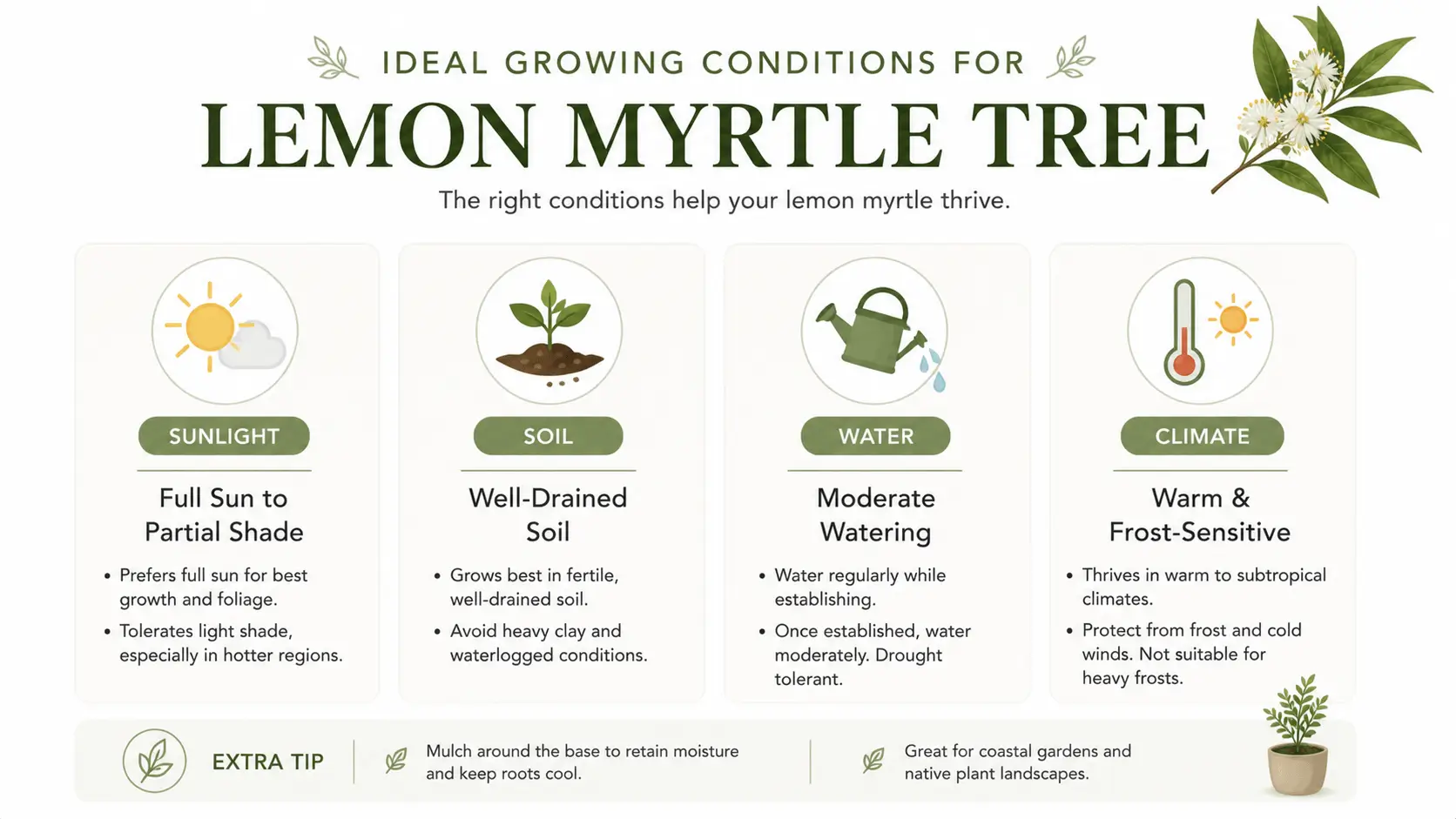
Proper environmental conditions are essential for healthy growth and long-term survival.
Climate Requirements
Lemon myrtle thrives in warm, subtropical to tropical climates. It is sensitive to frost and cold winds, which can damage leaves and slow growth.
Soil and Sunlight Needs
Optimal conditions include:
- Well-drained soil to prevent root rot
- Slightly acidic to neutral pH levels
- Full sun to partial shade for balanced growth
Lemon Myrtle Tree Care Guide
Proper care ensures consistent growth, strong foliage, and high oil content in leaves.
Watering and Fertilization
- Water moderately, keeping soil moist but not waterlogged
- Reduce watering during cooler months
- Apply balanced fertilizer during active growing seasons
Pruning and Maintenance
- Regular pruning helps control shape and size
- Encourages bushier growth for hedges
- Removes weak or damaged branches
Container vs Ground Planting
- Containers limit size but allow mobility
- Ground planting supports larger growth
- Good drainage is critical in both cases
If you are planning container gardening, refer to Ultimate Guide: Best Trees to Grow in Pots Australia Easily to understand how lemon myrtle compares with other potted tree options.
Common Problems and Solutions for Lemon Myrtle Trees
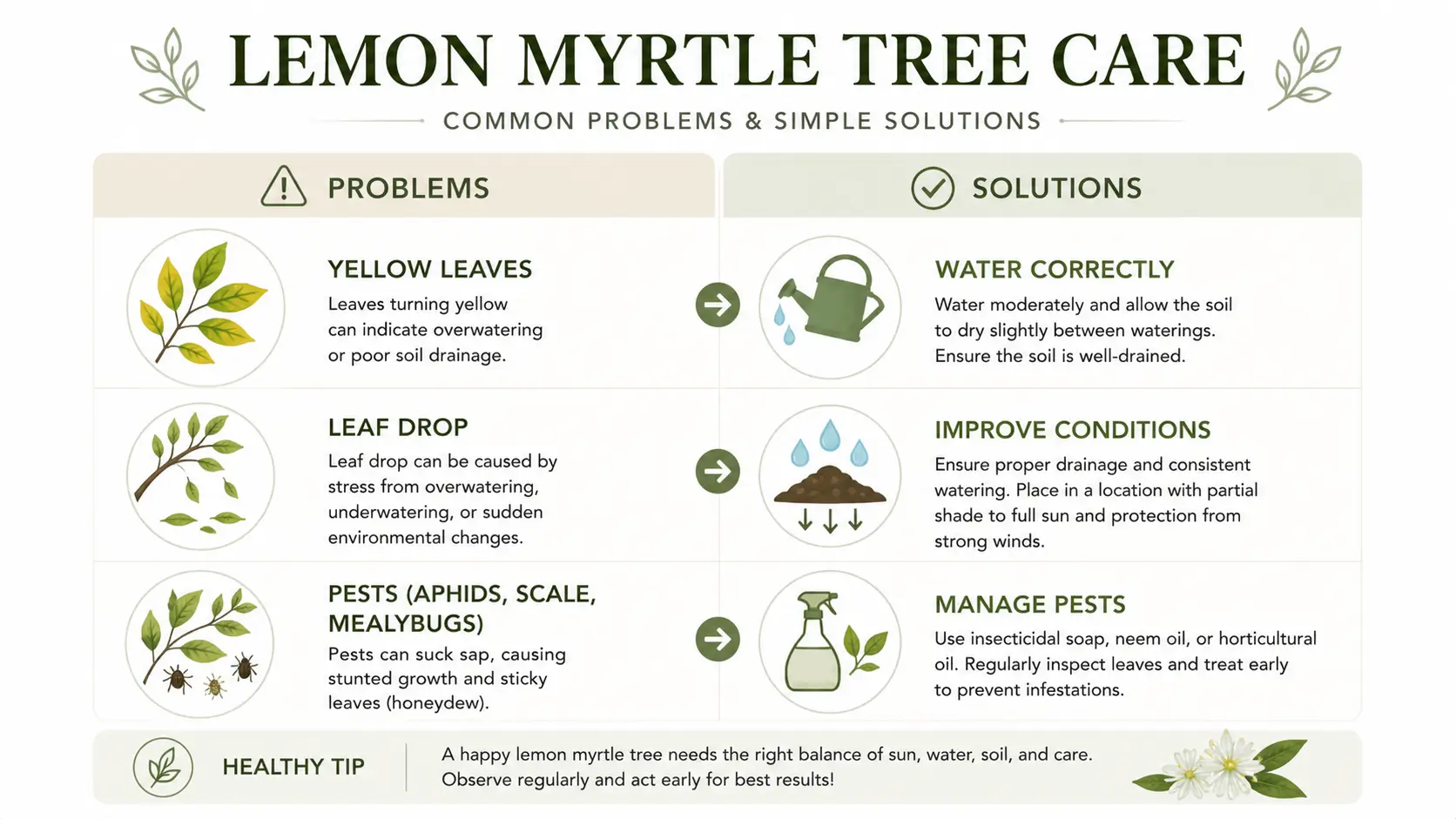
Why Leaves Turn Yellow or Drop
Leaf yellowing or drop is usually caused by environmental stress, most commonly overwatering or poor drainage. Nutrient deficiencies can also contribute to discoloration.
Slow Growth Issues
Slow growth often results from insufficient sunlight or poor soil conditions. Improving light exposure and soil quality typically resolves the issue.
Pests and Environmental Stress
Common challenges include:
- Scale insects feeding on sap
- Wind damage affecting structure
- Cold stress causing leaf drop or stunted growth
Uses and Benefits of Lemon Myrtle Tree
Culinary and Herbal Uses
Lemon myrtle leaves are widely used for:
- Herbal teas with strong citrus flavor
- Flavoring in desserts, sauces, and marinades
- Use in both fresh and dried forms
Essential Oil and Natural Benefits
The plant contains high levels of citral, making it valuable for essential oil production.
Benefits include:
- Use in aromatherapy
- Natural antimicrobial properties
- Mild insect-repellent effects
Comparison: Lemon Myrtle vs Other Scented Plants
Lemon Myrtle vs Lemon Balm vs Lemongrass
| Feature | Lemon Myrtle | Lemon Balm | Lemongrass |
| Growth form | Tree | Herb | Grass |
| Aroma strength | Very strong | Mild | Moderate |
| Use | Culinary + oil | Herbal tea | Cooking |
Beginner Mistakes to Avoid When Growing Lemon Myrtle
Common mistakes include:
- Overwatering, leading to root issues
- Planting in cold climates without protection
- Ignoring pruning, resulting in poor shape
- Using poorly drained soil
Environmental Limitations and Seasonal Considerations
Lemon myrtle has specific environmental sensitivities:
- Frost can damage or kill young plants
- Growth slows during cooler seasons
- Indoor overwintering may be necessary in cold climates
How Lemon Myrtle Fits Into Broader Gardening Practices
The lemon myrtle tree integrates well into multiple gardening systems:
- Indoor plant care through container growing
- Landscaping as hedges or feature trees
- Propagation via cuttings for plant expansion
- Companion planting with other subtropical species
Conclusion
The lemon myrtle tree is a versatile, fragrant, and highly functional plant that serves both ornamental and practical purposes. Its adaptability allows it to be grown as a tree, hedge, or container plant, making it suitable for various gardening styles. With proper care—particularly warm conditions, well-drained soil, and consistent pruning—it can thrive and provide long-term benefits. For gardeners seeking a plant that combines strong fragrance, culinary use, and visual appeal, the lemon myrtle tree is a highly suitable choice. For a broader understanding of plant care, benefits, and growing strategies, explore the complete resource in Plants: Benefits and Guides (Complete Care, Types & Growing Tips).
FAQs
How tall does a lemon myrtle tree grow?
A lemon myrtle tree typically grows 6–8 meters tall outdoors, though it remains smaller when grown in containers.
Can lemon myrtle be grown indoors?
Yes, lemon myrtle can be grown indoors if it receives sufficient sunlight and is planted in well-drained soil.
Is lemon myrtle fast growing?
Lemon myrtle has a moderate growth rate and develops steadily under suitable environmental conditions.
Why is my lemon myrtle tree losing leaves?
Leaf loss is usually caused by overwatering, environmental stress, or poor drainage conditions.
What is lemon myrtle used for?
Lemon myrtle is used for herbal tea, cooking, essential oil production, and natural fragrance applications.
Can lemon myrtle be used as a hedge?
Yes, lemon myrtle is commonly used as a hedge due to its dense foliage and strong aromatic properties when pruned regularly.