

Introduction
The Brisbane planting guide helps gardeners understand what vegetables, flowers, and plants grow best throughout the year in Brisbane’s warm subtropical climate. Because seasons in South East Queensland differ from many other parts of Australia, planting success depends on timing crops according to local weather patterns, rainfall, and temperature changes.
This guide explains what to plant each season in Brisbane, which vegetables and flowers thrive in the region, and how a local planting calendar helps gardeners plan productive gardens year-round.
Understanding Brisbane’s Gardening Climate
Brisbane has a humid subtropical climate, which strongly influences gardening schedules. Summers are typically hot, humid, and rainy, while winters are mild and relatively dry. These conditions mean many crops can be grown almost year-round, but planting times must align with seasonal temperature patterns. In South East Queensland, planting patterns differ from cooler southern regions of Australia. For example, winters remain warm enough for many vegetables to grow actively, while summer heat and humidity can stress certain plants. Because of these differences, gardeners often rely on a South East Queensland planting guide or a planting calendar Australia adapted for subtropical climates. Understanding local climate conditions helps gardeners choose the right crops and schedule planting at the most suitable times. Brisbane has a subtropical climate, characterized by hot humid summers and mild winters, which strongly influences planting schedules and crop selection throughout the year.
Why Subtropical Climates Require Different Planting Schedules
Subtropical climates like Brisbane experience average summer temperatures between 28°C and 32°C, combined with high humidity and frequent rainfall. These conditions accelerate plant growth but can also cause disease pressure or heat stress.
Many crops traditionally grown during summer in southern Australia perform better in Brisbane’s cooler seasons. For example, leafy greens and root vegetables often grow best in autumn and winter rather than summer. Planting calendars help adjust sowing times so crops mature during suitable weather conditions.
How Planting Calendars Help Brisbane Gardeners
A vegetable planting calendar provides a structured guide for sowing seeds and transplanting seedlings during the correct months. Gardeners can use a vegetable planting calendar QLD to determine when vegetables should be planted, grown, and harvested.
These calendars also connect with broader guides such as the gardening calendar Australia, which explains seasonal patterns across different regions. By following a planting schedule tailored to South East Queensland, gardeners can maintain continuous harvests throughout the year.
Seasonal Brisbane Planting Guide Overview
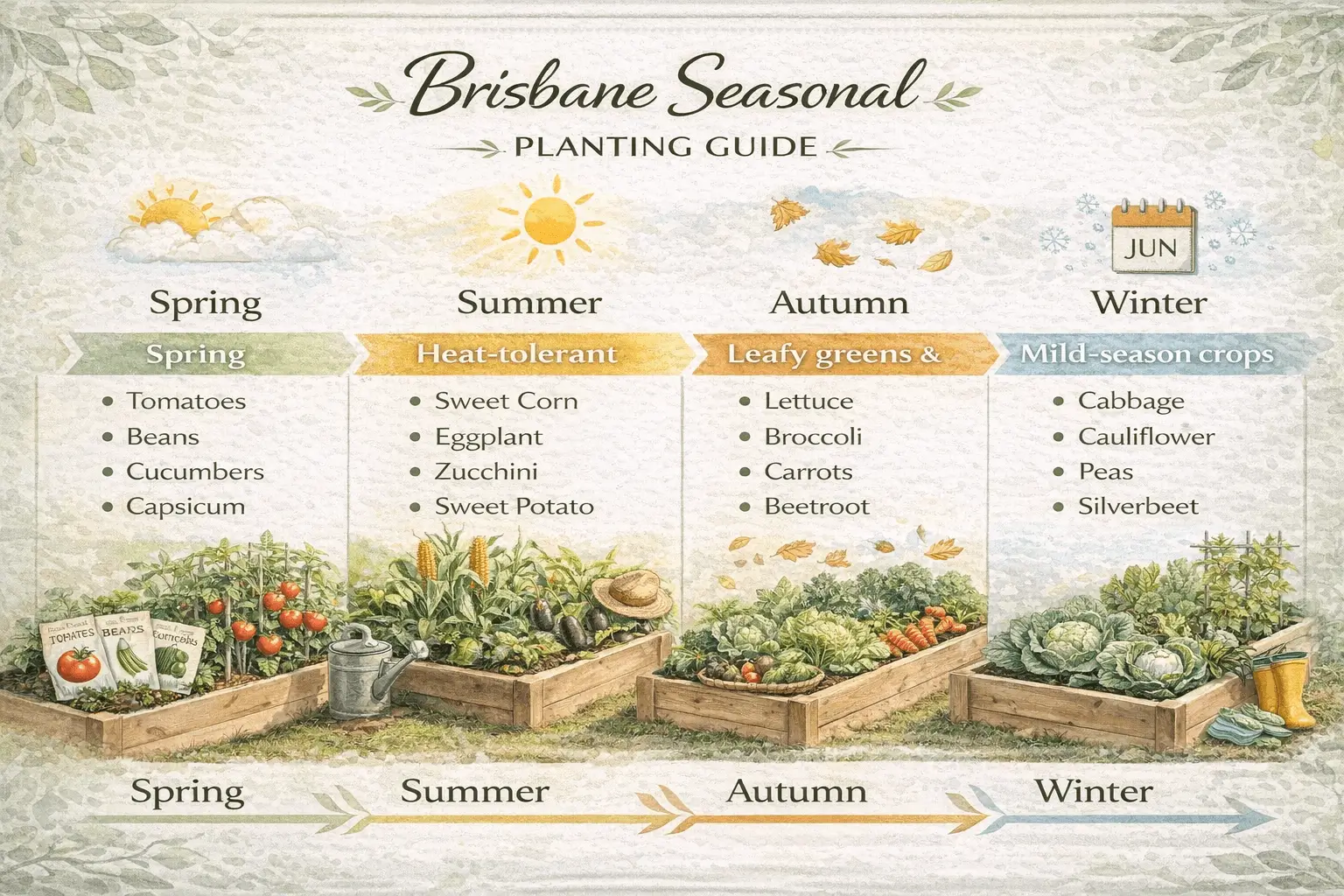
A seasonal planting guide helps Brisbane gardeners plan their gardens based on changing weather patterns throughout the year. Each season brings different temperature conditions, rainfall levels, and daylight hours that influence plant growth.
Vegetables, herbs, and flowers respond differently to seasonal changes. Some crops prefer warm temperatures, while others grow best during cooler months. A Brisbane planting guide, combined with a planting calendar QLD, allows gardeners to rotate crops and maximize productivity.
-
Spring Planting Guide for Brisbane
Spring in Brisbane typically brings gradually warming temperatures and longer daylight hours. Soil temperatures rise during this period, encouraging strong seed germination and rapid plant growth.
A spring planting guide Brisbane usually includes warm-season vegetables such as tomatoes, beans, cucumbers, and capsicums. Many flowering plants also establish well during spring because conditions support healthy root development.
-
Summer Planting Guide for Brisbane
Summer in Brisbane is hot and humid, often accompanied by heavy rainfall and storms. Gardeners generally choose heat-tolerant crops that grow quickly and tolerate humidity.
Vegetables such as okra, sweet potatoes, pumpkins, and some Asian greens often perform well during summer. However, gardeners must monitor drainage and protect seedlings from excessive rain and heat.
-
Autumn Planting Guide for Brisbane
Autumn brings cooler temperatures and lower humidity, creating favorable conditions for many vegetables. During this season, gardeners often plant leafy greens, root vegetables, and brassicas.
An autumn planting guide Brisbane typically includes crops such as lettuce, spinach, carrots, broccoli, and cabbage. These plants prefer cooler conditions and grow steadily through autumn and winter.
-
Winter Planting Guide for Brisbane
Brisbane’s winters are mild compared with many other regions of Australia. Frost is rare, allowing gardeners to continue growing crops during the cooler months.
Winter vegetables may include peas, leafy greens, herbs, and root crops. Because temperatures remain moderate, gardening activities can continue throughout winter with minimal seasonal interruption.
What Vegetables to Plant Now in Brisbane
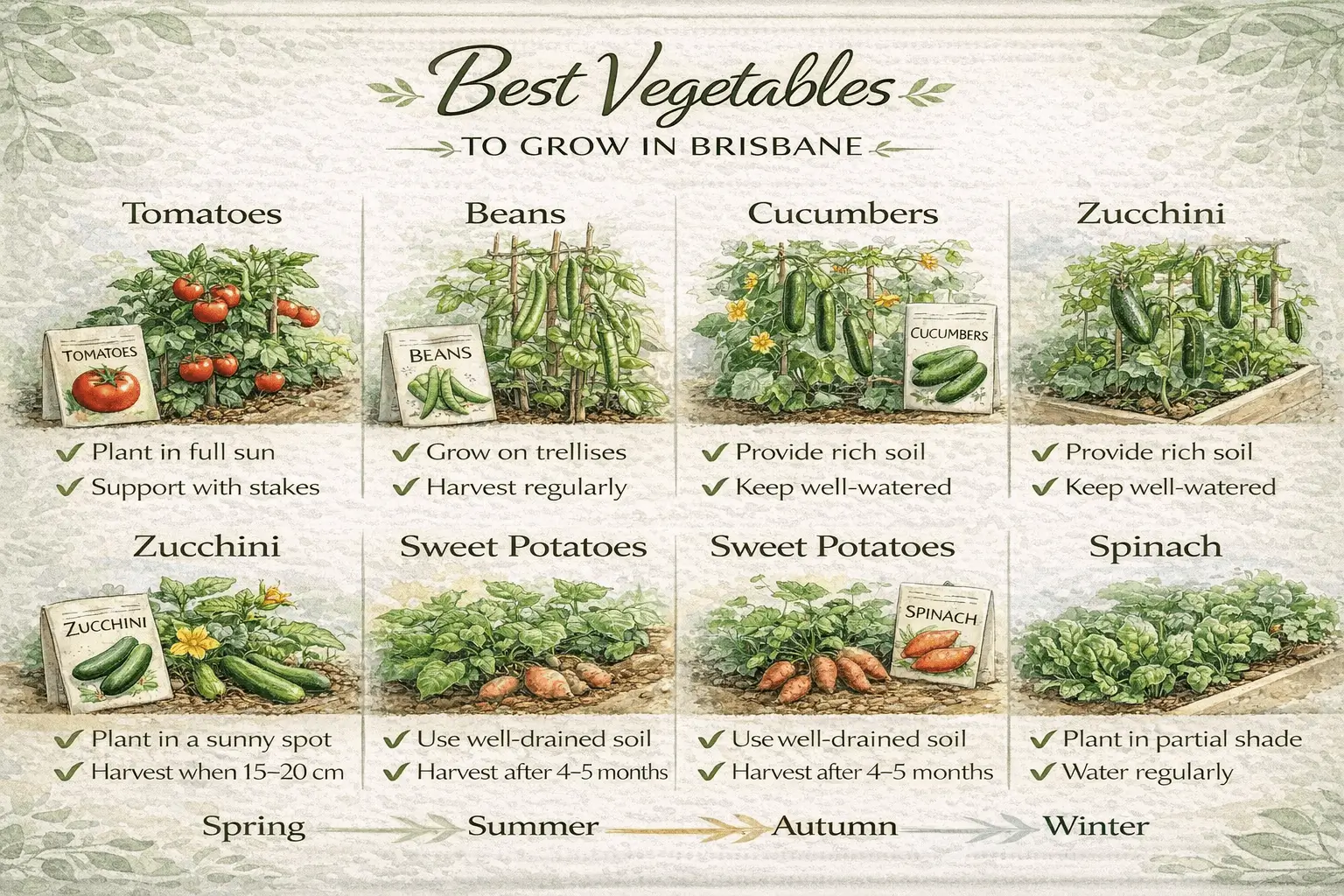
The answer to what vegetables to plant now in Brisbane depends on the current season and local temperature conditions. Gardeners often check a Brisbane vegetable planting guide or a vegetable planting guide South East Queensland to determine which crops suit the current month.
Seasonal planting helps ensure vegetables grow during favorable weather conditions. Choosing appropriate crops also reduces pest problems and improves harvest quality.
Best Vegetables to Grow in Brisbane Gardens
Several vegetables consistently perform well in Brisbane’s warm subtropical climate. These crops tolerate heat, humidity, and seasonal rainfall patterns.
Common options include beans, tomatoes, cucumbers, zucchini, spinach, and sweet potatoes. A vegetable planting guide Brisbane often highlights these crops because they adapt well to the region’s growing conditions.
Monthly Vegetable Planting Tips
A vegetable planting calendar QLD helps gardeners plan planting activities month by month. These calendars provide recommended sowing windows and harvest periods for different crops.
Gardeners can also follow a seed planting guide Brisbane when starting vegetables from seed. Planting seeds at the correct time ensures plants develop during suitable temperature conditions.
What Flowers to Plant in Brisbane Gardens
Ornamental plants add color and biodiversity to Brisbane gardens. Because the region has a warm climate, many flowers thrive throughout most of the year. A Brisbane flower planting guide helps gardeners select flowering plants suited to local conditions. These guides often consider seasonal rainfall, sunlight exposure, and temperature tolerance. Many flowering shrubs also adapt well to subtropical gardens, and gardeners looking for fragrant options often grow gardenias suited to the local climate, as explained in this Gardenia Brisbane Guide.
Flowers to Plant Now in Brisbane
Gardeners asking what flowers to plant now in Brisbane should consider seasonal conditions. Warm months support heat-tolerant flowers, while cooler seasons favor different varieties.
Common seasonal flowers may include marigolds, zinnias, sunflowers, and cosmos, which tolerate warm temperatures and produce long flowering displays.
Best Flowers to Grow in Brisbane
The best flowers to grow in Brisbane are usually those adapted to warm climates and seasonal rainfall. Many annual flowers thrive during the warmer months, while others grow during cooler seasons.
Heat-tolerant flowering plants often perform reliably in Brisbane gardens because they adapt well to humidity and strong sunlight.
Plants That Flower All Year in Queensland
Some plants are well adapted to Queensland’s climate and can produce flowers for most of the year. These plants tolerate warm temperatures, seasonal rainfall, and extended growing seasons.
Examples often include hardy ornamental shrubs and perennial flowers that respond well to subtropical environments. Gardeners who choose plants that flower all year round in Queensland can maintain colorful gardens with minimal seasonal interruption.
Using a Brisbane Vegetable Planting Calendar
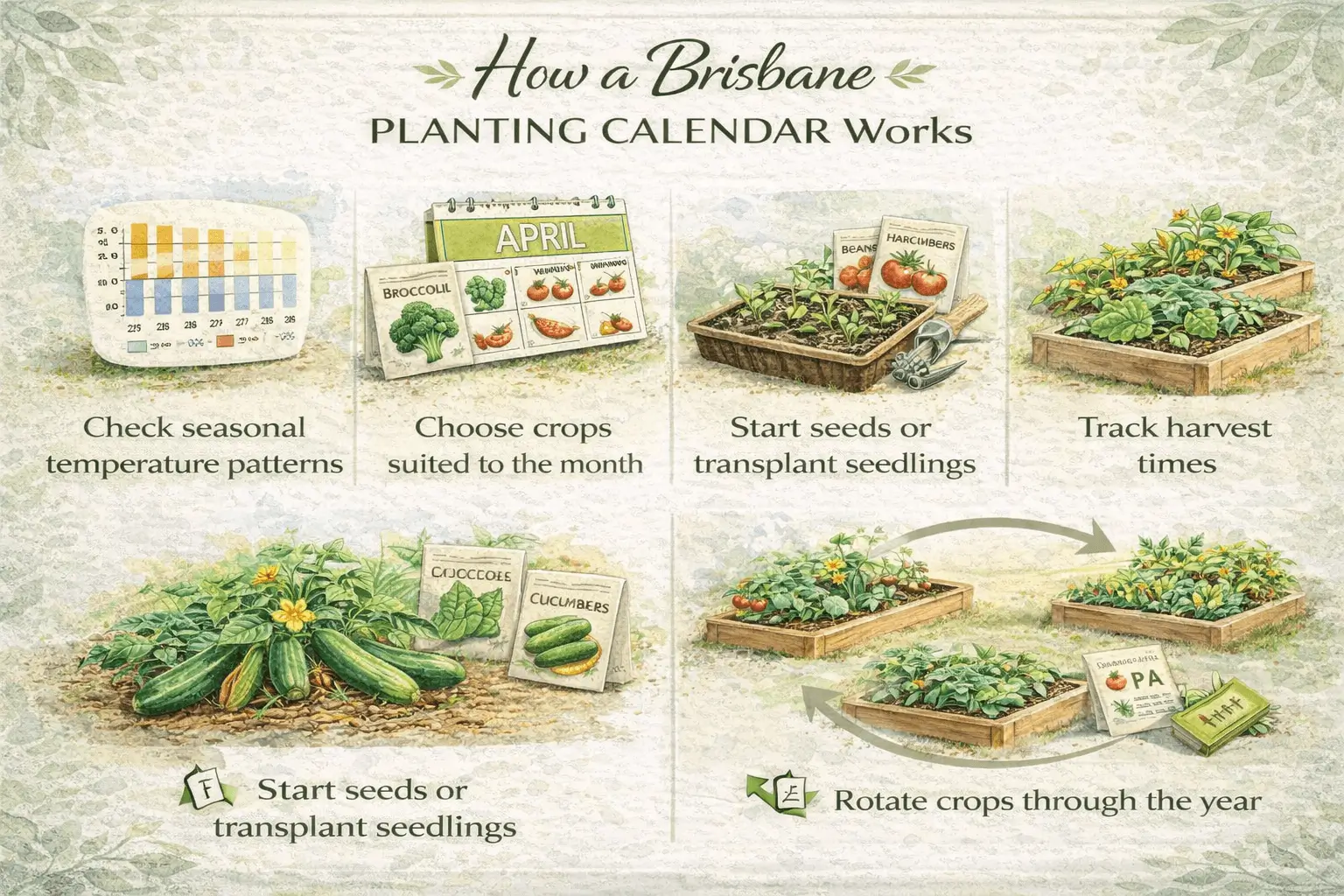
A planting calendar QLD helps gardeners organize planting schedules and maintain productive gardens throughout the year. These calendars list recommended months for planting seeds, transplanting seedlings, and harvesting crops.
They also help gardeners rotate crops and avoid planting vegetables at unsuitable times. Many gardeners combine local calendars with broader references such as the vegetable planting calendar Australia or Australian planting calendar.
How Australian Planting Calendars Work
Planting calendars in Australia vary by region because climate conditions differ significantly across the country. For example, planting schedules in tropical Queensland differ from those in cooler southern states.
A vegetable growing calendar Australia usually divides planting advice into regional zones. Using a vegetable planting guide Australia adapted for Brisbane ensures planting schedules match local climate conditions.
Beginner Mistakes When Following a Brisbane Planting Guide
Many beginner gardeners experience difficulties when adapting general gardening advice to Brisbane’s subtropical climate. Understanding regional conditions helps avoid common planting mistakes.
One common error is planting vegetables at the wrong time because guides designed for cooler regions were used.
Ignoring Seasonal Rainfall Patterns
Heavy summer rainfall in Brisbane can affect soil conditions and young seedlings. Excess moisture may lead to root rot, fungal diseases, or poor germination.
Gardeners often improve success by ensuring proper drainage and planting crops suited to wetter summer conditions.
Planting Temperate-Climate Crops at the Wrong Time
Another common mistake is planting cool-climate vegetables during Brisbane’s hot summer months. Crops such as lettuce and spinach may bolt quickly if temperatures become too high.
Following a Brisbane planting guide helps gardeners choose planting times suited to local seasonal conditions.
Environmental Factors That Affect Planting Success in Brisbane
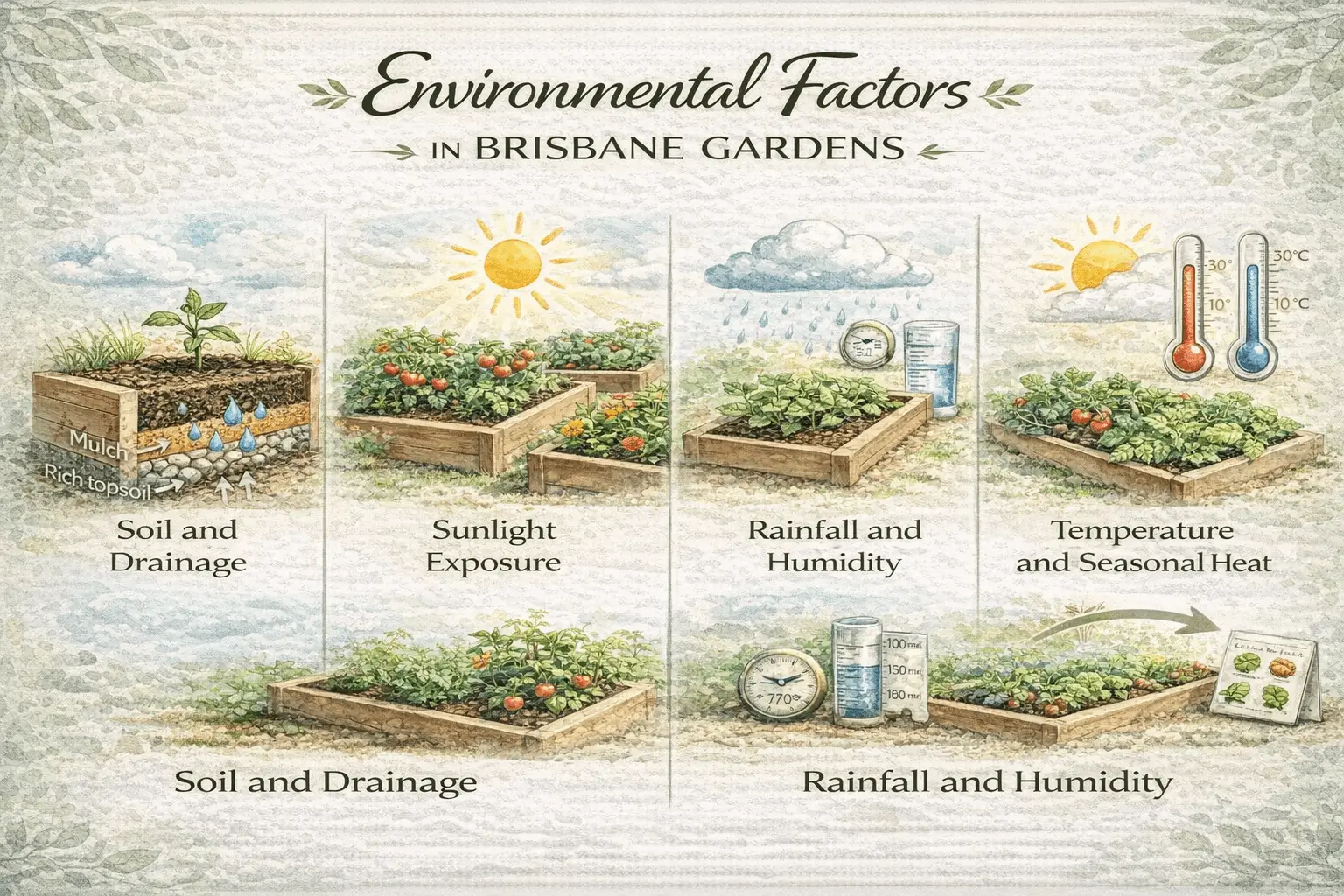
Several environmental factors influence gardening success in Brisbane. Soil quality, rainfall patterns, humidity, and sunlight all affect plant growth. Understanding these conditions allows gardeners to adapt planting practices and maintain healthy plants throughout the year. In many Brisbane gardens, taller vegetation is also used to create privacy and shade, and gardeners often combine vegetables with hedges or tall greenery such as those described in Tropical Screening Plants.
Soil and Drainage in Subtropical Gardens
Many Brisbane gardens have soils that require improvement to support vegetable growth. Adding compost and organic matter improves soil fertility and structure.
Good drainage is particularly important during summer because heavy rain can quickly saturate garden beds.
Managing Heat and Humidity in Brisbane Gardens
Extreme summer heat and humidity can stress plants and increase disease pressure. Gardeners often use mulching, shading, and proper watering schedules to protect crops.
These practices help maintain soil moisture and reduce temperature fluctuations around plant roots.
Conclusion
A Brisbane planting guide helps gardeners align planting times with the region’s unique subtropical climate. By following seasonal planting calendars and choosing crops suited to South East Queensland conditions, gardeners can grow vegetables and flowers successfully throughout the year. Understanding seasonal timing, local weather patterns, and plant suitability allows Brisbane gardens to remain productive and colorful across every season.
FAQs
What vegetables grow best in Brisbane’s climate?
Many vegetables thrive in Brisbane’s subtropical climate, including leafy greens, beans, tomatoes, and root vegetables that tolerate warm temperatures and seasonal rainfall.
What vegetables should I plant now in Brisbane?
The vegetables suitable to plant depend on the current season. A local vegetable planting calendar helps determine the best crops for each month.
Can you grow vegetables year-round in Brisbane?
Yes. Brisbane’s mild winters allow gardeners to grow crops throughout the year when planting schedules are adjusted seasonally.
What flowers grow well in Brisbane gardens?
Heat-tolerant flowers such as marigolds, zinnias, and other warm-climate varieties often perform well in Brisbane gardens.



4 Responses