
Introduction: What Is a Lilly Pilly Privacy Screen?
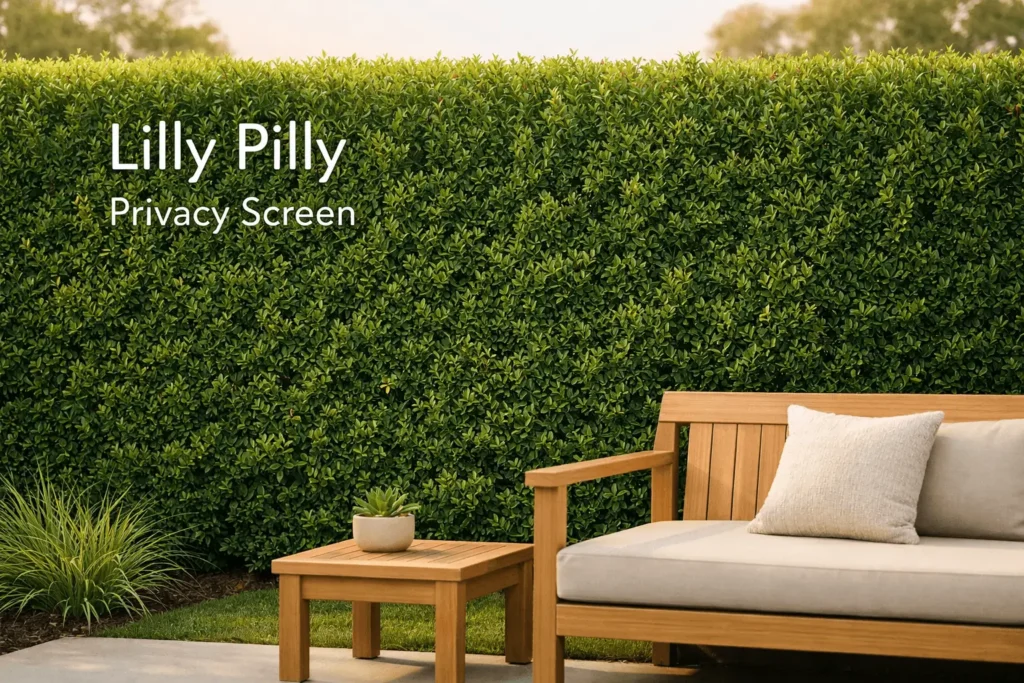
A lilly pilly privacy screen is a dense, evergreen hedge made from lilly pilly trees (Syzygium species), commonly used to create natural privacy barriers in gardens. These plants are widely valued for their fast growth, thick foliage, and ability to form structured or informal screens.
Lilly pilly hedges are particularly effective for blocking views, reducing noise, and enhancing garden aesthetics. Their adaptability to different climates and soil types makes them a reliable choice for residential landscapes. When properly spaced and maintained, they form a long-lasting, low-maintenance privacy solution.
Quick Summary
- Lilly pilly is a fast-growing evergreen hedge ideal for privacy screening
- Best results depend on spacing, variety selection, and pruning
- Popular varieties include Backyard Bliss, Resilience, and Straight and Narrow
- Proper care prevents common issues like pests, disease, and poor growth
What Is a Lilly Pilly and Why Is It Used for Privacy Screening?
Understanding the lilly pilly plant
Lilly pilly refers to a group of evergreen plants from the genus Syzygium, native to Australia and Southeast Asia (see Syzygium on Wikipedia for botanical classification). These plants are commonly grown as ornamental trees, hedges, or screening plants due to their dense foliage and glossy leaves.
A lilly pilly tree can grow into a large specimen, while a lilly pilly hedge is regularly pruned to maintain shape and density. Screening plants are specifically spaced and shaped to create a continuous visual barrier.
Why lilly pilly works as a privacy screen
Lilly pilly is widely used for privacy screening because it provides consistent coverage and responds well to pruning.
- Dense foliage creates an effective visual barrier
- Evergreen leaves ensure year-round screening
- Fast growth allows quick establishment
- Easily shaped into formal hedges or natural screens
These characteristics make lilly pilly screening plants one of the most practical options for residential privacy.
How to Choose the Best Lilly Pilly for Screening
Key factors when selecting a variety
Choosing the best lilly pilly for screening depends on several practical considerations:
- Required height and width of the hedge
- Growth rate and maintenance needs
- Climate adaptability and pest resistance
Selecting the right variety ensures better long-term performance and reduces maintenance effort.
Popular lilly pilly varieties for privacy screens
| Variety | Mature Height | Width | Growth Rate | Best Use |
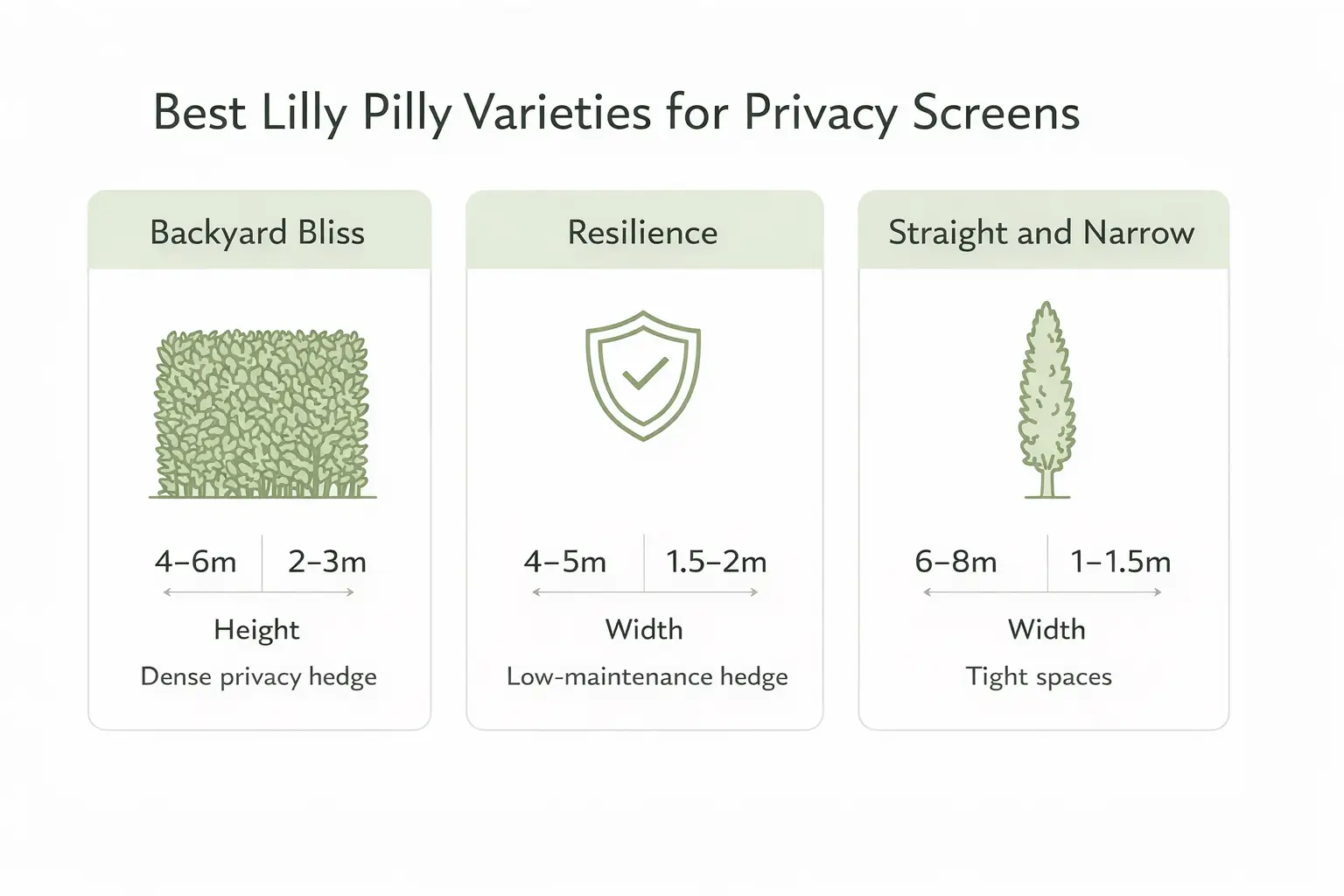
| Backyard Bliss (Syzygium paniculatum) | 4–6 m | 2–3 m | Fast | Tall hedge / privacy |
| Resilience (Syzygium australe) | 4–5 m | 1.5–2 m | Moderate–fast | Pest-resistant hedge |
| Straight and Narrow (Syzygium australe) | 6–8 m | 1–1.5 m | Fast | Narrow screening |
- Backyard Bliss is ideal for dense, tall hedges
- Resilience is preferred for pest resistance, especially against psyllids
- Straight and Narrow suits tight spaces due to its upright growth
For a deeper understanding of available options, explore Types of Lilly Pilly to compare growth habits and hedge suitability.
Ideal Height, Size, and Growth Expectations
How tall and wide do lilly pillies grow?
Lilly pillies can grow between 3 to 10 meters depending on the variety and conditions. Dwarf types remain compact, while taller varieties are suitable for large privacy screens.
- Dwarf varieties: 2–4 m
- Standard hedge varieties: 4–6 m
- Tall screening trees: up to 8–10 m
Growth rate and maturity timeline
Most lilly pilly trees are fast-growing, especially in favorable conditions such as full sun and well-drained soil.
- Fast growers: 30–60 cm per year
- Moderate growers: 20–40 cm per year
Environmental factors such as soil quality, sunlight, and watering significantly influence growth speed.
Bullet Highlights:
- Fastest growing lilly pilly types establish quickly
- Full grown lilly pilly tree size varies by species
- Tall vs narrow screening options depend on variety selection
Planting a Lilly Pilly Privacy Screen (Step-by-Step)
Best time to plant lilly pilly
The ideal planting time is during mild seasons such as spring or early autumn, allowing roots to establish before extreme temperatures.
How to plant a lilly pilly hedge properly
Proper planting ensures strong root development and healthy growth.
Bullet Steps:
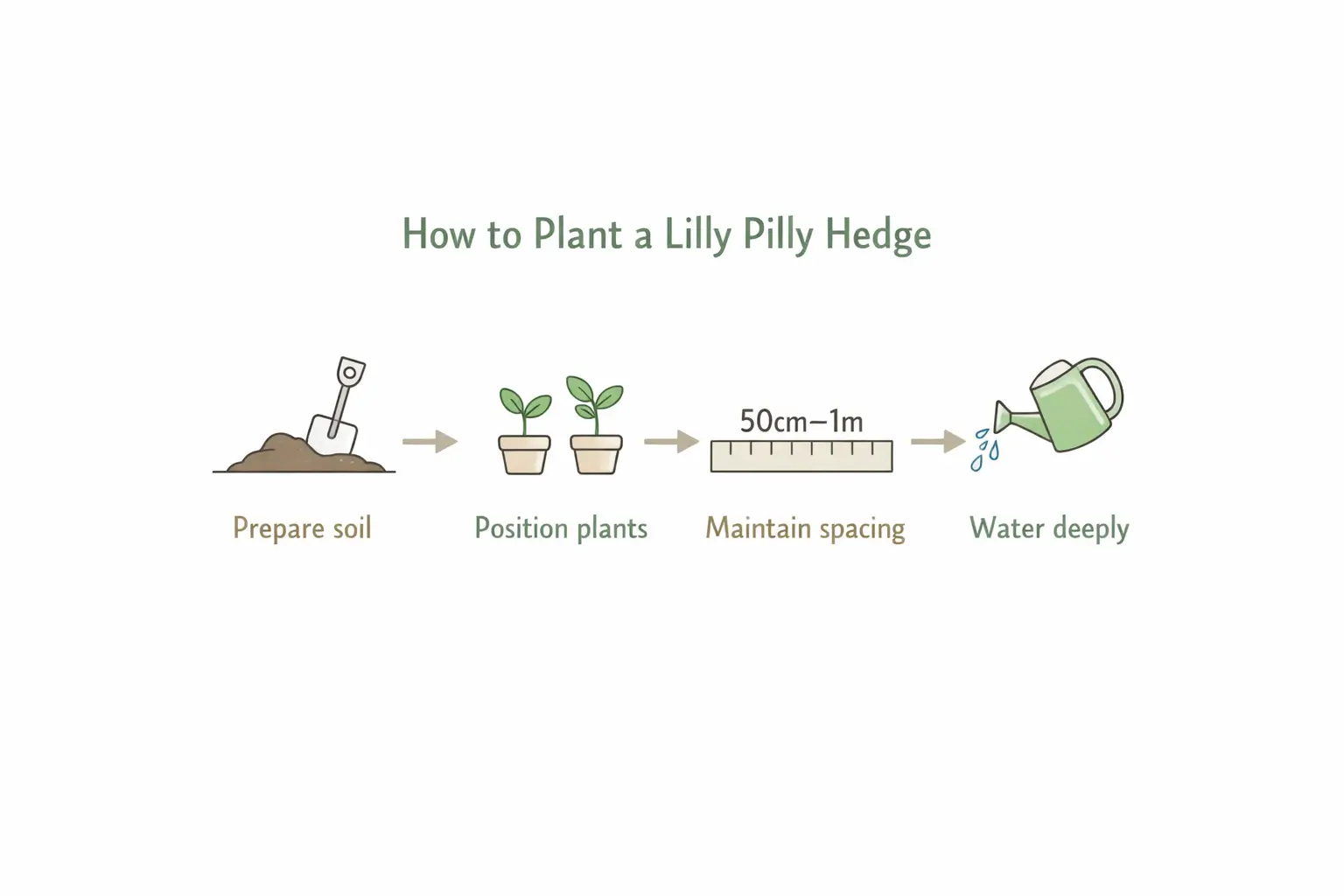
- Prepare soil by improving drainage and adding organic matter
- Position plants at the correct depth
- Maintain consistent spacing
- Water deeply after planting
Spacing guide for effective screening
Spacing plays a critical role in achieving a dense hedge.
- Typical spacing: 50 cm to 1 meter
- Closer spacing results in faster density
- Wider spacing reduces maintenance but delays full coverage
Correct lilly pilly hedge spacing ensures uniform growth and effective privacy. If you need more precise spacing recommendations, see How Far Apart to Plant Lilly Pilly for Dense Hedges for detailed planting distances and hedge density tips.
Care Guide for a Healthy Lilly Pilly Screen
Essential care requirements
Lilly pilly care focuses on maintaining consistent growth and foliage density.
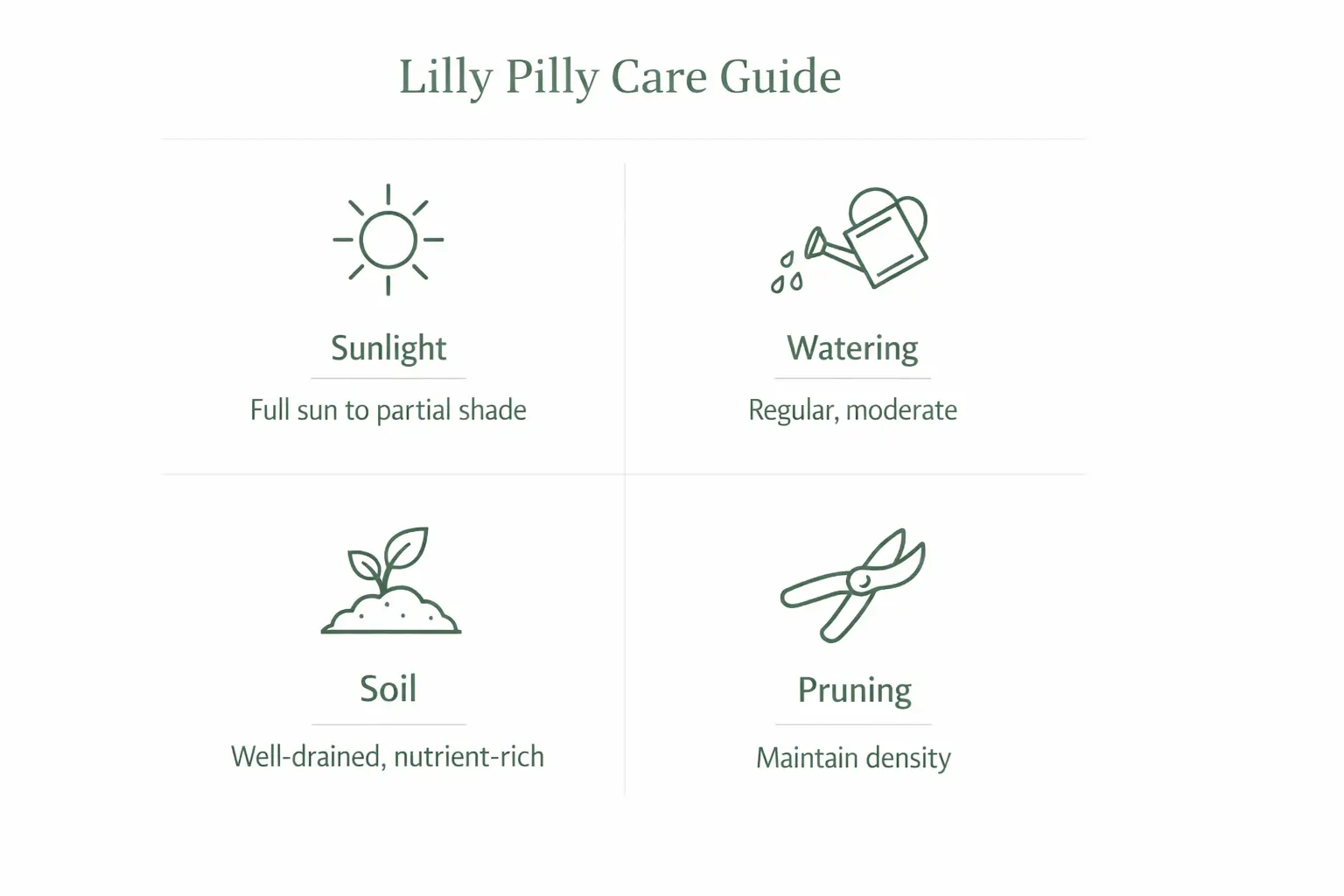
- Water regularly during establishment
- Provide full sun to partial shade
- Use well-drained, nutrient-rich soil
Maintenance practices
Proper maintenance keeps the hedge dense and visually appealing.
Bullet Points:
- Prune regularly to encourage thick growth
- Fertilize during active growing seasons
- Shape hedge to maintain structure
- Best pruning time is after new growth cycles
- Regular trimming prevents gaps in the hedge
- Lilly pilly shows strong resilience in varied climates
Common Problems with Lilly Pilly and How to Fix Them
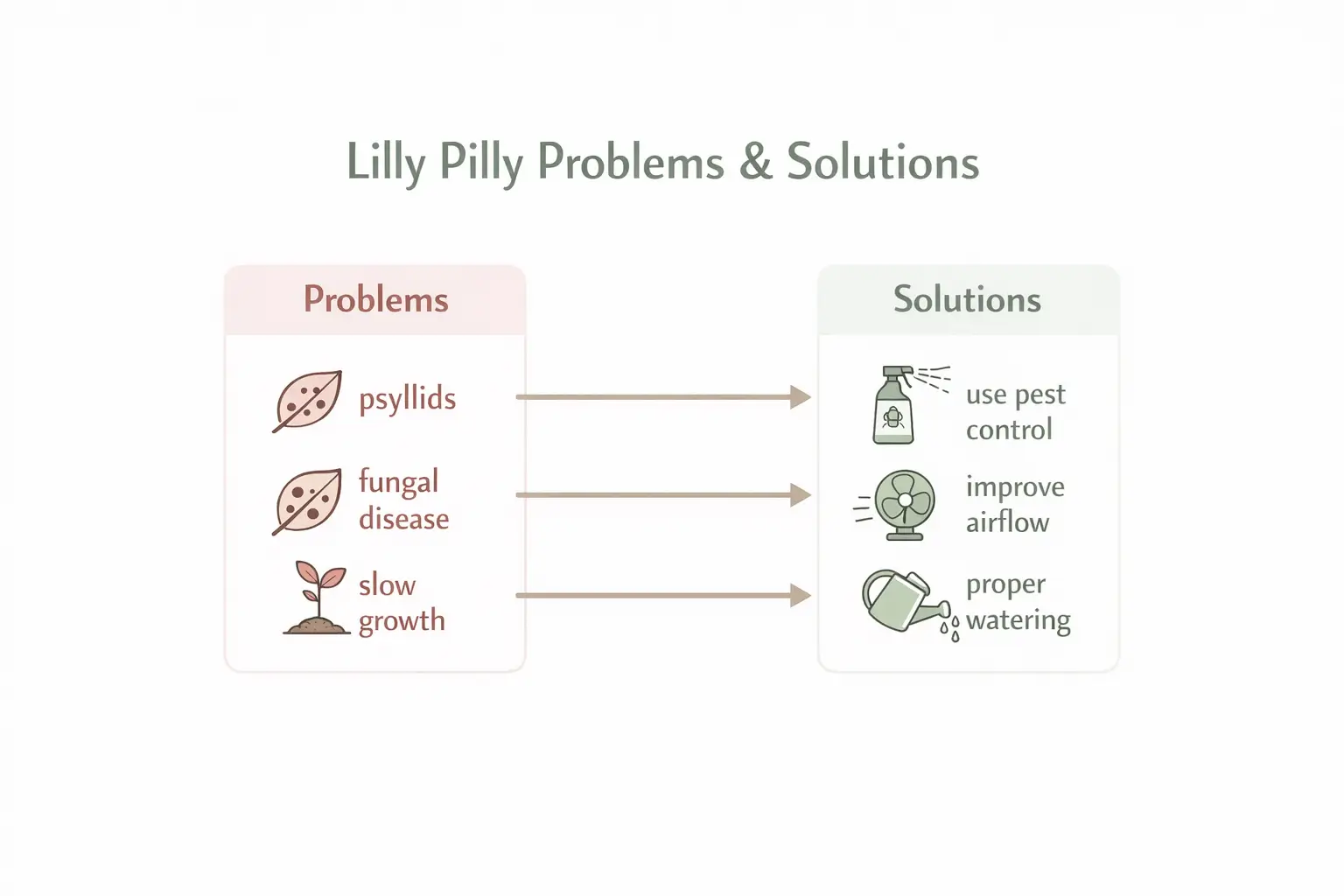
Common lilly pilly problems
Lilly pillies can face several issues if not properly maintained:
- Psyllids causing leaf bumps and distortion
- Fungal diseases due to poor airflow
- Slow growth from inadequate care
Solutions and prevention strategies
Addressing these problems early improves plant health and hedge performance.
Bullet Fixes:
- Use pest control methods for psyllids
- Improve airflow and sunlight exposure
- Ensure proper watering and drainage
- Choose resistant varieties like Resilience
Consistent monitoring helps prevent long-term damage and maintains dense foliage.
Lilly Pilly vs Alternatives for Privacy Screening
| Feature | Lilly Pilly | Other Hedging Plants |
| Growth Speed | Fast | Moderate |
| Maintenance | Moderate | Varies |
| Density | High | Medium–high |
| Appearance | Glossy evergreen | Varies |
Lilly pilly stands out for its balance of fast growth, dense foliage, and adaptability.
When to choose alternatives
Alternatives may be suitable when:
- Space is extremely limited
- Specific climate conditions require different species
- Lower maintenance is a priority
Beginner Mistakes to Avoid When Growing Lilly Pilly Hedges
Common mistakes
Many beginners reduce hedge performance due to avoidable errors:
- Incorrect spacing between plants
- Overwatering or poor drainage
- Choosing unsuitable varieties
How to avoid them
Following proper guidelines ensures better results.
Bullet Highlights:
- Use correct spacing for dense growth
- Avoid excessive watering
- Select appropriate variety for your space
- Maintain regular pruning
These practices improve hedge density and long-term performance.
Environmental Factors That Affect Screening Performance
Key conditions
Environmental factors significantly impact lilly pilly growth and screening effectiveness:
- Sunlight exposure affects foliage density
- Soil drainage influences root health
- Climate zones determine growth rate
Impact on growth and density
Lilly pilly performs best in full sun with well-drained soil. Seasonal changes may affect growth patterns, with faster growth during warm months.
Understanding these factors helps optimize hedge thickness and overall screening performance.
Conclusion: Is a Lilly Pilly Privacy Screen the Right Choice?
A lilly pilly privacy screen is one of the most effective natural solutions for creating dense, evergreen privacy in gardens. Its fast growth, adaptability, and ability to form structured hedges make it a reliable option for residential landscaping.
With proper variety selection, correct spacing, and consistent care, lilly pilly hedges provide long-lasting coverage and strong visual appeal. Understanding environmental conditions and avoiding common mistakes ensures optimal performance and minimal maintenance.
FAQs
1. How fast does a lilly pilly privacy screen grow?
Lilly pillies typically grow 30–60 cm per year under ideal conditions, making them a fast-growing option for privacy hedging.
2. What is the best spacing for a lilly pilly hedge?
Spacing usually ranges from 50 cm to 1 meter depending on the variety and desired hedge density.
3. Which lilly pilly variety is best for narrow spaces?
Straight and Narrow is ideal for tight areas due to its upright and compact growth habit.
4. Do lilly pillies require a lot of maintenance?
They require moderate maintenance, mainly regular pruning and occasional fertilizing.
5. What problems affect lilly pilly hedges?
Common issues include psyllids, fungal diseases, and poor growth caused by improper care or environmental conditions.



2 Responses