
Introduction
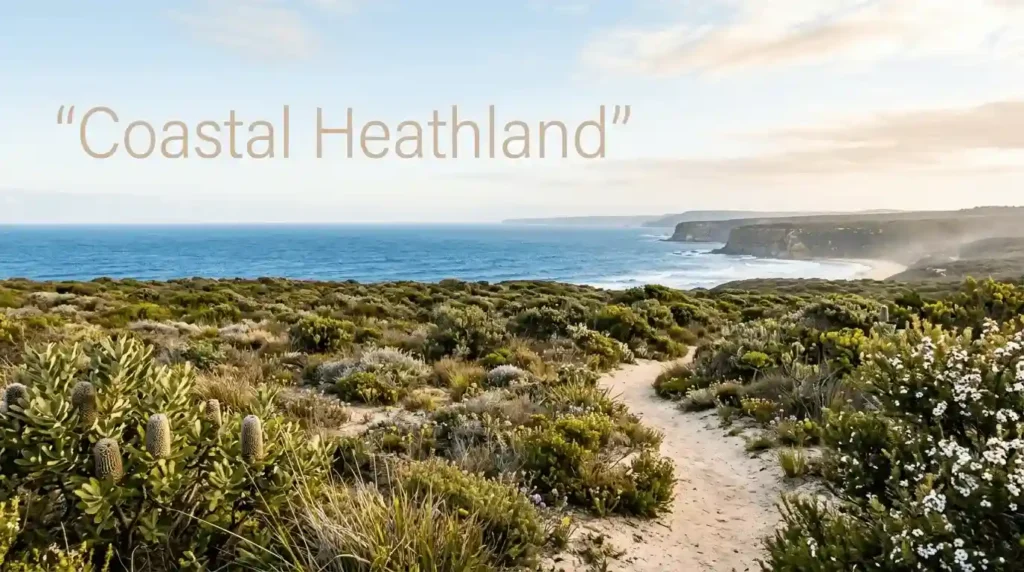
Coastal heathland is a distinct and ecologically significant vegetation community found along Australia’s sandy coastlines, especially in regions with nutrient-poor soils and strong marine influence. It is a low-growing shrubland dominated by hardy, flowering shrubs adapted to harsh conditions such as salt spray, wind exposure, and frequent fire. Unlike inland heathlands, coastal heathland is strongly shaped by proximity to the ocean, making it one of the most specialized and biodiversity-rich ecosystems in Australia.
Quick Summary
- Coastal heathland is a low shrub ecosystem on sandy, nutrient-poor coastal soils in Australia.
- It is dominated by plant families such as Proteaceae, Myrtaceae, and Epacridaceae.
- Wallum heathland is a distinct subtype found in southeast Queensland and northern New South Wales.
- These ecosystems support specialized wildlife and are highly sensitive to fire, development, and invasive species.
What Is Coastal Heathland?
Defining Heathland and Coastal Heath
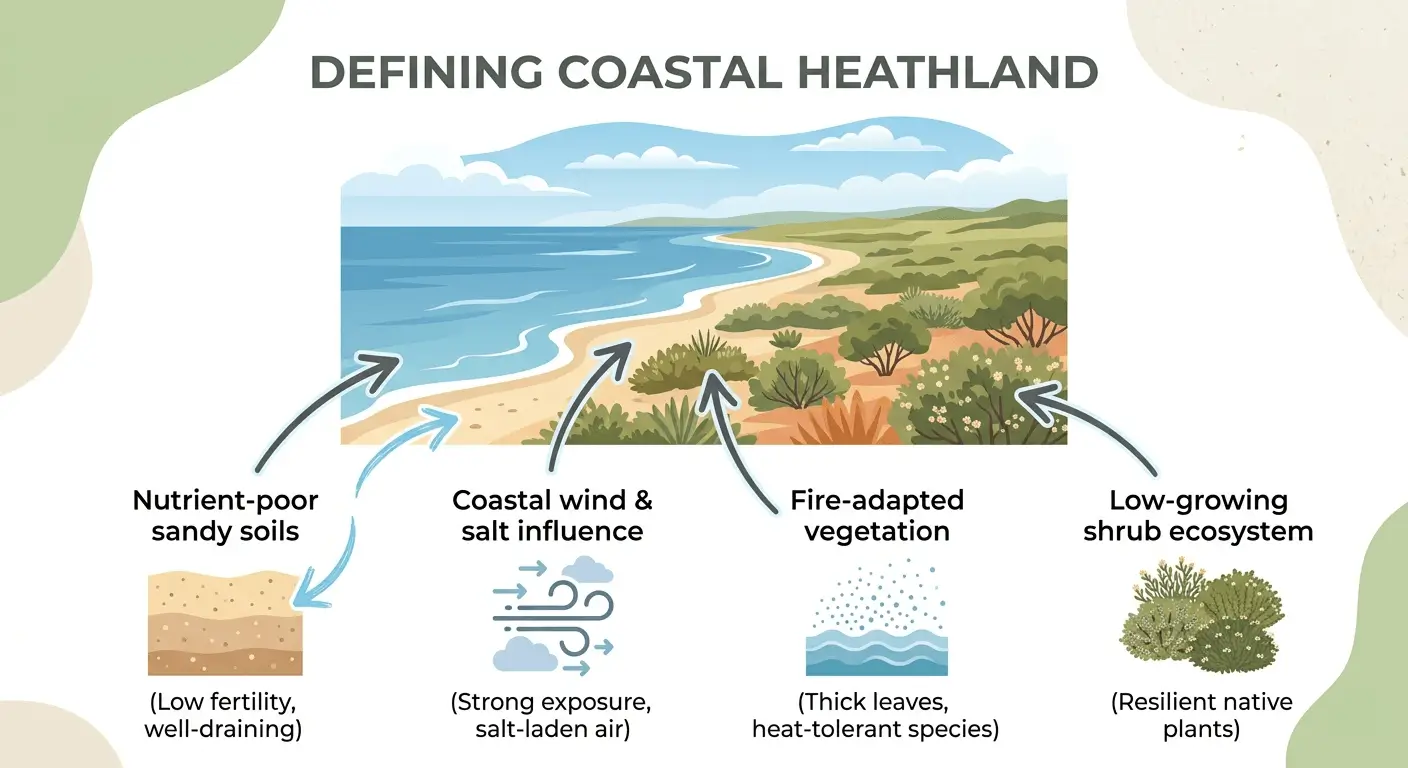
Coastal heathland is a low, open shrubland ecosystem that develops on acidic, nutrient-poor sandy soils where trees are naturally limited. It is defined by dense shrub cover rather than tall forest structure, and it persists in environments where soil fertility cannot support large woody vegetation.
Coastal heathland is part of a broader heathland biome described in global ecological classifications such as heath ecosystems.
The term “heathland” describes vegetation dominated by dwarf shrubs, while “coastal heath” emphasizes its location near the ocean. Compared with moorlands and dry sclerophyll forests, coastal heathland is shorter in structure, more exposed to salt spray, and more dependent on fire cycles.
Key environmental influences include:
- Constant wind exposure limiting tree growth
- Salt spray from ocean proximity
- Sandy soils with very low nutrient content
What Makes Coastal Heathland Unique
Coastal heathland is distinguished by several ecological features:
- Extremely nutrient-poor, acidic sandy soils
- High exposure to coastal winds and salt stress
- Strong dependence on fire for regeneration
- Surprisingly high plant diversity despite poor soil conditions
Many species have evolved specialized adaptations such as hard leaves, underground seed banks, and rapid post-fire regeneration strategies.
Wallum Heathland: A Distinct Coastal Ecosystem
What Is Wallum and Wallum Country?
Wallum heathland is a northern subtype of coastal heathland found in southeast Queensland and northern New South Wales. The term “wallum” originates from Aboriginal languages and refers to coastal lowland landscapes dominated by heath vegetation.
Wallum country typically includes:
- Low-lying coastal plains
- Seasonally waterlogged sandy soils
- Acidic wetland systems interspersed with shrublands
- Distinct plant communities adapted to fluctuating water tables
Compared to southern coastal heathlands, wallum ecosystems are wetter and more hydrologically dynamic.
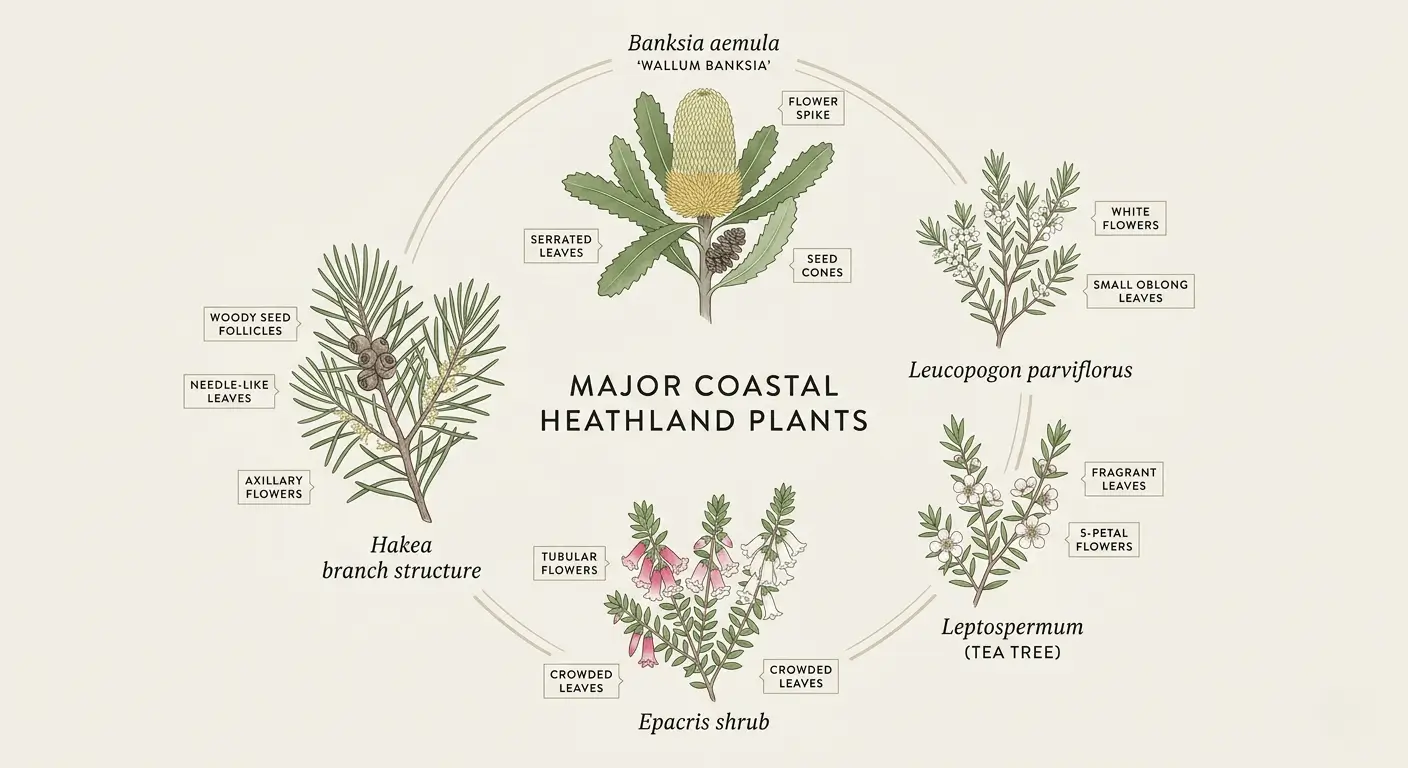
Wallum Banksia (Banksia aemula)
Banksia aemula is a keystone species of wallum heathland and a defining ecological component of this ecosystem.
Key characteristics include:
- Woody shrub or small tree with bright yellow flower spikes
- Strong adaptation to fire-prone environments
- Ability to thrive in acidic, sandy soils
- Important nectar source for birds, bats, and insects
It plays a critical role in supporting pollination networks and stabilizing coastal soils.
Key Plant Species of Coastal Heathland
Leucopogon parviflorus (Coastal Beard-Heath)
Leucopogon parviflorus is a widespread shrub found in coastal heathland across Australia.
Key features include:
- Small, tough leaves adapted to salt and wind exposure
- White tubular flowers
- Fleshy fruits consumed by birds and small mammals
It commonly grows in dune systems and open heathland, contributing to coastal food webs. Many of these coastal heathland species are also widely used in native landscaping and restoration projects, as seen in guides on Lilly Pilly Privacy Screen: 7+ Essential Growing Tips and Fast Growing Australian Native Screening Plants Guide, which highlight how similar shrubs are used for hedging and ecological garden design.
Other Dominant Plant Groups
Coastal heathland is dominated by a range of shrub and ground-layer species:
- Banksia spp. — nectar-producing shrubs vital for pollinators
- Leptospermum spp. — tea trees often found in wetter habitats
- Epacris spp. — flowering heath shrubs
- Hakea spp. — woody shrubs with hard seed pods
- Allocasuarina spp. — she-oaks adapted to nutrient-poor soils
- Sedges, rushes, and orchids forming the ground layer vegetation
Plant Comparison Table
| Species | Common Name | Growth Form | Ecological Role |
| Banksia aemula | Wallum banksia | Shrub/small tree | Nectar source, habitat structure |
| Leucopogon parviflorus | Coastal beard-heath | Shrub | Food source for fauna |
| Leptospermum spp. | Tea tree | Shrub | Wetland and soil stabilization |
| Epacris spp. | Heath | Shrub | Pollinator support |
| Hakea spp. | Hakea | Shrub | Post-fire regeneration |
Where Is Coastal Heathland Found in Australia?
Coastal Heathland Distribution
Coastal heathland occurs along much of Australia’s coastline where sandy soils and harsh coastal conditions limit forest development. It is found in:
- Queensland
- New South Wales
- Victoria
- South Australia
- Western Australia
Its distribution is closely linked to soil type, rainfall patterns, and exposure to marine winds.
Coastal Heathland in New South Wales
In New South Wales, coastal heathland occurs in:
- Sydney Basin coastal headlands
- North Coast regions
- South Coast reserves
Northern NSW areas transition into wallum heathland systems.
Coastal Heathland in Victoria
In Victoria, coastal heathland is found in:
- Wonthaggi Heathland and Coastal Reserve
- Heathland Coastal Park areas
- Wilsons Promontory coastal ecosystems
These systems are typically low-growing and heavily wind-exposed.
Coastal Heathland Across Australia
Notable examples include:
- Southeast Queensland wallum ecosystems
- Sydney coastal headlands
- Wilsons Promontory (Victoria)
- Fitzgerald River region (Western Australia)
Coastal Heathland Climate and Environment
Climate Conditions That Support Coastal Heathland
Coastal heathland develops under:
- Mild coastal temperature conditions
- Seasonal rainfall variability
- Strong wind and salt spray exposure
- Fire-prone climatic conditions in many regions
Wallum systems tend to experience higher rainfall and seasonal waterlogging compared to southern heathlands.
Soil Conditions and Hydrology
Key environmental characteristics include:
- Sandy, acidic, nutrient-poor soils
- Low water retention in many areas
- Seasonal waterlogging in wallum regions
- Strong influence of soil chemistry on plant diversity and structure
Coastal Heathland Animals and Wildlife
What Animals Live in Coastal Heathland?
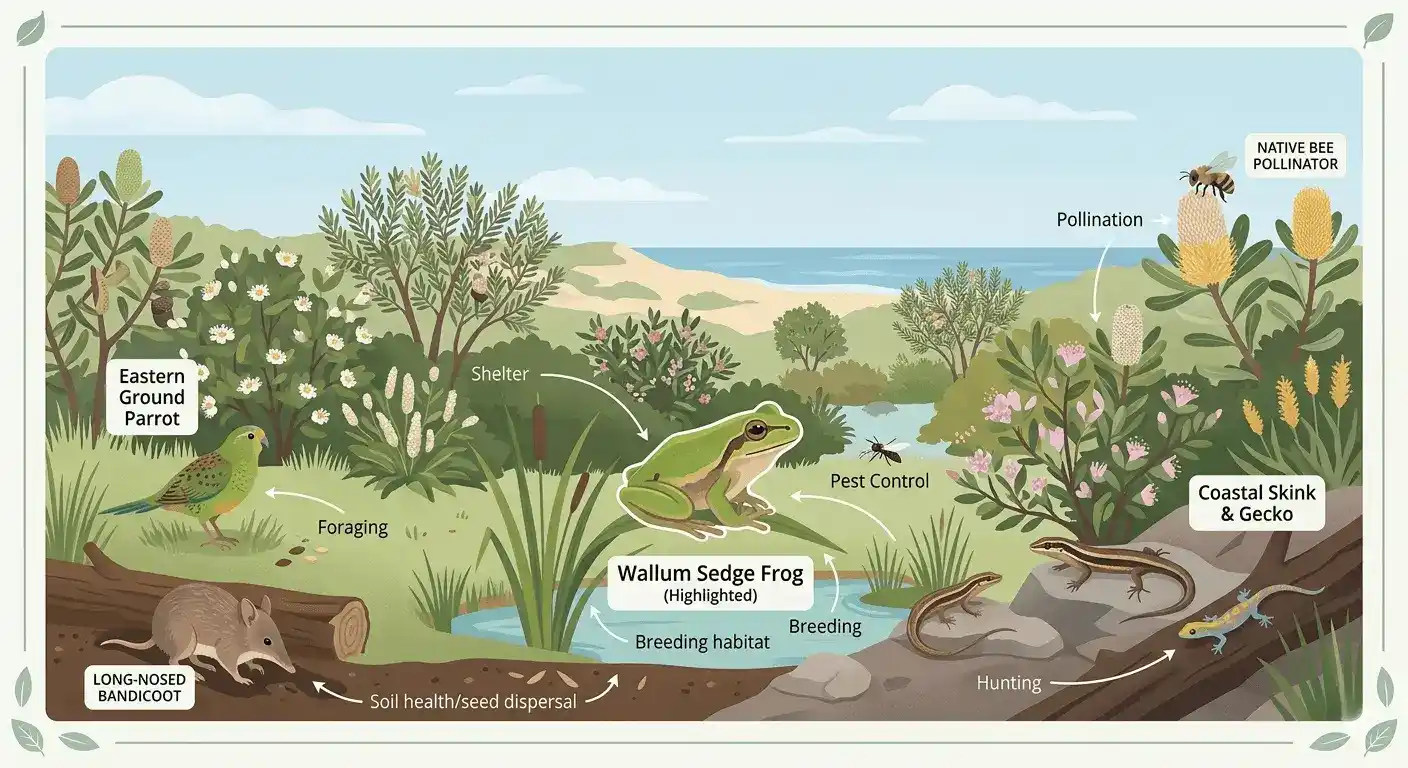
Coastal heathland supports specialized wildlife adapted to dense shrub cover and nutrient-poor conditions. Many species are highly localized and sensitive to habitat disturbance.
Birds of Coastal Heathland
Common bird species include:
- Eastern ground parrot (Pezoporus wallicus)
- Tawny-crowned honeyeater
- Striated fieldwren
- New Holland honeyeater
- Migratory shorebirds using nearby wetlands
Reptiles, Amphibians, and Invertebrates
- Litoria olongburensis — a specialist frog found in wallum heathlands
- Ground-dwelling skinks and geckos
- Native bees and butterflies as pollinators
- Coastal heathland cutworm — moth larvae that feed on plant roots and stems
Mammals of Coastal Heathland
- Bandicoots
- Dunnarts
- Pygmy possums
These mammals rely on dense vegetation for shelter and protection from predators.
Fire Ecology and Coastal Heathland
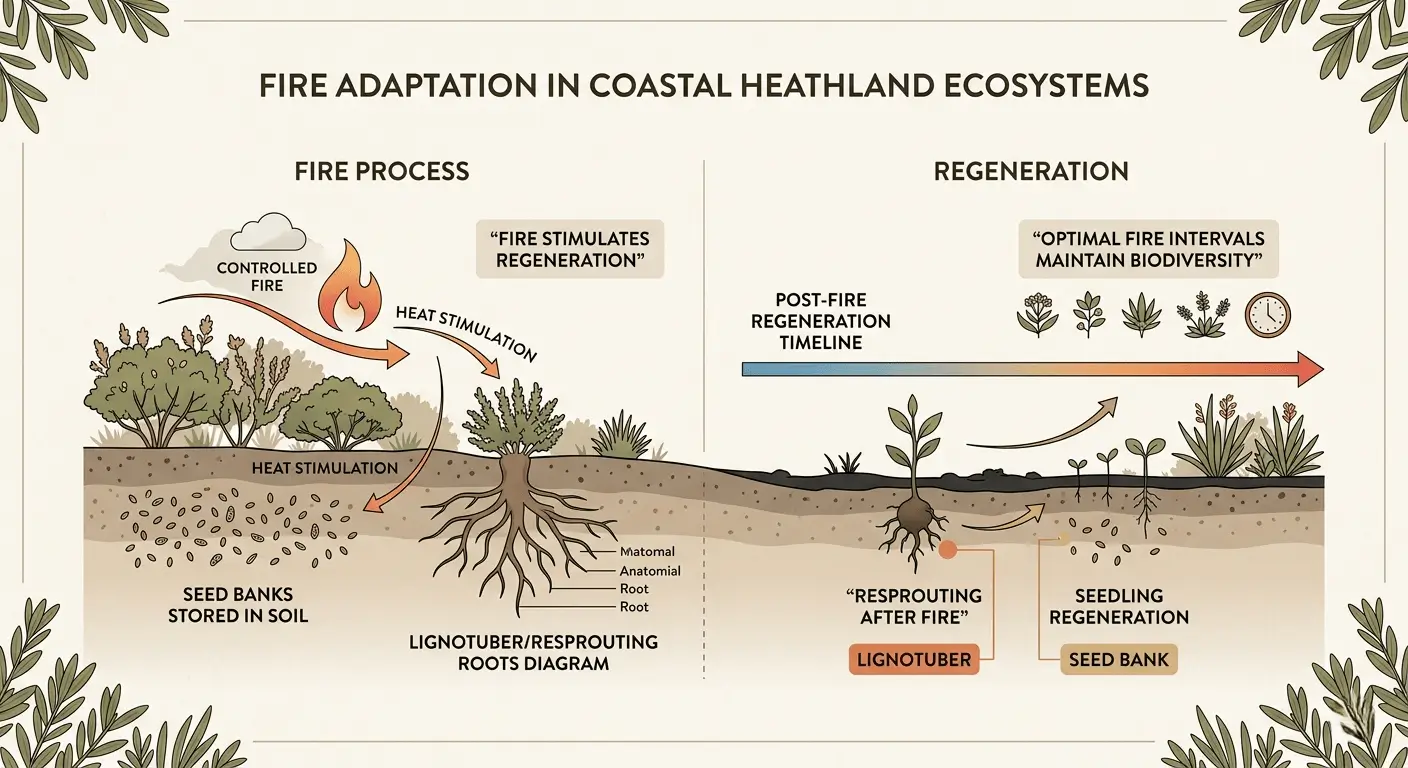
The Role of Fire in Heathland Ecosystems
Fire is a natural and essential process in coastal heathland. Many plant species depend on fire for regeneration through:
- Soil-stored seed banks
- Fire-triggered seed release (serotiny)
- Resprouting from underground structures
Fire maintains biodiversity by preventing dominance of a few long-lived shrubs.
Prescribed Burning and Management
Land managers use controlled burns to:
- Maintain ecological balance and species diversity
- Support regeneration cycles
- Reduce fuel loads and wildfire risk
However, incorrect fire frequency can severely damage ecosystems and reduce plant and animal diversity.
Coastal Heathland Plant Size and Growth
Typical Plant Size in Coastal Heathland
Coastal heathland vegetation is generally low-growing, with most shrubs ranging from:
- 0.5 to 2 meters in height
- Prostrate forms in highly exposed coastal zones
- Taller shrubs or small trees in sheltered areas
Plant height is influenced by soil depth, wind exposure, and water availability.
Growth Rate of Heathland Plants
Coastal heathland plants typically grow slowly due to nutrient-poor soils. However:
- Post-fire regeneration can be rapid in many species
- Growth rates vary seasonally with rainfall
- Nutrient limitations strongly restrict long-term biomass increase
Caring for Coastal Heathland: Restoration and Conservation
How Coastal Heathland Is Managed and Restored
Conservation efforts include:
- Removal of invasive weeds such as Bitou bush
- Replanting native species from local seed sources
- Control of feral animals like foxes and cats
- Community-based restoration programs
Threats to Coastal Heathland
Key threats include:
- Urban and residential development
- Invasive plant and animal species
- Altered fire regimes
- Climate change impacts such as drought and rainfall shifts
- Physical damage from off-road vehicles
Restoration efforts in coastal heathland often overlap with broader native planting strategies discussed in Australian Native Garden Plants: Types, Care Tips & Design Ideas, especially when selecting species for biodiversity-focused rehabilitation.
Common Problems in Coastal Heathland
Why Is Coastal Heathland Degraded?
Coastal heathland degradation typically results from human disturbance, ecological imbalance, or environmental stress.
| Problem | Cause | Solution |
| Shrub dieback | Root pathogens (Phytophthora) | Hygiene and soil protection |
| Loss of diversity | Incorrect fire frequency | Managed fire regimes |
| Weed invasion | Soil disturbance | Manual removal and restoration |
| Cutworm damage | Moth larvae feeding | Monitoring and targeted control |
| Waterlogging changes | Urban development | Hydrological restoration |
Coastal Heathland vs. Other Vegetation Communities
Coastal Heathland Compared to Other Ecosystems
Coastal heathland differs from nearby ecosystems in structure, soil, and biodiversity.
| Ecosystem | Soil Type | Structure | Fire Response | Vegetation |
| Coastal heathland | Sandy, acidic | Low shrubland | Fire-dependent | Shrubs, heath species |
| Dry sclerophyll forest | Loamy, nutrient-poor | Open forest | Fire-adapted | Eucalyptus canopy |
| Saltmarsh | Saline, waterlogged | Low herbaceous | Low fire influence | Salt-tolerant herbs |
| Banksia woodland | Sandy, better drainage | Open woodland | Moderate fire response | Banksia-dominated canopy |
Key differences:
- Heathland has no continuous tree canopy
- Saltmarsh is more waterlogged and saline
- Dry sclerophyll forests have taller tree cover
- Wallum heathland is wetter and more acidic than southern forms
Conclusion
Coastal heathland is one of Australia’s most ecologically important and sensitive vegetation communities. It is defined by nutrient-poor sandy soils, fire-adapted plant species, and highly specialized wildlife. From wallum heathlands in the north to Victoria’s coastal reserves in the south, these ecosystems show remarkable regional variation while maintaining a shared ecological structure. Their conservation depends on appropriate fire management, invasive species control, and protection from urban expansion, making them a priority for long-term ecological preservation.
Frequently Asked Questions
What is coastal heathland?
Coastal heathland is a low-growing shrub ecosystem found on sandy, nutrient-poor soils along Australia’s coast, characterized by fire-adapted vegetation and high biodiversity.
What is the difference between wallum heathland and coastal heathland?
Wallum heathland is a subtype of coastal heathland found in southeast Queensland and northern New South Wales, distinguished by wetter, seasonally waterlogged soils and unique plant species.
What animals live in coastal heathland in Australia?
Species include ground parrots, honeyeaters, skinks, bandicoots, pygmy possums, native bees, and the wallum sedge frog.
Why is coastal heathland important?
It supports high biodiversity, provides habitat for threatened species, stabilizes sandy soils, and plays a role in fire-adapted ecological cycles.
What threatens coastal heathland ecosystems?
Main threats include urban development, invasive species, altered fire regimes, climate change, and habitat fragmentation.
Where can I find coastal heathland in Victoria?
Key locations include Wonthaggi Heathland and Coastal Reserve, Heathland Coastal Park areas, and Wilsons Promontory.
What plants are found in coastal heathland?
Common plants include Banksia aemula, Leucopogon parviflorus, Leptospermum species, Epacris species, and Hakea species.