
Introduction
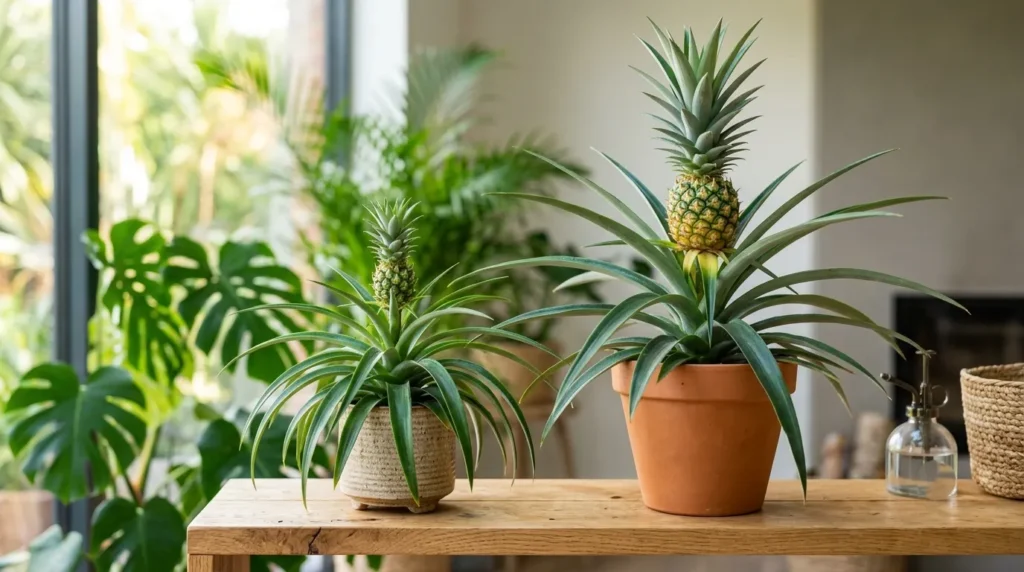
A baby pineapple tree is a common term used for a young pineapple plant or a small ornamental pineapple variety. However, pineapples do not grow on trees; they grow on low-growing bromeliad plants with a central rosette of long leaves. A baby pineapple plant can develop from a pineapple crown, seed, or side shoots called suckers. Depending on the variety and growing conditions, pineapple plants may take 18–24 months to produce fruit. Understanding pineapple growth, care needs, propagation methods, and differences between edible and ornamental varieties helps growers successfully raise healthy plants indoors or outdoors.
Quick Summary
- A “baby pineapple tree” usually refers to a young pineapple plant grown from a crown or a naturally small ornamental pineapple variety.
- Pineapple plants are bromeliads, not true trees, and usually need 18–24 months to produce fruit.
- Mini or ornamental pineapple plants are often grown for decoration and may produce small or poor-quality fruit.
- One pineapple plant typically produces one main pineapple fruit per growth cycle.
- New plants can be propagated from crowns, seeds, or offsets called suckers.
What Is a Baby Pineapple Tree?
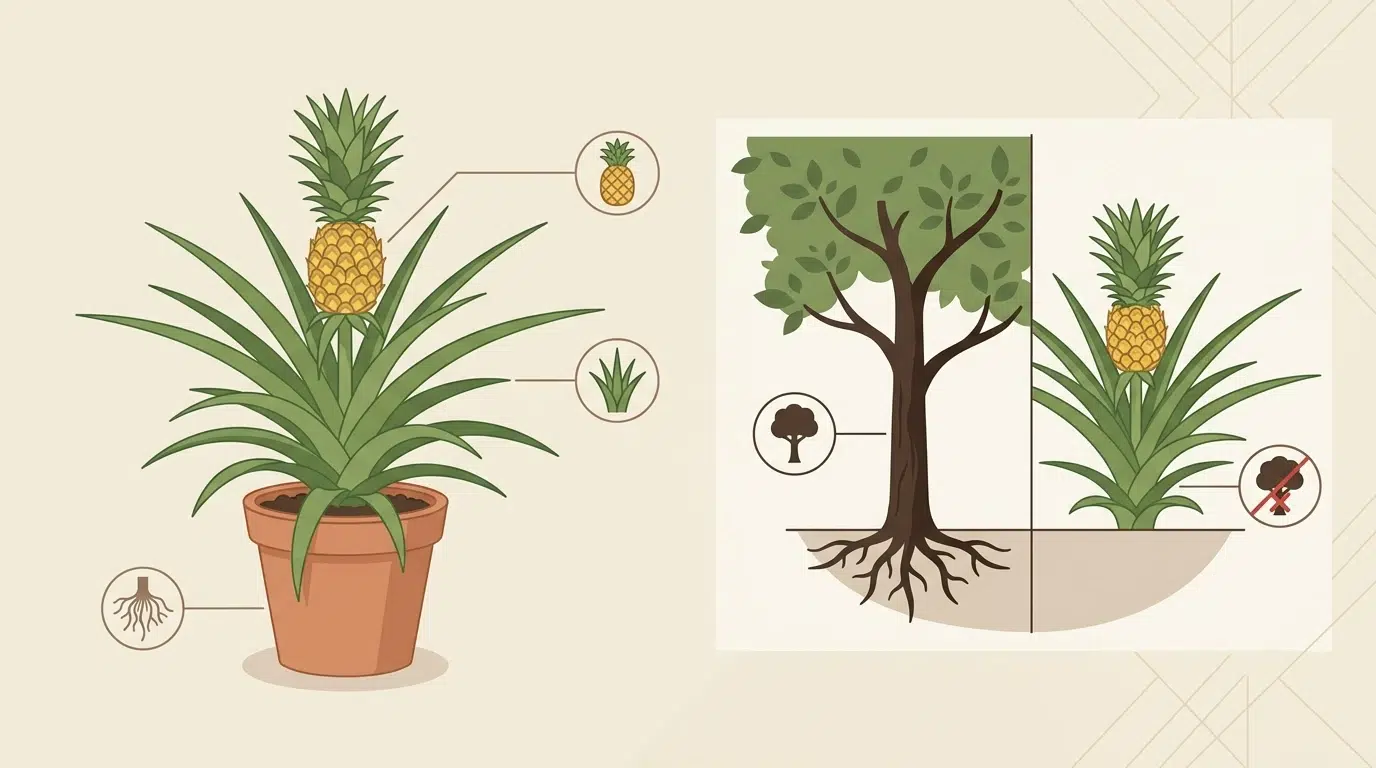
A baby pineapple tree is a small pineapple plant that is either in its early growth stage or belongs to a dwarf ornamental variety. The term is commonly used because the plant produces a pineapple fruit above a leafy base, but botanically it is not a tree. Pineapple plants belong to the bromeliad family, Bromeliaceae, and their scientific name is Ananas comosus, a tropical plant species widely cultivated for its edible fruit.
A young pineapple plant may begin from the leafy crown removed from a mature pineapple fruit. As it develops, it forms a compact rosette of leaves before producing a flower stalk and pineapple fruit.
A baby pineapple plant can refer to:
- A newly propagated pineapple crown growing roots.
- A small pineapple plant grown indoors.
- A dwarf or ornamental pineapple variety that remains compact.
- A decorative pineapple plant grown mainly for appearance.
Baby Pineapple Tree vs. Ornamental Pineapple Plant
The main difference between a baby pineapple plant and an ornamental pineapple plant is their purpose and growth characteristics.
A young edible pineapple plant is expected to mature and eventually produce a usable pineapple fruit. An ornamental pineapple plant is selected mainly for its attractive leaves, small size, and decorative fruit appearance.
The term “pineapple tree” or “pineapple bush” is incorrect because pineapples grow from a herbaceous bromeliad plant rather than a woody tree or shrub.
What Are the Small Baby Pineapples Called?
Small pineapple fruits and plants are commonly called mini pineapple, dwarf pineapple, or ornamental pineapple. These names usually describe naturally smaller varieties or decorative cultivars.
Some miniature pineapple plants produce edible fruit, but many ornamental types are grown mainly as houseplants because their fruit is small, acidic, or not considered desirable for eating.
Baby Pineapple Tree vs. Full-Grown Pineapple Plant
| Feature | Baby Pineapple Plant | Full-Grown Pineapple Plant |
| Size | Small rosette with developing leaves | Larger mature leaf arrangement |
| Growth stage | Early development phase | Mature vegetative stage |
| Fruit production | Not ready to fruit | Can produce pineapple fruit |
| Lifespan | Beginning of growth cycle | Several years with offsets |
| Appearance | Compact and decorative | Larger, established plant |
How Do Pineapples Grow?
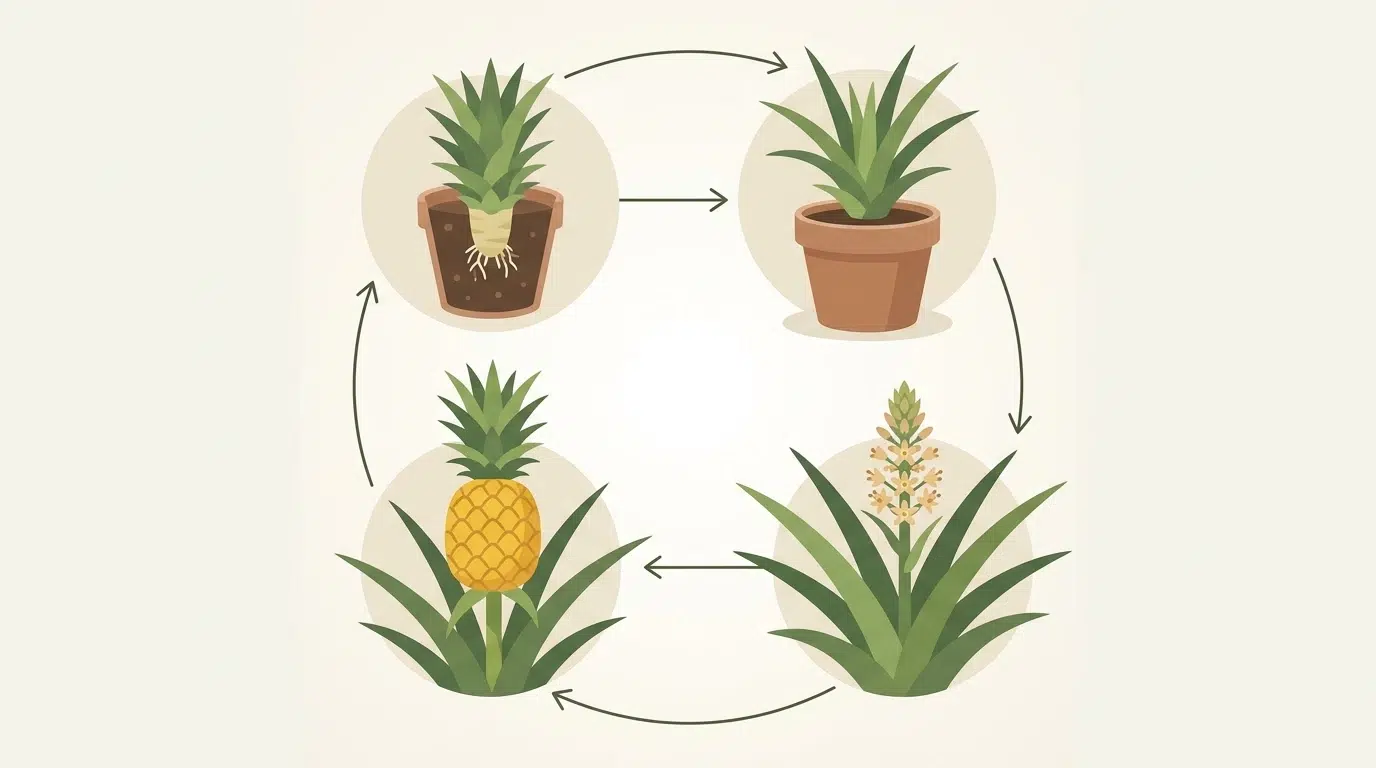
Pineapples grow through a slow development process that begins with a crown, seed, or sucker. The plant first focuses on producing roots and leaves. After reaching maturity, it forms a flower cluster that develops into the pineapple fruit.
The growth process includes:
- Root development after planting.
- Leaf and stem growth during the vegetative stage.
- Flower production from the plant center.
- Fruit development after flowering.
- Production of new suckers for future plants.
How Long Does It Take to Grow a Pineapple?
A pineapple usually takes about 18–24 months to grow from a crown to a mature fruit-producing plant. The exact timeline depends on temperature, sunlight, soil quality, and plant health.
Growth stages include:
| Stage | Duration | Visible Signs |
| Rooting | 2–8 weeks | New roots develop from crown base |
| Leaf growth | Several months | Larger green leaves form |
| Vegetative growth | 12–18 months | Plant reaches mature size |
| Flowering | Several weeks | Central flower stalk appears |
| Fruit maturity | 5–6 months after flowering | Pineapple enlarges and changes color |
What Does a Pineapple Look Like When It First Starts Growing?
A young pineapple plant first appears as a small cluster of stiff green leaves emerging from the center. After planting a crown, the lower leaves may dry while new leaves appear from the middle. A healthy growing plant produces firm, upright leaves with steady new growth.
How to Plant a Pineapple Top or Crown
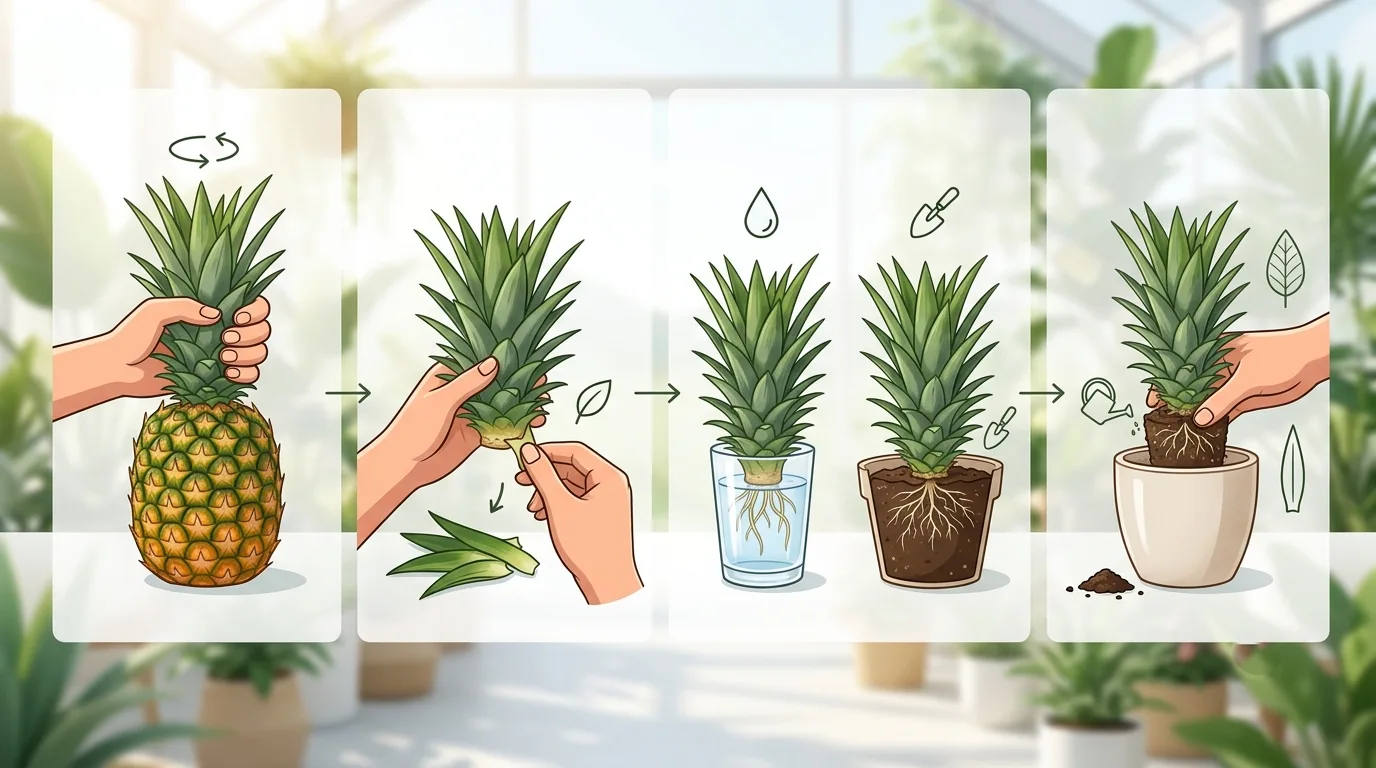
Growing a pineapple from the top of a fruit is one of the easiest propagation methods. The crown contains the growing point that can develop into a new pineapple plant.
Steps for planting a pineapple crown:
- Twist or cut the leafy pineapple crown from the fruit.
- Remove leftover fruit flesh to prevent rotting.
- Remove several lower leaves to expose the stem area.
- Allow the crown base to dry for a few days.
- Place the crown in water or directly into well-draining soil.
- Move the rooted plant into a larger container once roots develop.
Growing a Pineapple From Seed vs. From the Top
| Method | Advantages | Disadvantages |
| Crown propagation | Easy and faster | Requires a mature pineapple crown |
| Seed propagation | Produces genetic variation | Very slow and less common |
Most home growers prefer crown propagation because pineapple seeds can take years to produce mature plants.
How to Propagate a Baby Pineapple Plant
Pineapple plants naturally produce offsets called suckers or pups around the base of the plant. These young plants can be separated and replanted. Propagation techniques vary between plant species, but many houseplants can be multiplied through specific methods, as explained in our guide on How to Propagate a Prayer Plant: Complete Guide.
Propagation from suckers is often faster because the new plant is already partially developed.
Baby Pineapple Tree Care Guide
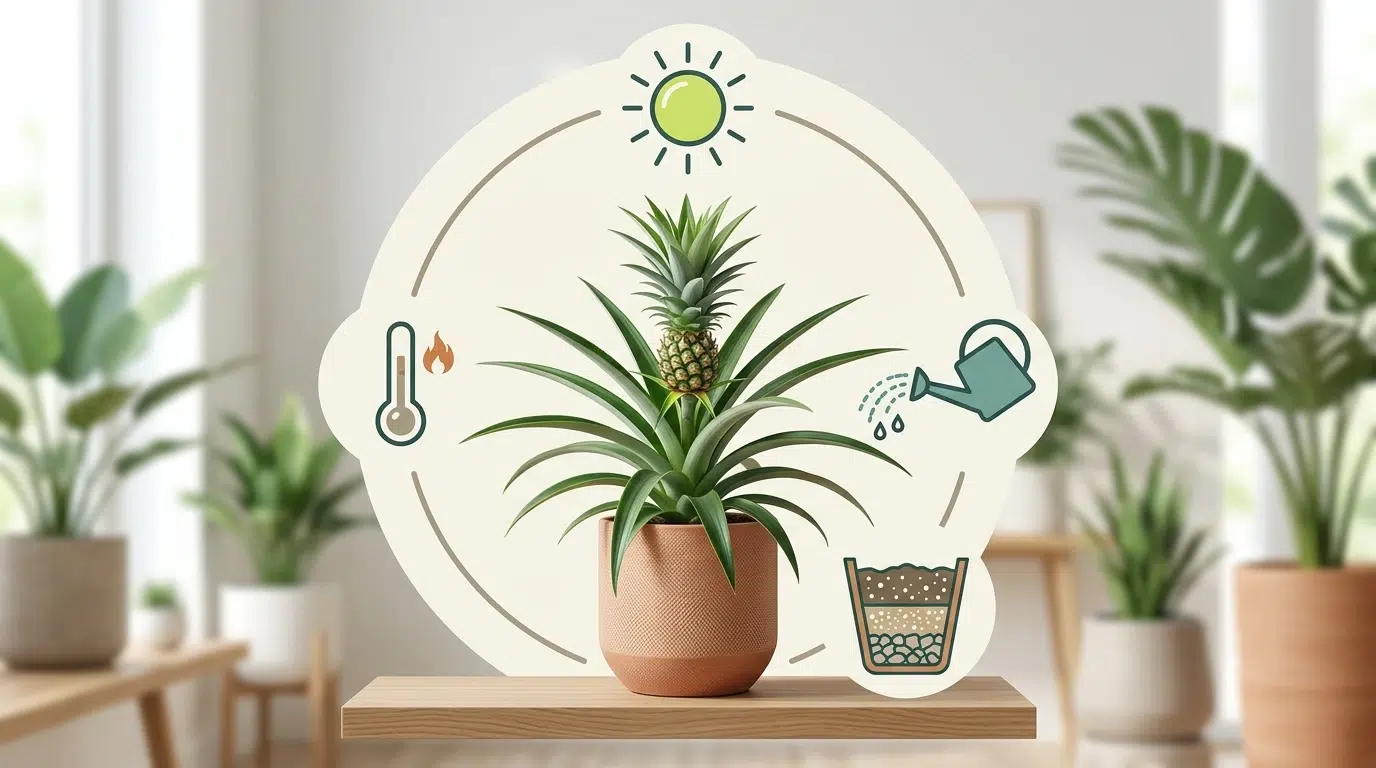
Proper care helps a baby pineapple plant develop strong leaves and healthy roots. Pineapples are tropical plants that prefer warm temperatures, bright light, and well-draining soil. Like other tropical houseplants such as banana plants, pineapple plants require warm temperatures, bright light, and consistent moisture management for healthy growth. Learn more about tropical plant care in our How to Care for a Banana Plant: Complete Growing Guide.
Growing healthy indoor plants requires understanding their individual light, water, and soil preferences. Similar care principles are discussed in our Alocasia Plant Care: The Complete Guide.
Light and Temperature Requirements
Pineapple plants need bright sunlight for healthy growth. Outdoor plants perform best with several hours of direct sunlight daily. Tropical plants often perform best when their natural climate needs are replicated indoors, similar to care practices used for plants like Musa Tropicana, which also prefers warmth, sunlight, and humidity.
Ideal conditions include:
- Bright indirect light indoors.
- Full sun outdoors when temperatures allow.
- Temperatures between 65°F and 95°F (18°C–35°C).
Cold temperatures can slow growth and damage leaves.
Watering Needs
Pineapple plants prefer moderate watering because their roots are sensitive to excess moisture.
Water when:
- The top layer of soil feels dry.
- The container has proper drainage.
- The plant is actively growing.
Overwatering is one of the most common causes of yellow leaves and root problems.
Soil and Fertilization Preferences
Pineapple plants grow best in loose, well-draining soil. A cactus or bromeliad soil mix works well.
Good soil should provide:
- Excellent drainage.
- Light texture.
- Moderate nutrients.
A balanced fertilizer applied during the growing season can support leaf development.
Indoor vs. Outdoor Care Differences
Indoor pineapple plants usually grow smaller because they receive less sunlight and space. Outdoor plants in warm climates often grow larger and mature faster.
Indoor care focuses on:
- Bright windows.
- Controlled watering.
- Warm temperatures.
Outdoor care requires:
- Protection from frost.
- Proper drainage.
- Adequate sunlight.
Baby Pineapple Tree Size and Growth Rate
A baby pineapple plant remains relatively compact compared with traditional fruit trees. Its mature size depends on variety, climate, and growing conditions.
Baby Pineapple Tree Size (Indoor vs. Outdoor)
Indoor pineapple plants typically reach around 1–3 feet tall and wide. Outdoor plants may become larger, with leaves spreading several feet depending on the variety.
Factors affecting size include:
- Sun exposure.
- Container size.
- Soil quality.
- Temperature.
Growth Rate — Slow, Moderate, or Fast?
Pineapple plants have a slow to moderate growth rate. They grow faster during warm seasons and slow down during cooler months.
Growth improves with:
- Long periods of sunlight.
- Warm temperatures.
- Proper fertilization.
- Consistent moisture control.
Is a Baby Pineapple Tree Edible?
A baby pineapple plant may be edible if it belongs to a fruit-producing pineapple variety, but many ornamental pineapple plants are not grown for eating. Decorative varieties often produce small fruits with limited flavor or tough texture.
Ornamental vs. Edible Pineapple Varieties
| Type | Purpose | Fruit Quality |
| Edible pineapple varieties | Food production | Larger, sweet fruit |
| Ornamental pineapple varieties | Decoration | Small or low-quality fruit |
Red ornamental pineapple plants are popular for their colorful appearance rather than their fruit.
How Many Pineapples Does One Plant Produce?
One pineapple plant usually produces one main pineapple fruit per growth cycle. After fruiting, the original plant may produce suckers that can grow into new fruit-producing plants.
A pineapple plant may produce:
- One main pineapple from the original stem.
- Smaller ratoon fruits from side shoots.
- Multiple future plants from offsets.
Common Baby Pineapple Tree Problems (Troubleshooting)
Yellowing Leaves and Overwatering
Yellow leaves often indicate too much water, poor drainage, or root stress.
Solutions include:
- Reduce watering frequency.
- Improve soil drainage.
- Remove damaged leaves.
Dying or Dead Pineapple Plant
A dying pineapple plant may result from cold damage, root rot, insufficient sunlight, or improper watering.
To save it:
- Check root health.
- Move it to better light.
- Remove damaged growth.
- Adjust watering habits.
Slow Growth or No Fruit
Slow growth is usually caused by low light, cold temperatures, poor nutrition, or immature plant age.
A pineapple plant may fail to fruit if it has not reached maturity or lacks enough energy from sunlight.
Beginner Mistakes and Practical Tips
Common mistakes when growing a baby pineapple tree include:
- Overwatering the plant.
- Using heavy soil that holds too much moisture.
- Growing in low-light areas.
- Expecting fruit too quickly.
- Using coffee grounds excessively as fertilizer.
Coffee grounds may add organic matter, but they should not replace balanced plant fertilizer.
After harvest, the original plant may decline naturally, but the surrounding suckers can continue growing into new pineapple plants.
Conclusion
A baby pineapple tree is actually a young or miniature pineapple bromeliad, not a true tree. These plants grow from crowns, seeds, or suckers and typically require 18–24 months to produce fruit. Proper sunlight, controlled watering, well-draining soil, and warm temperatures are essential for healthy growth. While some pineapple plants produce edible fruit, many ornamental varieties are grown mainly for decoration. Understanding the plant’s growth cycle and care requirements helps growers successfully maintain a healthy baby pineapple plant indoors or outdoors.
Frequently Asked Questions
How long does a baby pineapple take to grow?
A baby pineapple plant usually takes 18–24 months to mature and produce fruit. Growth speed depends on sunlight, temperature, soil quality, and care.
How do you care for a baby pineapple tree?
Care for a baby pineapple tree by providing bright light, warm temperatures, well-draining soil, and moderate watering. Avoid keeping the roots constantly wet.
What are baby pineapple plants called?
Baby pineapple plants are commonly called mini pineapple plants, dwarf pineapples, ornamental pineapple plants, or young pineapple plants.
Can you eat an ornamental pineapple plant?
Some ornamental pineapple plants produce edible fruit, but many have small, poor-quality, or less flavorful fruit and are mainly grown for decoration.
How many pineapples do you get from one plant?
Most pineapple plants produce one main pineapple per growth cycle. Afterward, the plant may create suckers that grow into new fruiting plants.
What is the lifespan of a pineapple tree?
A pineapple plant can live for several years, often producing new offsets after the main fruit harvest. It is a perennial bromeliad rather than a true tree.