
Introduction
Plants for dry areas are species adapted to survive with minimal water, poor soil conditions, and high heat exposure. These plants are essential for creating sustainable gardens in drought-prone environments like Australia. By selecting drought tolerant plants suited to sun, shade, and soil conditions, gardeners can reduce water use while maintaining strong visual appeal. The right combination of native and drought-adapted plants ensures long-term success with minimal irrigation and maintenance.
Quick Summary
- Plants for dry areas thrive in low water, heat, and poor soil conditions
- Native and drought tolerant plants offer the highest survival rates
- Plant selection depends on sunlight, soil type, and purpose
- Layering plant types improves resilience and design balance
What Are Plants for Dry Areas and Why They Matter
Definition and Key Characteristics
Plants for dry areas are species that can survive prolonged periods with limited water availability. Drought tolerant plants can endure low moisture conditions, while drought resistant plants actively adapt to water stress and recover after drought periods.
These plants often exhibit adaptations such as deep root systems, reduced leaf surface, and water storage, similar to species found in Xerophyte environments.
The key distinction is:
- Drought tolerant plants: Survive with minimal water
- Drought resistant plants: Adapt and recover from drought stress
- Drought proof plants: Do not exist; all plants need some water
These plants have natural adaptations such as:
- Deep root systems to access underground moisture
- Waxy or small leaves to reduce water loss
- Water storage tissues in stems or leaves
These biological traits allow drought plants to function efficiently in harsh climates, especially in regions like Australia.
Types of Plants for Dry Areas Based on Conditions
Full Sun Drought Tolerant Plants
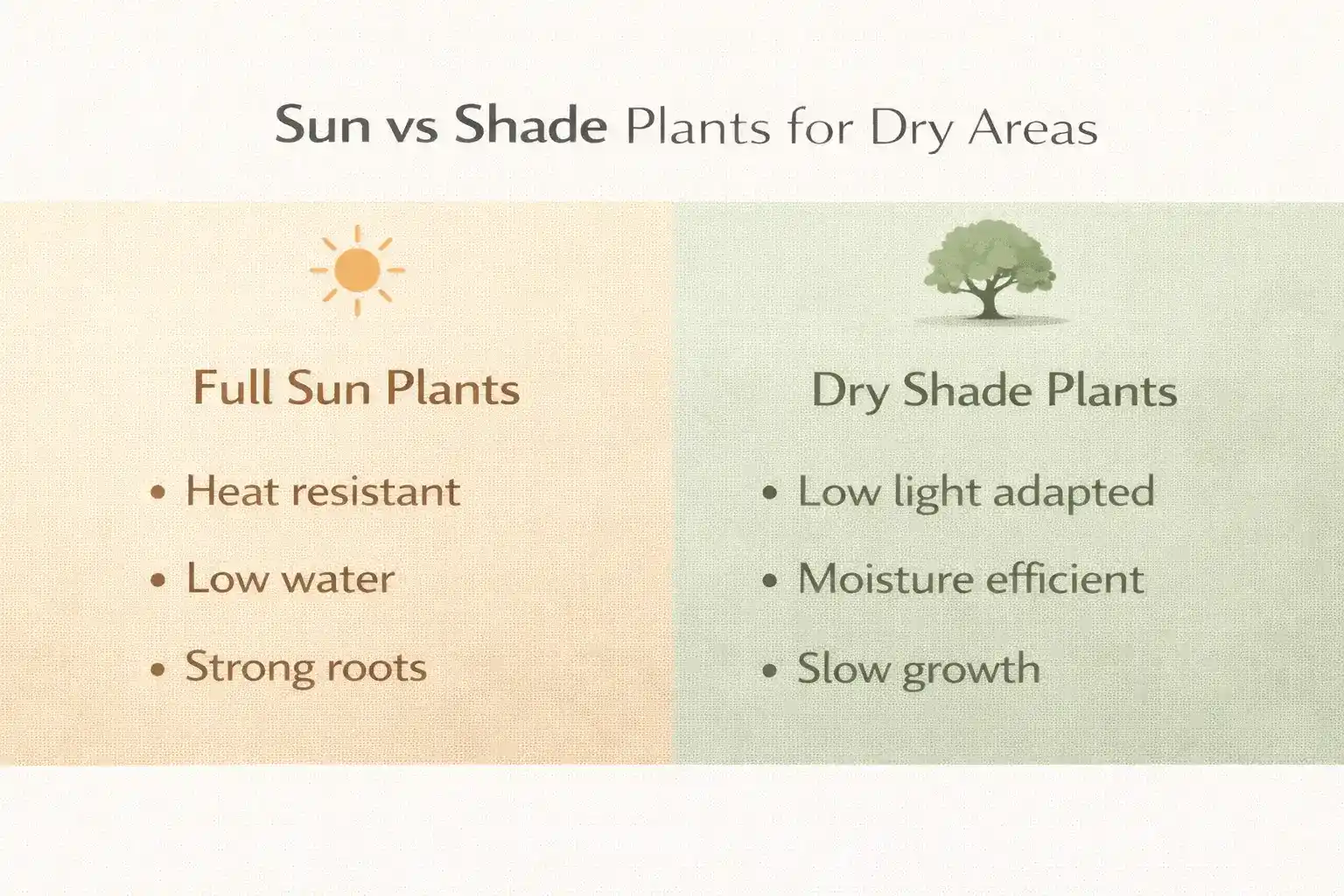
Full sun drought tolerant plants thrive in direct sunlight and high heat. These include many Australian natives adapted to open landscapes.
Common characteristics:
- Heat resistance
- Low water demand
- Strong root systems
Examples include low maintenance full sun drought tolerant plants suited to exposed gardens and coastal regions.
Plants for Dry Shade Conditions
Plants for dry shade are adapted to low light and low moisture environments, such as areas under trees or beside buildings.
Key features:
- Efficient water use
- Shade tolerance
- Slow to moderate growth
Shade loving Australian natives perform especially well in these conditions due to natural adaptation.
Plants for Dry Soil Under Trees
Plants growing under trees face competition for water and nutrients. Suitable plants must tolerate:
- Root competition
- Limited sunlight
- Dry, compacted soil
Choosing plants specifically adapted to dry soil under trees improves survival and reduces maintenance issues.
Best Drought Tolerant Plants in Australia (By Category)
Trees and Structural Plants
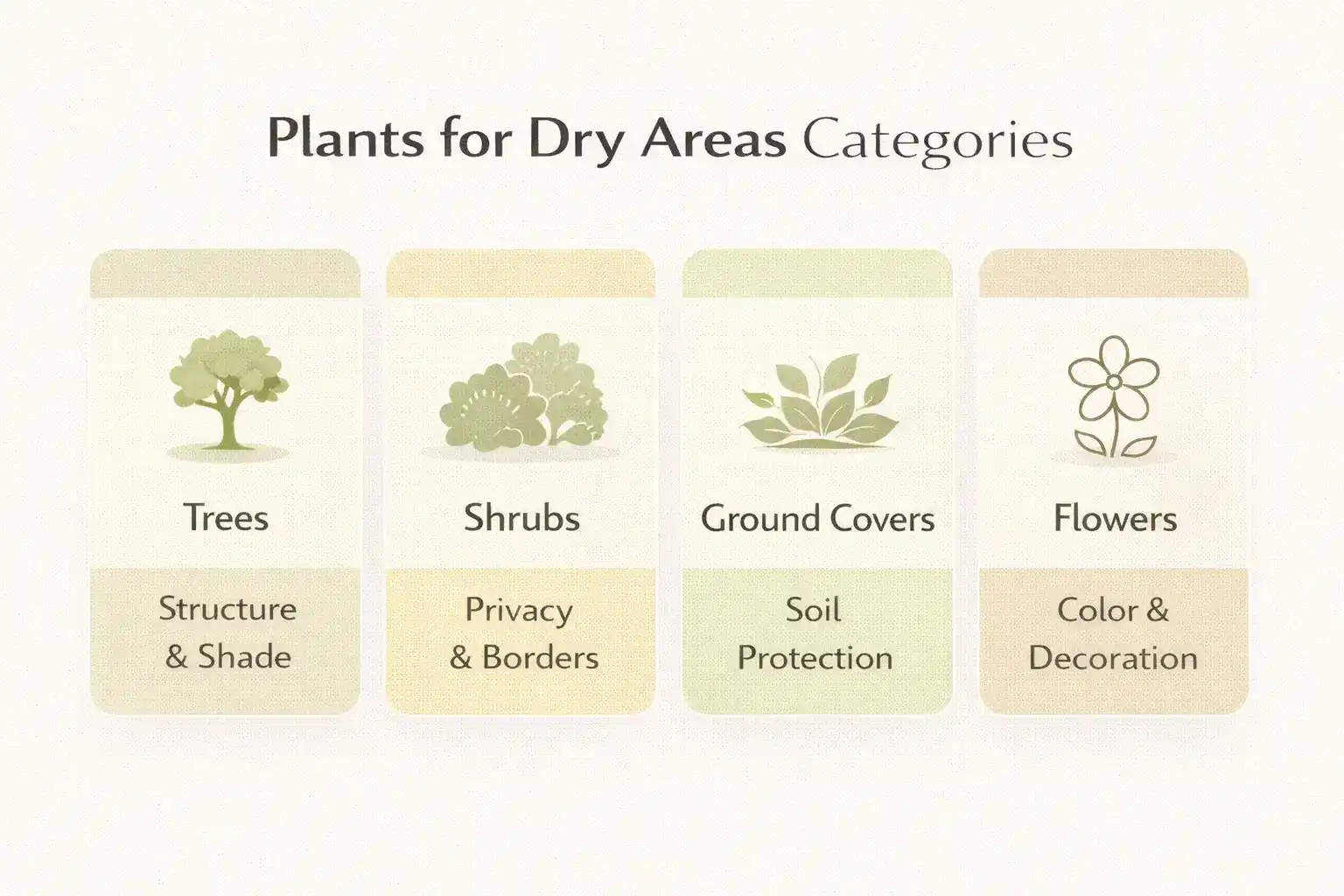
Drought tolerant trees provide structure, shade, and long-term stability in dry landscapes.
Typical benefits:
- Deep root systems
- High heat tolerance
- Low irrigation needs
They can also function as visual barriers in dry area landscaping. If you’re selecting larger structural plants, consider native options adapted to heat and low rainfall—see Fast Growing Australian Native Trees: 8+ Smart Picks for practical recommendations.
Shrubs and Hedge Plants
Drought tolerant hedge plants are ideal for privacy and garden structure while requiring minimal water.
Features include:
- Dense growth
- Easy shaping
- Adaptability to dry soil
Low hedge and small hedge plants are commonly used for borders and compact spaces. For structured privacy and wind protection in dry gardens, choosing the right species is essential—explore Tropical Screening Plants: Best Choices for Garden Privacy for suitable drought-tolerant options.
Ground Covers and Low Growers
Ground cover plants for dry areas help reduce evaporation and suppress weeds.
Advantages:
- Soil protection
- Moisture retention
- Low maintenance
Small drought tolerant plants are effective for filling gaps and covering exposed soil. Ground covers also play a key role in moisture retention and soil protection, and species like Australian natives are widely used in dry landscapes—see Australian Violet Ground Cover: Care, Growth & Uses Guide for practical examples.
Flowering and Decorative Plants
Drought tolerant flowers add color without increasing water demand.
Common traits:
- Seasonal blooming
- Heat resistance
- Minimal watering needs
Cottage garden plants for dry areas combine aesthetics with resilience.
Table: Comparison of Plant Types
| Plant Type | Water Needs | Sun/Shade Tolerance | Growth Height | Maintenance |
| Trees | Low | Full sun | Tall | Low |
| Shrubs | Low–Moderate | Sun/Partial shade | Medium | Moderate |
| Ground Covers | Very Low | Sun/Shade | Low | Low |
| Flowering Plants | Moderate–Low | Sun/Partial shade | Low–Medium | Moderate |
Native vs Non-Native Drought Tolerant Plants
Benefits of Native Plants
Native drought tolerant plants are adapted to local climates and soils, making them highly efficient.
Key advantages:
- Very low water requirements
- High survival rates
- Support for local biodiversity
Shade loving Australian natives are particularly effective in challenging environments.
When to Choose Non-Native Options
Non-native plants can offer:
- Greater variety in color and form
- Unique aesthetic styles
- Flexibility in design
However, they may require more care compared to native species.
Comparison: Native vs Non-Native Plants
| Feature | Native Plants | Non-Native Plants |
| Water Needs | Very Low | Moderate–Low |
| Maintenance | Low | Varies |
| Biodiversity Support | High | Low |
How to Choose the Best Plants for Dry Areas
Key Selection Factors
Selecting the right plants depends on environmental conditions:
- Soil type: Sandy soils drain quickly, while clay retains water
- Sun exposure: Full sun vs shaded areas affects plant choice
- Climate zones: Regional differences impact plant survival
Matching plant characteristics to these factors ensures better growth and longevity.
Functional Garden Goals
Plant selection should align with garden purpose:
- Low maintenance plants reduce care requirements
- Evergreen plants provide year-round coverage
- Perennial plants offer long-term value
- Outdoor plants must match environmental exposure
Clear goals help create a functional and sustainable garden design.
Designing a Low-Maintenance Drought Tolerant Garden
Layering Strategy
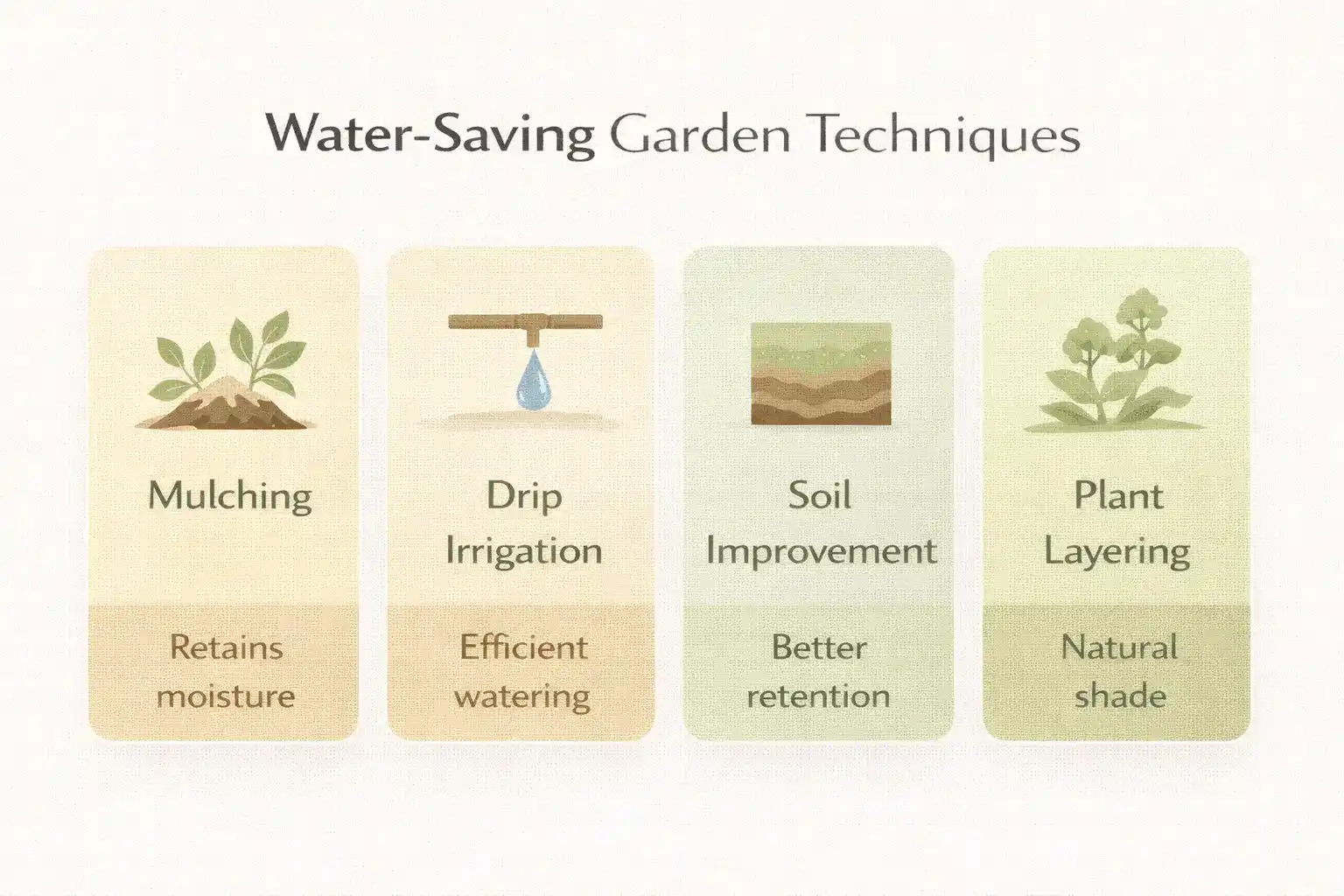
A layered approach improves both aesthetics and water efficiency:
- Trees provide shade
- Shrubs add structure
- Ground covers protect soil
This reduces evaporation and enhances resilience.
Water Efficiency Techniques
Efficient water use is essential:
- Apply mulch to retain soil moisture
- Use drip irrigation for targeted watering
- Improve soil with organic matter
These techniques reduce water waste and improve plant health.
Drought Tolerant Garden Planning
A well-planned drought tolerant garden focuses on:
- Proper plant placement
- Efficient irrigation systems
- Long-term sustainability
Common Problems with Plants in Dry Areas (And Solutions)
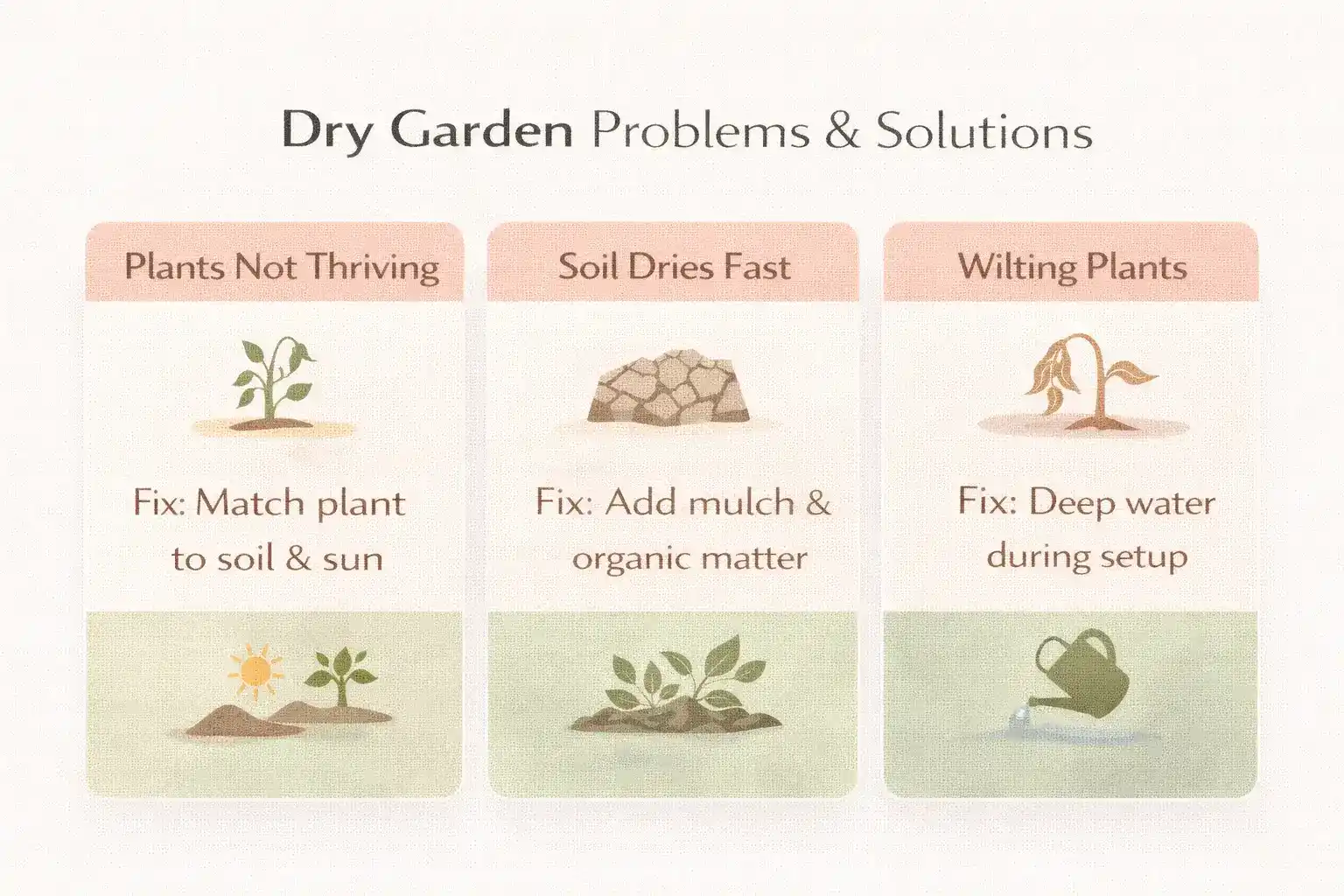
Problem: Plants Not Thriving
Plants fail when they are not suited to the environment.
Solution: Match plant species to soil and sunlight conditions.
Problem: Soil Dries Too Quickly
Sandy or exposed soil loses moisture rapidly.
Solution: Add mulch and organic matter to improve retention.
Problem: Slow Growth or Wilting
New plants often struggle during establishment.
Solution: Water deeply at first, then reduce frequency gradually.
Beginner Mistakes to Avoid
- Overwatering drought tolerant plants, leading to root issues
- Choosing plants based only on appearance
- Ignoring microclimates such as shade and wind exposure
- Planting too densely, increasing competition for water
Avoiding these mistakes improves long-term plant health.
Regional Considerations for Dry Area Plants
Australia-Specific Conditions
Plants for dry areas in Australia must handle:
- High temperatures
- Irregular rainfall
- Poor soil quality
Different regions like NSW and Brisbane require specific plant choices based on local climate.
Climate Comparison (Optional Insight)
Compared to Australia:
- New Zealand has more consistent rainfall
- The UK has cooler, wetter conditions
This makes Australian drought tolerant plants uniquely adapted to harsher environments.
Table: Region vs Plant Adaptability
| Region | Climate Type | Plant Adaptability |
| Australia | Hot, dry | High (native plants) |
| New Zealand | Mild, wetter | Moderate |
| UK | Cool, moist | Low for drought plants |
Conclusion
Plants for dry areas are essential for creating sustainable, low-maintenance landscapes in water-limited environments. By selecting drought tolerant plants suited to sun exposure, soil conditions, and regional climates, gardeners can build resilient outdoor spaces. Native Australian plants offer the highest efficiency, while thoughtful garden design further enhances water conservation and plant health.
FAQs
What are the best plants for dry areas in Australia?
Drought tolerant native plants, shrubs, and trees adapted to low rainfall perform best, especially those suited to local climate conditions.
Can plants survive in dry shade conditions?
Yes, plants for dry shade are specifically adapted to low light and low moisture environments, including many native species.
How often should drought tolerant plants be watered?
Water regularly during establishment. Once established, watering can be reduced significantly depending on conditions.
What is the difference between drought tolerant and drought resistant plants?
Drought tolerant plants survive with minimal water, while drought resistant plants can adapt and recover from drought stress.
Are native plants better for dry areas?
Yes, native plants typically require less water, less maintenance, and support local ecosystems.
What are good low-maintenance plants for dry areas?
Evergreen, perennial, and ground cover drought tolerant plants are ideal for low-maintenance gardens.



2 Responses