
Introduction
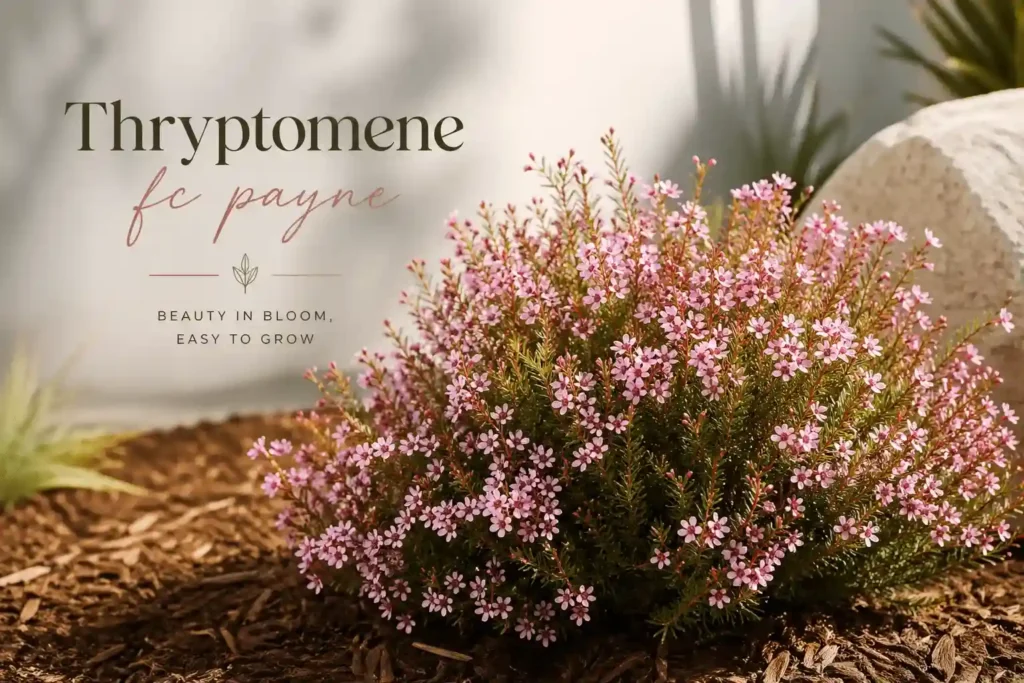
Thryptomene fc payne is a compact, flowering shrub cultivar of thryptomene saxicola, widely valued for its fine foliage and abundant pink blooms. It is especially popular in ornamental gardening due to its drought tolerance and suitability for native plant landscapes. As part of the broader thryptomene genus, which includes varieties like thryptomene saxicola, pink thryptomene, and thryptomene saxicola compact, this cultivar offers a manageable size and decorative appeal. Gardeners can expect a dense growth habit, minimal care requirements, and some sensitivity to soil conditions, particularly drainage. It is especially popular in ornamental gardening due to its drought tolerance and suitability for drought-tolerant landscapes, similar to plants featured in smart dry-area garden planning.
Quick Summary
- Thryptomene fc payne is a compact evergreen shrub with fine foliage and pink flowers.
- It belongs to the thryptomene saxicola group and suits low-maintenance gardens.
- Ideal for drought-tolerant landscapes, borders, and rock gardens.
- Requires excellent drainage and careful watering to avoid root issues.
What Is Thryptomene fc payne? (Plant Identity & Classification)
Botanical Background and Naming
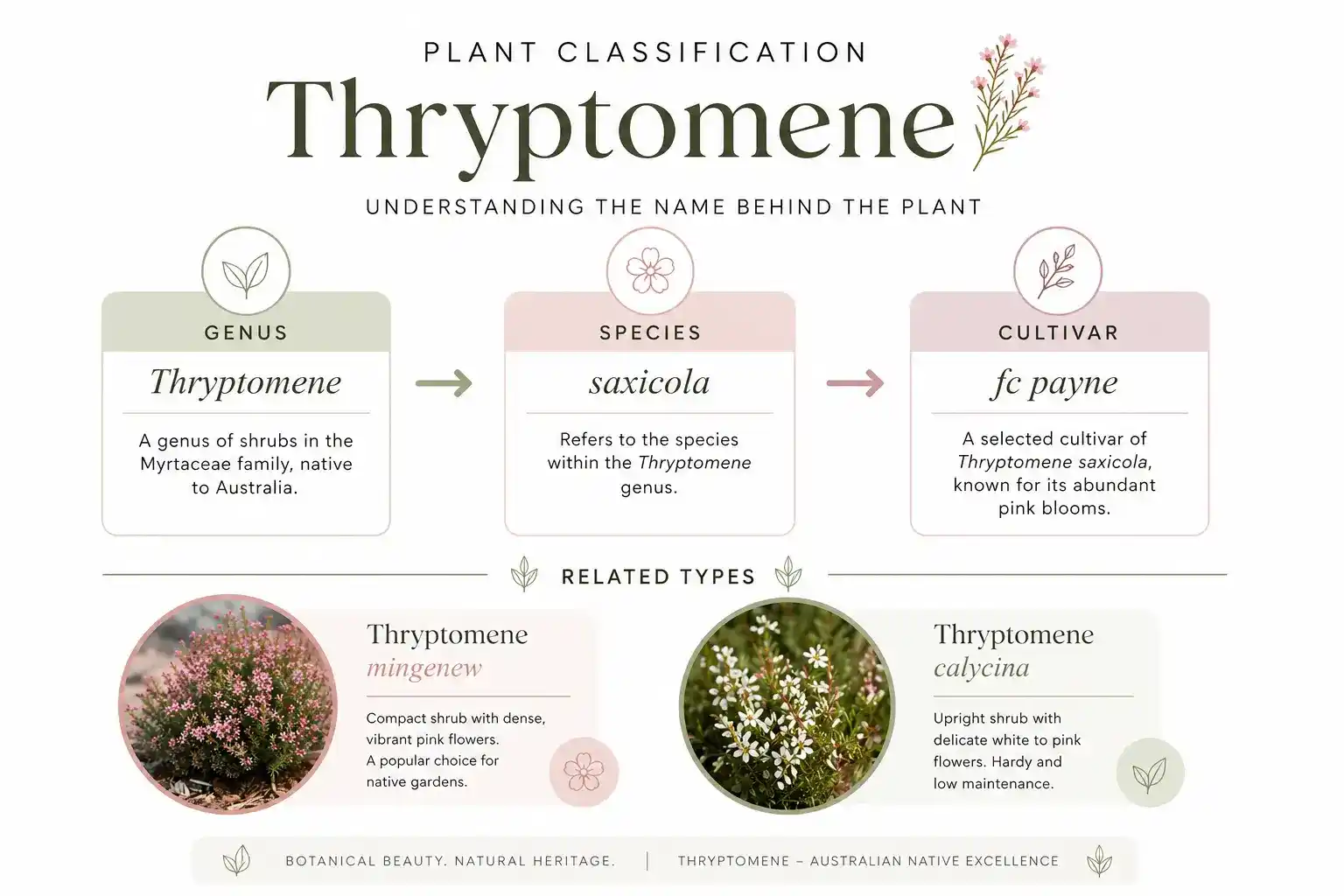
Thryptomene fc payne is a cultivar within the thryptomene genus, which belongs to the Myrtaceae family. It is closely related to thryptomene saxicola, and the name thryptomene saxicola fc payne is often used interchangeably to reflect its species origin.
In botanical naming:
- The genus is Thryptomene
- The species is saxicola
- The cultivar is “fc payne”
The term “fc payne” distinguishes this plant from other forms such as thryptomene saxicola compact. Cultivars are selected for specific traits like compact size or flower color consistency.
Related species include:
- Thryptomene mingenew
- Thryptomene calycina
These differ in growth habit, flower color, and size but share similar structural traits. Thryptomene fc payne belongs to the Thryptomene genus, a group of flowering plants in the Myrtaceae family widely found in Australia (see Wikipedia for botanical classification).
Key Features of Thryptomene fc payne
Appearance and Flower Characteristics
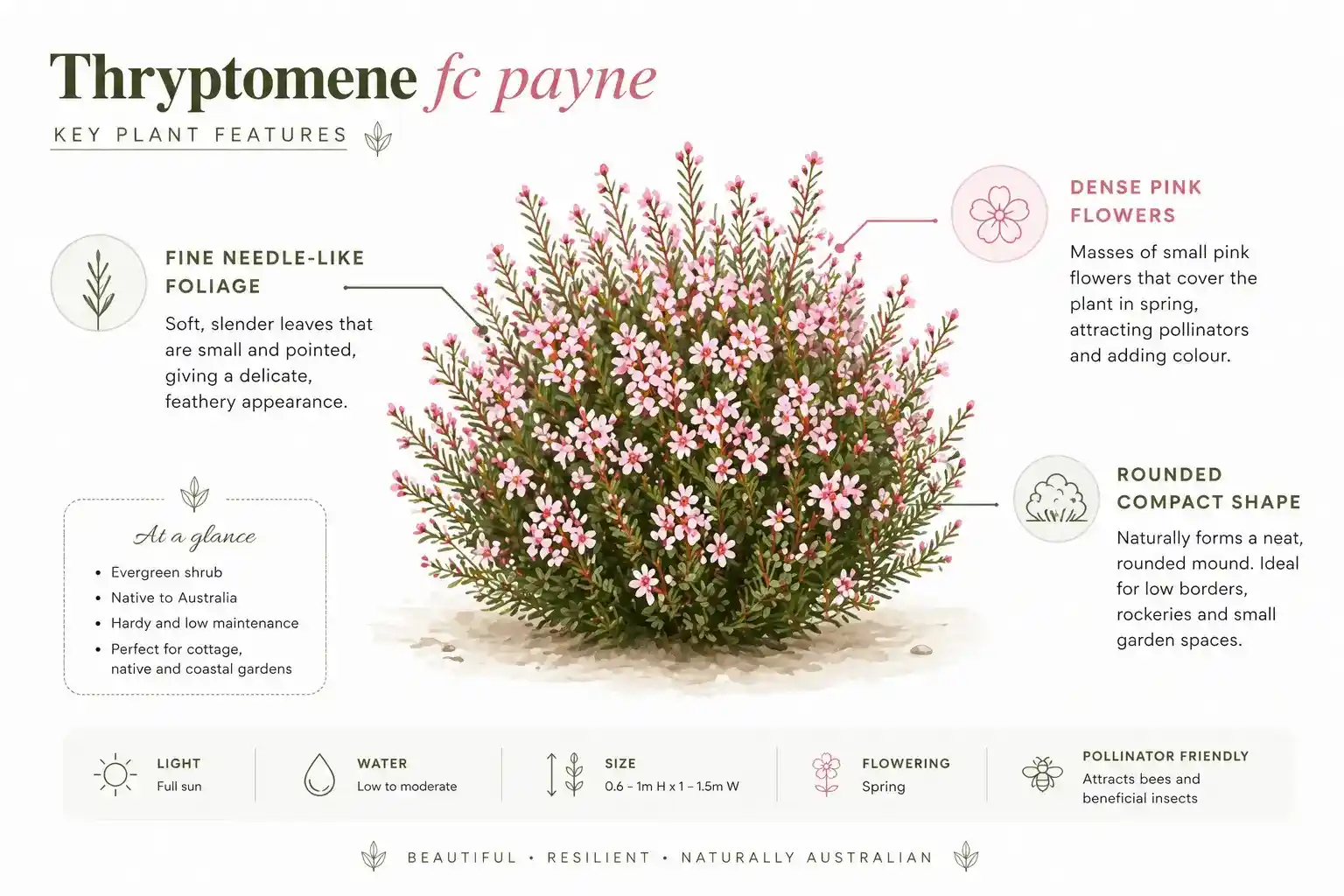
Thryptomene fc payne is known for its delicate, needle-like foliage that creates a fine-textured appearance. The plant produces masses of small pink thryptomene flowers that cover the shrub during its blooming season, typically in late winter to spring.
Key flower traits include:
- Star-like shape
- Soft pink coloration
- Dense flowering coverage
Compared to white thryptomene types, pink thryptomene varieties like this offer a warmer visual tone, making them popular in ornamental settings.
Growth Habit and Structure
This shrub forms a dense, rounded structure that is ideal for both formal and informal garden designs. Its compact nature allows it to function well as:
- Low hedging
- Border planting
- Feature shrub
Its uniform shape requires minimal structural pruning. Its compact form makes it comparable to other small hedge plants used for structured garden borders.
Plant Size and Growth Rate
Typical Height and Width
The typical thryptomene fc payne height ranges from 0.8 to 1.5 meters, with a similar spread. This makes it a compact shrub compared to larger thryptomene varieties.
Compared to:
- Dwarf thryptomene: smaller and tighter growth
- Thryptomene saxicola compact: more compact and low-growing
Growth Speed and Seasonal Behavior
Thryptomene fc payne has a moderate growth rate. It establishes steadily and produces seasonal flowering cycles, with peak blooming in cooler months.
Environmental factors influencing growth include:
- Soil quality
- Sun exposure
- Pruning frequency
Ideal Growing Conditions for Thryptomene fc payne
Light, Soil, and Climate Needs
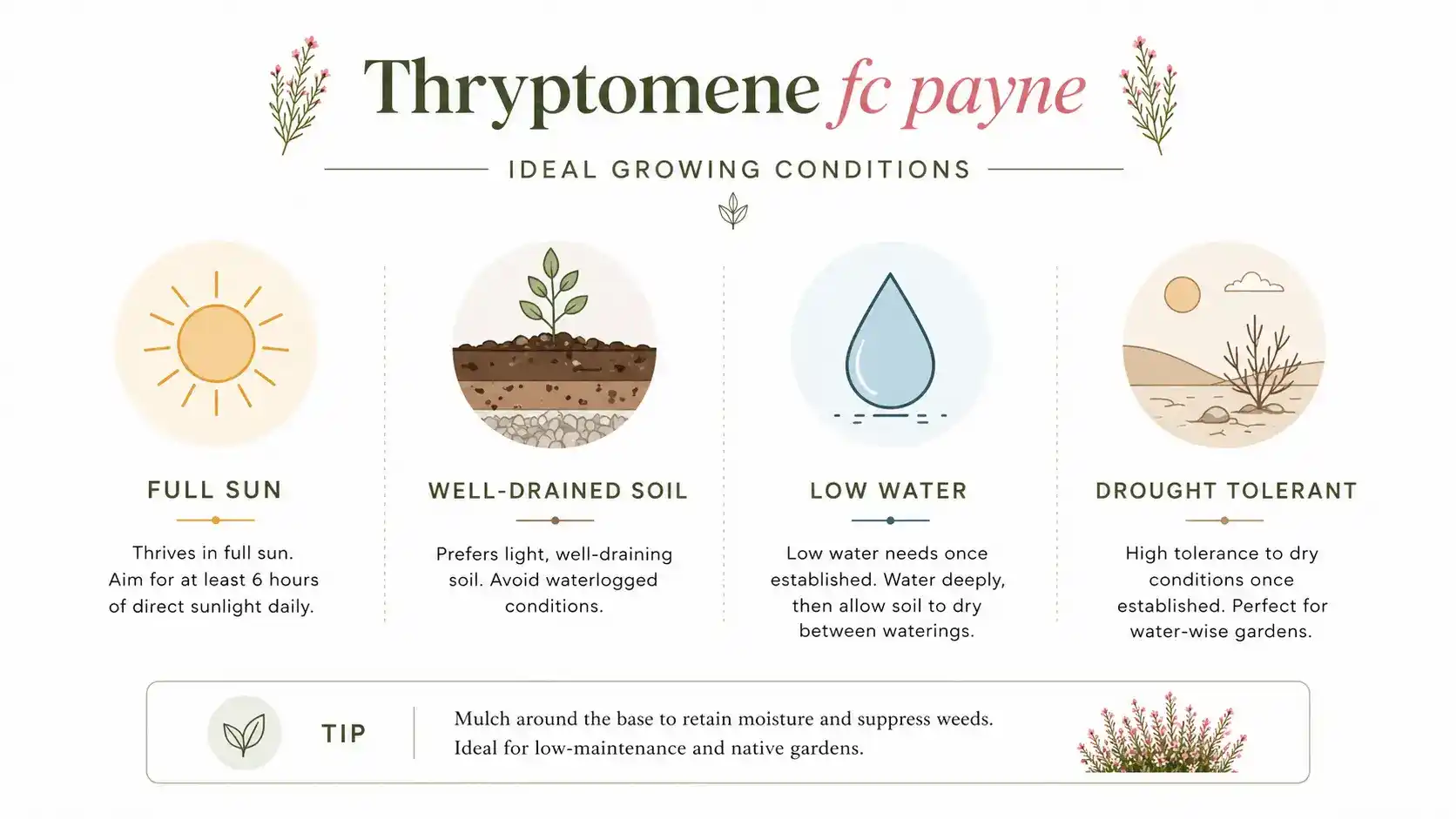
This plant thrives in full sun, which promotes dense growth and abundant flowering. Well-drained soil is critical for its survival, as it is adapted to dry, free-draining environments.
Key requirements:
- Full sun exposure
- Sandy or loamy soil
- Low humidity environments
Environmental Limitations
Thryptomene saxicola fc payne is highly sensitive to heavy or waterlogged soils. Poor drainage can lead to root rot and plant decline.
It performs best in climates with:
- Mild winters
- Dry summers
Care Guide for Healthy Growth
Watering and Feeding
- Water sparingly once established
- Avoid overwatering, especially in cooler months
- Reduce watering in winter
Pruning and Maintenance
- Light pruning after flowering
- Remove dead or weak branches
- Maintain shape with minimal cutting
Soil and Fertilization
- Use well-drained soil mixes
- Apply low-phosphorus fertilizer if needed
- Avoid excessive feeding
Common Problems with Thryptomene fc payne and Solutions
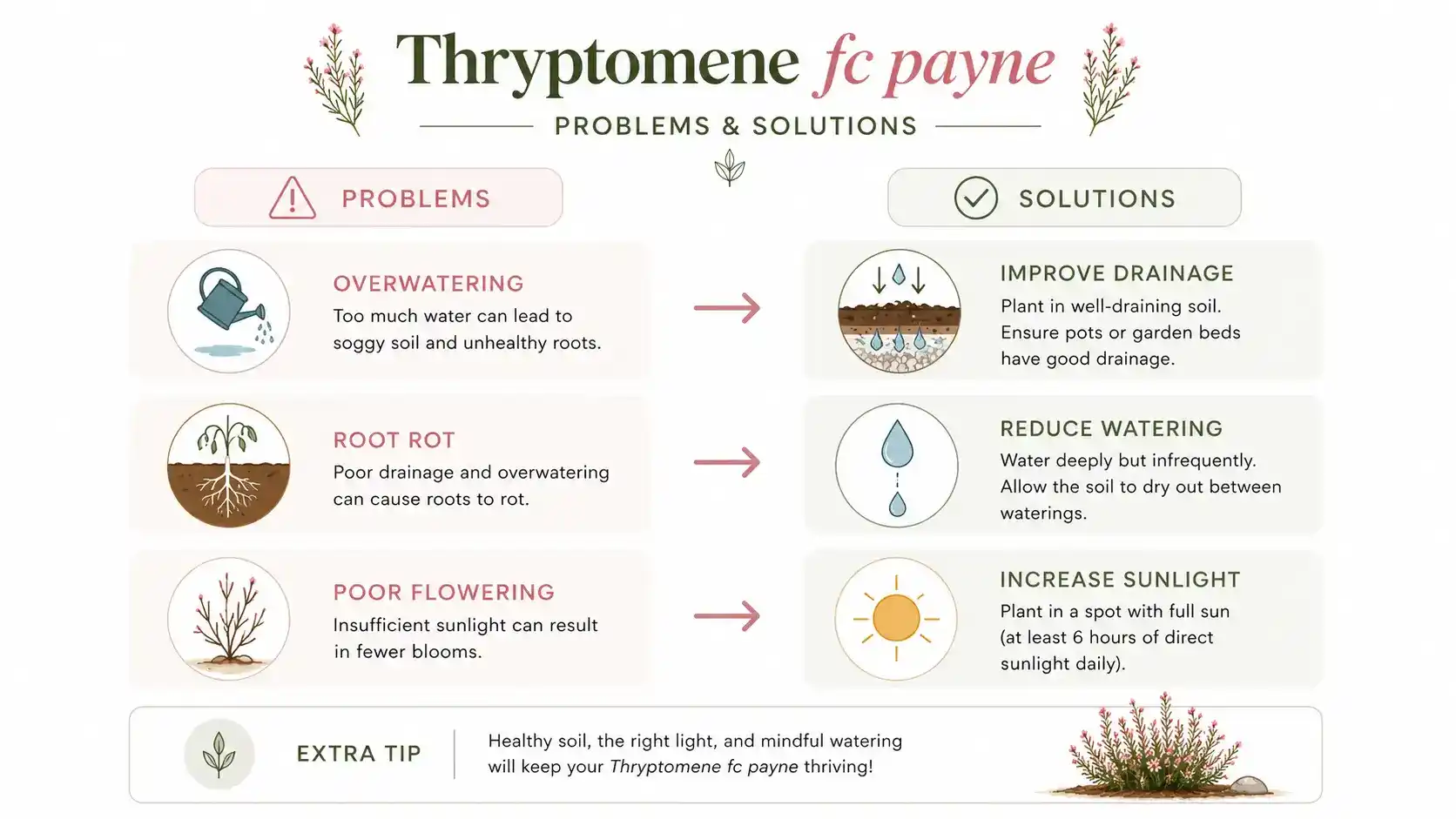
Typical Issues
- Overwatering → root rot
- Poor flowering → insufficient sunlight
- Soil stress → compacted or clay-heavy soil
How to Fix and Prevent Problems
- Improve drainage → use raised beds or sandy soil
- Adjust watering → water only when soil is dry
- Correct location → ensure full sun placement
This cause → solution → prevention approach helps maintain plant health effectively.
Is Thryptomene fc payne Invasive or Safe for Gardens?
Growth Behavior and Spread
Thryptomene fc payne is not invasive. It has a controlled growth habit and does not spread aggressively through seeds or roots.
Unlike invasive species, it:
- Grows in a defined shape
- Requires human propagation
- Does not outcompete surrounding plants
It is considered safe for structured garden environments.
Comparison: Thryptomene fc payne vs Other Thryptomene Varieties
Side-by-Side Comparison Table
| Feature | fc payne | saxicola compact | mingenew | calycina |
| Size | Compact | Very compact | Medium | Larger |
| Flower Color | Pink | Pink/White | Pink | White |
| Growth Habit | Dense | Low-growing | Upright | Shrubby |
Key Differences Explained
- Flower density: fc payne produces dense pink blooms
- Growth habit: more rounded than upright mingenew
- Landscape uses: more versatile for borders and hedging
Rock thryptomene types are generally more rugged and suited for harsher environments.
Landscaping Uses and Design Ideas
Common Uses
Thryptomene fc payne is widely used in:
- Rock gardens (rock thryptomene style planting)
- Garden borders
- Low hedges
- Native plant landscapes
Design Integration
It fits well in drought-tolerant and low-maintenance gardens. Its fine texture contrasts effectively with broader-leaf plants. It fits perfectly into low-maintenance native gardens, where water efficiency and minimal upkeep are key priorities.
Beginner Mistakes to Avoid
Common Errors
- Overwatering the plant
- Planting in poorly drained soil
- Choosing shaded locations
Prevention Tips
- Always check soil drainage before planting
- Water only when necessary
- Select full sun positions
These steps reduce the risk of common failures.
Conclusion
Thryptomene fc payne is a compact, evergreen shrub valued for its fine foliage and vibrant pink flowers. As a cultivar of thryptomene saxicola, it offers a reliable option for drought-tolerant and ornamental gardens. Its low-maintenance nature, combined with its structured growth habit, makes it suitable for borders, hedges, and rock gardens. Proper care—especially well-drained soil and controlled watering—is essential for long-term success. When grown in the right conditions, thryptomene fc payne provides consistent visual appeal and strong landscape performance. For more plant care insights and detailed growing guides, explore our complete resource on plant benefits and care strategies.
FAQs
1. What is thryptomene fc payne used for in gardens?
It is used for ornamental purposes, including borders, hedging, and decorative planting in drought-tolerant landscapes.
2. How tall does thryptomene fc payne grow?
It typically grows between 0.8 and 1.5 meters in height with a similar spread.
3. What problems can affect thryptomene fc payne?
Common problems include root rot from overwatering, poor flowering due to low sunlight, and stress from heavy soils.
4. Is thryptomene fc payne drought-tolerant?
Yes, it is drought-tolerant once established and requires minimal watering in suitable conditions.
5. What is the difference between thryptomene fc payne and thryptomene saxicola?
Thryptomene saxicola is the species, while fc payne is a cultivated variety selected for compact growth and flower traits.
6. Can thryptomene fc payne grow in pots?
Yes, it can grow in containers if provided with well-drained soil, full sun, and careful watering management.