
Introduction
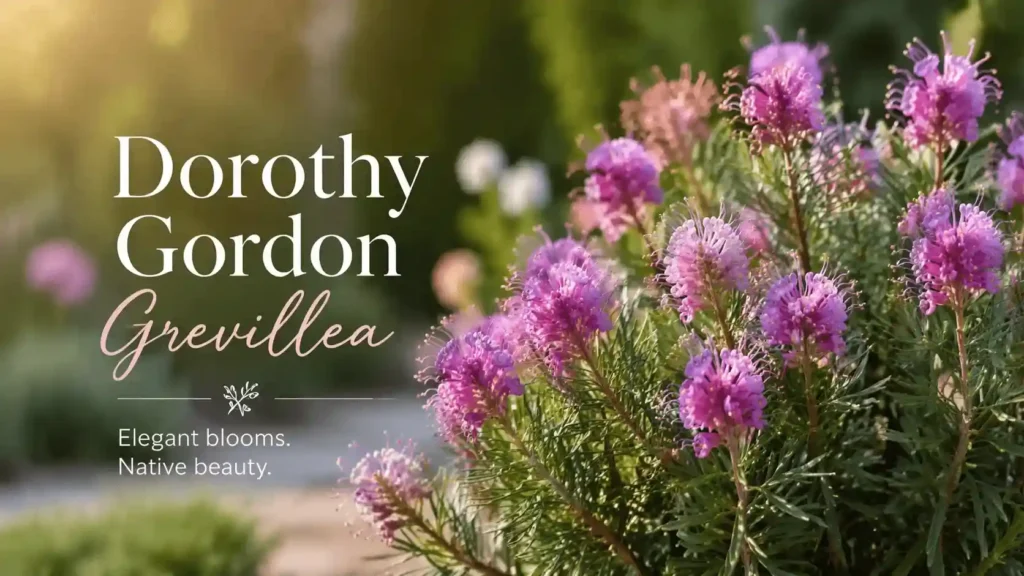
The Dorothy Gordon grevillea is a popular flowering Australian shrub known for its vibrant blooms, fast growth, and adaptability to different garden environments. This hybrid grevillea is widely used in landscaping for its ornamental value, drought tolerance, and ability to attract pollinators such as birds and bees. As an evergreen shrub from the Proteaceae family, it thrives in sunny conditions and well-drained soil. Its low-maintenance nature makes it especially suitable for gardeners seeking a resilient yet visually striking plant that performs well in both residential and larger landscape settings. For a broader understanding of plant care and growing techniques, refer to the complete Plants: Benefits and Guides (Complete Care, Types & Growing Tips) resource.
Quick Summary
- Dorothy Gordon grevillea is a fast-growing shrub with bright, nectar-rich flowers.
- It thrives in full sun and well-drained, low-phosphorus soil conditions.
- Commonly used for hedging, screening, and wildlife-friendly gardens.
- Requires minimal care once established, with strong drought tolerance.
What Is Dorothy Gordon Grevillea?
Understanding the Plant and Its Origins
The grevillea Dorothy Gordon is a hybrid cultivar within the Grevillea genus, developed for ornamental horticulture. It originates from Australia, where many grevillea species naturally occur and are widely used in landscaping. It belongs to the Grevillea genus, a group of Australian native plants widely studied in botany (see Wikipedia).
This plant is commonly referred to as both “Dorothy Gordon” and “grevillea Dorothy Gordon,” reflecting naming variations in gardening contexts. It is classified as an evergreen shrub, meaning it retains its foliage year-round, making it valuable for consistent garden structure and visual interest.
Key Characteristics of Dorothy Gordon Grevillea
Appearance, Flowers, and Foliage
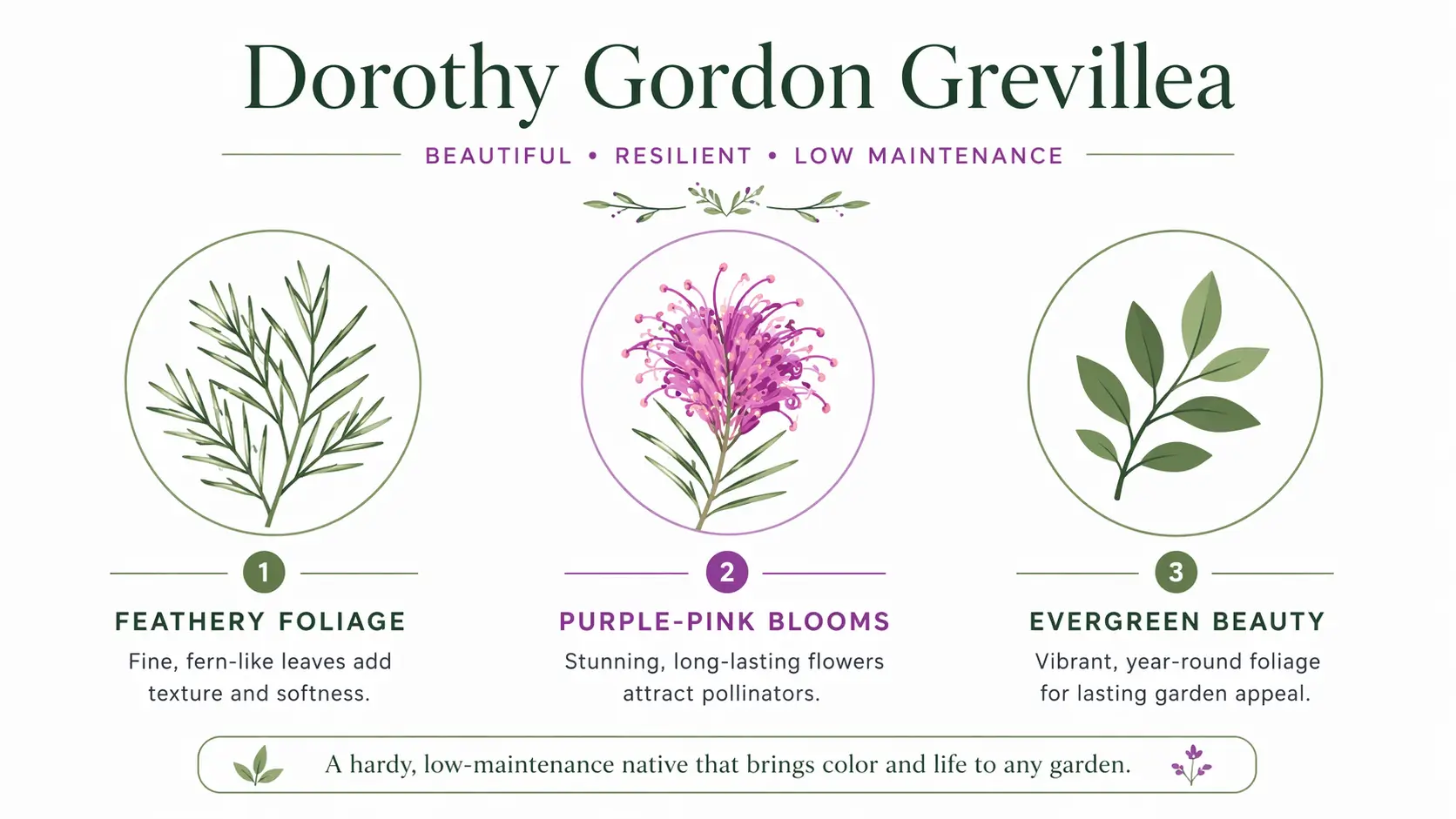
The plant features narrow, finely divided leaves with a slightly soft texture, typical of many grevilleas. Its foliage remains evergreen, providing year-round greenery.
The flowers are a standout feature, typically displaying shades of purple to pink. These nectar-rich blooms appear for extended periods, attracting pollinators such as bees and birds. Because of its coloration, it is often recognized as a purple grevillea variety in ornamental gardening.
Growth Habit and Structure
Dorothy Gordon grevillea develops a dense, bushy structure with well-branched growth. Its natural form allows it to function effectively as a hedge or screening plant.
The compact yet spreading habit makes it suitable for defining garden boundaries while maintaining visual softness.
Dorothy Gordon Grevillea Size and Growth Rate
Typical Height and Width
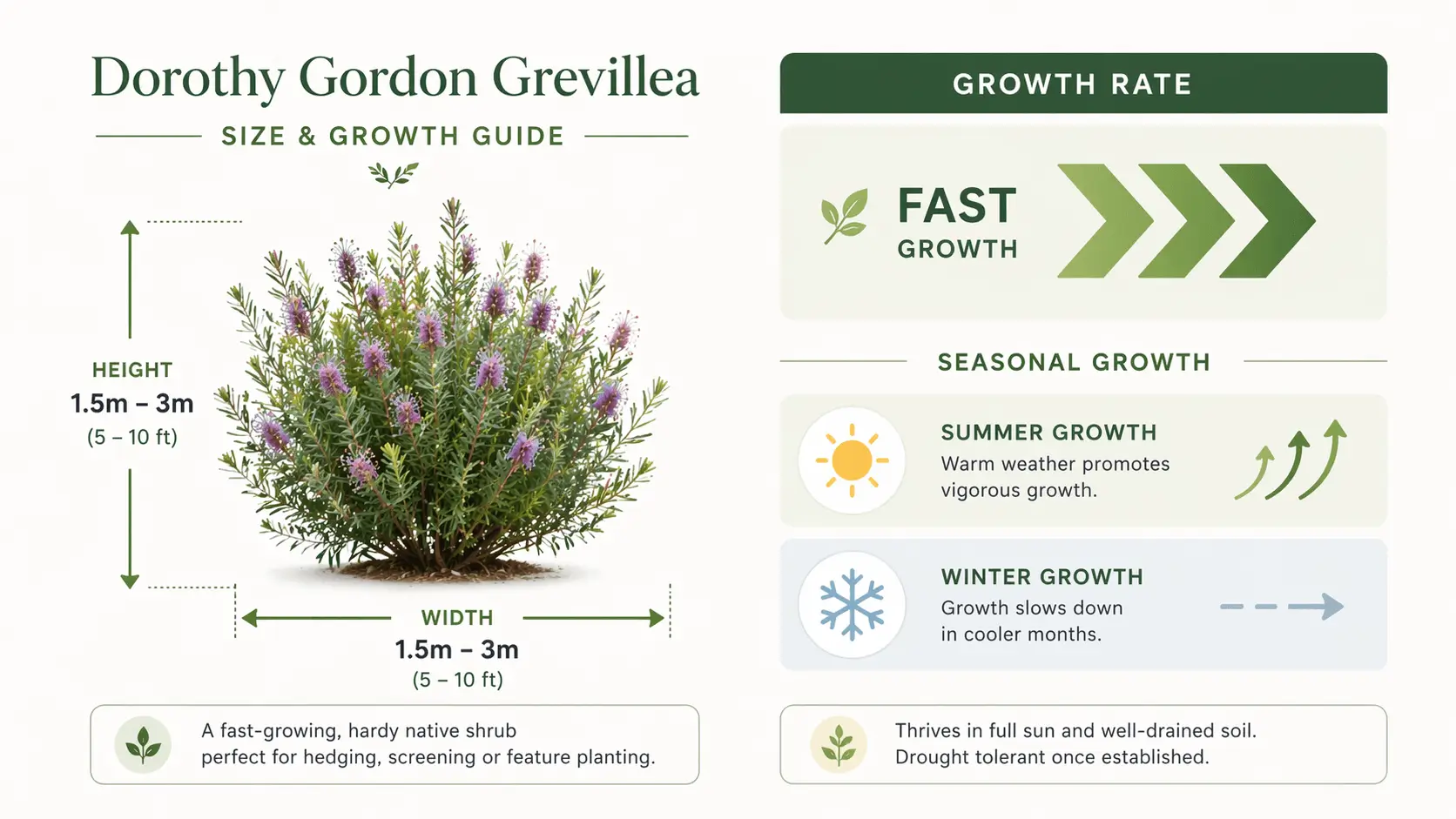
The Dorothy Gordon grevillea height typically ranges between 1.5 to 3 meters, with a similar spread depending on growing conditions. Its size can vary based on climate, pruning practices, and soil quality.
In warmer climates with optimal care, the plant may reach its maximum size more quickly and maintain fuller growth.
Growth Speed and Seasonal Patterns
This shrub is considered fast-growing, especially during warmer seasons. Growth is most active in spring and summer when sunlight and temperature conditions are favorable.
During cooler months, growth slows, but the plant remains structurally stable due to its evergreen nature.
Root System and Plant Behavior
Understanding the Root System
The Dorothy Gordon grevillea root system is generally shallow and spreading rather than deeply penetrating. This allows efficient absorption of surface moisture but also makes the plant sensitive to waterlogged soil.
Because of this root structure, it should not be planted too close to structures or areas with poor drainage.
Environmental Adaptability
The roots adapt well to well-drained soils, including sandy or loamy conditions. However, heavy clay soils can restrict root function and lead to health issues.
It performs best in dry to moderately moist environments, reflecting its natural adaptation to Australian climates.
Ideal Growing Conditions for Dorothy Gordon Grevillea
Light, Soil, and Climate Requirements
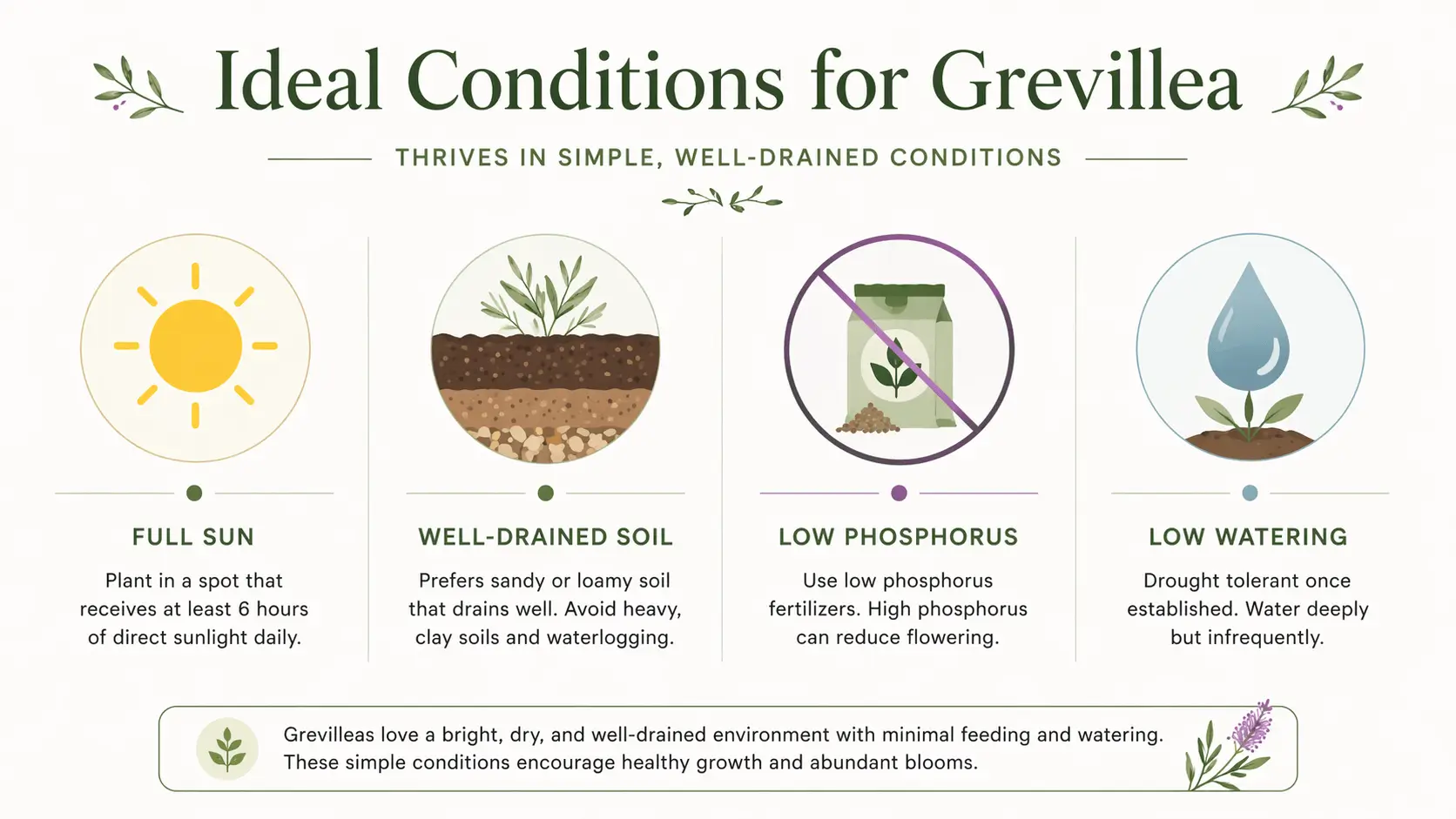
Dorothy Gordon grevillea thrives in full sun, requiring at least 6–8 hours of direct light daily for optimal flowering.
It prefers well-drained soil with low phosphorus content, as high phosphorus levels can harm grevilleas. The plant is best suited to temperate and warm climates where frost is minimal.
Watering and Fertilization Needs
Once established, the plant requires minimal watering and can tolerate dry conditions. Overwatering should be avoided to prevent root issues. Fertilizers should be low in phosphorus and specifically formulated for native plants to support healthy growth.
Dorothy Gordon grevillea thrives in conditions similar to other native plants, making it comparable to species discussed in Ultimate Olive Grevillea Guide: 7+ Easy Care Tips for soil and sunlight requirements.
Care Guide for Healthy Growth
Essential Care Practices
For young plants, regular watering is necessary until roots are established. Mature plants require only occasional watering during prolonged dry periods.
Pruning after flowering helps maintain shape and encourages denser growth. Applying mulch supports soil moisture retention and improves overall soil health.
Climate Tolerance and Maintenance
Dorothy Gordon grevillea is highly tolerant of heat and drought, making it ideal for warm regions.
However, it may be sensitive to frost. In colder climates, protection such as mulching or planting in sheltered locations can reduce frost damage.
Common Problems and Solutions (Problem-Solution Section)
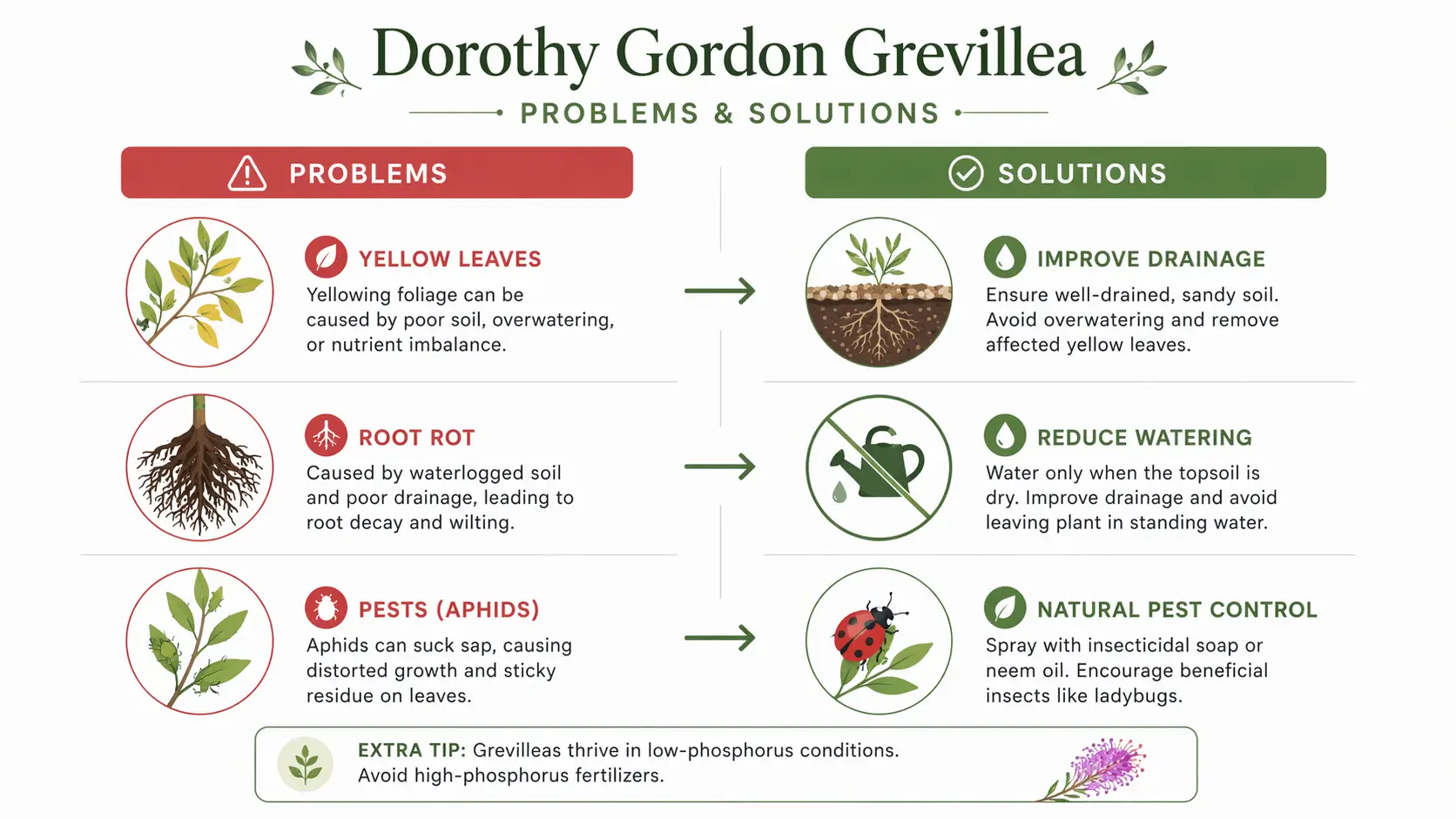
Yellowing Leaves and Poor Growth
Yellowing leaves are usually caused by overwatering, poor drainage, or nutrient imbalance.
Solutions include:
- Improving soil drainage
- Reducing watering frequency
- Using appropriate low-phosphorus fertilizers
Pest and Disease Issues
Grevilleas can occasionally be affected by pests such as aphids or scale insects.
Preventive measures include:
- Regular inspection of leaves
- Using natural insect control methods
- Maintaining proper air circulation
Comparison: Dorothy Gordon vs Other Grevillea Varieties
Key Differences Between Popular Grevilleas
Dorothy Gordon grevillea differs from other varieties in flower color, growth habit, and maintenance requirements.
- Robyn Gordon grevillea: Typically produces red flowers and has a moderate growth rate.
- Superb grevillea: Features orange-yellow flowers and grows larger than Dorothy Gordon.
Comparison Table (Recommended)
| Feature | Dorothy Gordon | Robyn Gordon | Superb Grevillea |
| Flower Color | Purple/Pink | Red | Orange/Yellow |
| Height | Medium | Medium | Larger |
| Growth Rate | Fast | Moderate | Fast |
Landscaping Uses and Design Ideas
Practical Garden Applications
Dorothy Gordon grevillea is widely used for hedging, borders, and feature planting. Its dense growth and vibrant flowers make it suitable for creating natural screens.
It is also ideal for wildlife-friendly gardens due to its ability to attract pollinators.
Design Considerations
Proper spacing is important to allow airflow and prevent overcrowding. It pairs well with other drought-tolerant plants, creating cohesive, low-maintenance garden designs.
For privacy-focused landscaping, it performs similarly to plants featured in Fast Growing Trees for Privacy: Ultimate Guide for Quick Screening, making it a practical screening option.
Environmental Limitations and Growing Considerations
Conditions That Affect Growth
Poor drainage is one of the main limitations, as it can lead to root rot.
The plant is sensitive to phosphorus, and excessive wind exposure can affect its structure and flowering performance.
Seasonal Care Adjustments
In summer, watering may need slight adjustment during extreme heat.
In winter, reduce watering and protect from frost where necessary. Pruning should be timed to avoid stress during colder periods.
Beginner Mistakes to Avoid
Common Errors in Growing Grevillea
Common mistakes include:
- Overwatering
- Using high-phosphorus fertilizers
- Planting in heavy clay soil
These issues can negatively impact plant health and flowering.
Planning placement carefully is essential, especially when following principles from the Easy Low Maintenance Australian Native Garden Guide 7+ Steps for long-term success.
How to Grow Successfully
For best results:
- Ensure well-drained soil
- Provide full sunlight
- Follow a consistent but minimal watering schedule
These practices support long-term plant health and performance.
Conclusion
The Dorothy Gordon grevillea is a versatile, fast-growing shrub that combines ornamental beauty with practical garden benefits. Its vibrant flowers, drought tolerance, and adaptability make it a valuable addition to many landscapes. By understanding its preferred growing conditions, root behavior, and care requirements, gardeners can ensure healthy growth and long-term success. Proper soil selection, sunlight exposure, and minimal maintenance allow this grevillea to thrive while enhancing both visual appeal and ecological value in garden environments.
FAQs
1. How tall does Dorothy Gordon grevillea grow?
It typically grows between 1.5 to 3 meters tall, depending on climate, soil conditions, and maintenance practices.
2. What type of soil is best for grevillea dorothy gordon?
Well-drained soil with low phosphorus content is ideal to support healthy root development and flowering.
3. Is Dorothy Gordon grevillea drought tolerant?
Yes, once established, it is highly drought tolerant and performs well in dry conditions.
4. How do you prune Dorothy Gordon grevillea?
Light pruning after flowering helps maintain shape, encourages bushier growth, and promotes more blooms.
5. Why are the leaves of my grevillea turning yellow?
Yellowing leaves are usually caused by overwatering, poor drainage, or nutrient imbalance.



One Response