
Introduction
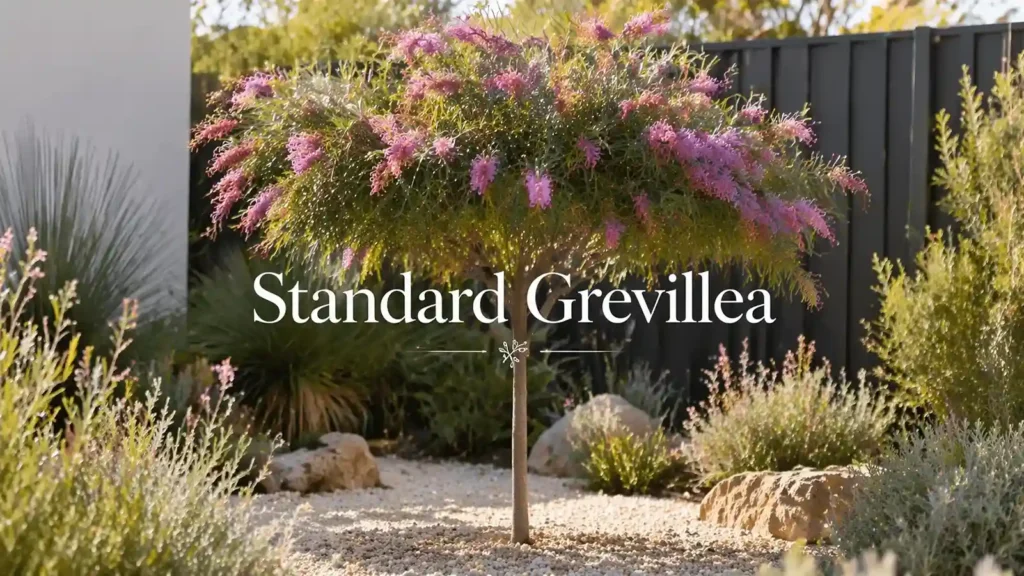
Standard grevillea refers to a grafted or trained form of grevillea shaped into a small tree with a single trunk and a rounded or weeping canopy. These ornamental native plants are valued for their striking flowers, drought tolerance, and suitability for landscaping or container growing. Standard grevillea is widely used in gardens due to its compact structure and decorative appeal.
They are commonly created through grafting techniques, combining hardy rootstocks with decorative varieties such as weeping grevillea or flowering cultivars.
Quick Summary
- Standard grevillea is a grafted or trained tree-form version of grevillea shrubs
- Often features weeping or rounded flowering canopies
- Ideal for small gardens, pots, and decorative landscaping
- Requires well-drained soil, sunlight, and minimal maintenance
What Is a Standard Grevillea?
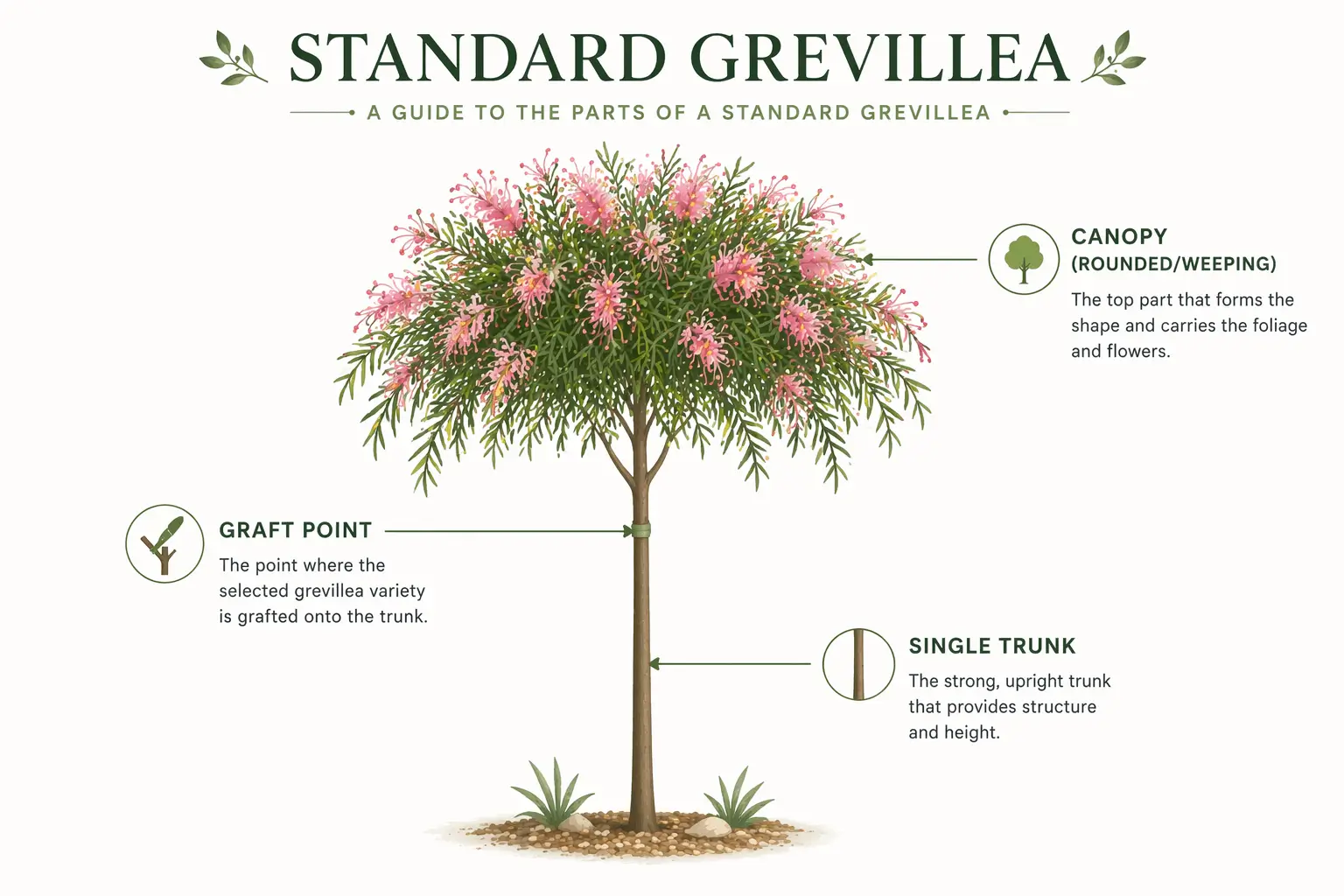
A standard grevillea is a grevillea plant shaped into a tree-like form with a single trunk and elevated canopy, typically achieved through grafting or training techniques.
The terms grevillea standard, standard grevillea, and standardised grevillea all refer to this structured form rather than a naturally occurring growth habit. In horticulture, a “standard” plant means it has a clear trunk with foliage and flowers forming a canopy above ground level.
Standard grevilleas are often created as grafted grevillea or standard grafted grevillea, where a desirable flowering variety is attached to a hardy rootstock. This differs from natural grevillea shrubs, which grow as bushy, spreading plants without a defined trunk.
How Grafted Grevillea Standards Are Created
Grafting Process Explained
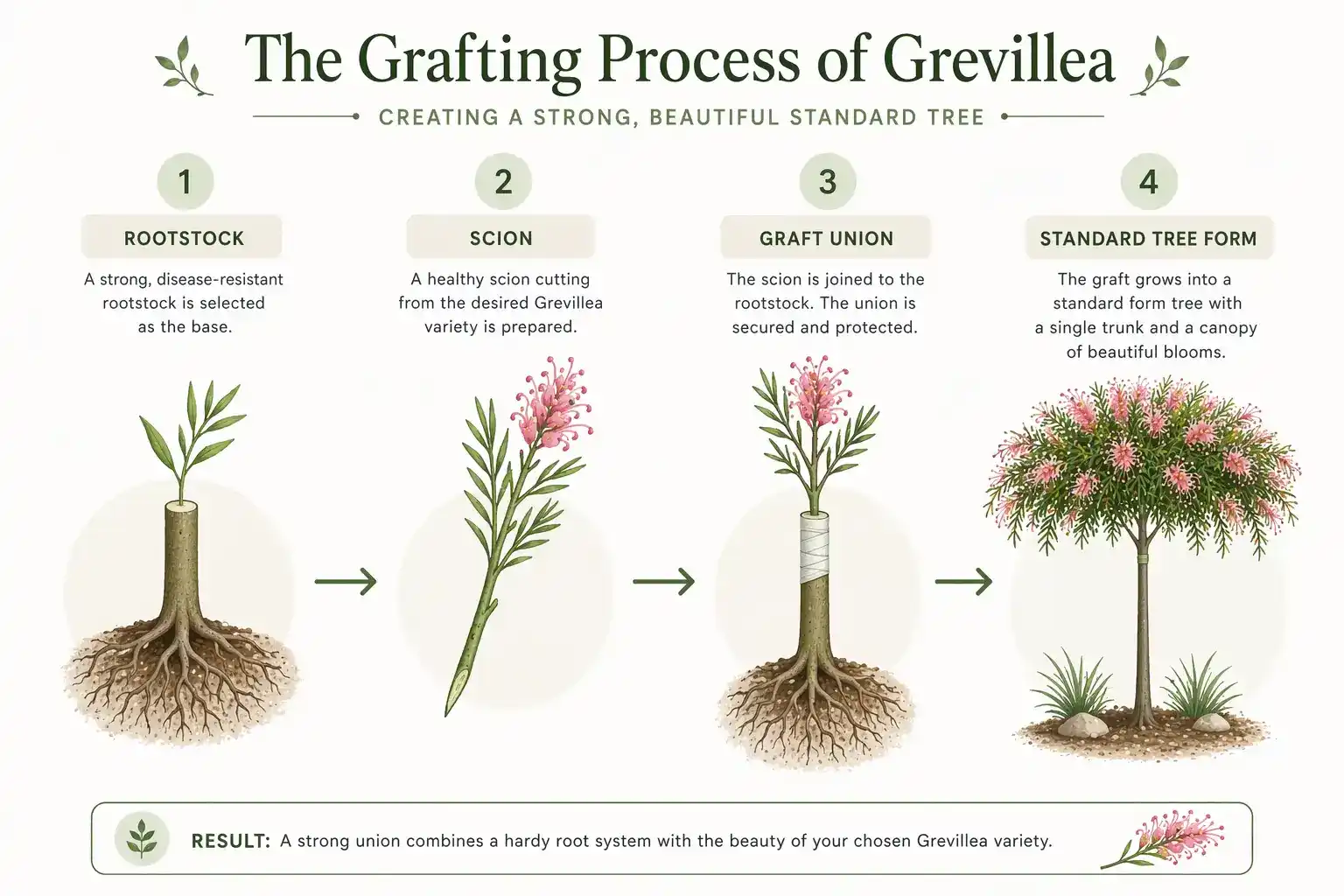
Grafted grevillea standards are produced by combining two plant parts to form a single, stable plant.
- Rootstock selection: A hardy grevillea species is chosen for strong root development and soil adaptability
- Scion attachment: The desired flowering variety (scion) is grafted onto the rootstock
- Formation of trunk and canopy: The plant is trained so the trunk grows straight while the canopy develops above the graft point
This process is known as plant grafting, a widely used horticultural technique for combining plant traits.
Why Grafting Is Used
Grafting is used to improve plant performance and ensure consistent results.
- Enhances hardiness and resistance to soil-related issues
- Allows delicate or less adaptable varieties to grow successfully
- Produces uniform standard grafted grevillea shapes suitable for landscaping
Most grafted grevillea standards are created this way because many ornamental varieties do not thrive on their own roots.
Types of Standard Grevillea and Popular Varieties
Weeping Standard Grevillea Forms
Weeping forms are characterized by cascading branches that create a soft, flowing canopy.
- grevillea standard weeping
- standard weeping grevillea
- weeping standard grevillea
- weeping grevillea tree
These forms are commonly used as focal points due to their dramatic structure.
Popular Cultivars Used in Standards
Several grevillea cultivars are commonly used to create standard grevillea varieties:
- grevillea bulli princess
- grevillea pink ice
- grevillea amber blaze
- grevillea royal mantle
- standard grevillea fanfare
These varieties are selected for flower color, growth habit, and compatibility with grafting.
Many standard grevillea varieties are selected from proven cultivars—see detailed growing insights in Dorothy Gordon Grevillea: 7+ Essential Care Tips.
Upright vs Weeping Growth Styles (Comparison Block)
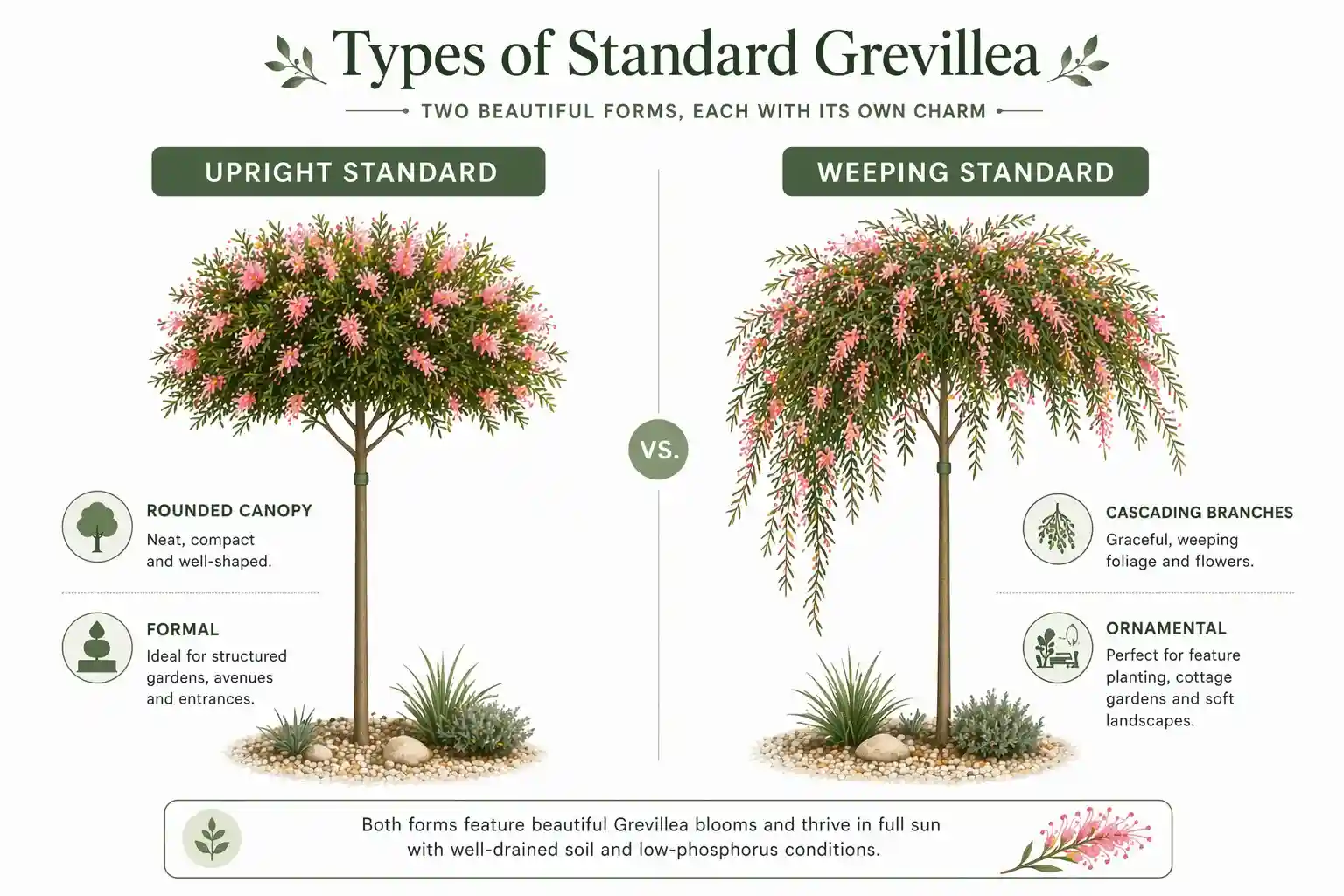
| Feature | Upright Standard | Weeping Standard |
| Shape | Rounded canopy | Cascading branches |
| Visual use | Formal gardens | Feature/ornamental focal point |
| Maintenance | Easier pruning | Requires shaping control |
Upright types provide structured formality, while weeping grevillea varieties offer a more relaxed, decorative effect.
Standard Grevillea Size and Growth Characteristics
Typical Size Range
Standard grevillea size depends on graft height and variety.
- Trunk height is usually set during grafting, often between 0.8–1.5 meters
- Canopy spread varies from compact dwarf forms to wider advanced grevilleas
- Dwarf types remain smaller and are suitable for pots, while advanced grevilleas develop broader canopies
Growth Rate and Influencing Factors
Growth rate is typically moderate but depends on environmental conditions.
- Warm climates such as Adelaide and Perth support steady growth
- Well-drained soil improves root health and growth speed
- Full sunlight enhances flowering and canopy development
- Water availability influences establishment and early growth
Care Guide for Standard Grevillea
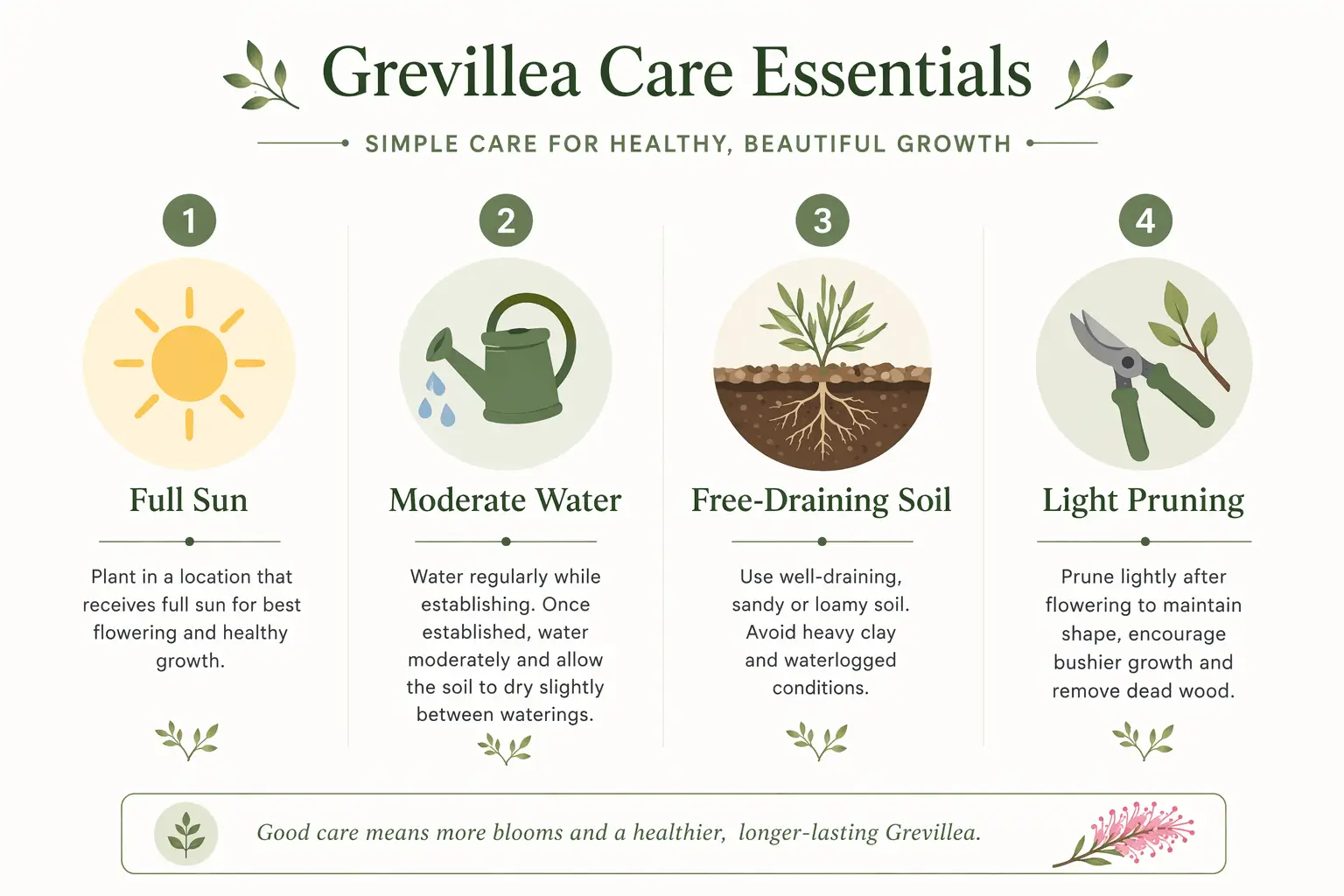
Watering and Soil Requirements
Standard grevilleas require excellent drainage.
- Use well-draining soil to prevent root rot
- Water moderately, allowing soil to dry between watering
- Avoid heavy clay soils unless improved
Light and Climate Conditions
Full sun is essential for healthy growth.
- Requires at least 6–8 hours of sunlight daily
- Highly drought-tolerant once established
- Performs well in Australian climates with mild winters
Fertilizing and Maintenance
Grevilleas are sensitive to phosphorus.
- Use low-phosphorus fertilizers formulated for native plants
- Avoid overfeeding, which can damage roots
Pruning and Shaping
Proper pruning maintains structure and health.
- Light pruning after flowering encourages new growth
- Remove dead or crossing branches
- Maintain canopy shape to preserve the standard form
How to Make or Train a Standard Grevillea
Training a Grevillea Into Standard Form
A standard grevillea can be created without grafting through careful training.
- Select a strong central leader to form the trunk
- Remove lower branches gradually
- Use stakes to support upright growth
- Allow the canopy to develop at the desired height
Grafting vs Training (Comparison Block)
| Method | Description | Pros | Cons |
| Grafting | Joining two plants | Faster results, stronger | Requires skill |
| Training | Shaping a single plant | Natural process | Takes longer |
Grafting is preferred for consistent results, while training suits long-term growers.
Landscaping Uses and Design Ideas
Standard grevilleas are versatile in garden design.
- Ideal as feature plants in small gardens
- Suitable for container gardening on patios
- Effective as entryway or pathway accents
- Integrate well into native plant landscapes
Their elevated canopy allows underplanting and efficient use of space.
Standard grevilleas fit perfectly into native landscapes—explore this easy low maintenance Australian native garden guide to plan a cohesive outdoor design.
Common Problems and How to Fix Them
Yellow Leaves or Poor Growth
Yellow leaves are usually caused by poor drainage or nutrient imbalance.
- Improve soil drainage
- Adjust fertilization with low-phosphorus products
Overwatering Issues
Overwatering can lead to root rot.
- Ensure free-draining soil
- Reduce watering frequency
Misshapen Canopy
Irregular growth occurs without pruning.
- Prune regularly to maintain structure
- Remove uneven or excessive growth
Pest or Environmental Stress
Stress can result from environmental conditions.
- Monitor for signs like leaf drop or discoloration
- Provide proper sunlight, water balance, and airflow
Environmental Limitations and Growing Conditions
Standard grevilleas have specific environmental tolerances.
- Some varieties are sensitive to frost, especially young plants
- Heavy clay soils can restrict root health
- Strong winds may damage canopy structure
Proper placement and soil preparation improve long-term performance.
Standard Grevillea vs Shrub Grevillea
| Feature | Standard Grevillea | Shrub Grevillea |
| Form | Tree-like | Bushy shrub |
| Space use | Compact vertical | Spreads horizontally |
| Maintenance | Requires shaping | Lower maintenance |
Standard forms are suitable for structured landscapes, while shrubs are better for natural garden settings.
Conclusion
Standard grevillea offers a unique way to enjoy the beauty of grevillea plants in a compact, tree-like form. Whether grafted or trained, these plants combine ornamental appeal with drought tolerance and adaptability.
Understanding their structure, care requirements, and environmental limitations ensures successful growth. Standard grevillea remains a practical and visually appealing choice for both garden beds and container planting. For more plant care strategies and detailed growing guides, explore our complete resource on Plants: Benefits and Guides (Complete Care, Types & Growing Tips).
FAQs
What is a standard grevillea?
A standard grevillea is a grevillea plant trained or grafted into a tree-like form with a single trunk and elevated canopy.
Are all standard grevilleas grafted?
Most are grafted to improve hardiness and maintain consistent growth, but some can be trained manually.
How big does a standard grevillea grow?
Size varies by variety, but most reach a manageable height with a defined canopy spread.
What is the difference between weeping and upright standard grevillea?
Weeping types have cascading branches, while upright types form rounded canopies.
How often should you prune a standard grevillea?
Light pruning after flowering helps maintain shape and encourages healthy growth.
Can standard grevilleas grow in pots?
Yes, they are well-suited for container growing if provided with proper drainage and sunlight.

2 Responses