
Introduction
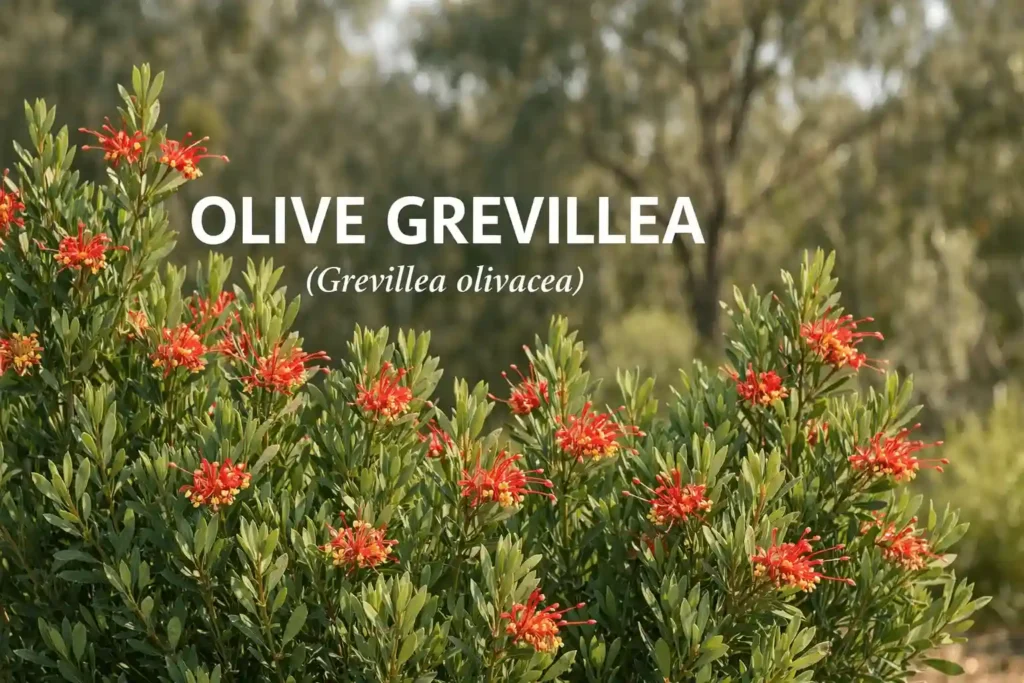
Olive grevillea (Grevillea olivacea) is a native Australian shrub prized for its olive-like foliage and vibrant flowers, endemic to Western Australia’s west coast. This erect, dense plant offers strong ornamental value through its striking blooms and adaptability in gardens. It is widely referenced in native landscaping due to its resilience, fast growth, and suitability for hedging and screening applications in dry, coastal, and frost-prone environments. Olive grevillea belongs to the diverse genus Grevillea, which includes hundreds of Australian native flowering plants known for their unique spider-like blooms and ecological value (see: Grevillea on Wikipedia).
Quick Summary
- Dense shrub growing 1–4.5m tall with olive-like foliage and spider-shaped flowers.
- Thrives in full sun, well-drained soils; highly drought and coastal tolerant.
- Attracts birds and pollinators, making it valuable for wildlife-friendly gardens.
- Low-maintenance native plant ideal for hedges, screens, and mass planting.
Plant Size
Plant Size and Form
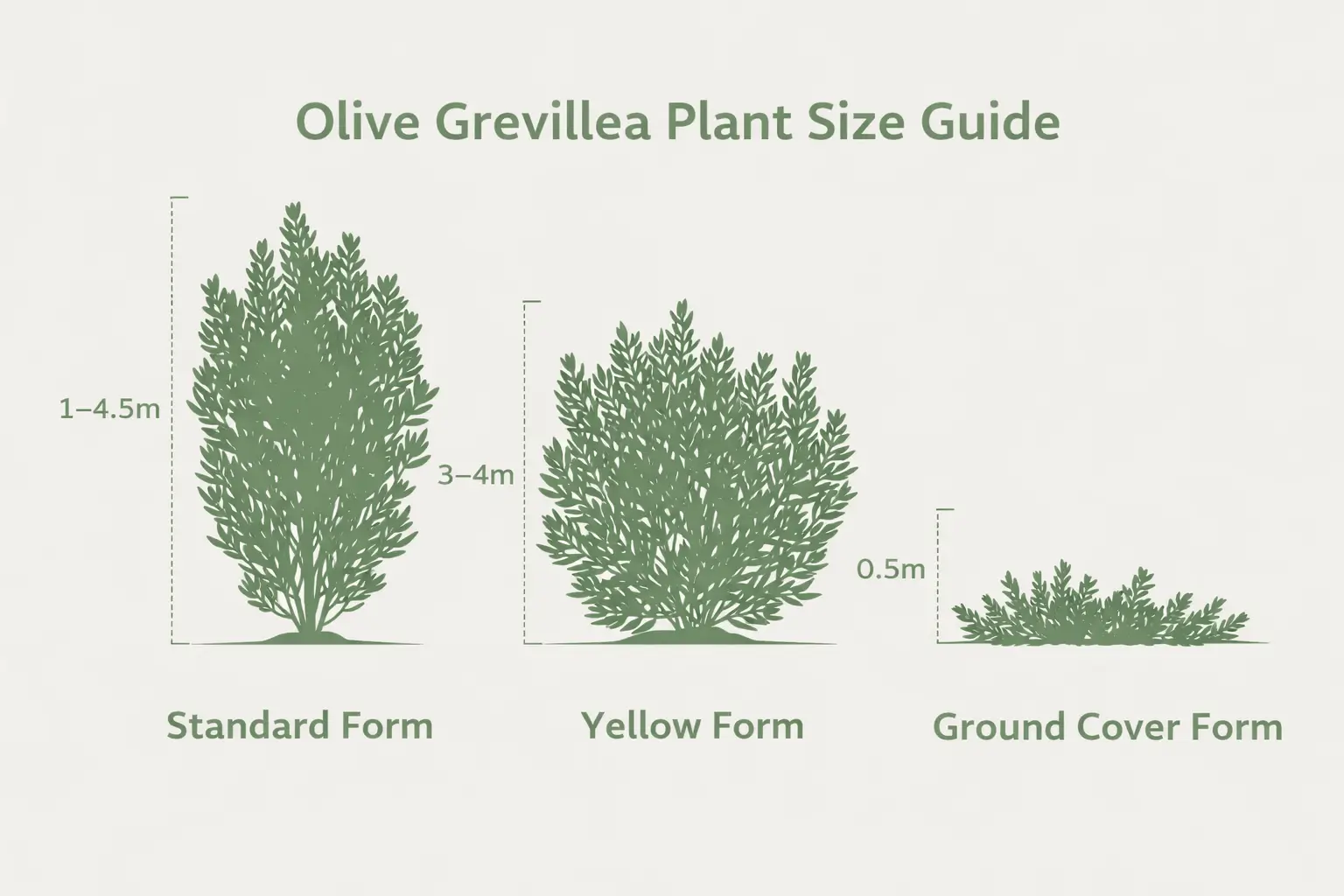
Olive grevillea (Grevillea olivacea) typically grows as a dense, upright shrub ranging from 1–4.5 meters in height, with a spread of about 2–4 meters depending on conditions. Its growth form is naturally bushy, making it highly suitable for screening and structural planting in landscapes.
The plant’s size varies based on cultivar type and environmental conditions such as soil fertility, sunlight exposure, and pruning frequency. Standard forms are compact yet tall enough for hedging, while selected variants reach greater height for windbreaks or privacy screens.
Size Comparison by Variant
| Variant | Height | Width | Best Use |
| Standard | 1–4.5m | 2–3m | Screening |
| Yellow Form | 3–4m | 3–4m | Hedges |
| Ground Cover Types | 0.5–1m | 2m+ | Low borders |
Indoor growth is not typically recommended due to size constraints, as olive grevillea performs best in outdoor environments with full root expansion.
Growth Rate
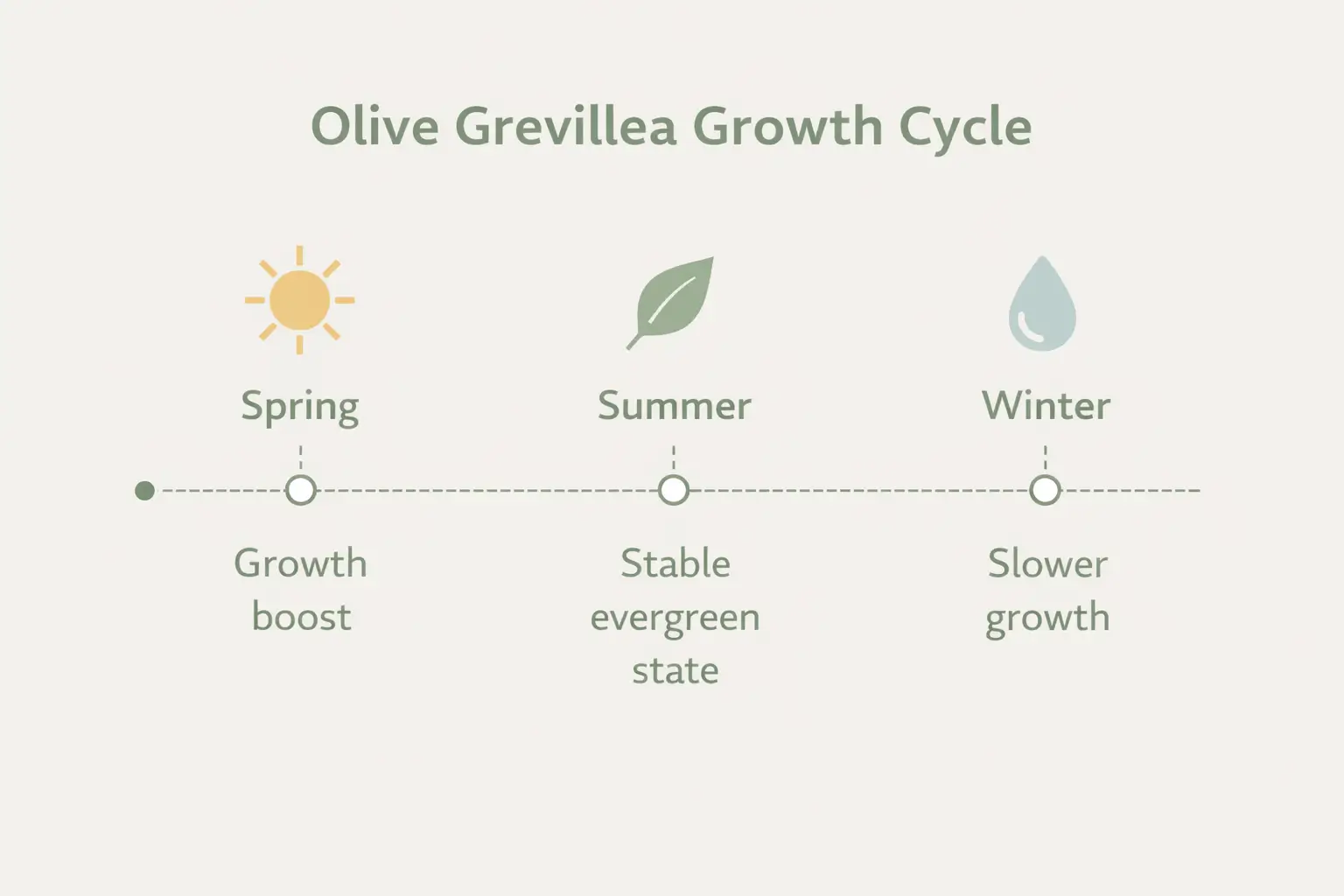
Olive grevillea is classified as a fast-growing shrub, often reaching near-mature size within 2–3 years under optimal conditions. Its growth is most vigorous during spring when temperature and sunlight levels are favorable.
Growth slows significantly during dry or cold periods, but the plant remains resilient and recovers quickly when conditions improve. Full sun exposure and well-drained soils are critical factors that enhance its growth rate.
Seasonal growth patterns show peak development in spring and early summer, with maintenance pruning encouraging denser foliage.
Care Guide
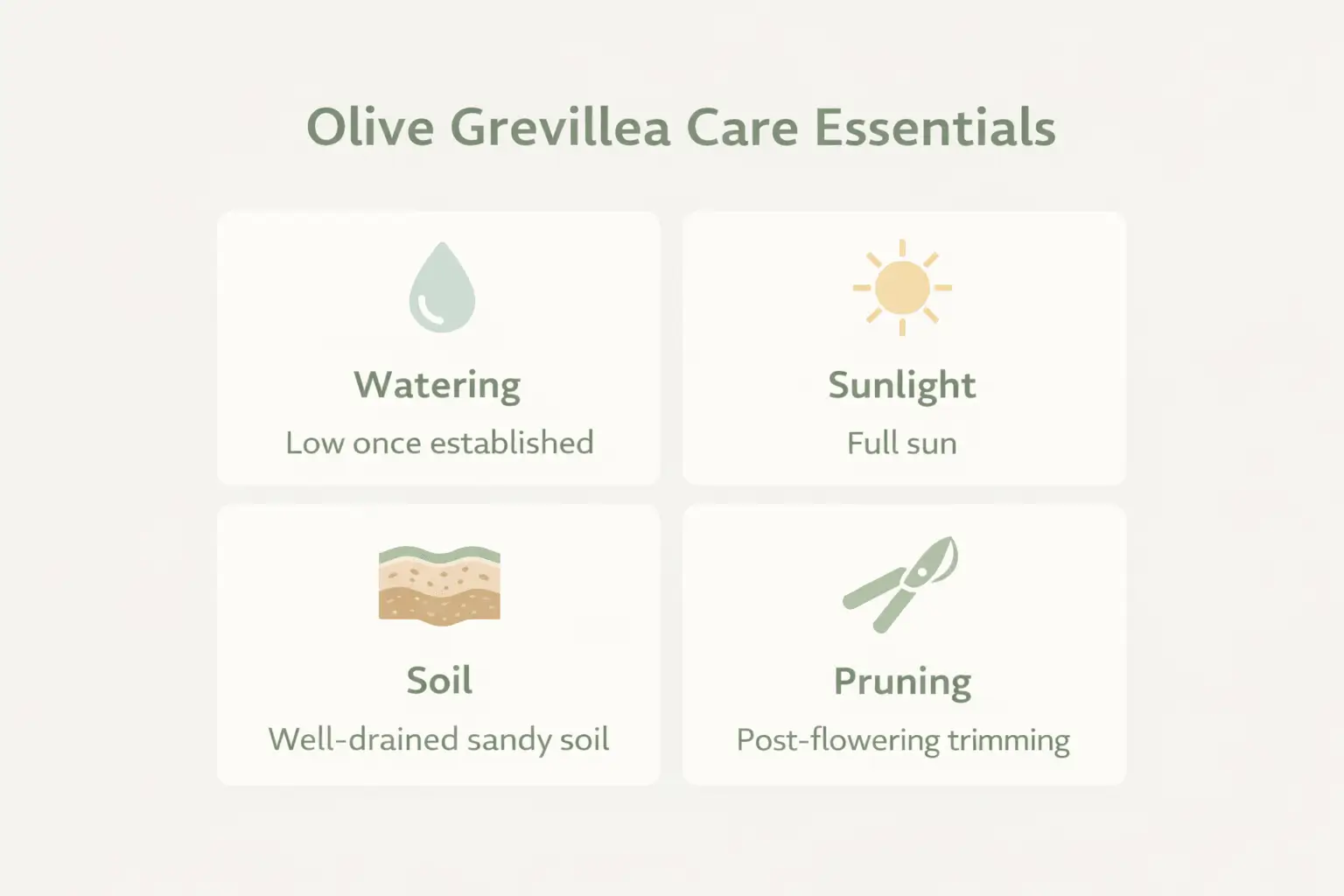
Olive grevillea requires minimal maintenance once established, making it a reliable choice for low-water gardens and native landscapes.
- Watering: Water regularly during establishment; once mature, it becomes drought tolerant.
- Light: Requires full sun for best flowering and dense growth.
- Soil: Prefers sandy, well-drained soils; avoid heavy clay conditions.
- Fertilizer: Light feeding in spring using low-phosphorus native plant fertilizer.
- Pruning: Light pruning after flowering encourages compact shape and more blooms.
- Climate: Tolerates coastal winds and light frost once established.
Proper drainage is essential, as waterlogged soil can lead to root stress and reduced flowering.
Olive Foliage Characteristics
Olive Foliage Characteristics
Olive grevillea features elliptic to egg-shaped leaves measuring approximately 30–68 mm in length. The foliage is grey-green with a soft, silky-hairy underside, closely resembling true olive tree leaves in appearance.
The evergreen nature of the plant ensures year-round visual structure in gardens. Its foliage texture adds contrast when planted alongside finer-leaved natives.
The leaf structure also contributes to pest resistance and reduced water loss, enhancing its drought tolerance.
Flower Varieties and Colors
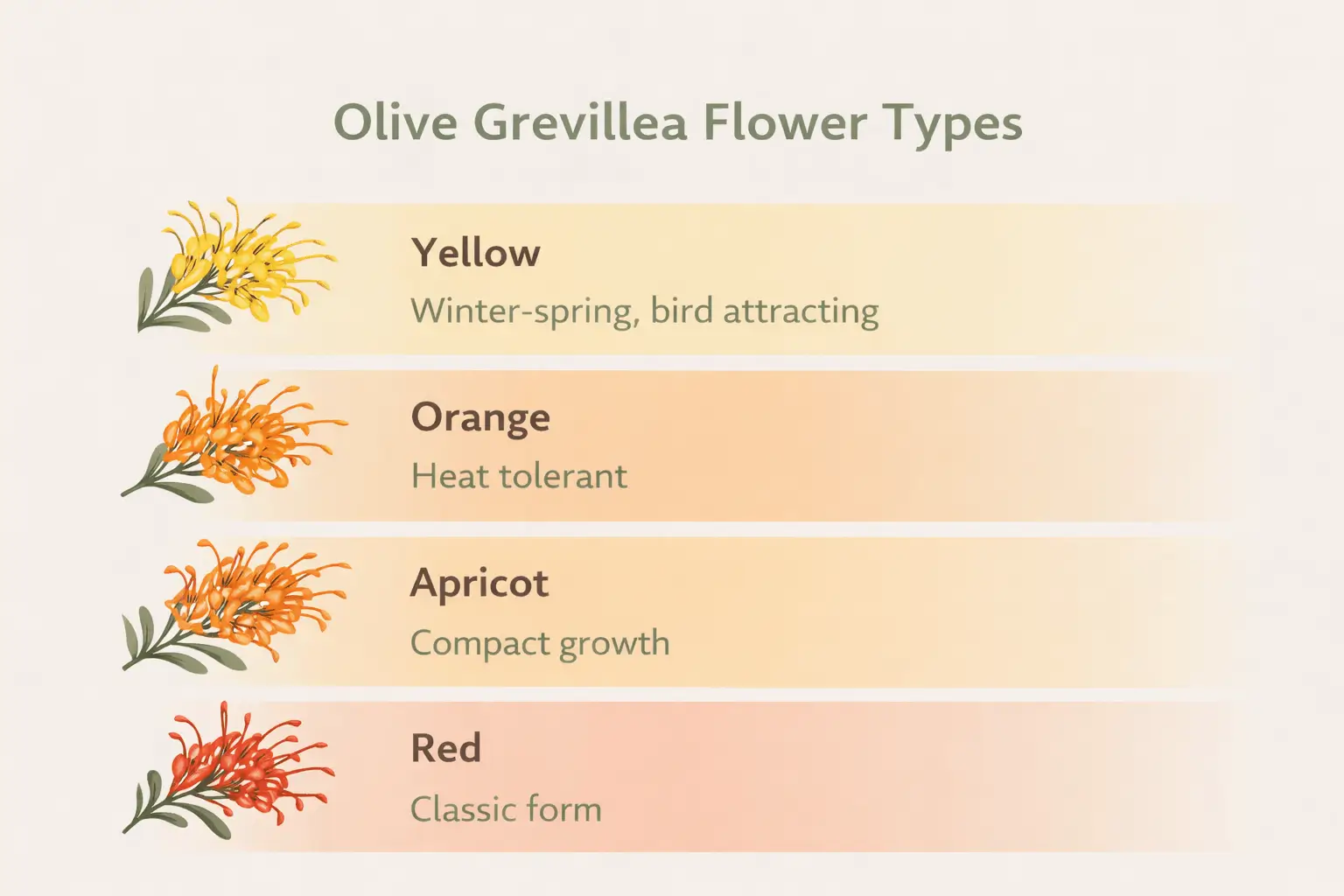
Flower Varieties and Colors
Olive grevillea produces spider-like flowers in a range of colors including red, orange, yellow, and apricot tones. These blooms appear mainly from winter through spring, depending on the variant.
| Color Variant | Style Color | Bloom Season | Notes |
| Yellow | Yellow | Winter–Spring | Highly bird attracting |
| Orange | Red-Orange | June–Oct | Heat tolerant |
| Apricot Glow | Apricot | Spring | Compact growth form |
| Red | Red | Winter | Classic form |
Grevillea Olivacea Yellow
The yellow form of Grevillea olivacea is especially valued for its bright spider-shaped blooms and strong attraction to birds. It performs well as a hedge or feature shrub due to its dense flowering habit and strong visual contrast.
Grevillea Olivacea Hedge
When used as a hedge, olive grevillea responds well to pruning, forming tight, dense screens. Regular trimming after flowering promotes branching and improves privacy coverage, making it suitable for structured landscape designs. For structured garden designs, olive grevillea is commonly recommended alongside other 7+ Essential Small Hedge Plants for Easy Garden Borders due to its dense growth and pruning response.
Landscaping Uses
Landscaping Uses
Olive grevillea is widely used in native and drought-tolerant landscaping due to its adaptability and visual appeal. It performs well as a grevillea olivacea hedge, windbreak, or mass planting shrub.
Common applications include:
- Privacy hedges and screening
- Coastal windbreaks
- Wildlife-friendly gardens
- Mixed native plant borders
- Ground-level color mass planting (low forms)
Proper site preparation with well-drained soil enhances long-term performance, especially in exposed locations. Olive grevillea is widely used in native garden designs and is often grouped with other Tropical Screening Plants: Best Choices for Garden Privacy, especially in coastal and drought-tolerant landscapes. It is also featured among the Fast Growing Australian Native Screening Plants Guide, making it a reliable option for quick privacy and wind protection.
Common Problems and Solutions
Common Problems and Solutions
Olive grevillea is generally hardy, but environmental stress and poor soil conditions can cause issues.
- Yellowing leaves: Usually caused by overwatering or poor drainage. Improve soil structure and reduce watering frequency.
- Pests (aphids): Can be controlled using water sprays or neem oil applications.
- Slow growth: Often linked to insufficient sunlight or nutrient imbalance; ensure full sun and use low-phosphorus fertilizer.
Most issues are preventable with proper planting conditions and seasonal maintenance.
Comparison with Similar Grevilleas
Comparison with Similar Grevilleas
Olive grevillea differs from many other grevillea species due to its dense foliage and olive-like leaf shape. While many grevilleas have fine, needle-like leaves, Grevillea olivacea offers broader, more structured foliage.
It also demonstrates stronger hedging ability compared to more open-growing varieties. In colder climates, it shows better tolerance than some ornamental grevilleas, making it a more versatile landscaping choice.
| Feature | Olive Grevillea | Typical Grevillea |
| Foliage Type | Broad olive-like | Fine needle-like |
| Growth Habit | Dense, upright | Open, spreading |
| Hedging Ability | High | Moderate |
| Frost Tolerance | Moderate–High | Variable |
Propagation and Seasonal Care
Propagation and Seasonal Care
Olive grevillea is commonly propagated through semi-hardwood cuttings taken in warm seasons. Cuttings root best in sandy, well-drained propagation mixes with consistent moisture.
Seasonal care includes:
- Spring: Fertilize lightly and prune after flowering.
- Summer: Monitor watering during extended dry periods.
- Autumn: Reduce pruning and prepare for cooler conditions.
- Winter: Minimal maintenance; flowering period begins in many regions.
Seasonal adaptation ensures consistent flowering and healthy structure year-round.
Conclusion
Olive grevillea (Grevillea olivacea) combines dense olive-like foliage, vibrant seasonal flowers, and strong environmental adaptability. Its fast growth, low maintenance needs, and suitability for hedging make it a valuable choice for sustainable landscaping. With proper drainage, sunlight, and light pruning, it delivers long-term ornamental and ecological benefits in both residential and native garden settings.
FAQ
What is olive grevillea?
Olive grevillea (Grevillea olivacea) is a dense Australian shrub with olive-like leaves and spider-shaped flowers, native to Western Australia.
How fast does grevillea olivacea grow?
It is fast-growing and can reach near full size within 2–3 years under ideal sun and soil conditions.
Can grevillea olivacea be used as a hedge?
Yes, its dense growth habit and response to pruning make it highly suitable for hedging and screening.
What are grevillea olivacea yellow flowers like?
They are bright yellow, spider-shaped blooms that appear mainly in winter to spring and attract birds.
Is grevillea olivacea frost tolerant?
Yes, it tolerates light frost once established but performs best in protected, sunny locations.